Author : David Ondrej
Compiled by: Deep Tide TechFlow
Introduction: Last Monday, Anthropic released a suite of plugins for Claude Cowork. Not a new model, not a chatbot upgrade, but a plugin. Within 24 hours, the software stock market lost $285 billion in market value. A single plugin market announcement wiped out more wealth in a single day than most industries generate in a year. Wall Street is no longer afraid of AI; they're afraid of what AI will replace.
David Ondrej points out that what's dying is a very specific type of software business—SaaS built on a weak moat of "pretty UI + integration + pay-per-seat." When AI agents can do the work directly within existing systems, you don't need 15 SaaS tools with pretty dashboards. Value is being sucked up to the agent layer and down to the data layer. Everything in between is being squeezed out.
The full text is as follows:
Last Monday, Anthropic released a set of plugins for Claude Cowork.
It's not a new model, not a chatbot upgrade, it's a plugin.
Within 24 hours, the software stock market lost $285 billion in market value.
A single plug-in market announcement can wipe out more wealth in a single day than most industries generate in a year.
Wall Street is no longer afraid of AI.
They are afraid of what AI will replace.
two
Here are the places where most people misunderstand this.
They heard "SaaS is dead" and assumed it meant companies would stop buying software.
That's not how it is, not at all.
What's dying is a very specific type of software business—and if you understand what kind, you're looking at the biggest startup opportunity of the last decade.
Let me explain:
three
The SaaS playbook has been simple over the past 15 years:
Find a common business workflow. Build a nice UI around it. Add some integrations. Charge by seat, by month. Defend your position through switching costs and minor product tweaks.
This script created hundreds of billionaires.
But it has a fatal flaw that nobody talks about.
Most of the value never lies in the software itself. It lies in the workflow of the software organization.
The UI is the middleman.
And AI has just rendered the man-in-the-middle obsolete.
Four
Here’s what Anthropic actually does—because the title misses the point.
They didn't build a better chatbot. They turned Claude into a job execution layer.
The Cowork plugin allows AI agents to log into your existing tools—your CRM, your documents, your databases—and autonomously execute entire workflows. Applications include legal auditing, sales pipeline management, data analytics, and production-grade code.
No human intervention is required. This is the part that is causing panic in the market.
Because if an AI agent can do the job directly within your existing system—why would you need 15 different SaaS tools with pretty dashboards?
This is the part that should truly keep SaaS founders up all night:
If 10 AI agents can do the work of 100 employees, you no longer need 100 Salesforce seats.
AI doesn't kill software directly. It kills the number of employees using the software. That kills the per-seat revenue model. That kills the business.
five
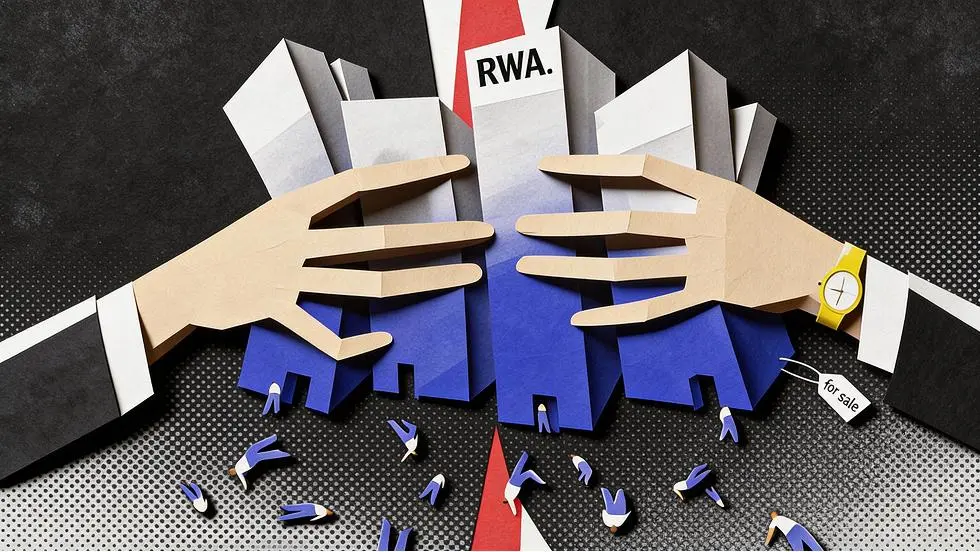
This is what I call "Thin Middle Squeeze".
Imagine three layers:
Top level – AI agent. The one that actually performs the work.
The middle layer —the SaaS UI. Dashboards, workflows, and the buttons you click.
The underlying layer —the recording system. This includes databases, CRM systems, and ERP systems that store real data.
Currently, value is being drawn upwards into the proxy layer and downwards into the data layer.
Everything in the thin middle layer collapsed under the pressure.
This is why Adobe's forward P/E ratio fell from 30 to 12. ServiceNow fell from 67 to 28. Not because people don't need what they do—but because investors realize that the moat around "pretty UI + integration" is paper-thin when AI agents can completely bypass the UI.
The interface used to be the product, but now it's just a shell.
six
But that's where those who say "SaaS is dead" are completely wrong.
SaaS is not dead; rather, the easy SaaS moat has died.
This is a huge difference.
The company will spend more on software this year than ever before. Enterprise AI capital expenditures alone will exceed $470 billion by 2026. This is not a shrinking market—it's a market exploding in size.
The money didn't disappear; it just moved.
Most people are too busy panicking to see where it's going to land.
seven
Here is where the money actually went:
- AI Platform Subscription
Based on usage. Based on consumption. Not by seat. Companies will pay for AI capacity like they pay for cloud computing—based on what they use, not how many people sit in the building. This is already happening. GitHub's AI agent is gated with a high-level tiered pricing system based on usage. That's the template.
- Recording System
Agents don't eliminate the backend; they operate the backend. CRM, ERP, data warehouses—these become more valuable, not less important. This is because AI agents need clean, authoritative, and reliable data to take action. Only garbage data input produces garbage action output. Companies with large-scale, well-regulated data will win.
- Security, governance and compliance
When agents operate on a large scale, errors occur on a large scale. Every company that deploys AI agents pays for permissions, audit logs, policy enforcement, monitoring, and evaluation. This is mundane infrastructure—it will quietly print money over the next decade.
- Outcome-based pricing
Instead of "$99 per seat per month," you'll see "$5 per review contract," "$2 per resolved support ticket," and "$10 per rich, qualified lead." Software is being priced like labor—because it's replacing labor. This is where the entire industry's pricing model shifts.
- Serve
This is surprising. But as building software becomes cheaper and easier, companies will try more custom software services. Implementation, workflow design, migration, integration work—the demand for services is about to explode. Vibe coding makes creation easy. Getting it working in a real business is a completely different story.
eight
So if you're building a startup right now—or thinking about it—this is the only important question:
Where are you in the stack?
If you're building in a thin middleware tier—creating a pretty UI on someone else's data, charging per seat, with no proprietary advantage—you have a serious problem. Not because your product is bad. It's because the economics of your location are collapsing in real time.
The proxy layer above you is eating up your interface.
The logging system below you is consuming your lock.
You are being squeezed from two directions. And this squeezing will only accelerate from here.
Nine
Here's what should be built.
Build at the agent layer. Create AI-native tools that do more than just display information—they execute workflows. Don't show users dashboards. Get the work done for them. Price based on results, not seats. Be something that takes action.
Build at the data layer. Own proprietary data. Build a record system for domains that don't yet have a good system. Make yourself the authoritative backend that every AI agent needs to plug into. Agents come and go—the data layer is eternal.
Building infrastructure. Security. Monitoring. Assessment. Governance. Compliance. Tools to enable secure, large-scale deployment of AI agents. Not sexy. Extremely profitable. Demand hasn't even started yet.
Build services. Help companies implement, customize, and operate AI systems in their actual operations. This is where most of the real-world complexity lies, and where a significant amount of value will be created over the next five years.
ten
This is the irony that nobody talks about.
Anthropic's Cowork—the product that supposedly kills SaaS—is itself a SaaS product, sold to organizations via subscription on the internet.
SaaS is a great delivery model, and it always has been.
And SaaS, as a business strategy built on shallow moats and per-seat pricing for product workflows—that's over.
in conclusion
Everyone is looking at this $285 billion loss, seeing the destruction.
But I saw a transfer.
That value hasn't disappeared. It's shifting—from companies that capture value by acting as intermediaries between humans and their tools, to companies that capture value through execution, data, and infrastructure.
The old script was: build a workflow UI, charge per seat, and grow revenue by increasing the number of employees your clients have.
The new playbook is: build something that owns data, executes results, or protects systems. Price it based on the value delivered, not on the seat you're in.
If you are the founder reading this article, the worst thing you can do is panic.
The second worst thing is to continue building like we did in 2019.
The best thing you can do is understand where value is moving—and stand where it lands.
The SaaS era is not over.
The era of easy SaaS is over.
Honestly, this is the best news in a decade for anyone who's really building something real.