

Hash (SHA1):
f1b3e93df4687ebfa91d4fc818bf9751f327d6ad04be85d263cdc9d0f69d5433
No.: PandaLY Hotspot Insights Broadcast No.011
Jupiter Exchange is a decentralized exchange (DEX) aggregator based on the Solana blockchain, dedicated to solving the problem of decentralized liquidity in the DeFi market and providing users with an efficient and transparent digital asset trading experience. Since its launch in 2021, Jupiter Exchange has quickly become an important part of the decentralized finance (DeFi) ecosystem. Recently, Jupiter announced the launch of the full-chain network Jupnet, taking a new step. From the beginning, it only focused on aggregating Solana's liquidity, and now plans to expand its goals to a wider ecosystem and build a full-chain network. "Now we will turn to the next major goal, aggregating everything," said founder meow. In addition, Jupiter has launched a new community website jup.com, which will become an important information platform for the Jupiter community, providing the latest project dynamics from community DAOs to research forums to the Jupiverse project ecosystem.
1. What is JupiterExchange
The core function of Jupiter Exchange is to help users easily discover and obtain the best trading prices by aggregating data from multiple decentralized exchanges. Users can access multiple liquidity pools on one interface, significantly improving trading efficiency while reducing transaction costs. In order to meet the diverse needs of users, Jupiter has also introduced advanced trading features such as limit orders and dollar cost averaging (DCA), which make it stand out in the fierce market competition.
As part of the ecosystem, Jupiter's native governance token JUP creates a decentralized community governance framework, which encourages users to participate in the decision-making of the platform and enhances the sense of belonging and participation of the community. Overall, Jupiter Exchange is committed to improving the accessibility and efficiency of DeFi through its flexible technical architecture, providing users with powerful trading tools and opportunities.
2. Jupiter Technical Highlights

Jupiter Exchange has made in-depth innovations in technical architecture and functions. The following will provide a detailed analysis of its four key functions: "Swap", "Limit Order", "Dollar-Cost Averaging (DCA)" and "Value Averaging (VA)".
Swap Function
Jupiter's Swap function is one of its core features, which aims to provide users with the best transaction price.
Liquidity aggregation: By connecting to multiple DEXs (decentralized exchanges) within the Solana ecosystem, Jupiter aggregates liquidity for different trading pairs. When users exchange assets, the algorithm evaluates the price and liquidity of each DEX in real time to ensure that users get the lowest transaction cost.
Metis is an important part of how Jupiter Swap works, using a heavily modified Bellman-Ford algorithm to dynamically select the best trading path. Metis ensures seamless operation on Solana's ultra-fast block times, and supports fast trade execution through major improvements to the backend infrastructure, effectively finding the most appropriate trading route even in volatile markets.
To find the best price, Metis streams input tokens in real time, gradually building out routes that split and merge at any stage of the transaction. This innovation enables users to discover better prices for more complex transactions. For example, when a user wants to trade token A for token C, the system can consider multiple routes, such as A→B→C, to determine whether a better price can be obtained. To improve efficiency, Metis even merges route generation and quotation links to avoid generating incorrect routes while providing the best price.
Limit Order Function
A limit order is a type of trading order set by users through Jupiter Exchange, which provides users with a flexible and efficient way to trade, allowing them to execute trades at a preset price under certain conditions. When placing an order, users specify the price they wish to buy or sell at, and Jupiter uses the Jupiter Price API to continuously monitor on-chain prices and obtain market data in real time. When the on-chain price of SOL reaches the set conditions, the system will automatically execute the limit order.
If the order size is too large and the on-chain liquidity is insufficient, the system will strive to partially execute the order in blocks to ensure that users can complete the transaction with as little market impact as possible until all orders are satisfied. Once the order is executed, whether partially or fully, the system will automatically transfer the traded tokens to the user's wallet to ensure that the user can quickly obtain the transaction assets.
In addition, the expiration time can be set flexibly. Users can set the expiration time for limit orders. If the order is not executed within the specified time, the system will automatically cancel it and return the tokens to the user's wallet, thus avoiding unexpected market risks.
Jupiter’s limit order feature minimizes the risk of slippage caused by market fluctuations, ensuring that users can still get the set transaction price during fluctuations. In addition, placing an order using such an order ensures that the transaction will not fail due to market price fluctuations.
Dollar-Cost Averaging (DCA)
Dollar-Cost Averaging (DCA) is a widely used investment strategy, especially suitable for dealing with market fluctuations. In Jupiter Exchange, the DCA strategy allows you to spread your investment over different periods of time instead of investing a large sum of money in a single transaction, avoiding the risk of buying near the peak, and helping to smooth the user's overall cost.
Users can automatically configure the purchase quantity within a specified time interval based on their investment plan. They only need to enter the amount of tokens they want to invest, the price range and the investment time interval, and the system will automatically handle the rest.
Especially in bull and bear markets, users can use DCA to buy more tokens at low points and maximize returns in the long run by smoothing the cost basis. Users do not have to worry about when to enter the market, and the automated investment process helps eliminate emotional decisions caused by price fluctuations.
Value Averaging (VA)
Value Averaging (VA) is a strategy that adjusts investment amounts by setting a target portfolio value, allowing users to flexibly change investment amounts based on market conditions.
Unlike DCA, VA allows users to adjust investment amounts based on market performance based on set investment goals. When asset prices are lower than the target, users can increase investment, and vice versa. This flexibility allows users to maximize investment returns.
By using VA, users can automatically adjust their investments over the long term. This approach allows users to catch market lows, thereby reducing their overall cost base and facilitating locking in higher asset values when the market rises.
3. What will be the future Jupnet?
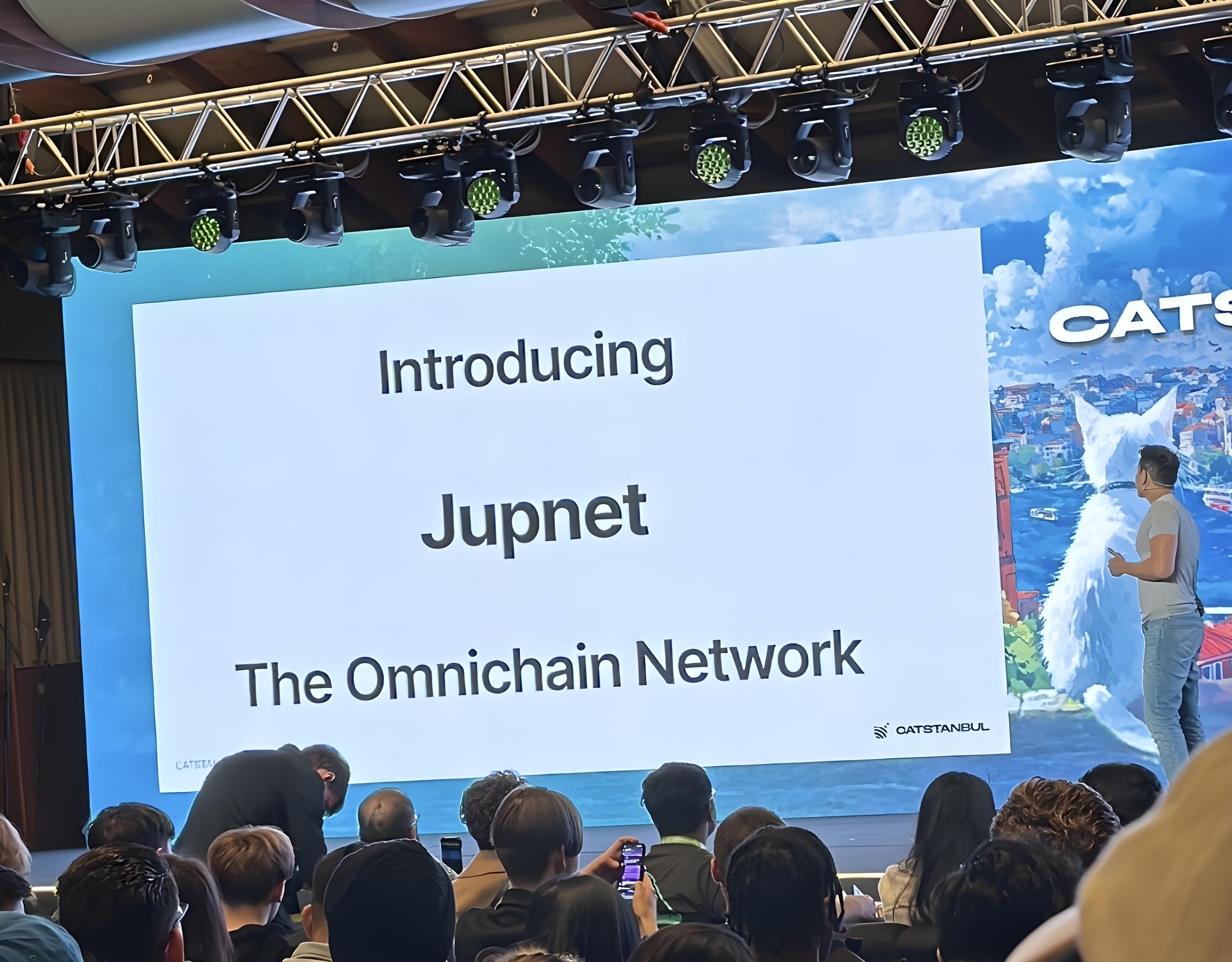
Jupnet is a full-chain network that aims to aggregate all cryptocurrencies in a centralized book, connecting multiple blockchains to improve the user and developer experience and make transactions smoother.
Jupnet is driven by three main systems:
- DOVE Network : This is a centralized front-end responsible for transaction verification and execution, solving the current blockchain single source of truth problem in a cross-chain environment. The design of the DOVE network ensures that multiple chains can be synchronized and consistent, thereby improving the security and efficiency of transactions.
- Full-chain ledger network : This network is able to host full-chain ledgers on multiple chains, allowing users and applications to trade freely in a decentralized funding manner. It implements the concept of dynamic finality, which facilitates the rapid processing of transactions based on transaction size and circumstances, while simplifying complexity for developers.
- Aggregate Decentralized Identity (ADI) : Jupu.com adopts a more user-friendly authentication system to replace traditional wallets, providing users and developers with a more optimized access experience. By putting the authentication framework on-chain, users can better control and manage their assets, improving security and recovery capabilities.
Jupnet aims to become a global unified market infrastructure that connects all possible trading assets and services. In the coming months, Jupnet will launch its first public beta version to continue to promote the advancement of decentralized finance.
4. Jupiter DAO and JUP Token Economics
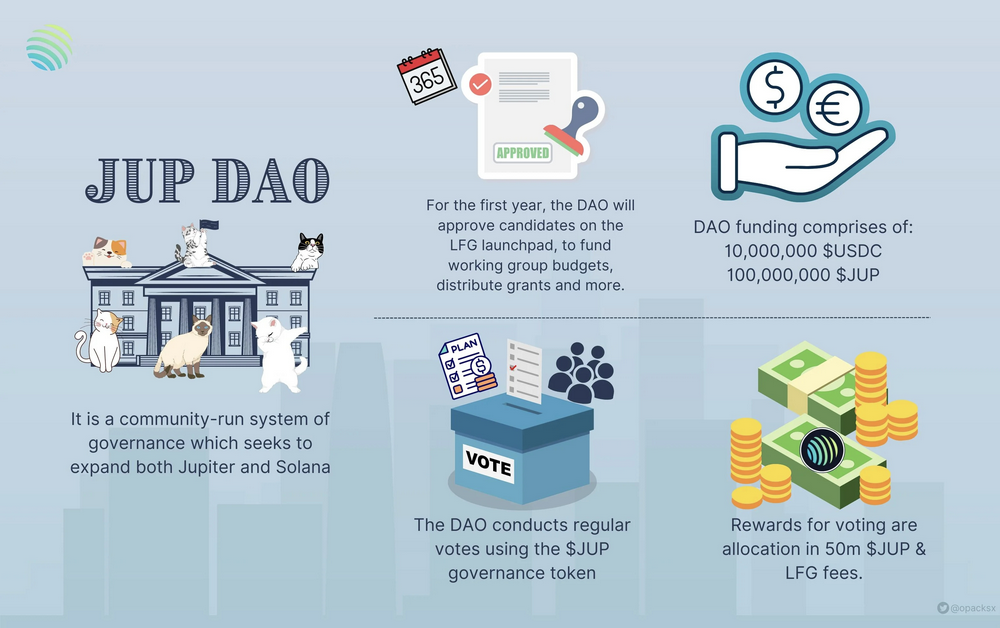
Jupiter DAO is a decentralized autonomous organization closely related to Jupiter Exchange, which aims to enable users to participate in the decision-making process of the platform through a community governance mechanism. The establishment of Jupiter DAO embodies the core concept of decentralized finance (DeFi), in which JUP tokens play a vital role in the governance framework, providing holders with voting rights and the right to participate in the decision-making of project development.
Recently, Jupiter Exchange distributed 700 million $JUP tokens to 2.3 million eligible wallets, worth more than $590 million. This large-scale token distribution not only increased community participation, but also significantly increased the liquidity of the token, driving the project to develop more rapidly.
The total supply of JUP tokens is set at 10 billion, a considerable portion of which is distributed to community members through airdrops and incentives. This distribution method not only promotes active user participation, but also ensures the circulation of tokens. At the same time, users holding JUP tokens not only have the right to participate in important decisions of the platform, but can also obtain additional income through staking and other methods. This mechanism effectively encourages users to hold and use JUP for a long time, building a stable foundation for community participation. The specific token distribution structure is as follows:
- 40% — Community Growth and Airdrops : Used to incentivize community development, including airdrops and other community incentive programs, aimed at attracting more users to participate and increase project activity.
- 20% — Token Sale : Allocated through the token sale to raise funds to support further development of the project.
- 40% — Internal Personnel and Strategic Reserves : Allocated to the project team, consultants and strategic reserves to ensure the continued operation and long-term development of the project.
Jupiter DAO allows users to participate in key governance decisions by holding JUP tokens. The system adjusts voting weights based on user participation and token holdings to ensure active users have influence in the decision-making process. Token holders can participate in voting, and decisions involve important matters such as the introduction of new features, the allocation of ecosystem funds, and the development of potential projects. By introducing a community voting mechanism, Jupiter ensures transparency and fairness in the decision-making process and drives real development of the project. Community members can vote on proposals to point the way for the future development of the platform. This governance structure not only enhances the sense of community participation, but also ensures that the platform can quickly respond to user needs and market changes, and more clearly identify and solve practical problems faced by users.
Recently, Jupiter launched a new community website, jup.com, which is now open for user registration. The website will become an information collection platform for the Jupiter community, unifying all the latest project updates on the community website, centralizing platform information in one place. This will further enhance the interaction between community members and build a decentralized DeFi ecosystem that is completely user-driven.
Conclusion
The decentralized trading function in Jupiter Exchange paints a promising blueprint for the future development of the Solana ecosystem. By aggregating liquidity and providing diversified trading tools, it enables users to complete transactions in a more efficient way. The upcoming Jupnet will further expand this vision, enabling various crypto assets to be interconnected, promoting innovation and development in the entire DeFi field, and expanding the overall scale of DeFi to promote more financial activities and transactions.
In a rapidly evolving and diverse crypto market, flexibility and innovation will be the key to success. In the context of ever-changing user needs, Jupiter must continue to optimize platform functionality and security to ensure the long-term and robust development of the ecosystem. Although the road ahead is long and arduous, every innovative progress of blockchain projects is laying the foundation for the future of decentralized transactions and realizing a wider range of cryptocurrency applications.