These "infrastructure builders" without fancy narratives ultimately define the true value of the crypto economy.
Written by: BitpushNews Mary Liu
He has worked in traditional banks and wealth management offices.
He is also a pioneer in turning digital currency into a tool for buying houses.
He has been sharing on Twitter for 10+ years.
It also received a group of the most mysterious on-chain customers in the world.
You can use USDT to buy a Japanese homestay from him, or you can play with cats while discussing overseas asset investments.
“I bought the house for my cat!”
——————I am a gorgeous dividing line——————
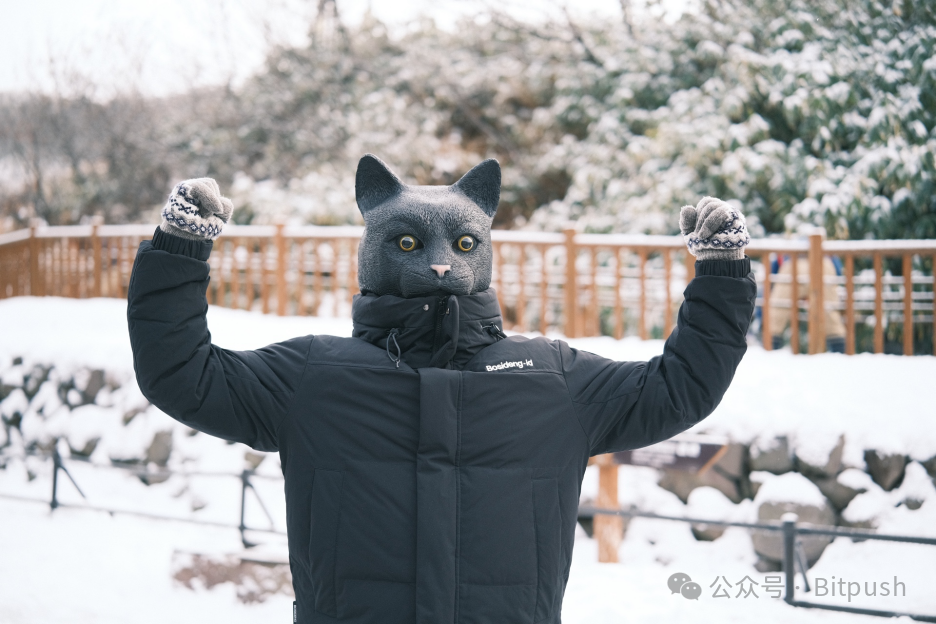
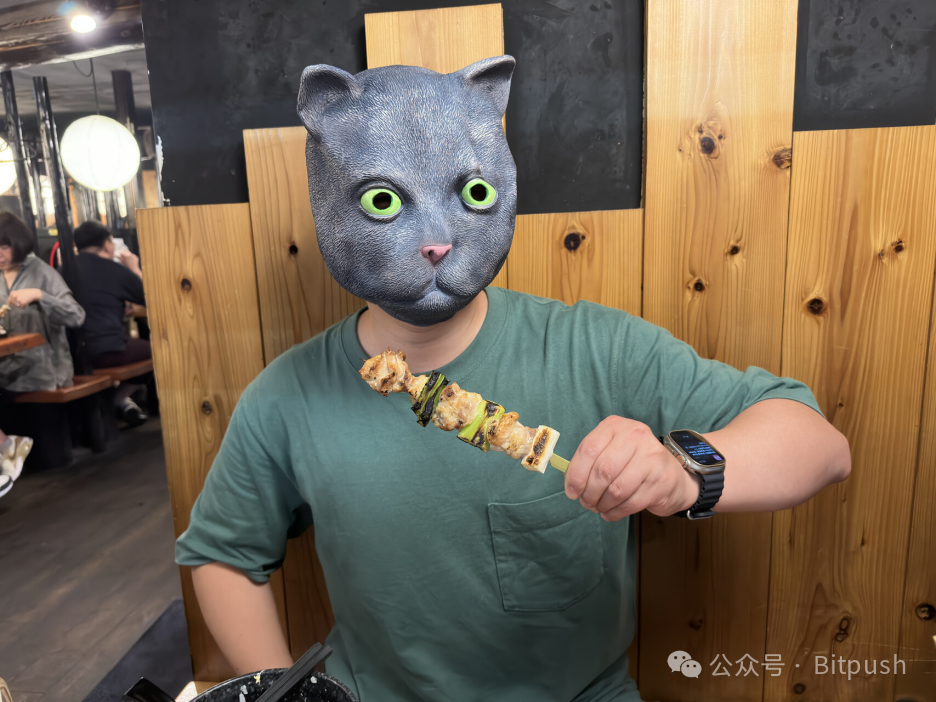
You may have heard of this "Mao Zong" who is active on Chinese Twitter with a cat head image. He uses a cat head mask as his logo and speaks in a humorous and sarcastic style. He says, "Black Osaka is my profession" and calls himself a "seaweed-level financial practitioner." But his real identity is the CEO of Keihan Jugyo Co., Ltd., a creative Japanese real estate startup.
In this article, we will delve into the world of Mr. Mao and learn how this rigorous entrepreneur, who wears a cat mask, curses people from Osaka, but actually delivers coins and houses to customers, sells Japanese real estate to the cryptocurrency circle.
A native "cat boss" from the Lujiazui financial circle
As early as 2016, Mao Zong started investing in Bitcoin.
His major was finance, and he followed the "professional route" of studying for both undergraduate and graduate degrees. After graduation, he worked in banks, securities firms, and wealth management institutions, and became familiar with all the traditional financial practices.
He told BiTuesday: “In 2017, the cryptocurrency industry started to get hot, and I wanted to jump in, but no one paid attention to me.”
He submitted his resume to mainstream exchanges including Binance, ZB, Gate, etc. His background is from a French business school and his resume is in traditional finance, but he did not get a single offer in the cryptocurrency industry.
In the same year, the regulators issued an order to shut down all domestic exchanges, and the crypto industry quickly died down. He "missed" the first Crypto wave.
But this was just a small episode. At the same time, he had already started building his personal IP.
Mao Zong is not a one-person "entrepreneur", but a "passed down" one. The first generation of Mao Zong was a leader from Noah Wealth, and later by chance the account was passed to him.
Today, Mao Zong has a stable fan base on Twitter. His avatar is a custom-made cat head mask, which he started at a Halloween party while studying in France in 2015. It was not until 2017 that he decided to use it as a brand after he entered the banking system.
By chance in 2018, he learned about the opportunities in Japanese real estate - the Japanese housing market was not hot at that time, but he "saw the direction".
On January 3, 2020, Mao flew from Pudong Airport to Osaka to inspect business. At that time, a news report about Wuhan was being broadcast on the news. He thought it was a joke, but he never returned home. Covid "sealed" him in Japan, but it also opened another door.
Crypto + Real Estate: A Pragmatic Path
An interesting trend seems to have emerged in recent years: many people do not actually have an "urgent need" to buy a house, but rather want to "enrich" their lives based on comprehensive considerations such as asset allocation, identity, and lifestyle optimization.
Some want to send their children to study in Japan, so they buy a house first; some already live in Southeast Asia or the Middle East and think that the cost of living in Japan is reasonable and the safety factor is high.
According to Tencent News, data shows that the number of Chinese buying houses in Japan in 2022 increased by 50% compared to 2021. From October to November, it soared by 120% in just one month, and Chinese accounted for 80% of foreign home buyers in Tokyo.
Among them, there are also many people who have made money in the crypto circle and are eager to convert their assets into "visible and tangible" physical assets. They do not understand the Japanese real estate process and cannot find suitable intermediaries.
Mao, who not only understands the language of the crypto community but also has a financial background and is in Japan, has grasped this demand: Japanese real estate is relatively stable, has considerable returns, and has a clear legal structure, making it an ideal landing place for crypto funds. Buying a house with digital currency has since become a realistic option.
That's what he's good at.
Mr. Mao said that he was not the first person to do this business, but he was the first person to systematize the output process: "In 2018, some people used digital currency to buy houses, but the first Chinese guide was written by us."
His blog post "A Practical Guide to Trading Japanese Real Estate with Cryptocurrency" is almost textbook-level, clearly describing everything from currency exchange paths and payment methods to possible pitfalls.
He also shared a real case:
“Back then, Koreans used UST to buy houses, but LUNA collapsed and all defaulted.”
Having seen the craziness of the crypto industry, he is extremely cautious and only does one-on-one real estate transactions. In the crypto industry where trust is extremely valuable, he has won a good reputation through solid delivery.
According to Mr. Mao, digital currency trading of Japanese real estate has several significant advantages:
- Convenient cross-border payment: no need to go through traditional banks, fast transaction speed and simple procedures;
- Low tax sensitivity: Different countries have different definitions of Crypto Assets, which is more flexible in some cases;
- Natural market match: Most crypto investors are from the younger generation, who have unique preferences for asset allocation and lifestyle.
In those years, when people in the industry were crazy about the myth of getting rich quickly through DeFi and NFT, Mr. Mao had quietly turned "exchanging USDT for Tokyo real estate" into a business.
How to get customers? A person who has been writing on Twitter for more than 10 years has become his own best advertisement
"90% of my customers come from Twitter." - Cat 2022
In the early days, Mao Zong also used the "traditional routine" marketing method, writing public accounts, talking about practical information, bragging about Tokyo, and talking about policies...
“But it’s too curly. Everyone writes the same thing.”
Until one day, he took a photo of an ATM machine full of garbage in Namba, Osaka and posted it on Twitter with the caption "This is Osaka", and it went viral.
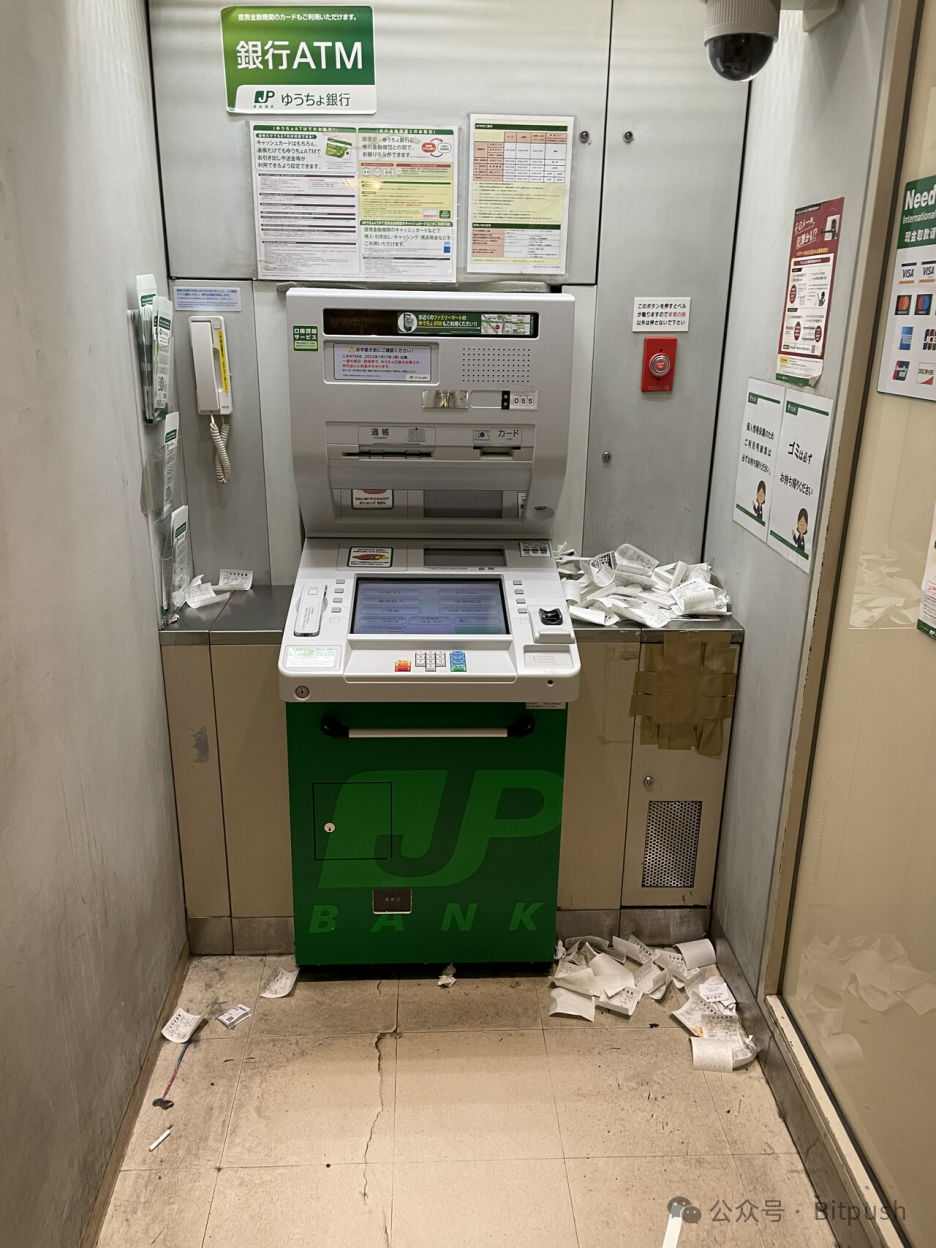
"My followers increased by more than 10,000. At that moment, I knew I had found the secret to traffic."
This unintentional act made him realize that the market is not short of praise for Japan, but lacks someone who dares to speak the "opposite side" and the "truth". From then on, Mao Zong started the marketing strategy of "professionally blackening Osaka people", which also made him the most alternative real estate agent in the crypto circle.
In an era of information overload, you can’t talk about finance as an ordinary person, nor can you talk about Japanese real estate as an ordinary agent. In this era of serious homogeneity, you either have to be interesting or no one will remember you.
The slogans such as "I bought a house for my cat" and "I was so poor that I only had 320,000 yuan left for the mortgage" came from his real life.
In 2018, Mao's family assets exceeded 30 million, but they were burdened with a large amount of mortgage loans. In order to relieve the pressure on his parents, he took on 95% of the loan, and now only has 320,000 left.
Mr. Mao also admitted that this entrepreneurial road is not easy to take. In the early days, the handling fee was as high as 12%, and the clearing channel was almost monopolized by Koreans. In 2022, the LUNA incident broke out, and the UST used by a large number of customers returned to zero, and the clearing channel was interrupted for half a year.
"The most difficult thing is not the process, but trust." Crypto people are naturally wary of agents, and traditional Japanese landlords are also skeptical of cryptocurrency investors, resulting in a large number of properties that cannot be matched.
He and his team eventually built their own set of processes step by step, not aiming to be the fastest, but to be the one that lasts the longest.
Mr. Mao’s clients are mostly cryptocurrency investors born in the 1980s and 1990s. They are relatively young and have strong financial strength, but they cannot find real estate companies willing to take their orders because Japanese real estate practitioners are generally older and do not understand cryptocurrency operations. Mr. Mao is one of the few people who understands both cryptocurrency and real estate.
His company is also in contact with some local developers in Japan, hoping that there will be more properties that "accept cryptocurrency payments" in the future.
Don't rush to chase the trend, just hope to keep your feet on the ground
Talking about the hot RWA (Real World Assets) track, Mao Zong was very sober: "This industry is too early, like the fund industry 100 years ago. There is no underlying asset protection, no legal support, and most of them are still speculating on concepts."
He is not in a hurry to issue coins or put real estate on the chain. He just hopes to get the process of "handing over coins in one hand and real estate in the other" running smoothly first.
"Japanese real estate is still using fax to handle procedures. Talking about automatic delivery through smart contracts? That's a very distant future."
But he still believes that the direction is right. In the future, real estate transactions will become more and more platform-based and digitalized. Even if they are not on the chain, they will be driven forward by digital asset holders.
Mr. Mao's ultimate goal is to turn "buying a house in the cryptocurrency circle" into a standardized service. He is not in a hurry to expand the scale, but prefers to serve each customer clearly, verify the model clearly, and then see if it can be replicated. "As for whether RWA can be done in the future, it depends on the legislation of RWA worldwide. We do not rule out small-scale testing, but it is still very far from the existing Japanese law to pass RWA."
Conclusion
This is not a myth of getting rich overnight, but a story about finding a pragmatic path between traditional and new finance. Mao always uses his intuition about the market and his understanding of human nature to find a position - and then sit firmly in it. When the tide recedes, perhaps it is these "infrastructure builders" without gorgeous narratives who ultimately define the true value of the crypto economy.