
Editor/ far@Centreless
X (Twitter) @Tocentreles
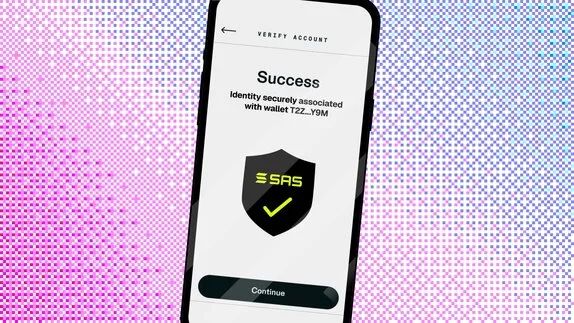
On May 24, Solana published a blog on its official website stating that the Solana Identity Group and the Solana Foundation announced that the Solana Authentication Service (SAS) is now live on the Solana mainnet - an open, permissionless, verifiable credential protocol. SAS allows trusted issuers to associate off-chain information (such as KYC checks, geolocation qualifications, Clip membership, or certification status) with a user's wallet. These certifications are signed, verifiable, and reusable between applications without exposing sensitive data on the chain or repeating verification steps.
By providing a neutral and permissionless proof layer, SAS enables compliance, access control, reputation systems, and programmable identity across the Solana ecosystem. This results in a better, more convenient experience for end users and builders.
Attestation Service and Oracle are both mechanisms for bringing off-chain information to the chain, but their positioning, purpose, trust model and working methods are obviously different. Let's make a system comparison:
✅ A table to understand Attestation Service vs Oracle:
project | Attestation Service | Oracle |
|---|---|---|
Main Application | Transform off-chain "subjective or static information such as identity, status, behavior, etc." into on-chain credentials | Feeding “objective, dynamic data” off-chain to the chain (such as price, weather, etc.) |
Data Types | Subjective/event type: whether the person is over 18 years old, whether the person has passed the verification, whether the person is a member of a certain organization | Numerical/factual: BTC price, off-chain API data, weather data |
Data Structure | Reusable, wallet-bound certification “claim” | Data used in real-time transactions (such as price feeds) |
Trust Source | A "trusted publisher" (such as a KYC agency, DAO, or device manufacturer) signs the certificate | From multiple data sources, aggregated and published by the oracle network |
Update frequency | Not frequent, often generated once and valid for a long time | High-frequency updates, such as updating prices every minute |
Is it composable and reusable? | Yes, one authentication can be reused for multiple applications (such as KYC certification for a wallet) | No, price data is mainly an input to a transaction |
Handling of privacy | Strong privacy protection, only verifying "whether it is passed" without disclosing detailed information | Usually does not involve user identity privacy |
Representative projects/technologies | Solana Attestation Service, Ethereum Attestation Service (EAS) | Chainlink, Pyth, Band Protocol |
🔍 Let’s take a comparative example
Attestation Service Use Case: You completed "real-name authentication" through a Web3 platform and obtained an on-chain certification stamp of "I am an adult". This stamp is stored in your wallet and can be verified by any dApp in the future without you having to resubmit your ID every time. Oracle Use Case: A DeFi protocol needs to know the current price of ETH to determine liquidation conditions. It reads the real-time ETH/USD price through an oracle (such as Chainlink). 🔑 The core difference can be summarized in one sentence:
The oracle is a "data feeding" mechanism that focuses on "objective facts" outside the chain; while the Attestation Service is a "authentication identity or status" mechanism that focuses on "subjective or conditional trust" outside the chain.
The two are complementary rather than substitutes.