Author: Nancy, PANews
An ugly and cute little monster Labubu quietly stood in the window, and outside the glass was a long queue of fans queuing up to buy it, just for the surprise that it might open a hidden model. Similarly, a string of digital images was cast into NFT on the chain. The real object could not be seen, but it was sold out in just a few minutes.
One is real and tangible, the other exists only on the screen. These two IP forms seem to exist in two different worlds, the real and the virtual. However, in the consumer era driven by emotions, they grow, explode and recreate myths with surprisingly similar logic. Behind this is the medium of community interaction, the projection of individual identity, and the cultural and emotional container spawned by the IP era.
Emotional resonance: connecting more than just products
The charm of Labubu is far more than its furry appearance and unique design. It is an extension of the user's inner world, or the hidden monster image in the childhood graffiti book, reflecting the lonely but complex self deep in the heart. This seemingly simple doll actually creates real emotional companionship for users and fills people's desire for belonging and love - just as psychologist Maslow pointed out, "the need for belonging and love."
At the same time, Labubu satisfies the psychological phenomenon of collecting. In psychology, collecting behavior is seen as a manifestation of a sense of control. When users gain a sense of accomplishment by constantly accumulating and displaying Labubu dolls, this sense of ownership in turn enhances self-identity and inner satisfaction. Behind each doll, there is a unique story: whether it is the excitement of queuing up late at night to buy it, or the emotional resonance when sharing the collection with friends, these moments have precipitated into precious emotional treasures.
NFT also inspires a deep sense of group belonging and meets people's social needs for acceptance and recognition. What players collect is no longer just a string of cold codes, or a symbol of faith that touches the crypto world for the first time, or a memory forged by like-minded people.
The emotional resonance based on a sense of ownership and belonging not only meets the inherent needs of users, but also serves as an invisible bond between users and brands. At the same time, this emotional stimulation opens up a new growth path for brands and creators. By deepening the emotional experience of users and building multi-dimensional cultural identity and community belonging, users' long-term loyalty and continuous participation can be achieved.
IP Narrative: Not Just an Asset, But Also a Container for Stories
In the current wave of cultural consumption, a character is never just an image. The core of a truly viable IP lies in the ability to build a narrative universe that people are willing to immerse themselves in.
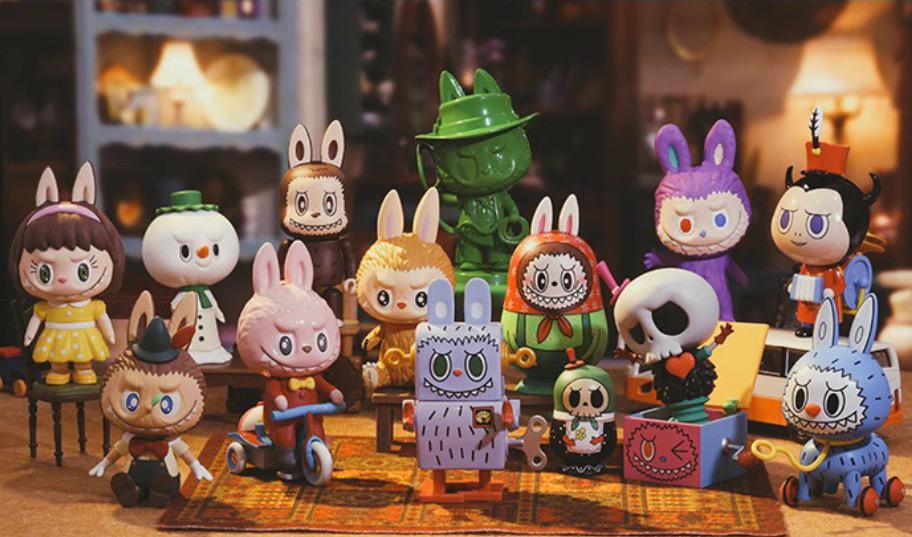
Labubu is such a typical case. As a core member of The Monsters series, Labubu may have been just a big-eyed monster with pointed ears at first, but after gradually developing a personality, partners, and growth trajectory, it grew from a doll to a character, weaving a diverse and rich virtual network with other characters in the same series such as ZIMOMO and SkullPanda. The construction of this universe relies on continuous content output, scenario-based immersive experience layout, and deep user emotional participation mechanism, which also allows Labubu's image to be extended to various physical carriers such as offline theme parks, limited plush toys, blind boxes, and building blocks.
This idea of building a narrative IP is also evident in the NFT field. NFT projects have long realized that what can really impress users and maintain the community is not a single scarcity, but the story behind the character. For example, BAYC continues to expand the boundaries of its "Ape Universe" by launching multiple products such as the metaverse, trendy clothing, games, and music; Azuki enriches the user's touchpoint experience with physical comics and trendy peripherals; Pudgy Penguins breaks through the Web3 circle and enters the traditional retail scene with children's books and offline toys, emphasizing the cute healing attributes of penguin characters and the emotional narrative of accompanying growth. The common point of these cases is that they have all achieved a leap from visual symbols to cultural roles, making NFT a role-driven narrative medium, rather than just an on-chain asset.
From this perspective, IP universes with long-term narrative structures and continuous content production capabilities have the real cultural potential to transcend time and reach a wider audience.
Blind box gameplay: the game between scarcity and surprise
The blind box mechanism is a psychological game based on probability. Through artificially created uncertainty, the product is separated from simple functional attributes and given an emotional value and trading potential. Probability creates scarcity, scarcity stimulates emotions, and emotions ultimately drive the formation of market value. The core of this mechanism is to make players obsessed with "next time" through repeated attempts. In psychology, this psychological state is called "intermittent reinforcement."
Labubu combines the innovative gameplay of blind box mechanism to give consumers a sense of surprise and challenge. The hidden models push ordinary commodities into the category of collectibles and even assets. Every time you open a box, it is not just an emotional consumption, but also a concrete probability game emotion. The NFT field has also introduced similar gameplay, writing randomness and scarcity on the chain in the form of smart contracts. Each Mint process is essentially a digital card draw, and the algorithm determines the combination of images, backgrounds, and features, and the rarity almost replicates the logic of hidden models in physical blind boxes.
More importantly, when a hidden Labubu is unpacked or a rare NFT is revealed, the dissemination and emotion amplification mechanism on social networks is activated. From posting pictures on WeChat Moments to bidding in the secondary market, scarcity is quickly priced by the market and converted into a hard currency.
Premium: Market pricing of FOMO sentiment
The price of a hidden Labubu has soared to tens of thousands of yuan, and the price of an NFT with rare attributes has soared to millions or even tens of millions of dollars. Behind these astonishing figures, these are not simple price behaviors, but the marketization of emotional value.
FOMO is one of the core emotions that drives premiums. When buyers see others selling at high prices, they are often tempted to rush in. At this point, many buyers no longer make judgments based solely on the value of the work itself, but instead make their bids based on the psychological expectation of seizing the first opportunity or not being abandoned by the market, thus forming a positive feedback loop of prices and further pushing up premiums. This behavior is actually a psychological bet on possible future value. Not only that, market consensus is also strengthened by factors such as rising transaction prices and social media discussions, which in turn drives prices to continue to rise.
Some speculators/resellers and even officials are well aware of the FOMO psychology and will intentionally create market hotspots, such as manipulating prices, repurchases or limited releases, hype and publicity, and creating scarcity to stimulate buying desire, forming a bubble phenomenon that causes price surges in the short term.
Although sentiment drives huge premiums and market activity, it also comes with extremely high volatility risks. Once sentiment reverses, prices may collapse quickly, leading to panic selling in the market.
Celebrity Effect and Social Identity Symbols
In this era where emotional value is commercialized, physical toys and NFTs such as Labubu not only exist as collectibles, but also become a new social language and identity projection carrier. The endorsement of celebrities and the emotional resonance of the public have jointly constructed the symbolic status of trendy toys and NFTs in contemporary culture, making them transcend their original aesthetics, functions and collection attributes, and further evolve into cultural symbols that highlight personality, interest and social capital.
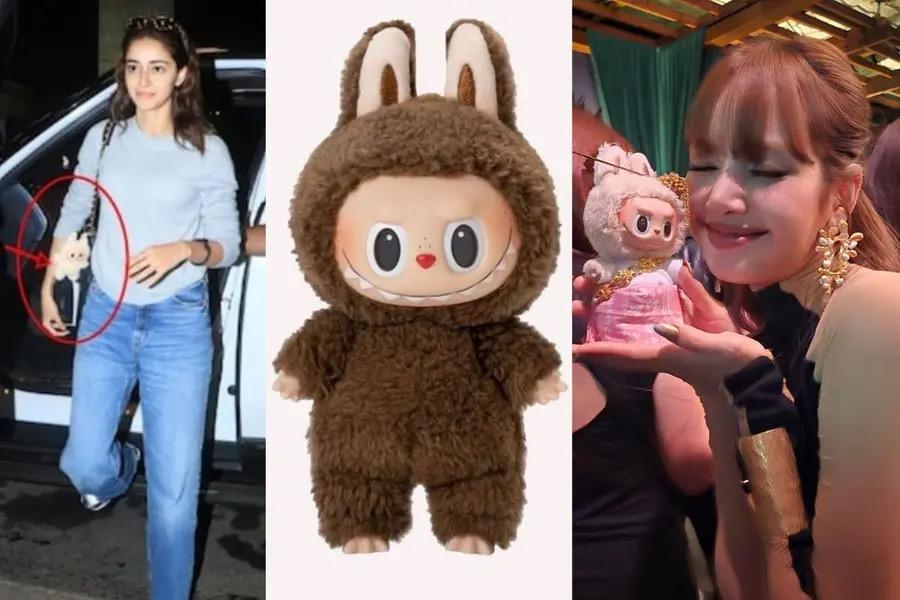
Whether it is Labubu becoming a symbol of global pop culture under the frequent "planting" of stars such as Rihanna, Dua Lipa, and BLACKPINK's Lisa and Rosé, or NFT gradually moving from crypto subculture to mainstream discourse system after the participation of celebrities such as Takashi Murakami, Snoop Dogg, Eminem, Justin Bieber and Jay Chou, these phenomena all show that celebrities, as super nodes for the dissemination of these IP cultures, their behaviors naturally have the effect of aesthetic guidance and consumption demonstration, and often quickly enhance the cultural value of a certain trendy toy or NFT project.
In the era of social media, these collections have also become cultural masks to be seen. By showing off a hidden or celebrity-like Labubu, or setting a rare NFT as a Twitter/X avatar, users are not only showing off their collections, but also conveying their own aesthetic tastes, values, and even economic strength. In a sense, this is a social behavior and identity statement made with images, assets, and symbols.
Community is productivity: IP’s narrative engine and cultural flywheel
The growth path of brands is undergoing a fundamental change. In the past, advertising was the main battlefield for brand expansion, and high-frequency exposure and budget stacking were almost equivalent to a monopoly on user attention. Now this formula is failing, and the power that can really penetrate the noise and touch people's hearts often comes from the community.
Labubu's breakthrough is not due to overwhelming commercial investment, but a group of ordinary users who love doll culture. They continuously produce UGC content through daily behaviors such as "showing off their dolls", hand-made modifications, producing emoticons, taking photos and checking in. These real and warm contents spread on social media, which not only lowers the threshold for dissemination, but also easily stimulates emotional resonance, allowing IP to grow naturally in social networks.
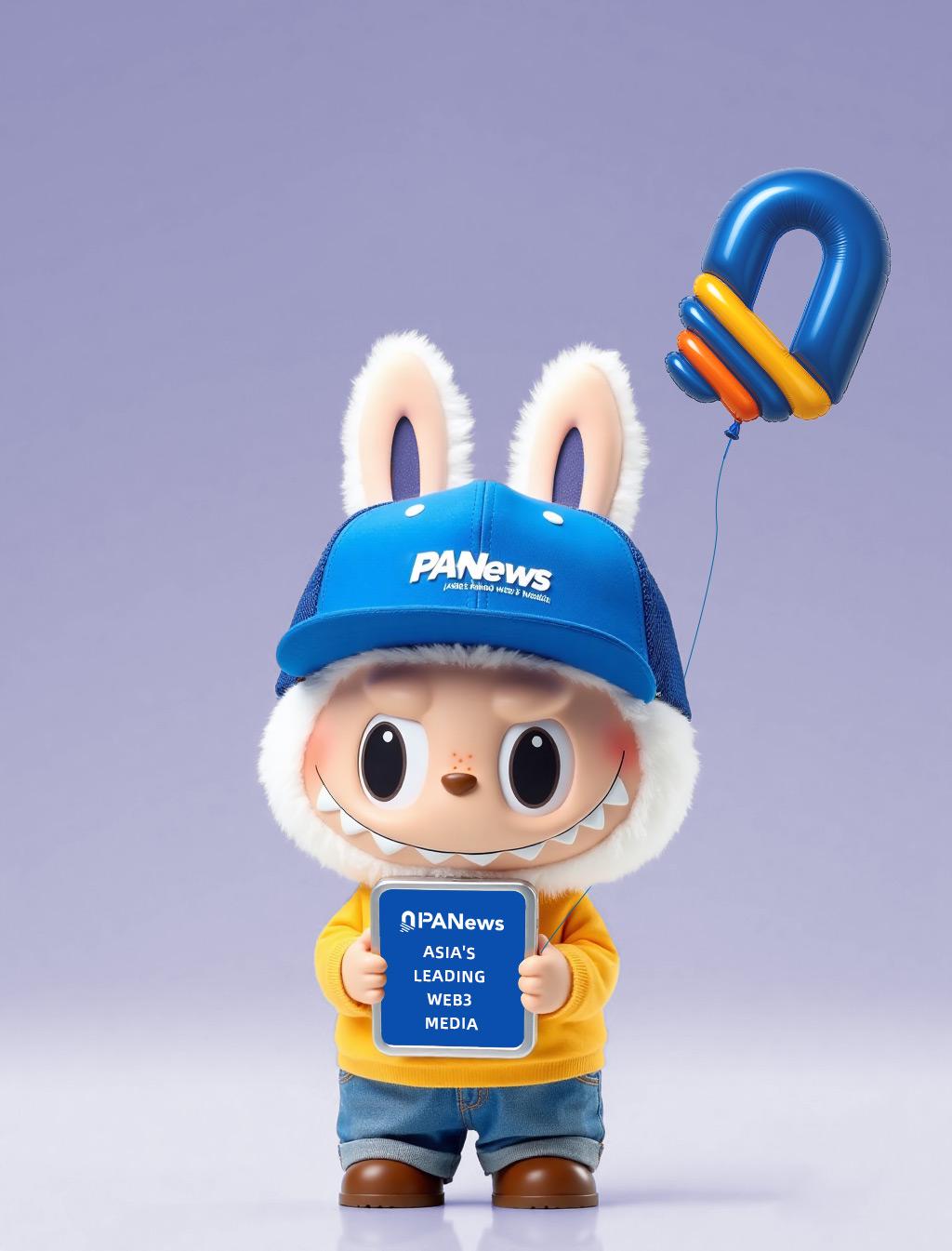
PANews Second Creation Labubu
The same is true for the NFT world. In the process of going mainstream, NFT projects such as CryptoPunks, BAYC, Pudgy Penguins and Azuki have achieved cultural spillover more through the spontaneous creation of holders. If the scarcity of NFTs gives symbolic capital to participation, then community creation gives these IPs continued vitality.
This is not only an innovation in communication logic, but also a transfer of narrative rights. In such a system, ownership is not just about the ownership of assets in the physical sense, but also about the right to participate in and shape the brand narrative. Every piece of copy and every photo is giving the brand a new semantic level. Furthermore, the community itself has become a kind of productivity, and it is also the source of IP narrative, the incubator of creativity, and the amplifier of cultural resonance.
Aesthetics drive: from visual style to emotional communication
The popularity of trendy toys is inseparable from its visual language of "cute but weird" and "rebellious and healing". This seemingly contradictory but highly integrated aesthetic quality injects a strong personality into the work and accurately hits the emotional context and inner world of contemporary young people.
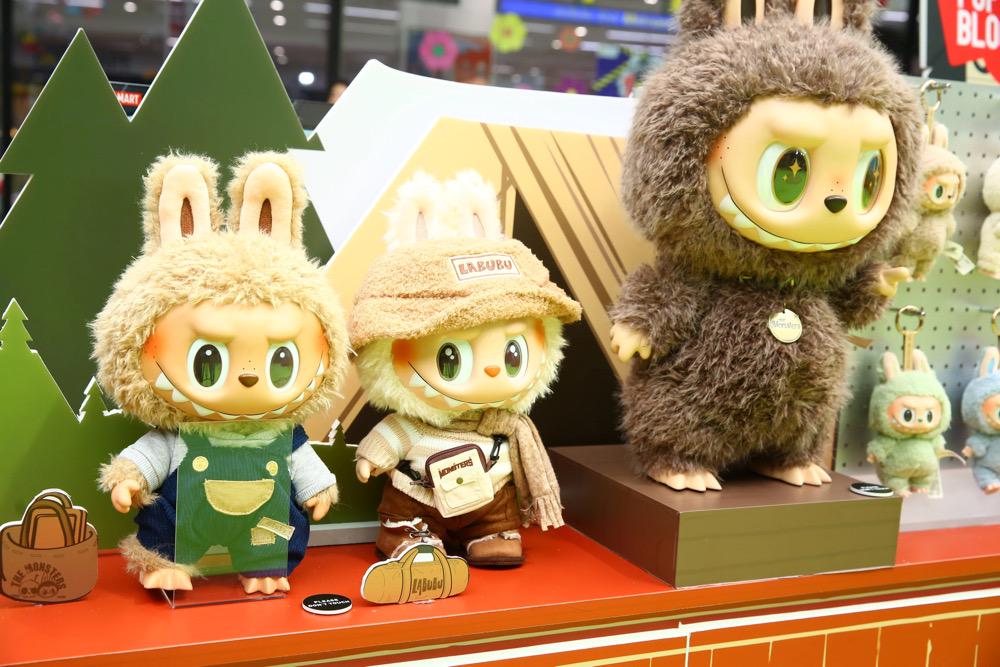
Labubu, with its contrasting aesthetics of grotesqueness and cuteness, brings a strong visual impact and fresh emotions, becoming a cultural symbol of self-identification for Generation Z. This visual style is not only an aesthetic choice, but also a narrative strategy. Labubu's image is both alienated and friendly, marginal and warm. This contradictory and complex aesthetic expression aptly reflects the true portrayal of Generation Z in identity anxiety, emotional internal consumption and social alienation. At the same time, Labubu breaks the previous trendy play aesthetic system dominated by kawaii sweetness, injecting a more angular expression dimension into trendy culture.
This aesthetic logic has also been interpreted in the NFT world. As a new visual species in crypto culture, the NFT aesthetic language has also evolved beyond simply being good-looking or cool, and has evolved into a cultural resonance. For example. CryptoPunks pioneered the minimalist pixel style, representing geek spirit and digital fundamentalism; Azuki combines Japanese comic grammar with street trends to build a new generation of identity in the context of Asian culture and globalization; Bored Ape Yacht Club uses a street vision that combines cartooning and absurdity to satirize elite culture and traditional authority; Pudgy Penguins conveys healing emotional comfort through round and cute character images... These styles are not randomly stacked, but concentrated expressions around identity, emotional projection and cultural belonging.
Images become the entrance to the spiritual space, and aesthetic style is the social language. In the final analysis, whether it is physical trendy toys like Labubu or NFT works on the chain, what really touches people's hearts is not just the shape and style, but the ability to implant emotional resonance in the vision with color, texture and style, thereby establishing a deep connection that goes beyond the attributes of commodities.