1. Project Introduction
1. Basic information of the project
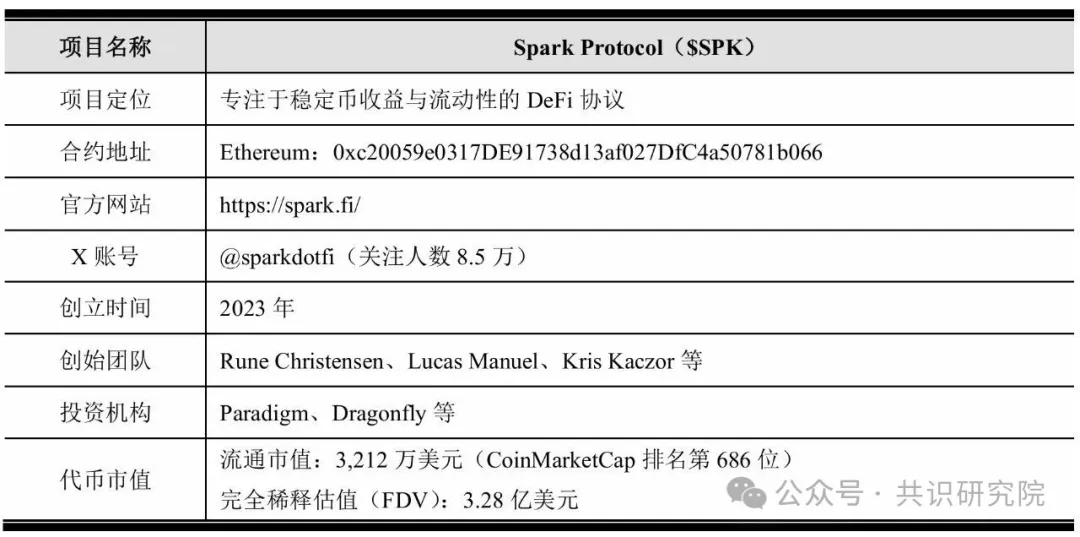
Spark Protocol is a decentralized finance (DeFi) protocol focused on stablecoin yield and liquidity. It was initiated by the MakerDAO (now renamed Sky) ecosystem and built by the Phoenix Labs team that focuses on DeFi contract development. Spark's vision is to build a cross-chain, multi-asset scalable yield engine, intelligently deploying Sky's billions of dollars of stablecoin reserves to various DeFi, CeFi and real asset (RWA) opportunities, and providing stable returns to coin holders. The protocol has been deployed on multiple mainstream networks such as Ethereum, Arbitrum, Base, Optimism, Gnosis, etc., and the stablecoin liquidity currently managed has reached billions of dollars. Spark advocates user-friendly yield solutions, simplifies complex strategies, and makes the appreciation of crypto assets as simple as bank savings.
 Note : Data as of July 14 , 2025
2. Project development history
The development of Spark Protocol clearly reflects MakerDAO's strategic intention to evolve from a single stablecoin issuer to a complex, multi-layered financial ecosystem (Sky). Each step has been carefully planned to take advantage of existing advantages and accurately enter and reshape the DeFi lending market.
Key Milestones:
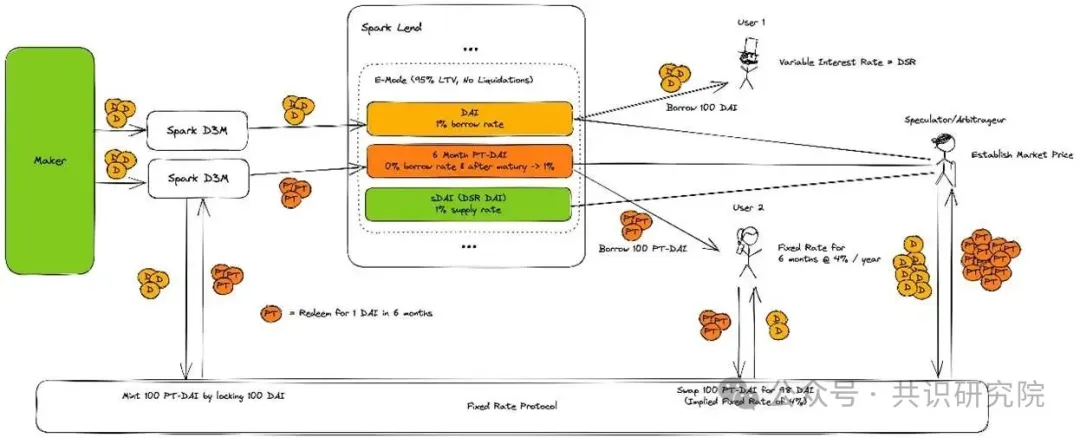
Ø May 2023: The protocol is officially launched: Spark Protocol, created by Phoenix Labs, the core development team incubated by MakerDAO, is officially launched on the Ethereum mainnet. In the early stage, the core function of the protocol is to use MakerDAO's direct deposit module (D3M) to provide an initial, price-competitive lending market for DAI. The direct goal of this move is to reduce the borrowing cost of DAI, increase its attractiveness relative to USDC and USDT, and recover part of the interest income that originally flowed to competitor protocols such as Aave and Compound.
Ø End of 2024: Strategic Transformation and the Rise of SLL: As the yields in the DeFi market generally decline, the “Real Yield” narrative emerges. Spark Protocol begins to strategically develop its “Spark Liquidity Layer” (SLL). The protocol is no longer content to be just a passive lending platform, but begins to actively allocate a large amount of funds in the pool to real-world assets (RWA) with more stable returns, such as tokenized US Treasury bonds. This marks Spark’s transformation from a pure DeFi protocol to a hybrid finance (HyFi) platform.
Ø Q1 2025: Multi-chain expansion and ecological integration: In order to capture a wider range of users and liquidity, Spark Protocol has begun to expand to Layer2 networks (such as Arbitrum, Base) and other public chains with the help of cross-chain technologies such as SkyLink and Circle's CCTP. At the same time, SLL began to actively integrate with other DeFi protocols (such as liquidity pledge derivatives protocols, yield aggregators, etc.), building a complex yield strategy matrix.
Ø June 12, 2025: TVL surges: Driven by the strong market expectation of the upcoming airdrop of the native token SPK, a large number of users flocked to Spark Protocol to participate in liquidity mining and points activities (such as Ignition, Overdrive). The total locked value (TVL) of the protocol rose sharply in a short period of time, once breaking through the $8.52 billion mark, fully demonstrating its strong market appeal and liquidity siphoning ability.
Ø June 17, 2025: SPK Token Genesis: The highly anticipated native governance token SPK is officially launched. Through retroactive airdrops to early users, liquidity providers, and community contributors, as well as simultaneous listings on leading centralized exchanges such as Binance, SPK quickly gained widespread market attention and liquidity.
3. Project strategic positioning
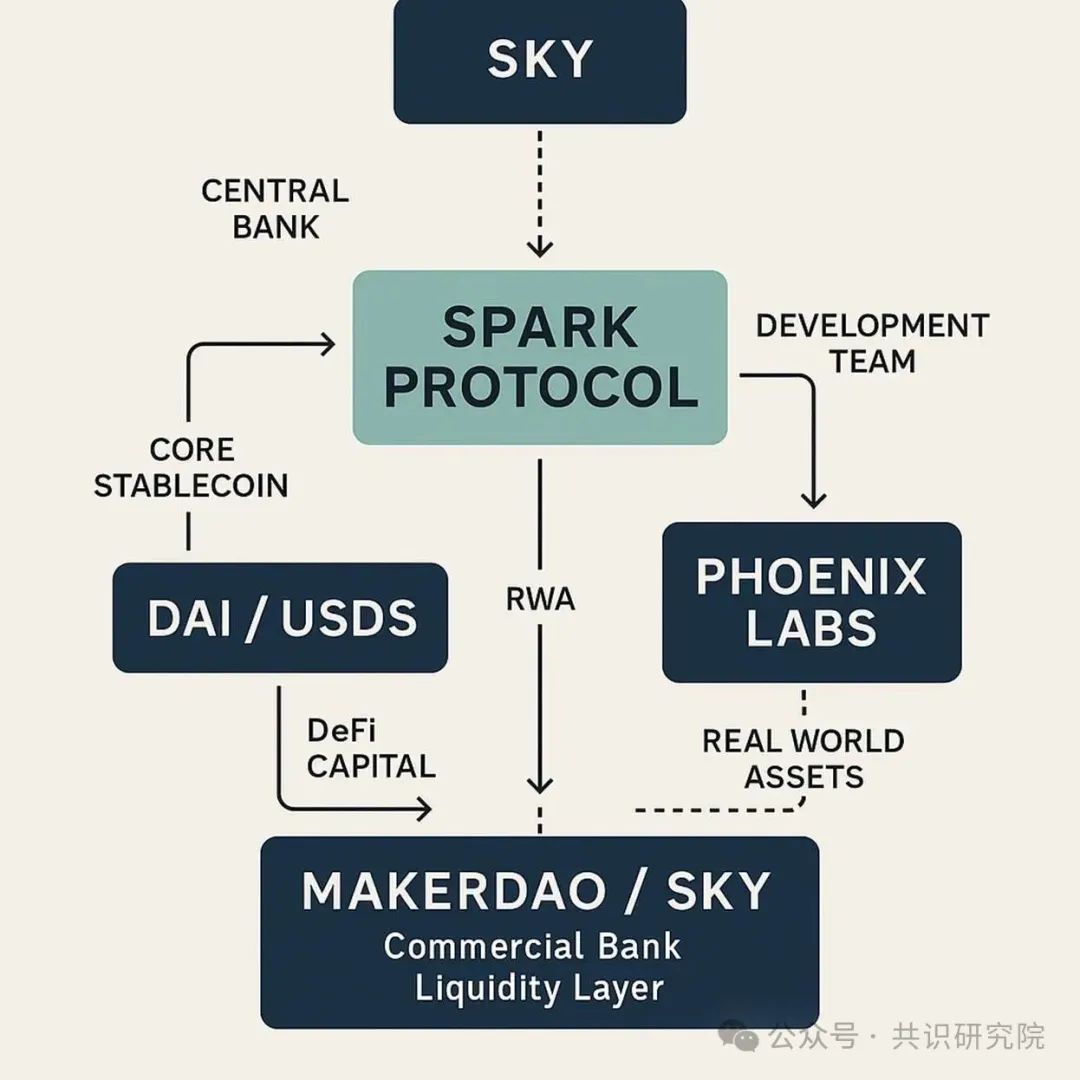
"Commercial Bank" of Sky Ecosystem: If Sky (MakerDAO), which has the right to mint coins, is regarded as the "central bank", then Spark Protocol plays the role of a "commercial bank". It is responsible for efficiently allocating liquidity (mainly USDS) within the Sky system to borrowers in the market and providing competitive returns to depositors.
The flagship product matrix includes:
Ø SparkLend: As the cornerstone of the protocol, this is a fully functional money market that allows users to supply (Lend) and borrow (Borrow) a variety of crypto assets in an over-collateralized manner. It supports variable interest rates and fixed interest rate lending for some assets to meet the risk preferences of different users.
Ø Spark Savings (sUSDS): This is an innovative savings solution. Users only need to deposit USDS into this module to automatically obtain the Sky Savings Rate (SSR). The sources of SSR income are extremely diverse, including not only SparkLend's own lending spreads, but more importantly, the stable income generated by the protocol investing in real-world assets (RWA) and other DeFi protocols through the Spark Liquidity Layer (SLL).
Ø Spark Liquidity Layer (SLL): This is the most strategic component of Spark Protocol. SLL aims to actively and efficiently deploy idle or inefficient liquidity in the protocol to multiple blockchain networks outside the Ethereum mainnet (such as Base, Arbitrum) and various high-yield DeFi protocols (such as Ethena, Morpho), thereby maximizing overall capital efficiency and returns.
4. Core Team Background
Spark's core team has been deeply engaged in the blockchain field for many years. It was not built from scratch by a startup team, but was born in the arms of MakerDAO, one of the most senior organizations in the DeFi field.
( 1 ) Incubator: MakerDAO/Sky Ecosystem
MakerDAO is an early proponent and practitioner of the DeFi concept and has been operating stably since 2017. As the incubator and major supporter of Spark Protocol, MakerDAO provides unparalleled resource advantages:
Ø Brand credibility: MakerDAO’s established reputation for security, stability, and decentralized governance provides a strong endorsement for Spark Protocol.
Ø Deep liquidity: Through mechanisms such as D3M, Spark can directly access MakerDAO’s multi-billion dollar balance sheet, obtaining initial liquidity that is difficult for other protocols to achieve.
Ø Strategic Guidance: Spark’s development path is closely linked to MakerDAO’s “Endgame Plan” and has received top-level strategic design and guidance from key figures such as MakerDAO founder Rune Christensen.
( 2 ) Development team: Phoenix Labs
Phoenix Labs is a core contributor team established within the MakerDAO community to perform specific development tasks. The team focuses on building user-oriented products for the Sky ecosystem, and Spark Protocol is its most important flagship project. The team members mainly include:
Ø Lucas Manuel (co-founder): Former technical director of Maple Finance, an institutional lending platform, responsible for designing and developing Maple's on-chain lending engine. He led the design of the cross-chain liquidity routing architecture in the Spark project, solving the problem of slippage control of funds in multi-network deployment. He holds a master's degree in financial engineering from University College London and began his career in the fixed income department of Morgan Stanley.
Ø Nadia (co-founder): A well-known growth strategy expert in the DeFi field, she has led MakerDAO's ecosystem growth plan, driving DAI's adoption rate on L2 networks such as Arbitrum and Optimism by 300%. In Spark, she is responsible for product design and market development, and built a fiat currency access channel connecting CeFi institutions and DeFi protocols.
Ø Kris Kaczor (Chief Engineer): Blockchain infrastructure expert, co-founder of Layer2 data analysis platform L2Beat. He led the multi-chain deployment implementation in Spark and developed a cross-chain state verification mechanism based on zero-knowledge proof to ensure the safe flow of funds between dozens of chains. He previously worked as a smart contract security auditor at ConsenSys.
2. Business Model
Spark Protocol's operating model can be understood as a "DeFi super bank", which integrates the deposit and loan business of commercial banks, the asset management business of investment banks, and some monetary policy transmission functions of central banks. The core of its business model is "low-cost liabilities + diversified and efficient asset allocation".
1. Core operating mechanism
(1) Privileged liquidity source (low-cost liabilities): This is the most fundamental asymmetric advantage of the Spark Protocol. Unlike protocols such as Aave and Compound that rely mainly on market user deposits (with higher costs on the liability side), Spark can obtain initial liquidity of up to billions of dollars directly from the Maker vault at a very low cost (i.e., the base interest rate of DAI) through MakerDAO's D3M (Direct Deposit DAI Module) mechanism. This is equivalent to having a "parent bank" that can attract deposits at low interest rates, giving it huge flexibility and competitive advantages in pricing assets.
(2) Innovative interest rate model: "Transparent Rates": The interest rates of traditional lending protocols are determined by market supply and demand, that is, the higher the capital utilization rate, the higher the interest rate. Although this floating model reflects market conditions, it is highly volatile and is not conducive to institutions and large traders who need stable capital costs. Spark Protocol has introduced a "transparent interest rate" mechanism for its core asset USDS. This interest rate is not directly determined by market utilization, but can be directly set by Sky community governance (i.e., voting by SPK and MKR holders). This mechanism provides borrowers with a high degree of interest rate predictability, making it one of the most attractive stablecoin lending platforms on the market.
(3) Diversified sources of income (efficient asset allocation): Spark Protocol’s income is not limited to the interest rate spread within the SparkLend market, but through its powerful Spark Liquidity Layer (SLL), it proactively builds a diversified income combination:
Ø Traditional lending spread: The difference between the borrowing rate and deposit rate of various assets in SparkLend’s money market, which is its basic source of income.
Ø Real World Asset (RWA) Investment: SLL invests a large amount of idle USDS in the pool into tokenized real-world assets with low risk and stable returns. The most typical example is the cooperation with BlackRock to invest its funds in the BUIDL fund to capture the yield of US Treasury bonds. This part of the income is stable and has a low correlation with the volatility of the crypto market, providing a solid income foundation for the protocol.
Ø Cross-protocol/cross-chain strategy deployment: SLL plays the role of an "on-chain hedge fund". It uses cross-chain bridges and liquidity networks to efficiently deploy capital to other high-yield DeFi protocols. For example, participate in Ethena's "Delta Neutral" strategy to earn sUSDe income, or conduct liquidity mining and provide liquidity in protocols such as Morpho and Curve.
Ø Institutional and CeFi lending: By cooperating with compliant CeFi platforms such as Coinbase Prime and Maple Finance, Spark lends part of its funds to institutional traders and market makers in an over-collateralized manner, enters the over-the-counter lending market of cryptocurrencies, and obtains wholesale-level lending interest.
2. Closed-loop business model
Spark's business model forms a powerful positive flywheel:
Ø Get deep liquidity at low cost with D3M.
Ø Through SLL, liquidity is allocated to RWA and other high-yield strategies to generate stable and substantial “real returns”.
Ø Feed this part of the profit back to USDS deposit users (through sUSDS's SSR), providing the most attractive stablecoin deposit interest rate on the market.
Ø High deposit rates attract more external USDS inflows, further deepening the liquidity moat of the protocol.
Ø Deep liquidity and predictable borrowing rates attract a large number of high-quality borrowers and increase the protocol's interest rate spread income.
Ø The whole process is repeated over and over again, continuously enhancing the network effect of USDS and the market position of Spark Protocol.
3. Ecosystem construction
Spark Protocol is not an isolated application, but is designed to be the first and most important "Star" (i.e. SubDAO) in the Sky ecosystem (i.e. the final form of the MakerDAO Endgame plan). Its ecological construction revolves entirely around one core goal: to make USDS the "ultimate currency" in the DeFi world.
As shown in the figure below, Spark is at the hub of the entire Sky ecosystem, connecting the “central bank” (Sky/MakerDAO) and the vast majority of DeFi market users.
Core role in the ecosystem:
Ø USDS liquidity engine: Spark is the main liquidity outlet for USDS. All newly minted or idle USDS in the Maker vault can be efficiently injected into Spark through D3M, and then distributed to the entire DeFi market by Spark. This ensures that USDS has a reliable and deep lending market to support it wherever it is.
Ø Implementer of Sky Savings Rate (SSR): SSR is Sky's core financial product to attract users to hold USDS. Spark is the main generator of SSR income. Through its diversified investment strategies (RWA, cross-protocol deployment, etc.), Spark provides SSR with a stable and above-market average income source, making holding USDS itself a profitable investment behavior.
Ø Bridgehead of multi-chain strategy: As the DeFi world develops towards a multi-chain landscape, the dominance of a single chain is no longer sufficient to support a world-class stablecoin. Spark uses advanced cross-chain infrastructure such as SkyLink and CCTP to act as the "vanguard" for USDS to expand to emerging ecosystems such as Arbitrum, Base, and Solana. By deploying the SparkLend market on these chains, it quickly established currency markets and application scenarios for USDS in the new world.
Ø Open and integrated connectors: Spark's ecosystem is open. Its SLL constantly seeks to integrate with the most innovative protocols in the DeFi field, whether it is Ethena's synthetic dollar or Morpho's peer-to-pool lending optimization. This strategy allows Spark to not only capture revenue opportunities from external protocols, but also indirectly incorporate the users and liquidity of these protocols into Sky's ecosystem.
Ø User incentives and community binding: In order to drive the cold start and continuous growth of the ecosystem, Spark has designed a sophisticated incentive system. For example, points activities such as "Ignition" and "Overdrive" reward users for various interactive behaviors within the ecosystem (deposits, borrowing, recommending new users, etc.) by issuing Spark Points. These points are ultimately linked to the airdrop of SPK tokens, thereby deeply binding early core users and cultivating an active and loyal community. This model has proven to be an effective means of building a strong network effect in the DeFi field.
4. $ SPK Token Economic Model
$SPK is the native token of Spark Protocol, and its design concept deeply reflects MakerDAO's pursuit of long-termism and sustainable development. Unlike many projects that tend to use short-term high incentives in exchange for false prosperity, SPK's token economics aims to cultivate a community that grows with the protocol and truly owns it through a smooth, long-term release mechanism.
SPK total supply: 10,000,000,000 (10 billion) pieces, minted once at the creation. Core functions include:
Ø Governance: SPK is the only credential for participating in Spark Protocol governance. Holders can vote on key decisions of the protocol, including but not limited to: listing new assets, adjusting risk parameters (such as collateral ratio, liquidation threshold), setting or adjusting "transparent interest rates", determining SLL's funding allocation strategy, and managing the use of ecosystem funds.
Ø Staking: In future plans, SPK will introduce a staking module. Users can participate in the protocol's security mechanism (similar to Aave's Safety Module) by staking SPK, and serve as the last line of defense when a shortage occurs in the protocol. In return, the staker will receive a portion of the protocol's revenue or additional SPK rewards (in the form of Spark Points, etc.).
The initial circulation of SPK is approximately 1.7 billion, accounting for 17% of the total supply, mainly from initial airdrops and liquidity incentives.
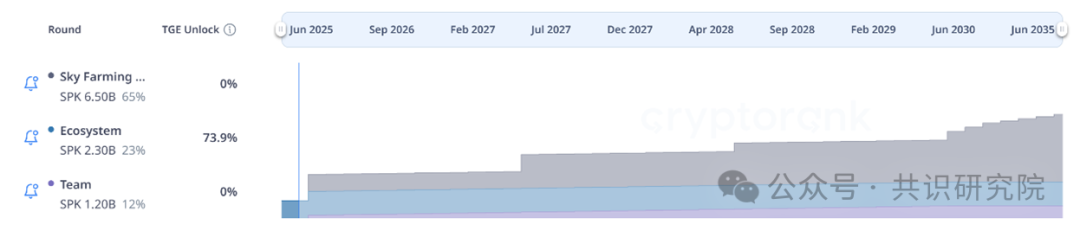
The biggest feature of SPK's token distribution model is that the vast majority of tokens (65%) are reserved for long-term community incentive programs.
Detailed explanation of token distribution structure:
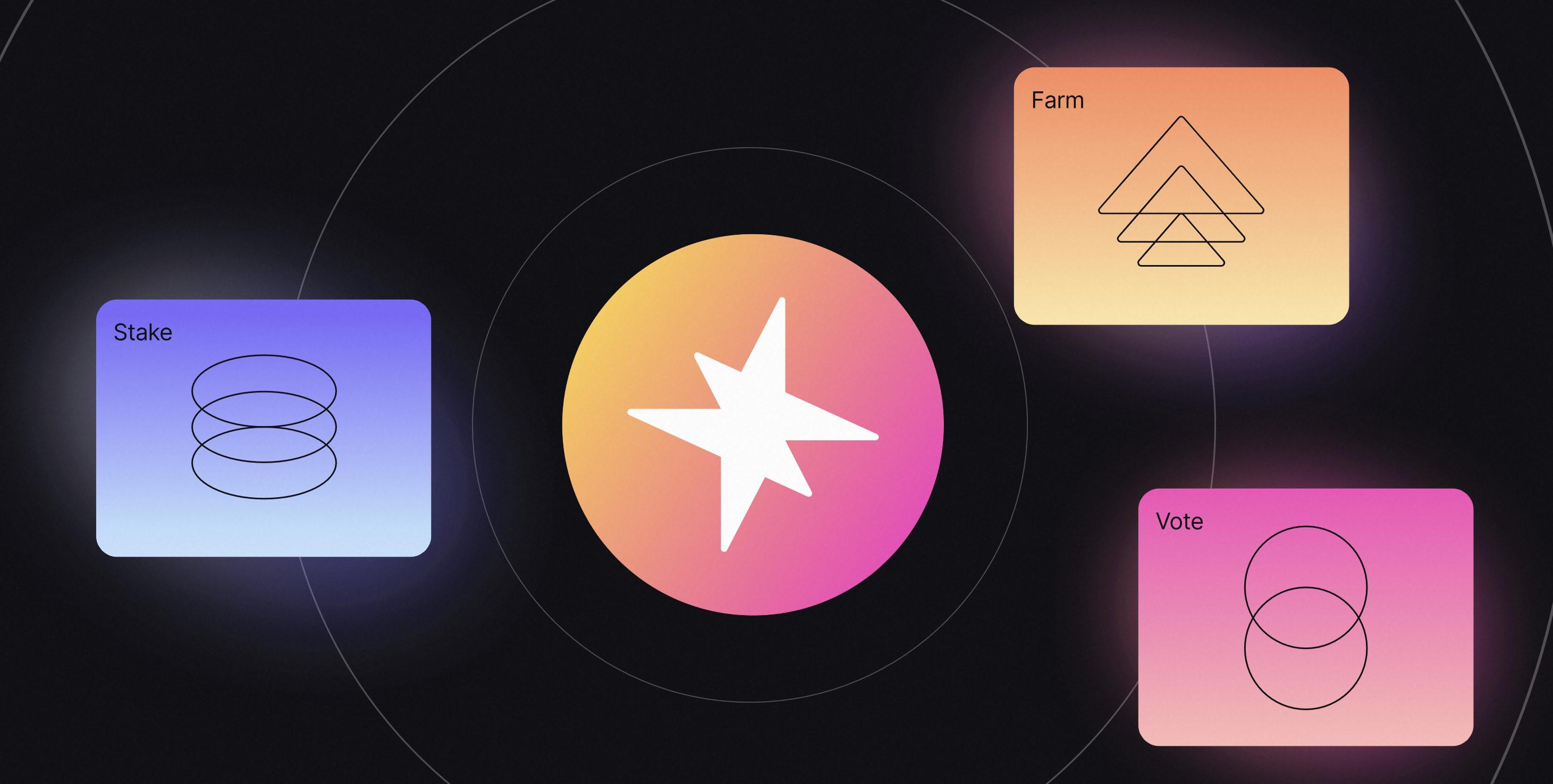
Ø 65% - Sky Farming: This is the core of the SPK token economic model. This part of the token will be used as a liquidity mining reward, and will be distributed linearly to users who provide core assets (mainly staking USDS) in the Spark ecosystem over a period of up to 10 years. Its release follows a decreasing schedule year by year, and early participants can get higher rewards. This ultra-long-term incentive design aims to filter out short-term "mining, selling and withdrawing" speculators, attract and retain liquidity providers and users who recognize the long-term value of the protocol, thereby building a stable and loyal community foundation for the protocol.
Ø 23% - Ecosystem Fund: This is a strategic fund pool controlled by community governance. Its uses are very wide, including but not limited to: providing initial liquidity incentives for newly launched assets; funding marketing activities, developer bounty programs, and community education projects; establishing strategic partnerships with other DeFi protocols; executing additional airdrop activities, such as precise airdrops for specific communities, and growth hacking activities on task platforms such as Layer3 (such as part of the reward source for Ignition and Overdrive points activities).
Ø 12% - Team and Core Contributors: This portion of tokens is allocated to Phoenix Labs' development team and other early core contributors to recognize their hard work and ensure that their long-term interests are aligned with the project. In order to prevent early selling pressure, this portion of tokens has a strict lock-up plan: all tokens have a 12-month full lock-up period (Cliff), and then linearly unlocked (Vesting) over the next 3 years. The total vesting period of up to 4 years ensures that the core team has enough motivation to continue working for the long-term success of the protocol.
3. Project Prospects
To evaluate the future potential of a DeFi project, it is necessary to comprehensively consider it from three dimensions: macro industry trends, fierce market competition, and its own clear development blueprint. Spark Protocol was not only born in a promising core track, but also showed great growth potential with its unique competitive advantages and forward-looking strategic planning. This chapter will provide an in-depth outlook on the project prospects from three aspects: industry analysis, competition landscape, and development planning.
1. Industry analysis
The decentralized lending market is at a structural growth inflection point. According to QYResearch data, the global decentralized lending market is expected to reach $15 billion in 2025, with a compound annual growth rate (CAGR) of more than 25%. This growth is driven by three major trends:
Ø Institutional adoption wave: Traditional financial institutions are accelerating their deployment of DeFi, and the proportion of institutional participants will increase from 15% to 35% in 2024. Giants such as BlackRock and Fidelity configure crypto assets through protocols such as Spark, and single deposits often exceed tens of millions of dollars. These institutions are particularly fond of RWA products, driving the annual growth rate of this market segment to 47%.
Ø Interest rate marketization reform: With the end of the Fed's interest rate hike cycle, the interest rate advantage of DeFi protocols has once again become prominent. Currently, the sUSDS savings rate provided by Spark is 6.5%, which is much higher than the average interest rate of traditional banks in the United States. This interest rate spread attracts a large amount of funds to flow in from the traditional financial system.
Ø Multi-chain liquidity demand: Ethereum L2 network TVL will exceed $100 billion in 2025, but liquidity is highly fragmented. Spark's cross-chain solution can increase capital utilization by more than 3 times and solve industry pain points. Data shows that there are more than $1.8 billion in idle stablecoins on Arbitrum and Base chains, which is the core target market of Spark's SLL layer.
However, the industry also faces severe challenges: regulatory uncertainty has increased, especially the US SEC's investigation into the "unregistered securities issuance" of DeFi protocols has expanded to the top 20 projects; protocol revenues are generally under pressure, with the average net interest margin (NIM) of major lending platforms compressed from 1.8% in 2022 to 0.9%; smart contract risks are frequent, and the DeFi field will lose $1.7 billion due to vulnerabilities in 2024.
In this context, Spark Protocol has established a moat in the institutional market by relying on MakerDAO's compliance foundation (it has obtained the Dubai VARA license) and RWA configuration capabilities (about 40% of its assets are compliant government bonds). Of its $3.86 billion in management scale, more than $1.5 billion comes from hedge funds and family offices, proving its institutional-level service capabilities.
2. Analysis of competition landscape
Spark Protocol faces competition from both traditional lending giants and emerging RWA players. Its differentiated advantage lies in its full-stack capital allocation capabilities:

Ø Competing with traditional giants (Aave & Compound): Aave has the largest market share (TVL 21 billion USD) with its first-mover advantage, but its V3 version encounters liquidity fragmentation problems in multi-chain deployment - each chain market operates independently and cannot allocate funds across chains10. In contrast, Spark's SLL layer realizes true cross-chain capital flow, and its capital utilization rate is 40% higher than Aave. However, Aave's flash loan and credit delegation functions are still irreplaceable, and Spark will find it difficult to shake its position in innovative DeFi applications in the short term310.
Ø Competition with vertical newcomers (Morpho & Exactly): Morpho Blue uses the "peer-to-pool" model to reduce lending spreads to 0.8%, slightly better than Spark's 0.75%. However, it lacks RWA configuration capabilities, and its returns lag behind by 10% in the traditional interest rate rise cycle. Exactly focuses on interest rate accuracy, but its TVL is only US$4.1 billion, less than one-third of Spark. These new protocols face a common dilemma: lack of MakerDAO-level capital reserves and insufficient liquidity depth in extreme market conditions.
Ø RWA track-specific competition: RWA-focused protocols such as Centrifuge (TVL $2.8 billion) and Goldfinch (TVL $1.9 billion) lead in the diversity of underlying assets, supporting complex assets such as invoice financing and real estate mortgages. However, Spark has established advantages in the field of compliant treasury bond allocation by cooperating with licensed institutions. Its U.S. Treasury bond holdings amount to $1.2 billion, exceeding the total of Centrifuge and Goldfinch. However, these professional RWA platforms are still competitive in their localized knowledge of local assets (such as European commercial paper).
3. Development plan
According to the official roadmap, the future development of Spark Protocol revolves around three strategic pillars:
( 1 ) 2025 : Cross-chain expansion and revenue enhancement
Technical focuses include:
1) Complete zk-Rollup integration in Q3, support ZK-based L2 such as zkSync and Starknet, and it is expected to reduce cross-chain costs by 62%.
2) In Q4, the “Yield Aggregator V2” will be launched, adding support for Ethena’s sUSDe and Pendle’s YT assets to expand the source of income.
In terms of market expansion, it plans to enter the Southeast Asian market and cooperate with Singapore's DBS Bank (DBS) to pilot institutional-level RWA deposit and withdrawal channels, with the goal of attracting US$5 billion in new TVL.
( 2 ) 2026 : Decentralized governance and ecosystem expansion
The core milestone is the launch of the “Spark Federation” governance model:
The decision-making power will be transferred to SPK stakers, and key parameter adjustments must be voted on by veSPK holders.
Establish a SubDAO system with professional teams responsible for specific areas (such as RWA asset review and risk parameter calibration).
At the same time, the open source SDK toolkit will be released, aiming to attract more than 100 ecological applications for integration. It will focus on supporting innovative scenarios such as fixed-rate derivatives and option hedging, and build a moat for the Spark ecosystem.
( 3 ) 2027 and beyond: Real-world large-scale applications
The long-term vision is to become the on-chain distribution layer of the global capital market:
Cooperate with traditional brokerage firms to allow traditional securities such as stocks and ETFs to be used as collateral.
Develop a "Compliance Output Module" to help institutional users automatically meet regulatory requirements such as MiCA and SEC.
The target managed assets will reach US$50 billion, of which RWA will account for 60%, making DeFi returns deeply linked to traditional financial markets.
IV. Conclusion
1. Core conclusions
Spark Protocol represents the infrastructure evolution of the DeFi 3.0 era. Its core innovation is to achieve optimal cross-chain capital allocation through algorithm-driven. The biggest advantage of the project is the deep liquidity of the MakerDAO ecosystem (6.5 billion US dollars Sky reserves) and the mature RWA channel (managing 3.86 billion US dollars in real-world assets), which builds a double moat in the fiercely competitive decentralized lending track.
From the perspective of product architecture, Spark has successfully integrated the three major functions of lending, savings, and liquidity management to form a complete closed loop of "deposit-allocation-income". In particular, SLL (Spark Liquidity Layer), as the core of the protocol, has increased the utilization rate of stablecoin funds to more than three times that of traditional protocols by optimizing cross-chain fund deployment in real time. Data shows that its AMM pool still maintained an annualized rate of return of 64% during the market volatility in June 2025, verifying the effectiveness of the model.
2. Valuation and investment advice
Based on a comprehensive analysis of the project fundamentals and market environment, we make the following assessment of the SPK token:
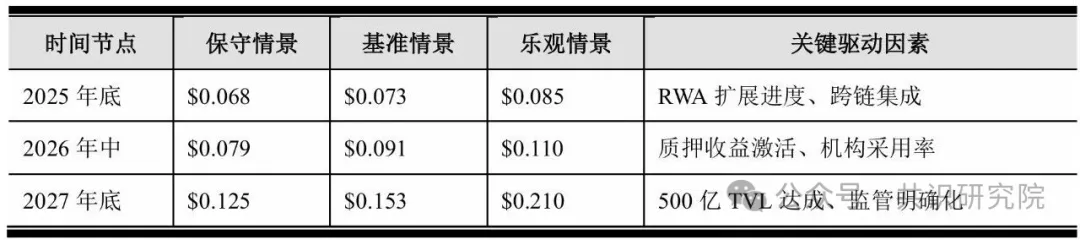
Ø Positive factors (Bull Case): Strong fundamentals, real protocol revenue, clear growth path and strong support from MakerDAO make SPK a strong competitor for DeFi blue chip stocks. For investors seeking long-term value investment, SPK is a high-quality target that cannot be ignored.
Ø Risks and Challenges (Bear Case): Investors must be aware of potential risks. 1) Regulatory risk: The deep integration of RWA exposes it to the uncertainty of traditional financial regulation, especially in the United States. 2) High valuation risk: The market frenzy caused by airdrops may cause tokens to be overvalued in the early stage of listing, with the risk of callback. 3) Systemic risk: The complexity of the protocol means that it faces the risk of smart contract vulnerabilities, oracle failures, and potential collapse of third-party protocols it relies on (such as Ethena).
Ø Intervention strategy: Investors are advised to avoid chasing high prices when market sentiment is at its most enthusiastic. You can wait for market sentiment to cool down and prices to fall back, and then establish positions in batches based on the verification of protocol fundamentals (such as TVL, revenue, and user growth). Long-term holding and participating in protocol governance and staking may be the best way to share its growth dividends.
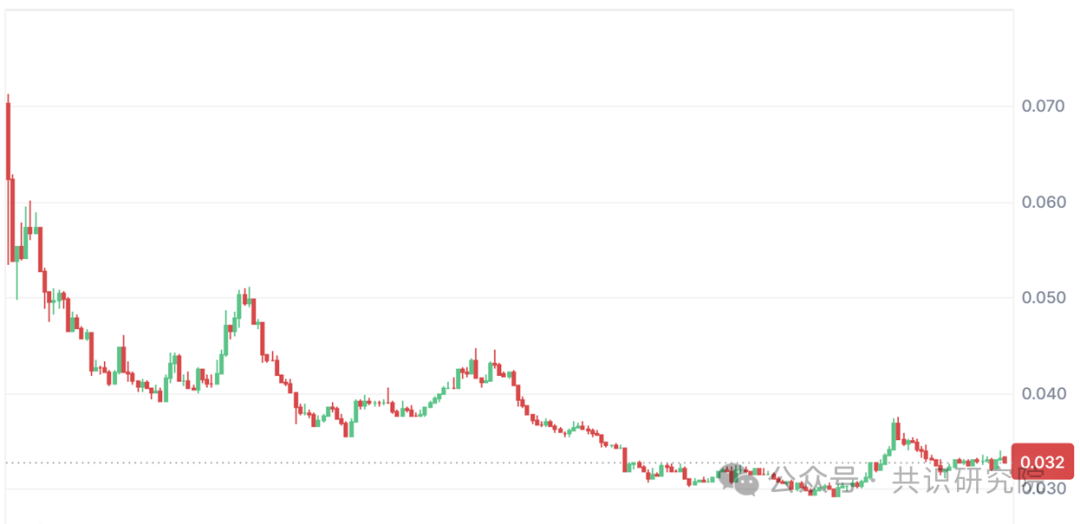
Investment advice:
Ø Short term (0-6 months): Neutral and cautious. The inflation pressure of tokens is significant, and the airdrop selling pressure has not been fully released. From a technical perspective, $0.05 forms a strong resistance level, which needs to be broken to confirm the upward trend.
Ø Medium to long term (1-3 years): Active allocation. After the pledge and destruction mechanism takes full effect in 2026, SPK will enter a deflationary cycle. It is recommended to adopt a fixed investment strategy, focusing on the growth of TVL (a monthly increase of 5% is a healthy indicator) and the RWA allocation ratio (40% is the baseline).
3. Outlook
The rise of Spark Protocol is a microcosm of the evolution of the DeFi industry. In the future, the competition between DeFi protocols will no longer be a competition of single product functions, but a comprehensive confrontation between ecosystems. Protocols that can integrate more resources, build stronger network effects, and connect to real value off the chain will stand out in the competition. RWA, multi-chain liquidity management, and sustainable token economics will become the three pillars that define the next generation of DeFi blue-chip projects. Spark Protocol has taken the lead in all three aspects, and its future development deserves our continued attention and expectations.