
TL,DR
In February 2025, the US economy faces multiple challenges, including rising inflationary pressure, labor market differentiation, and slowing growth. The CPI rose more than expected in January, the labor market resilience weakened, and industry differentiation was significant. At the same time, the marginal slowdown in economic growth and the risk of stagflation increased. The Fed's policy turned cautious, and the expectation of interest rate cuts may be postponed to June. We need to pay close attention to changes in economic data in the future.
In February, the crypto market was sluggish, with the total market value falling by 18%. BTC's market share remained stable, while ETH's market share fell below 10%. The LIBRA incident had a huge impact on the Meme market, and the market's attention shifted to VC coins. Macroeconomic factors and the Bybit theft incident exacerbated the negative market sentiment, with BTC ETF and ETH ETF fund outflows of $8.886 billion and $2.1 billion, respectively. Despite this, the stablecoin market maintained strong growth, with USDC and PYUSD circulation increasing by $3.63 billion and $290 million, respectively.
BTC price fell below the key support level and is currently facing strong technical pressure. The price fell to the range of $86,000-89,000 to form a dense selling pressure zone, but if it can form a "triple bottom" at $75,200, there may be a short-term rebound. ETH continues to be weak, and the Bybit theft incident has caused investors to sell spot to avoid risks, and short-term selling pressure has intensified. SOL price is affected by liquidity squeeze, and $130 is the key support level. If it falls below, it may fall further. The reduction of whale holdings and the increase in unlocking have exacerbated market concerns.
The collapse of the LIBRA Meme coin promoted by the Argentine president led to a collapse in market confidence. Negative news such as insider trading, speculation, and selling caused a sharp drop in the price of SOL. BNB Chain rose rapidly with the help of CZ, and promoted the Meme craze through technology upgrades and event marketing, becoming a new focus of the market. In addition, Bybit was hacked, setting a record for the largest theft in the cryptocurrency field.
1. Macro perspective
In February 2025, the U.S. macro-economy faces multiple challenges: inflation has not fallen effectively, structural problems in the labor market have intensified, and economic growth has slowed down, but some areas are still strong. The Federal Reserve faces the choice of whether to continue to cut interest rates, and the volatility risk of the capital market is gradually increasing. As macro risks intensify, future policy directions will become more uncertain, and we need to pay close attention to changes in economic data.
1. Monetary Policy
Inflation rebounded beyond expectations in January: CPI rebounded to 3.0% year-on-year (market expected 2.9%), core CPI increased to 3.3% year-on-year (expected 3.1%), and the month-on-month growth rate was the highest since May 2023. Although the FOMC statement pointed out that "the path of inflation falling back to the 2% target has not been fundamentally damaged", Powell conveyed a cautious signal in his speech on February 11, clearly stating that "policy adjustments will depend on inflation and economic data in the next three months". The first interest rate cut is expected to be postponed to June, 3 months later than expected at the beginning of the year.
2. Labor Market
In January, non-farm payrolls increased by 143,000 (expected to be 175,000), a three-month low, but the data for the first two months were revised up by 100,000, indicating that the labor market is still resilient. The unemployment rate fell slightly to 4.0% (expected to be 4.1%), and the labor participation rate remained stable at 62.5%, indicating that the pull effect of wage growth on labor supply has weakened. The industry differentiation is obvious: education and medical care (+54,000) and construction (+36,000) contributed the main increase, while retail (-12,000) and manufacturing (-8,000) continued to shrink. The wage growth rate was 4.2% year-on-year and 0.3% month-on-month, and wage pressure in the service industry still exists.
3. Inflation
In January, the CPI rose to 3.0% year-on-year, and the core CPI rose to 3.3% year-on-year, up 0.5% and 0.4% month-on-month, respectively, significantly exceeding market expectations. Service prices became the main driver: housing OER (owner equivalent rent) rose 0.4% month-on-month, and medical care (+0.6%) and entertainment services (+0.9%) increased. The divergence between PPI and CPI intensified, with PPI falling 2.3% year-on-year in January. The delayed transmission of energy costs caused the profit margin of the manufacturing industry to be compressed to 4.1% (the lowest point in the past three years).
4. Capital Market
In February, the U.S. stock market showed significant differentiation: Nasdaq rose 4.2% for the whole month, hitting a record high of 19,945.64 points; the S&P 500 rose 1.8%, and the Dow Jones rose slightly by 0.6%. Technology stocks continued to dominate the market, with Nvidia's monthly increase reaching 17%. Meta, Google and other "tech giants" saw Q4 net profits increase by 33%-52% year-on-year, with AI computing power demand and advertising business recovery becoming the core drivers. In terms of market sentiment, the VIX index fell to 14.7, and the number of call options held in the technology sector surged by 23%. However, after the release of non-agricultural and CPI data, the daily volatility of the S&P 500 expanded to 1.5%, indicating an increase in policy sensitivity.
5. Economic Outlook
The US economy showed stagflation-like characteristics of "inflation rebound + slowing growth": the initial value of Markit's manufacturing PMI in February was 51.6 (expected 51.4), expanding for two consecutive months, the new order index rose to 53.1, and the inventory replenishment cycle started; however, the initial value of the service PMI was 49.7 (expected 53), falling below the boom-bust line for the first time, and the employment index dropped sharply to 48.3. The Treasury market reflected the rising concerns about stagflation. The 10-year US Treasury yield fell 8BP to 4.42% throughout the month, but it soared to 4.63% after the CPI was released. The 30-year real interest rate turned negative, and the term spread expanded to 17BP. At the policy level, the Federal Reserve faces a dilemma: premature interest rate cuts may strengthen inflation expectations, but maintaining high interest rates will suppress consumption and manufacturing investment. Retail sales in January increased by only 0.1% month-on-month (expected 0.3%), and economic fatigue was evident. If the CPI released in March fails to fall, the adjustment pressure of risky assets may be further released.
2. Crypto Market Overview
Currency data analysis
Trading volume & daily growth rate
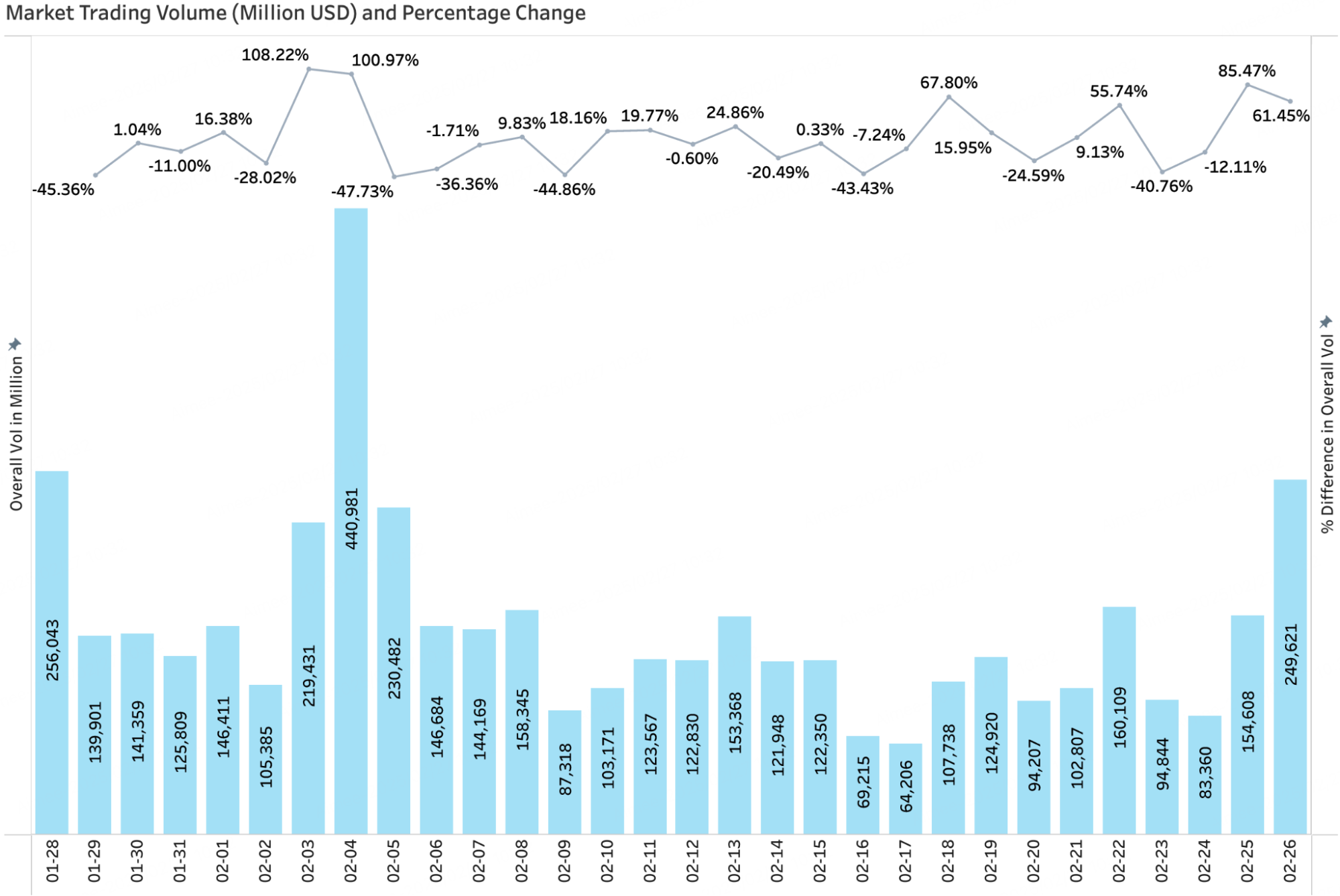
According to CoinGecko data, as of February 26, crypto market transactions have continued to be sluggish in the past month, with an average daily trading volume of US$146.5 billion, a 17% drop from the average daily trading volume in the previous cycle. On February 4, when the Asian Spring Festival holiday was coming to an end, the liquidity of the Asian market briefly rebounded, pushing the daily trading volume to US$440.9 billion. However, this growth did not reverse the overall liquidity depletion in the market, and subsequent trading volume continued to remain at a low level.
Total market value & daily growth
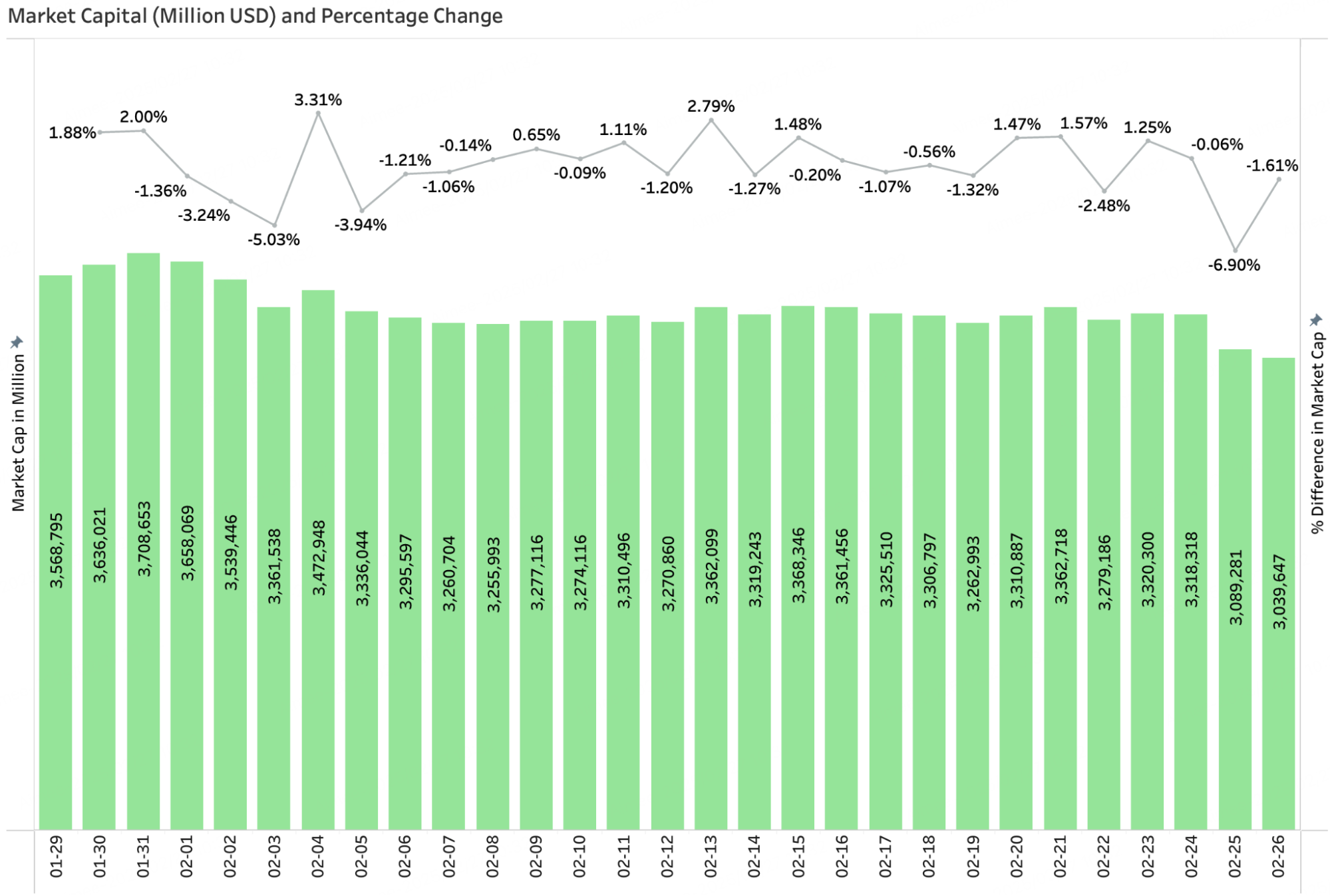
According to Coingecko data, as of February 26, the total market value of cryptocurrencies was $3.03 trillion, down 18% from the previous month. Among them, BTC accounted for 59.8% of the market, and ETH accounted for 9.9%, falling below 10%.
New popular tokens in February
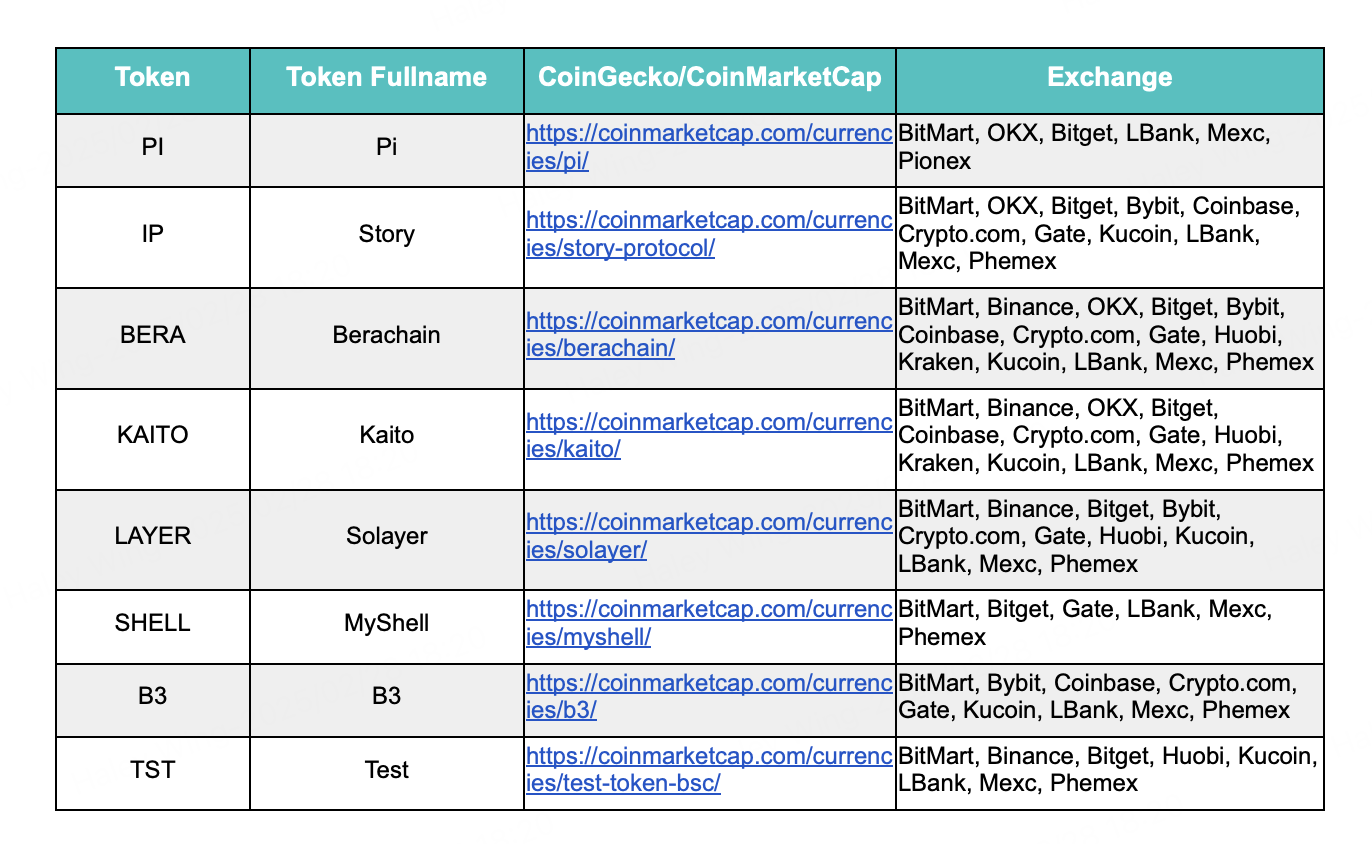
Among the popular tokens newly launched in February, the market's attention has gradually shifted to ecological projects, especially VC coins. From the perspective of market performance, newly launched projects such as PI, KAITO, and IP (Story) have received widespread attention, and their token prices have also increased to varying degrees; while the Berachain project is mainly reflected in the steady growth of TVL, and its token price has fluctuated sideways.
3. On-chain data analysis
3.1 Analysis of BTC and ETH ETF inflows and outflows
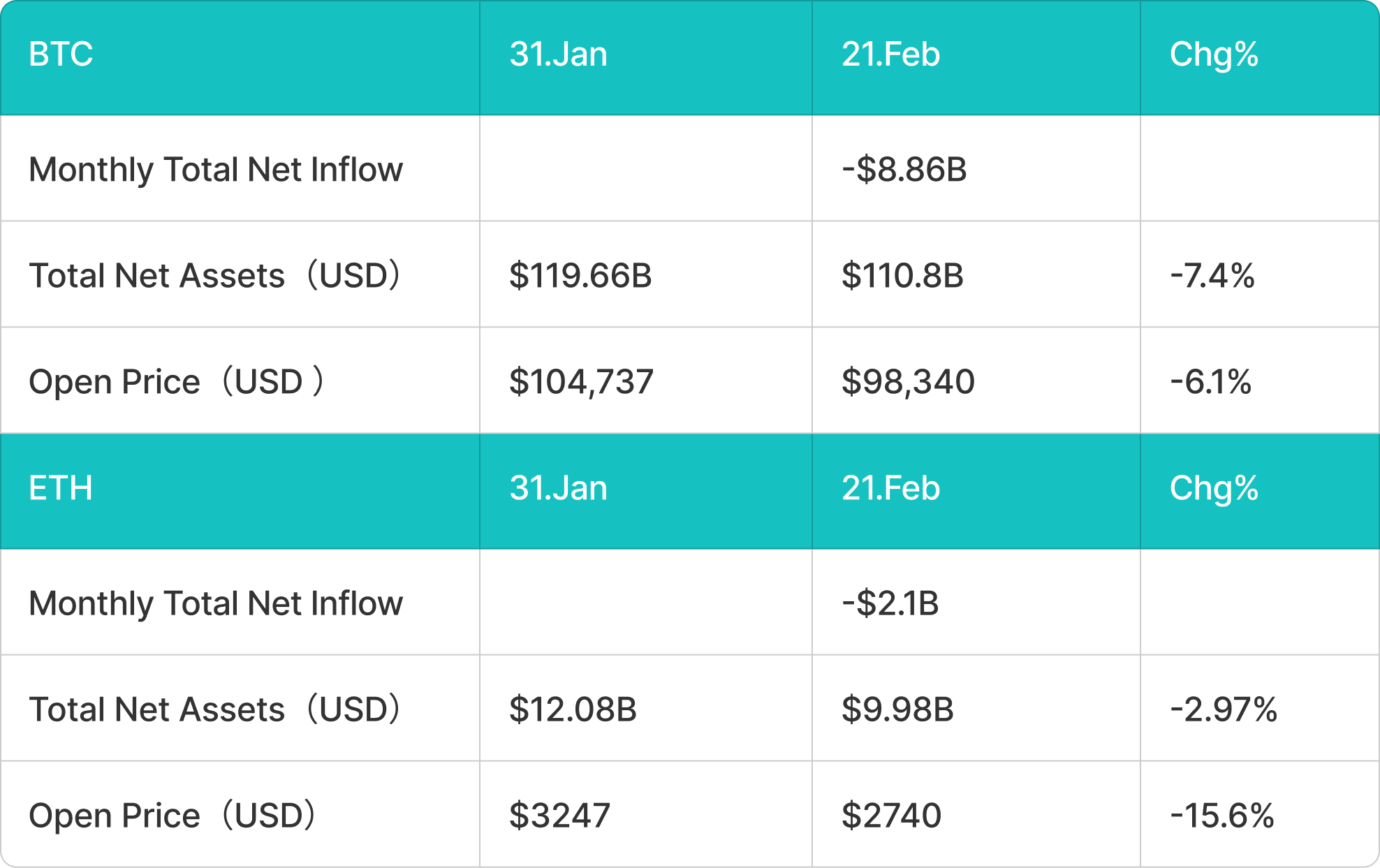
BTC ETF outflows of $8.86 billion in February
In February, the market focused on the impact of the turbulent global trade pattern caused by the Trump administration's tariff policy. In addition, the hacking of Bybit Exchange by North Korean hackers, which resulted in the theft of $1.5 billion in Ethereum, caused a certain amount of negative sentiment, and the prices of the two major currencies fell sharply. As of February 25, the price of BTC fell from $105,064 at the beginning of the month to $91,870, a drop of about -12.5%. In February, BTC ETF funds outflowed, with a total outflow of up to $8.86 billion. Combined with the decline in BTC prices, the current total holding value of BTC ETF has dropped by -7.4% year-on-year from January.
ETH ETF saw a small outflow of $2.1 billion in February
In February, altcoins led by Ethereum continued to experience a sharp correction and faced a more severe situation. The Bybit theft incident (the stolen assets were all ETH) further stimulated the decline in Ethereum prices. As of February 25, the price of ETH fell from $3426 at the beginning of the month to $2,492, a drop of -27.2%. In February, ETH ETF funds showed an outflow, with a total outflow of approximately -2.1 billion US dollars, and the total holding value of ETH ETF fell by -2.97% year-on-year from January.
3.2 Analysis of Stablecoin Inflows and Outflows
Stablecoin inflows in February were approximately $7.56 billion, mainly from USDC, USDT, and DAI
In February, despite the negative impact of macro and cryptocurrency markets, the stablecoin market continued its strong growth momentum. Among them, USDC became the main driving force for growth this month, with the circulation increasing by about 3.63 billion US dollars, accounting for an important share of the expansion of the stablecoin market. In addition, the total circulation of PYUSD increased from 480 million to 770 million, an increase of about 60.51%.

4. Price analysis of mainstream currencies
4.1 Analysis of BTC price changes
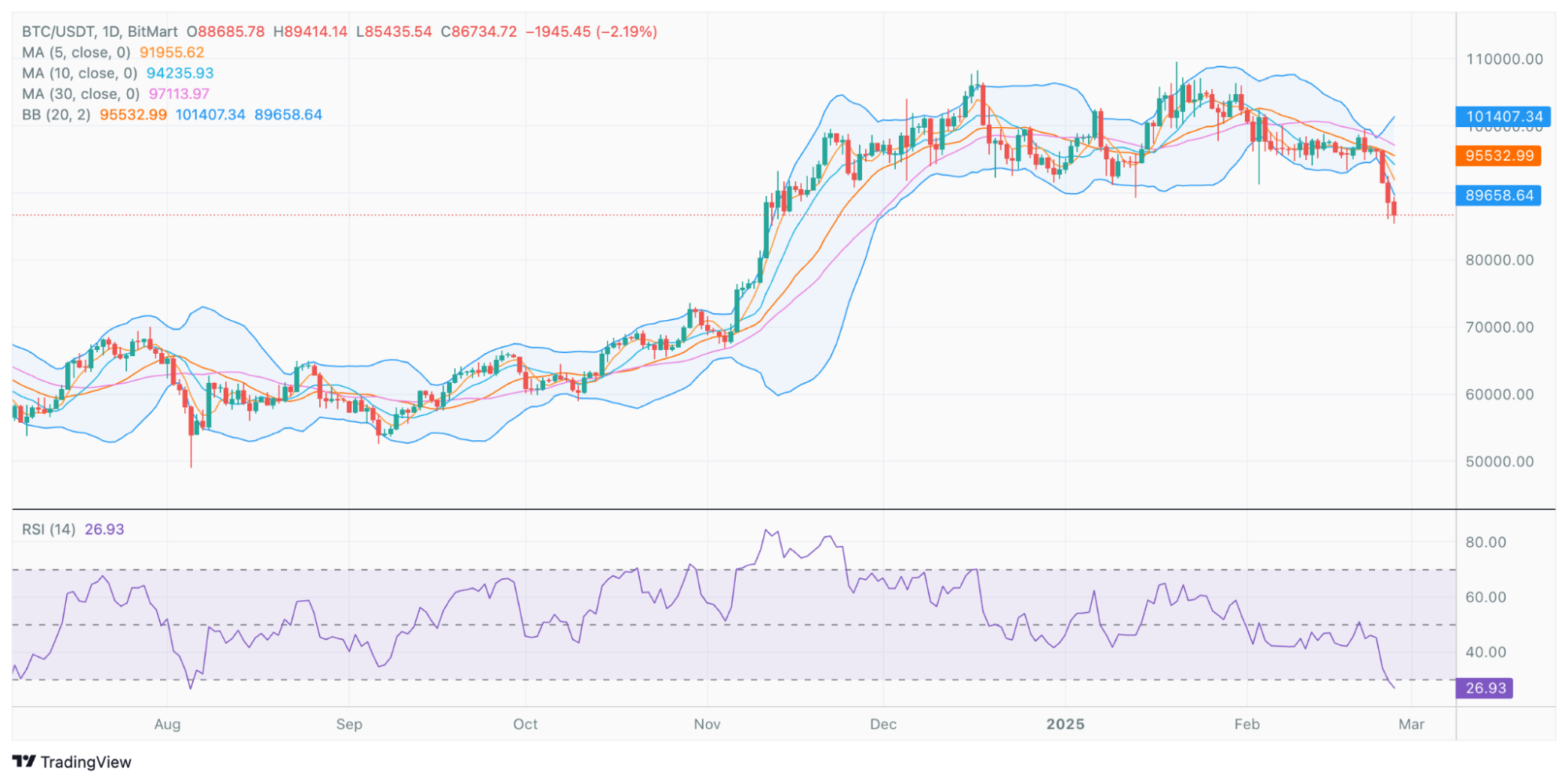
The Bitcoin market is facing the resonant pressure of multi-cycle technical signals. After losing $90,000, the price continued to weaken. The daily level has confirmed that it has fallen below the lower track of the rising channel formed since November 2023, which has now turned into a short-term resistance band (US$88,000-89,200). The weekly chart shows more severe trend destruction. The price has closed below the middle track of the Bollinger Band (US$92,300) for two consecutive weeks, and the medium-term momentum has weakened significantly. The on-chain volume distribution shows that the historical turnover of about 530,000 BTC has been deposited in the US$86,000-89,000 range, forming a dense selling pressure area, while the 200-day exponential moving average (EMA) of US$75,200 and the 50-week moving average of US$78,500 below form a double support. The current price has bottomed out three times in the US$75,800-76,200 area. If a "triple bottom" structure can be formed with the cooperation of trading volume, it may trigger a short-term rebound. However, the weekly MACD column is still expanding rapidly below the zero axis. Although the daily RSI (14) shows a bottom divergence near 38, the monthly Fibonacci 38.2% retracement level (US$71,800) is still a key medium- to long-term defense line. Once it falls below this level, it may trigger a deeper adjustment.
4.2 Analysis of ETH price changes
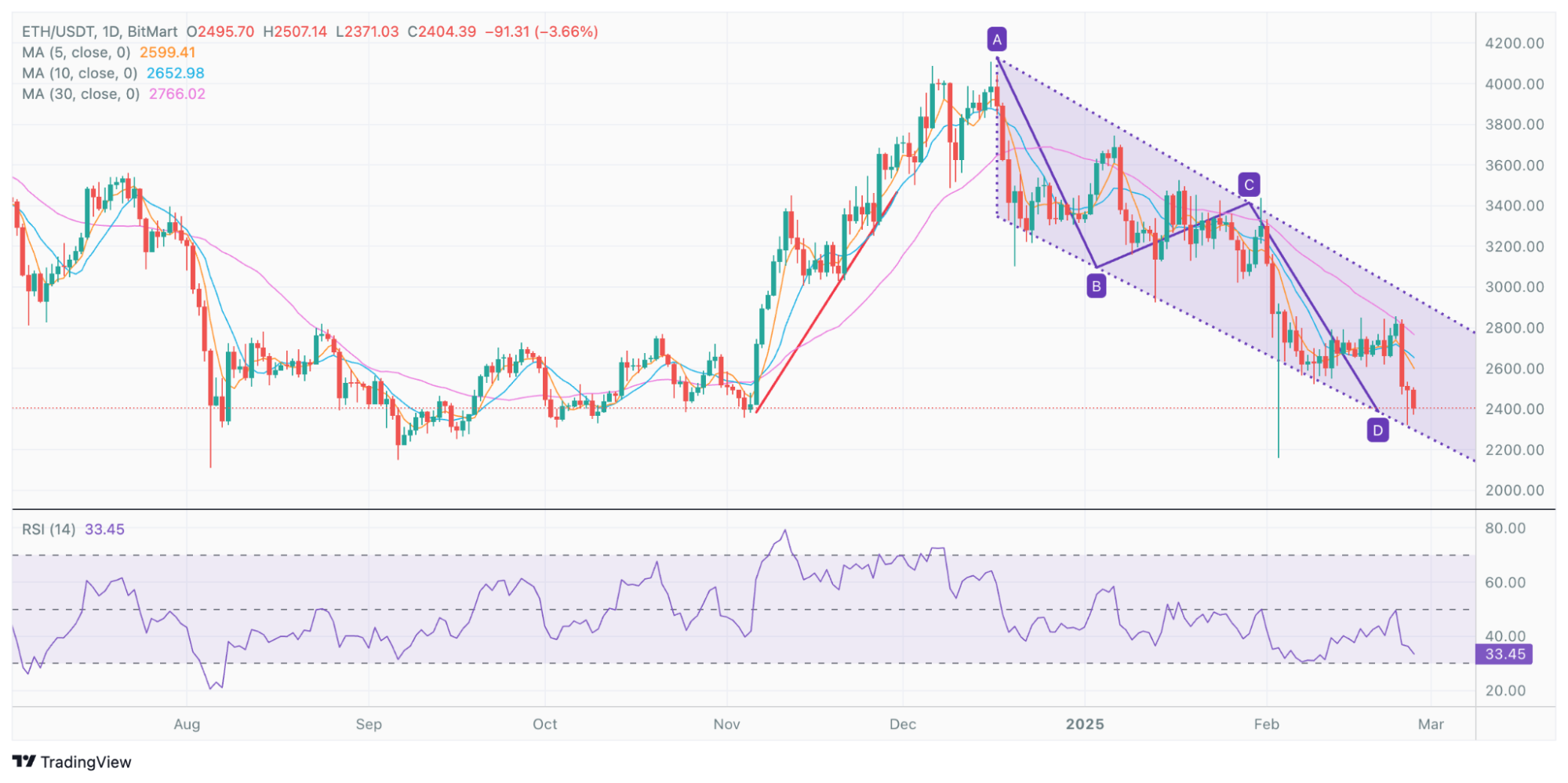
Ethereum's technical side shows typical weak linkage characteristics. After falling below 0.048, the ETH/BTC exchange rate accelerated to the 0.043 support, setting a new low since June 2022. In terms of independent prices, the key position of $2,850 is facing severe tests. This is not only the extended support of the rising trend line in 2023, but also coincides with the holding cost area of about 18.7 million ETH on the chain. If the daily closing price continues to be lower than this position, it may trigger passive reduction of pledged positions. In terms of technical form, after the daily symmetrical triangle breaks downward, the theoretical measurement target points to $2,200, while the 30-day historical volatility drops to 42% (the lowest since October 2023), suggesting that the market is about to face a direction choice. Differentiation signals appear in the derivatives market: Despite the negative decline in spot prices, ETH quarterly futures still maintain an annualized positive basis of 5%, indicating that some funds are deploying long-term positions at low levels. In addition, although the recent theft of Bybit Exchange did not directly affect the assets on the ETH chain, it caused the market to worry about the reserve funds of centralized exchanges. Some investors chose to sell ETH spot to avoid risks, further exacerbating short-term selling pressure.
4.3 Analysis of SOL price changes
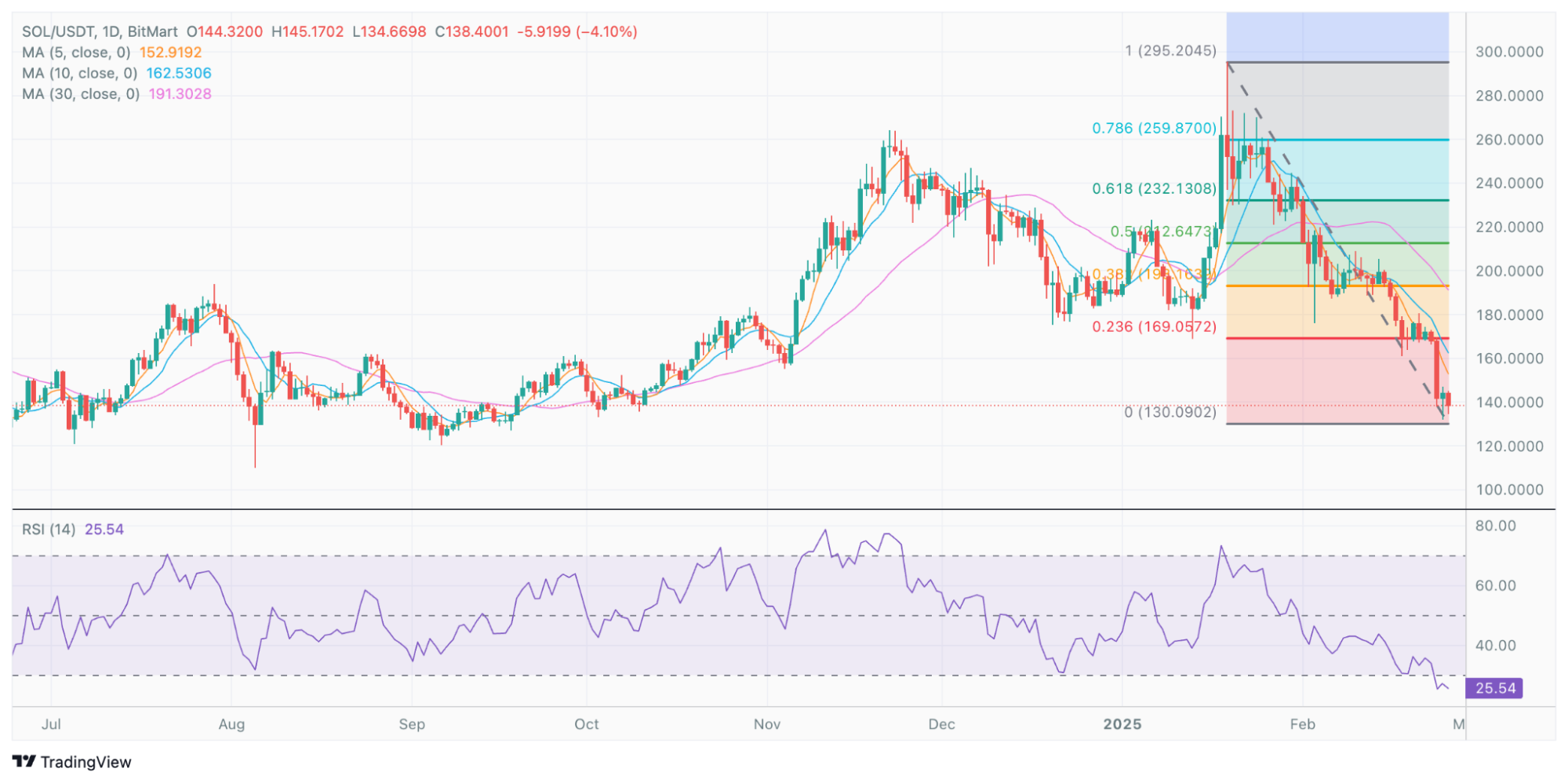
Solana's price fluctuations show obvious characteristics of liquidity squeeze, and the current price of $135 is in a high-risk area. Technically, the 4-hour chart forms a "falling flag" structure, and the gains and losses of the $130 neckline become the key. If it effectively falls below, it may open up a downward space of $98-103 (corresponding to the Fibonacci 50% retracement level). On-chain data shows that whale addresses holding more than 100,000 SOL have reduced their holdings by 4.2% in the past 30 days, which has a superimposed effect with the 2.3% circulation unlocking (about 36.7 million SOL) launched on March 1. Among them, Melania and Libra-related wallets were monitored to transfer 2.4 million SOL to exchanges in a single day, triggering market concerns about the systematic withdrawal of liquidity by institutions.
5. Hot events of this month
5.1 Argentine President’s coin issuance collapsed, and MEME liquidity was harvested again
On February 15, 2025, Argentine President Javier Milley announced the launch of a Meme coin called LIBRA on his official X account and published the relevant contract address. He claimed that the purpose of issuing LIBRA is for national financing, aiming to promote the revival of the Argentine economy, especially to support small businesses and entrepreneurial projects.
As soon as the news came out, LIBRA's market value soared rapidly. In just forty minutes, its market value quickly climbed from zero to $4.5 billion, and the price of the coin rose from $0.12 to $4.61, an increase of 3741%. However, this surge did not last long. Within a few hours after the market value reached $4.5 billion, due to a large amount of cashing out by insiders, the price of the coin flashed and the market value plummeted by more than 80%, from $4.5 billion to $257 million, causing huge losses to investors. Subsequently, Mile deleted the previous tweet about LIBRA and posted a message saying that he did not know the specific details of the project at the time. After a deeper understanding, he decided not to continue promoting the project. This move triggered a collapse of market confidence in LIBRA, causing its price to continue to fall. As of February 25, LIBRA's market value was only $32 million.
The LIBRA incident not only had a huge impact on the Meme coin market, but also triggered widespread legal and political controversy. Several lawyers filed criminal charges against Mile for suspected fraud, and the opposition also called for an impeachment trial. In addition, some media and experts pointed out that there may be suspicions of insider trading and money laundering behind the issuance of LIBRA, further exacerbating the public's doubts about the project. The LIBRA incident caused the market's confidence in Meme coins to drop sharply. New Meme coins are launched almost every day, but these new coins are often accompanied by hype and sell-offs, which is one of the reasons for the recent continuous decline in the price of SOL.
5.2 Solana price fell sharply, and the ecosystem was affected by multiple negative news
As of February 25, the price of SOL fell from $230 at the beginning of the month to $134, a year-on-year decrease of about -41%. The main reason for this phenomenon is that the Solana ecosystem has been affected by multiple negative events recently, including the LIBRA black swan, the unlocking of SOL auction tokens, and the surge in internal fighting in the ecosystem caused by the establishment of AMM by Pump.Fun.
LIBRA’s black swan became the last straw that broke the camel’s back for the MEME track. A large number of investors lost confidence in MEME, thereby increasing the selling pressure on SOL.
On March 1, 11.2 million SOL from the FTX bankruptcy auction will be unlocked, worth $2.06 billion, and the number of unlocked tokens accounts for about 2.29% of the current SOL circulation supply. The huge selling pressure coupled with the sluggish market conditions caused the price of SOL to fall further.
Pump.Fun is about to launch an AMM liquidity pool. The launch of its own AMM is undoubtedly a big good news for Pump.Fun, but at the same time it also means that it will get rid of its dependence on Raydium and Jupiter. As soon as the news came out, the prices of RAY and JUP fell. In the long run, strengthening internal competition can diversify the projects in the ecosystem, but with the current continuous decline in SOL prices, internal competition may further intensify the panic in the market.
5.3 CZ enters the market to attract traffic, and BNB Chain becomes the new hot spot in the market
In February, when the Solana MEME track was in chaos, CZ personally stepped in to create hype by posting tweets to attract traffic to BNB Chain, causing BNB Chain to rise strongly and become one of the core MEME transaction public chains.
TST: On February 6, CZ tweeted that the BNB Chain team's test token TST was hyped by KOLs, pointing out that the token was not issued by the team and did not hold the token, and attached a link to buy the token. The market value once exceeded 50 million US dollars. On February 9, CZ tweeted again that the TST Twitter and LOGO were not obtained by Binance officials and were not controlled by the relevant Binance team, but the market trading enthusiasm continued unabated. Subsequently, CZ announced that Binance would launch TST spot and contracts, and the market value of TST soared to 480 million US dollars, and market sentiment was high.
BNB Ecosystem Upgrade Expectations: On February 11, CZ said that it was time for BNB Chain to untie its shackles, and on the 12th, he announced the 2025 ecological construction goals, which enhanced the market's expectations for the BNB ecosystem. Subsequently, BNB broke through $640, rising to $725 at its highest, and the market heat increased significantly.
Broccoli: On February 13, CZ responded to netizens' questions about his pet, saying that he had a Belgian Malinois. Subsequently, a large number of imitations emerged on the BSC chain. On February 14, CZ announced the pet's name Broccoli, but did not provide the contract address. However, the community Meme coin exploded, causing congestion on the BSC chain, Fourmeme's official website freezing, and transactions being blocked. CZ later said that this "stress test" exposed technical issues that the BSC chain still needs to be optimized.
SHELL: On February 13, BSC Chain, Binance Wallet, and PancakeSwap cooperated to carry out the MyShell token SHELL public fundraising round (Binance Labs is one of the investors of MyShell). The event exceeded the fundraising by 105 times, with a total of 134,606 BNB participating in the subscription.
5.4 Bybit cold wallet was stolen, creating the largest cryptocurrency hacking incident in history
On February 21, the cold wallet of Bybit exchange was hacked, resulting in the theft of assets worth $1.46 billion. This not only set the record for the largest single loss in the crypto field, but also surpassed the $1 billion theft of the Central Bank of Iraq in 2003, becoming the largest theft in global financial history. With such a huge amount of stolen funds, ETH fell below the $2,700 mark in a short period of time. After the incident, many exchanges and institutions deposited funds to Bybit for support. 12 hours after the security incident, Bybit's capital inflow exceeded $4 billion, covering the loss of stolen funds. Bybit's quick response to this temporarily alleviated the panic in the market. In addition, because Bybit needs to purchase ETH, the price of ETH has risen again to $2,800.
6. Outlook for next month
6.1 BNB Chain is expected to lead a new MEME craze
In February, with the crypto market experiencing a pullback of altcoins and pressure on the Solana ecosystem, BNB Chain achieved a breakthrough against the trend through multiple strategies. Binance founder CZ's frequent voices (such as supporting Meme coins and emphasizing the technical roadmap) have injected a shot in the arm to the ecosystem. His tweets have directly led to a hundredfold increase in tokens such as $TST, forming a significant wealth effect. According to the 2025 roadmap released by BNB Chain, technology upgrades (such as sub-second block confirmations, anti-MEV wallet tools) and user experience optimization (reducing Gas fees, multi-currency Gas payments) have become the core, aiming to create a lower threshold environment for Meme transactions. Therefore, it can be inferred that MEME will be one of the main development goals of BNB Chain in 2025.
Currently, under the influence of Binance's traffic, BNB Chain has started the first phase of the MEME heat cycle. In the current market lack of new narrative drivers, BNB Chain may continue to rely on the popularity of Meme coins to maintain market attention, and high-return MEME may still be born in the BNB Chain ecosystem in the short term. In addition, BNB Chain's phased victory has seen opportunities for other public chain ecosystems. More ecosystems may learn from BNB Chain's triple strategy of "event marketing + technology upgrade + wealth effect" for promotion, thereby leading a new wave of enthusiasm.
6.2 VC coins are active and are expected to regain market favor
The current crypto market is structurally differentiated: Against the backdrop of a general pullback of altcoins, the fading of the Solana ecosystem Meme craze, and the lack of new narratives in the market, newly launched VC coins represented by KAITO, IP, and Shell have emerged as a dark horse, recording significant increases of 33%, 555%, and 124%, respectively. These projects present two common characteristics: one is that the initial circulation ratio is generally low, and the other is that the airdrop release is concentrated in the early stages of the project. This token economic design leads to huge selling pressure at the beginning of the opening, and combined with the market memory that VC coins generally "break the issue price as soon as they go online", it often forms a short-term trend of "opening high and going low". However, there have been important changes in the market recently: recent VC coins have successfully reversed the traditional path of "peaking as soon as they go online" through high control and continuous positive release (such as ecological cooperation and technology upgrades), causing their coin prices to rise against the trend. However, whether they can maintain a stable rise in the future still needs to be continuously monitored.