Written by: Xiaobing , Deep Tide TechFlow
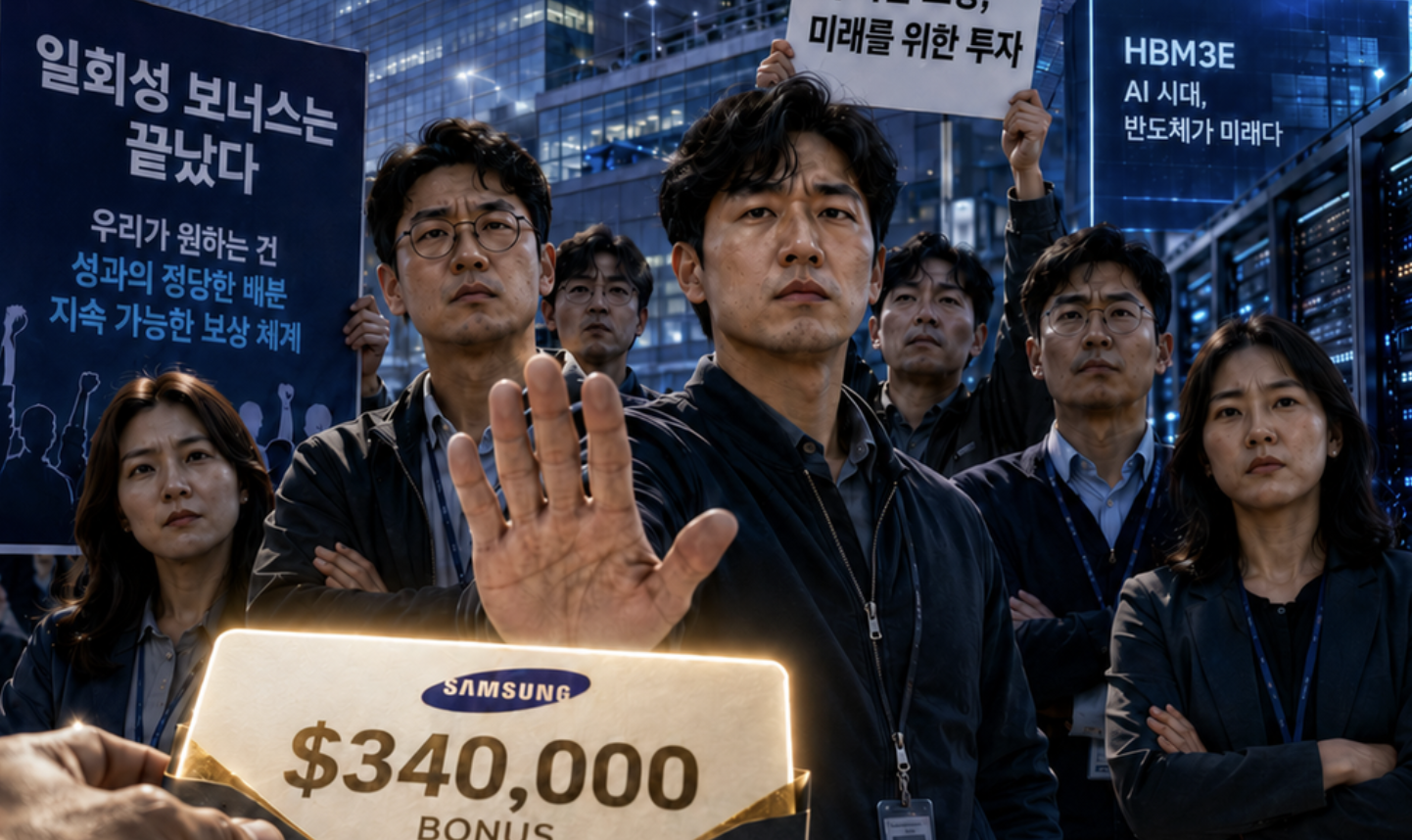
Labor negotiations at Samsung Electronics have finally reached the brink of a strike.
Late on May 12, mediation mediated by the National Labor Committee of South Korea broke down. Samsung Electronics union chairman Choi Seung-ho told reporters as he left the meeting room, "There's no point in waiting any longer." If all goes according to plan, the union will launch an 18-day general strike starting May 21 and continuing until June 7.
The union currently has approximately 74,750 members, with about 80% in the semiconductor division (DS). According to Choi, about 41,000 people have expressed their willingness to participate in the strike, and the final number could exceed 50,000. Considering Samsung's participation rate in labor actions over the past two years, industry analysts estimate that the actual number of participants will be between 30,000 and 40,000, making it the largest labor action in Samsung's history. A one-day partial strike caused some production lines to reduce night shift output by 58%. If the strike continues for 18 days, TrendForce estimates that it could affect 3-4% of global DRAM capacity and 2-3% of NAND capacity. JPMorgan estimates that, based on the current disagreements, Samsung Electronics' operating profit could decrease by more than 40 trillion won throughout the year.
The real highlight of the story isn't the strike itself, but the proposal that the union rejected.
A 13% proposal failed to reach an agreement.
According to the Financial Times, the labor and management sides have recently narrowed their differences significantly. The union's initial demands included allocating 15% of the semiconductor division's operating profit as a bonus pool, removing the 50% bonus cap, and a 7% wage increase. Management's initial response was 10% plus other benefits. After back-and-forth negotiations, both sides reportedly approached 13% at one point.
But it got stuck.
The union wants to include 13% in the agreement, and distribute it annually according to this formula. Management is willing to distribute a lump sum based on this percentage, but only once, which, based on the current profit level, is equivalent to a one-time bonus of approximately $340,000 per person.
It didn't sound like a big difference, but the union refused.
For employees, the difference is not complicated:
The logic behind a one-time bonus is that the company made a lot of money this year, so they give you a bonus. Whether they make a lot of money next year, whether they will give you a bonus, and what formula they will use to give it, all need to be negotiated every year.
The logic behind annual profit sharing is that, according to the agreement, a certain percentage of operating profit belongs to the employees. Employees will receive the profits as long as the AI dividend lasts; they will accept the loss even when the dividend disappears.
Both models are "bonuses," but they correspond to different statuses. The former is a temporary bonus from the company, while the latter is a bonus that is supposed to be distributed according to the system. Given similar amounts, the two arrangements mean that employees have to wait for management's approval every year, while there is a predictable rule written in black and white.
This is the core issue that the union is relentlessly pursuing.
SK Hynix has already paved the way.
The union's confidence comes from its neighbor.
In the latter half of last year, SK Hynix reached an agreement with its labor union to abolish the previous bonus cap and allocate 10% of its annual operating profit as a bonus pool for employees over the next ten years. In February 2026, SK Hynix issued its first bonus under this new mechanism, which was 2,964% of the basic salary, averaging nearly $100,000 per person.
SK Hynix's operating profit in Q1 2026 surged more than fivefold year-on-year, with an operating profit margin of 72%, a figure extremely rare in the hardware industry. The reason is clear: it holds more than 50% of the global HBM (High Bandwidth Memory) market share and is the main supplier of the HBM chips in Nvidia's H100 and H200 series. It earns as much as AI data centers are built.
With profit forecasts for the year being revised upwards, some South Korean and foreign media outlets have estimated, under optimistic scenarios, that SK Hynix employees' average bonus this year could be around $470,000; theoretically, if the high profit forecasts from institutions like Macquarie for 2027 materialize, it could approach $900,000. These figures should be viewed with caution, as they are projections based on optimistic profit assumptions, not actual cash payments. However, even based solely on already paid-out bonuses and conservative second-half projections, the absolute figures still far exceed Samsung's current proposal.
Since last December, approximately 200 Samsung employees have jumped ship to SK Hynix, according to statistics from Samsung's labor union. This is a very rare migration among engineers, as SK Hynix has been consistently outcompeted by Samsung for the past decade. However, this time, the bonus structure changed, and people followed suit.
Samsung's management is unlikely to concede.
From the outside, Samsung may seem stingy, but from the management's perspective, the matter is more complicated than it appears.
Samsung Electronics is not a purely memory chip company. It has multiple business lines including mobile phones, home appliances, display panels, wafer foundry, and memory. The fact that semiconductors are profitable this year doesn't mean other departments will enjoy the same cycle. In the first quarter, the DX division's operating profit was already declining. If semiconductors were to be included in the 15% profit-sharing scheme alone, someone within the group would immediately ask: Why do they get a share of the profits, but we don't?
According to external analysts' calculations, if Samsung Semiconductor were to distribute 15% of its operating profit to its employees, the corresponding bonus pool would reach 40 to 45 trillion won, an amount higher than SK Hynix's total annual operating profit. This isn't because the company is "reluctant" to spend, but rather because once such a large amount of fixed expenditure is institutionalized, it will be very difficult to recoup in the future.
What management is least willing to do is to include "formulaic profit sharing" in the contract. Once this precedent is set, the DX union and the panel union will use the same logic to negotiate next year. The internal compensation order of the entire Samsung Group will be reshuffled, and labor contracts within the entire South Korean chaebol system will be re-referenced.
Therefore, Samsung would rather suffer the losses from the strike and be called "stingy" by the union and the media than give up on the word "annual".
This issue won't just stop in South Korea.
In the long run, the exact date when the specific compromise between the union and management is finalized is not the most important factor.
Importantly, scarce positions in the AI industry chain have begun to be re-negotiated .
For the past thirty years, Silicon Valley's script has been to tie employees' fates to company stock prices through equity incentives. However, this script has two implicit prerequisites: the company must go public, and employees must be among the early adopters. Engineers who join later, after their stock options are diluted, will receive far fewer options than those who joined earlier.
SK Hynix took a second path: instead of waiting for an IPO or monitoring stock prices, it turned employees into cyclical partners through cash dividends. The advantages are a transparent formula, a clear timeline, and predictability. The cost is that the company needs to acknowledge that employees are not just a cost item, but also a source of profit.
Once this path is successfully implemented at SK Hynix, and a version in some form is negotiated with Samsung, the next companies to be asked the same questions may not just be Korean companies.
What do TSMC engineers think about how much profit Nvidia makes on every GPU it sells? What do ASML workers think about the $200 million price tag of an EUV lithography machine? Will the veterans who supply liquid cooling, power, and transformers to data centers suddenly realize that they have scarce resources at their disposal?
Not all questions will have immediate answers, but the questions have already been asked.
Over the past two years, the capital market has already provided an answer to the question of "who benefits from the AI dividend": Nvidia shareholders were the first to reap the rewards, followed by TSMC, SK Hynix, and Samsung through production capacity and pricing. This is a distribution among companies.
The internal distribution within the company has only just begun.
The 18 days starting May 21st may end in a union victory, or it may end in some kind of compromise, with management making concessions on the "annualization" issue and including it in a shorter-term agreement, leaving room for maneuver. The specific outcome will affect the contract amount, but it will not affect the real direction.
SK Hynix employees have already received their first share of the profits. Samsung employees are striking to fight for theirs. Who will receive the next share, when, and in what form is it likely to be one of the most intriguing undercurrents in the AI industry chain over the next three to five years.