Compiled & translated by: Deep Tide TechFlow
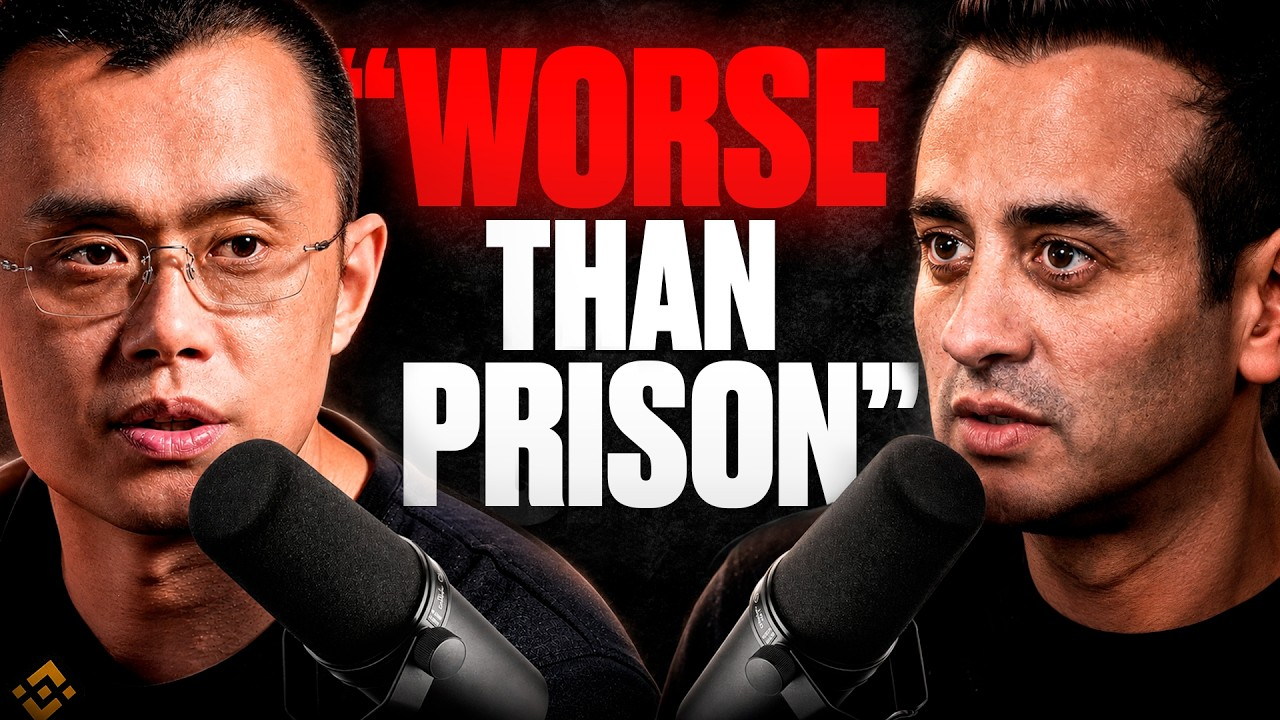
Guest: CZ, Founder of Binance
Host: Ran Neuner, CNBC cryptocurrency trader
Podcast source: Crypto Banter & Crypto Insider
Original title: CZ Life Before and After Prison, Crypto's Future & The Freedom Of Money
Broadcast Date: May 9, 2026
Key points summary
In this exclusive interview, Ran Neuner engages in an in-depth conversation with Binance founder CZ, discussing his new book *Freedom of Money*, his imprisonment, his pardon, family relationships, and the future of the crypto industry. CZ recounts his experience writing the book in a US prison, coping with uncertainty, and rebuilding his life priorities. He also explains why he still dedicates 80% to 90% of his time and energy to blockchain. He believes the AI Agent era will spawn financial transaction networks far larger than today's, and blockchain is likely to become an irreplaceable settlement channel within them. At the end of the interview, CZ also discusses his understanding of wealth, children, investment, health, and legacy: money is not the end goal; what truly matters is using one's abilities and resources to improve the world.

Summary of key viewpoints
About the 76-day prison experience and mindset reshaping
- “I started writing in prison. I had a lot of time, but not many ways to access the outside world. I didn’t have internet access, and I could only use a very rudimentary terminal. Each session was 15 minutes long, and I would be kicked offline when the time was up. That terminal didn’t allow copy and paste, so I had to type everything out myself.”
- "The newspapers wrote that I was the richest person ever to go to a U.S. prison, and the only one to go in for a single violation of the Bank Secrecy Act. So before I went in, my lawyer told me: 'You are a prime target for extortion.'"
- “No one in American history has ever been imprisoned for a single violation of the Bank Secrecy Act, not even today. I am the only one, the first, and the only one. So I am special, and they treat me specially. I don’t know what other ‘special treatment’ I might receive.”
- “After I was released from prison, I wrote in my book that I didn’t really care about fame, or even inheritance. I didn’t care what others thought of me. What I cared about was how I would view myself when I grew old.”
- “It’s very clear, it’s people. I miss my family, my children, my loved ones, and my friends. When everything is taken away, you realize what you miss most.”
Business competition regarding amnesty, nationality, and U.S. crypto regulations.
- “There was absolutely no bargaining involved in getting a pardon. My lawyer made it very clear to me that you didn’t want to get into any more trouble to get a pardon.”
- “We did encounter very strong lobbying, counter-lobbying, and reverse lobbying. Some of our competitors in the US don’t want me to be pardoned. Other US crypto exchanges don’t want me to be pardoned because they’re worried about Binance returning to the US. It’s business competition.”
- “It had nothing to do with the negotiations. I was invited to become a UAE citizen. ... However, I did not use my UAE citizenship. I did not want to use it as a tool to ‘hide here.’ After obtaining it, it actually made me more eager to go to the United States to solve the problem, rather than relying on it.”
- “When you were convicted, one of the restrictions was that you could no longer operate Binance. After the pardon, it disappeared for me personally, so I have no restrictions. But for the company, there may or may not be some restrictions.”
Business Reflection: CZ Revisits His Biggest Business Mistakes
- “If I could go back now, I would create two platforms from the beginning: Binance US and Binance Global, and block US users from day one. That would save a lot of trouble.”
- “Our US users have never exceeded 30% of our user base at any given time; it’s been around 10%, 20%, and 30% at different stages. … We turned a profit within three months, and the profit margin was very high. So even if it’s 30% less, we can probably still survive.”
- "But I later learned that America looks back many years. They look back at what you did in the past."
- “I’m much more cautious when doing business, but I don’t have all my tweets reviewed by lawyers. … I now involve more lawyers in business matters, which is something I’ve learned. Law is my weakness; I don’t have a legal background.”
Crypto x AI: Why Crypto Tracks Are Severely Underestimated
- "Blockchain is money, it's a technology about money. We will always need money, and we will need more and more money that is more efficient and freer."
- “I still dedicate 80% to 90% of my time, money, and energy to blockchain. AI and biotechnology are great, but they're not my forte.”
- "Based on the information I've seen today, Bitcoin still holds a dominant position and has the stamina to maintain it. Nothing can replace Bitcoin at the moment."
- “This isn’t just AI trading with AI; it’s one AI representing one person trading with another AI representing another person on the other side of the world. I don’t see an alternative; this kind of funding has to be Crypto.”
- "It will certainly far exceed $2 trillion, and it will far exceed our current monetary system. The future monetary system will be much larger than today's monetary system."
The core figures of wealth, trust arrangements, and "financial freedom"
- “I won’t give my children a lot of money. For example, my adult children, I tell them, if you want to live comfortably for the rest of your life, I can support you. But if you want luxury, sports cars, private jets, yachts, big houses, then you have to earn it yourself.”
- “I won’t leave them billions of dollars. I might leave them tens of millions of dollars in assets, which I hope to arrange through a trust, so that they receive a certain amount each year when they are young, less when they are younger, and more when they are older.”
- “I want to use most of my money while I’m still alive. I don’t really believe in the idea of ‘donating to charity at the end of your life.’ I think that’s a terrible way to use money because you can’t really control it by then.”
- “For almost everyone on Earth, $90 million is enough… but I think $10 million is enough to achieve financial freedom if you want to live an ordinary life. What I mean by $100 million is that there really isn’t much difference beyond that number. If you have $100 million and say you’re unhappy and think $200 million would make you happier, that’s crazy, that doesn’t work.”
- "Over $50 million, the difference is zero. If you're fixated on making yourself happy with money, you'll be unhappy."
- "When I am old and bedridden, I hope to look back and say: I have done my best to contribute to the world I came into. I want the world to be a little better than when I came."
YZi Labs' screening logic and Elon Musk's "alien theory"
- “I don’t look at shiny things, nor do I look at fancy ‘great brands’ or ‘brilliant new ideas’; I look at very basic things.”
- “I’m looking for people who truly believe in their mission and would do it even without money. If you’re just looking to make money, I think you’ll stop where you’re relatively successful, but you won’t become a great company in history. So it’s these two things: ability and mission.”
- “I think Elon doesn’t care about money. My theory is that he’s an alien who wants to go back to his home planet, and Mars is just a transit point. That’s my theory, half-joking and half-serious.”
"Money Freedom": CZ's New Book Release
Host Ran Neuner: When did you write your new book, "The Freedom of Money"?
CZ :
I started writing while I was in prison. I had a lot of time, but not much access to the outside world. I didn't have internet access; I only had a very rudimentary terminal, with 15 minutes at a time, after which I would be logged off. That terminal didn't allow copy and paste, so I had to type everything out myself. I couldn't delete anything either; if I did, I had to retype it. So basically, I just poured out what was in my head and emailed it to my assistant and a friend.
After my release from prison, it took me about a year and a half to finish it. I spent about six months writing the book, but there were many rounds of revisions afterward. Each round of revisions resulted in a 400-page document that took two to three weeks to complete.
Host Ran Neuner: What do people think about before they write a book? Why do they want to write it? If you were in prison, you might be scared, nervous, and anxious, so why would your first reaction be to write a book? What were you thinking at that time?
CZ :
There are several reasons. First, I wanted to keep myself busy in prison, and writing a book was a great project. It didn't require anything else; I just needed to stay in my head and write the content down. So I kept trying to get in line for the computer.
More importantly, some people say that writing a book is actually writing for yourself. You are having a dialogue with yourself. You will reflect on your life, think about what is important, what is meaningful, what is not important, what is interesting, and then write it down.
After my release from prison, I felt it was a natural turning point in my life, a turning point in a new chapter. I originally wanted to publish it immediately after my release, but it took much longer. For the next few months, I applied for a pardon, wondering when it would come. When the pardon finally came, I was quite surprised and felt it would be a great ending to the book.
Host Ran Neuner: Tell me about what it's like to write a book in prison. You said you sometimes have access to a computer. People outside don't really know what it's like inside; we've only seen it in movies. If you want to write a book, do you use pen and paper? Is there only one computer inside? Can the computer access the internet? How does it actually work?
CZ :
Our cell has 200 prisoners, and there are 4 terminals. You have to wait in line to use a computer. Once you're up there, you only have 15 minutes. The computers don't have internet access; you can only use a messaging application to send messages to pre-approved contacts, a maximum of 30 people. I only have two contacts: my assistant and a friend.
So I log in for 15 minutes each time. After that time, I have to wait several hours before I can use it again, and then I have to queue up again. I can use it about 3 to 4 times a day. I also have paper and pen, but I just write down the main points I want to write about next time on a piece of paper first. Once I'm on the computer, I write the content as quickly as possible. This writing process lasted for about several months.
Host Ran Neuner: You stayed there for four months. Was the task of writing the book to keep yourself busy? Did you count down the days, day 1, day 2, day 3, to keep your brain active?
CZ :
Almost. But strictly speaking, I spent 76 days in prison. After that, I went to Halfway House, where I could go out to the office, but my movements were still restricted; I couldn't go wherever I wanted. I stayed there for about three to four weeks, and then I was re-detained for the final 14 days of my sentence. This is written in the book, but I can't write about the last 14 days because I had no access to anything.
Host Ran Neuner: What's the scariest part of prison? Is it the moment you walk in, or sometime inside?
CZ :
Before you go in, you really don't know what will happen. The newspapers said I was the richest person ever to go to a US prison, and the only one to go for a single violation of the Bank Secrecy Act. So before I went in, my lawyer told me, "You're a prime target for extortion." The problem was, how could I protect myself from being extorted? I didn't know what form the extortion would take. What if someone held a knife or a metal rod to my neck? How could I avoid that? So I did a lot of preparation, which also brought me a lot of anxiety. The book doesn't actually cover this part much.
But once inside, the admission process itself is somewhat terrifying. You walk into a cell, and 200 very strong men are staring at you. However, in the end, it turns out that most prisoners are actually quite reasonable. Some are criminals, some shouldn't be there, and some have been there too long.
My next worry was whether they would keep me locked up there indefinitely, whether they would find other charges, or whether they would find other reasons to keep me there. Especially after I arrived at Halfway House, I was supposed to be transferred to home detention for the last nine days. But on the thirteenth day before the end, the police came, handcuffed me, and sent me back to the detention center. The detention center was worse than prison because it was temporary and had nothing. At that point, I was thinking, were they going to add new charges against me? The mental stress was immense.
Even on the day I was supposed to leave, I was very nervous. I didn't relax even on the plane; I waited until the plane flew out of US airspace.
Host Ran Neuner: It sounds like you have a lot of PTSD or distrust of this system. I think that distrust might stem from the fact that you didn't expect to go to jail, and the whole process sounds like the rules could change at any time, and there are no fixed rules in the game.
CZ :
Absolutely correct. Any lawyer can tell you that no one in U.S. history has ever been imprisoned for a single violation of the Bank Secrecy Act, not even today. I am the only one, the first, and the only one. So I am special, and they treat me specially. I don't know what other "special treatment" I might receive.
Five days before my sentencing, Senator Elizabeth Warren declared war on crypto. That was during the Biden administration, when there was indeed a war on crypto, so there was a lot of uncertainty. I was a special case, and I didn't know what to expect. Even my sentencing judge said he couldn't follow precedent because I was a special case.
Host Ran Neuner: You're a special case. When you walk outside, people come up to you; you're respected here. What's it like in prison? When do the prisoners know who you are? Do they respect you, or are you just someone with a number who's in there for a crime?
CZ :
When I first went in, a few people did recognize me, but they didn't come over to talk to me. Fortunately, those who recognized me were mostly newspaper readers, meaning they were relatively more educated. Most people don't read the Wall Street Journal, Bloomberg, or the New York Times; they just live their lives in prison, and those people don't know me.
But soon everyone realized I was relatively well-off. Most people in prison didn't receive any money from them; they were really poor. They had to find ways to earn money in prison, like doing chores, providing services, and all sorts of odd jobs. I, of course, had family to support me, sending me $80 or $90 every two weeks—the maximum I could receive in prison. For me, that was quite good in prison. So they would say I was doing well, and then the word would spread.
People come to me asking what crime I committed, and I say financial crime. When you say financial crime, they automatically assume it's fraud. At first, I tried to explain that there was no fraud, but they didn't care. They assumed I was relatively wealthy, so even if they didn't know who I was, they'd still have a certain level of respect. Later, people gradually found out that this person seemed to have quite a background. Not because they read the news, but because of word of mouth.
The most terrifying and rewarding moments in prison
Host Ran Neuner: What was the scariest thing you experienced in prison? Was there a particular night, a specific moment, or the most frightening thing you ever saw?
CZ :
Relatively speaking, I didn't stay there for very long, although it felt incredibly long at the time. There were many new things and a lot of uncertainty. Once, a prison guard called me into a small room without telling me what was going on, and I sat there for two hours. Later I found out that I had apparently violated some dress code; I had been walking in the corridor wearing inappropriate clothes. It's these kinds of small things that can suddenly get you caught, and they won't explain. They just make you sit in a tiny room, about 1 meter by 1 meter, for two hours. These kinds of psychological games happen constantly.
I didn't experience any physical threats, nor did I get into any fights. I witnessed a few fights, but they weren't very serious, and there were no knives. I think the American prison system, at least in the one I was in, has strict control over physical violence, but the guards playing psychological games with you is another matter entirely.
Host Ran Neuner: Did you make any friends there?
CZ :
Yes, I am still in contact with two of them.
Host Ran Neuner: You can make friends anywhere. What crimes did they commit?
CZ :
One of the robbers, a former Cisco developer, robbed 12 banks. He was sentenced to 45 years in prison for carrying a gun during the robberies. Because he was armed and pleaded guilty, his final sentence was very long.
He was the kind of person who read the Wall Street Journal, the New York Times, and Bloomberg. He subscribed to magazines while in prison. His method of robbing banks was interesting; for example, if he lost several thousand dollars playing poker, he'd rob a bank the next day at noon. Completely unprepared, no research whatsoever. He wore the same T-shirt to rob multiple banks, which is why the police were able to connect the cases. He didn't fire a gun; he was a very mild-mannered person, an IT guy, of Vietnamese descent, a very good person.
Host Ran Neuner: Were you angry in prison? Outside you're a big shot, inside you're a prisoner, and you're supposed to be treated like an ordinary prisoner. It's a huge adjustment. You're used to being important somewhere, and then you go to another place and are treated like a number; that doesn't feel good. Did you feel angry or resentful?
CZ :
I don't really care how I'm treated; in fact, I hope to be treated like everyone else. I even hope no one knows who I am, and no one treats me specially. I just want to get through these four months. In prison, I don't want to be a big shot, nor do I want to be in charge. I'd rather be an ordinary person; that would actually be a good thing.
US federal prisons are actually fairly normal; I didn't receive any special treatment, good or bad. The real stress was psychological; I just wanted it to end, not prolong it, and I just wanted to be back with my family.
Host Ran Neuner: What do you miss the most? What do you miss the most when you're sitting in prison?
CZ :
It's very clear, it's people. I miss my family, my children, my loved ones, and my friends . When everything is taken away, you figure out what you miss most. You'll miss food, your bed, a nice shower, but most of all, you'll miss people.
Host Ran Neuner: Have you ever had a moment when you felt that once you get out of here, you really need to change yourself, spend more time with these people, and spend less time on other things?
CZ :
Yes, a little. I did tell myself back then that after I came out, I had to spend more time with my family; I hadn't spent enough time with them before. I would also spend less time with random people. And there are some things that people outside think they would miss, like parties and events, but you don't miss them at all. You don't miss those luxurious things either.
Host Ran Neuner: Do you miss social validation? Do you miss likes, shares, and social verification?
CZ :
I haven't given it much thought; I've seriously considered it. After my release from prison, I wrote in my book that I don't actually care about fame, or even much about inheritance. I don't care what others think of me. What I care about is how I will view myself when I'm old.
Host Ran Neuner: Is this different from before you went to jail?
CZ :
I think it's essentially the same, but it wasn't as clear before. Especially after stepping down as CEO of Binance, I started thinking about what to do next, what's important, and what I care about.
Host Ran Neuner: Did the whole experience of going to jail bring anything good? If you were to summarize this experience, of course going to jail was not a good thing, but what positive results did it bring?
CZ :
There were some positive results. The most basic one was that I became stronger. I worked out in prison and decided to keep at it after my release. Another positive is that it makes you clearer about what's important, and that changed the way I did things afterwards. It also made me appreciate life more.
I used to work about 20 hours a day for six, seven, or eight years straight. It was a lot of fun back then.
Host Ran Neuner: Do you regret it? Do you regret working 20 hours a day and not spending enough time with your loved ones? Or do you think those experiences are what brought you to where you are today?
CZ :
I don't regret it. I think it was a great experience, and I enjoyed it. But I'm also glad I was forced to change direction and take a break. Different stages of life call for different things. I still work hard now, but not as hard as I did when I was running Binance. I don't regret it; it was a fantastic experience. I was younger and in better physical condition then. Working like that for years on end is extremely demanding on the body. Different stages of life involve experiencing different things.
Host Ran Neuner: Do you miss that busy period? I remember you were incredibly busy when you were managing Binance, with management, European operations, and legal issues. You seem much more relaxed today.
CZ :
I'm still quite busy, but definitely much less so than before. I'll also be involved with Giggle Academy, which is very interesting. They're solving various problems, such as how to improve children's retention rates on learning apps and how to ensure they keep coming back to learn. YZi Labs will also be making a lot of investments, so there are many projects to look at and many founders to talk to. I'll also be working with many governments to help them design crypto regulatory frameworks, which will also take a lot of time.
Life after release from prison and connection with family
Host Ran Neuner: Let's break down CZ's life. I imagine before the "vacation," CZ's life was about 95% binance and 5% everything else. You look more relaxed and stronger now. So how do you allocate 100% of your time today? And by 100%, I don't necessarily mean time, but rather the amount of mental time you spend on it.
CZ :
Currently, I have four main things occupying a relatively even share of my attention: the Giggle Academy educational platform, YZi Labs, BNB Chain-related matters, and government consultations. This is my work-related aspect. Work takes up about 80% to 90% of my time, with the remaining 10% to 20% devoted to family, relaxation, and rest.
Host Ran Neuner: What are some things you do now that you're with your family that you didn't do before?
CZ :
It means spending more time with them. I can't quite articulate exactly what I do, but my philosophy is that whenever I'm with them, it should be quality time. For example, when I'm with them, I won't be looking at my phone or replying to messages while I'm with them.
Host Ran Neuner: Do you feel guilty towards your older children? Do you feel like you didn't spend enough time with them before? How do you make up for it in later stages of your life?
CZ :
I don't feel that much guilt. I think everyone grows up on a different path. Their environment was much better than mine was back then. Even though I didn't spend as much time with them, I still care about them a lot and help them. I think they can feel that. Now that they're older, they have all sorts of problems that young adults face, and they ask me for advice on things like career prospects and financial matters. We chat a lot. I don't think they resent me, nor do I think it's a problem.
Host Ran Neuner: I ask this because I also work very hard and have young children. I'm always balancing: Am I spending enough time on this? Will I hate myself later for working so hard now? Actually, I don't need to work; I do it because I genuinely enjoy it.
CZ :
There's another side to this. You can spend quality time with your child, but spending too much time or being overly protective can actually weaken them. Overprotecting a child makes them less resilient.
Family wealth management and financial freedom of choice
Host Ran Neuner: You have a lot of money now, probably one of the richest people in the world. What about your children? How do you ensure they don't lack ambition and become spoiled rich kids?
CZ :
I largely agree with Warren Buffett's philosophy. He famously said something to the effect of giving children enough money so they feel they can do anything; but not so much that they feel they don't need to do anything. I basically agree with this idea.
I won't give my children a lot of money. For example, with my adult children, I tell them, if you want to live comfortably for the rest of your life, I can support you. But if you want luxury, sports cars, private jets, yachts, and big houses, then you have to earn it yourself. I will make sure that even if you don't earn anything, you will still have basic support to get through the rest of your life.
Host Ran Neuner: Do you think your children will still feel hunger? They are the children of one of the richest people in the world, will they still have that motivation?
CZ :
The two older kids seem quite motivated; they're eager to find jobs and ask me for advice on different job opportunities and financial advice. They seem quite hungry for opportunities.
Host Ran Neuner: How do the children feel about their father going to jail? This case has been widely reported; it's a very high-profile financial case. What social impact has this had on them?
CZ :
I don't think it has any impact. I've always been very open, so they understand these issues. They understand why I went to jail and understand the circumstances. I'm the only person imprisoned for violating the Bank Secrecy Act, without fraud or any other more serious crimes; I'm a special case. My children don't talk about me much with their friends either; I'll keep them low-key.
Host Ran Neuner: When you walk into college, walk into school, and two weeks ago your dad was taken to jail, people always talk about it.
CZ :
Actually, there aren't that many. I think only close friends know who their father is. And close friends are, of course, very supportive. Kids these days are smart too; they'll look into my case. I haven't lost my children, their friends, or my friends' respect because of my imprisonment.
Host Ran Neuner: What will you leave for your children? When you leave this world, you may leave billions of dollars and many businesses.
CZ :
I won't leave them billions of dollars. I'll probably leave them tens of millions of dollars, which I hope will be arranged through a trust. They'll receive a certain amount each year when they're young, less as they get younger and more as they get older. The logic is that if they haven't achieved much by the time they're 45 or 50, they'll receive more.
Host Ran Neuner: But won't that become an incentive for not working hard?
CZ :
No, it's to incentivize them to achieve something. If they succeed, the money will be meaningless to them then.
Host Ran Neuner: So what are you planning to do with your money?
CZ :
I will strive to make money work. Money is an enabler, and I want it to help the world have a positive impact, which is actually very difficult. Simply giving money away or putting it in a specific way to have a positive impact is not easy. I want to use most of my money while I'm still alive. I don't really believe in the idea of "donating to charity at the end of your life." I think that's a terrible way to use money because you can't really control it anymore. I hope I have decades more to continue trying to deploy money in places that have a positive impact.
Host Ran Neuner: An average person's life is about 28,800 days. The first 5,000 days and the last 5,000 days are a bit tricky to calculate, as the first 5,000 are the formative years. So there are roughly 18,800 days in the middle, and you're currently around the midpoint of those 18,800 days. That means you probably have about 9,000 days left. You need to make the most of them. You mentioned wanting to invest your money in things that will generate social returns; what exactly are those?
CZ :
Charity is certainly possible, and giving money directly to people will have a positive impact, but I don't think that's the biggest impact. The biggest impact is improving the technology we possess. That's why I place great importance on investing in AI and biotechnology. For example, if we say we have 9,000 days left, perhaps we can invest heavily in biotechnology to make those 9,000 days longer and of higher quality.
I think we're at a point where AI can process massive amounts of data, find patterns, and conduct experiments; but in biotechnology, our understanding of the human body is still insufficient. So I can use money to make an impact in these areas, even though I'm not a biologist.
The Ultimate Truth About Money: Global Bitcoin Adoption, AI, and Blockchain
Host Ran Neuner: Are you still passionate about blockchain, crypto, and cryptocurrencies?
CZ :
Of course, absolutely. Since becoming an adult, I've experienced three fundamental technologies: the internet, blockchain, and AI. AI is new and exciting, but that doesn't mean we'll stop working on the internet and blockchain. Blockchain is about money, it's a technology about money, and we will always need money, and we will need more and more money—more efficient and more flexible money.
Host Ran Neuner: What will be the killer use case for blockchain? Is it AI Agent currency?
CZ :
AI Agents and Currency are one example. But let's rephrase the question: what is the killer application for currency? It has many directions. Currency drives the economy, drives innovation, and is the system that operates the global financial system. You look at companies in one country and then at companies in another, but currency should ideally be global, so blockchain has many different use cases.
I still dedicate 80% to 90% of my time, money, and energy to blockchain. AI and biotechnology are great, but they're not my forte. I believe a person should do what they're good at, what interests them, and what's useful to others; the intersection of these three is most important.
Host Ran Neuner: Do you think Bitcoin will become a global currency? Bitcoin has been around for so many years; we know its problems and the quantum risks. Do you still think Bitcoin will become a global currency, or has your opinion changed?
CZ :
Nothing has changed. Based on what I've seen today, Bitcoin remains dominant and has the stamina to maintain that dominance. Nothing can replace Bitcoin at present. There may be better Bitcoin-like currencies in the future, but I haven't seen them yet.
Host Ran Neuner: Blockchain has been developing for 15 or 16 years now. We've created killer applications in several areas: one is Bitcoin as a store of value, but it's not entirely money; another is bringing fiat currency onto the blockchain, making it readily transactable; and the third is creating and trading digital value—anyone can create and trade digital value. But you could also say we haven't yet had a truly decisive killer use case; we haven't yet had our ChatGPT moment.
CZ :
I agree with that statement. However, it's also important to understand that for the past 15 years, cryptocurrencies, blockchain, and Bitcoin have faced significant government suppression. Only in the last year and a half have we seen the US truly shift towards supporting crypto. In other words, we've only had a year and a half of government-supported development. Before that, it was all suppression, and this was true in almost every country; the UAE was one of the few exceptions. Only now are we seeing governments slowly moving towards support.
They also realized that even under suppression, the technology was still growing . Bitcoin rose from 5 cents to $80,000 today. It continued to grow even under pressure. So many killer applications are actually stifled before they even have a chance to mature. Payments, micropayments, agent payments, agentic money—these will all come.
Host Ran Neuner: All of this will happen in an AI world with billions of agents. What currency will these agents use in the future? Will it be the Bitcoin blockchain? Will it be on-chain USD?
CZ :
These details are difficult to predict. There are several possibilities, and I don't know which one will win. One is that they will use Bitcoin, possibly the Lightning Network, or other L2 on Bitcoin, to enable instant, low-cost microtransactions.
Host Ran Neuner: The advantage of this approach is that we know it works, it has network effects, it's global, and it can't be controlled by any single country. Therefore, we get a borderless global agent world. What are the other options?
CZ :
The other extreme will be more centralized. Today's AI companies are highly centralized, with perhaps fewer than 10 truly top-tier AI models, maybe even 3 or 4. At least for now, the AI landscape is extremely centralized. Whether open-source models will prevail in the future is unknown. However, within this highly centralized structure, AI companies can launch their own blockchains or their own crypto tokens—not AI tokens, but crypto tokens. That could be a new chain, or it could be a more private or enterprise-grade blockchain; that's one possibility.
I believe there will be many different attempts in various fields in the future, and then we'll see where it ultimately leads.
Host Ran Neuner: My sentiment towards crypto has hit rock bottom lately, especially after October 10th. I was thinking that Bitcoin might be hit by quantum risks, but it seems like nobody cares. There are very few use cases other than moving fiat dollars onto the blockchain.
Then, at some point, it suddenly clicked. I started asking myself: How will they transact? What will their funding come from? Ultimately, I concluded that the only money they can use is blockchain. So the entire AI revolution is still in V1; agents aren't yet transacting on our behalf. But in V2 and V3, they will begin transacting on our behalf, and this is impossible without blockchain.
CZ :
Yes. And we need to understand that this isn't just a transaction between AIs, but rather one AI representing one person, and another AI representing another person, transacting on the other side of the world. I don't see an alternative; this kind of funding has to be Crypto.
Why are crypto assets severely undervalued?
Host Ran Neuner: If that's the case, then I would say that crypto is the most undervalued asset class today. If you tell me it will become the track for every financial transaction, and the financial markets themselves will expand 1,000 times or more, while the entire monetary system and track currently only has $2 trillion in assets, what's wrong with that?
CZ :
It will certainly far exceed $2 trillion, and it will far exceed our current monetary system. As you said, the future monetary system will be much larger than today's.
Host Ran Neuner: The general economy itself, I think, will expand 1000 times. Therefore, the orbital value of a financial system composed of more micro-transactions must also increase exponentially.
CZ :
Absolutely. And if you think even further ahead, say Elon goes to the moon first, then Mars, and establishes a population there, how are we going to trade with them? We won't trust anyone on Earth. So if we look even further ahead, and we believe that humanity will soon become an interstellar species, then we'll need a suitable currency.
Host Ran Neuner: You said you're still 80% to 90% involved in crypto. What's your outlet? Is it your investment firm, YZi Labs? Is that where you stimulate crypto thinking, connect with founders, and invest in projects?
CZ :
Yes. Now I'm no longer the founder or run the project myself; I'm more of an investor. We invest in people who don't mind listening to my advice. I mentor them, give them advice, and act as a guide. I try to help others be more successful.
Host Ran Neuner: If someone wants to get your investment, what qualities do you look for? What is the most crucial element of a founder?
CZ :
I don't look at flashy things, nor do I look at fancy "great brands" or "brilliant new ideas." I look at very basic things. If you have a product, or revenue and profit , that's great and easy to judge. Before that, if you don't have those, but you have a good product that we can use and we believe has a product-market fit, that's also good. Going further back, if you don't even have a product yet, then we look at the team. How strong is the team? Can the team work together seamlessly? Regardless of the stage, we will look at the team .
Host Ran Neuner: When you look at founders, is there anything special about them? If I were a founder and wanted to stand out, what would I look for?
CZ :
Two points: technical capability and mission-driven . If you're just looking to make money, I think you'll stop where you're at relative success, but you won't become a great company in history. I'm looking for people who truly believe in their mission and would do it even without money. Of course, we hope they're doing something valuable. If they're doing something valuable and have a sense of mission, they'll create wealth. So it comes down to these two points: capability and mission.
Host Ran Neuner: To be honest, if you were investing in a company, would you consider yourself a good partner? What makes you a good partner? If I were lucky enough to receive your investment, what else could I get from you besides the money?
CZ :
I ask every founder we interact with: Besides money, what else can we do to help you? In the crypto space, this is why I still dedicate 80% to 90% of my time to crypto. We have the reputation to give you exposure; we have the community and a very large user base; we also understand the crypto ecosystem and can advise crypto founders on things like token economic models, token design, unlocking plans, and common pitfalls. We can also connect you with resources, such as whether you need other investors, market makers, or other resources.
Host Ran Neuner: If I'm lucky enough to get your investment, how much will I get from you? And how much will I get from your team? You have a great team.
CZ :
It depends on the project . YZi Labs holds incubation seasons. In each season, I spend several hours in small groups with the projects answering questions. I get more involved in projects that truly need my help and are suitable for my assistance. I can't help every project. There are some projects I'm not an expert in. For example, I spend very little time helping biotechnology projects because I can't help them much.
I can offer more assistance to crypto projects, especially those related to trading, exchanges, and wallets. I also have an AI data project with whom I talk about every few months. However, their product area isn't my expertise, so when they ask me questions about token economics and token design, I offer advice.
Host Ran Neuner: The closer you are to the crypto trading side, the closer you are to the area you love, understand, and are familiar with, the more specific advice you can offer. Elsewhere, it's more about the general entrepreneurial mindset, such as how to cope with pressure. How large is your investment firm team?
CZ :
It's about 15 people, a small team, but I don't think we need a large team.
CZ's Pardon and Restrictions
Host Ran Neuner: As part of the pardon? When you were convicted, one of the restrictions was that you could no longer operate Binance. After the pardon, did that restriction disappear? Are you basically able to go back?
CZ :
For me personally, it's gone, so I'm not restricted. But for companies, there might be some restrictions, or there might not; there are different legal opinions on this. If I want to do anything, I now consult a lawyer.
Host Ran Neuner: You're released from prison, you've served your sentence, and there's a little black dot next to your name. How restrictive is that little black dot? What impact does it have?
CZ :
Without a pardon, I would be labeled a felon with a financial crime record. This would render me ineligible as the ultimate beneficial owner (UBO) of a financial company. This would severely impact our ability to obtain financial licenses in various regions globally, not just the United States.
It would be much better if there were pardons. Of course, there will still be some regulatory bodies that I think are unreasonable trying to say that I am still unqualified, but we can refute that because those claims have no legal basis.
Host Ran Neuner: How did you get a pardon?
CZ :
The process involves hiring a lawyer to draft a petition and then submitting it through legal channels. I know there's someone at the White House responsible for pardons named Alice Johnson. She served 10 years in prison and has written a very good book. After you submit it, you wait. The problem is, at least in my experience, nobody really knows what the process is. My understanding is that the Constitution grants the president the power to grant pardons, but it doesn't specify exactly how to do it or what procedures to follow.
Host Ran Neuner: But how did you get the president's attention? I'm sure he received thousands of pardon applications. I'll ask you directly, was there any lobbying behind the scenes? There are rumors that a lot of money is flowing through the system.
CZ :
There was absolutely no bargaining involved in getting a pardon. My lawyer made it very clear to me that you didn't want to get into any more trouble to get a pardon.
As for how to gain attention, you submit your case. I believe my case itself has strong merit. The US wants to become a crypto hub, and President Trump also wants the US to become the global crypto capital. It was arguably the right time and the right place; he pardoned Ross Ulbricht on his third day in office, and he also pardoned Arthur Hayes. Arthur Hayes didn't go to jail, but his charges, like mine, were violations of the Bank Secrecy Act. So there's a certain context to this; he did all this within two or three months.
Host Ran Neuner: Were you confident at the time? Did you expect it to happen?
CZ :
Nobody can say for sure; we did encounter very strong lobbying, counter-lobbying, and reverse lobbying. Some of our perceived competitors in the US don't want me to receive a pardon. Other US crypto exchanges don't want me to receive a pardon because they're worried about Binance returning to the US. This is business competition.
Host Ran Neuner: Business is one thing, but people, emotions, and empathy are another. Ideally, people should compete on business matters, not personalize things or attack individuals.
CZ :
I'm pretty sure something like this happened to some extent. There's no concrete evidence, but I'm sure there was resistance, though that resistance might have helped me gain visibility. Discussions can escalate when others object. When I first learned about this, I felt it was very detrimental, but looking back, perhaps it was actually helpful. I don't know the process; it's a black box. You submit a petition and then wait.
The Truth Behind US Crypto Regulation
Host Ran Neuner: I'd like to talk about UAE. UAE seems to have been very friendly to you. They seemed to offer you a lot of support when you needed help. Why did you initially go to UAE?
CZ :
I visited the UAE in October 2021. At that time, a friend told me that the UAE supports encryption, and their leaders are very forward-thinking, supporting encryption and innovation. AI wasn't a hot topic then, but now they strongly support it.
I flew there and booked a three-week trip. Only one meeting was scheduled, to meet a minister. I planned to stay for three weeks and see who I could meet. The minister was truly excellent; he had a very deep understanding of cryptography. He had bought Ethereum back in 2015 or 2016 when it first came out. He was young and very interested in technology, which gave me a lot of confidence.
He also appears in my book. He is His Excellency Omar Al Olama, a wonderful person, who later introduced me to several other ministers and friends. Through him, I met many very successful people, including Telegram founder Pavel. The UAE has many interesting people; once you settle in a place, you slowly build a network.
Over time, I also interacted with higher-level leaders in the country. They were very forward-thinking, very mature, and highly educated in technology. They wanted the UAE to become a new innovation hub. This wasn't just about crypto, but also AI, biotechnology, and any industry you could think of.
Host Ran Neuner: These things happened before the problems arose, right? You were still running Binance, everything was fine, they welcomed you and wanted you there.
CZ :
They basically know me, so when these issues arose, they knew CZ wasn't that kind of person. You get to know someone, and you form your own judgment. They are very supportive of me. They also want UAE to become a leader in the crypto space.
Crypto is a very interesting industry because the biggest businesses in this space aren't in the US. Binance isn't in China either; we were kicked out of China because exchanges are banned there. So we're a new fintech industry leader, but we're neither in the US nor in China, and the UAE welcomes us.
Host Ran Neuner: What kind of support did they give you? You said they supported you, but what exactly did they do?
CZ :
Most importantly, there is regulatory support . This means establishing appropriate regulations that allow us to operate compliant businesses and have clear regulatory guidance.
Host Ran Neuner: Is Binance in Dubai?
CZ :
Our current headquarters are in Abu Dhabi, specifically at the Abu Dhabi Global Market. The financial regulator there granted Binance a global license, allowing us to provide cryptocurrency exchange services.
Host Ran Neuner: When you were attacked by the United States and the indictment was issued, what kind of conversations did you have with the UAE?
CZ :
Actually, I didn't have many detailed conversations with the UAE government about my case because negotiations had to be conducted privately. I couldn't tell too many people the details of the negotiations, so there wasn't much detailed communication.
Coincidentally, unrelated to the negotiations, I was invited to become a UAE citizen. They grant citizenship by invitation only; Pavel from Telegram also received it. I gladly accepted; it was unrelated to the negotiations, but it was helpful to them. The UAE is not an extradition country of the United States and almost never extradites people, so it's even less likely for a citizen to be extradited.
However, I did not use UAE citizenship. I did not want to use it as a tool to "hide here." After obtaining it, I was more inclined to go to the United States to solve the problem, rather than relying on it.
CZ looks back at its biggest business mistakes
Host Ran Neuner: Before we wrap up, I have two questions. One is about returning to the US and getting to where you are today. Do you have any regrets? If you could go back and change some things, one or two of the most important things, what would they be? You just mentioned that you spend more time with your family on a personal level. Let's also talk about your business mistakes.
CZ :
On a personal level, like you said, I would probably try to spend more time with my family. But that's easier said than done; when you're actually running a startup, it can take up all your attention.
From a business perspective, looking back, it's quite simple. If I could go back now, I would create two platforms from the beginning: Binance US and Binance Global (binance.com), and block US users from day one. That would have avoided a lot of trouble.
Host Ran Neuner: But if you had done that, you would have made less money. The reason you grew so fast is because everyone was using your platform.
CZ :
Not necessarily. In the US, users have never exceeded 30% of the total user base at any given time; it has been around 10%, 20%, and 30% at different stages.
We were a smart platform from the start. As long as the user base grows, operating a decent exchange is actually quite easy to sustain. We turned a profit within three months, and a very high one at that. I remember once asking the finance department how much profit we were making, and they said a few hundred bitcoins, meaning our business would soon be sustainable. So even if it were 30% less, we could probably still survive.
Host Ran Neuner: So you'll be more compliant? Startups are always balancing: should they comply, or should they grow wildly first and then ask for forgiveness later?
CZ :
When most tech companies are just starting out, your concern is whether the business will still exist a year from now. You think, "Will I give up after a year? This business might work, or it might not." You don't think about all the regulatory issues from the beginning. If you're starting a business today, there's a regulatory framework, so you get the licenses. But back then, there were no licenses, no crypto licenses, no VASPs, no MiCA, no Genius Act, no Clarity Act, nothing. The definition of crypto—was it currency, a commodity, or a security?—wasn't clear. But I later learned that the US looks back many years. They look back at what you did before.
Host Ran Neuner: Are you more careful now? You were convicted and then pardoned, which essentially restored your innocence. Do you think twice before you tweet or post anything?
CZ :
I'm much more cautious when doing business, but I don't have all my tweets reviewed by lawyers. However, I generally know where the tabs are and try not to offend anyone. I now involve more lawyers in business matters, something I've learned. Law is my weakness; I don't have a legal background.
How much net worth is needed to achieve true freedom?
Host Ran Neuner: Your relationship with money is quite unique. I've known you for a long time, and you've always been a very low-key billionaire. It seems that money isn't so important to you personally, but rather to the businesses you're building and the investments you're making. Am I right?
CZ :
There are several different milestones in money. You need to be able to take care of yourself , have food and shelter, which doesn't actually require too much money.
Host Ran Neuner: Where else do you spend your money? Do you own houses around the world?
CZ :
No, I try not to own too many properties . I have one in Dubai and one in Abu Dhabi. The Dubai one is completely vacant; I've always wanted to sell it, but now that the price has come down, it's fine. The Abu Dhabi house is an old building from 15 years ago; the second-floor bathroom leaks, and the water leaks into the first-floor living room. This old problem hasn't been fully fixed yet, and the air conditioning isn't very good either. I think I spent about 57 million on that house.
Host Ran Neuner: Dollars? You said you own a boat and travel by private jet. What other changes have occurred in your personal life?
CZ :
There's not much else to it. You don't need that much money to live a good life, and luxury watches won't make you happy.
Host Ran Neuner: So how do you manage your money?
CZ :
I don't think you should make enjoying money your goal. If you do, you're working for money, and money will control you.
Host Ran Neuner: What is it that money buys for you, and what do you truly enjoy?
CZ :
I have a lot of camera equipment, but many of them are used once and then left lying around, which doesn't really make me happy. So I don't think the focus should be on how money makes you happy . Once you have enough money, and that amount isn't high, more money shouldn't be a source of happiness.
Host Ran Neuner: To the viewers watching today, if you say "enough money," what is that number?
CZ :
For almost everyone on Earth, $90 million is enough, though it can certainly be much less. But I believe that $10 million is sufficient for a normal life and financial freedom. What I mean by $100 million is that beyond that, there's really no difference. If you have $100 million and say you're unhappy, and think $200 million would make you happier, that's insane; that's not true.
I think even if it exceeds 10 million, there might still be a slight difference at 20 million, but the marginal difference will quickly decrease. Beyond 50 million, the difference is zero. If you're fixated on using money to make yourself happy, you'll be unhappy. There are other things too, like family and health.
What kind of legacy does CZ hope to leave behind?
Host Ran Neuner: How do you want people to remember you? You'll have a legacy because you're one of the most influential people; you changed an industry. How do you want people to remember you?
CZ :
As I've said in my book and many times publicly, I don't really care about my legacy. What I care more about is how I see myself before I die . When I'm old and bedridden, I hope I can look back and say: I did my best to contribute to the world I came into. I want the world to be a better place than when I arrived.
I want to make a positive contribution. If I'm highly capable, then I should do a lot; if my ability is limited, then I'll do my best. I want to be the best I can be. I don't need to be the best at anything; I just need to know that I've done my best.
Elon Musk's Crazy Alien Theory
Host Ran Neuner: When you look at someone like Elon, he might be on a slightly different track because he's trying to change the world, even Mars. What do you think he's thinking?
CZ :
I think Elon doesn't care about money . My theory is that he's an alien who wants to return to his home planet, and Mars is just a transit point. This is my theory, half-joking, half-serious.
If you think about it carefully, gasoline cars won't work on Mars, but battery-powered cars will. Other planets don't have gasoline, so solar energy is crucial. Think about SpaceX, batteries, Tesla, and now Tesla robots—it's all about returning to their home planet. I think Mars isn't the final destination; it might just be a transit point.
If you think about it that way, it makes perfect sense. Of course, it's all conspiracy theory, or maybe he just finds Earth too boring.
Host Ran Neuner: Do you know Elon? Have you ever spent time with him?
CZ :
I've never actually met him in person. We chat occasionally, maybe five text messages a year or less, and sometimes we don't text at all. He's busy, and so am I. We're both entrepreneurs, and I'm not the type to chat casually. I only text when I have something to discuss; I don't text "Hey bro, how are you doing?" He's too busy, and so am I, so we've never met in person.