
Author: ChainCatcher, RootData
Centralized exchanges (CEX) are facing unprecedented changes in the industry. On the one hand, the industry faces multiple challenges, such as weakening listing effects, frequent security incidents, intensified trust crises, and on-chain competition; on the other hand, DEXs such as Hyperliquid continue to erode market share with technological innovation. At this critical turning point, Chinese users, as the core customer group of CEX, will have a direct impact on the evolution of the industry landscape through their behavioral preferences.
ChainCatcher and RootData recently launched the "2025 Centralized Exchange Chinese User Survey", collecting 715 valid questionnaires in more than 10 days. This report will analyze the user demands behind these trends and provide decision-making references for industry participants. (Click this link to download the PDF version)

Key data points:
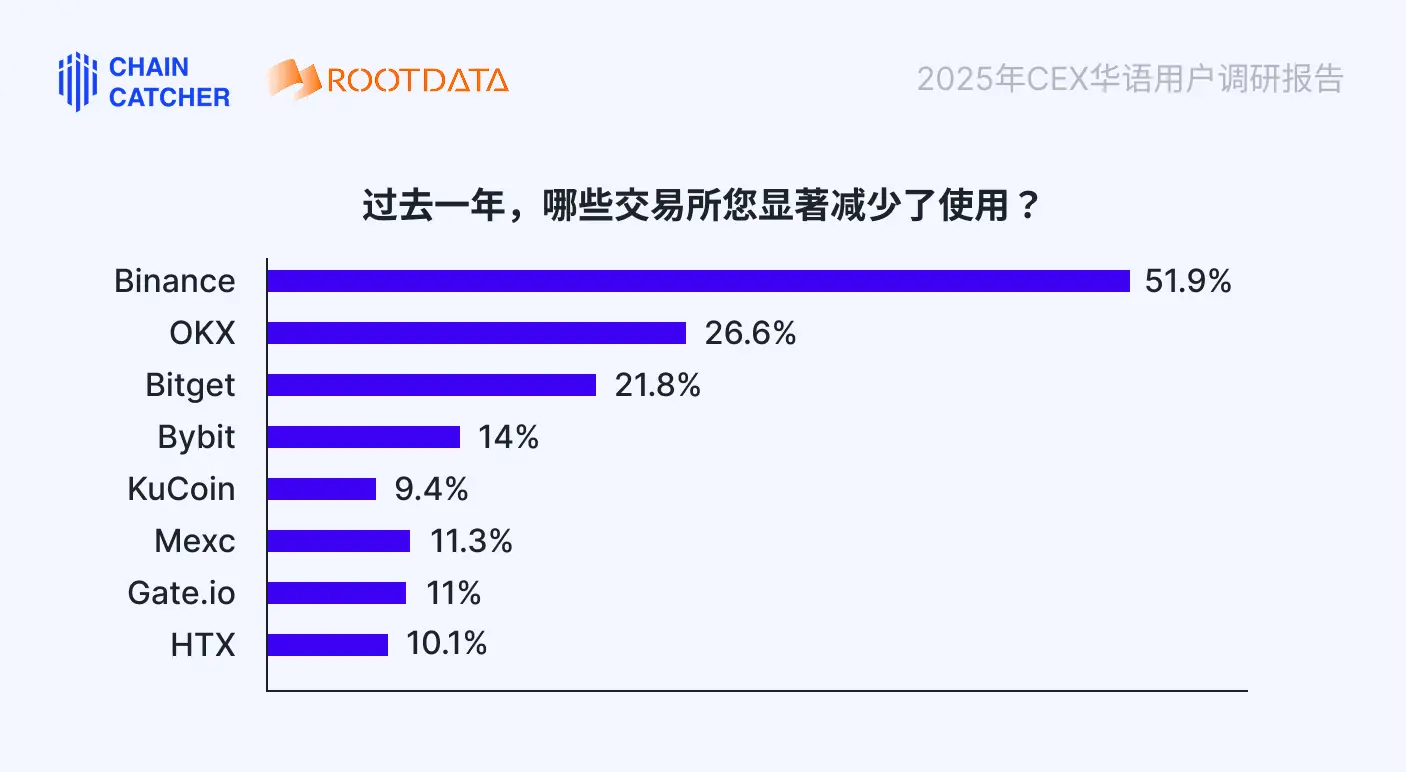
- Binance and OKX are the CEXs most frequently used by respondents and with the largest amount of custodial funds, but they are also the platforms with the highest rate of user reduction in the past year.
- "Actively listing high-quality assets" is the most popular coin listing style among respondents, but at the same time, a small number of respondents have lost confidence in the exchange's coin listing mechanism.
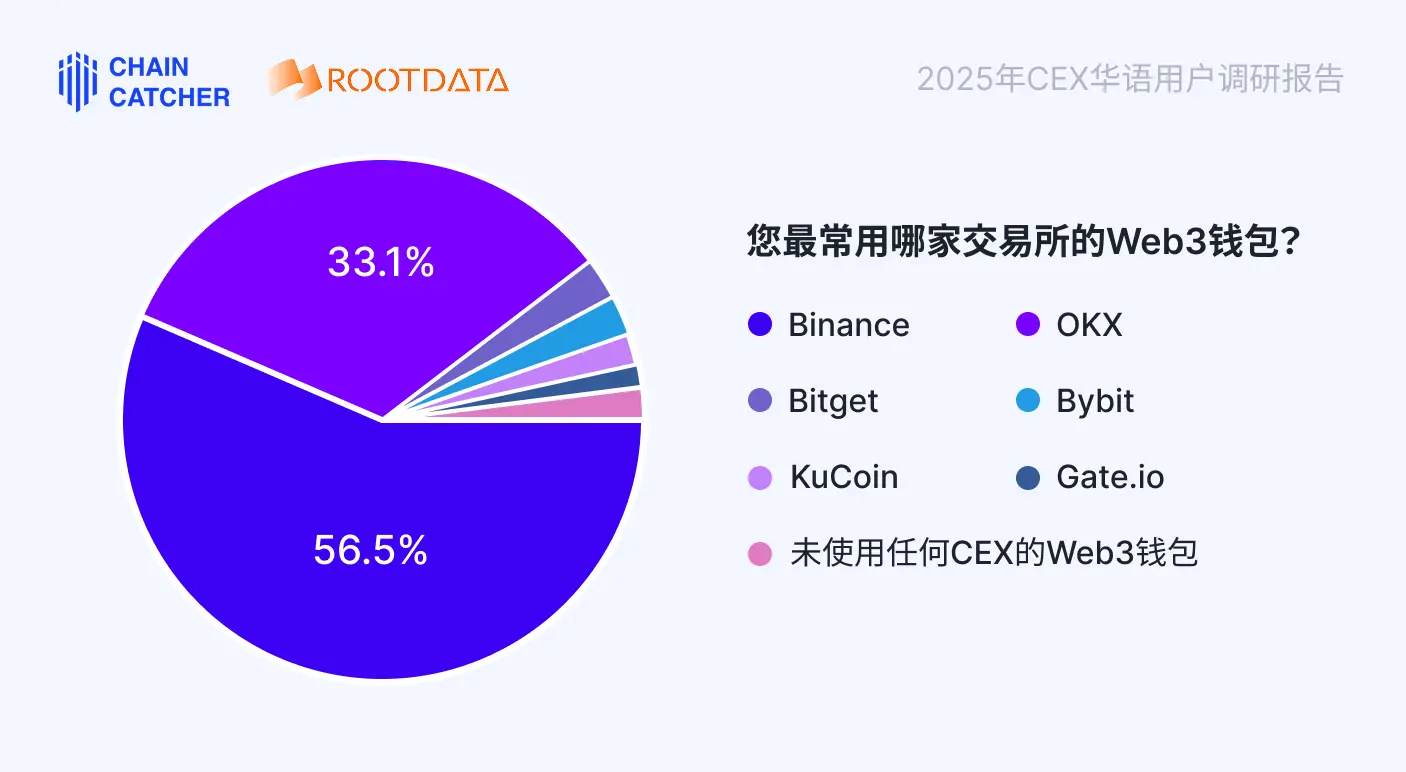
- The CEX Web3 wallet market is highly concentrated, with nearly 90% of respondents choosing Binance and OKX as their Web3 wallet services. Binance leads with a usage rate of 56.5%, while OKX ranks second with a share of 33.1%.
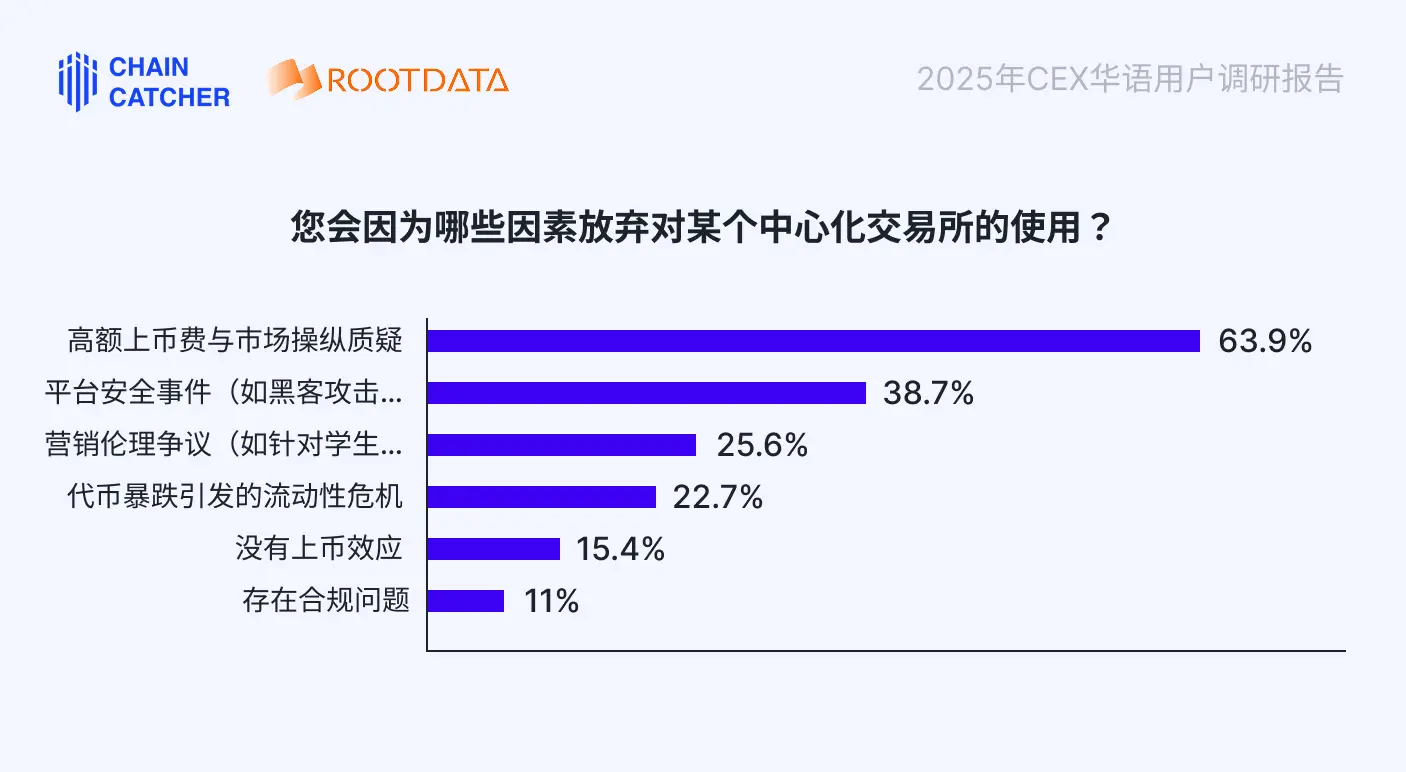
- The most prominent problem of deposit and withdrawal in centralized exchanges is the coin listing mechanism, which is questioned. 59.3% of the respondents encountered deposit and withdrawal problems, and 63.9% abandoned exchanges due to coin listing problems (breaking the issue price, insider trading); 74% of the respondents demanded transparency in the coin listing process.
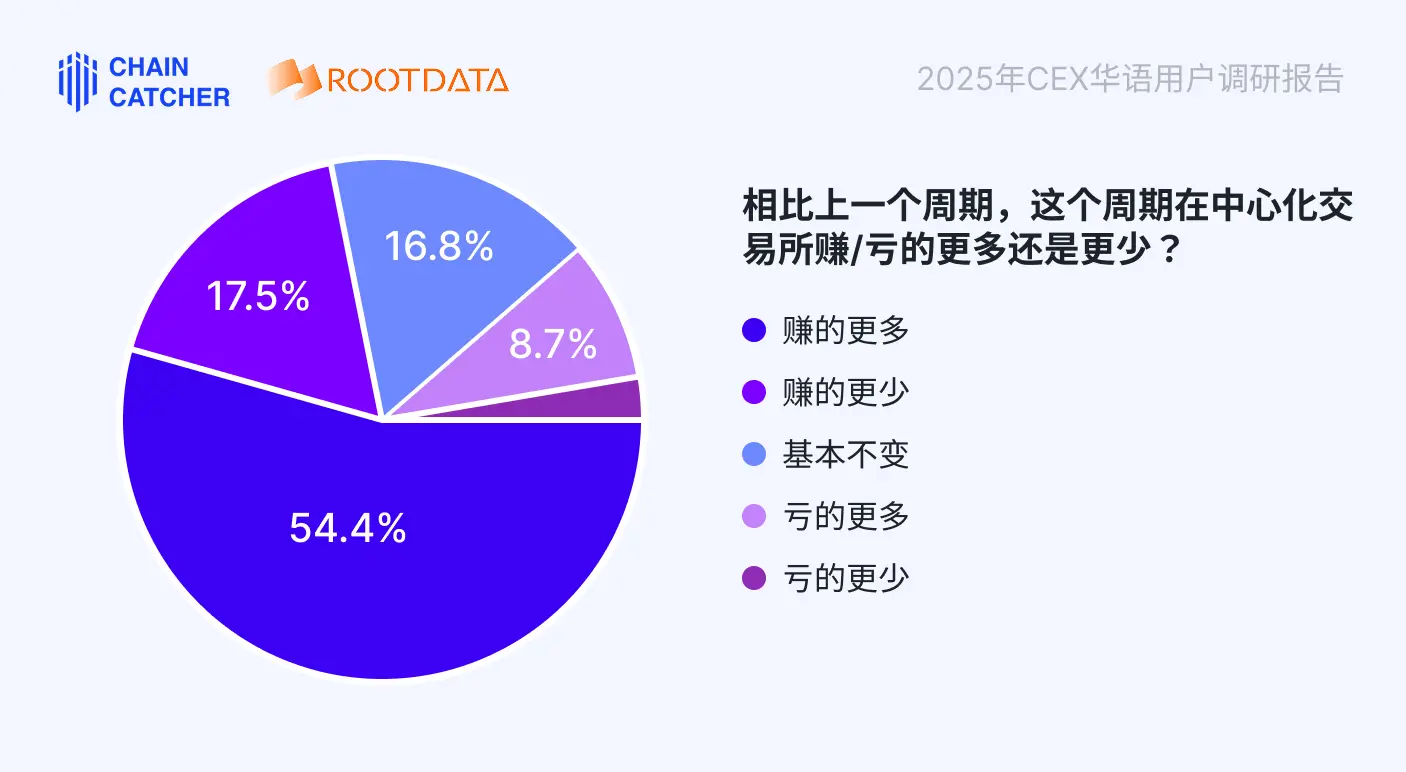
- Most respondents have increased their frequency of using centralized exchanges and the amount of funds they invested in the past year, and their overall profitability has expanded significantly. About 54.4% of respondents said that their profits from CEX investment transactions this cycle exceeded those of the previous cycle, and only 8.7% of respondents experienced an increase in losses.
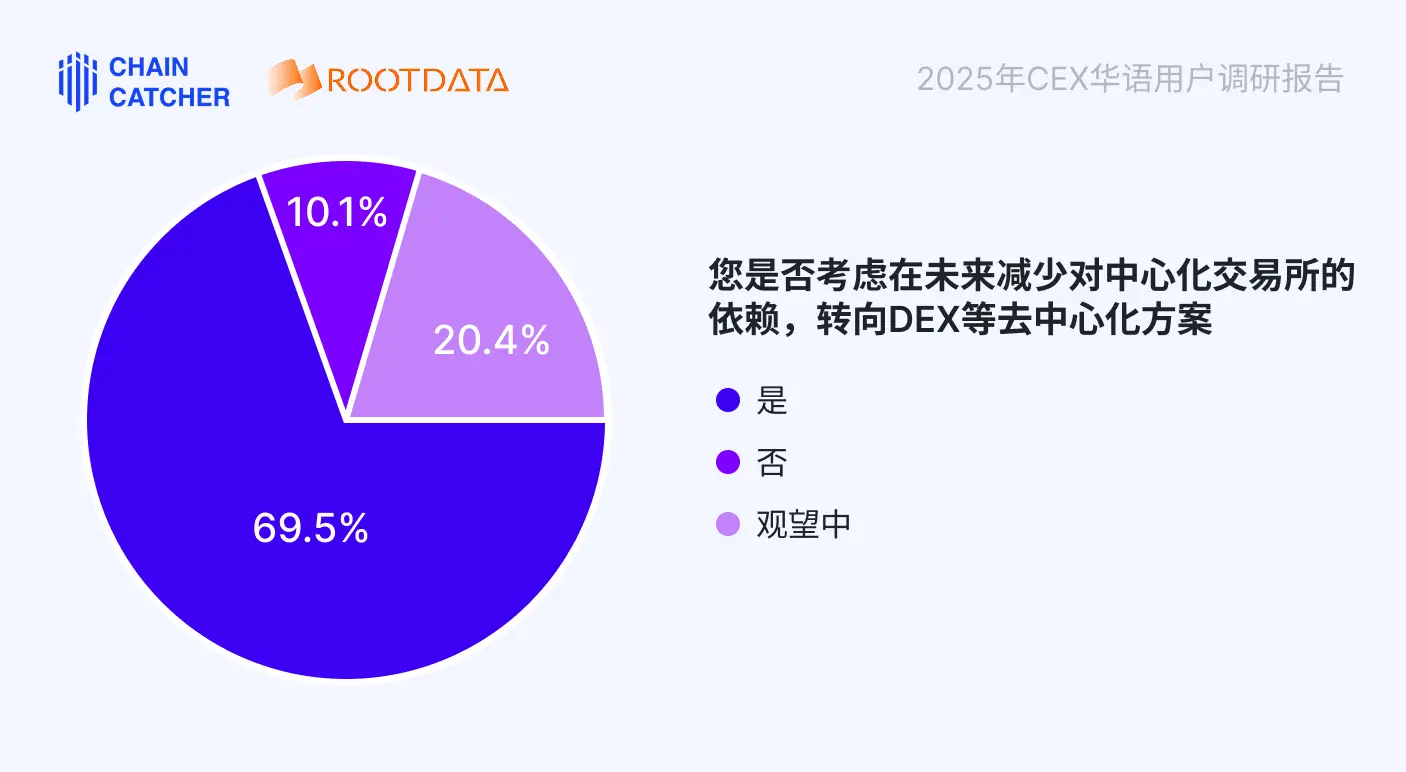
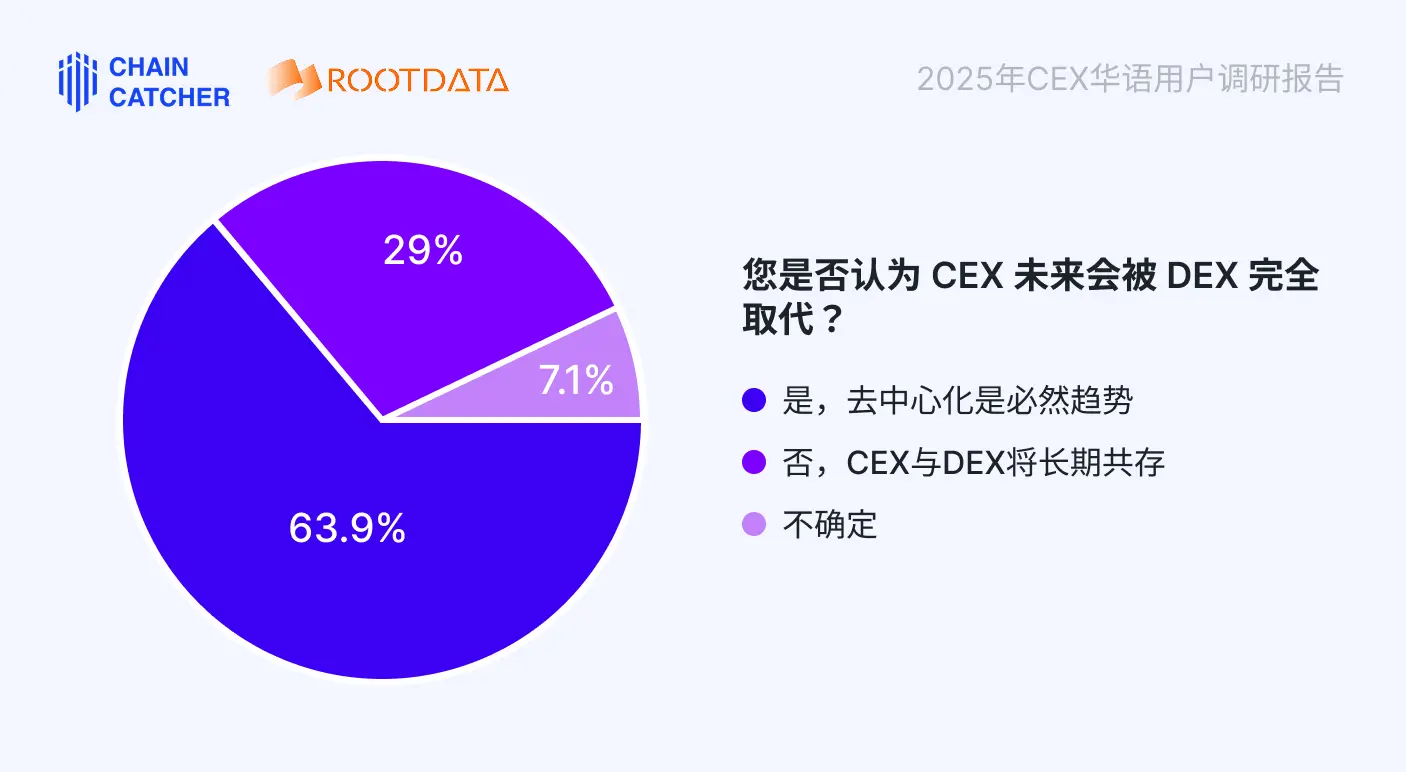
- 69.5% of the respondents considered switching to decentralized solutions such as DEX, and 63.9% of the respondents believed that DEX will completely replace CEX. However, 77.4% of users are still increasing their asset allocation in CEX, reflecting that short-term dependence is difficult to change.
1. Overview of the survey population
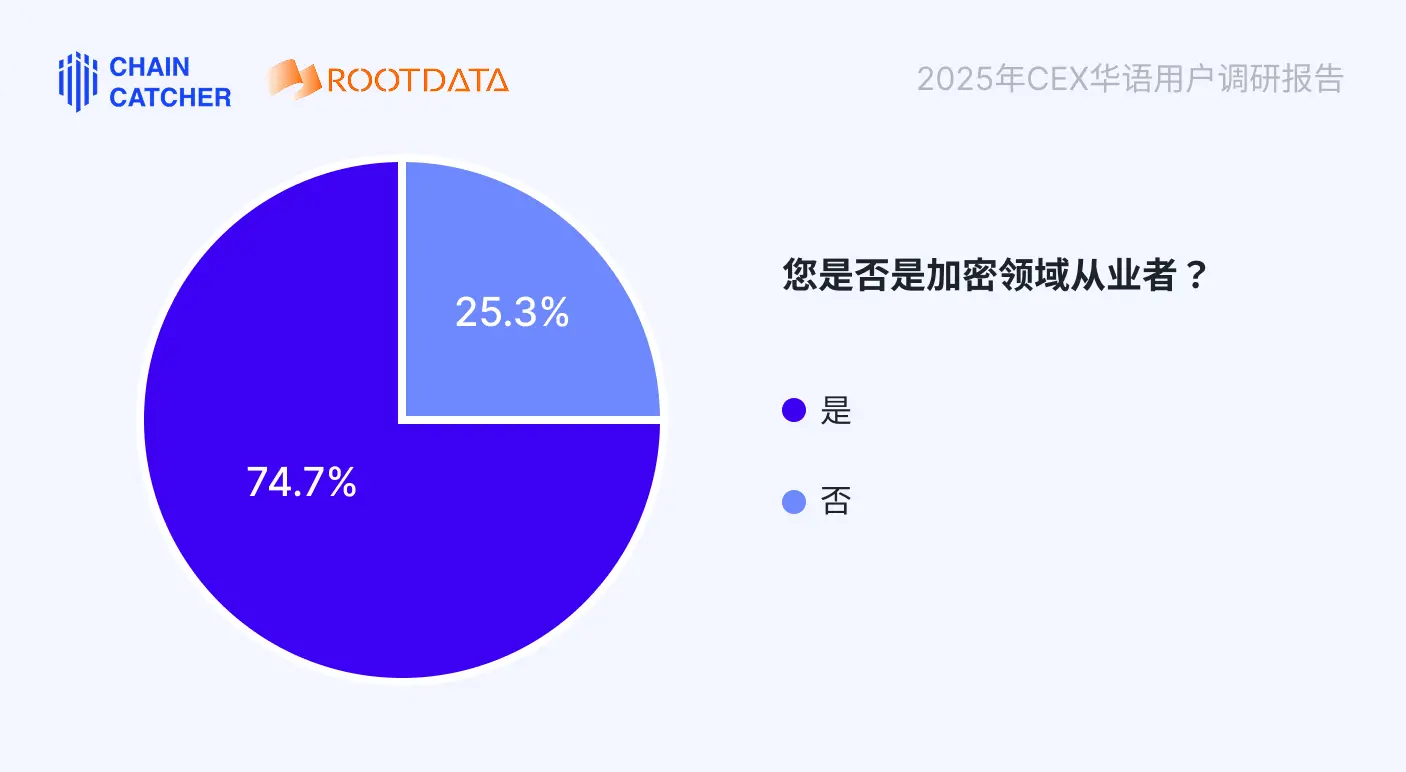
Most of the respondents are practitioners in the encryption field: almost 3/4 of the respondents are practitioners in the encryption field, and 1/4 of the respondents are non-encrypted practitioners.
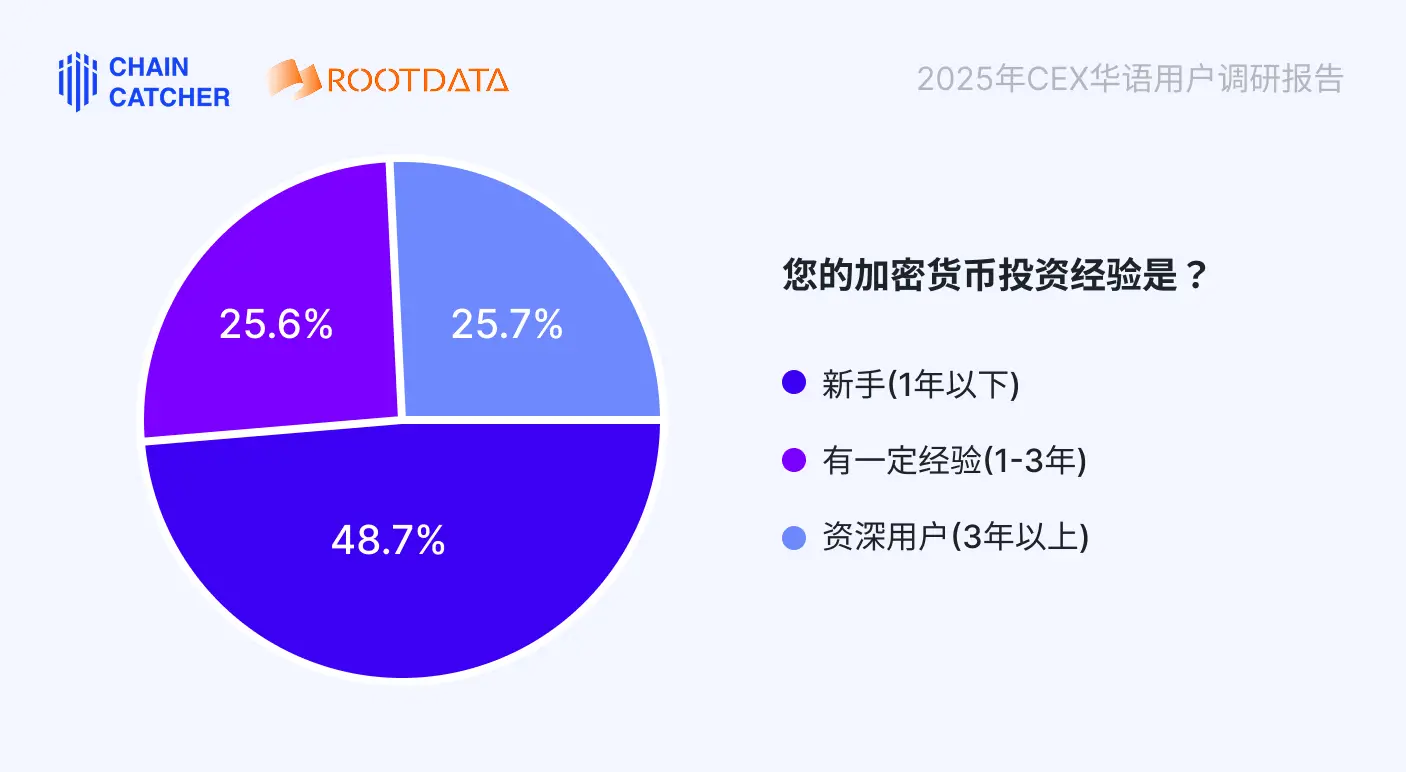
The respondents were mainly crypto investment novices and investors with certain experience: novices with less than 1 year of investment experience accounted for 48.7%; senior users with 1-3 years of investment experience and more than 3 years of investment experience accounted for 25.6% and 25.7% respectively.
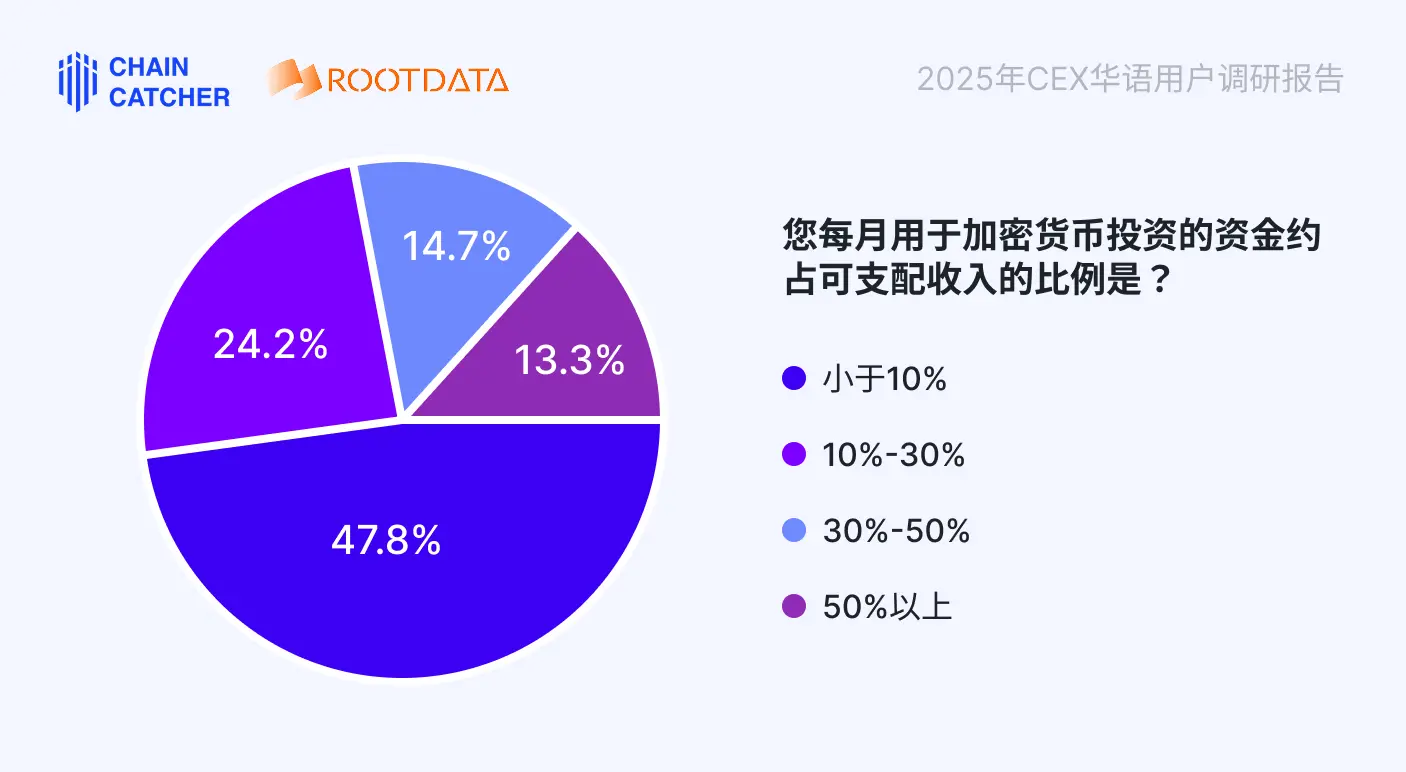
Respondents are relatively cautious about crypto investment. Nearly half of the respondents invest less than 10% of their monthly income in crypto, 24.2% invest 10%-30%, and 14.7% invest 30%-50%. 13.3% of respondents are still relatively aggressive, investing half or more of their monthly income in cryptocurrencies.
2. CEX Chinese-speaking users’ preferences
1. Highly used CEX
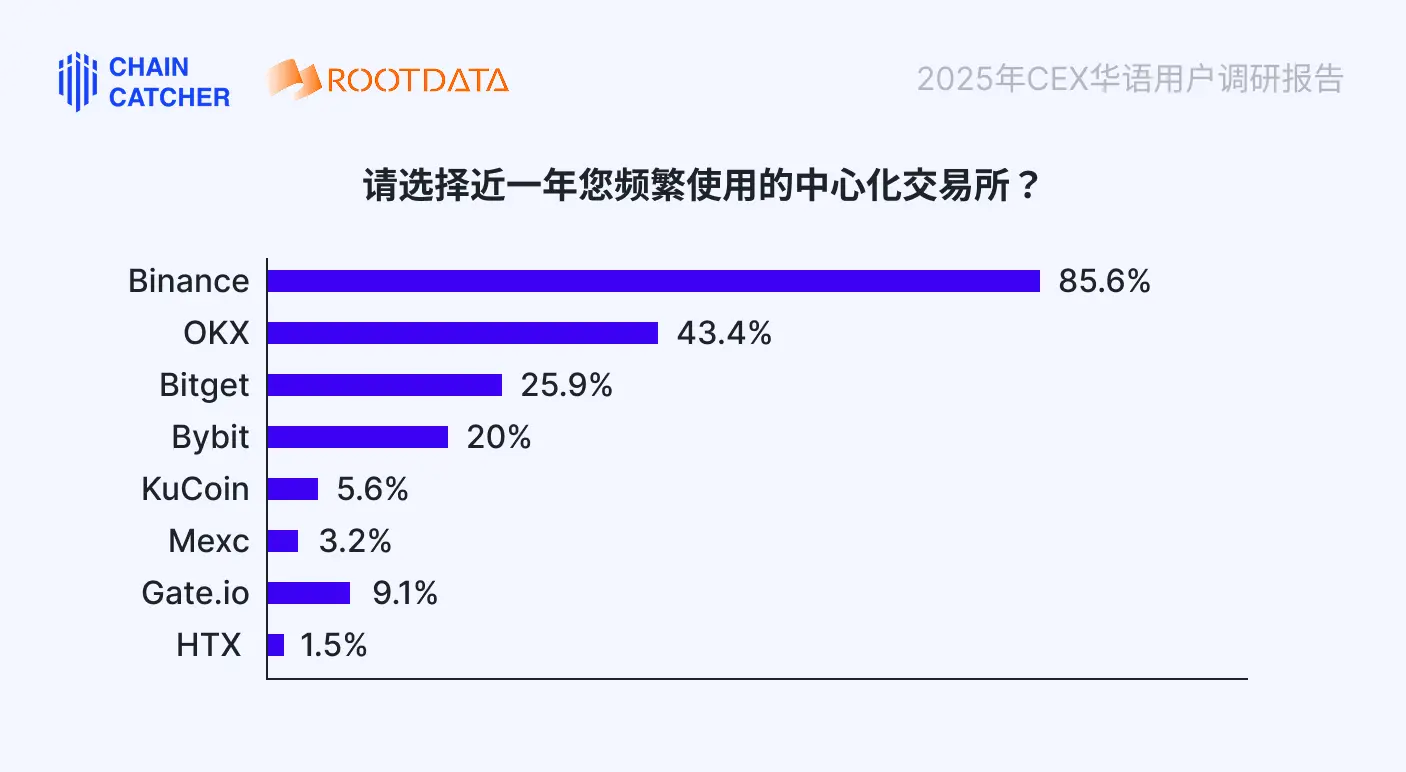
This survey asked respondents to select up to three centralized exchanges that they have frequently used in the past year.
The results show that Binance, OKX, and Bitget are the top three centralized exchanges most frequently used by respondents.
Binance was chosen by 85.6% of the respondents, far exceeding other platforms and nearly twice as high as the second-place OKX (43.4%), reflecting that users' choices are clearly concentrated on the leading platforms and the Matthew effect is intensifying.
Bitget (25.9%) and Bybit (20%) form the third camp, which to some extent illustrates that the competition in the second echelon is fierce and the pattern is difficult to determine.
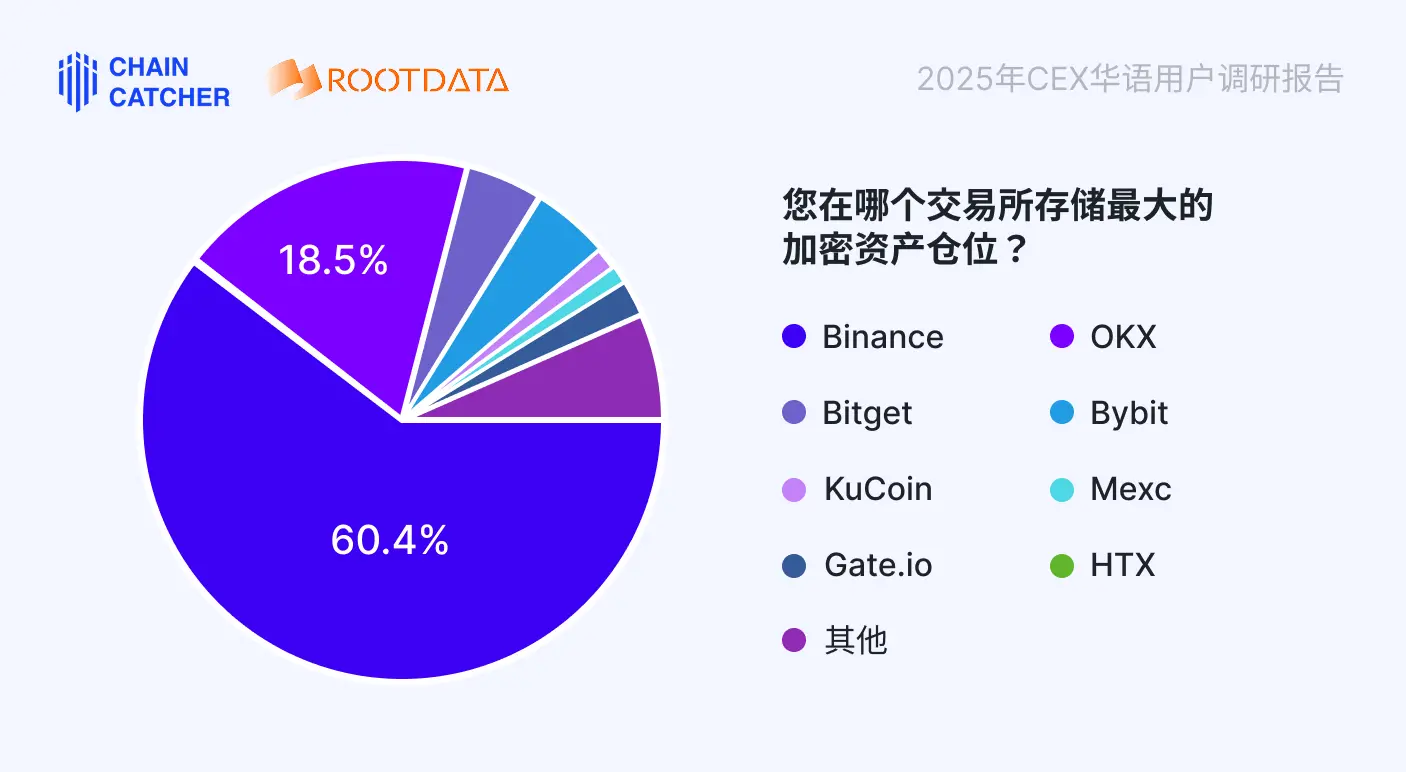
2. CEXs that store the largest crypto asset positions
In addition to the frequency of use, the location of respondents’ largest crypto asset positions also illustrates the level of trust users have in centralized exchanges.
Judging from the survey results, Binance is still the centralized exchange chosen by most respondents to store the largest cryptocurrency positions, with more than 60% of respondents choosing to store the most cryptocurrency assets on Binance.
18.5% of the respondents placed their largest crypto asset positions on OKX, which is significantly lower than the usage frequency of 43.4%. This may indicate to some extent that users tend to use it as a "trading channel" rather than an "asset warehouse."
Except for Binance and OKX, the market share of other exchanges is very scattered and low. Bitget and Bybit, as the third and fourth exchanges, were chosen by only 4.8% of respondents as the CEX where they place the largest crypto asset positions.
This reflects that in the cryptocurrency storage market, Binance and OKX have already occupied the vast majority of the market share, and other exchanges face considerable challenges in breaking through and attracting more users to store assets.
3. Coin style preference
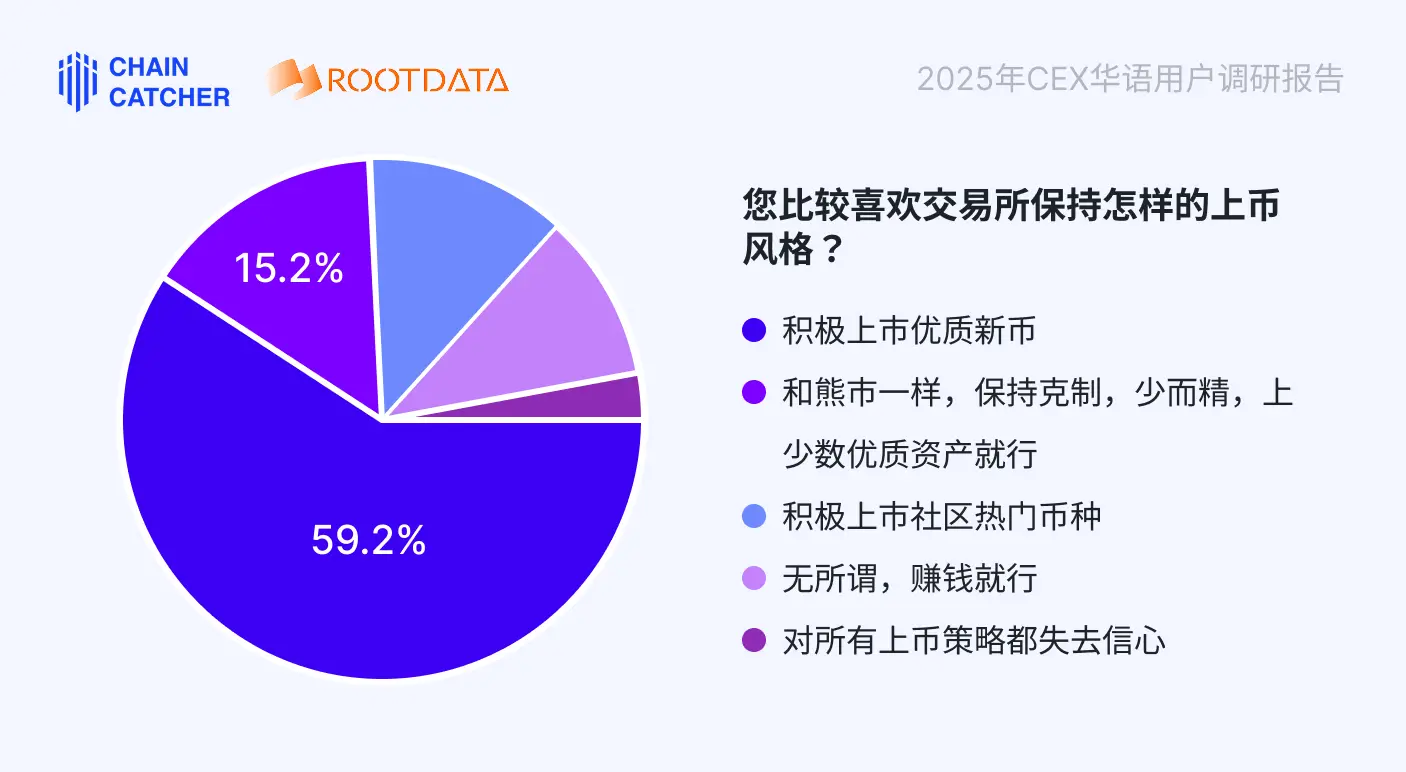
In this cycle, as the listing effect of centralized exchanges has weakened, what style of listing the exchanges adopt has also become a focus of frequent discussion in the market.
According to the survey results, 59.2% of the respondents like the listing style of actively listing high-quality new coins. This reflects that the cryptocurrency market is still in the innovation-driven stage and users still have high expectations for emerging assets.
15.2% of the respondents prefer a more restrained style of listing coins: they hope to list fewer but better assets, and select a few high-quality assets. This reflects that some users focus on long-term value investment.
12.4% of the respondents prefer the style of actively listing popular community currencies. In this round of cycle, the popularity of meme coins has once again verified the power of community sentiment, and the popularity of the community is also a direction that users and exchanges must refer to.
In addition, 10.2% of the respondents are not too concerned about the style of listing, but are more concerned about the money-making effect; and 2.9% of the respondents have lost confidence in the listing of exchanges. This reflects that the high rate of broken prices of listed coins and insider trading scandals in the past have indeed troubled some users.
Centralized exchanges may need to find their position in a dynamic balance - satisfying the majority of users' desire for "new assets", building trust through screening mechanisms, and flexibly responding to changes in community culture.
4. CEX listing strategy and process satisfaction
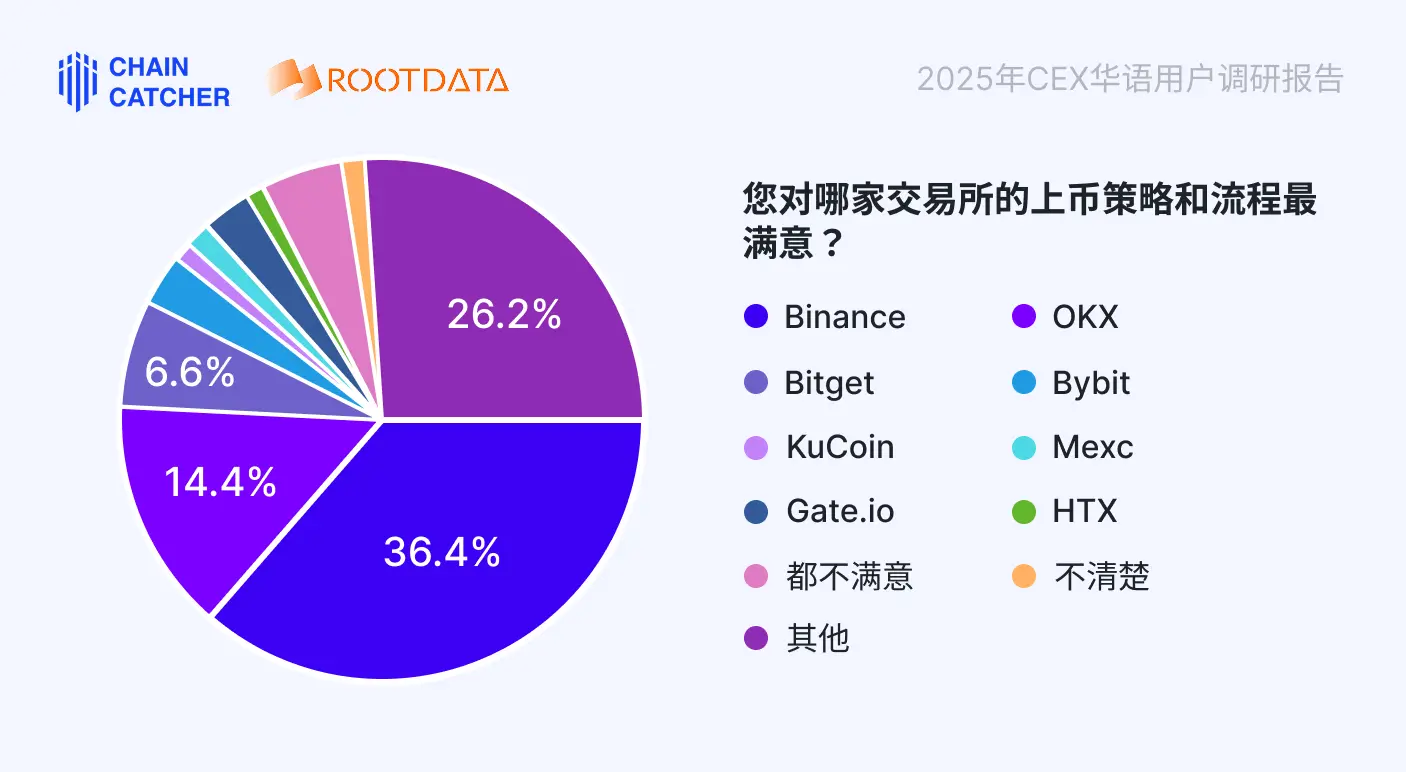
Binance still ranks first with a share of 36.4%, but its lead has narrowed. Binance has caused controversy many times in this cycle due to currency listing issues (such as insider trading suspicions and high break-even rates of some new coins), but it still has advantages in project screening capabilities, liquidity and global resources, making it the exchange that respondents are most satisfied with.
However, compared with its dominant performance in high-frequency usage, asset custody and other dimensions, there is still a significant gap in user satisfaction with its coin listing strategy, indicating that aspects such as audit transparency and project quality control need to be optimized.
KuCoin followed Binance with a share of 26.2%, becoming the second platform in terms of listing strategy and process satisfaction. According to the Klein Labs report, KuCoin will list 297 coins in 2024, far higher than Binance (60) and OKX (64), but significantly lower than Gate.io (629), the most aggressive coin listing platform. This "moderately active" coin listing strategy and community voting mechanism have attracted some investors who value participation. OKX ranked third with a share of 14.4%.
Overall, centralized exchanges still face challenges in listing coins. More than 5% of users are dissatisfied with the listing strategies and processes of all exchanges, and many users have left messages criticizing exchanges for dumping coins after listing.
5. Popularity of CEX Web3 wallet services
According to survey data, among the Web3 wallet services provided by centralized exchanges, Binance takes the lead with a usage rate of 56.5%. Its leading advantage may be mainly due to the continuous diversion of Binance Alpha program.
OKX ranks second with a share of 33.1%. OKX, which has a first-mover advantage in Web3 wallets, may be affected by the suspension of services and the impact of Binance Alpha.
Overall, Binance and OKX were chosen by 90% of the respondents, forming a clear duopoly, while the Web3 wallet usage rate of other exchanges was less than 3%. In addition, 2% of the respondents said that they did not use any Web3 wallet of any centralized exchange at all. (Note: After the survey, Bybit announced the closure of most of its Web3 wallet services)
6. Key factors for choosing a CEX
What factors do respondents value most when choosing a centralized exchange? This questionnaire also conducted a detailed investigation.
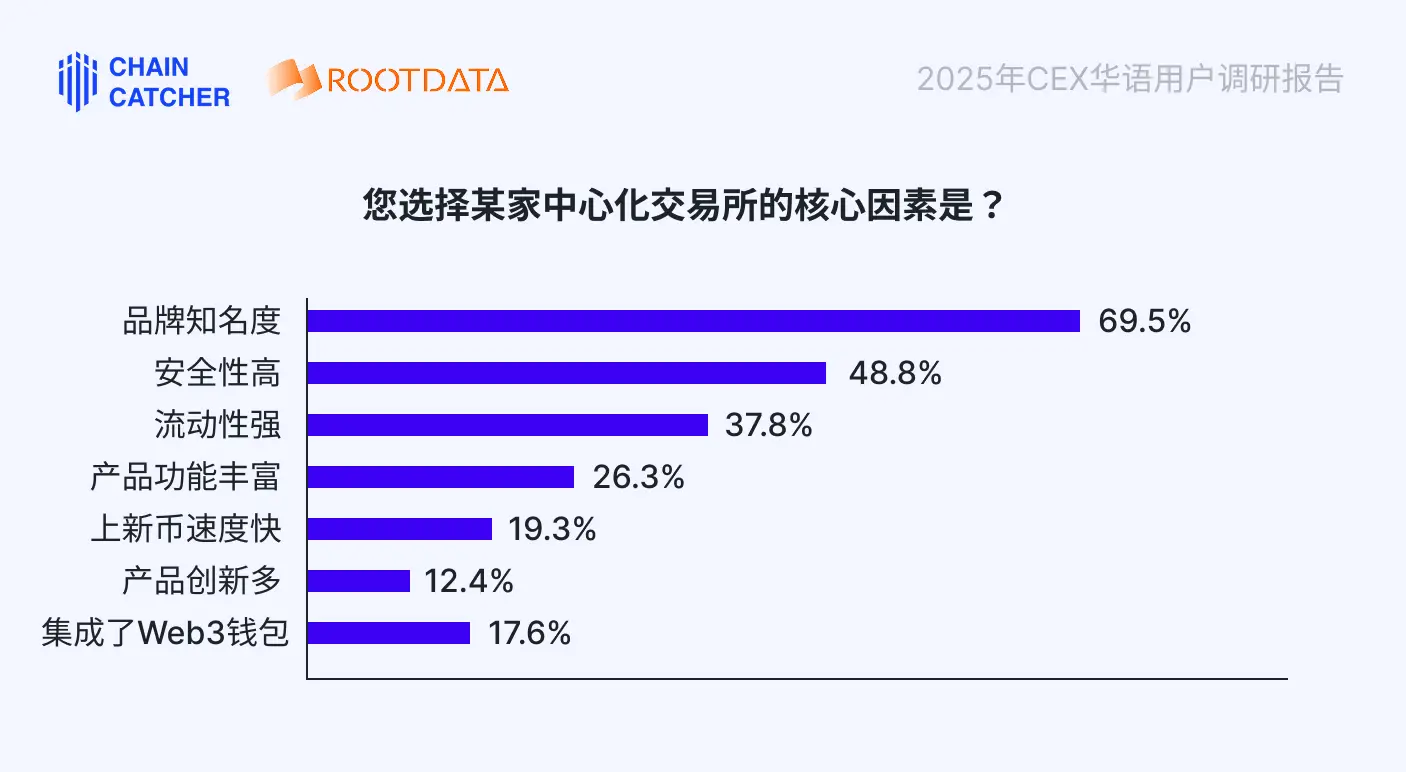
Judging from the survey results, brand effect is absolutely dominant. 69.5% of the respondents listed "brand awareness" as the primary consideration, reflecting the intensification of the Matthew effect in the industry. The top exchanges have formed cognitive barriers with their first-mover advantage and scale effect.
48.8% of users emphasize "security" and 37.8% focus on "liquidity". These two rigid demand indicators together constitute the bottom line for the survival of the exchange.
26.3% of users are concerned about the "richness of product functions", reflecting the demand of mature investors for comprehensive services such as derivatives and financial management.
19.3% prefer "speed of listing new coins", reflecting the need to participate in the primary market. And 17.6% of users take "integrated Web3 wallet" into consideration. This relatively new option has surpassed some traditional indicators, indicating that the integration of CEX and DeFi is reshaping industry standards.
In addition, from the comments of the respondents, we can see that whether there are more welfare activities such as airdrops, the empowerment of platform coins, and the usage experience of U cards are also reference options for the respondents to choose centralized exchanges.
7. Analysis of pain points of CEX users
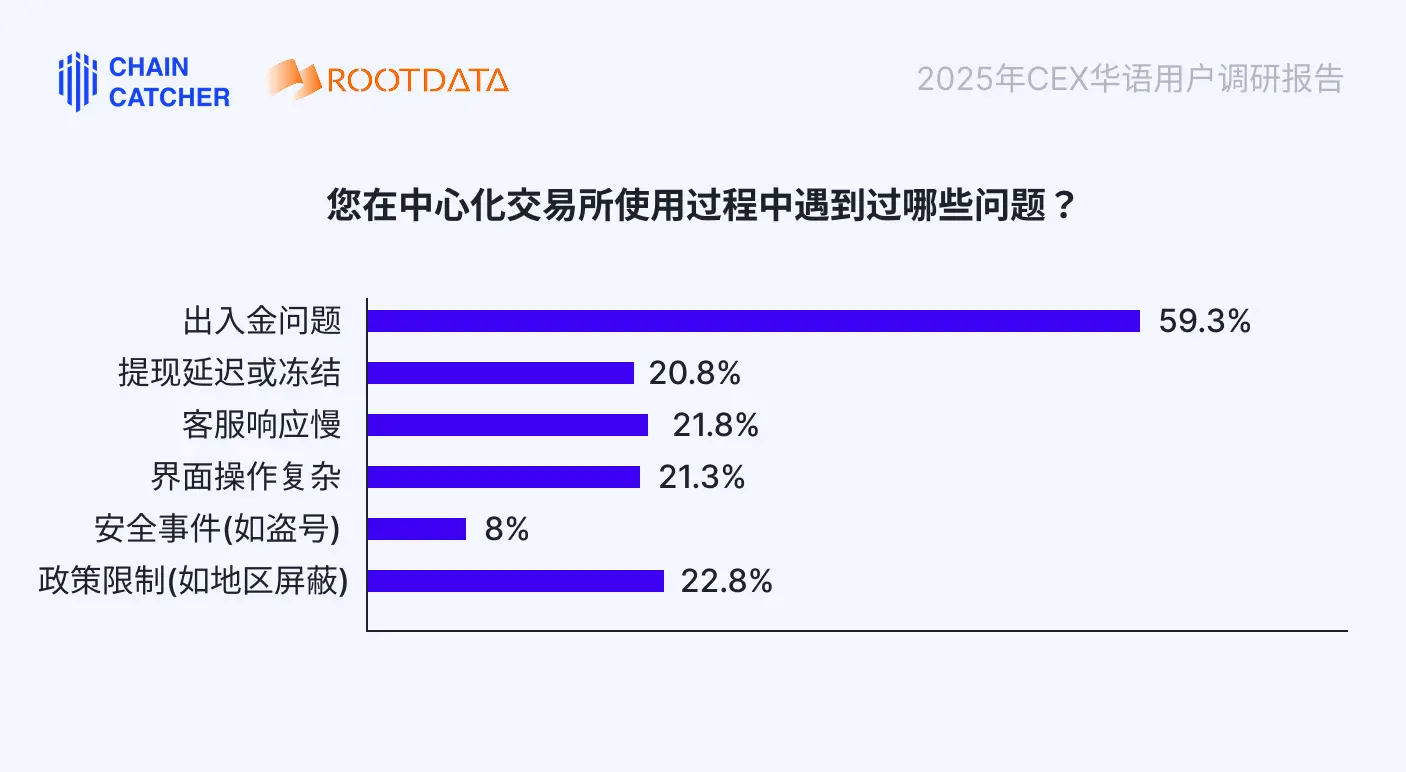
Deposit and withdrawal issues have become the biggest pain point. 59.3% of users have encountered deposit and withdrawal issues, which is much higher than other types of problems, reflecting that there are still systemic obstacles in the connection between traditional finance and the crypto ecosystem.
Operational and service problems also emerged. Withdrawal delays/freezes (20.8%) and slow customer service responses (21.8%) affected more than 40% of users, exposing the shortcomings of some exchanges in fund processing efficiency and customer service systems.
22.8% of users are affected by policy restrictions (such as regional blocking, KYC upgrades, etc.), and policy compliance challenges are becoming increasingly prominent.
In addition, 21.3% of respondents believe that the interface operation is complicated, which also reflects that there is still much room for improvement in the user experience design of the current centralized trading platform.
3. Changes in usage trends of CEX Chinese users in the past year
1. Changes in usage frequency
The questionnaire investigated the changes in the frequency of users' use of CEX in the past year.
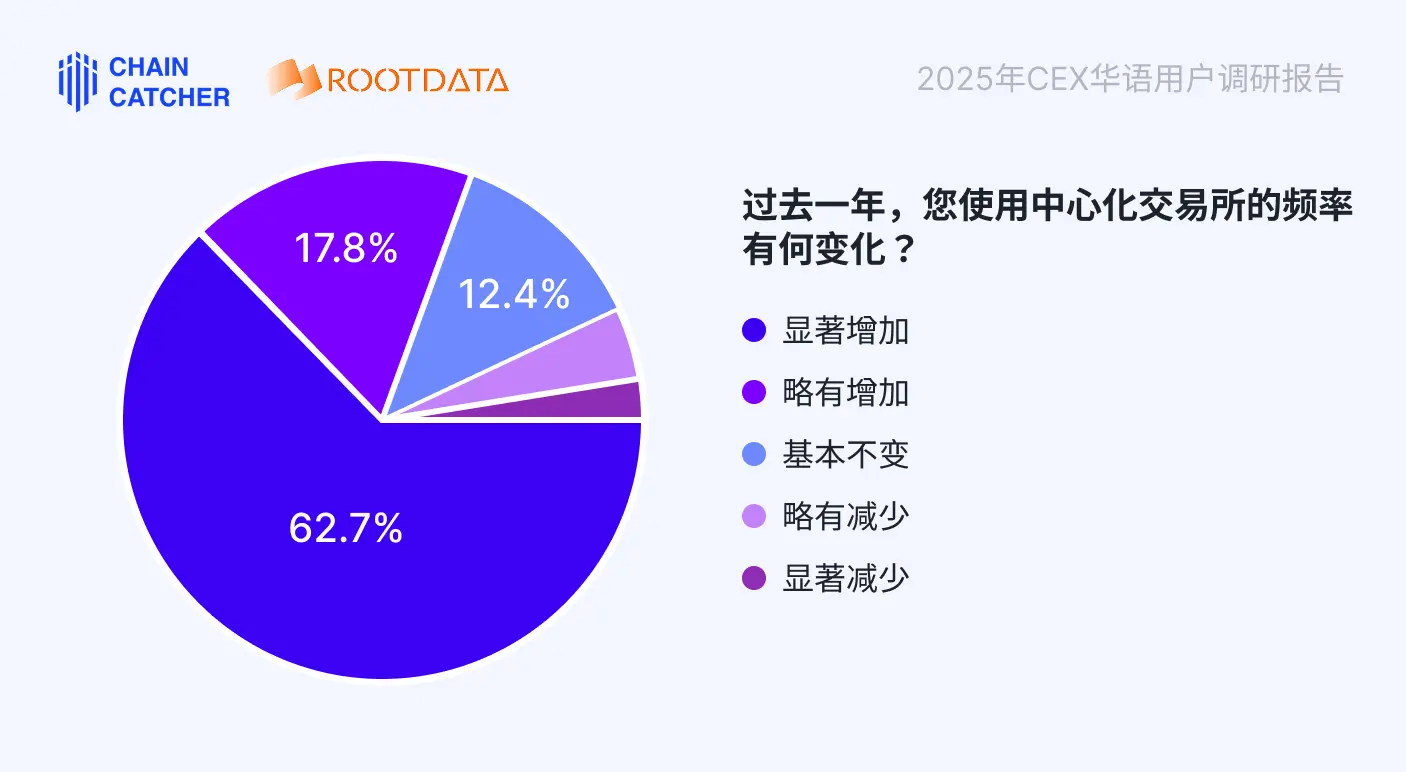
80.5% of users (62.7% increased significantly, 17.8% slightly increased) said that the frequency of using CEX increased in the past year, indicating that CEX still has strong stickiness among Chinese users. This may be related to market fluctuations, the crypto asset investment boom, and the continuous introduction of new features by leading CEXs (such as Web3 wallets, financial products, etc.).
12.4% of users said that the frequency of use remained basically unchanged, reflecting that some users have formed stable trading habits. Only 7.1% of users (a slight decrease of 4.6% and a significant decrease of 2.5%) reduced the frequency of CEX use, which may be related to security incidents or the increased attractiveness of DEX.
2. Changes in asset investment
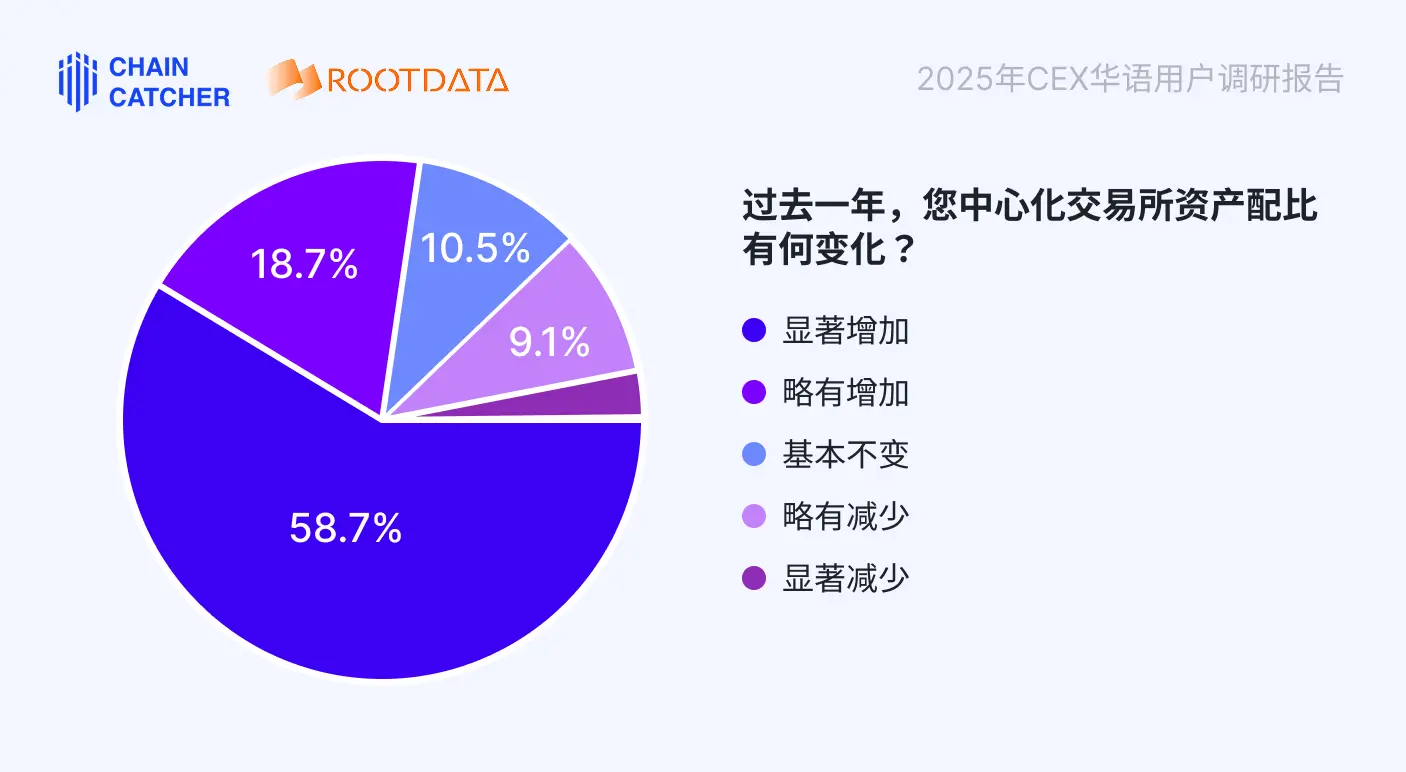
The results show that 77.4% of users (58.7% increased significantly and 18.7% increased slightly) increased their crypto asset allocation on CEX. Among them, more than half of the respondents increased their asset allocation significantly in the past year, and only 12% of the respondents reduced their asset allocation (9.1% decreased slightly and 2.9% decreased significantly).
Overall, it reflects that as Bitcoin continues to hit new highs and the crypto market recovers, users' investment demand for crypto assets is also increasing, and CEX remains the most important cryptocurrency investment and trading entry point for users.
3. Asset appreciation trend
We asked respondents in the questionnaire, "Compared to the previous cycle (early 2022 to the end of 2023), have you made more or less money on centralized exchanges in this cycle (early 2024 to date)?"
The results show that the overall profitability has expanded significantly, with about 54.4% of users indicating that their profits from CEX investment transactions in this period exceeded those in the previous period, and only 8.7% of users experiencing increased losses.
4. Significant reduction in CEX usage and reasons
Binance, with a share of 51.9%, is the exchange that respondents use less the most, which may be affected by factors such as the weakening listing effect and regulatory compliance. OKX follows closely with a share of 26.6%.
Binance and OKX, as the exchanges with the highest frequency of use among respondents and the largest amount of assets under custody, may still face a high user churn rate.
5. Analysis of the reasons for abandoning a certain CEX
The reasons why survey respondents abandoned a centralized exchange showed that the coin listing mechanism brought the greatest negative impact.
63.9% of users abandoned CEX due to the issue of listing, which is the highest proportion, reflecting that users are particularly dissatisfied with the listing mechanism. High listing fees may increase the cost of the project party and indirectly push up the token price, while market manipulation suspicions further shake users' trust in the fairness of the platform. In addition, 15.4% of users will abandon CEX due to "no listing effect", which shows that CEX urgently needs to optimize the listing mechanism to rebuild user confidence.
38.7% of users abandoned CEX due to platform security incidents, indicating that security issues are still one of the pain points that users are most concerned about. This year, Bybit’s $1.5 billion theft once again sounded the alarm for crypto CEX users and the industry.
25.6% of users abandoned CEX due to marketing ethics disputes, indicating that such issues not only damage the reputation of the platform, but may also cause users to question the overall operational integrity of the platform.
22.7% of users abandoned CEX due to the liquidity crisis caused by the token plunge, reflecting the insufficient liquidity management capabilities of some platforms under market fluctuations.
11% of users abandoned CEX due to compliance issues, indicating that some platforms have shortcomings in regulatory compliance. As global crypto regulation becomes stricter, users are also worried about the impact on asset security. CEX needs to actively adapt to regulatory requirements and improve compliance levels to reduce user concerns.
6. Analysis of potential factors that reduce the overall use of CEX
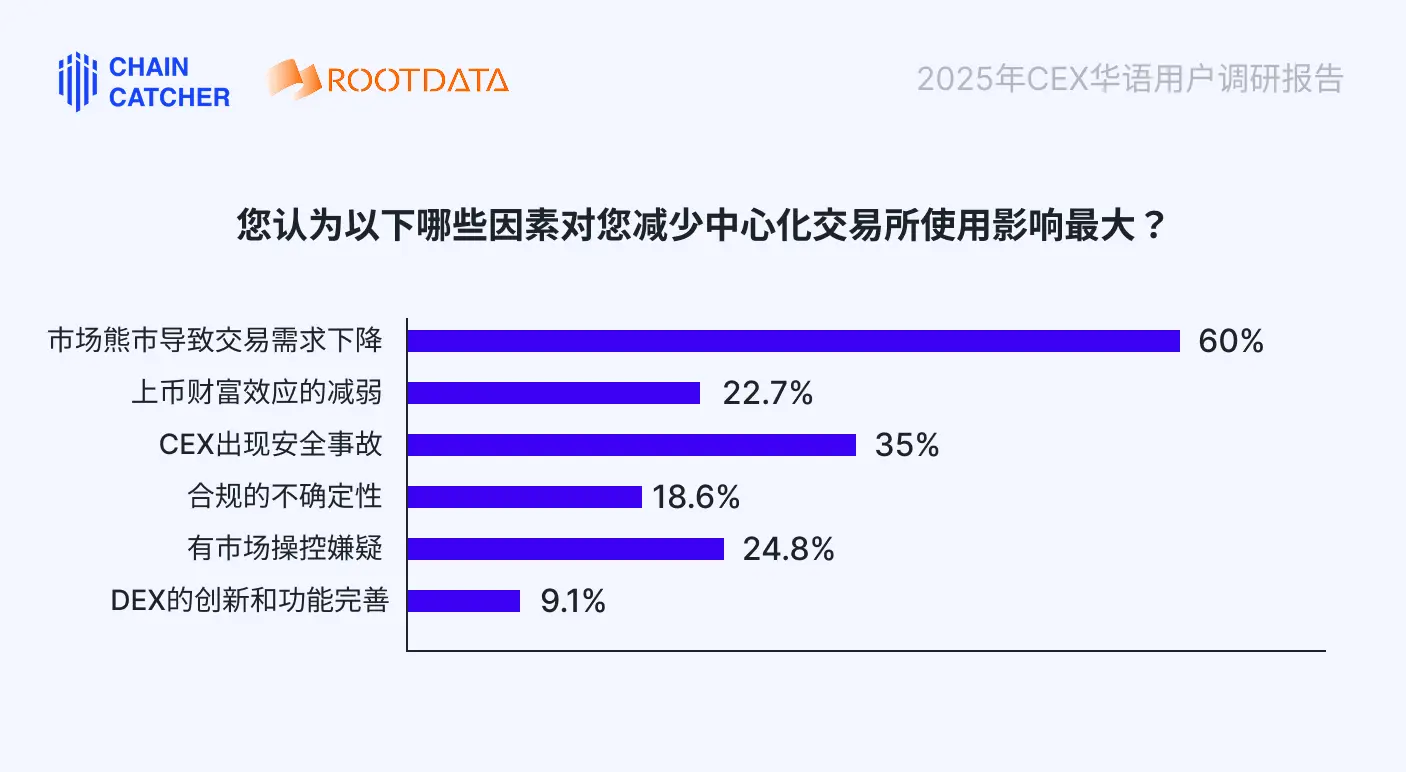
When asked what factors would cause respondents to reduce their use of centralized exchanges, the results showed that 60% of users reduced their use of CEXs due to the bear market, which was the highest proportion, reflecting the direct impact of the macro market environment on user behavior.
35% of users reduce their use of CEX due to security incidents, indicating that security is still the core pain point of CEX.
24.8% of users reduced their usage due to suspicion of market manipulation, reflecting users’ doubts about the fairness of CEX transactions.
22.7% of users reduced their usage due to the weakening of the wealth effect of listing coins, reflecting that if CEX fails to attract users through high-quality projects, it may lead to user loss. In addition, compliance issues and DEX innovations have brought challenges to CEX in attracting users.
4. Chinese users’ expectations for the future development of CEX
1. Are you considering using decentralized solutions to replace CEX?
69.5% of the respondents said they would consider replacing CEX with more decentralized solutions such as DEX, which is a significant proportion. This reflects the intensification of users' trust crisis in CEX and the competitive pressure brought by the rise of DEX to CEX.
However, 10.1% of the respondents still said they were waiting and watching, which shows that some users may still have a strong reliance on the CEX brand and are skeptical about the maturity of so-called decentralized solutions such as DEX.
2. Judgment on the future pattern of CEX and DEX
Regarding the question "Will CEX be completely replaced by DEX in the future?", 63.9% of respondents believe that DEX will completely replace CEX, reflecting that the concept of decentralized finance (DeFi) has a strong appeal in the cryptocurrency community, and that DEX is gradually narrowing the gap with CEX in user experience.
Nearly 30% of the respondents believe that CEX and DEX will coexist for a long time, indicating that some people are optimistic about the continued existence of CEX. The advantages of CEX are fast transaction speed, user-friendly experience, high liquidity, support for fiat currency transactions, etc., which are especially attractive to novice users and institutional investors. A small number of respondents are on the sidelines, probably because they are uncertain about blockchain technology, market supervision, the maturity of DEX technology (such as transaction efficiency, gas fee issues) or the iteration ability of CEX. This reflects the complexity of the crypto market and the variability of future development.
3. Analysis of the improvement measures that respondents most expect to see in order to enhance trust in CEX
The transparency of the listing process is still the most concerned. More than 74% of the respondents believe that the listing process needs to be further disclosed, which also reflects that users generally believe that the listing process of CEX is not open enough and there may be concerns about "black box operations" or profit transfer.
More than 37% of the respondents are concerned about the transparency of CEX's asset reserves, reflecting concerns about the security of platform funds. The shadow cast by FTX and other bankruptcy incidents on some users may still not dissipate.
In addition, more than 35% of respondents hope that CEX will establish industry-wide unified risk control standards, which may indicate that the current CEX risk control measures are uneven and may lead to systemic risks; more than 18% of respondents hope to limit high-leverage transactions.