
In 2025, the crypto market is like a deserted morning after a feast. The altcoins, the tokens that once ignited the wealth dreams of countless investors, are quietly fading from their former glory. In the ICO boom of 2017, the DeFi and NFT craze of 2021, altcoins once wrote the glory of the "altcoin season" with the legend of a hundredfold increase. However, today's market has changed beyond recognition. The narrative exhaustion, value collapse, and liquidity crisis have completely ended the bull market feast of altcoins. Will the altcoin season come again? The answer may be no. So in the next cycle, how can we operate to seize the possible local market?
The illusion of copycat season is shattered: from enthusiasm to cold reality
Altcoins were once the brightest stars in the crypto market. In 2017, the ICO craze swept the world, and countless projects attracted money through token issuance. Investors flocked in like gold diggers, eager to catch the "next Bitcoin". Tokens such as Ethereum and EOS skyrocketed overnight, and their market value increased dozens of times. In 2021, DeFi and NFT became new outlets. DeFi tokens such as Uniswap and Aave rose dramatically. The token AXS of the NFT project Axie Infinity soared from $1 to $160, and the total market value of altcoins once exceeded $1 trillion. It was a frenetic era, retail investors were intoxicated by the dream of "hundred-fold coins", and the altcoin season seemed to be endless.
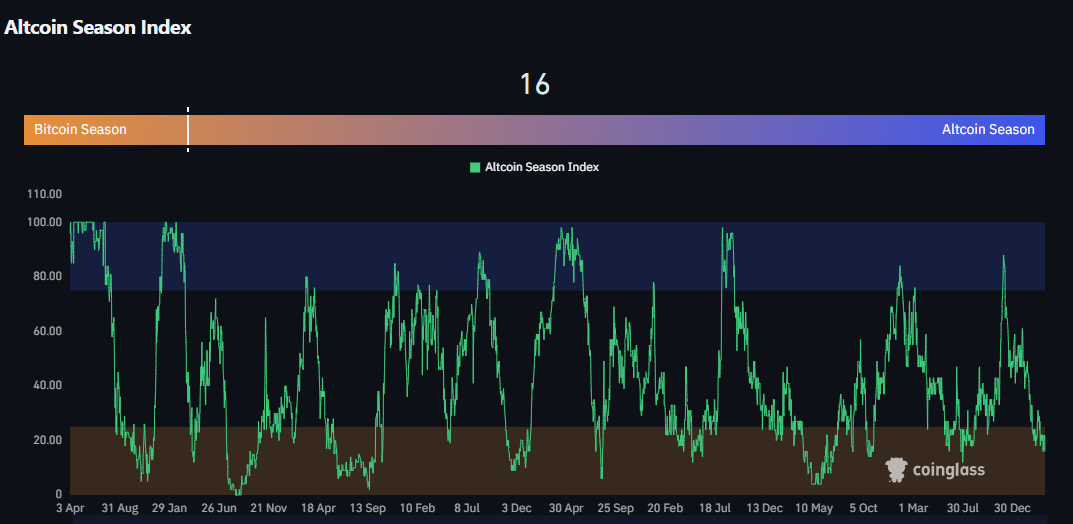
However, the altcoin market in 2025 is already deserted. The Altcoin Season Index fell to a new low of 16, indicating that the overall performance of altcoins has hit the bottom. Market analysts pointed out that according to the logic of terminal acceleration, the next quarter may be a critical period for altcoins to find the bottom. The former craze has turned into a bubble, and investors' confidence in altcoins has almost collapsed, and even leading altcoins such as Ethereum have not been spared. The fantasy of the altcoin season is shattered in the cold reality.
Why is the altcoin season unsustainable? The answer lies in the essential dilemma of altcoins. Many tokens lack real value, and their contribution to real society is minimal compared to Web2 companies of the same market value. For example, some Meme coins have a market value of billions of dollars, but their technical value is almost zero; while SaaS companies of the same market value often have stable income and user base, creating real value for society. Blockchain technology has been around for more than ten years, but altcoins have rarely been put into practical use. Metaverse projects such as Decentraland were once highly anticipated, but their virtual worlds have few users and are difficult to convert into sustainable value. The altcoins with collapsing value are the first to be hit in the bear market. Investors are gradually turning to Bitcoin and a few leading projects, leaving a narrower living space for altcoins.
Narrative exhaustion and incremental shrinkage: from national enthusiasm to deserted stock
The fuel of the altcoin season is inseparable from the injection of new narratives and new funds. In 2017, the narrative of the "blockchain revolution" swept the world with the ICO craze; in 2021, the buzzwords of DeFi and NFT ignited market enthusiasm, retail investors flocked into the market, and funds pushed up token prices like a flood. However, the altcoin market in 2025 has lost the magic of narrative, and the torrent of funds has dried up.
First, the exhaustion of narratives has wiped out the appeal of altcoins. The DeFi craze has long since cooled, and many projects have lost trust due to unsustainable high returns and frequent hacker attacks (such as cross-chain bridge vulnerabilities). The NFT market has also cooled, with trading volume falling from billions of dollars in 2021 to the bottom. Once-popular NFT tokens such as AXS are now priced below $5. Although new narratives such as the metaverse and AI tokens have been tried, it is difficult to form a market consensus and is far from enough to ignite a full bull market. What's more fatal is that blockchain technology has not yet produced a killer application. After losing the halo of "subverting tradition", altcoins can no longer attract new players to enter.
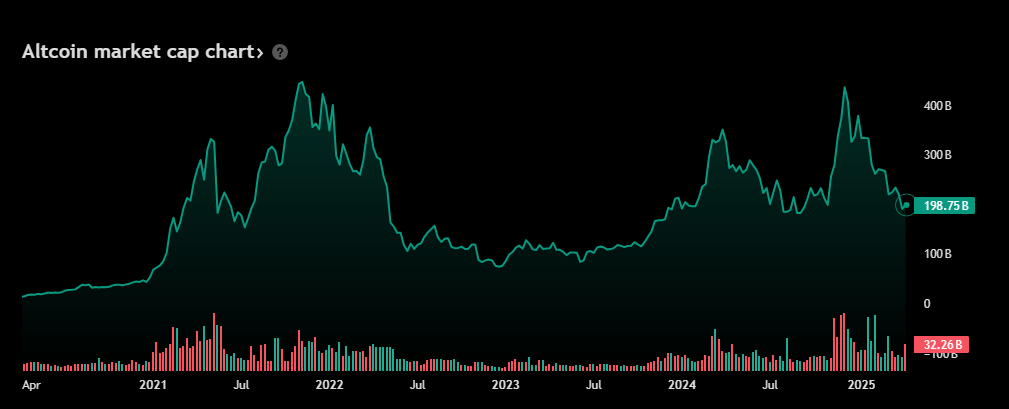
Secondly, the market has shifted from "incremental" to "stock". The early crypto market was like an uncultivated wasteland, with few projects and concentrated funds. Retail investors flocked in and it was easy to push up the market value. Today, the number of crypto projects has surged to tens of thousands, but the total market value and retail investors' attention are seriously divided. The deterioration of the global economic environment has further aggravated the situation: high interest rate policies have compressed the valuation of risky assets, geopolitical risks have intensified, investors are more inclined to hold cash or gold, and the speculative demand for altcoins has shrunk significantly. Without the injection of new funds, the engine of the altcoin season has been stalled.
Departure from the original intention of decentralization: Bitcoin takes the lead
The original intention of blockchain is decentralization, but many altcoin projects go against this. Some public chains sacrifice decentralization in pursuit of performance, and centralized exchange tokens rely more on platform policies than community consensus. This deviation makes the consensus of altcoins short-lived, and investor confidence is difficult to sustain. For example, in the LUNA/UST crash in 2022, the algorithmic stablecoin designed by the centralization returned to zero overnight, and investors lost tens of billions of dollars. Similar incidents are common in small altcoins, which seriously damaged market trust.
On the other hand, Bitcoin, as the source of blockchain, is highly decentralized (no single control point, miners are distributed all over the world), making it irreplaceable. In 2025, Bitcoin's market share is close to 60% (historical trend speculation). Arthur Hayes, founder of BitMEX, said bluntly on social media: "Shitcoins are getting in our strike zone, but I think #bitcoin dominance keeps zooming towards 70%." Institutional investors also prefer Bitcoin, which is regarded as "digital gold" and has become the first choice for safe-haven assets. If Bitcoin's market share soars to 70%, the survival space of altcoins will be further compressed, and the possibility of the return of the altcoin season is slim.
Liquidity crisis and the decline of public chains: the survival dilemma under the shadow of ghost towns
Another fatal flaw of altcoins is the fragmentation of liquidity. In 2025, the liquidity of the crypto market is concentrated in a few public chains, such as Ethereum, Solana, and BNB Chain, and the transaction volume and developer activity of small public chains have dropped significantly. For example, EOS's TVL reached billions of US dollars in 2018, but now it is less than 100 million US dollars, almost becoming a "ghost chain". The reasons for the decline of public chains are: lack of ecological appeal, difficulty in attracting DApp developers; slow integration of cross-chain technology; Layer 2 diverts the transaction volume of the main chain. In the future, more than 90% of public chains may become "ghost towns", and the living environment of altcoins will become increasingly harsh.
What's more dangerous is that it is not advisable to buy the bottom of altcoins that have lost liquidity. There is a saying in the market: "A 90% drop can still fall another 90%." Take LUNA as an example. It fell from its peak of $120 in 2022 to $0.0001, a drop of more than 99.9%. Similar fates are common among small altcoins. If investors blindly buy the bottom, they may lose all their money. The liquidity crisis is like an invisible shackle that traps altcoins firmly in the abyss.
A glimmer of light that breaks out from the darkness
The full return of the alt season may be a thing of the past, but altcoins are not without opportunities in the next cycle. Even if the overall market is sluggish, some tracks and projects may still stand out with unique narratives, practical applications or strong community support, becoming highlights of local breakthroughs. The following are three types of altcoins that may maintain a high market value in the next cycle, which are worthy of investors' attention.
1. New projects with strong narratives: the tipping point that ignites market enthusiasm
The explosion of altcoins is often inseparable from a narrative that can "break out of the circle", which can quickly attract new funds and new users to enter the market and ignite market enthusiasm. The NFT craze and the concept of the metaverse in 2021 are typical cases: the NFT project Axie Infinity attracted millions of players through the "earn while playing" model, and its token AXS soared from US$1 to US$160; metaverse projects such as Decentraland once became the focus because of the concept of "virtual real estate".
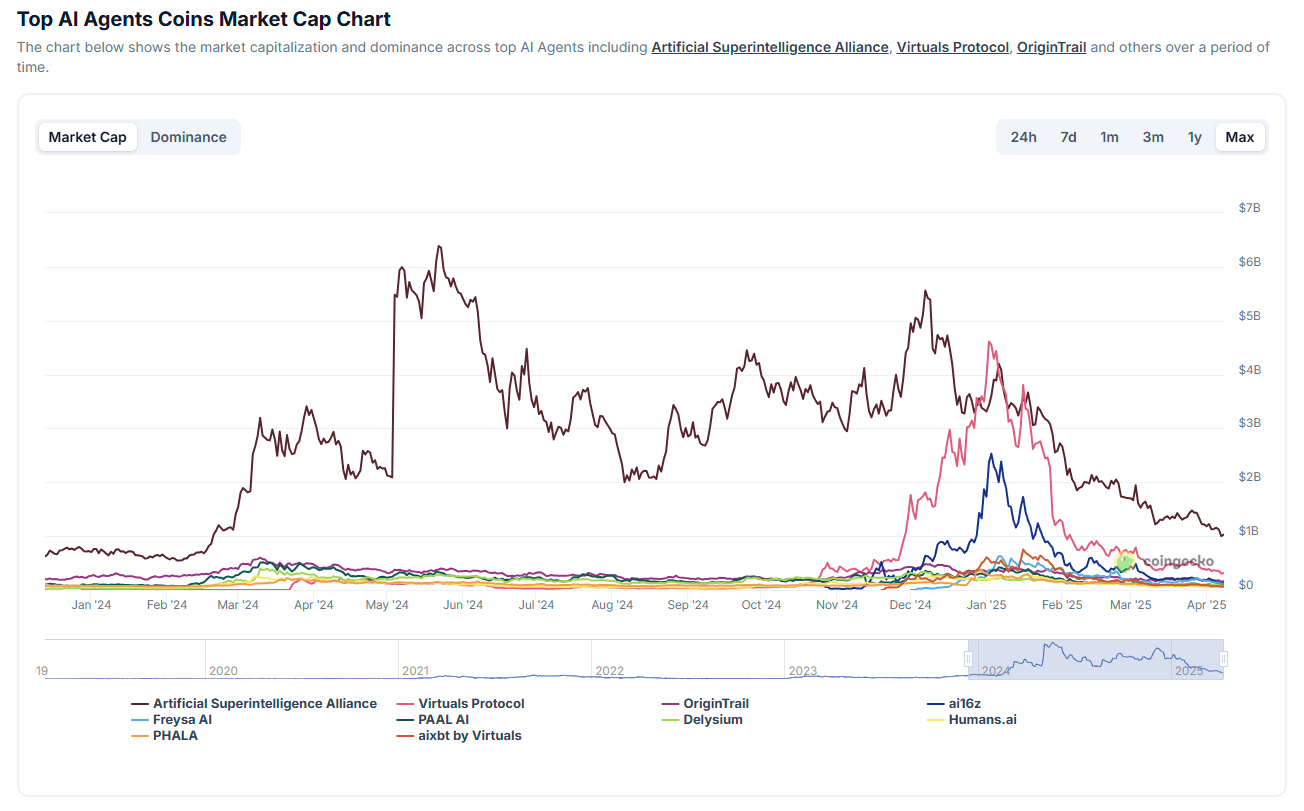
In this cycle, AI Agent tokens and Meme coins have shown similar potential. AI Agent tokens (such as AI16Z and Fetch.AI) benefited from the AI boom and attracted a lot of attention; Meme coins spread through social media, which is in line with the logic of the "attention economy". However, it is difficult to escape the fate of most tokens returning to zero. What we can learn is that if a similar strong narrative track appears, it may still become the detonation point of the next cycle and drive capital inflows, but please remember to escape the top.
2. Practical application projects: DeFi, RWA, and the solid foundation of stablecoins
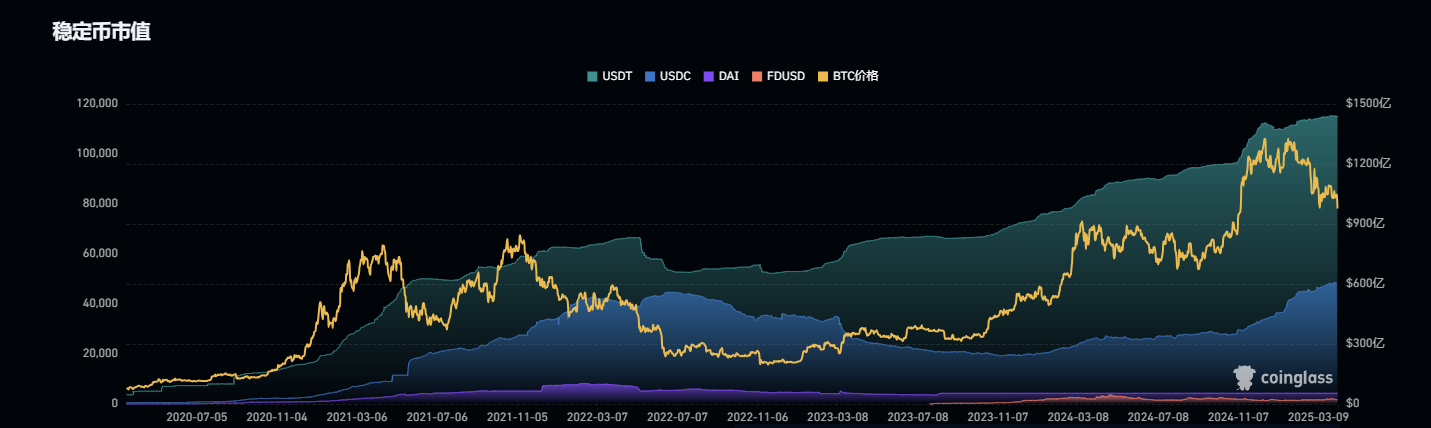
After the speculative craze subsides, projects with real applications and revenue will become the mainstay of the altcoin market. The DeFi track is still the core. For example, Uniswap and Aave continue to attract users and funds with stable transaction volume and fee income; RWA (real world asset) tokens open up the connection channel between blockchain and traditional finance by putting assets such as real estate and bonds on the chain. Projects such as Ondo Finance have begun to take shape. The stablecoin track has unlimited potential. The payment demand for USDT and USDC continues to grow. The stablecoin bill that may be passed in 2025 (requiring full collateral of US dollars or US bonds) will further consolidate the hegemony of the US dollar and promote the expansion of the stablecoin ecosystem. Projects such as Circle (issuer of USDC) may become new hot spots due to favorable policies. These tracks are expected to grow steadily in the next cycle due to their real demand and income sources.
3. Strong or local promotion projects: community-driven traffic engines
Projects with strong community power and marketing capabilities can often maintain high market capitalization during market downturns. XRP has accumulated a huge user base through large-scale marketing in South Korea and other places, and its market capitalization has long been at the forefront; Pi Network has attracted tens of millions of users to participate in mining through a social fission model, forming a strong community consensus; Cardano (ADA) has established extensive grassroots support through educational projects in Africa. Although these projects may not have outstanding technical value, they have the opportunity to attract capital attention in the next cycle and become the highlight of local market conditions with their strong community drive and traffic engines.
Next cycle operation guide
The glory of the copycat season has become a thing of the past, but there is still hope for the next cycle.
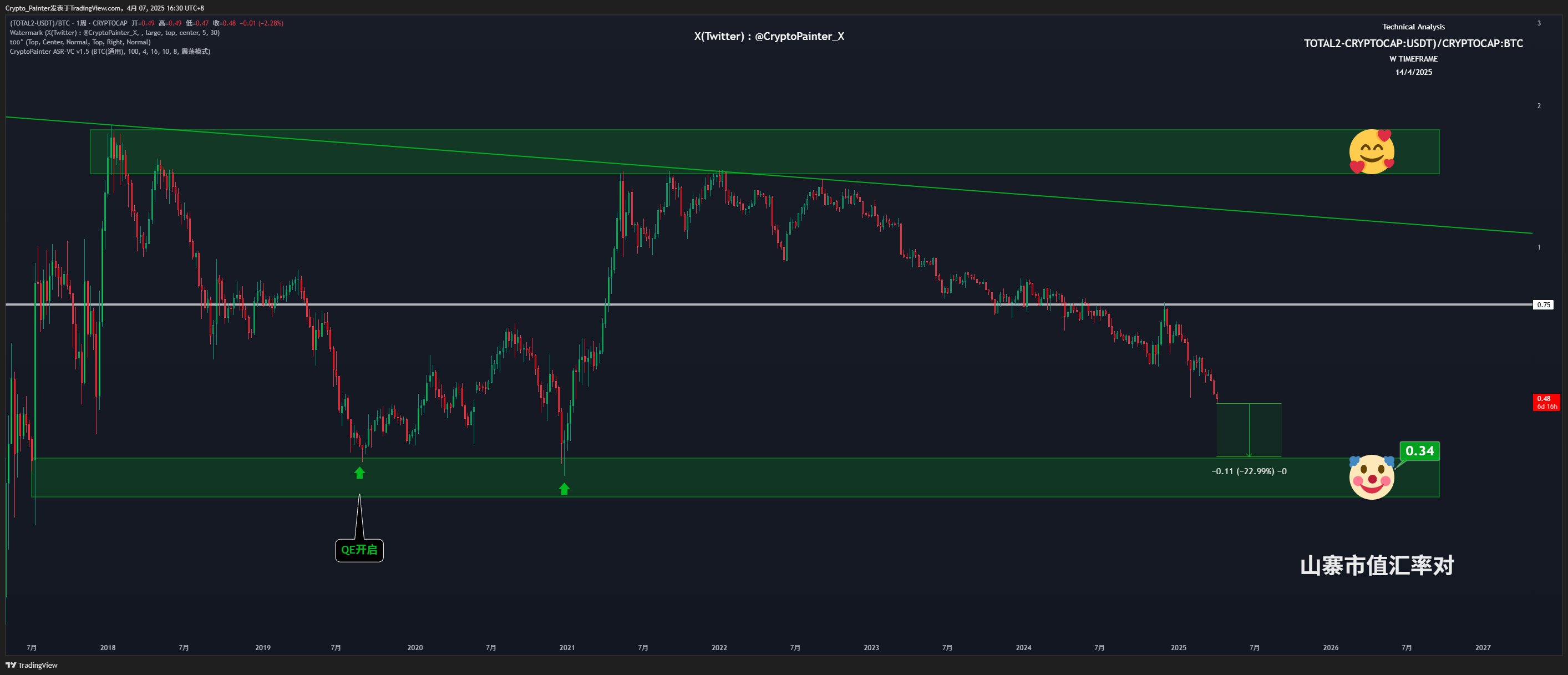
Source: @CryptoPainter_X
Even though the exchange rate of altcoin market capitalization to BTC is still in a bearish trend, with only 23% of the space left to the lower edge of the range, the next quarter may be a key window for bottoming out. Senior traders have summarized a set of strategies to capture the glimmer of altcoins through long-term observation. Investors may wish to try it:
Step 1: Analyze the general trend and understand the macro trend
The rebound of altcoins cannot be separated from the cooperation of the macro environment. The first task is to observe the trend of global liquidity and the US dollar: if the US dollar enters a weak cycle, global liquidity is loose, risk assets may rebound, and altcoins may have local opportunities; on the contrary, if the US dollar continues to be strong and liquidity is tightened, the pressure on altcoins will be further intensified. In 2025, the global economy will still be affected by high interest rates and geopolitical risks, and investors need to pay close attention to the policy trends of the Federal Reserve.
Step 2: Carefully select and lock in potential new stars
In the altcoin market, the key is to select the right projects. Focus on new projects that have been established for about a year and have initially established a foothold, and avoid high-risk tokens that have just been launched. Don't be confused by the dollar price of the token, but pay attention to its exchange rate performance against BTC. At the end of the current altcoin market value and exchange rate decline, select the ones that are resistant to decline or have stable performance. These projects are often more resilient and may become the dark horse of the next cycle.
Step 3: Dig deep into the track and find the star field
The selected projects are not the end. The next step is to analyze the potential of the track behind them. The outbreak of altcoins often relies on track narratives, such as AI, RWA, stablecoins, etc. Find the areas where multiple projects have the most intersections and evaluate whether they have the potential to become the star track of the next bull market. The key lies in the liquidity sensitivity and actual demand of the track: AI tokens may rise due to technological breakthroughs, RWA tokens are stable due to the on-chain of real assets, and stablecoins may become the focus due to favorable policies (such as the Stablecoin Act of 2025).
Step 4: Take steady steps and patiently build positions
After selecting a track, adopt a strategy of building positions in batches. Use 6 months to gradually build spot positions in the target track, accounting for 60% of the total funds. You can choose to invest at a fixed time, or buy in batches when the price falls below the key support, for example, invest 10% of the position each time. The volatility of altcoins is high, and patience is the key. After building a position, you can wait for the market to pick up.
Step 5: Dynamic optimization and rolling adjustment strategy
The altcoin market is changing rapidly, and the performance of the track and project needs to be re-evaluated every quarter. Continue to screen new projects, analyze track trends, and adjust position allocation until the spot position reaches the target ratio. Rolling adjustments can help investors seize market changes and avoid missing new opportunities.
Step 6: Wait for the flowers to bloom, lock in profits and leave
The cyclical fluctuations of altcoins take time, and investors need to learn to be friends with time. When the altcoin market value exchange rate returns to a high range, it may be a bull market signal. At this time, use a quarter to gradually clear the position and lock in the profit. Although the altcoin season is no longer coming, the glimmer of local market conditions is still worth capturing.
Conclusion: The survival rules of altcoins
The glory of the altcoin season is a thing of the past. Narrative exhaustion, value collapse, and liquidity crisis make a full bull market a luxury. Bitcoin's market share may soar to 70%, dominating the stock game market. Investors should prioritize the layout of leading public chain tokens such as Ethereum and Solana, pay attention to the stablecoin track, and cautiously participate in narrative projects such as AI and Meme. Do not buy the bottom of altcoins that have lost liquidity. A 90% drop may just be the beginning. In the next cycle, the glimmer of altcoins is hidden in practical applications and strong narrative tracks. Only rational operations can find vitality in the cold winter.