Original text: https://x.com/shawntabrizi/status/1887348493724897783
By Shawn Tabrizi
Compiled by: OneBlock+
At the BUIDL Here Conference, Shawn Tabrizi, the lead developer of Polkadot, shared his deep insights into the blockchain ecosystem with the audience. Shawn has a rich academic background. He studied physics and mathematics at UCSB and then worked at Microsoft Azure for four years, accumulating seven years of blockchain development experience. In this article, we will review Shawn's wonderful speech at the conference, and explore in depth the differentiation of the blockchain ecosystem, the core concept of Web3, and how Polkadot promotes the progress of this revolution.
Differentiation of blockchain ecosystem
And the Web3 Revolution
The difference between long-term and short-term thinking
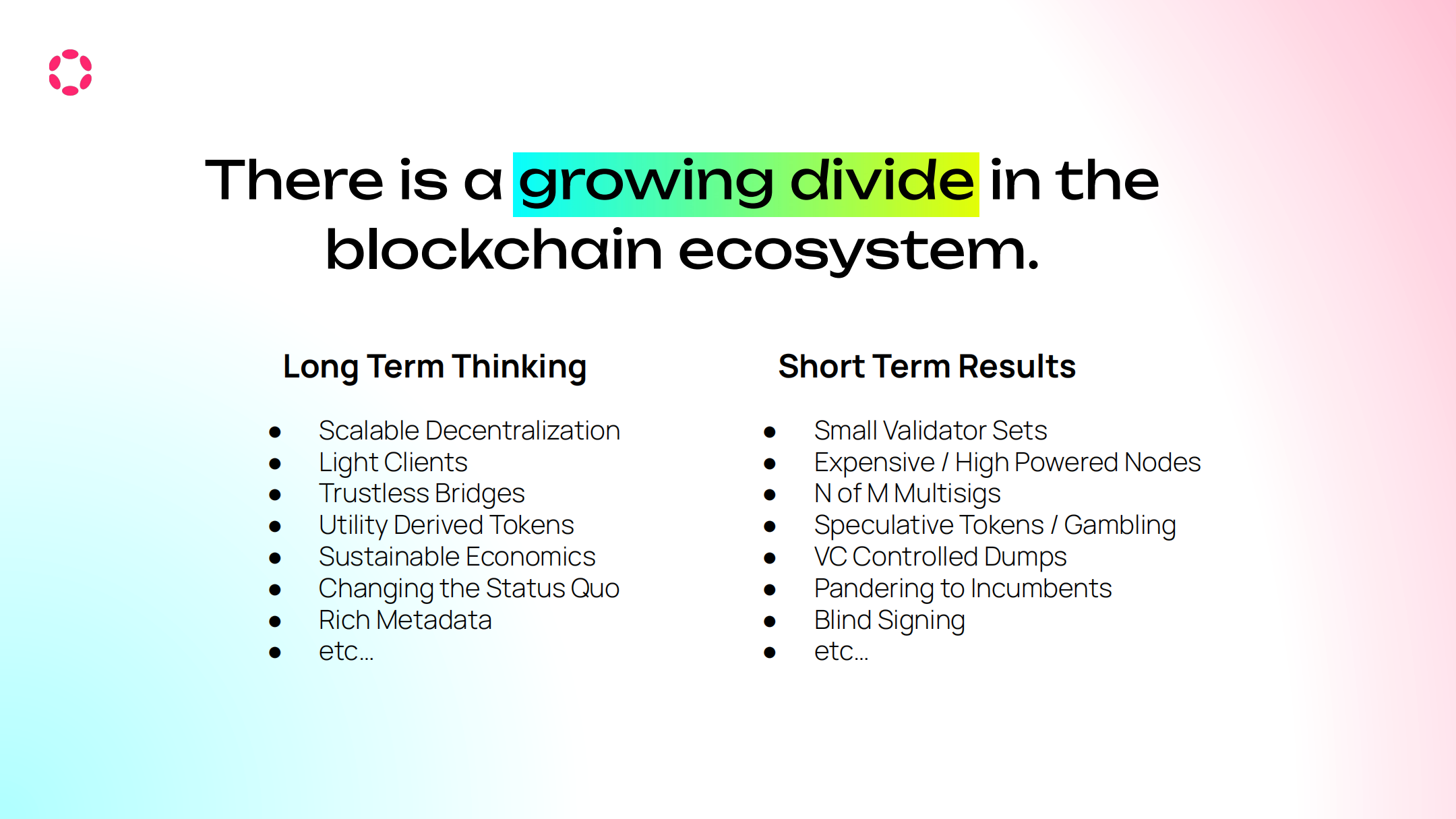
Shawn mentioned in his speech that the blockchain ecosystem is gradually splitting into two ways of thinking. Long-term thinking focuses on building scalable decentralized systems, light clients, trustless bridges, and sustainable economic models, with the goal of fundamentally promoting change and creating a more resilient blockchain ecosystem. Short-term thinking tends to respond quickly to market trends, focusing on small-scale validator clusters, expensive high-performance nodes, speculative tokens, and venture capital-dominated markets. Although these measures can bring short-term profits, they lack sustainability and are difficult to guarantee long-term development.
The Essence of Web3: Solving the Trust Problem
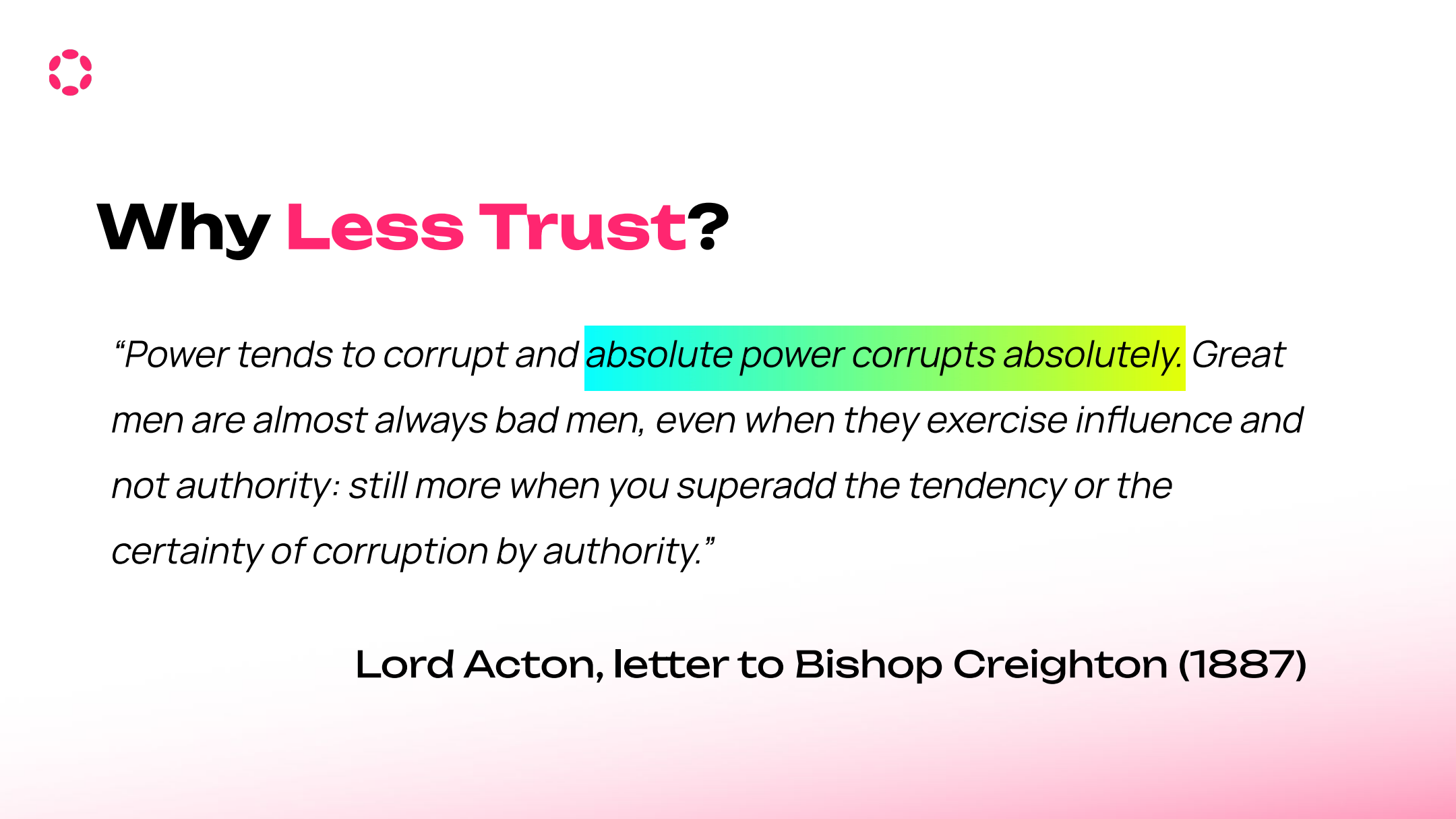
The core goal of Web3 is to solve the trust problem in centralized systems through decentralization. Shawn quoted Lord Acton's famous saying: "Power tends to corrupt, and absolute power corrupts absolutely", emphasizing the corruption and abuse that may result from centralized power. Web3 provides a more credible system through the characteristics of decentralization, verifiability and autonomous control, aiming to create a transparent, fair and decentralized world.
Misunderstandings about Blockchain Terminology
The misuse of blockchain terminology is the root cause of the current ecological division. Cryptocurrency, blockchain, DeFi and Web3 represent different levels: cryptocurrency is a resource, blockchain is a technology, DeFi is a vertical industry, and Web3 is a decentralized revolution. With the continuous advancement of technology, the application areas of Web3 continue to expand, covering wallets, DAO, DeFi, SocialFi, privacy protection, cross-chain bridges, sustainable development, data, games, identity authentication, NFT and other fields. Web3 is not just an extension of DeFi, it is driving a revolution in multiple industries.
The Evolution of Blockchain Technology: From Computers to Decentralized Clouds
From Bitcoin to Polkadot: The Evolution of Blockchain Technology
The essence of blockchain technology is decentralized computers. With the continuous development of technology, Polkadot has greatly improved the scalability and decentralized computing power by combining Relay Chain with multiple parallel chains (Parachains) through its innovative JAM architecture. Bitcoin ushered in the era of calculators, Ethereum further developed into computers, and Polkadot represents the blockchain technology moving towards a new era of cloud servers. It has brought revolutionary changes to the infrastructure of Web3, similar to the impact of AWS (Amazon Cloud Service) on Web2.
The core differences between Web3 and Web2:
Resilience and adaptability
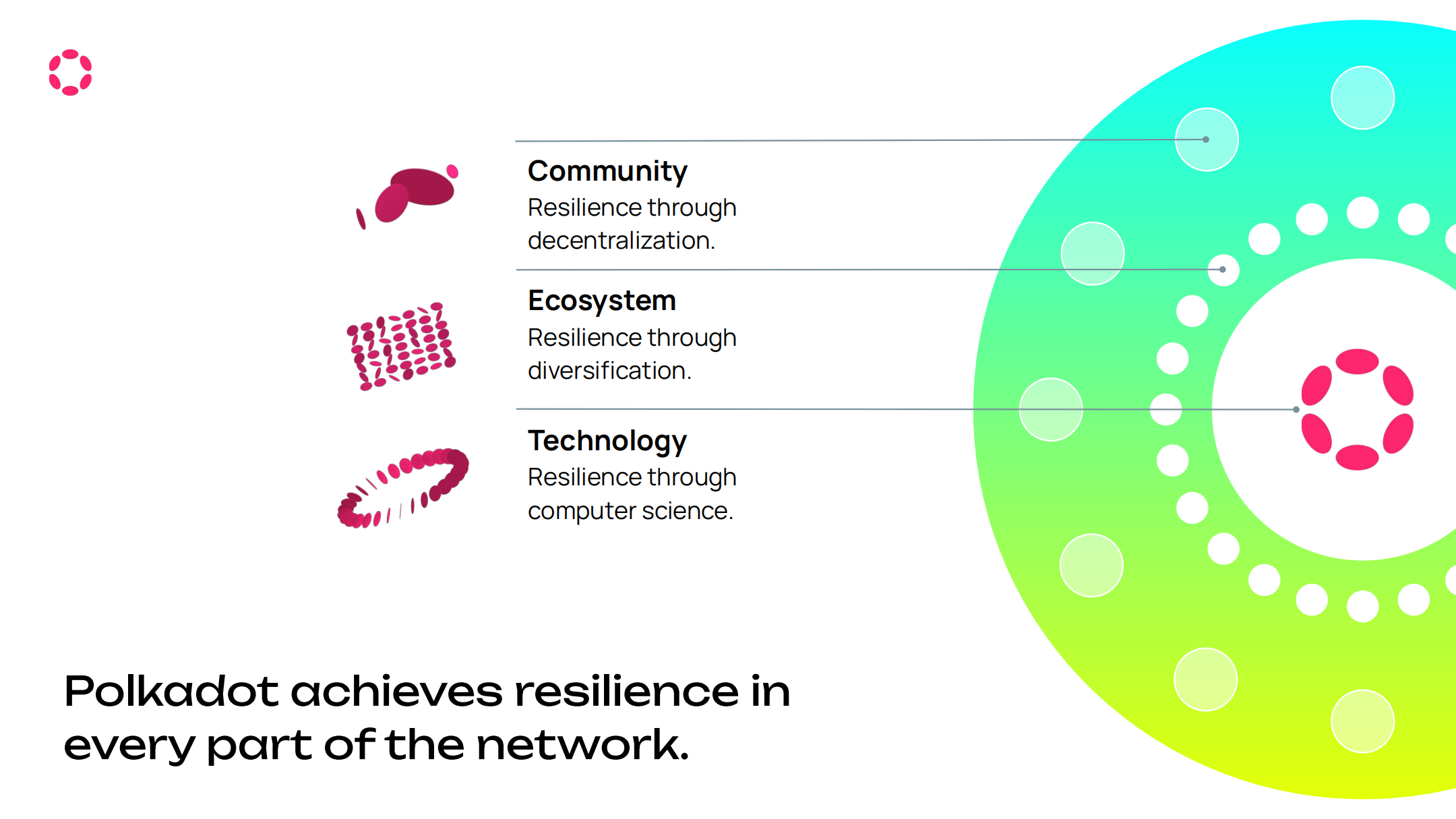
The most fundamental difference between Web3 and Web2 is resilience. Web3 effectively avoids the single point of failure problem in Web2 through decentralized design, enabling the system to resist risks such as external attacks, censorship, and network interruptions, providing higher security and stability. In the Web3 world, resilience is not only reflected in the technical level, but also in the diversity of the community and ecosystem. Decentralized communities can remain vibrant in crises and ensure that Web3 continues to operate in different scenarios.
How Polkadot Achieves Resilience in Web3
Polkadot achieves Web3 resilience through its unique design. First, the decentralized community structure ensures that the system will not collapse due to a single point of failure; second, Polkadot's diverse ecosystem enhances adaptability and resilience, and can cope with challenges in different scenarios; finally, Polkadot's innovation in computer science not only enhances the performance of the decentralized architecture, but also improves the security of the system, providing strong resilience support for the Web3 platform. The decentralized "supercomputer" that Polkadot is building not only improves the resilience of the system, but also provides a solid technical foundation for the scalability and security of the future Web3.
Polkadot’s technical innovation: decentralized multi-core computer
Polkadot is the world's first decentralized multi-core computer, and its Polkadot Cloud provides hundreds of execution cores and rich blockspace. Each application can choose shared cores or independent cores according to its needs: small applications can share a core, while large services can use multiple cores at the same time. Through data and execution sharding to execute applications and services in parallel, Polkadot enables multiple applications to run simultaneously on multiple cores, thereby achieving true horizontal scalability.
Security and interoperability
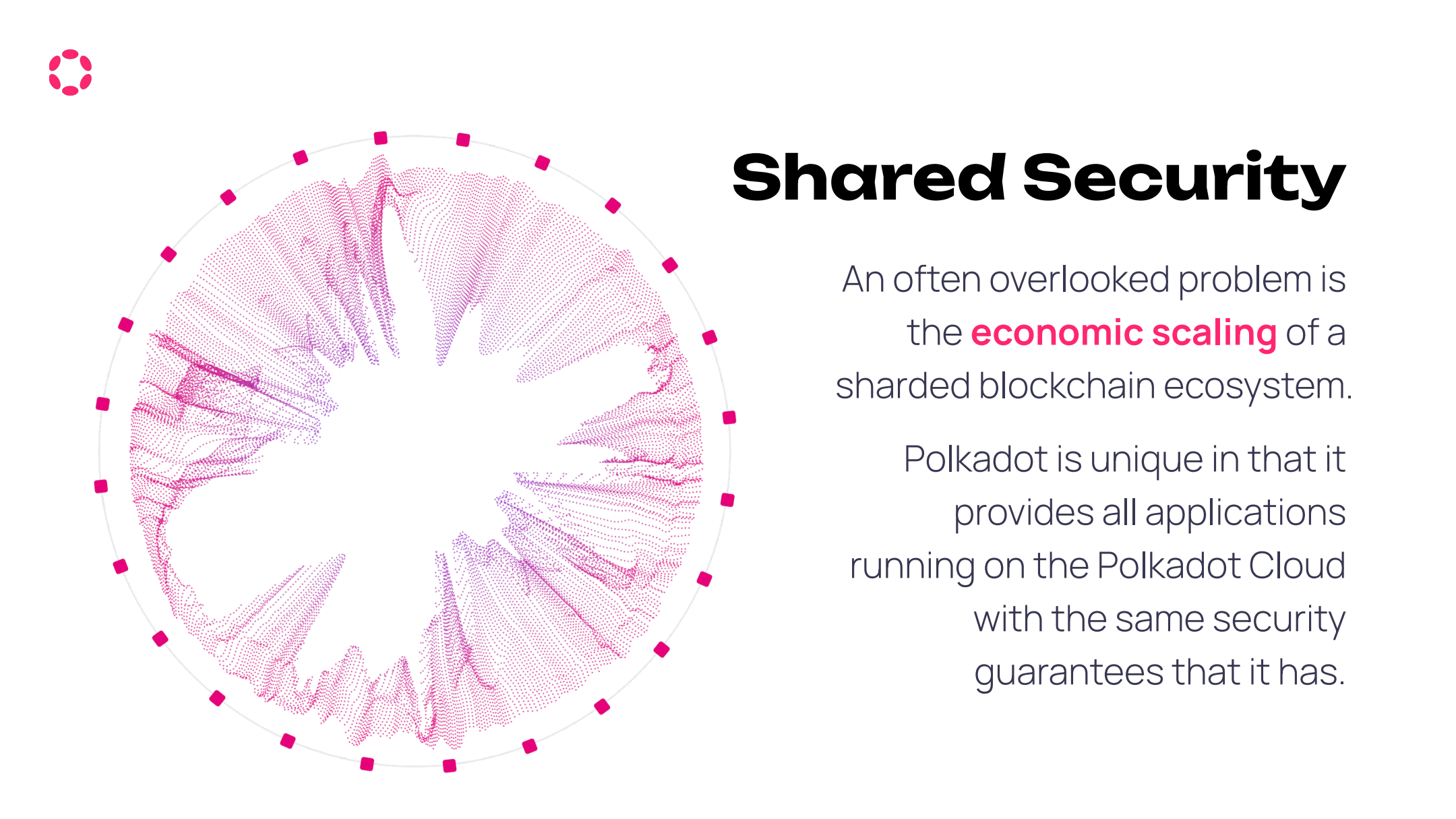
In the blockchain ecosystem, shared security is a critical issue that is often overlooked. Polkadot is unique in that it provides unified security guarantees for all applications running on the Polkadot Cloud. This allows different blockchains to coexist with mutual trust without relying on third-party bridges. At the same time, Polkadot also has a built-in interoperability layer that allows different applications to communicate and cooperate seamlessly. It not only supports cooperation with applications within its own network, but also can achieve trust and intercommunication with external blockchain systems such as Ethereum and Bitcoin, reducing the cross-chain costs between traditional blockchains.
High performance and high bandwidth
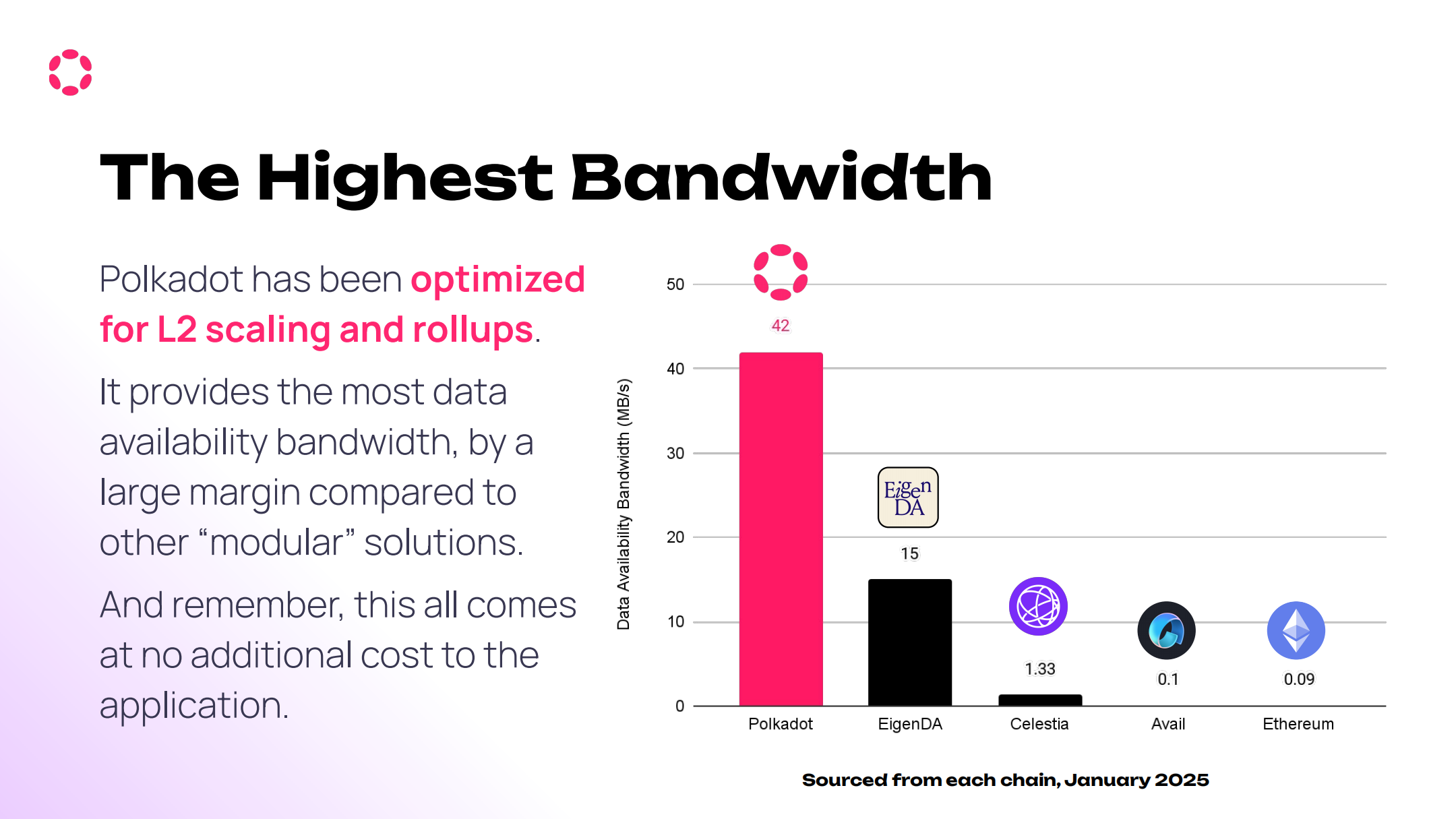
Polkadot has a unique advantage in data availability, providing a native data availability layer, so applications can access the required data without additional fees or using secondary tokens. In addition, Polkadot provides high bandwidth support of 42 MB/s, far exceeding other modular solutions such as EigenDA (15 MB/s) and Celestia (1.33 MB/s).
In terms of transaction processing capacity, Polkadot set a record of 143,343 transactions per second, which only uses 23% of the system's capacity. Based on this, Polkadot's maximum throughput may be four times the current level. In contrast, ICP (25,621 TPS) and Aptos (11,936 TPS) are far behind Polkadot.
Resilience and sustainable development
Polkadot's system design focuses on decentralization and resilience. According to the Nakamoto coefficient, Polkadot requires 149 independent entities to collude to paralyze the network, which is significantly ahead of other blockchain systems such as Cardano (29), Avalanche (25), Solana (19) and Cosmos (7). This gap proves Polkadot's outstanding performance in decentralization and system resilience.
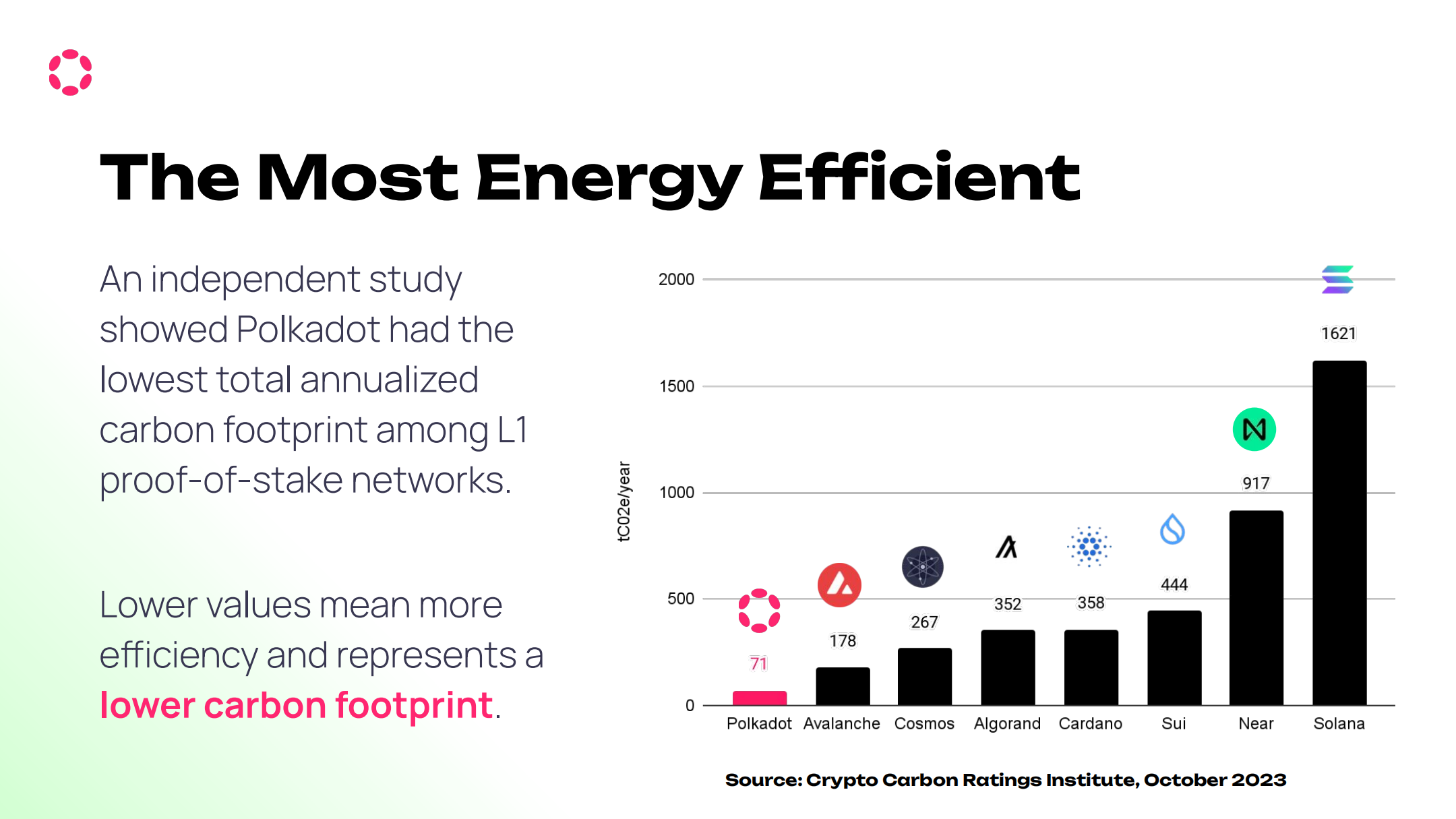
Polkadot also performs well in terms of environmental protection. According to independent research by the Crypto Carbon Rating Agency, Polkadot has the lowest annual carbon footprint among all L1 proof-of-stake networks, at only 71 tCO2e/year, far lower than Solana (1621 tCO2e/year), Near (917 tCO2e/year), etc., making it an industry benchmark in terms of environmental sustainability.
Polkadot’s community and governance ecosystem: decentralization and development momentum
Decentralized validator system and incentive mechanism
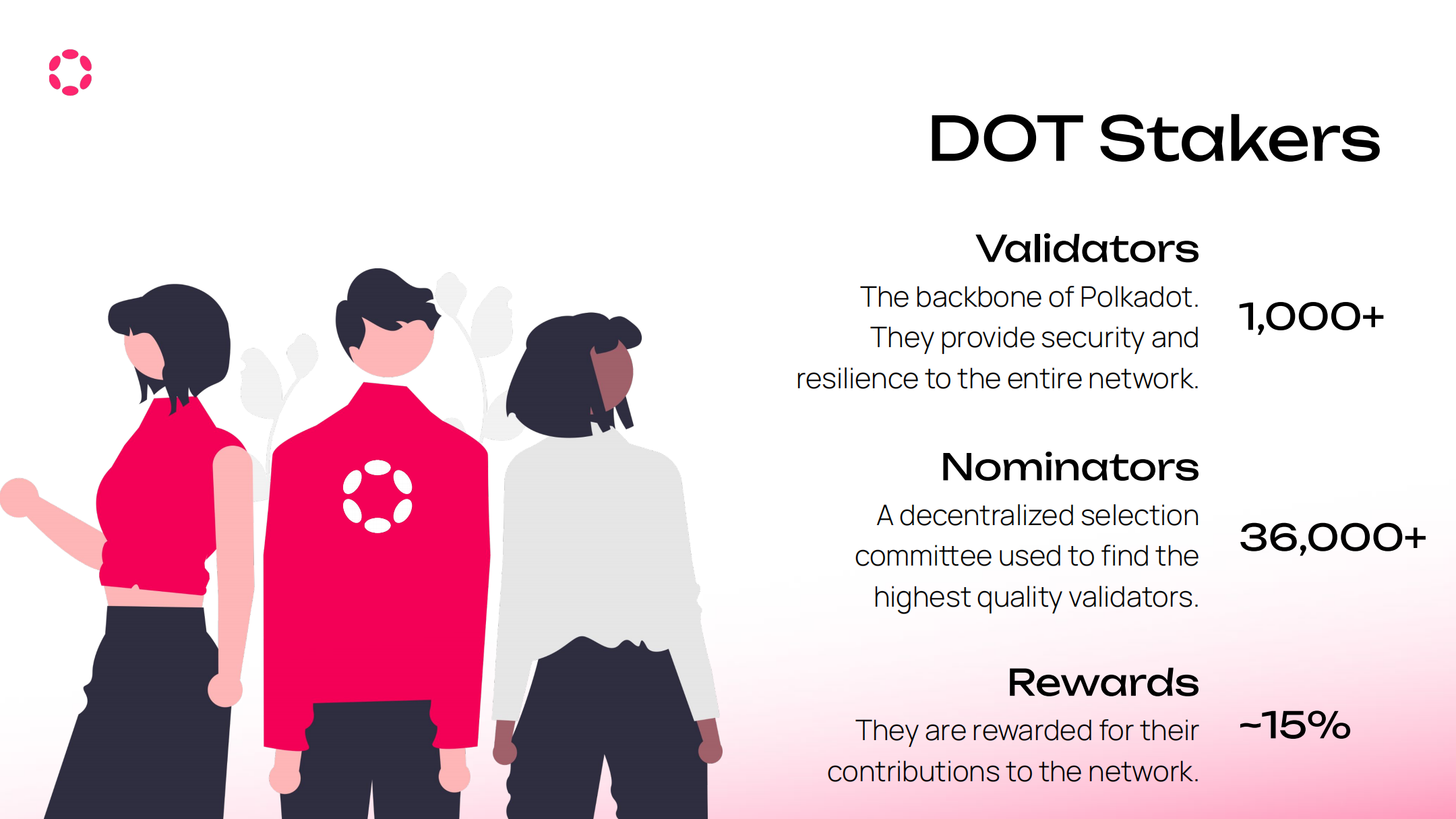
In Polkadot's staking system, validators are the core pillars of the network. Currently, there are more than 1,000 validators who ensure the security and resilience of the network. At the same time, a decentralized selection committee composed of more than 36,000 nominators is responsible for screening the best validators. Through a reward mechanism of about 15%, Polkadot encourages participants to contribute resources to the network to ensure the continued operation and healthy development of the ecosystem.
Strong governance and talent development
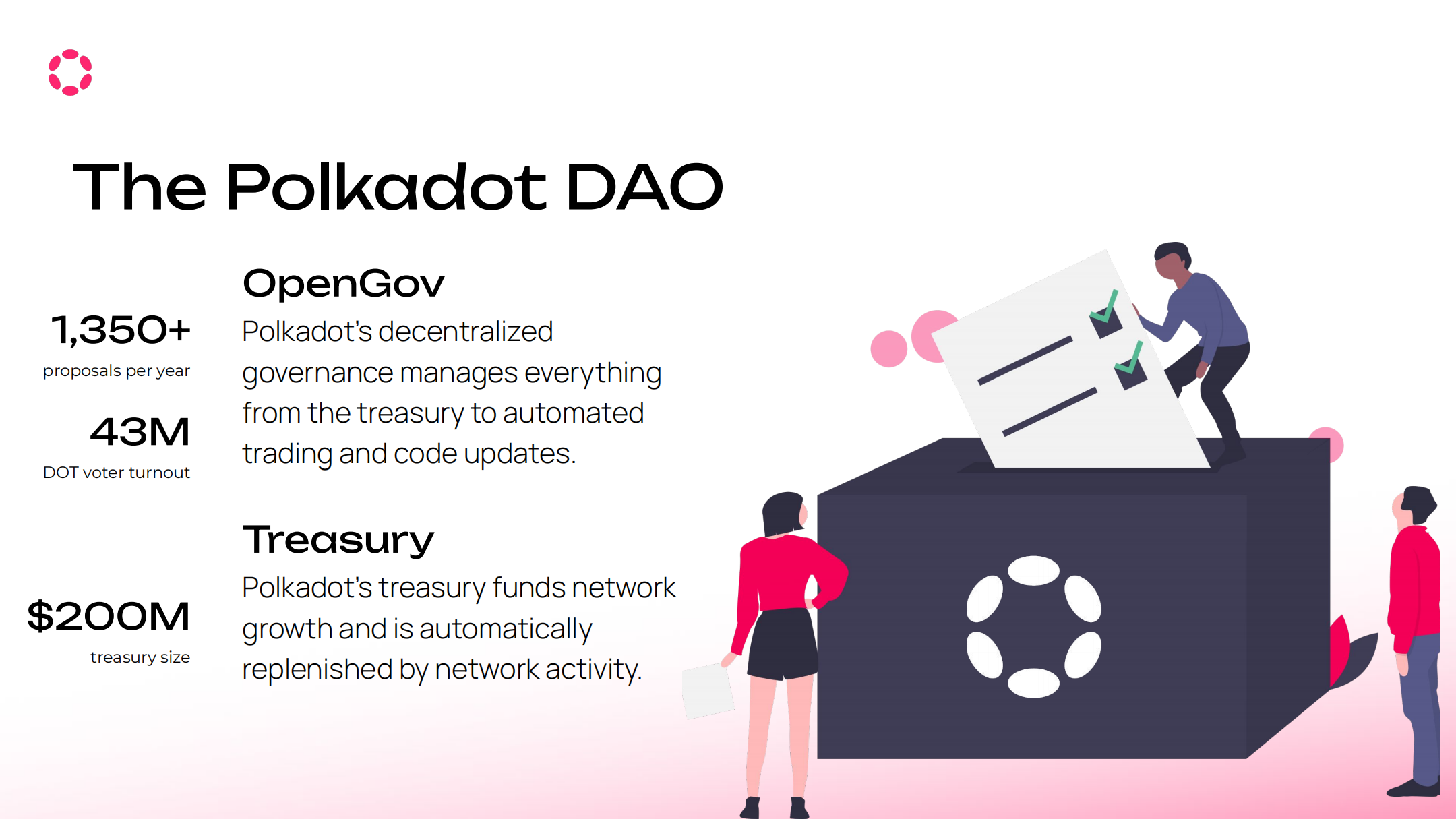
Polkadot has demonstrated strong governance capabilities through its decentralized autonomous organization (DAO). The OpenGov system processes more than 1,350 proposals each year, attracting approximately 43 million DOT holders to vote, and a $200 million treasury to provide financial support for network development, which can be automatically replenished through network activities. In addition, Polkadot has also made remarkable achievements in education and talent development, having trained more than 15,000 entry-level students and supported the development of more than 400 college-level students and more than 470 teams. In order to further strengthen the developer ecosystem, Polkadot has established a Technical Fellowship to support core developer training and help build one of the largest developer communities in the blockchain field.
Polkadot Ecosystem: Innovation and Diversity Drive the Future of Web3
Polkadot Cloud: Efficient Web3 Infrastructure
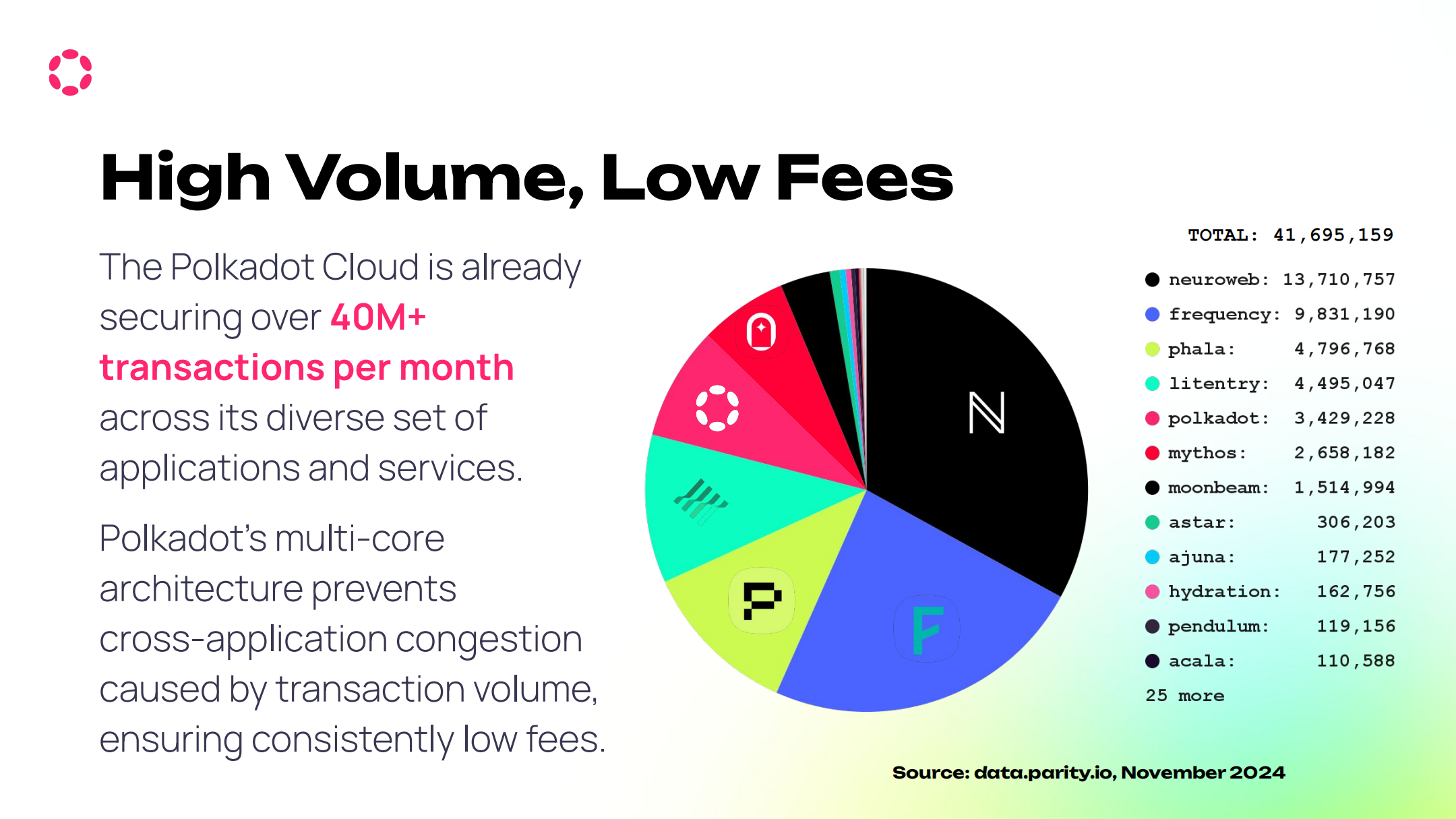
As an efficient infrastructure platform for Web3, Polkadot Cloud processes more than 40 million transactions per month, mainly led by neuroweb, frequency, and phala, accounting for 13.7 million, 9.8 million, and 4.8 million transactions respectively. The platform adopts a multi-core architecture, which effectively avoids cross-application congestion and ensures continuous low-cost operation. In addition, Polkadot Cloud adopts a "pay as you go" model, and Web3 applications only need to pay for the resources actually used. At the same time, it provides elastic expansion functions, allowing applications to dynamically adjust resource usage according to demand, with extremely high flexibility and predictability.
Rich application ecology: expanding into multiple fields
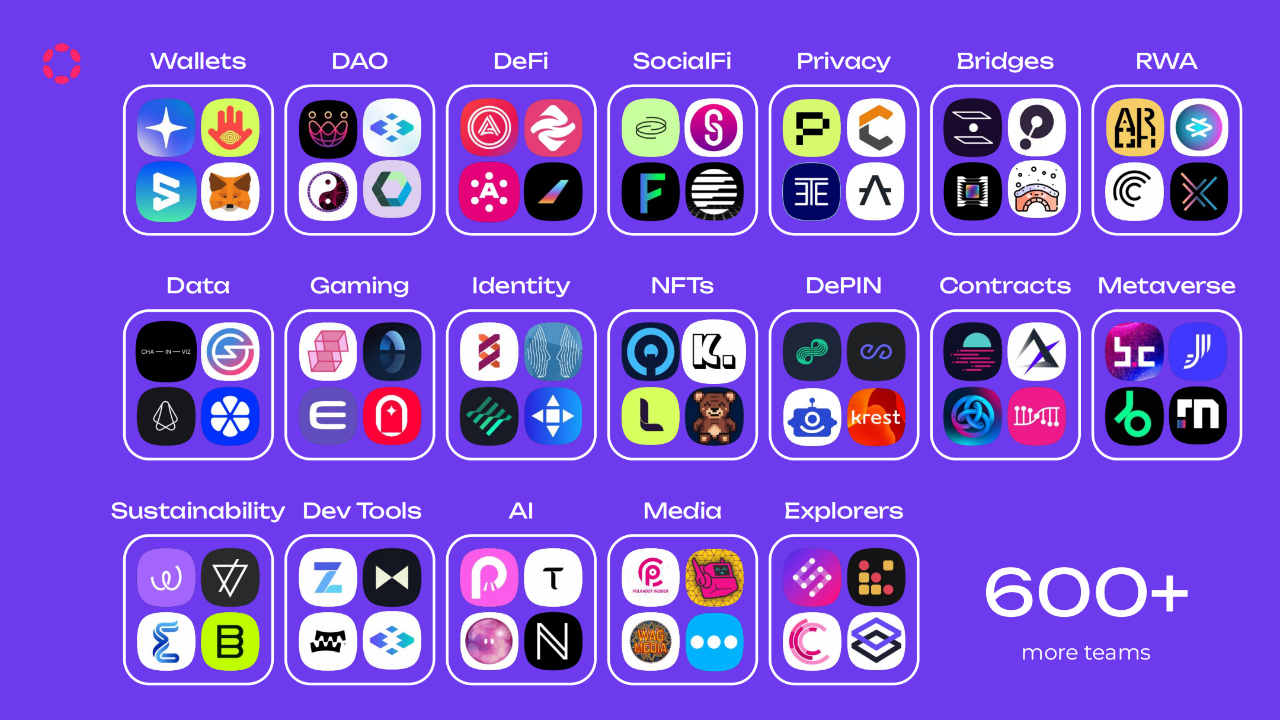
Polkadot Cloud not only supports the DeFi field, but also promotes multiple innovation directions. Among the top 20 scalability solutions, Polkadot Cloud provides support for 10, including Frequency, Energy Web, NeuroWeb, Mythos and Hyperbridge. The ecosystem covers wallets, DAOs, social finance, privacy protection, cross-chain bridging, data, games, NFTs, smart contracts, metaverse and other fields. More than 600 teams have developed on the platform, showing strong innovative vitality.
Conclusion
From the decentralized resilience design to the unique innovation of the Polkadot ecosystem, we see a more transparent, fair and efficient Web3 world gradually taking shape. In the future development path, Polkadot, as an important pillar of Web3 infrastructure, will continue to promote technological innovation and ecological construction, and help realize the real transformation of blockchain technology. With the advent of the Web3 era, each of us is witnessing and participating in this revolution led by decentralization.