Pre-IPO investment boom is here, and retail investors can also get in on the action before the IPO.
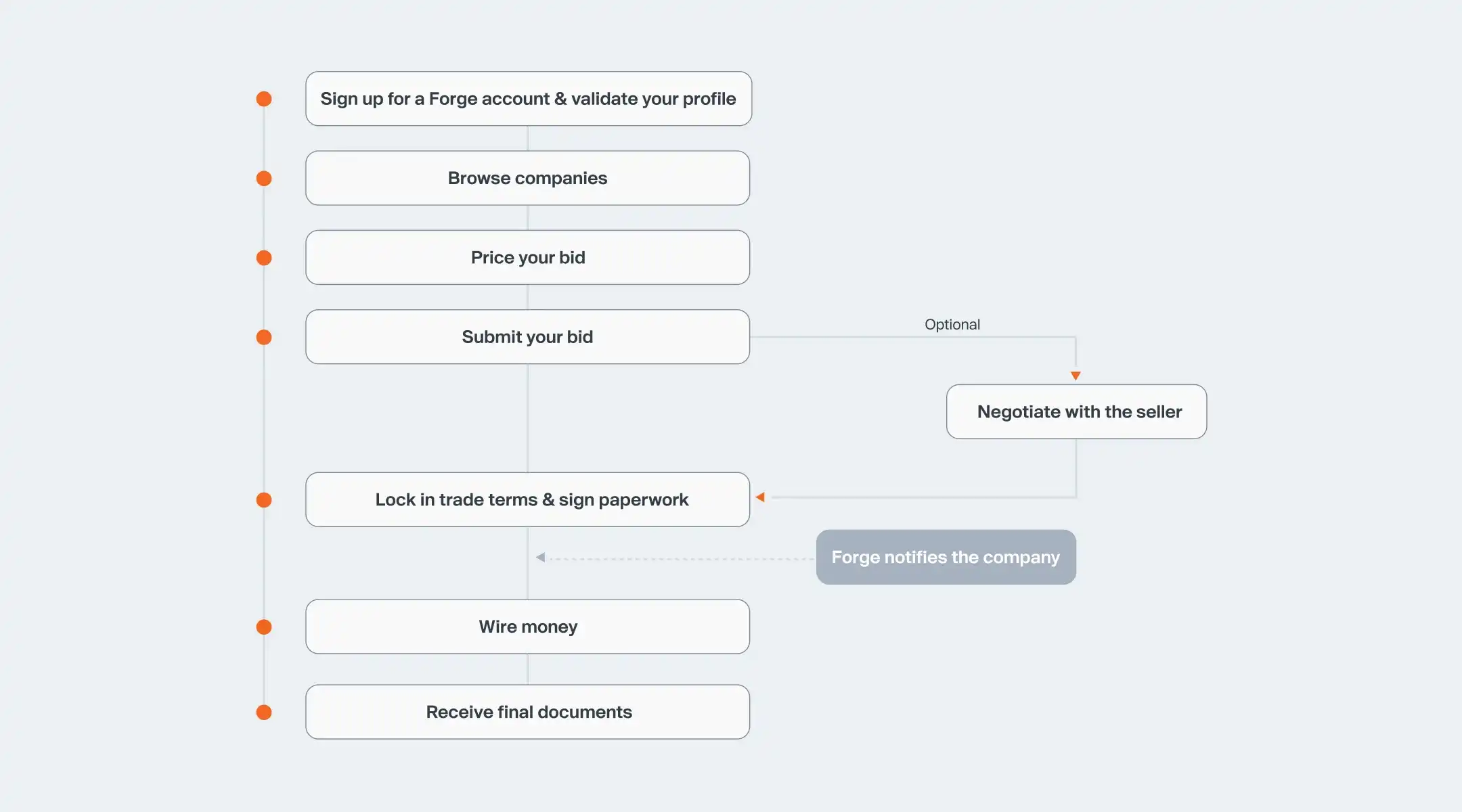
With top companies like OpenAI and SpaceX remaining private for extended periods, many original employees and early investors are looking to cash out their shares before the IPO. Forge is a trading platform connecting these sellers with investors looking to buy in. With Kraken's IPO hype building, if employees or institutions begin selling their shares, private equity trading platforms like Forge could serve as an indirect entry point for retail investors to capitalize.
On the Forge platform, investors can typically purchase shares in private companies in two ways: The first is a direct transaction, where you find a Kraken equity holder willing to sell and negotiate a price. Forge will assist with the Know Your Customer (KYC) process, due diligence, and contract signing. The second is through SPV transactions (Forge Funds). Forge establishes a special purpose vehicle (SPV) to pool funds from buyers and purchase the target company's equity. You hold shares in the SPV, not the company's shares. This method bypasses the ROFR and is more suitable for investors seeking quick entry, with transactions possible within a few days. The SPV is expected to receive liquidity after Kraken's IPO.
Currently, the price on the Forge platform is $36.13, a 200% increase in a year, reflecting the market's enthusiasm for Kraken's IPO. With a valuation of approximately $10 billion, if Kraken successfully IPOs at a $15 billion valuation, current investors could potentially reap excess returns exceeding 50%.
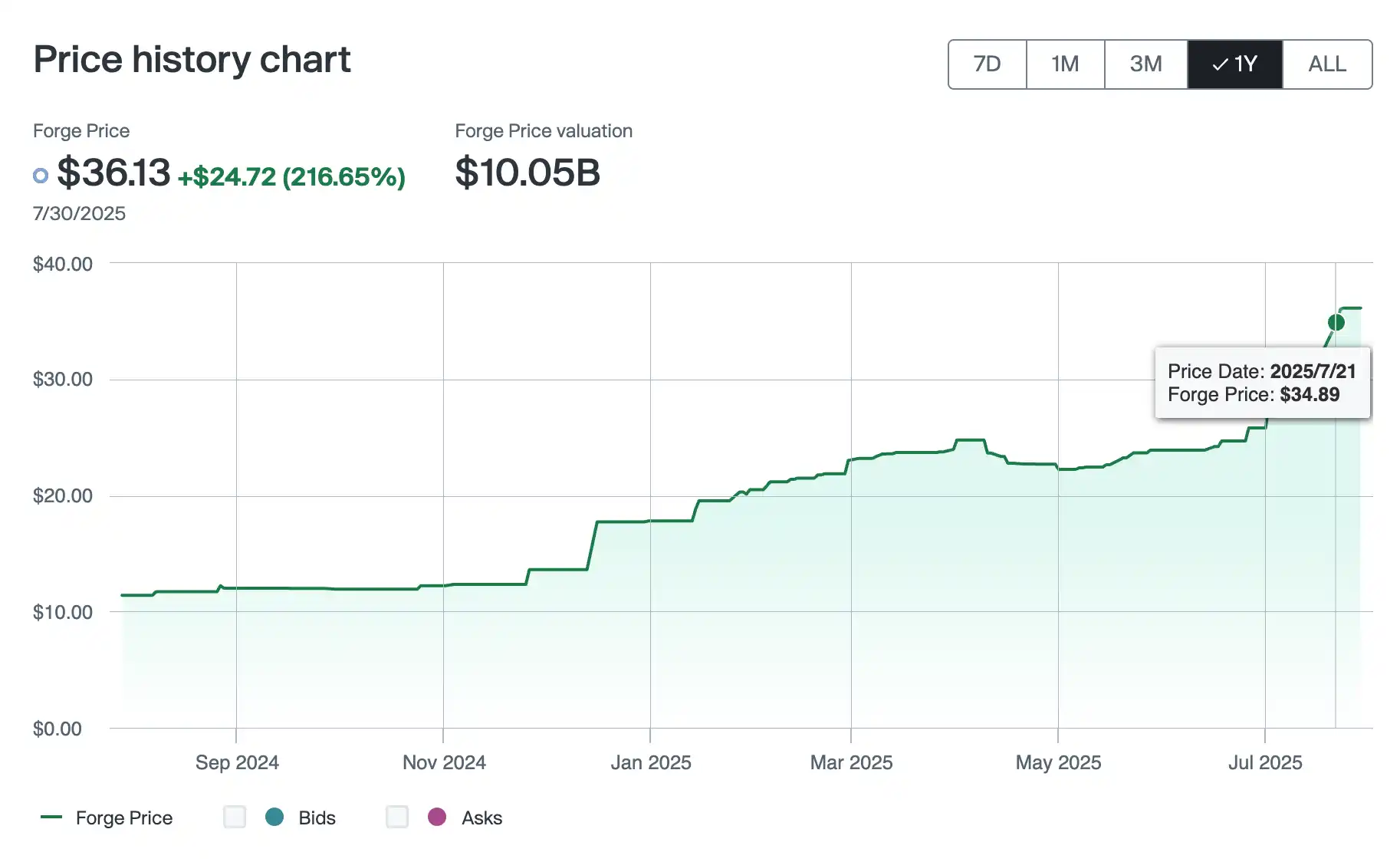
In addition, the tokenization of private equity is also creating new investment opportunities for retail investors. Platforms like Republic and Robinhood already support technology companies like OpenAI and SpaceX. Whether they will also support Kraken in the future is also worth watching.
Benchmarking Coinbase's Base Chain, Ink Becomes the Core of the Next Layer 2 Narrative
Following Coinbase's Base Chain, which has become a traffic hub for the Layer 2 sector, Kraken has officially entered the fray, launching the Ink Network as the first step in its Layer 2 strategy. Built on the Ethereum OP Stack, Ink focuses on high throughput, low latency, and native compatibility with the Ethereum Virtual Machine (EVM). It aims to become the DeFi hub on the Superchain, providing a solid foundation for future transactions, payments, and on-chain financial infrastructure. The network is spearheaded by Kraken, and its native token, $INK, will be issued by its subsidiary, the Ink Foundation, and distributed to eligible active users and ecosystem participants through an airdrop program on the Kraken trading platform. While the specific distribution criteria and timeline have not yet been announced, the news has already captured market attention.
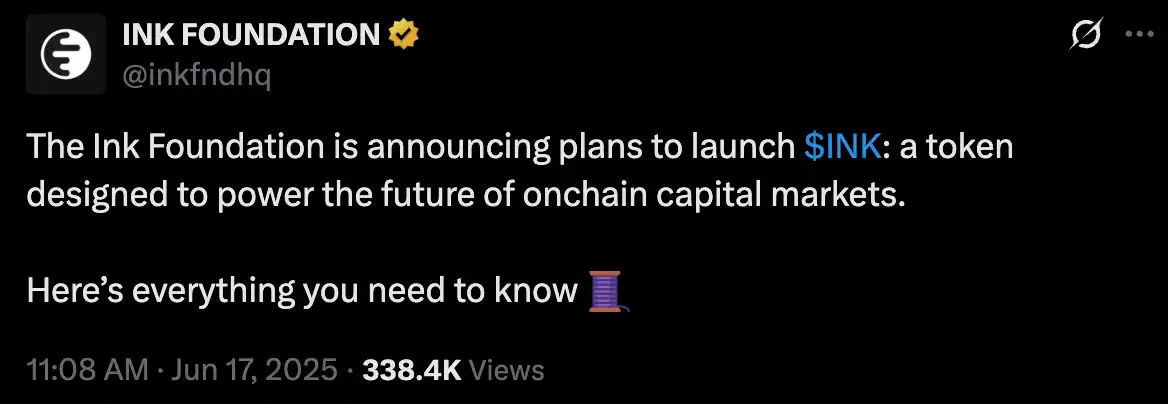
On June 17th, the Ink Foundation announced that the total supply of $INK will be permanently capped at 1 billion. There will be no additional issuance and no governance rights. $INK will be used solely for ecosystem incentives and user-level usage, positioning itself more like a "fuel" than a traditional governance token. The first clear application scenario is the native liquidity protocol powered by Aave, a key component of Ink's onchain capital stack. This protocol natively integrates lending mechanisms into the Ink chain, providing users with efficient and convenient on-chain fund allocation services.
Kraken co-CEO Arjun Sethi stated that Ink's mission is to deeply integrate "production-grade on-chain systems" into Kraken's product ecosystem, driving the strategic migration of centralized platforms to an on-chain financial system. The Ink Foundation Board of Directors called this a "critical moment," believing that Ink's launch marks the beginning of the convergence of CeFi and DeFi and a concrete step towards the vision of a unified global capital market.
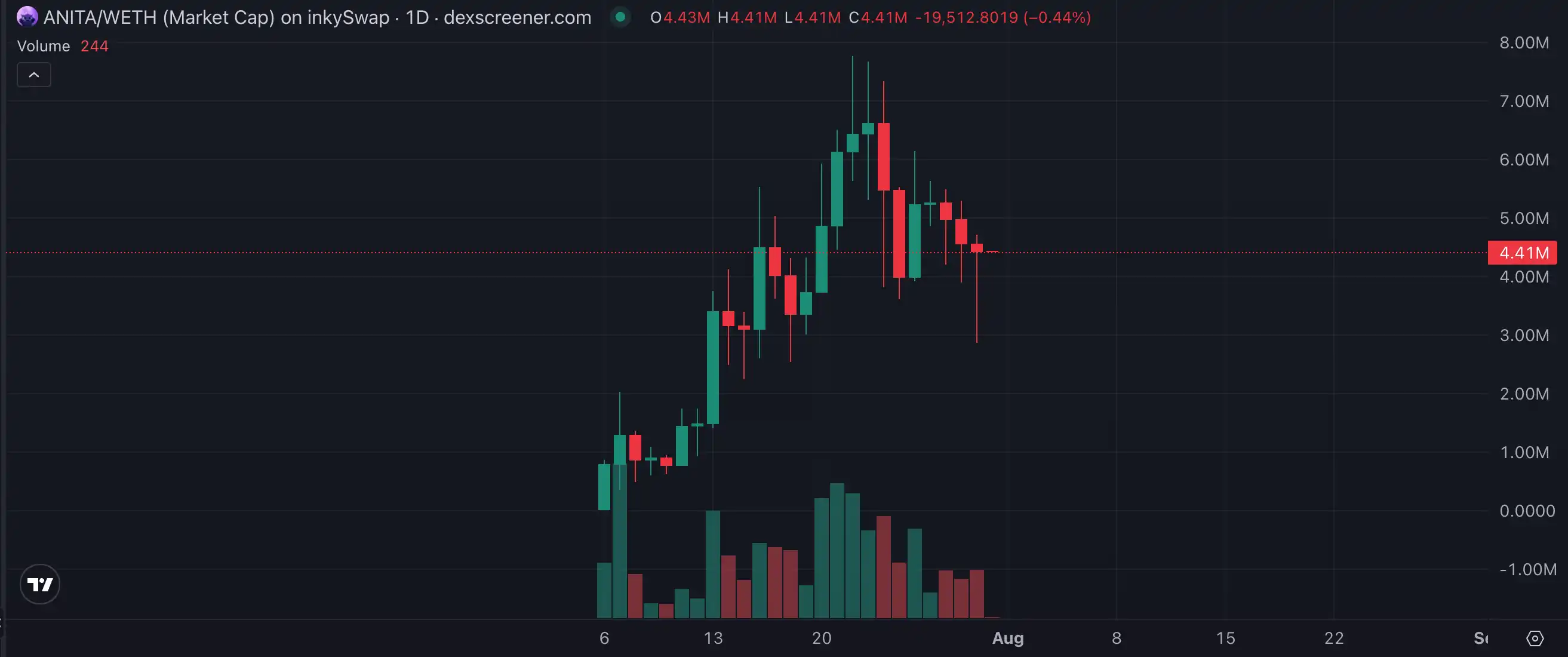
With the official launch of the mainnet, the Ink ecosystem is taking shape. The platform has launched the memecoin launch tool, Inkypump. Its first mascot token, $ANITA, once reached a market capitalization of $8 million and is currently stabilizing around $4 million. While $INK's TGE has yet to be announced, the market is already anticipating its potential, fueled by the success of Layer 2 projects like Base.
Looking at the rapid growth of Base Chain in ecosystem activity, TVL, and the number of projects, as well as the performance of ecosystem tokens built around it, such as $VIRTUAL and $ZORA, Ink, with its direct endorsement from the Kraken team and its commitment to its own traffic and resources, undoubtedly has the potential to become the next hot L2 mainline. It's foreseeable that once $INK launches and trading becomes available, it will undoubtedly become one of the "legitimate" representatives of the CeFi hype. This is especially true given Kraken's intention to deeply integrate its trading capabilities with on-chain scenarios. Ink is not just a Layer 2, but potentially the core of Kraken's onchain strategy. For investors hoping to capitalize on Kraken's IPO and the next wave of Layer 2 investments, Ink and its ecosystem deserve close attention.
Summary
Beyond crypto trading and Layer 2 network development, Kraken has recently been actively expanding its broader financial footprint. In 2025, Kraken acquired Ninja Trader, a leading US retail futures trading platform, for $1.5 billion, securing futures commission merchant status and officially entering the CFTC-regulated derivatives market, bridging the gap between CeFi and TradFi. At the same time, Kraken also launched Krak, a payment application that supports instant remuneration transfers across over 300 crypto and fiat assets. Future expansion will include lending and credit card services, creating a comprehensive crypto payment experience. This series of initiatives not only lays the foundation for Kraken's development into a super financial platform, but is also seen as a crucial prelude to its long-awaited IPO plan. With the expansion of its product line, revenue growth, and continued improvement in the regulatory environment, Kraken's path to a formal IPO is accelerating.