
Author: Luke, Mars Finance
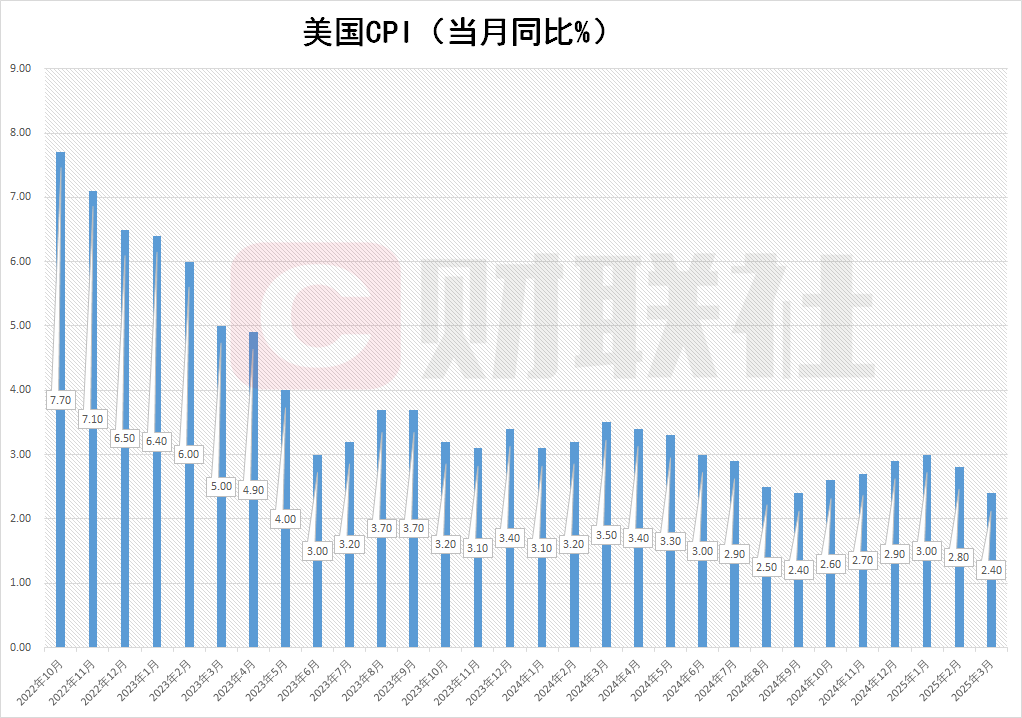
The US financial market is experiencing severe turbulence. The CPI data for March unexpectedly showed that inflation cooled down, with the year-on-year growth rate of core CPI hitting the lowest level in four years and the month-on-month decline for the first time in five years. However, the threat of high tariffs from the Trump administration quickly overshadowed this positive news, triggering concerns about an escalation of the trade war. US stocks, the US dollar and cryptocurrencies were sold off, while safe-haven assets such as gold, the Japanese yen and the Swiss franc rose strongly. Amid the market panic, a bold guess emerged: Will Trump's firing of Federal Reserve Chairman Powell be the key to saving the market? This article analyzes this possibility based on the current market situation, explores the legal, procedural and market impacts in depth, and reveals the game between Trump and the Federal Reserve.
The positive CPI was overshadowed by the tariff war, and the market panicked again
The March US CPI data should have injected confidence into the market. The year-on-year growth rate of the core CPI fell to the lowest level in four years, and the month-on-month decline was the first in five years, suggesting that inflationary pressures have eased. However, Trump's 145% tariff on China and his threat of high tariffs on Mexico and Canada have ignited panic about a global trade war. The expectation that tariffs could push up prices quickly overwhelmed the positives, and investors turned to risk aversion.
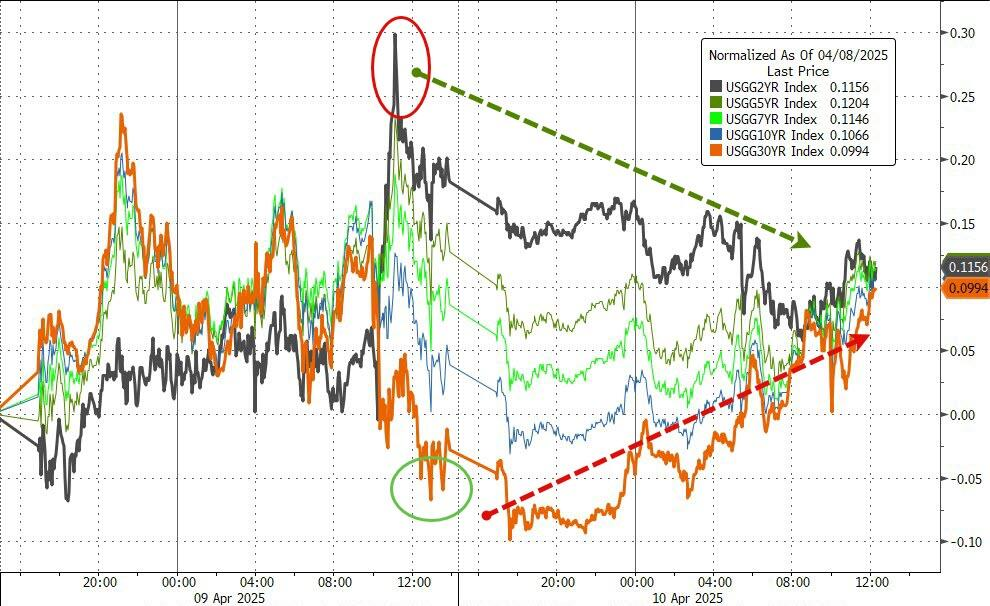
On Thursday, the three major U.S. stock indexes failed to continue their rebound on Wednesday. The S&P 500 fell more than 6% during the session, approaching the circuit breaker line, and closed down 3.46%. Technology stocks led the decline, with Tesla falling more than 7%. The cryptocurrency market was also sluggish, with Bitcoin falling 5.2% and Ethereum plummeting 11.7%. The U.S. dollar index recorded its largest single-day drop since 2022, falling more than 2% during the session. The safe-haven Swiss franc rose nearly 4% against the U.S. dollar, the largest intraday gain since 2015; the yen rebounded simultaneously. Gold performed well, with spot gold breaking through $3,170 during the session, a record high, up about 3%.
The bond market reflects mixed emotions. The 10-year Treasury yield once rose by more than 10 basis points, indicating rising inflation expectations. After the CPI data was released, the 2-year Treasury yield plunged by more than 10 basis points, and the short-end yield fell. The market turmoil stems from the dual threat of the tariff war: pushing up prices and dragging down growth. This has made the Fed's policy a focus of attention, and the conflict between Trump and Powell has become the focus of the market.
Can firing Powell save the market?
Amid the market downturn, Trump's firing of Powell was seen by some investors as a potential turnaround. The idea is that if Powell is replaced by a more accommodative chairman, the Fed may quickly cut interest rates to ease the pressure of high interest rates on the stock market and cryptocurrencies. If the tariff war pushes up the dollar, the new chairman may intervene in the exchange rate to boost export competitiveness. This expectation is quite attractive given the desire for interest rate cuts.
However, the reality is far from that simple. Firing Powell could shake the independence of the Fed and trigger sharp market fluctuations. The new chairman may not be completely obedient to Trump. Historically, changes in chairmanships are often accompanied by uncertainty rather than immediate benefits. In addition, inflationary pressure caused by tariffs may limit the room for interest rate cuts. Whether firing Powell can really become a "panacea to save the market" requires in-depth analysis from the legal and procedural perspectives.
Trump and the Federal Reserve's feud: Why are they so incompatible?
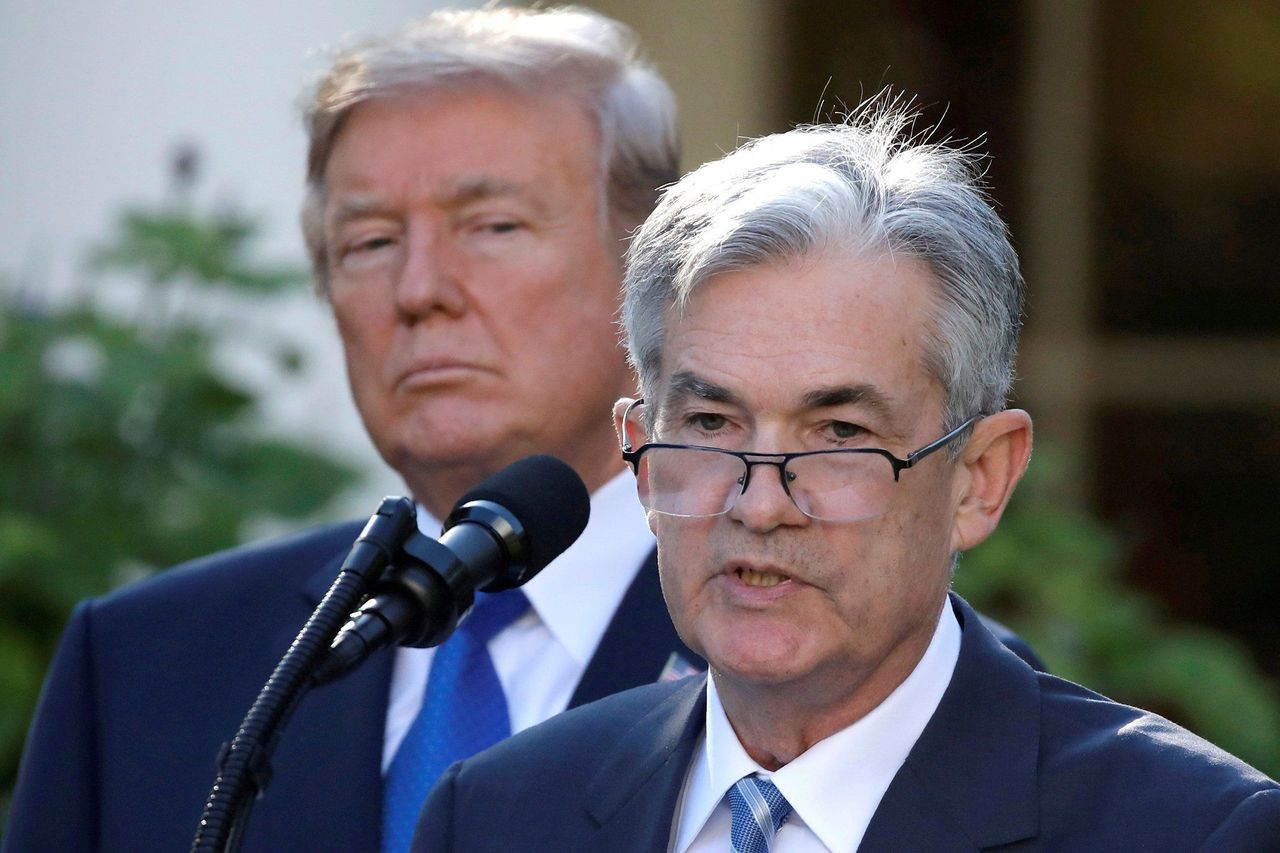
Trump's conflict with the Fed is a naked political showdown, the core of which is his firm belief that the Fed, under Powell's leadership, intends to "cooperate with Biden and target him." This perception stems not only from policy differences, but is also deeply rooted in Trump's obsession with political loyalty and his suspicion of "establishment" manipulation.
Trump's evidence of favoritism
Trump has repeatedly accused the Fed of being "too cooperative" during Biden's term. In 2021-2022, the Fed maintained low interest rates to support the post-epidemic recovery, coinciding with Biden's promotion of a massive stimulus plan, which Trump interpreted as a "secret help" for the Democratic agenda. In contrast, during his term, Powell has gradually raised interest rates since 2018, and maintained high interest rates in 2023-2024 due to high inflation. Trump believes that this directly undermines his economic growth commitments and trade war offensive. He repeatedly declared at the 2024 campaign rallies: "Powell listens to Biden, but sabotages me." Although this narrative lacks direct evidence, it caters to its supporters' distrust of the "deep state" and strengthens Trump's image as a system challenger.
The Federal Reserve’s “political motivation” illusion
From a political standpoint, the independence of the Federal Reserve itself is Trump's target. Powell emphasizes that decisions are based on data, but Trump sees it as a "political disguise." He believes that as part of the Washington establishment, the Federal Reserve is naturally inclined to maintain the stability preferred by the Democratic Party rather than support its radical "America First" reforms. For example, Powell's tolerance of inflation at the beginning of Biden's term was interpreted by Trump as "letting the Democratic Party go," while the high interest rates during his term were seen as "deliberate constraints." This cognitive bias stems from Trump's extremely high demands for loyalty: any institution that does not fully cooperate is labeled "hostile."
The amplification effect of historical context
Trump's suspicion is not groundless. The Fed has had many frictions with Republican presidents in history, such as Reagan's criticism of Volcker. But Trump's situation is more special: he came to power with an "anti-establishment" attitude and regarded the Fed as a symbol of the elite. Powell was nominated by Trump, but he did not show the expected loyalty. Instead, he repeatedly emphasized his independence in public, and even hinted in 2023 that he would not adjust policies due to pressure from the White House. This sense of "betrayal" convinced Trump that the Fed led by Powell intended to stand on the opposite side of his politics, continuing the "moderate" line of the Democratic Party.
Catalyst for voter resonance
Trump portrayed the Federal Reserve as an "anti-public opinion" bureaucratic machine, igniting the anger of grassroots voters against elite institutions. He claimed that Powell "let workers and businesses suffer" and attributed high interest rates to "betrayal of ordinary Americans." This political rhetoric not only strengthened his "fighter" image, but also obscured the complexity of the Federal Reserve's independence and further solidified the narrative of "targeting Trump."
Trump's firing attempt and historical precedent
Trump's dissatisfaction with Powell has long been public. During the 2024 campaign, he repeatedly threatened to fire Powell. In February, he said Powell "misjudged inflation" and threatened to "fire him if he didn't obey." In July, he said the Fed chairman should be obeyed "like an advisor." These remarks have caused fluctuations in the dollar and U.S. Treasury yields, showing the market's sensitivity to his intentions.
Trump's actions are more than just words. On April 9, Supreme Court Chief Justice Roberts signed an order temporarily allowing Trump to fire members of the NLRB and MSPB, suspending the lower court's (the District of Columbia Circuit Court of Appeals) reinstatement ruling, and requiring the relevant parties to respond by April 15. This case challenges the precedent of "Humphrey Executor" and is intended to expand the president's control over independent agencies. If successful, it may open a legal loophole for the dismissal of Powell. In his first term, Trump tried to intervene in the Federal Reserve, pressuring interest rate cuts and nominating his confidants to the board of directors, but none of them were fully successful, showing that his long-term goal is to reshape executive power.
Whether Trump can fire Powell depends on three factors: law, procedure and market. They are analyzed one by one below.
1. Legal constraints and the key role of the Supreme Court
The Humphrey Executor provides that the heads of independent agencies can only be fired for “good cause” (such as malfeasance). The Federal Reserve Act provides similar protections to the Fed chair, who Powell serves until May 2026. Trump’s Supreme Court petition argues that agencies such as the NLRB exercise “substantial executive power” and should not be protected from removal. He may make a similar argument against the Fed, saying that monetary policy has far-reaching consequences and the chair should be under the direct control of the president.
In recent years, the Supreme Court has tended to expand presidential power. The 2020 Seila Law case ruled that the removal protection of the single-leader CFPB director was unconstitutional; the 2021 Collins case further limited the protection. However, the Federal Reserve is governed by a seven-member board of governors, which meets the "multi-member expert committee" standard of the Humphrey Executor, and its independence is more difficult to shake. The interim order on April 9 showed that the court was open to Trump's request, but the final ruling (expected in the summer of 2025) may only target NLRB/MSPB and may not cover the Federal Reserve.
If the Humphrey Execution is overturned, Trump could fire Powell for policy differences, but would need to prove "good cause." Powell's data-driven stance is unlikely to be accused of misconduct, and if fired, he could file a lawsuit to delay the process.
2. Procedural and political resistance
After firing Powell, Trump will need to nominate a new chairman and have him confirmed by the Senate. Republicans control the Senate, but moderates may oppose radical candidates, and the nomination process may take months. During the transition period, the vice chairman or the board member will temporarily serve as the chairman, and policies may continue the status quo, weakening Trump's expected effects.
Politically, firing Powell could cause divisions within the party. Some Republicans support the independence of the Federal Reserve and worry that intervention could cause economic turmoil. Powell is highly trusted in the financial community, and his dismissal could trigger a backlash. Internationally, the damage to the independence of the Federal Reserve could weaken the credibility of the dollar and affect capital inflows.
3. Market and economic consequences
The dismissal of Powell may cause short-term market fluctuations. The US dollar may fall due to concerns about independence, and the stock market may rise temporarily due to expectations of interest rate cuts, but US bond yields may rise due to inflation expectations. In the long run, if monetary policy is subject to political interference, it may lead to uncontrolled inflation and damage economic stability. The tariff war has exacerbated inflationary pressure. If the new chairman cooperates with interest rate cuts or exchange rate intervention, it may alleviate the overvaluation of the US dollar, but the inflation risk will be amplified.
4. Possibility Assessment
- High probability (25%): The Supreme Court overturns Humphrey Execution and Trump attempts to fire Powell, but is likely to be thwarted by litigation and Senate resistance.
- Medium probability (55%): The court limits removal protections and Trump pressures Powell to resign, but outright firing is difficult.
- Low probability (20%): The court maintains the status quo, and Trump can only influence the Fed indirectly by nominating board members.
Conclusion
U.S. stocks and cryptocurrencies have hit a low point amid cooling inflation and tariff wars, and safe-haven assets have become a safe haven for funds. Trump's firing of Powell is seen as a potential positive, but legal and procedural obstacles complicate its prospects. The Supreme Court's ruling will determine the president's control over independent agencies, and Powell's stay or departure will depend on Trump's strategy and market reaction. In the short term, the market will struggle with uncertainty, and it will take time to verify whether firing Powell can reverse the downward trend.