Partners who are familiar with and concerned about the Polkadot ecosystem know that Polkadot 2.0 has become a major upgrade direction for the Polkadot ecosystem since last year. It aims to further promote the expansion and maturity of its multi-chain ecosystem through technical optimization, governance improvement and innovation of resource allocation mechanisms. Towards building a highly interconnected, resource-efficient and developer-friendly multi-chain ecosystem, Polkadot 2.0 supports complex DApp deployment through flexible resources and low-cost architecture, provides a more seamless cross-chain experience, and establishes its ecological position in the industry, and continues to accelerate the migration process from Web2 to Web3.
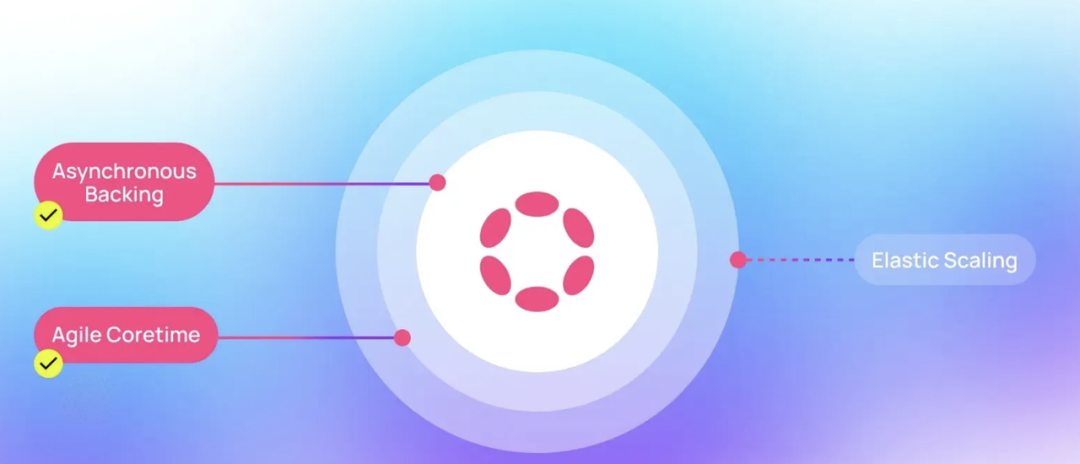
Just last year, DOT holders passed a referendum through community voting, defining Polkadot 2.0 to include features such as Agile Coretime, Async Backing, and Elastic Scaling , which played a vital role in providing Polkadot with a solid decentralized application platform. Now, with the launch of Agile Coretime and Asynchronous Backing , the latest status of Elastic Scaling, the last piece of the puzzle of Polkadot 2.0, has also attracted the attention of industry insiders.
The following are the important time points in the construction of Polkadot 2.0:
May 2024: Polkadot enables asynchronous backing
September 2024: Agile Coretime is launched on Polkadot, and all parachains can migrate to the new allocation model
October 2024: Elastic scaling MVP version supported on Kusama
December 2024: All components of Polkadot 2.0 are stress-tested on Kusama via the Spammening campaign
Q2 2025: Elastic expansion will be fully launched on the Polkadot ecosystem soon!
Today, let us approach this last piece of the puzzle, grasp the technical concepts and application advantages of elastic scaling , and explore the scenario problems and challenges of its implementation, which are new development directions worth exploring together in the future.
The concept and application advantages of elastic expansion
Parallel chain congestion problem in traditional blockchain model
Before we delve into the significance of elastic scaling to the development of the Polkadot ecosystem, we need to grasp its basic concepts and application scenarios. In the traditional blockchain model, each parallel chain can only use a single core to submit blocks . This limitation will cause congestion and inefficiency in high transaction volume scenarios. Therefore, the concept of elastic scaling was born, which enables it to process transactions in parallel and improves the resource utilization and flexibility of the entire network.
Based on agile core time design, multi-core allocation parallel
Elastic Scaling is a dynamic resource allocation mechanism based on Agile Coretime development and application, which can solve the limitations of the single-core model and optimize Polkadot's management of computing resources. By allowing parachains to use multiple cores in the same Polkadot block according to actual needs , network throughput is improved and larger transaction loads can be handled more efficiently; it is worth mentioning that in the process of allocating multiple cores to a single parachain,
Polkadot 2.0 can increase network throughput and speed up transaction processing without sacrificing security.
Case scenario:
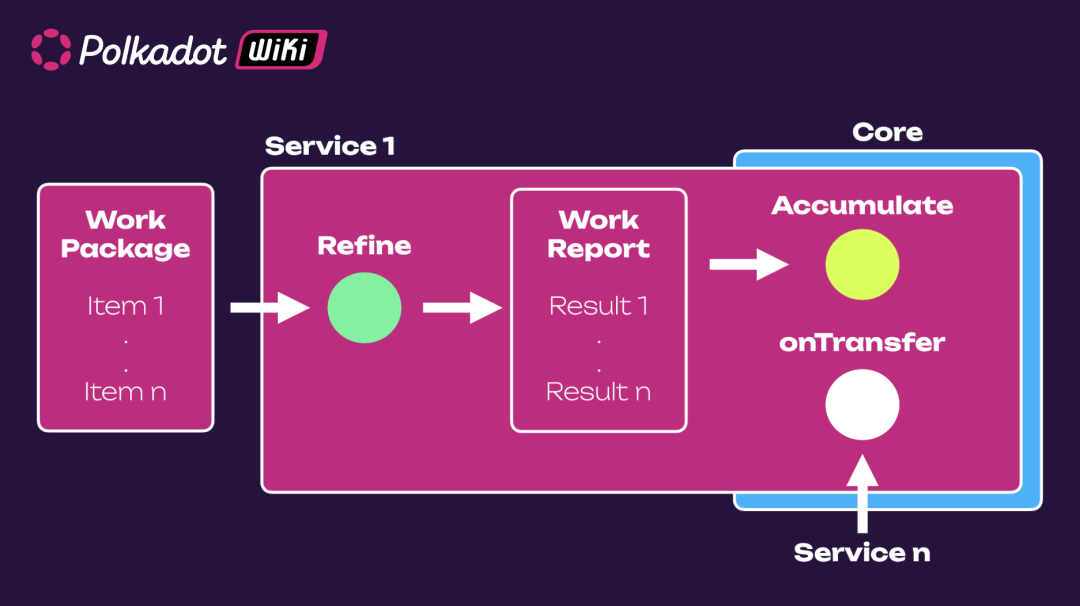
For example, if the relay chain can verify 100 parachain blocks at a time, we say it has 100 cores, just like a processor with 100 cores can execute 100 threads at the same time. In this way, parachains can get multiple cores to execute at the same time, so parachains with high throughput can execute transactions faster.
Overall, Agile Coretime implements dynamic resource allocation that matches network demand , while Elastic Scaling further optimizes this process through concurrent processing capabilities, ensuring that the project can achieve the goal of seamless expansion as demand grows, avoiding capacity bottlenecks while further improving performance.
Application advantages and application scenarios of elastic expansion
After grasping the basic concept of elastic scaling, we need to explore its practical application advantages and technical implementation scenarios in depth, and clarify the important position of elastic scaling in ecological operation and project extension through its specific performance in the Polkadot ecosystem. Overall, elastic scaling has the advantages of high flexibility, performance improvement, and cost optimization. The following is an analysis and discussion based on specific scenarios:

Dynamic throughput is greatly improved, enabling horizontal operation expansion
The development of elastic scaling has prompted the parallel chain architecture to deploy transactions to multiple chains through a sharding mechanism, allowing the ecosystem to increase the number of parallel chains or adjust the resource quota of a single parallel chain according to actual dynamic needs , and achieve horizontal expansion processing during traffic peaks. Specifically, there are display applications in DeFi protocols and NFT platforms . For example, when Unique Network is casting popular NFTs, it can temporarily expand parallel chains to reduce transaction delays.
Optimize resource utilization and reduce actual application costs
With the elastic scaling technology, the parallel chain can coordinate the processing process through the Cumulus framework and the relay chain , and allocate the corresponding ecological resources of the validator on demand. Parallel chains that are not fully utilized can further release the operating power of the validator node resources, thereby avoiding further idle resources . For example, the current development of the Internet of Things is accelerating. By synergizing the efficiency of on-chain and off-chain expansion, it can reduce public cost expenditures and improve the actual cost-effectiveness of project applications.
Cross-chain interoperability helps with communication scheduling and efficient processing of asset transfers
In the process of running ecological projects, communication optimization of cross-chain message passing protocols is a practical problem. Elastic Scaling can support the establishment of communication channels between parallel chains on demand and complete dynamic scheduling of relay chains through the optimization and quality improvement of XCMP, such as cross-chain asset transfer and other key cross-chain message processing processes. Today, when projects such as HydraDX complete the synchronization of liquidity between multiple parallel chains, Elastic Scaling can support the expansion of cross-chain communication bandwidth and reduce slippage ; in multi-chain governance (such as DAO organizations) cross-chain voting, it can also ensure the communication priority of key proposals; MMO games require millisecond-level interactions and millions of concurrent player status updates (such as metaverse scenarios) .

Elastic expansion is coming soon, filling the last piece of the puzzle for Polkadot 2.0
Today, the Polkadot 2.0 ecological blueprint is about to complete the upgrade of the elastic scaling technology, and will also complete its overall technology route strategy. Dynamic and flexible economic model, decentralized computing resource management, three technical upgrades are actively implemented on Kusama, and the vision of Polkadot 2.0 is finally complete - upgrading from a static sharding architecture to a dynamic and adaptive multi-chain network, truly realizing "on-demand expansion and seamless interoperability" , paving the way for large-scale applications of Web3.
However, while analyzing and exploring the advantages and potential of elastic scaling, we still cannot ignore the gaps that need to be solved and improved. Faced with real risks and challenges such as unbalanced node verification load, a large amount of metadata that needs to be processed across chains, and malicious parallel chain attacks, the application of elastic scaling still faces challenges in ecological deployment, network transaction congestion, and even the crisis of gradually moving towards the quagmire of centralization.
To this end, we have to further develop asynchronous support (Asynchronous Backing) and optimize the XCMP-Lite protocol based on the latest foothold of Polkadot 2.0 development to reduce the substantial dependence of more projects on the relay chain; we also need to introduce elastic slot auctions to support more short-term leases and prevent peak premium problems, and design resource credit centers to support projects to increase utilization through network resource allocation.
Only when we provide flexible and scalable technical support for more high-concurrency scenarios (such as DeFi, NFT, IoT) can we gradually unleash the development power of elastic scaling in the future Polkadot ecosystem construction . We also always believe that although challenges such as governance complexity and economic fairness still exist, through modular design, on-chain AI and community-driven iteration, Polkadot 2.0 has created an ideal performance stage for the next billion-level Web3 application scenario.