
Author: Luke, Mars Finance
In the mines late at night, the roar of mining machines resounds endlessly, like a never-ending symphony. However, when the price of Bitcoin hovers around $85,000, this jungle of computing power is undercurrents - more than half of the mining machines are standing on the edge of a cliff, facing a cruel choice: continue to burn electricity bills and insist on mining, or decisively press the shutdown button? This silent game points to the bottom-level survival rule of the cryptocurrency market - the shutdown price. Once, it was regarded as a weather vane at the bottom of the market; now, it is crumbling in the torrent of mining machine iterations. Can Bitcoin still rebound with the shutdown price? The answer may be hidden in this contest between computing power and cost.
Shutdown price: the oxygen line that miners breathe
In the digital world of Bitcoin, miners are pioneers who make a living by computing power, and electricity is the oxygen they breathe. The shutdown price is like the lowest oxygen concentration in this jungle. Once the price of Bitcoin falls below a certain critical point, the income from mining cannot cover the electricity cost, and miners can only choose to shut down.
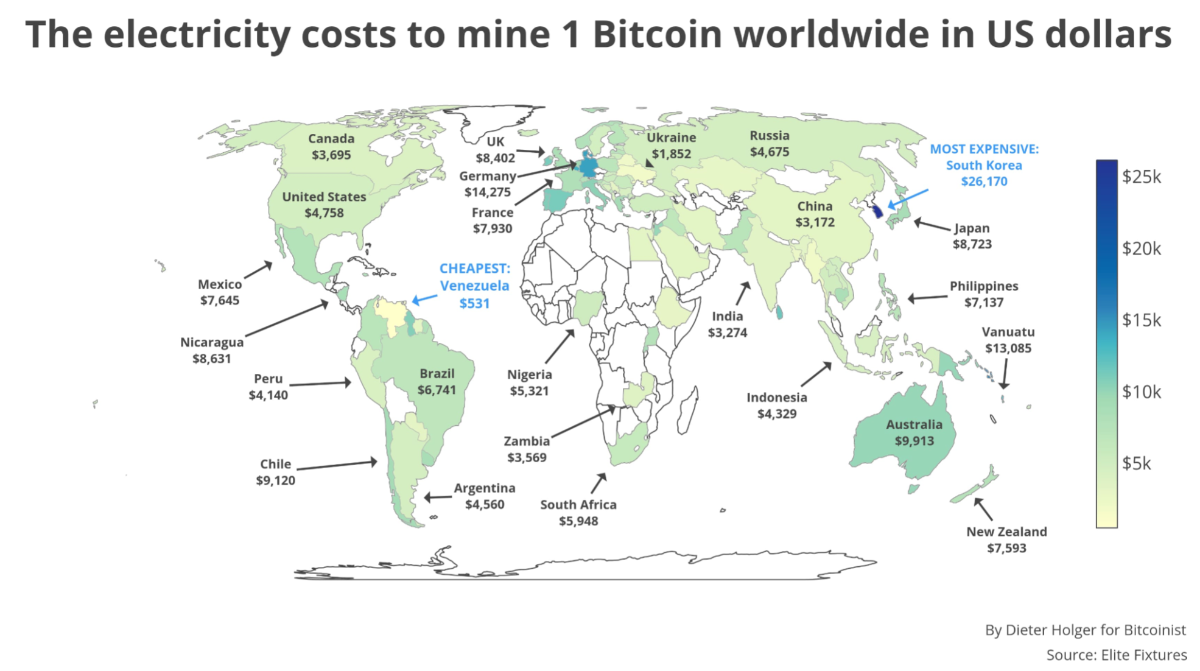
The exact calculation formula for the shutdown price:
Shutdown price = (Daily power consumption of mining machine × electricity price) ÷ (Daily output of bitcoins × mining pool fee coefficient)
Taking Antminer S19 as an example, it consumes 72 kWh of electricity per day (the price is 0.06 USD/kWh), and produces about 0.0002 BTC. The shutdown price is just close to 85,000 USD, which coincides with the current market price. This is not a coincidence, but a reflection of the fact that half of the industry is on the verge of death.
But the shutdown price is never a static number. It migrates to corners with lower electricity costs as miners move, dances with the rhythm of the difficulty adjustment of the Bitcoin network, and is constantly reshaped under the impact of the new generation of mining machines. Like a dynamic dance, the computing power of the entire network decreases after the old mining machines are shut down, and the survivors take a breath and recover due to reduced competition; every two weeks, the difficulty adjustment is waved like a baton to ensure a steady rhythm of block output; at the same time, new mining machines such as Ant S21 XP have emerged, reducing the proportion of electricity costs to 35%, causing the industry cost line to move down suddenly. It is the resonance of these factors that makes the shutdown price a hidden compass for peeking at the bottom of the market.
Historical code: The rebound fireworks ignited by the shutdown price
Looking through the historical ledger of Bitcoin, the shutdown price is like a lighthouse with hidden mysteries. Whenever the price touches its light, the market will always turn around.
December 2018
Bitcoin plummeted from $20,000 to $3,150, and a large number of Bitmain S9 mining machines (shutdown price of about $3,500) were shut down. In the following six months, the price of the currency rebounded to $14,000, an increase of 344%.
March 2020
“Black Thursday” caused the price of the currency to drop by half to $3,800, and the computing power of the entire network dropped by 30%. After the shutdown wave, Bitcoin started an epic bull run, reaching $65,000 in 15 months.
Bear Market in 2022
When the price of Bitcoin fell below $20,000, North American listed mining companies were forced to sell their Bitcoin inventory to pay for electricity. However, as the computing power dropped by 26%, the price of Bitcoin rebounded again in early 2023.

Why does this "shutdown means bottoming out" scenario work so well? The answer lies in the self-healing of the market ecology: miners sell about 900 bitcoins a day to pay for electricity, and the shutdown wave makes this selling pressure disappear; at the same time, the shutdown price is regarded as the "cost bottom line" by institutions, attracting funds to buy at the bottom; the difficulty adjustment is like a spring, the deeper it is pressed, the stronger the potential energy of the rebound. However, this familiar script is now shrouded in uncertainty under the shadow of new mining machines.
The evolution of mining machines: the breaker of the shutdown price curse?
When the Ant S21 XP lowered the shutdown price to $29,757, and the old Shenma M30S+ was dying at around $85,000, a knockout match of "computing power Darwinism" was taking place. From the Ant S9 in 2016 (28nm chip, energy efficiency ratio 100J/TH) to the S21 XP in 2024 (5nm chip, energy efficiency ratio 15J/TH), the energy efficiency has increased nearly 7 times in eight years, which can be called a leap from steam engine to magnetic levitation. The new mining machine not only has lower costs itself, but also squeezes the old mining machine out of the stage through computing power crushing. According to estimates by the Cambridge University Blockchain Research Center, when the S21 series occupies 20% of the computing power of the entire network, the shutdown price center will move down 40%. This makes people wonder: If the shutdown price falls to $30,000 in the future, and the price of Bitcoin fluctuates in the range of $40,000-60,000, will the classic "shutdown rebound" reappear?
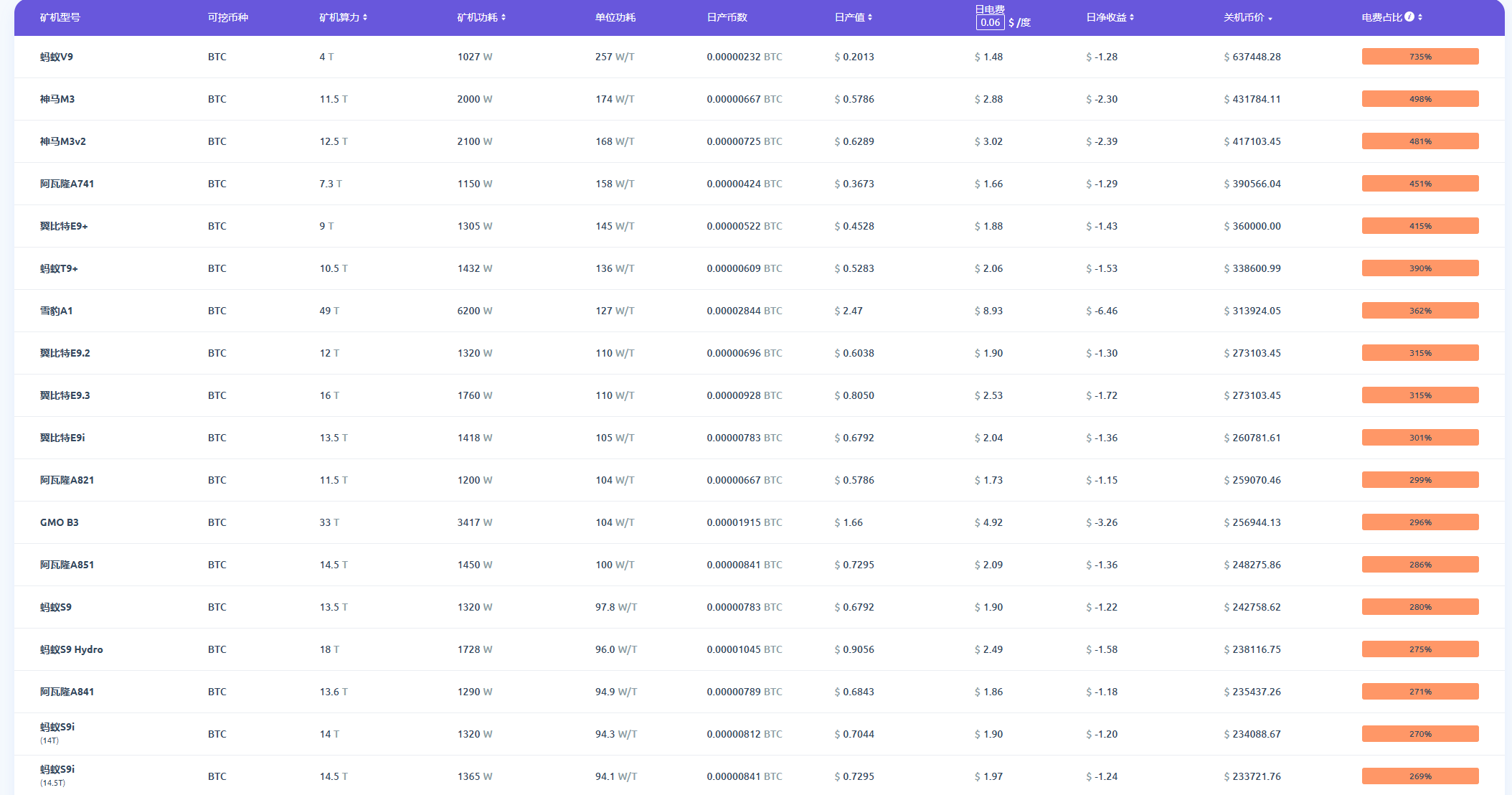
The impact of this mining machine arms race is far more than just numbers. Morgan Stanley analysts once pointed out in a report: "The improvement of mining machine efficiency is reshaping the cost curve of Bitcoin, and the fluctuation range of shutdown prices may be compressed from tens of thousands of dollars to thousands of dollars." At the same time, large mining farms have locked in profits through futures hedging and cheap electricity, further weakening the sensitivity of shutdown prices. The curse of history seems to be quietly being cracked by technology and capital.
The crossroads of shutdown price: rebound or silence?
The market is divided into two camps around the future of the shutdown price. On one side are the "failure theorists", who believe that the iteration speed of mining machines has exceeded price fluctuations, and the anchoring effect of the shutdown price is disintegrating; the rise of Bitcoin spot ETFs has also blurred the connection between miners' selling pressure and prices. On the other side are the "evolutionists", who firmly believe that the technological dividend will eventually reach the physical limit of chip manufacturing (approaching 1nm), and the rise in global electricity costs (especially under the carbon neutrality policy) will offset some of the efficiency gains. CoinMetrics data shows that the global Bitcoin mining machine market will reach US$5 billion in 2023, a year-on-year increase of 25%, but electricity costs have also risen by 15% in the past five years. Regardless of which faction is dominant, the shutdown price is quietly deforming: the fluctuation space is narrowing, the rebound cycle is shortened from months to weeks, and "super miners" with new mining machines and cheap electricity are gradually becoming the market leaders.
So, can Bitcoin still rely on the shutdown price to rebound? At the current price of $86,900, the answer is not clear. The magic of the shutdown price has repeatedly ignited the flames of rebound in history, but now it is facing new tests. If the price drops further, the new generation of mining machines such as Ant S21 XP (shutdown price of about $29,757) may still be able to hold its ground, and the large-scale shutdown of old mining machines may reduce selling pressure, attract funds to enter the market, and trigger a small rebound. However, if the price fluctuates at a high level, such as the $80,000-90,000 range, the traditional trigger effect of the shutdown price may gradually fail, and the trend of Bitcoin will rely more on the game of macroeconomics and market sentiment. Arthur Hayes, founder of BitMEX, once pointed out incisively: "Don't expect the shutdown price to save the market like in the past. Future fluctuations will come more from the struggle of external capital."
At the same time, market analysis adds more clues to this judgment. Bitcoin has recorded its biggest drop since the FTX crash in the past three days (-15%). Markus Thielen, founder of 10x Research, warned in a client report on Wednesday that in the worst case, Bitcoin could fall to the $72,000-74,000 range, and then rebound. He pointed out that this level is a key demand area by analyzing the actual price of short-term holders (the average cost of buying BTC for addresses with holding time of less than 155 days, currently about $82,000)-historically, Bitcoin rarely falls below this line for a long time in a bull market, while it may be under pressure for a long time in a bear market.
Thielen also mentioned that there is a lag in the correlation between Bitcoin and global central bank liquidity indicators. If liquidity tightens, the decline may intensify, but the support reached at $82,000 may pave the way for a rebound.
Epilogue: Revelation of survival in the computing jungle
For ordinary investors, the change of shutdown price is a vivid survival lesson. When the market cheers "shutdown price has arrived", don't forget to check the mainstream mining machine models and computing power ratio; the "inventory/liability ratio" in the financial reports of mining companies such as Marathon and Riot may be a hidden clue to selling pressure. More importantly, the shutdown price is not a crystal ball, but an X-ray of the market ecology, reflecting the game of computing power, cost and human nature. Just as the Bitcoin network always pursues the longest chain, the shutdown price will continue to be reborn in the pursuit of profit by miners and the evolution of technology. Rebound may no longer be inevitable, but this adventure in the computing power jungle will never end.