

Author: Phoebe Liu, Forbes
Translation by: Lemin
Over the past year, tech billionaires have expressed their unwavering belief in AI technology, but their actions haven't always matched their words. Among these billionaires who reduced their holdings, some used the proceeds to try and build new AI companies, while others took advantage of the AI boom to cash out.
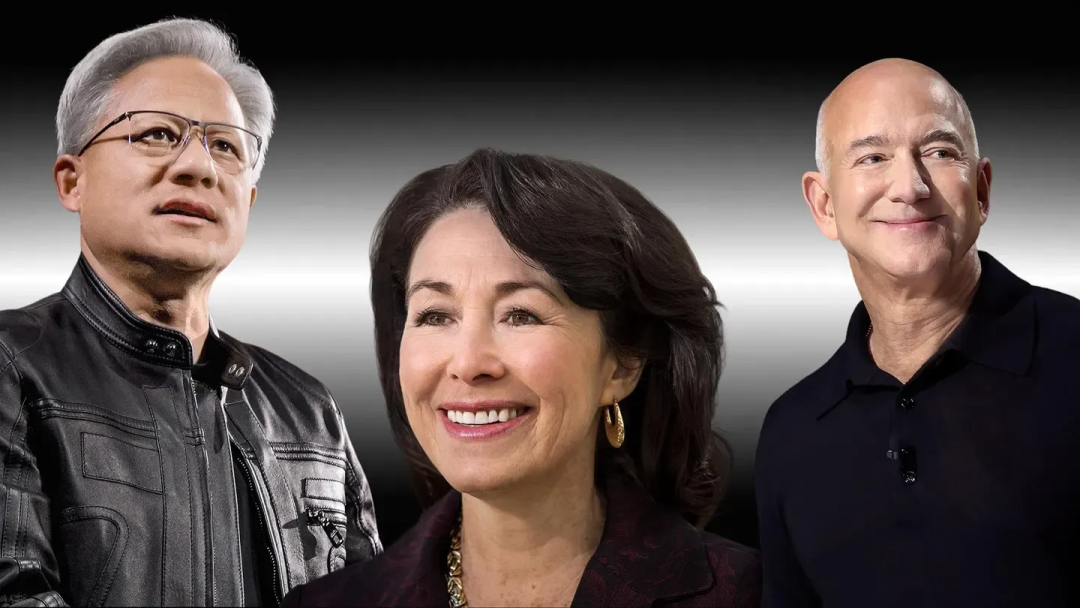
In September, billionaire Safra Katz announced her resignation as CEO of tech giant Oracle after 11 years at the helm, moving into an advisory role. Oracle was enjoying a bumper year at the time—the market was eagerly anticipating its massive expansion plans for its artificial intelligence data centers, and the company's stock price had reached an all-time high. "We need to complete this transition while the company is doing well," Katz told analysts at the time. She not only chose to retire at the company's peak but also used this opportunity to cash out a large portion of her capital.
According to Forbes estimates, since January 1, 2025, Katz has sold a total of $1.9 billion worth of Oracle stock, cashing out more than two-thirds of her net worth. In terms of the amount cashed out, she ranks third among tech billionaires, but in terms of the percentage of her net worth cashed out, she ranks first.
Katz is not the only one choosing to cash out. While the public market remains hot, driven by the AI boom, concerns about a bubble are also increasing, leading many billionaires to significantly reduce their holdings and cash out over the past year.
Forbes compiled a list of stock sales by 198 American tech tycoons on its billionaire list , including those transactions they were obligated to disclose in 2025 due to their positions as company executives, directors, or significant shareholdings. It's important to note that this data excludes sales solely for the purpose of paying taxes on newly granted stock, sales through charitable organizations, and expenditures related to exercising stock options.
Data shows that from January 1 to December 15, 2025, the top 20 billionaires in terms of the amount of shares sold cashed out more than $19 billion. Among them, 14 billionaires cashed out no less than $500 million each, including Katz, Jeff Bezos, Michael Dell, and Jensen Huang.
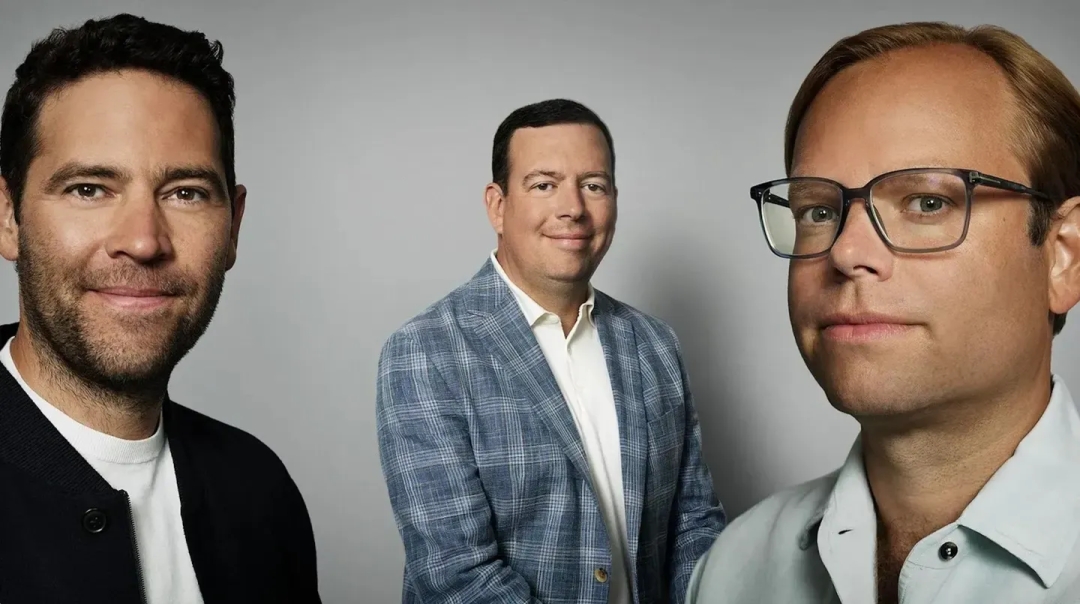
From left to right: CoreWeave co-founders Brenning Mabe, Brian Venturo, and Peter Saranki. Image credit: Guerin Blask for Forbes
CoreWeave, an AI data center company, went public in March 2025. Since then, its Chief Business Officer, Brenning Macbeth, Director and Investor Jack Kogan, and Chief Strategy Officer, Brian Venturo, have cashed out significantly, selling $473 million, $488 million, and $289 million worth of CoreWeave stock, respectively. The company's stock price has halved since August, and their early selling in the first half of the year allowed them to avoid most of the impact. CoreWeave's stock price plunge is mainly due to market concerns about its debt situation and the slowdown in its data center construction. Some market analysts see CoreWeave as a bellwether for the booming AI industry and the sustainability of related capital expenditures.
The reduction of stock holdings by wealthy individuals is not solely due to risk management.
Among all US tech billionaires whose transactions require disclosure, Amazon founder Jeff Bezos topped the list in terms of the amount of shares he sold. He may invest the proceeds in multiple areas: more luxurious real estate projects, the rocket company Blue Origin, venture capital projects (including robotics), and his mysterious new artificial intelligence startup, Project Prometheus—reportedly having raised over $6 billion, some of which came from Bezos himself. In December, Dell pledged $6.25 billion to American children by creating 25 million accounts and depositing $250 into each. Specific details and timelines for the donation plan have not yet been released, but this massive donation will undoubtedly help Dell reduce its tax burden from the sale of $2.2 billion worth of stock.
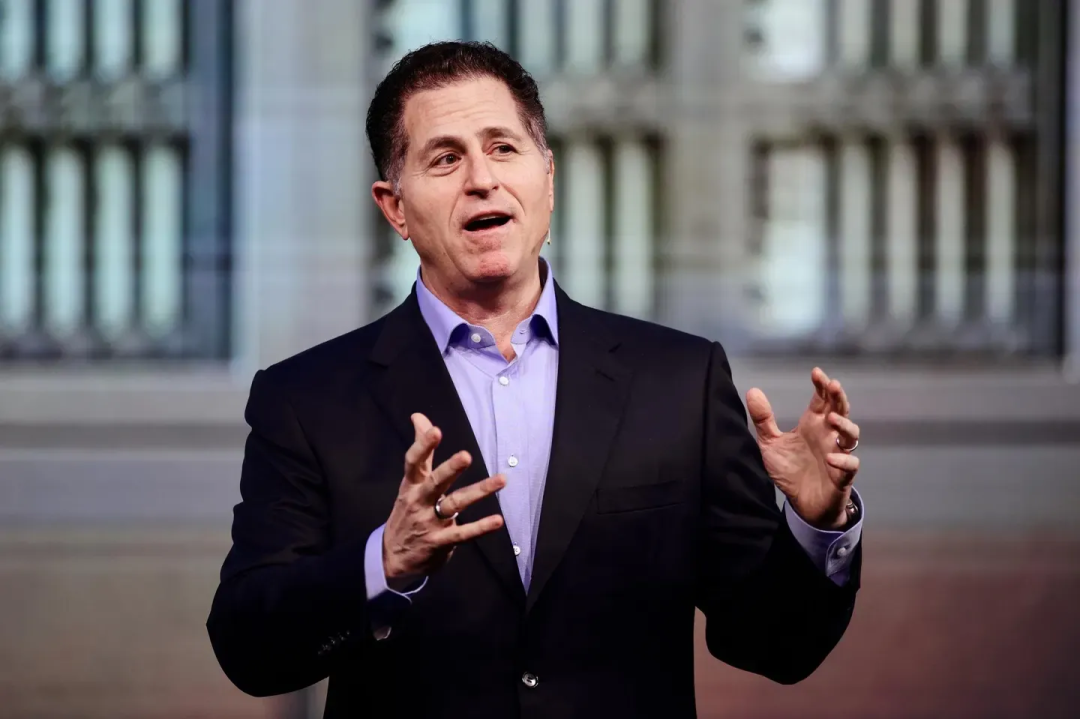
Michael Dell, Chairman and CEO of Dell. Image credit: Photo by Joan Cros/NurPhoto via Getty Images
Almost all share reduction plans were reported to the U.S. Securities and Exchange Commission (SEC) months in advance, a rule originally established to prevent insider trading allegations. However, billionaires' share reduction activities often align with macroeconomic trends because the core conditions of the plans—including the frequency, scale, and timing of the reductions—are largely determined by the wealthy individuals themselves. For example, a billionaire can set a specific stock price target as a condition to trigger automatic share reductions, meaning they are highly likely to initiate the reduction when the company's stock price rises. This explains why some billionaires are still cashing out: high stock prices (which currently appear to be the case) tend to generate more share reduction transactions.
Also noteworthy is the absence of Elon Musk, the world's richest man, and Larry Ellison, the world's fourth richest man, from this list. Instead of selling shares to generate cash, both have pledged hundreds of millions of shares of Tesla and Oracle stock respectively—allowing them to fully utilize the value of their shares without paying taxes on any sales.
The following are the tech tycoons on the Forbes Billionaires List who sold the most shares between January 1 and December 15, 2025.
1. Jeff Bezos
Net worth: $238 billion
Source of wealth: Amazon
Stock sales: $5.6 billion worth of Amazon stock
2. Michael Dell
Net worth: $143 billion
Source of wealth: Dell
Stock sales: $2.2 billion worth of Dell stock
3. Safra Catz
Net worth: $2.8 billion
Source of wealth: Oracle
Stock reduction: $1.9 billion worth of Oracle stock.
4. Jensen Huang
Net worth: $152 billion
Source of wealth: Nvidia
Stock reduction: $1.1 billion worth of Nvidia stock.
5. Jayshree Ullal
Net worth: $5.4 billion
Source of wealth: Arista Networks
Stock sales: $1 billion worth of Arista Networks stock
6. Herald Chen
Net worth: $2.4 billion
Source of wealth: Applovin
Share sales: $710 million worth of Applovin stock.
7. Frank Slootman
Net worth: $3.4 billion
Source of wealth: Snowflake
Stock sales: $680 million worth of Snowflake stock.
8. David Baszucki
Net worth: $5.3 billion
Source of wealth: Roblox
Stock sales: $670 million worth of Roblox stock.
9. Mark Zuckerberg
Net worth: $221 billion
Source of wealth: Meta
Stock sales: $640 million worth of Meta shares
10. Brian Armstrong
Net worth: US$11.5 billion
Source of wealth: Coinbase
Stock sales: $570 million worth of Coinbase stock.
11. Stephen Cohen
Net worth: $6.3 billion
Source of wealth: Palantir
Stock sales: $561 million worth of Palantir stock.
12. Eric Lefkofsky
Net worth: $5.8 billion
Sources of wealth: Groupon, Tempus AI
Stock sales: $506 million worth of Tempus stock.
13. Mark Stevens
Net worth: US$10.5 billion
Source of wealth: Nvidia
Stock reduction: $500 million worth of Nvidia stock
14. Henry Samueli
Net worth: $33 billion
Source of wealth: Broadcom
Share reduction: $500 million worth of Broadcom stock.
15. Jack Cogen
Net worth: $1.9 billion
Source of wealth: CoreWeave
Stock sales: $490 million worth of CoreWeave stock.
16. Brannin McBee
Net worth: $2.4 billion
Source of wealth: CoreWeave
Stock sales: $470 million worth of CoreWeave stock.
17. Reed Hastings
Net worth: $5.2 billion
Source of wealth: Netflix
Stock sales: $370 million worth of Netflix stock.
18. David Duffield
Net worth: $13 billion
Sources of wealth: Workday, PeopleSoft
Stock sales: $310 million worth of Workday stock.
19. Brian Venturo
Net worth: $3.2 billion
Source of wealth: CoreWeave
Stock sales: $276 million worth of CoreWeave stock.
20. Shyam Sankar
Net worth: $1.3 billion
Source of wealth: Palantir
Stock sales: $250 million worth of Palantir stock.



