
On July 30, 2025, the world celebrated the 10th anniversary of Ethereum. Ethereum, a community-driven, open-source blockchain platform, continues to lead technological evolution and application expansion. From the pioneer of smart contracts to the core foundation of the entire Web3 ecosystem, it has not only triggered systemic changes in financial innovation, asset programmability, and data sovereignty, but has also continuously achieved breakthroughs in scalability, privacy-preserving computing, and cross-chain interoperability, becoming a dominant infrastructure.
Currently, Ethereum hosts over 50% of the world's non-Bitcoin digital assets, including approximately 60% of all stablecoins in circulation, over 60% of decentralized finance (DeFi) locked capital, and up to 80% of on-chain mappings of real-world assets (RWAs), such as stocks, money market funds, and bonds. This achievement solidifies Ethereum's position as a pillar of the global digital economy and Web3 ecosystem.
Over the past decade, we have been unwavering in building the Ethereum ecosystem. Here are seven reasons for our unwavering commitment.
1. Leading Developer Ecosystem
1.1 Rich Developer Ecosystem and Growth Trends
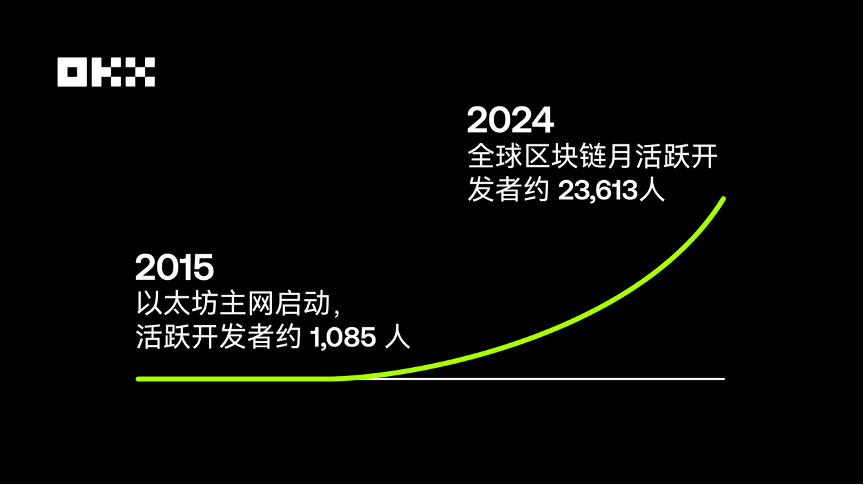
○ When the Ethereum mainnet launched in 2015, there were approximately 1,085 active developers. By 2024, the global number of monthly active blockchain developers will be approximately 23,613, with a ten-year compound annual growth rate of 39%. Ethereum maintains its position as the largest developer community.
○ In 2024, approximately 16,700 new developers will contribute code to the Ethereum ecosystem, three times the number of Polygon and nearly four times the number of Solana. Despite the recent bear market, the number of monthly active developers across Web3 has declined slightly from its peak (down approximately 7% year-on-year), but the number of "veteran developers" with more than two years of experience has increased by 27%, steadily supporting ecosystem innovation.
○ Senior developers (those with more than two years of experience) account for over 70% of the total, forming the cornerstone of the Ethereum ecosystem's continued innovation.
1.2 EVM Continuous Ecosystem Expansion and Network Effects
○ Currently, one-third of global crypto developers are multi-chain developers, and 34% are active on more than two public chains each month, a significant increase from 2015 (<10%).
○ The Ethereum Virtual Machine (EVM) ecosystem has a significant aggregation effect: 74% of multi-chain developers actively contribute to EVM chains, and the number of EVM cross-chain deployers has increased fourfold since 2021.
○ EVM-compatible chains such as Base, Polygon, and Starknet have attracted a large number of developers, sharing toolchains and code bases, greatly lowering the barrier to innovation and enhancing ecosystem stickiness.
○ Code innovation in the EVM ecosystem is migrating to Layer 2 and new chains: By 2024, the mainnet and Layer 2s will together host 65% of innovative code, with Base accounting for 25% of EVM innovation logic at one point.
○ In 2023, there were 17 crypto ecosystems globally, attracting over 1,000 active developers per month, with EVM chains holding the majority.
1.3 Ethereum (Solidity/EVM) remains the public chain with the most developers and the richest ecosystem.
○ Solana (Rust) saw rapid growth in developer numbers, surpassing Ethereum for the first time in 2024, but its total developer base still lags behind Ethereum.
○ The Move ecosystem, represented by Aptos and Sui, still has a significantly smaller developer base than EVM and Rust chains, but is experiencing significant growth, focusing on asset security, resource orientation, and the concentration of specialized talent.
○ Ethereum has set a benchmark for open standards and development tools in the blockchain industry. From code frameworks (such as Hardhat, Foundry, and OpenZeppelin) to infrastructure (such as Layer 2 Rollup and NFT protocols), it has effectively lowered the barrier to entry and learning costs for developers worldwide.
II. Continuously Growing and Innovating Scaling Ecosystem
2.1 Ecosystem Evolution and Innovation Leadership
○ The launch of the Ethereum mainnet in 2015 ushered in a new era of smart contracts and decentralized applications (dApps). Over the past decade, Ethereum has driven multiple waves of innovation, including DeFi, NFTs, and RWAs (Real-World Assets), becoming a global leader in blockchain application infrastructure and innovation.
○ Ethereum Rollup expansion (such as Optimism, Arbitrum, and zkSync), sharding, and state pricing mechanism innovations (such as upgrades to Pectra) have significantly improved network throughput and user experience.
○ Application scenarios have expanded from DeFi and NFTs to RWA, AI on-chain, social networking, and GameFi, greatly enriching the on-chain ecosystem and promoting cross-sector innovation.
2.2 Overview of Ecosystem Innovation Data and On-Chain Metrics
○ Changes in Total Value Locked (TVL)
▪ DeFi TVL reached approximately $62.59B in 2025, a year-on-year increase of 30%, accounting for over 53% of the global DeFi ecosystem. Leading protocols include Lido, Aave, EigenLayer, Etherfi, and Sky. The market expects Ethereum TVL to exceed $100B by the end of 2025.
▪ The TVL of Layer 2 platforms like Rollup continues to rise, with the EVM ecosystem leading multi-chain collaboration.
○ Transaction Volume and Activity
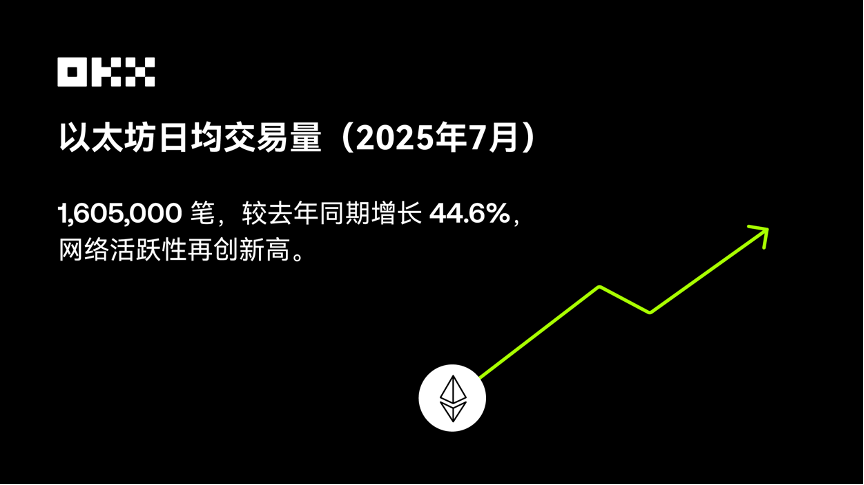
▪ Ethereum's average daily transaction volume (July 2025): 1,605,000, a 44.6% year-over-year increase, marking a new high in network activity.
▪ The number of active wallets reached 127 million in 2025, a 22% year-over-year increase. Multi-chain interoperability strengthens both the user base and the developer base.
2.3 ETH Leads the Development of the RWA Ecosystem
○ By July 2025, the total on-chain RWA size reached $24.8B, with over 54.9% issued on the Ethereum mainchain.
○ Assets and Holders: A total of 341 RWA assets have been issued on Ethereum, with 81,388 holders.
○ Stablecoin Support: As critical infrastructure for RWA, the market capitalization of stablecoins on Ethereum is approximately $141.01 billion, accounting for 54.7% of the total stablecoin market capitalization. The number of stablecoin holders on the Ethereum network has exceeded 14.74 million. On Ethereum's Layer 2, ZKsync Era's RWAs have reached $2.334 billion in assets, representing 38 different types of assets and accounting for 18.33% of the RWA market share. Asset types include US Treasuries, gold, money market funds, stocks, corporate bonds, and more. Leading projects include BlackRock BUIDL, Paxos Gold PAXG, and Tether Gold XAUT. BUIDL's single asset size exceeds $2.43 billion, and PAXG exceeds $940 million. Globally, there are 320,000 RWA holders, including 255 institutions and service providers. The rate of new RWA issuance is growing rapidly year-on-year.
III. Continuously Improving Performance and Scalability
3.1 Technical Upgrade Progress Review
○ Since its launch in 2015, Ethereum has undergone multiple rounds of significant technological evolution in terms of performance and scalability, profoundly impacting the blockchain industry.
▪ 2017 Byzantium upgrade: Introduced multiple EVM optimizations, reduced mining rewards, and laid the foundation for subsequent on-chain smart contract iterations.
▪ 2019 Istanbul and Constantinople: Improved transaction fee efficiency, enhanced support for Layer 2, and strengthened network resilience.
▪ 2020–2021 Beacon Chain & The Merge Preparation: The Beacon Chain will initiate the transition to Proof-of-Stake (PoS), laying the foundation for an efficient and secure consensus mechanism.
▪ 2022 The Merge (Bellatrix/Paris/Shapella): The mainnet and Beacon Chain will merge, fully completing the PoS transition and reducing energy consumption by over 99%. This will also pave the way for future scalability upgrades.
▪ 2024–2025 Dencun/Pectra Upgrade: Technological advancements, such as EIP-4844 (Proto-Danksharding), will introduce sharding-related data structures for the first time, optimizing data transmission bandwidth and significantly reducing Layer 2 transaction costs.
▪ By 2025, through these upgrades, Ethereum will have achieved its strategic goals of significantly reducing energy consumption, further improving security, and shifting idle load from the mainnet to Layer 2, laying a solid foundation for subsequent large-scale scalability.
3.2 Layer 2 Technological Progress and Data Evolution
• The successful expansion of the Ethereum ecosystem is inseparable from the explosive growth of the Layer 2 network:
○ In July 2025, the peak TPS of the Ethereum Layer 2 network (including Arbitrum, Optimism, Base, zkSync Era, etc.) reached a new high, with the average daily combined TPS exceeding 50, processing millions of transactions per day, surpassing the mainnet.
○ Mainstream Layer 2 transaction fees are typically less than $0.10 per transaction, far lower than the mainnet average of $0.75 per transaction.
• Leading Layer 2 Ecosystem and Protocol Progress
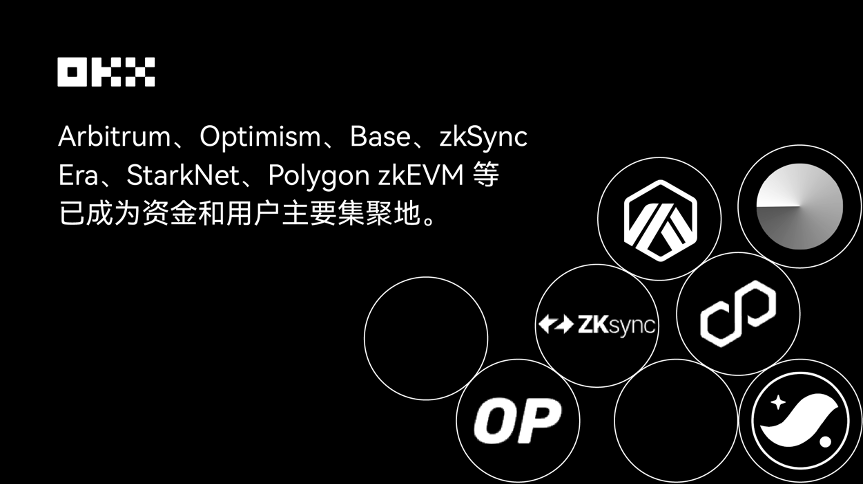
○ Arbitrum, Optimism, Base, zkSync Era, StarkNet, Polygon zkEVM, etc. have become major hubs for capital and users.
○ In 2025, Layer 2 locked-in value (TVL) continued to grow, with Arbitrum and Optimism's combined locked-in value exceeding $10B. Base emerged as a rising star, leading in individual TPS at one point and accounting for 40% of the ecosystem's transaction processing capacity.
3.3 Technical Outlook
○ Dual-Track Rollup Architecture Based on L1: The Ethereum ecosystem will evolve into two parallel Rollup models. One type is based on Ethereum, which is deeply aligned with L1. These utilize L1 for native ordering and verification, inheriting its top-tier security and trusted neutrality, primarily serving high-value DeFi, governance, and asset custody scenarios. The other type is high-performance Rollup, which optimizes throughput and user experience for large-scale user scenarios such as gaming and social networking. They typically utilize centralized ordering or alternative data availability (DA) solutions. This divergence will lead to market consolidation, and mid-layer Rollups lacking clear performance or security alignment will be marginalized.
○ Layer 1 Technological Transition: Ethereum's Layer 1 is shifting from an "execution-heavy" to a "verification-light" zkEVM paradigm, improving performance and decentralization through comprehensive architectural upgrades.
▪ The execution layer introduces the RISC-V virtual machine to improve the efficiency of zero-knowledge proofs and broaden the developer ecosystem.
▪ The settlement layer uses the EXECUTE precompile feature to natively verify Rollups, transforming them into protocol-level execution shards.
▪ The consensus layer has been upgraded to Beam Chain, reducing finality to approximately 12 seconds and lowering the validator threshold to 1 ETH, significantly enhancing network neutrality.
▪ The data availability layer leverages Danksharding to increase throughput to support the ecosystem's ability to achieve tens of millions of transactions per second.
○ This restructured Layer 1 will become the undisputed global asset settlement layer. Its enhanced security and neutrality provide a solid foundation for Rollup-based protocols, attracting high-value applications and liquidity. The value generated by these Rollups, such as MEV and transaction fees, will flow back to the Ethereum mainnet, strengthening ETH's economic model and security budget. This predictable, highly secure underlying protocol is key to earning institutional trust and driving the adoption of real-world assets (RWAs) and large-scale financial applications.
○ "Trustware": The trust engine of the global economy. Ethereum is evolving into "Trustware," an infrastructure that industrializes the production of trust. It algorithmically generates the validity and finality required for the digital world at extremely low marginal cost, replacing the expensive and inefficient legal, audit, and intermediary systems of traditional finance. In this way, Ethereum provides a scalable trust foundation for the digitization of global assets, capital, and financial transactions, striving to become the global ledger that underpins the future digital economy.
IV. Decentralization and Security
4.1Widely Distributed Nodes
○ Global Consensus and Network Effects
▪ Over the past 10 years, ETH has established a strong global consensus through a network of nodes spanning the globe. ETH has deployed 8,665 nodes in 86 countries.
▪ The number of ETH nodes continues to grow. Rising ETH prices and rising market expectations have directly incentivized more users to participate in node operations. Over the past seven days, the number of nodes has increased by 8.06%, reflecting the firm confidence of ETH holders in its future development.
○ Bilateral recognition by China and the United States leads to a high degree of mainstream consensus
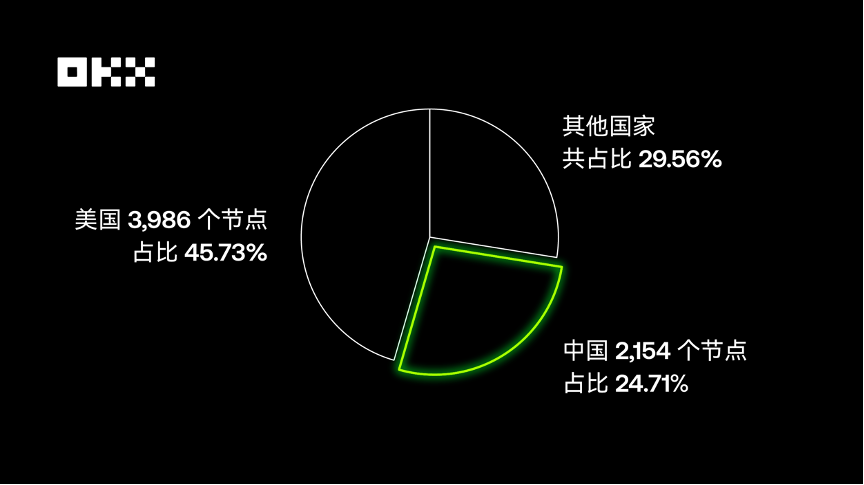
▪ The United States and China dominate the ETH node network, ranking first and second with 3,986 nodes (45.73%) and 2,154 nodes (24.71%), respectively. Their combined share exceeds 70.44%, demonstrating the high level of recognition ETH has received in both Eastern and Western economies.
▪ The developed infrastructure, mature developer ecosystems, and high cryptocurrency adoption rates in the United States and China strongly support the stable operation of the ETH node network. The widespread deployment of ETH in both countries not only enhances network security but also lays a solid foundation for its further application in global finance and technology.
○ Extensive Decentralization and Security
▪ ETH nodes are distributed across six continents. Europe's node count is second only to North America, with nodes located in countries like Germany, the UK, and the Netherlands. Despite strict cryptocurrency regulation in Asia, China, Japan, and South Korea still operate significant numbers of nodes. South America, Oceania, and Africa are experiencing rapid growth, with countries like Brazil, Argentina, Australia, New Zealand, South Africa, and Nigeria demonstrating ETH's strong potential in emerging markets.
▪ While the US and China hold a significant lead, over ten countries still account for over 1% of the total node count, including Germany, Japan, France, the UK, Canada, Singapore, and the Netherlands. Separating the execution and consensus layers reveals a more dispersed distribution of nodes. These nodes are the unbreakable foundation for ETH's recognition as the most decentralized and secure public blockchain.
4.2Client Diversity
○ Large-Scale Diversity
▪ ETH's execution layer currently has six mainstream clients (excluding those with minimal market share): Geth, Nethermind, Besu, Erigon, Reth, and EthereumJS, with a total of 15,018 clients in operation. These clients each have their own unique features, meeting the needs of different users and developers. Geth, the most widely used client, is directly maintained by the Ethereum Foundation; Nethermind and Besu focus on enterprise applications, offering high performance and scalability; Erigon and Reth focus on optimizing data storage and synchronization efficiency, providing developers with more efficient tools.
▪ At the consensus layer, ETH also supports six mainstream clients (excluding those with minimal market share), including Lighthouse, Lodestar, Nimbus, Teku, Prysm, and Grandie, with a total of 8,850 clients currently in operation. These clients utilize different technologies, ensuring the diversity and security of the ETH consensus mechanism. For example, Lighthouse, known for its high performance and low resource consumption, is suitable for individual node operators; Prysm, for its ease of use and rich functionality, is the preferred choice for many institutions.
○ Comprehensive Support for Multiple Languages and Systems
▪ ETH clients excel in technical compatibility, supporting all major development languages, including Go, Java, and Rust. This not only reduces the learning curve for developers but also attracts developers from diverse technical backgrounds to participate in the ETH ecosystem. Geth is suitable for developers familiar with Go; Nethermind, based on the .NET framework, provides convenience for C# developers; Reth and Lighthouse, using the Rust language, attract developers who prioritize performance and security.
▪ The ETH client is fully compatible with major operating systems such as Linux, Windows, and macOS, meeting the needs of developers with diverse technology stacks. This cross-platform compatibility not only improves client usability but also expands ETH's user base. For example, individual developers can quickly set up a node in a Windows environment, while enterprise users can deploy a high-performance client on Linux servers.
▪ This strong compatibility has earned ETH widespread community support. Geth, the official client of the ETH Foundation, boasts a large developer community and extensive documentation resources. Nethermind and Besu, through deep collaboration with enterprises, are promoting the adoption of ETH in enterprise applications. This diverse client base not only ensures technological innovation and iteration but also accelerates the development of the ETH ecosystem.
4.3 Restaking Data
○ Restaking Scale Grows Steadily, Protocols Diversify
▪ As the birthplace of the Restaking and Liquid Restaking narratives, the scale of the ETH ecosystem continues to expand as ETH prices continue to rise. ETH Restaking's TVL exceeds $19.96 billion, accounting for 76% of the total ecosystem's $26.41 billion. This is 4.9 times the second-ranked BTC ecosystem's $5.42 billion. This continued rise in TVL not only improves capital utilization but also enhances the security of the ETH network.
▪ ETH LST's TVL exceeds $14.08 billion, accounting for 95% of the ecosystem's total $14.75 billion and 48.5 times the second-ranked Solana ecosystem's $290 million. By converting staked assets into liquid tokens, it provides users with greater financial flexibility, attracting a large number of DeFi protocols, and ETH maintains its absolute dominance in this area.
▪ The ETH Restaking ecosystem is not only massive but has also spawned numerous innovative protocols. EigenLayer and Symbiotic are the most representative, with TVLs reaching $18.1 billion and $1.54 billion, respectively. LST protocols are even more diverse, with seven exceeding $100 million in TVL and three exceeding $1 billion: ether.fi at $9.8 billion, Kelp at $1.56 billion, and Renzo at $1.14 billion. The number and diversity of protocols far surpasses other ecosystems.
V. Continuously Iterating Official Governance Organization
5.1 EF's Continuous Management Upgrade
○ EF Welcomes a New Management Team
▪ In March, EF announced its most significant leadership change in recent years: former Executive Director Aya Miyagotchi transitioned to Chairman of the Foundation, Hsiao-Wei Wang and Tomasz Stańczak were appointed Co-Executive Directors, and researcher Danny Ryan joined the new organization, Etherealize.
▪ Aya Miyagotchi has served as Executive Director of EF since 2018, leading Ethereum to numerous milestones. With her transition to Chairman, she will be more responsible for promoting strategic collaboration and maintaining relationships, reducing her direct involvement in specific matters. This management team shakeup, seven years later, sends a clear signal to the outside world that EF is undergoing a period of self-improvement.
▪ The dual-executive director structure of Hsiao-Wei Wang and Tomasz distributes decision-making responsibilities and reduces single points of failure. The two executive directors' respective technical and management backgrounds complement each other perfectly. This leadership renewal has been welcomed and congratulated by the community and industry organizations.
○ The new management team provides clear direction and focus
▪ Hsiao-Wei Wang emphasized that the Foundation will be driven by "guiding principles" (core values) and "specific goals" (measurable impact and resilience) in the long term to advance its work. The four cornerstones of Ethereum—censorship resistance, open source innovation, privacy protection, and security—remain the foundational foundation for all decisions and actions.
▪ For the next year, they will focus on three key areas: expanding the scalability of the Ethereum mainnet (L1), optimizing data blob processing, and improving the overall user experience (UX). They also mentioned specific implementation plans, including an institutional-grade SDK (with integrated custody interfaces, compliance review, and gas fee optimization modules), an enterprise wallet based on the Noir zero-knowledge compiler, expansion into the Asia-Pacific and European markets, and collaborations with Singapore Digital Harbor and Switzerland's Crypto Valley.
○ Three New Organizations
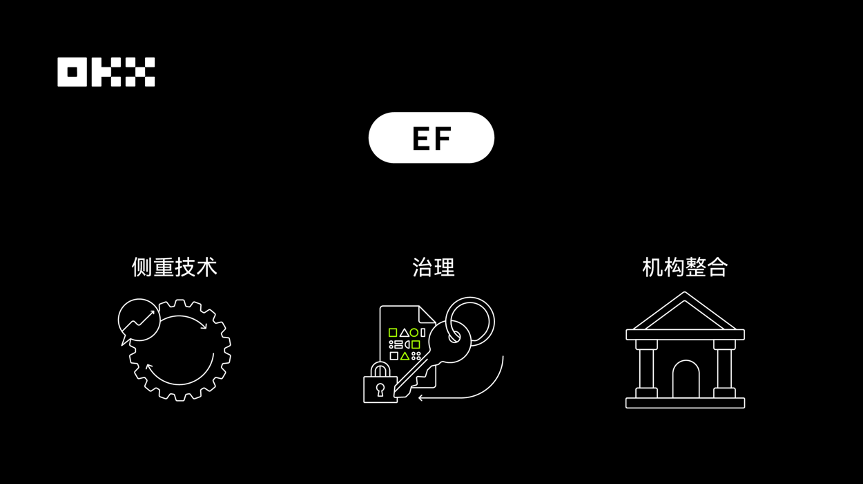
▪ EF established three key organizations this year, focusing on technology, governance, and institutional integration, respectively.
▪ The most notable, Etherealize, is the institutional marketing and product arm of the Ethereum ecosystem. Its mission is to promote Ethereum adoption in traditional financial markets (such as Wall Street). While promoting Ethereum as a store of value asset and underlying technology platform to institutions, it also aims to build financial products, connect the Ethereum ecosystem with institutional capital, and enhance the mainnet's economic cycle. The establishment of Etherealize demonstrates EF's commitment to promoting institutional adoption and building open finance. ▪ The EF Silviculture Society is an advisory group of 15 non-Foundation members whose primary responsibility is to ensure the development of the Ethereum ecosystem adheres to core values such as open source, privacy, security, and censorship resistance. This demonstrates EF's respect for experienced developers and industry experts and its confidence in further optimizing the community's governance structure. ▪ Ethereum Foundation Research, positioned as EF's research center, consists of five teams: the Applied Research Group (ARG), Consensus Research, Cryptography, Protocol Security, and RIG. These teams cover the five most critical areas of Ethereum's future development, providing a foundation for technological evolution.
5.2Advanced Cluster Community Governance Structure
○ EF has always emphasized that it is a non-profit organization and does not adopt a top-down corporate structure. Rather, it is more like a community cluster. The Foundation supports numerous semi-autonomous teams. These teams operate independently in their respective areas of expertise while collaborating organically under the guidance of shared values. EF's organizational structure is divided into four functional areas: Protocol Research and Development (PR&D), Ecosystem Development (EcoDev), Operations Support (Ops), and Privacy and Scalability Exploration (PSE). EF serves as a bridge for cross-team collaboration without micromanaging individual projects. Instead, it encourages teams to prioritize their own individual responsibilities. This governance philosophy and practice has set an excellent benchmark for the entire industry.
5.3 The Unchanging “Infinite Garden” Vision
○ Guarding the “Infinite Garden”
▪ In April, Aya Miyaguchi and Vitalik Buterin jointly released a document titled "The Vision of the Ethereum Foundation," reaffirming EF's mission, role, priorities, and core principles. They stated that the power of Ethereum should be reflected not only in its decentralized technical architecture but also in its broad decentralization and autonomy at the organizational level.
▪ EF positions itself as the guardian of the “Infinite Garden.” It is by no means a centralized authority. Instead, it is committed to guiding the projects, communities, and infrastructure within the ecosystem, enhancing the overall energy of the ecosystem. This commitment includes both "accomplishing what only EF can do today" (such as independently diversifying clients and coordinating network upgrades) and "helping others achieve what only EF can do today" (such as funding public goods and localized communities) in the future.
▪ EF's priorities are clear: first, maximizing the number of ETH users and ensuring they can truly benefit from ETH's censorship resistance, openness, and privacy protections; second, enhancing the resilience of ETH's technical and social infrastructure to ensure the ecosystem can operate independently and healthily even in extreme circumstances.
○ The Future of Ecosystem Development
▪ On July 10, EF released its latest vision statement, "The Future of Ecosystem Development." This statement clearly states its goal to maximize the number of people who directly or indirectly use ETH and benefit from its underlying values, and secondly, to maximize the resilience of ETH's technical and social infrastructure. The specific path to this goal is to introduce four strategic pillars (acceleration, amplification, support, and long-term facilitation), establish a new governance framework, and reform its treasury management strategy.
▪ To accelerate the ecosystem, EF has established new support modules focused on specific areas: enterprise relations, developer growth, application support, and founder support. Each module has a clear leader and detailed plan.
▪ Regarding funding reforms, EF will reduce its future operating expenses from 15% to 5% by 2025, gradually approaching the standards of a donation-based institution. It will also deploy on-chain assets to ensure a long-term financial buffer.
VI. Large-Scale Institutional Adoption
6.1 ETH ETFBecoming the Second Stage of Institutional Funding
○ ETH ETF: From No Interest to Explosive Growth
▪ In July 2024, the SEC officially approved the ETH spot ETF. Initially, the total trading volume of the US ETH ETF exceeded $1 billion, demonstrating strong market interest. However, as BTC was still stagnant at the time, institutional funds preferred to invest in BTC ETFs, causing ETH ETF trading volume to quickly fall back to around $200 million, a level that persisted until mid-2025.
▪ With the continued easing of regulatory frameworks and the integration of DeFi into traditional financial narratives, ETH's value-carrying capacity has reached a new low. Since May 2025, total ETH ETF trading volume has gradually rebounded to over $1 billion, with peak trading volume exceeding $3 billion.
▪ Net inflows into ETH ETFs have also shown strong growth. Over the past two months, ETH ETFs have experienced nearly continuous net inflows (except for a few days of small net outflows), with the highest single-day net inflow exceeding $700 million. The ETH price, daily net inflows, and total net assets show a highly consistent upward trend.
▪ As of now, ETH spot ETFs in the US market have seen cumulative net inflows of $8.89 billion and a total net asset value of $20.48 billion. These represent 16.2% of the $54.73 billion in net inflows and 13.4% of the $153.16 billion in total net asset value of BTC spot ETFs in the US market, respectively. The gap between the two is gradually narrowing.
○ Institutional holdings have significantly improved the structure of ETH holdings.
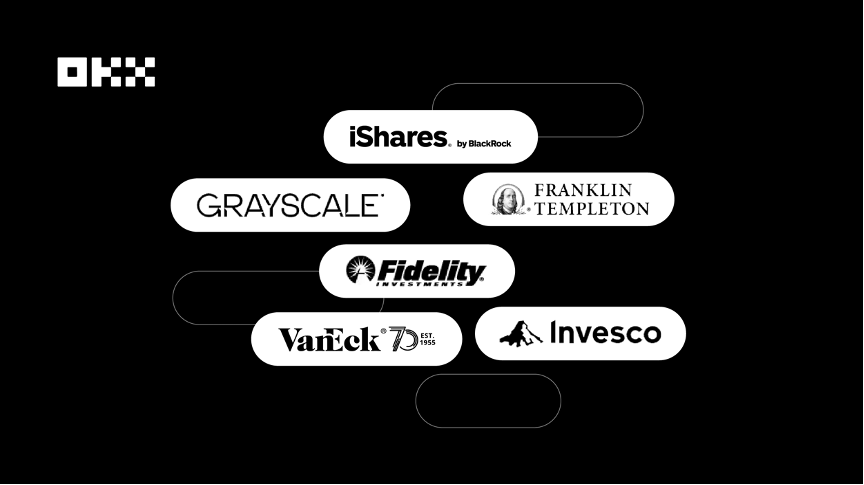
▪ Similar to BTC ETFs, ETH ETF issuers include major global asset management institutions, including iShares, Grayscale, Fidelity, Franklin Templeton, VanEck, and Invesco. Currently, there are nine ETH ETFs, bringing the number of issuers close to the 12 BTC ETFs.
▪ Active inflows into major ETFs have improved ETH's holdings. Institutional holdings accounted for 27% in 2025, nearly 2.5 times the 12% in 2024. Exchange trading volume accounted for 18%, a significant decrease from 31% in 2024. This not only reflects institutional optimism about ETH's long-term outlook, but also provides greater confidence for ordinary holders.
▪ Meanwhile, as ETH network usage recovers, transaction fees continue to increase, effectively offsetting some of ETH's inflation. Thanks to the PoS mechanism and the burn mechanism of EIP-1559, ETH's inflation rate has been significantly suppressed. As of July 2025, Ethereum's inflation rate remains low.
6.2 ETHBecomes a Key US Treasury Asset
○ ETH Treasury Strategy Receives Rapid Response from the US Stock Market
▪ With the BTC treasury strategy taking off in the US stock market, ETH, as a high-quality asset, has also quickly found its own treasury strategy flywheel. Currently, the ETH treasury strategic reserve stands at 2.31 million, with a net value of $8.56 billion, representing nearly 40% of ETF holdings and net value.
▪ Currently, 63 companies have officially established ETH ETF treasury strategies. Compared to the 5 companies in April 2025, this strategy has gained a high level of institutional consensus in just four months.
▪ SharpLink Gaming and Bitmine Immersion Tech, two of the most prominent players, hold 360,000 and 560,000 ETH, respectively, with market capitalizations of $1.34 billion and $2.1 billion, exceeding the ETH Foundation's 237,000 ETH. In addition, several other institutions, including Bit Digital, BTCs, GameSqaure, and Coinbase, hold tens of thousands of ETH.
○ More institutional holders will continue to elevate ETH consensus.
▪ Institutions establishing ETH treasury strategies are also highly diverse, with significant players entering the market. Catherine Wood's ARK Invest is boosting its ETH treasury by acquiring $182 million in BMNR common stock. SharpLink Gaming also secured participation from ConsenSys, ParaFi Capital, Electric Capital, Pantera Capital, and Galaxy Digital in its private fundraising round in May. Joseph Lubin, ETH co-founder and founder and CEO of ConsenSys, serves as Chairman of SharpLink's Board of Directors. Thomas Lee, a renowned Wall Street strategist and co-founder of Fundstrat, is behind Bitmine's establishment of a strategic ETH reserve. ▪ In addition to ETFs, US stock companies, and crypto companies, other types of institutions are also adopting ETH as a primary asset class. Since its inception in December 2024, the Trump family's WLFI has held a peak of 70,000 ETH and continues to purchase more. ▪ In June, Joseph Lubin also stated that his company is exploring the possibility of building infrastructure in the ETH ecosystem with a sovereign wealth fund and a bank. With the entry of diverse institutional holders, consensus on ETH will become more multifaceted and widespread.
▪ Crypto projects and exchanges are also actively increasing their ETH holdings. In addition to the ETH Foundation, PulseChain holds 166,000, the Golem Foundation holds 101,000, Gnosis DAO holds 66,000, and Coinbase holds 137,000.
▪ Based on BTC's growth trajectory, we believe ETH's new round of value bottoming out is still underway. With large-scale institutional adoption, ETH's value attributes will further diverge from other altcoins and converge with BTC. At the same time, ETH's unique decentralization, security, and on-chain economic ecosystem will continue to integrate with traditional finance, further enhancing ETH's value capture capabilities. Therefore, we believe ETH's upward trend will continue to be strong.
VII. Good Partnership with OKX
7.1 OKX is a Determined Builder of the Ethereum Ecosystem
○ OKX Wallet's Data on the ETH Ecosystem
▪ One of the earliest wallets to support the Ethereum network and its ecosystem, and quickly responds to every official upgrade.
▪ By 2024, the daily Ethereum API calls provided by OKX Wallet exceeded 900,000, covering core capabilities such as wallet management, smart contract interaction, and on-chain data query.
▪ In 2024, Justin Drake, a member of the Ethereum Foundation (EF), had an in-depth conversation with Owen, head of Web3 product at OKX. They discussed various aspects of Ethereum 2.0, including technical improvements, consensus mechanisms, scalability, security, DeFi, user experience, ecosystem, environmental impact, and future development and strategy.
▪ OKX Wallet co-hosted three exclusive "Builder Experiences" events in July 2025, including the ETHCC Cannes 2025 Builder's Club, inviting over 150 core project teams and ecosystem developers to participate. From technical sharing sessions and hackathons to closed-door workshops, the event promoted comprehensive innovation and collaboration in Web3.
▪ OKX launched the "50% ETH Carnival" event. During the event, users had a chance to win 0.5 ETH for every 1 ETH traded. Each user could participate up to 10 times, with 10 0.5 ETH grand prizes awarded daily. New users who traded 100 USDT or more on their first transaction received a 26.08% annualized interest rate coupon. Users who published event content and successfully invited a new user to trade also received 100 USDT in contract trading experience bonuses. https://www.okx.com/zh-hans/campaigns/okx-eth-campaign?channelId=CNMEDIA
○ OKX Ventures invests in numerous core Ethereum sectors
▪ Infrastructure and scaling, such as Arbitrum, ZKsync, Scroll, Taiko, and StarkWare
▪ Decentralized staking and re-staking, such as SSV, ether.fi, and Renzo
▪ AI and on-chain applications, such as Myshell and Altlayer
▪ Cross-chain and data availability, such as Avail
▪ In the future, OKX Ventures will continue to deeply cultivate the Ethereum ecosystem, capturing opportunities presented by technological evolution and emerging use cases to fuel the long-term development of the industry.
Over the past decade, Ethereum has been more than just a public blockchain; it's a force. It has transformed wildly imaginative ideas into running code, placing financial and contractual scenarios that once required layers of intermediaries directly in the hands of developers and users. Every smart contract deployment and every decentralized financial transaction proves that decentralized collaboration and transparent governance can underpin an open and inclusive digital world. Over the past decade, Ethereum has embodied people's aspirations for autonomy and fairness, and witnessed the community's continuous struggle for shared ideals.
On this journey, OKX has never been a bystander. Through Wallet, we have built on-chain portals, transaction aggregators, and exploration platforms, allowing users to easily experience its infinite possibilities. Through investment and incubation, we have given innovative projects the opportunity to flourish. We are not passing through, but building alongside them. At every critical juncture of Ethereum, we are willing to contribute technology, resources, and passion to accompany its growth and embrace its bright future.
Because builders are Ethereum's most devout believers.
Disclaimer
This article is for reference only. It represents the author's views only. It is not intended to provide (i) investment advice or recommendations; (ii) an offer or solicitation to buy, sell, or hold digital assets; or (iii) financial, accounting, legal, or tax advice. We do not guarantee the accuracy, completeness, or usefulness of this information. Holding digital assets (including stablecoins and NFTs) carries a high level of risk and may fluctuate significantly. You should carefully consider whether trading or holding digital assets is appropriate for you based on your financial situation. Please consult your legal, tax, or investment professionals regarding your specific circumstances. You are solely responsible for understanding and complying with applicable local laws and regulations.