
Author: Techub News
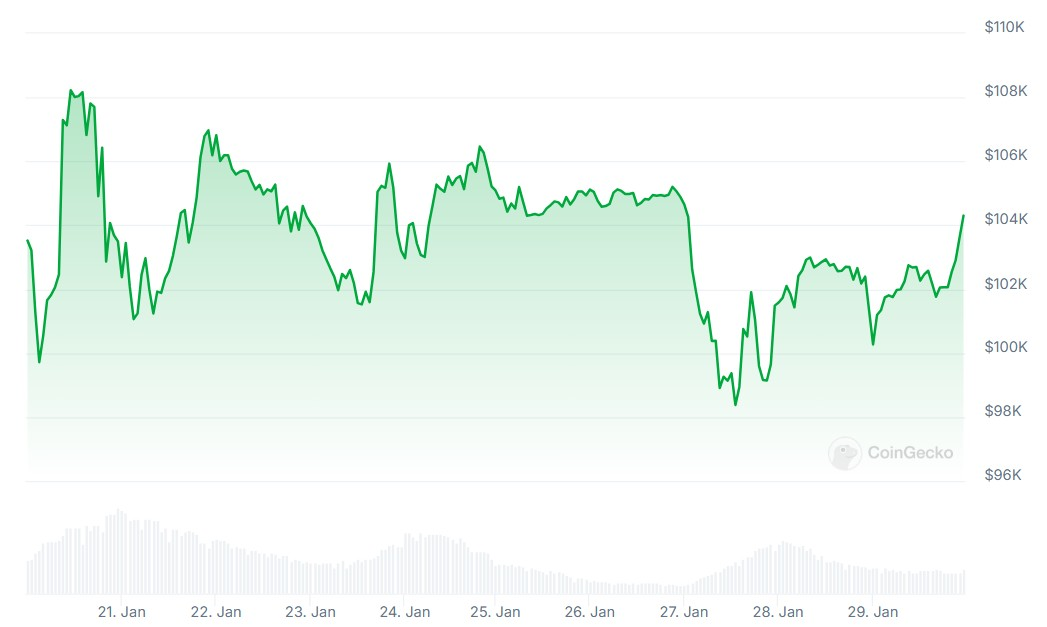
Although Trump's return to the White House ignited optimism in the cryptocurrency market, a global trade storm caused by tariff policies eventually dragged Bitcoin from its historical high of $109,000 to a deep valley of $78,000. This article reviews this epic market turmoil through key nodes.
Act I: New Officials Take Three Actions (January 2025)
On January 20, the day Trump was sworn in, the price of Bitcoin remained at a high of $107,000. On January 23, President Trump signed an executive order to establish a digital asset task force to explore regulatory reforms for digital assets. However, just six days later, the Colombian immigration dispute triggered the first round of crisis - Trump threatened to impose a 25% tariff on Colombian goods exported to the United States, and Bitcoin fell below the psychological barrier of $100,000. Although the two sides reached an agreement a week later to push the price of the currency back up, the sudden rise of Chinese AI giant DeepSeek triggered a sell-off in technology stocks, and risk aversion spread to the crypto market.
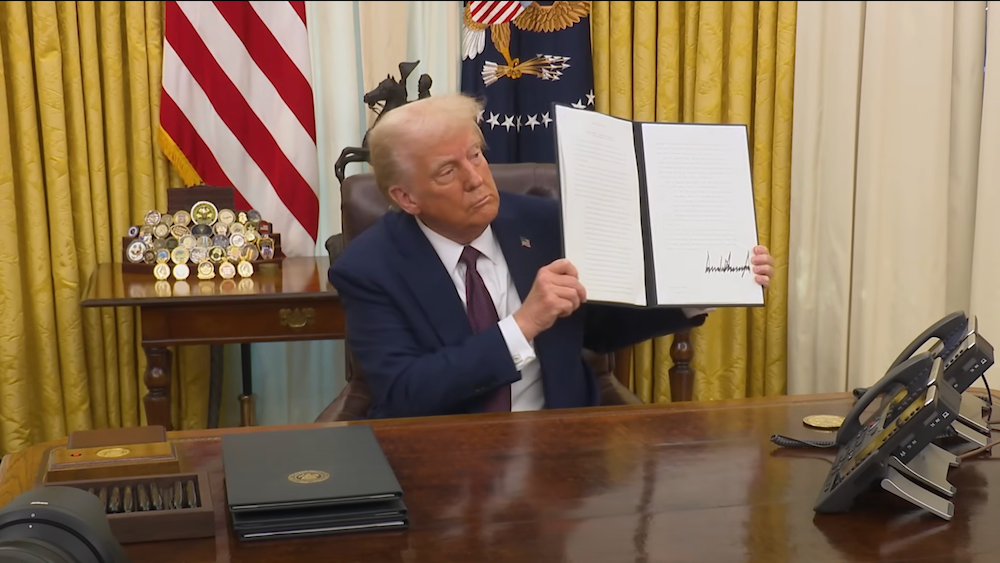
Key data: Bitcoin's daily fluctuation from January 26 to 28 reached 12%, the largest fluctuation since May 2024.
February Storm: Tariff Nuclear Button Activated
On February 1, Trump signed an executive order, announcing a 10% tariff on Chinese goods and a 25% tariff on Canadian and Mexican goods. The market reacted violently, and Bitcoin plummeted 9.3% to $93,000 in a single day. Although the suspension of tariffs on North American neighbors brought a short-term rebound, the steel tariff upgrade and the "reciprocal tariff" plan were announced on February 10, coupled with the epic $1.4 billion hacking incident of the Bybit exchange. Finally, under the impact of the copper tariff review news on February 25, Bitcoin fell below the $80,000 mark for the first time since November 2024.
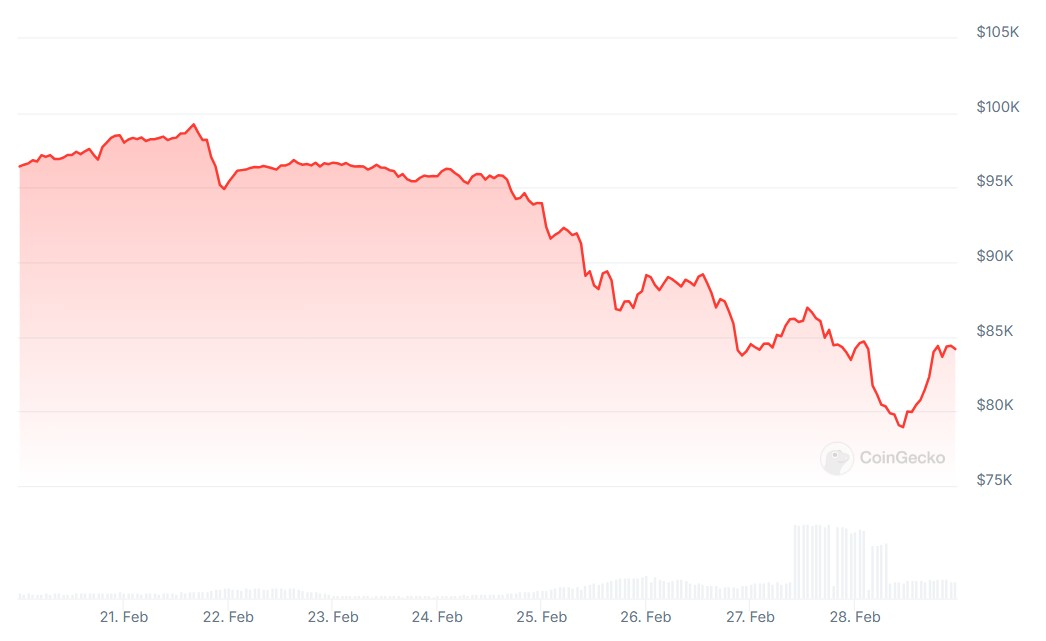
Market observation: BitMEX data showed that open interest in futures contracts fell by 37% in February, indicating that a large amount of leveraged funds withdrew from the market.
March tug-of-war: a respite from policy swings
On March 4, the double-edged sword of policy: the White House released contradictory signals: the announcement of a strategic digital asset reserve plan including XRP boosted confidence, but doubled the tariff on China to 20%. This "carrot and stick" strategy caused Bitcoin to continue to fluctuate in the range of $84,000-90,000. On March 18, the precursor to the turning point, Treasury Secretary Bensont expressed his position on the "differentiated tariff" policy for the first time, suggesting that tariff escalation could be avoided if trading partners lowered barriers. The market interpreted this as the first ray of light of policy softening, and Bitcoin rebounded 3.1% in a single day to break through $85,000. On March 20, the Federal Reserve doubled its assists. The Federal Reserve decided to keep interest rates unchanged, and the dot plot showed at least two interest rate cuts this year. The moment the resolution was announced:
- Bitcoin jumps $800 in one minute
- CME Bitcoin Futures Open Interest Surges by $1.1 Billion
- The total market value of stablecoins expanded by 4.3% in a single day (Tether CTO confirmed that 1.8 billion USDT was newly issued)
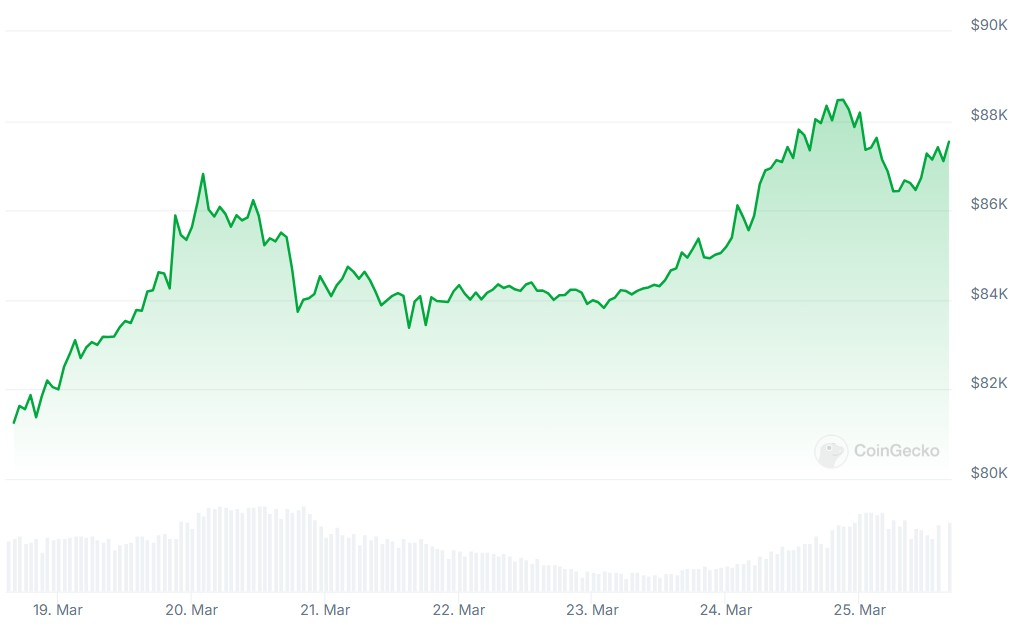
On March 24, the policy resonance effect was stimulated by the dual stimulation of the expectation of loosening tariff policy and easing liquidity. Bitcoin rebounded 8.7% in a single week and approached $89,000. On-chain data showed that the giant whale address (holding more than 1,000 BTC) increased its holdings of 213,000 bitcoins during this period, the largest single-week accumulation since the fourth quarter of 2024.
April time bomb: Market anxiety before Liberation Day
Although there were signs of recovery in late March, the effective date of "reciprocal tariffs" on April 2 is like a sword of Damocles hanging over our heads. Bitget Research Institute's simulation shows:
- If fully implemented, tariffs could shrink global trade by $2.3 trillion
- The correlation between Bitcoin and traditional assets has risen to a historical peak of 0.78
- Supply chain disruptions may lead to an 18% increase in mining machine production costs
Institutional strategy: Liquifi monitored that the net inflow of stablecoins reached US$4.7 billion in the last two weeks of March, indicating that funds are "loaded" and waiting for a direction decision.
Market Revelation: The Coming of Age Ceremony for Digital Currency
The crisis exposed a profound transformation in the cryptocurrency market:
- Policy sensitivity increases: BTC and S&P 500 three-month correlation exceeds 0.7
- Safe-haven properties diverge: gold rose 23% vs. Bitcoin fell 28% during the same period
- The end of regulatory arbitrage: The U.S. Treasury has frozen $1.2 billion worth of on-chain assets suspected of tariff evasion
As analysts at Amber Group said : "When a presidential tweet can wipe out $30 billion in market value in an instant, this market can no longer pretend to live outside the law." This baptism may be a required course for cryptocurrencies to integrate into the mainstream financial system.