Author: Liu Honglin
I don't understand electricity at all.
During the May Day holiday, I drove through the Hexi Corridor from Wuwei to Zhangye, Jiuquan, and then to Dunhuang. Driving on the Gobi Highway, I often saw wind turbines on both sides of the highway, standing silently on the Gobi, which was very spectacular, like a sci-fi Great Wall.
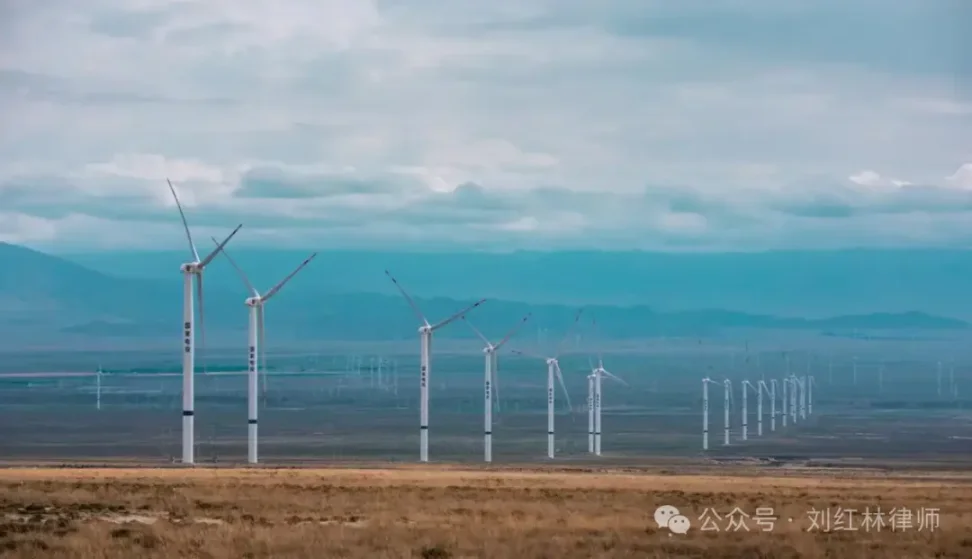
* The picture comes from the Internet
Thousands of years ago, the Great Wall guarded borders and territories, but today, these wind turbines and photovoltaic arrays guard a country's energy security and are the lifeblood of the next generation of industrial systems. Sunlight and wind have never been so systematically organized, embedded in national strategies, and become part of sovereign capabilities as they are today.
In the Web3 industry, everyone knows that mining is a very basic existence. It is one of the most primitive and solid infrastructures of this ecosystem. Behind every round of bull-bear switching and every prosperity on the chain, there is the sound of the continuous operation of mining machines. And every time we talk about mining, the most talked about is the performance of mining machines and electricity prices - whether mining can make money, whether the electricity price is high, and where to find low-cost electricity.
However, when I saw this thousand-mile long electricity road, I suddenly realized that I didn’t understand electricity at all: where does it come from? Who can generate electricity? How is it transmitted from the desert to thousands of miles away? Who uses it? How should it be priced?
This is a gap in my knowledge, and perhaps some of my friends are also curious about these issues. Therefore, I plan to use this article to make some systematic remedial lessons, from China's power generation mechanism, power grid structure, power trading, to terminal access mechanism, to re-understand one kilowatt-hour of electricity.
Of course, this is the first time that Lawyer Honglin has come into contact with this completely unfamiliar topic and industry, so there are bound to be shortcomings and omissions. I would also like to ask my colleagues to provide more valuable suggestions.
How much electricity does China have?
Let's first look at a macro fact: According to data released by the National Energy Administration in the first quarter of 2025, China's power generation in 2024 will reach 9.4181 trillion kWh, a year-on-year increase of 4.6%, accounting for about one-third of global power generation. What does this mean? The annual power generation of the entire European Union combined is less than 70% of China's. This means that not only do we have electricity, but we are in a dual state of "power surplus" and "structural reconstruction."
China not only generates more electricity, but also changes the way it generates electricity.
By the end of 2024, the total installed capacity in China will reach 3.53 billion kilowatts, a year-on-year increase of 14.6%, of which the proportion of clean energy will further increase. The newly installed photovoltaic capacity is about 140 million kilowatts, and the newly installed wind power capacity is 77 million kilowatts. In terms of proportion, in 2024, China's newly installed photovoltaic capacity will account for 52% of the world, and the newly installed wind power capacity will account for 41% of the world. In the global clean energy map, China is almost a "dominant role".
This growth is no longer concentrated in traditional energy-rich provinces, but is gradually tilting towards the northwest. Gansu, Xinjiang, Ningxia, Qinghai and other provinces have become "new energy provinces" and are gradually transforming from "resource export areas" to "energy production main forces". In order to support this transformation, China has deployed a national new energy base plan in the "Sand-Gobi" area: more than 400 million kilowatts of wind power and photovoltaic installed capacity will be concentrated in deserts, Gobi and desert areas, of which the first batch of about 120 million kilowatts has been included in the "14th Five-Year Plan" special plan.
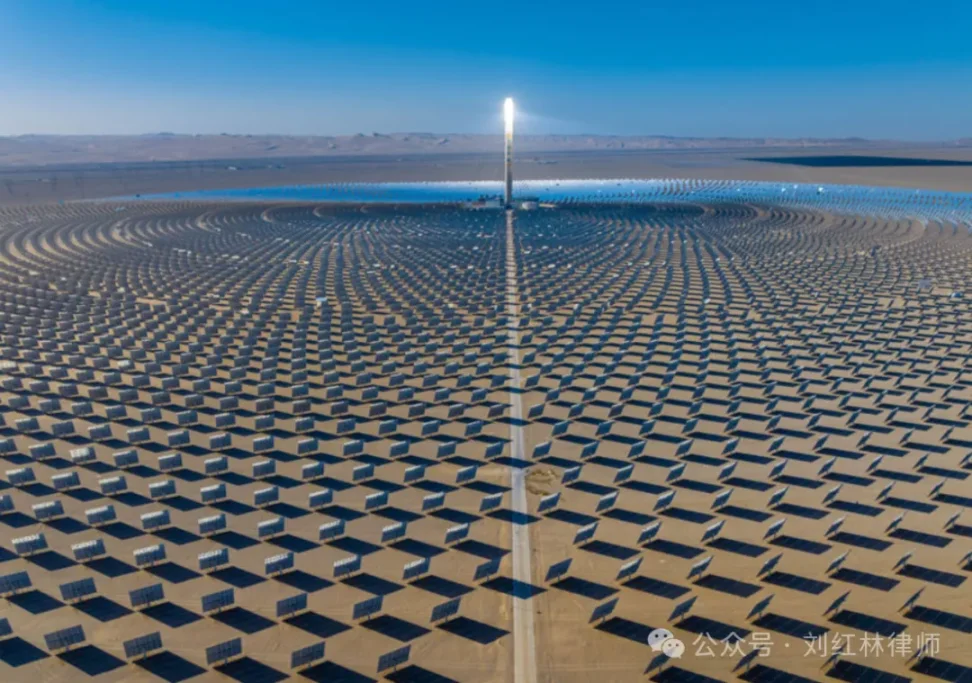
* The first in Asia, Dunhuang Shouhang Energy Saving 100 MW molten salt tower solar thermal power station (Photo from the Internet)
At the same time, traditional coal-fired power has not been completely phased out, but has gradually transformed into peak-shaving and flexible power sources. According to data from the National Energy Administration, the national coal-fired power installed capacity will increase by less than 2% year-on-year in 2024, while the growth rates of photovoltaic and wind power will reach 37% and 21% respectively. This means that a "coal-based, green-based" pattern is taking shape.
From the perspective of spatial structure, the national energy and electricity supply and demand will be generally balanced in 2024, but regional structural surpluses will still exist, especially in the northwest region where there is "too much electricity to use" during some periods of time. This also provides a realistic background for our discussion later on "whether Bitcoin mining is a way to export redundant electricity."
To sum it up in one sentence: China is not short of electricity now. What it lacks is "electricity that can be adjusted", "electricity that can be consumed" and "electricity that can make money".
Who can generate electricity?
In China, power generation is not something you can do whenever you want. It is not a purely market-oriented industry, but more like a "franchise" with a policy entry and a regulatory ceiling.
According to the Regulations on the Administration of Electricity Business Licenses, all entities that wish to engage in power generation business must obtain an Electricity Business License (Power Generation). The approval body is usually the National Energy Administration or its dispatched agencies. Depending on the project size, region and technology type, its application process often involves multiple cross-evaluations:
- Does it comply with national and local energy development plans?
- Have land use, environmental impact assessment and water conservation approvals been obtained?
- Are there conditions for grid access and space for power consumption?
- Is the technology compliant, the funds in place, and is it safe and reliable?
This means that when it comes to "generating electricity", administrative power, energy structure and market efficiency are all involved in the game at the same time.
At present, China's power generation entities can be roughly divided into three categories:
The first category is the five major power generation groups: China Energy Group, Huaneng Group, Datang Group, Huadian Group, and State Power Investment Corporation. These companies control more than 60% of the country's centralized thermal power resources and are also actively deploying in the field of new energy. For example, China Energy Group's new wind power installed capacity will exceed 11 million kilowatts in 2024, maintaining its leading position in the industry.
The second category is local state-owned enterprises: such as Three Gorges New Energy, Beijing Energy Power, and Shaanxi Investment Group. These enterprises are often tied to local governments, play an important role in local power layout, and undertake certain "policy tasks".
The third category is private and mixed-ownership enterprises: typical representatives include Longi Green Energy, Sungrow Power Supply, Tongwei Co., Ltd., Trina Solar, etc. These enterprises have demonstrated strong competitiveness in photovoltaic manufacturing, energy storage integration, distributed power generation and other sectors, and have also obtained "indicator priority" in some provinces.
But even if you are a leading new energy company, it does not mean that you can build a power plant whenever you want. The bottlenecks here usually appear in three aspects:
1. Project indicators
Power generation projects need to be included in the local energy development annual plan and must obtain wind and solar project indicators. The allocation of this indicator is essentially a form of local resource control - you cannot legally start a project without the consent of the local Development and Reform Commission and the Energy Bureau. Some regions also adopt a "competitive allocation" method, scoring and selecting the best based on land conservation, equipment efficiency, energy storage configuration, funding sources, etc.
2. Grid access
After the project is approved, you still have to apply to the State Grid or China Southern Power Grid for access system assessment. If the local substation capacity is full or there is no transmission channel, then the project you built is useless. Especially in areas such as the northwest where new energy is concentrated, it is normal to have difficulty in access and dispatch.
3. Absorption capacity
Even if the project is approved and the lines are in place, if the local load is insufficient and the cross-regional channels are not connected, your electricity may be "unavailable". This leads to the problem of "abandoning wind and solar power". The National Energy Administration pointed out in its 2024 report that some cities have even been suspended from adding new energy projects because of concentrated projects that far exceed the load.
Therefore, whether or not to generate electricity is not just a question of the company's capabilities, but also a result of policy indicators, the physical structure of the power grid and market expectations. In this context, some companies have begun to turn to new models such as "distributed photovoltaics", "park self-power supply", and "industrial and commercial energy storage coupling" to avoid centralized approval and consumption bottlenecks.
From the perspective of industry practice, this three-tier structure of "policy access + engineering threshold + scheduling negotiation" determines that China's power generation industry still belongs to a "structural access market". It does not naturally exclude private capital, but it is also difficult to allow pure market-driven.
How is electricity transported?
In the energy field, there is a widely circulated "electricity paradox": resources are in the west, and electricity consumption is in the east; electricity is generated, but cannot be delivered.
This is a typical problem of China's energy structure: the northwest has abundant sun and wind, but low population density and small industrial load; the east has a developed economy and high electricity consumption, but the local new energy resources that can be developed are very limited.
What should we do? The answer is: build ultra-high voltage (UHV) transmission lines and use “power highways” to transport wind and solar power from the west to the east.
By the end of 2024, China has put into operation 38 UHV lines, including 18 AC lines and 20 DC lines. DC transmission projects are particularly critical because they can achieve low-loss, high-capacity directional transmission over extremely long distances. For example:
- Qinghai-Henan ±800kV DC line: 1,587 km long, delivering electricity from the photovoltaic base in the Qaidam Basin of Qinghai to the Central Plains city cluster;
- Changji-Guquan ±1100kV DC line: 3,293 kilometers long, setting a global record for both transmission distance and voltage level;
- "Northern Shaanxi-Wuhan" ±800kV DC line: Serving the northern Shaanxi energy base and the central China industrial hinterland, with an annual transmission capacity of over 66 billion kWh.
Each UHV line is a "national project" approved by the National Development and Reform Commission and the National Energy Administration, and invested and constructed by the State Grid or China Southern Power Grid. These projects often require hundreds of billions of yuan in investment, a construction period of 2-4 years, and often require cross-provincial coordination, environmental assessments, and resettlement and relocation.
So why do we need UHV? In fact, it is a question of resource redistribution:
1. Space resource reallocation
China's wind and solar resources are seriously misaligned with its population and industry. If we cannot bridge the spatial gap through efficient power transmission, all slogans of "sending electricity from west to east" are empty talk. UHV is to replace "resource endowment" with "power transmission capacity".
2. Electricity price balancing mechanism
Due to the large difference in electricity price structure between the resource end and the consumer end, UHV transmission has also become a tool to adjust regional electricity price differences. The central and eastern regions can obtain relatively low-priced green electricity, and the western regions can realize energy monetization benefits.
3. Promote the consumption of new energy
Without transmission channels, the northwest region is prone to wind and solar power abandonment due to "too much electricity to use". Around 2020, the abandonment rate in Gansu, Qinghai and Xinjiang once exceeded 20%. After the construction of UHV, these figures have dropped to less than 3%, which is due to the structural relief brought about by the improvement of transmission capacity.
It has been made clear at the national level that UHV is not just a technical issue, but also an important pillar of the national energy security strategy. In the next five years, China will continue to deploy dozens of UHV lines in the "14th Five-Year Power Development Plan", including key projects such as Inner Mongolia to Beijing-Tianjin-Hebei and Ningxia to the Yangtze River Delta, to further achieve the unified dispatching goal of "one network across the country".
However, it should be noted that although UHV is good, there are two long-term controversial points:
- High investment and slow payback: The investment in a ±800kV DC line is often more than RMB 20 billion, and the payback period is more than 10 years;
- Cross-provincial coordination is difficult: UHV needs to cross multiple administrative regions, placing high demands on the coordination mechanism between local governments.
These two issues determine that UHV is still a "national project" rather than a market infrastructure under the free decision of enterprises. However, it is undeniable that in the context of the rapid expansion of new energy and the intensification of regional structural mismatch, UHV is no longer an "option" but a must for the "Chinese version of energy Internet".
How to sell electricity?
After generating and delivering electricity, the next key question is: how to sell the electricity? Who will buy it? How much does it cost per kilowatt-hour?
This is also the core link in determining whether a power generation project is profitable. In the traditional planned economic system, this problem is very simple: power plants generate electricity → sell to the State Grid → the State Grid coordinates → users pay electricity fees, and everything is priced according to the state.
However, this model has completely failed to work after the large-scale grid connection of new energy. The marginal cost of photovoltaic and wind power is close to zero, but their output is volatile and intermittent, which is not suitable for inclusion in the power planning system with fixed electricity prices and rigid supply and demand. Therefore, "whether it can be sold" has become the life and death line of the new energy industry.
According to the new regulations that will be implemented from 2025, all new renewable energy power generation projects in the country will completely cancel the fixed electricity price subsidies and must participate in market-based transactions, including:
- Medium- and long-term contract transactions: Similar to "pre-sale of electricity", power generation companies and electricity users sign contracts directly to lock in a certain time period, price and quantity;
- Spot market transactions: Electricity prices may change every 15 minutes based on real-time power supply and demand fluctuations;
- Ancillary service market: providing grid stability services such as frequency regulation, voltage regulation, and backup;
- Green electricity trading: users voluntarily purchase green electricity, which is accompanied by a green electricity certificate (GEC);
- Carbon market trading: Power generation companies can obtain additional benefits by reducing carbon emissions.
At present, a number of power trading centers have been established across the country, such as the power trading center companies in Beijing, Guangzhou, Hangzhou, Xi'an and other places, which are responsible for market matching, electricity volume confirmation, electricity price settlement, etc.
Let's look at an example of a typical spot market:
During the high temperature period in the summer of 2024, the Guangdong power spot market experienced extreme fluctuations, with the valley electricity price as low as 0.12 yuan/kWh and the peak price as high as 1.21 yuan/kWh. Under this mechanism, if new energy projects can be flexibly dispatched (such as equipped with energy storage), they can "store electricity at a low price and sell it at a high price" to obtain huge price difference profits.
In contrast, projects that still rely on medium- and long-term contracts but lack peak-shaving capabilities can only sell electricity at around 0.3-0.4 yuan per kilowatt-hour, and are even forced to connect to the grid at zero price during certain periods of power abandonment.
As a result, more and more new energy companies have begun to invest in supporting energy storage, on the one hand for grid dispatch response, and on the other hand for price arbitrage.
In addition to electricity price income, new energy companies have several other possible sources of income:
1. Green Electricity Certificate (GEC) trading. In 2024, Jiangsu, Guangdong, Beijing and other provinces and cities have launched GEC trading platforms, and users (especially large industrial enterprises) purchase GEC for the purpose of carbon disclosure, green procurement, etc. According to data from the Energy Research Association, the GEC transaction price range in 2024 is 80-130 yuan per MWh, equivalent to about 0.08-0.13 yuan/kWh, which is a major supplement to traditional electricity prices.
2. Carbon market trading. If new energy projects are used to replace coal-fired power and are included in the national carbon emissions trading system, they can obtain "carbon asset" benefits. By the end of 2024, the national carbon market price will be about 70 yuan/ton CO₂, and each kilowatt-hour of green electricity will reduce emissions by about 0.8-1.2 kilograms, with a theoretical benefit of about 0.05 yuan/kWh.
3. Peak-valley electricity price adjustment and demand response incentives. Power generation companies sign power regulation agreements with high-energy-consuming users, reduce loads during peak periods or send electricity back to the grid, and receive additional subsidies. This mechanism has been rapidly promoted in pilot projects in Shandong, Zhejiang, Guangdong and other places.
Under this mechanism, the profitability of new energy projects no longer depends on "how much electricity I can generate", but on:
- Can I get a good price?
- Do I have a long-term buyer?
- Can I smooth out the peaks and fill in the valleys?
- Do I have energy storage or other regulatory capabilities?
- Do I have any green assets to trade?
The past project model of "grabbing indicators and relying on subsidies" has come to an end. In the future, new energy companies must have financial thinking and market operation capabilities, and even manage power assets as meticulously as they do derivatives.
To sum it up in one sentence: the "selling electricity" link of new energy is no longer a simple buying and selling relationship, but a systematic project that uses electricity as a medium and coordinates with policies, markets, carbon rights, and finance.
Why is there power abandonment?
For power generation projects, the biggest risk is never whether the power plant can be built, but whether it can be sold after it is built. And "power abandonment" is the most silent but deadly enemy in this process.
The so-called "abandoned power" does not mean that you do not generate power, but that the power you generate has no users, no channels, and no room for dispatch, so you can only watch it go to waste. For a wind power or photovoltaic company, abandoned power not only means a direct loss of revenue, but may also affect subsidy applications, power accounting, green certificate generation, and even subsequent bank ratings and asset revaluations.
According to statistics from the Northwest Regulatory Bureau of the National Energy Administration, the wind power curtailment rate in Xinjiang was as high as 16.2% in 2020, and photovoltaic projects in Gansu, Qinghai and other places also had a curtailment rate of more than 20%. Although by the end of 2024, these figures have dropped to 2.9% and 2.6% respectively, in some areas and time periods, power curtailment is still a reality that project parties cannot avoid - especially in the typical scenario of high sunlight and low load at noon, a large amount of photovoltaic power is "pressed" by the dispatching system, which means that it is useless even if it is sent.
Many people think that power curtailment is due to "insufficient electricity consumption", but in essence it is the result of an imbalance in system scheduling.
The first is the physical bottleneck: in some resource-concentrated areas, the capacity of substations has long been saturated, and grid access has become the biggest limitation. Projects have been approved but cannot be connected to the grid. The second is the rigid dispatching mechanism. China currently still takes the stability of thermal power units as the core of dispatching. The uncertainty of new energy output makes dispatching units habitually "restrict access" to avoid system fluctuations. Coupled with the delay in cross-provincial coordination, a lot of electricity, although theoretically "someone wants it", "cannot be sent out" in administrative processes and inter-provincial channels, and ultimately can only be abandoned. At the market level, there is another set of lagging rules and systems: the spot power market is still in its infancy, and the auxiliary service mechanism and price signal system are far from perfect. The energy storage regulation and demand response mechanism have not yet formed a scale in most provinces.
There is actually a response at the policy level.
Since 2021, the National Energy Administration has included "new energy consumption capacity assessment" in the pre-approval of projects, requiring local governments to clarify local "carrying capacity indicators", and proposed in many policies of the "14th Five-Year Plan" to promote the integration of sources, grids, loads and storage, build local load centers, improve the spot market trading mechanism, and compulsorily configure energy storage systems to smooth out peaks and fill valleys. At the same time, governments in many places have introduced a "minimum consumption ratio" responsibility system, clarifying that the average annual utilization hours of new energy grid-connected projects must not be lower than the national baseline, forcing project parties to consider adjustment measures in advance. Although these measures are in the right direction, there is still a significant lag in the implementation progress - in many cities where new energy installations are soaring, problems such as lagging grid transformation, slow energy storage construction, and unclear regional dispatching rights are still common, and the pace of institutional promotion and market cooperation is still not matched.
More importantly, the reason behind power abandonment is not simply "economic inefficiency", but a conflict between resource space and institutional structure. Northwest China is rich in power resources, but its development value depends on the cross-provincial and cross-regional power grid transmission and dispatching system, and China's current administrative divisions and market boundaries are highly fragmented. This has led to a large amount of "technically available" electricity having nowhere to go in terms of the system, becoming a passive redundancy.
Why can’t China’s electricity be used for cryptocurrency mining?
While a large amount of electricity that is "technically available but has nowhere to be placed institutionally" is idle, a previously marginalized electricity usage scenario - cryptocurrency mining - has continued to appear in underground and guerrilla forms in the past few years, and has regained its real position of being "structurally needed" in some areas.
This is not accidental, but a natural product of a certain structural gap. Cryptocurrency mining is a real-time computing behavior with high power consumption and low continuous interference. Its operating logic is naturally compatible with wind and solar power generation projects. Mining farms do not need stable scheduling guarantees, do not require grid connection, and can even actively cooperate with scheduling to reduce peaks and fill valleys. More importantly, it can convert unwanted electricity into on-chain assets outside the market, thus forming a channel for "redundant monetization".
From a purely technical perspective, this is an improvement in energy efficiency; but from a policy perspective, it is always in an awkward position.
The Chinese mainland government called off mining in 2021. The core consideration was not electricity itself, but the financial risks and industry orientation behind it. The former is related to the opacity of the encrypted asset path, which is prone to regulatory problems such as illegal fundraising and cross-border arbitrage; the latter involves the industry evaluation of "high energy consumption and low output", which is not in line with the current strategic theme of energy conservation and carbon reduction.
In other words, whether mining is a "reasonable load" does not depend on whether it absorbs power redundancy, but on whether it is included in the "acceptable structure" of the policy context. If it still exists in an opaque, non-compliant, and uncontrollable manner, it can only be classified as a "gray load"; but if it can be limited to a certain area, power source, electricity price, and on-chain use, and designed as a special energy export mechanism within a compliance framework, it may not be impossible to become part of the policy.
This redesign is not without precedent. Internationally, countries such as Kazakhstan, Iran, and Georgia have long incorporated "computing loads" into the power balance system, and even used the "power for stablecoin" method to guide mining farms to bring digital assets such as USDT or USDC to the country as a source of alternative foreign exchange reserves. In the energy structure of these countries, mining has been redefined as a "strategic adjustable load", which serves both grid regulation and monetary system reconstruction.
Although China cannot follow this radical approach, can it partially, limitedly, and conditionally restore the right of mining farms to exist? Especially at a stage where the pressure of power abandonment continues and green electricity cannot be fully marketized in the short term, using mining farms as a transitional mechanism for energy consumption and treating Bitcoin as an on-chain asset reserve for closed allocation may be closer to reality than a one-size-fits-all withdrawal, and can better serve the country's long-term digital asset strategy.
This is not only a re-evaluation of mining, but also a redefinition of the "value boundary of electricity."
In the traditional system, the value of electricity depends on who buys it and how it is bought; in the on-chain world, the value of electricity may directly correspond to a computing power, an asset, and a path to participate in the global market. While the country is gradually building AI computing power infrastructure, promoting the East-West computing project, and building a digital RMB system, should it also leave a technology-neutral, compliant and controllable channel for an "on-chain energy monetization mechanism" on the policy blueprint?
Bitcoin mining may be the first practical scenario in China to convert energy into digital assets without a middleman - this issue is sensitive, complex, but unavoidable.
Conclusion: The ownership of electricity is a realistic choice
China's power system is not backward. Wind energy covers the Gobi Desert, sunlight shines on the sand dunes, and ultra-high voltage crosses thousands of miles of wasteland, delivering one kilowatt-hour of electricity from the border to high-rise buildings and data centers in eastern cities.
In the digital age, electricity is no longer just a fuel for lighting and industry. It is becoming the infrastructure for value calculation, the root of data sovereignty, and the most important variable in the reorganization of the new financial order. To understand the flow of "electricity", to some extent, is to understand how the system sets the boundaries of qualifications. The destination of one kilowatt-hour of electricity is never determined by the market naturally. There are countless decisions behind it. Electricity is not evenly distributed. It always flows to the people who are allowed, the scenes that are recognized, and the narratives that are accepted.
The core of the controversy over Bitcoin mining has never been whether it consumes electricity, but whether we are willing to recognize it as a "reasonable existence" - a use scenario that can be included in the national energy dispatch. As long as it is not recognized, it can only wander in the gray and operate in the cracks; but once it is recognized, it must be institutionalized - with boundaries, conditions, right of interpretation, and regulatory caliber.
This is not about the relaxation or lockdown of an industry, but a question of a system's attitude towards "unconventional loads".
And we are standing at this fork in the road, watching this choice happening quietly.
References
[1] China Government Website, “2024 National Electric Power Industry Statistical Data”, January 2025.
[2] IEA, Renewables 2024 Global Report, January 2025.
[3] National Energy Administration, Appendix to the 2024 Energy Operation Report.
[4] National Development and Reform Commission, Energy Research Institute, “Progress in the Construction of the Shagohuang Wind and Solar Base”, December 2024.
[5] National Development and Reform Commission, “Interim Measures for the Management of Renewable Energy Power Generation Projects”, 2023.
[6] Reuters, “China UHV Transmission System Assessment Report,” May 2025.
[7] Infolink Group, “Analysis on China’s Cancellation of Fixed Electricity Price Subsidies for New Energy”, March 2025.
[8] National Electricity Dispatching Center, “North China Electricity Spot Market Operation Bulletin (2024)”.
[9] REDex Insight, “China’s Unified Electricity Market Roadmap”, December 2024.
[10] China Electricity Council, Appendix to the 2024 Electricity Industry Report.
[11] Northwest Regulatory Bureau of the National Energy Administration, “Notice on the Situation of Wind and Solar Power Abandonment in Northwest China”, December 2024.
[12] Energy Research Institute, “Green Power Certificate Trading Pilot Observation Report”, January 2025.
[13] CoinDesk, “Analysis of Kazakhstan’s Mining Policy Adjustments,” December 2023.