
TL, DR
-
In July 2025, the US economy will continue to experience a combination of rising inflation and weakening growth momentum. Both CPI and core inflation will exceed the Federal Reserve's 2% target, making it difficult to support a shift to easing in the short term. While the labor market is generally stable, it has shown marginal weakness. The consumption rebound is modest and based on an unstable foundation. High interest rates and credit costs continue to suppress consumer spending. Disagreement within the Federal Reserve over the timing of rate cuts has intensified, with the market expecting a September rate cut, though this remains dependent on subsequent inflation and employment data. Meanwhile, geopolitical risks and domestic policy wrangling have heightened market uncertainty. The Fed has maintained a high interest rate and a wait-and-see approach, putting pressure on overall market risk appetite.
-
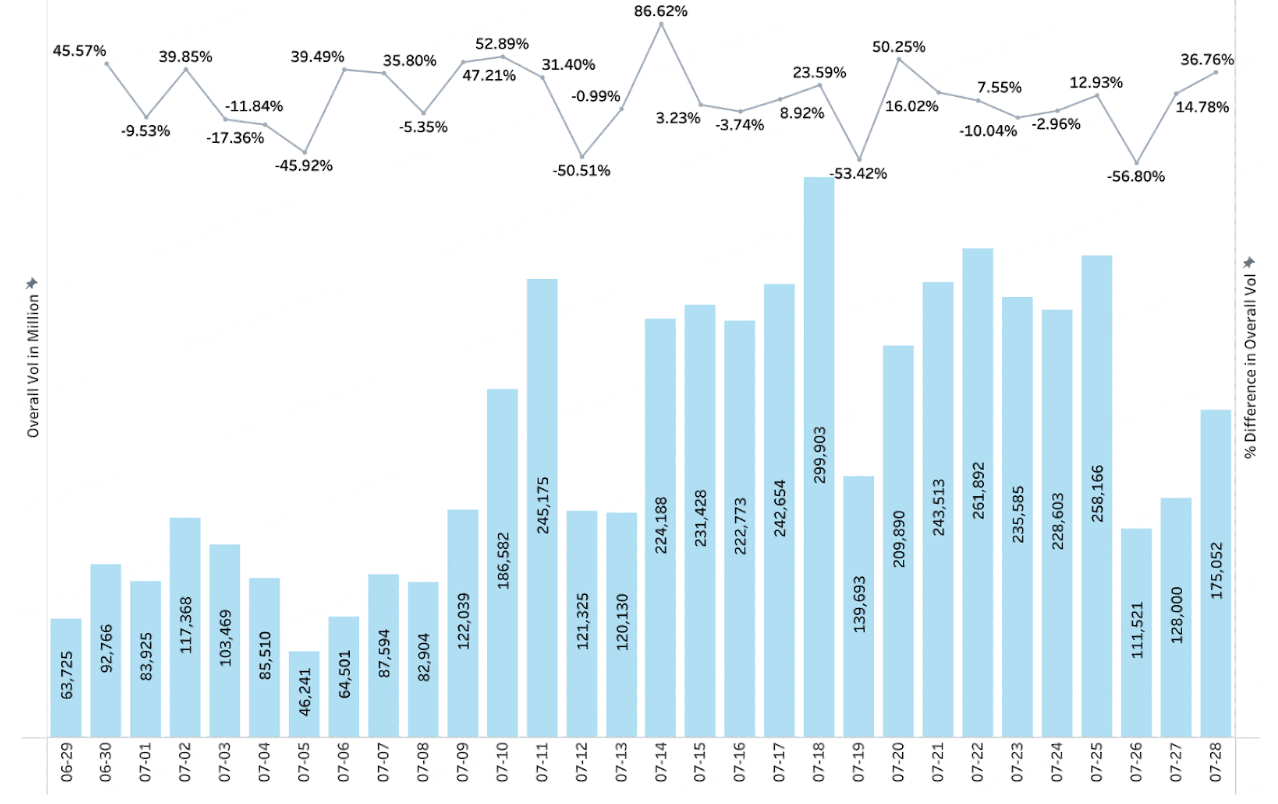
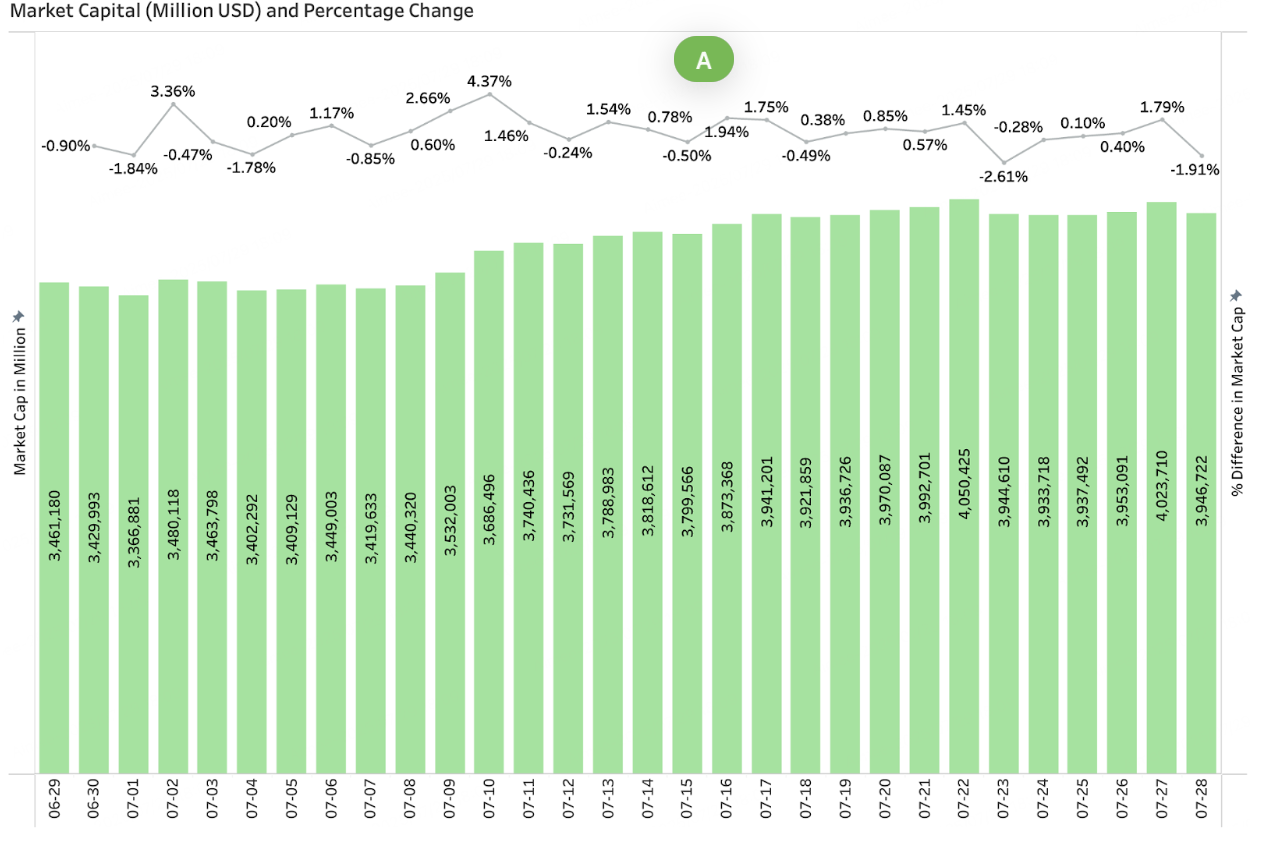
Crypto market trading volume saw a significant increase in July, averaging $161.2 billion per day, a 56% increase from the previous month, with daily trading exceeding $200 billion several times. Total market capitalization rose to $3.94 trillion (up 16.2%), with BTC holding 60.6% of the market share and ETH 11.8%. Funds are rapidly flowing from BTC to ETH and its ecosystem, and market sentiment is rapidly improving. Newly launched popular tokens are primarily infrastructure projects, with Layer 1 and Layer 2 projects (such as Chainbase, ZKWASM, Caldera, and ERA) attracting the most attention. DeFi applications remain a key growth driver.
-
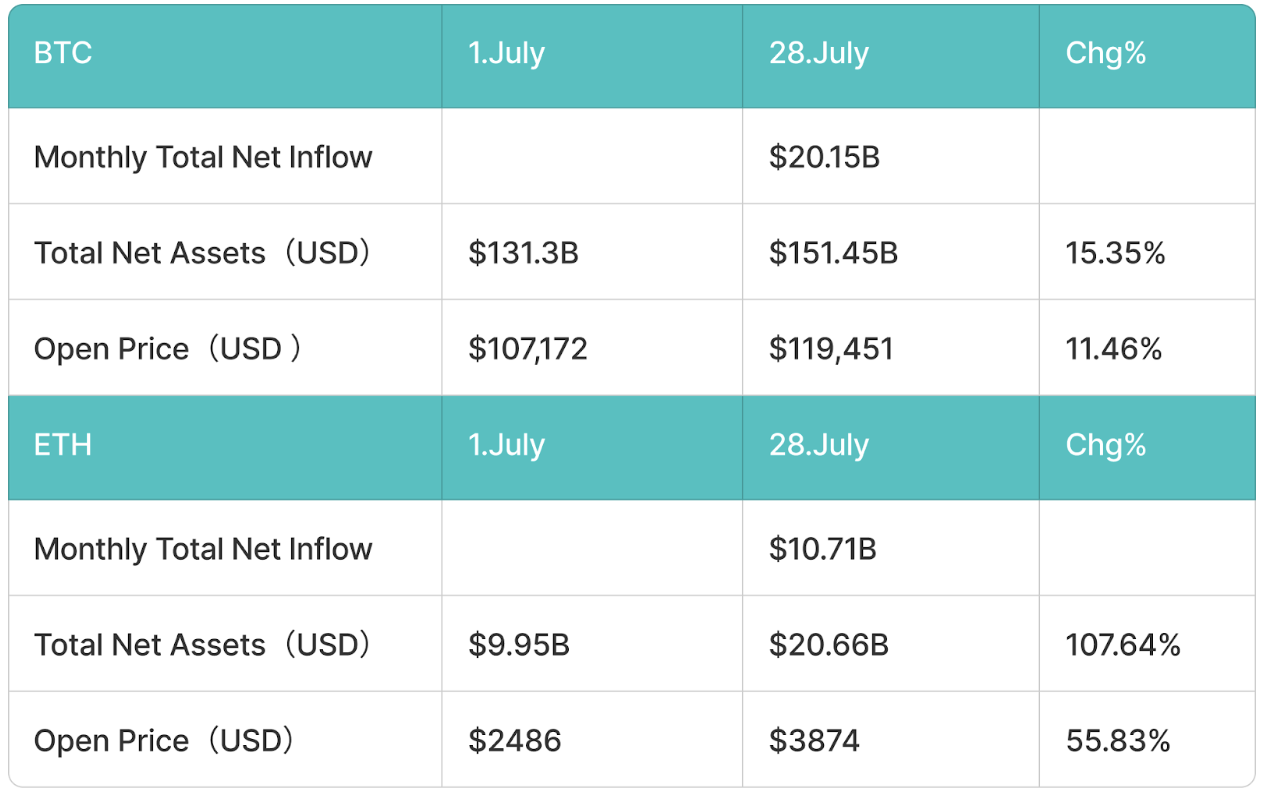
In July, BTC spot ETFs saw net inflows of $20.15 billion, while ETH saw net inflows of $10.71 billion, driving price increases of 11.46% and 55.83%, respectively. Ethereum showed greater appeal. During the same period, stablecoin circulation surged by $9.617 billion, with the US Dollar (USDE) leading the market with a monthly surge of 36.2%.
-
This week, BTC attempted to reach $120,000 several times but failed. It reached a high of $120,113 on July 23 before retracing to a low of $114,759. It is currently trading around $119,600, still constrained by its 20-day moving average (around $116,300). ETH has shown the strongest performance, rising from $3,740 to $3,881 over the past two days. ETFs have seen net inflows of $2.4 billion over the past six days. A break above $3,745 could see it reach $4,094–$4,868. Solver (SOL) has been relatively weak, hitting a low of $184 since falling below $200 and currently consolidating between $187 and $190. A break below $176 could push it down to $157.
-
US-listed companies such as SharpLink and Bitmine have been massively increasing their ETH holdings and staking it on-chain, creating an "Ethereum MicroStrategy" and driving ETH's transformation from a technology asset to an institutional reserve asset. The GENIUS Act, the first federal stablecoin law in the United States, has officially taken effect, clarifying the regulatory path for stablecoin banks, stimulating stablecoin inflows and accelerating institutional deployment of on-chain payment and settlement applications. The first Solana ETF (SSK) supporting on-chain staking has been listed in the US, pioneering a "staking + cash dividend" structure and marking a new era for crypto ETFs in yield-oriented products.
-
The CLARITY Act has passed the House of Representatives and is now under consideration in the Senate, which is expected to boost compliance and capital inflows into the US crypto market. The approval process for the Solana spot ETF has accelerated, with multiple institutions submitting applications and the SEC expected to approve it by October at the latest. Ethereum staking ETFs led by BlackRock and others are also under review and are expected to be approved in the fourth quarter of 2025.
1. Macro Perspective
In July 2025, the US macroeconomy will continue to experience a pattern of rising inflation and weakening growth momentum. While current inflation has rebounded compared to previous months, it remains significantly below the Federal Reserve's 2% target, and monetary policy maintains a highly cautious stance. Meanwhile, a marginal cooling in the labor market and a rebound in consumer spending, albeit on a precarious basis, coupled with uncertainties arising from geopolitical and internal policy wrangling, continue to weigh on market sentiment. Inflation Remains Above Target From an inflation perspective, June CPI data showed that the annualized overall US inflation rate rebounded to 2.7%, with core inflation rising slightly year-on-year to 2.9%. Higher input costs due to tariff adjustments have led to particularly pronounced price increases in the service sector, particularly housing, healthcare, and insurance. Several Federal Reserve officials emphasized that current data do not support an immediate easing cycle, and the sustainability of core inflation remains to be further confirmed. In the short term, policy will remain focused on maintaining stability. The labor market is stabilizing but cooling marginally. Non-farm payrolls increased by 147,000 in June, below the 12-month monthly average. The unemployment rate fell slightly from 4.2% to 4.1%. Initial jobless claims have declined for six consecutive weeks, indicating that the overall labor market remains resilient. However, hiring intentions in sectors such as manufacturing and construction have weakened, and employers in some regions have begun to slow the pace of hiring, indicating marginal weakness. Consumption rebounded modestly. In terms of consumption, retail sales grew by 0.6% month-over-month in June, the first increase in nearly three months. Non-essential goods and online consumption showed relatively positive recovery. However, high interest rates, rising credit costs, and declining savings rates continue to dampen residents' appetite for mid- to high-end consumption. Data show that consumers in many regions are remaining cautious about high-priced goods, and the recovery momentum in the tourism and accommodation industries has also weakened. While consumption has not deteriorated significantly, its resilience remains challenged. Interest rate policy divergences intensify. Regarding monetary policy, the market generally expects the Federal Reserve to maintain its benchmark interest rate at 4.25%-4.50% at the July 30th FOMC meeting, marking the fifth consecutive pause in rate hikes. Despite marginal improvement in inflation data, disagreements within the Fed have intensified over the timing of rate cuts. Some dovish members are calling for a swift rate cut to hedge potential growth risks, while hawkish members advocate holding rates steady until inflation has more clearly subsided. Market expectations currently suggest a rate cut as early as September, with the probability of two cuts this year gradually increasing. Geopolitical uncertainty Regarding the international situation, the conflict in the Middle East has not significantly abated, and fighting in Ukraine continues. Although the US and China have resumed economic and trade dialogue, deep differences remain on key issues such as high technology and data regulation. Furthermore, domestic debate over the Federal Reserve has raised political doubts about the independence of monetary policy, putting pressure on policy transparency and credibility. The combined effects of these internal and external risks have impacted corporate confidence in medium- and long-term investment, and market risk appetite remains under pressure. Outlook In summary, the US economy in July 2025 is at a critical stage, characterized by the interplay of multiple forces. Inflation remains below target, employment momentum is weakening marginally, the consumer recovery is fragile, and monetary policy signals are unclear. In the short term, the Federal Reserve will remain data-driven, maintaining a cautious and cautious approach. The market is closely watching the performance of core economic data in August and September, as well as the direction of geopolitical risks. If subsequent data supports a continued decline in inflation and increasing employment pressures, the Fed may formally begin its interest rate cuts in the fall.
2. Crypto Market Overview
Currency Data Analysis
Trading Volume & Daily Growth Rate
According to CoinGecko data, as of July 28th, overall crypto market trading volume showed a significant upward trend in July, with an average daily trading volume of approximately $161.2 billion, a 56% increase compared to the previous period. Market activity continued to rise, with two periods of particularly high volume from July 11th to 18th and from July 21st to 25th, with daily trading volumes repeatedly exceeding $200 billion. This reflected a massive influx of capital and a rapid rise in market sentiment. Overall, driven by BTC breaking its all-time high and ETH leading the way, the market is in a short-term upward cycle, with structural opportunities accelerating and investors' risk appetite significantly increasing.
Total Market Capitalization & Daily Growth
According to CoinGecko data, as of July 28, the total cryptocurrency market capitalization has steadily risen to $3.94 trillion, a 16.2% increase from the previous month. BTC holds a 60.6% market share, while ETH's market share has risen to 11.8%. The ETH/BTC exchange rate has risen to 0.32. This round of ETH outperforms BTC, and funds are gradually flowing from BTC to ETH and its ecosystem. On July 22nd, total market capitalization surpassed $4 trillion, reaching a new high. Since July 11th, market capitalization growth has accelerated significantly, reflecting continued capital inflows and renewed market confidence driven by rising mainstream assets. Driven by BTC's repeated record highs, ETH's strong lead, and the rotation of hot sectors, the crypto market's market capitalization expansion has shown structural characteristics, indicating that the overall market is entering a new upward cycle.
Hot New Tokens in July
Among the hot new tokens launched in July, the hot sectors are mainly concentrated in infrastructure projects. Layer 1 and Layer 2 projects such as Chainbase, ZKWASM, Caldera, and ERA are the most popular in the market. DeFi projects such as Aspecta also garnered considerable attention, demonstrating the market's dual emphasis on underlying technologies and the decentralized financial ecosystem. Overall, investors have shown strong interest in infrastructure projects that enhance blockchain performance and scalability, while DeFi applications remain a key growth driver.
|
Token |
Token Fullname |
CoinGecko/CoinMarketCap |
Exchange |
|
ERA |
Caldera |
Bitmart,Binance,Bybit,Gate,Coinbase,Bitget,Crypto.com,Huobi, Kucoin,Mexc,Lbank,Phemex |
|
|
ES |
Eclipse |
Bitmart,Bybit,Gate,Bitget,Crypto.com,Huobi, Kucoin,Mexc,Lbank,Phemex |
|
|
FRAG |
Fragmetric |
Bitmart,Bybit,Gate,Bitget,Huobi, Kucoin,Mexc,Phemex |
|
|
ICNT |
Impossible Cloud Network |
https://coinmarketcap.com/currencies/impossible-cloud-network/ |
Bitmart,Bybit,Gate,Bitget, Kucoin,Mexc,Phemex |
|
TANSSI |
Tanssi |
Bitmart,Gate,Bitget,Huobi,Kraken,,Mexc,Phemex |
|
|
C |
Chainbase |
Bitmart,Binance,Gate,Bitget,Kucoin,Mexc,Phemex |
|
|
ZKWASM |
ZKWASM |
Bitmart,Gate,Bitget,Kucoin,Mexc,Lbank,Phemex |
|
|
ASP |
Aspecta |
Bitmart,OKX,Gate,Kucoin,Mexc,Lbank,Phemex |
3. On-chain data analysis
3.2 Analysis of Stablecoin Inflows and Outflows
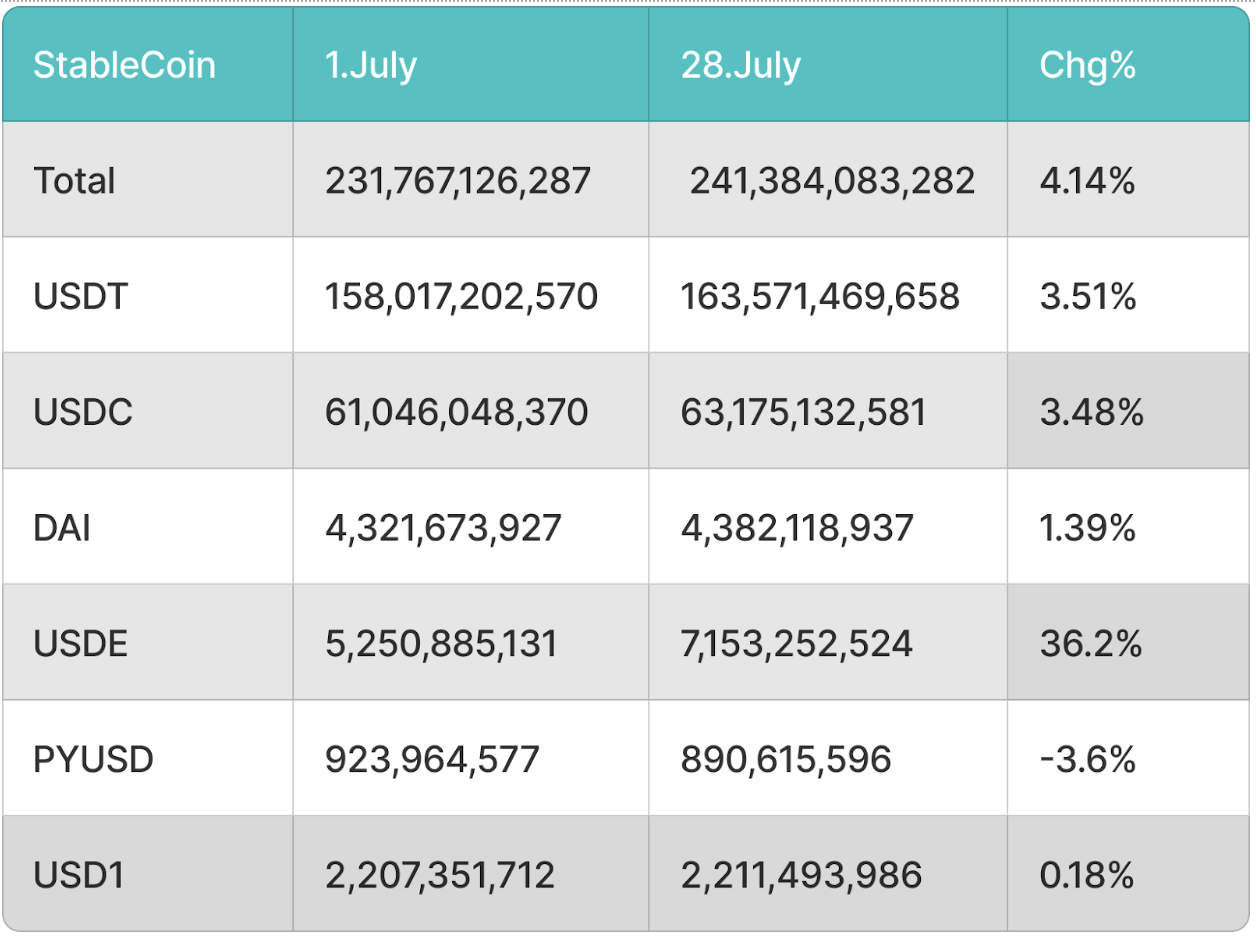
The total circulating supply of stablecoins surged by $9.617 billion in July, with the USDE soaring 36.2% in a single month
In July, driven by the passage of the Stablecoin Act, the total circulating supply of stablecoins surged by $9.617 billion (+4.14%) to $241.38 billion. USDE led the market with an astonishing growth rate of 36.2% (an additional $1.9 billion), while USDT (+5.55 billion) and USDC (+2.13 billion) jointly contributed the main growth.
4. Price Analysis of Major Currencies
4.1 Analysis of BTC Price Changes
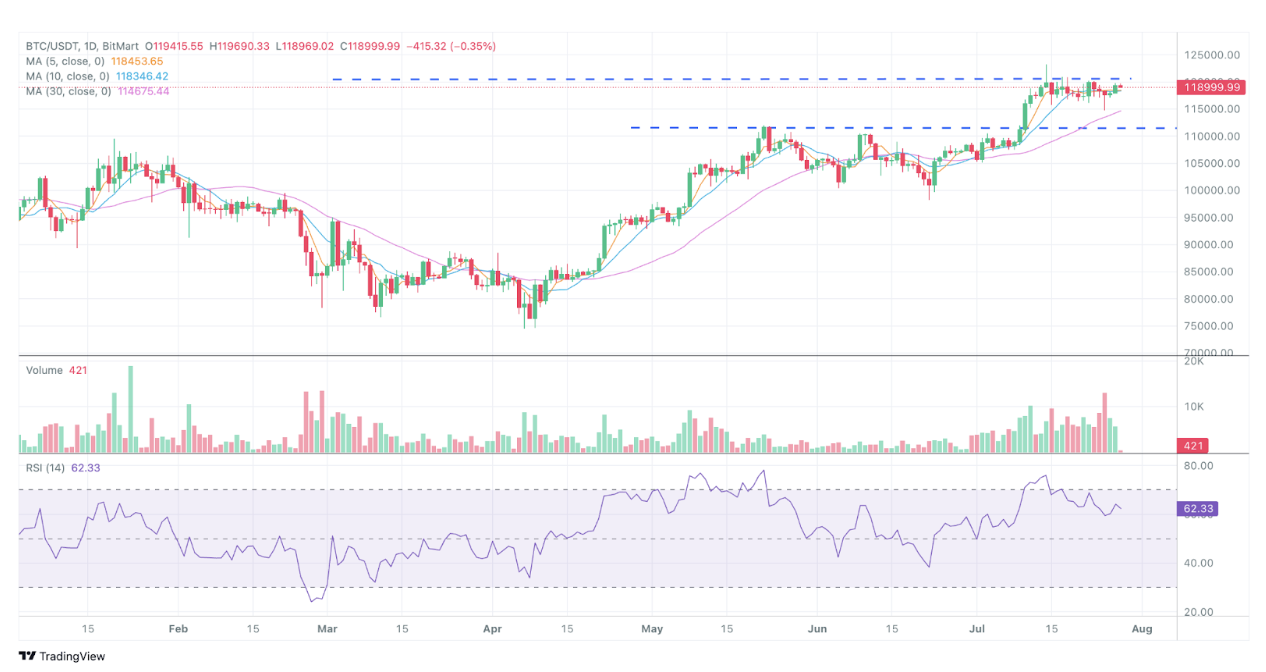
This week, BTC has repeatedly attempted to break through the $120,000 resistance level, particularly on July 23rd, when it briefly touched $120,113 before falling under pressure and gradually dropping to around $114,759 (the low of July 25th). The price has rebounded slightly over the past two days to around $119,600. Despite this short-term rebound, it remains below the 20-day moving average (around $116,300), indicating that bears still have some upward momentum. Technically, BTC is currently consolidating between $110,530 and $116,000, attempting to establish a base. If bulls can successfully halt the decline and rebound here, the possibility of a renewed challenge of $123,000 will increase, potentially opening the way to $135,000. Failure to hold $110,530 could trigger a further decline to the psychologically important $100,000 mark. While the past two days' rally has boosted confidence, it hasn't broken through key resistance, prompting caution.
4.2 ETH Price Change Analysis
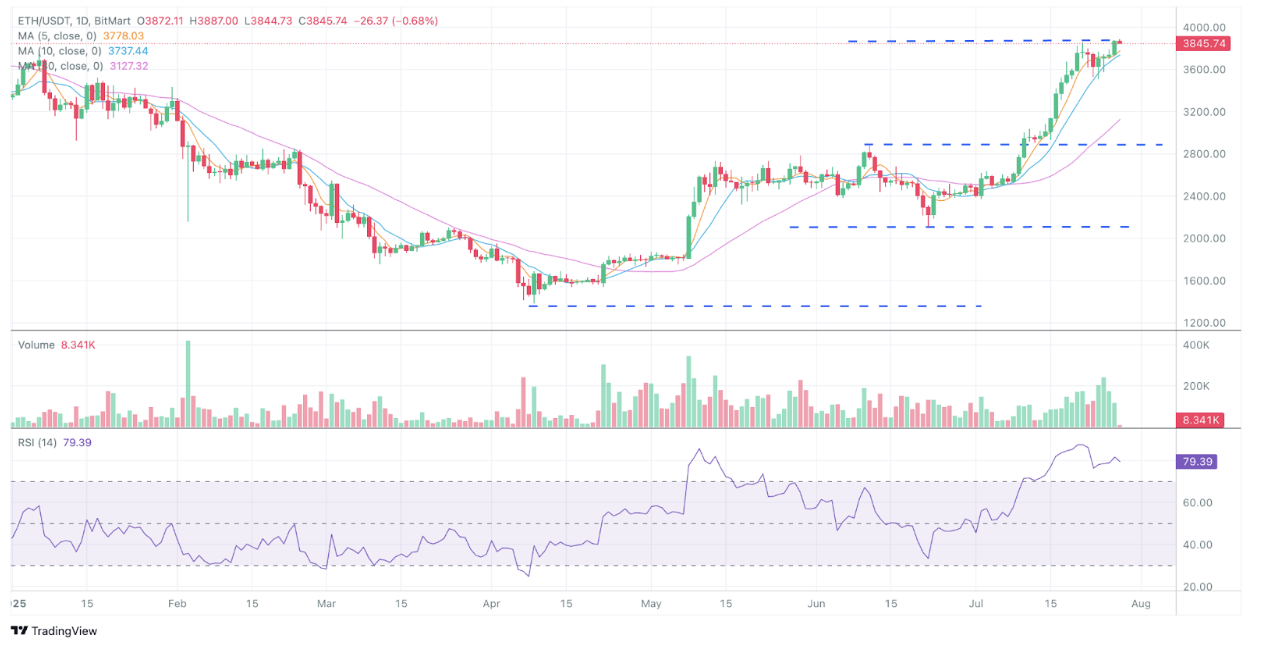
ETH has seen strong performance this week, with its price rising from approximately $3,740 to its current price of approximately $3,881 over the past two days, representing a daily increase of nearly 3–4%, significantly outperforming both BTC and SOL in terms of cumulative growth. According to on-chain and ETF data, ETH spot ETFs have attracted approximately $2.4 billion in net inflows over the past six trading days, far exceeding the $827 million in BTC ETFs over the same period, demonstrating a clear trend of capital concentration towards Ethereum.
Technically, ETH is at a critical juncture in its push toward $3,745 resistance. If it breaks through and holds this level with significant volume, it could subsequently reach $4,094 resistance, opening the way to $4,868. However, if the price retreats and falls below $3,500 or the 20-day moving average (around $3,234), upward momentum could be weakened, potentially leading to a short-term correction. The recent two-day slight rebound could be seen as a prelude to a breakout if the strength continues.
4.3 SOL Price Analysis
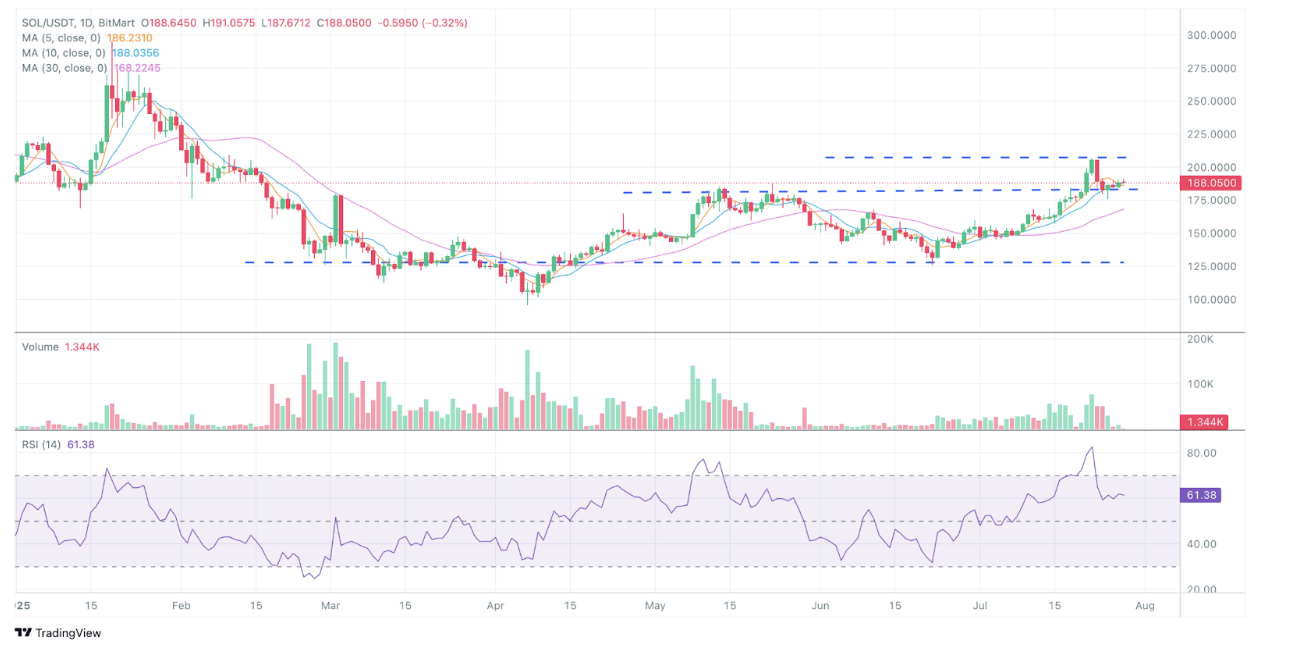
SOL's performance was weak this week. After failing to break through the key $200 resistance level, the price quickly retreated and fell below the $185 support level, reaching a low of around $184. Currently, the price is hovering between $190 and $187, forming a typical inverse head and shoulders or cup and handle pattern on the chart. A break above the $180–188 resistance zone could trigger an upward reversal, targeting around $220. However, a break below the short-term support level of $176 (or near the 20-day moving average) could accelerate the correction toward the $157 area. SOL has only seen a slight rebound over the past two days, significantly lagging behind both ETH and BTC. Market enthusiasm remains low, with new investor interest waning and long-term holders also showing signs of reducing their holdings. Overall, SOL remains in a correction, with bulls yet to make a significant comeback.
5. Hot Events of the Month
Ethereum-Based MicroStrategy Drives Price Rise
Recently, US-listed companies such as SharpLink, Bitmine, Bit Digital, and BTCS have continued to increase their ETH holdings and establish an "Ethereum-Based MicroStrategy" through on-chain staking. As of July 21, 2025, SharpLink holds approximately 358,000 ETH (market capitalization: approximately $1.278 billion), Bitmine holds 300,700 ETH, Bit Digital holds 120,300 ETH, and BTCS holds 31,900 ETH. SharpLink has surpassed the Ethereum Foundation to become the world's largest institutional holder of ETH. Driven by Wall Street investors like ARK Invest, Bitmine plans to increase its ETH allocation to 5%, further strengthening ETH's market positioning as an "enterprise-grade asset." With ETH's price rebounding and continued net inflows into ETFs, ETH is undergoing a transformation from a retail-driven technology asset to an institutional-led reserve asset. The current institutional holdings structure exhibits a dual-center structure: SharpLink represents the native crypto community, while Bitmine represents traditional capital flows, pushing ETH into a new narrative cycle characterized by the trinity of "staking, reserves, and governance." The overall trend suggests that ETH is entering a phase of institutional revaluation, driven by ETFs, listed companies, and on-chain nodes.
US Stablecoin Act Passed
On July 17, 2025, the US House of Representatives passed the GENIUS Act by a vote of 308 to 122. The Act was signed into law by the President the following day, marking the first federal regulation in US history regarding a US dollar stablecoin. The law establishes the issuance qualifications for "Permitted Payment Stablecoin Issuers" and requires them to be federally or state-approved banks or trusts, to use cash or short-term U.S. Treasury bonds as reserves, to disclose their holdings daily to the public, to prohibit the reuse of collateral, to not offer interest returns, and to be subject to regulation by the Treasury Department, the Office of the Banking Commissioner (OCC), and the Bank Secrecy Act. The law also exempts stablecoins from securities and commodities laws, explicitly removing them from SEC/CFTC regulation as securities or commodities, placing them under the full supervision of banking regulators. Shortly after the signing, the cryptoasset market saw a significant rebound: major cryptoassets such as Bitcoin and Ethereum saw significant gains, with Ethereum surging by approximately 50% and Bitcoin by 10.27% in July. Stablecoins saw inflows of $9.617 billion. At the financial institution level, payment giants such as JPMorgan, Mastercard, and Visa accelerated the issuance of stablecoins or explored on-chain payment solutions. Traditional banks and online platforms (such as Circle, Coinbase, PayPal, Amazon, and Walmart) also quickly followed suit, integrating stablecoins into payment, cross-border settlement, and corporate cash management operations, thus driving the adoption of stablecoins into the mainstream financial services market. The first Solana staking ETF was listed in the United States. In July, the United States welcomed the historic launch of the first cryptocurrency ETF permitted for staking: the REX-Osprey Sol + Staking ETF (SSK). The fund received regulatory approval and officially listed on the Cboe BZX exchange earlier this month. The ETF's most distinctive feature is its built-in "staking" mechanism: a portion of the fund's SOL assets will be staked on-chain to participate in Solana network validation activities, earning approximately 7% annualized staking rewards and distributing regular cash dividends to investors, similar to the "fixed deposit + dividend" model in traditional finance. Approximately 60% of the fund's SOL assets will be staked on-chain, generating an annualized return of approximately 7%, which will be distributed in cash. The remaining 40% will be invested in an overseas Solana ETP product, circumventing the 19b-4 process and gaining listing approval solely through S-1 registration. This "staking + dividend" structure distinguishes SSK from ETFs that simply track SOL futures, and the market sees it as a landmark achievement of the Trump administration's deregulation of cryptocurrencies.
SOL briefly surged 6% in early July on the news. Grayscale, VanEck, Bitwise, and other institutions have already submitted their S-1 filings for the Solana Spot ETF and are expected to submit revised versions by the end of July. The SEC is expected to complete its review in mid-to-late August (the deadline is October 10th). Furthermore, spot-collateralized ETFs, including Ethereum, are expected to follow suit soon. 6. Outlook for Next Month CLARITY Act The highly anticipated Clarity in Digital Asset Markets Act (CLARITY Act) has successfully passed the U.S. House of Representatives and will enter the Senate for deliberation in late July, marking a key step in U.S. crypto asset regulation. The bill aims to clarify the classification standards and regulatory boundaries for crypto assets, dividing the responsibilities of the SEC and CFTC for the first time, and providing a clear compliance path for decentralized projects, stablecoins, and DeFi protocols. If successfully passed, this bill will have three major positive impacts:
-
Increased regulatory certainty will encourage compliance operations for projects and exchanges, boosting institutional confidence;
-
Giving the CFTC greater regulatory authority and weakening the SEC's oversight authority will hopefully end years of regulatory disputes;
-
Confirming the legal status of DeFi and self-custody, reducing the compliance burden on developers and clearing obstacles for decentralized innovation.
A number of blue-chip DeFi projects and exchange-related assets have rebounded since mid-July, driven by expectations of favorable policies. If the Senate's August review goes smoothly and the House version's support for the DeFi exemption and "mature chain" provisions is upheld, the CLARITY Act is expected to become a major turning point in driving a new round of compliance and capital inflow into the US crypto market. SOL Spot ETF and Ethereum Staking ETF Review Progress for the Solana spot ETF is accelerating. Seven institutions, including Grayscale, VanEck, Fidelity, and Franklin, submitted S-1 registration statements to the SEC in mid-June. These documents generally cover the staking mechanism and redemption process design. The SEC requires applicants to submit revised versions by July 31st to clarify the specific operational details. According to regulations, the SEC's deadline for reviewing such ETFs is October 10, 2025. However, if the applicant submits the supplemental documents on time, the market generally expects the SEC to make an early decision in mid-to-late August. If approved, Solana will become the third mainstream crypto asset to be supported by a spot ETF, following Bitcoin and Ethereum. Regarding Ethereum staking ETFs, BlackRock submitted a revised 19b-4 filing on July 16, proposing to partially or fully stake its ETH holdings through a trustee staking service provider to generate additional returns. Grayscale submitted an application to add staking functionality to its ETH trust product earlier this year, but as of June, it was still under review, with approval potentially delayed until October at the latest. The SEC issued its first regulatory guidance for crypto ETFs on July 7, clarifying that standardized procedures will be implemented for staking, custody, and profit distribution, and considering introducing a unified filing template to shorten the approval process to 75 days. If the overall process proceeds smoothly, the first ETH staking ETFs could be approved as early as the fourth quarter of 2025.