
Data Insights
The latest report released by Citi GPS shows that as of April 2025, the total circulation of stablecoins has exceeded US$230 billion, a year-on-year increase of 54% compared with April 2024. The market is currently dominated by two giants, Tether (USDT) and USD Coin (USDC), which together account for more than 90% of the market share in terms of trading volume and transaction value.
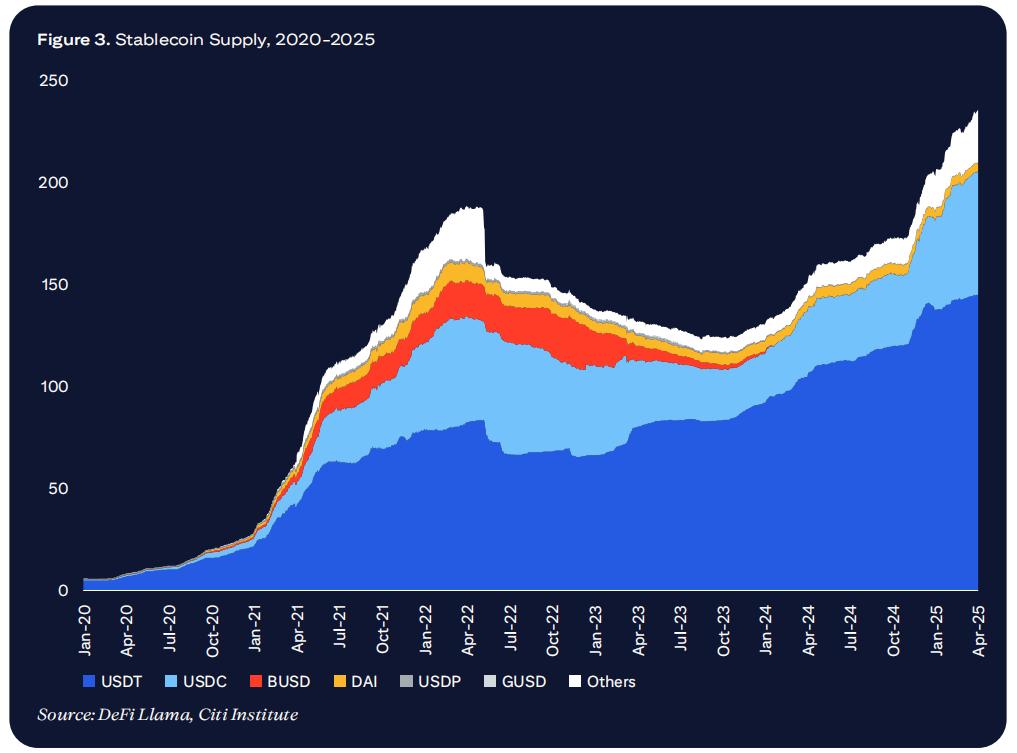
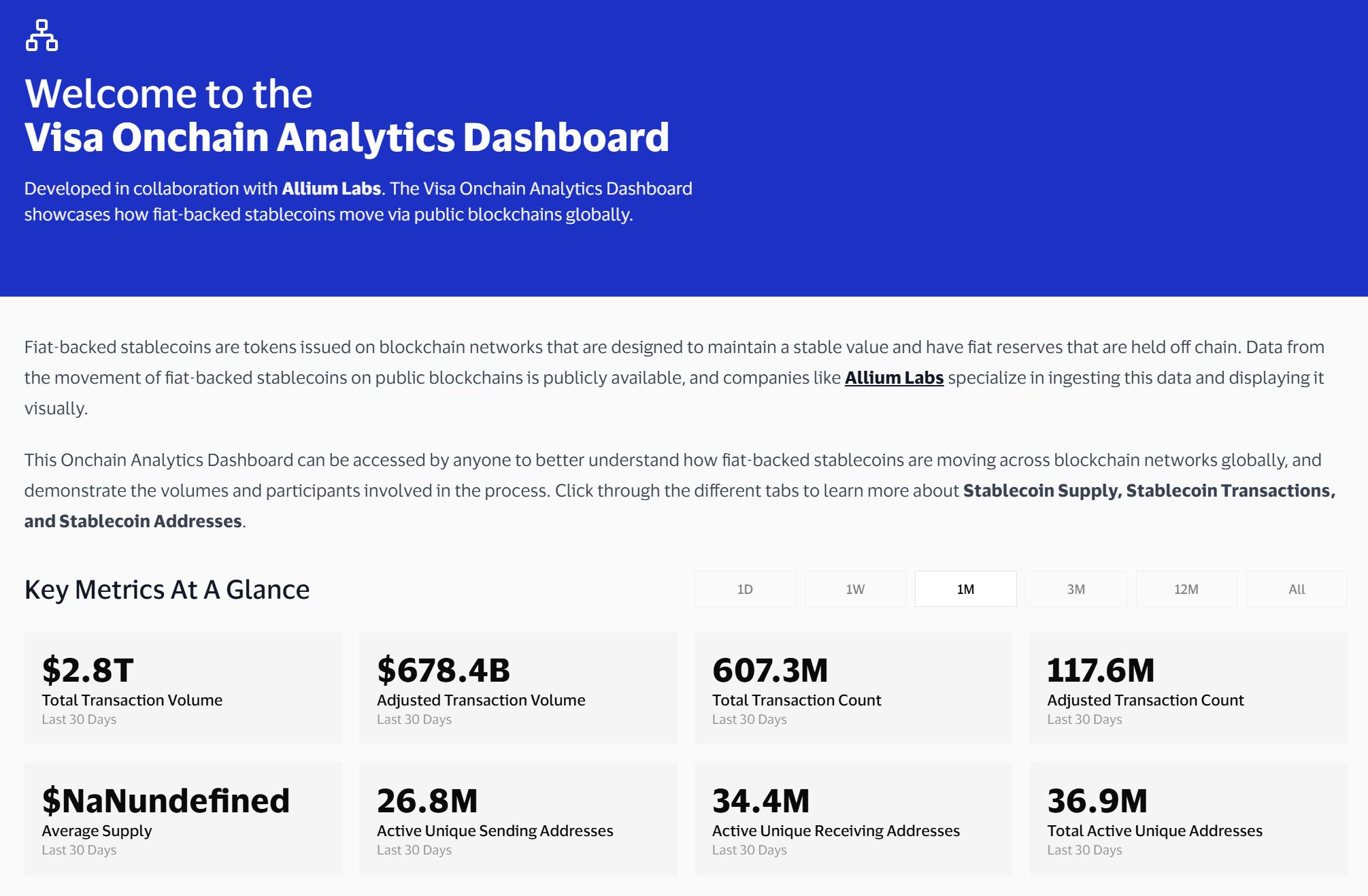
In recent years, the transaction volume of stablecoins has continued to grow rapidly. Adjusted data show that the monthly transaction volume of stablecoins in the first quarter of 2025 has reached 650 billion to 700 billion US dollars, almost twice the level in the same period from the second half of 2021 to the first half of 2024. The main applications are still concentrated in supporting the cryptocurrency trading ecosystem.
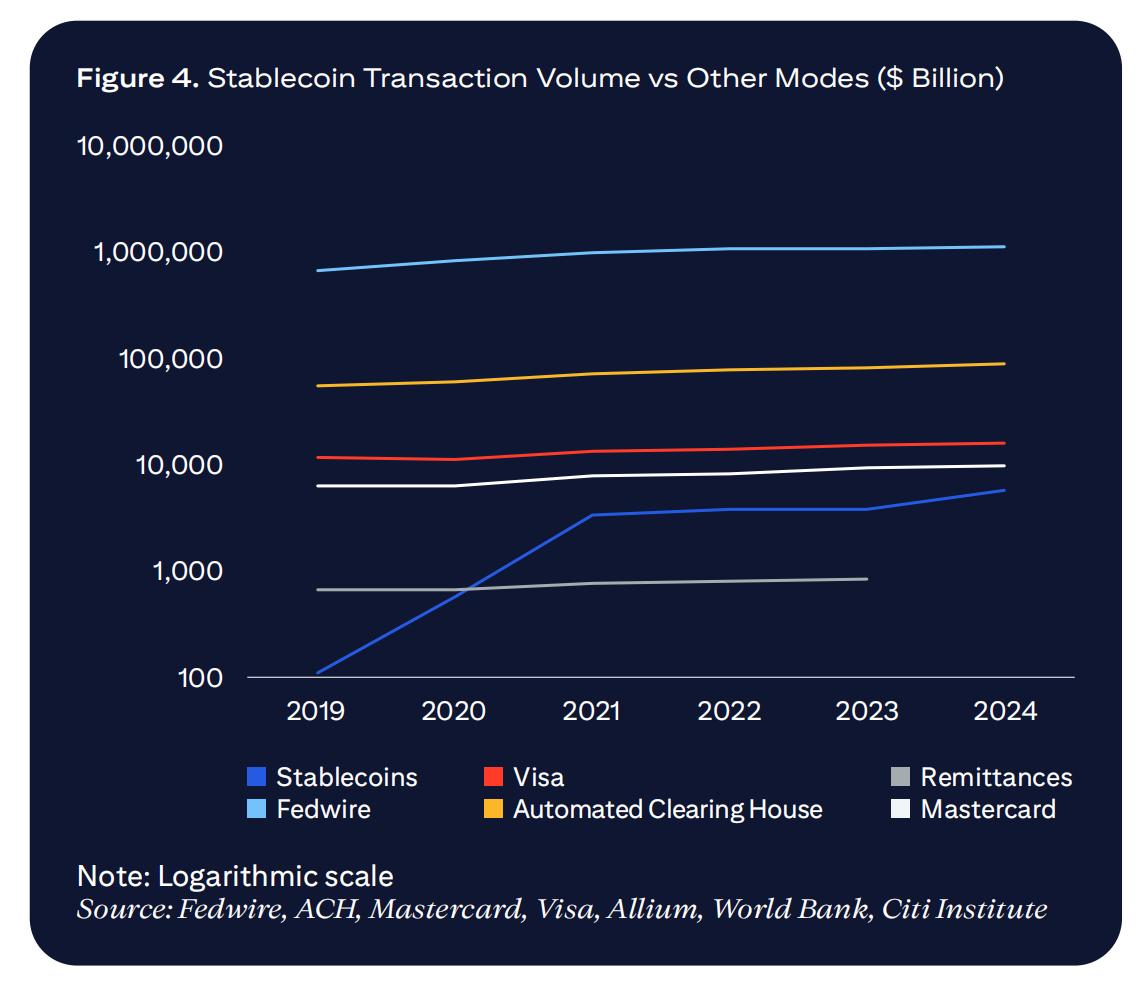
In addition to its role in the field of cryptocurrencies, stablecoins are also gradually becoming a key tool in the cross-border payment system . The Citi GPS report points out that the transaction volume of stablecoins is expected to exceed the existing transaction volume of VISA and Mastercard in the future. Although it is still in its early stages of development, the trend is clear.
As Matt Blumenfeld, PwC's US and global digital asset leader, said, more banks and traditional financial institutions will join the market in the future. USD stablecoins are expected to continue to dominate, and the number of participants will depend on the diversity of products that meet the needs of different scenarios. In the future, the competition landscape of the stablecoin track may exceed that of the existing card organization system.
Financial technology giants accelerate their layout
Changes in the U.S. digital asset regulatory environment are profoundly affecting corporate payments, capital flows, and asset management methods. The new SEC Chairman Paul S. Atkins is expected to bring clearer regulatory expectations to the crypto industry, which is actively welcomed by the industry.
a16z said that stablecoins have reached a level of popularity that can completely change the global payment system, just as WhatsApp has revolutionized international communications. Currently, financial giants are gathering to enter the market and compete for the stablecoin payment market.
Circle Payment Network
USDC issuer Circle officially launched Circle Payments Network (CPN), which aims to solve the long-standing problems of cross-border payments such as multiple intermediaries, complex compliance, and fragmented legal jurisdictions, especially providing efficient and modern payment solutions for emerging markets.
CPN creates an Internet-based payment experience, realizes global real-time settlement of funds, and ensures compliance, including licenses, AML/CFT, network security, risk management, etc. The first batch of partners include banks, financial technology companies, payment and remittance service providers and USDC strategic partners. In the future, we hope to compete head-on with traditional payment networks such as Mastercard and Visa.
In addition, CPN supports third-party developers to build diversified financial service scenarios based on smart contracts and modular APIs. It has currently cooperated with large global banks such as Banco Santander, Deutsche Bank, Societe Generale, and Standard Chartered Bank.
Circle CEO Jeremy Allaire said that CPN will simplify remittances to be as convenient as sending an email, which not only consolidates Circle's position in the global financial services field, but also verifies the transformative value of stablecoins in efficient, compliant and real-time payments.
Stripe Stablecoin Application
Stripe has launched a new product portfolio based on AI and stablecoins to help businesses grow their payments. Its Payments Foundation Model relies on tens of billions of transaction data to improve anti-fraud and payment authorization rates, and is particularly good at identifying card testing attacks.
At the same time, Stripe launched Stablecoin Financial Accounts, which supports enterprises in 101 countries to use stablecoins for payment (currently supports USDC and USDB , and will be expanded to more currencies in the future). In addition, through the Bridge platform, it cooperates with Visa to issue bank cards bound to stablecoin wallets, allowing users to directly consume stablecoins at merchants that accept Visa. Bridge CEO Zach Abrams said that this innovation is an important step in integrating stablecoins into daily payments.
Stripe CEO Patrick Collison emphasized that AI and stablecoins are rapidly releasing business dividends. In 2024, AI functions will help Stripe's total payment volume increase by 38%.
Global Dollar Network (USDG)
Visa is planning to join the Global Dollar Network (USDG) alliance led by Paxos, a US compliant stablecoin issuer, and become the first traditional financial institution to participate in the alliance. The alliance brings together leading companies such as Robinhood, Kraken, Galaxy Digital, Anchorage Digital, Bullish, and Nuvei, focusing on improving the interoperability, liquidity, and revenue sharing mechanism of stablecoins.
USDG launched a stablecoin anchored to the US dollar in November last year, aiming to increase the global application rate of stablecoins and bring economic benefits to partners. Today, stablecoins are evolving from crypto trading tools to practical financial infrastructure such as B2B payments, capital market settlements, and treasury management. Visa's move also echoes its long-term strategy in the field of digital payments.
Battle for the Banking Card
As traditional banks tighten their services to crypto customers, leading companies such as Circle, Paxos, and Coinbase have applied for banking licenses, planning to enter the regulated banking system, obtain customer deposits, custody stablecoin reserves, and provide banking services. Stripe has also applied for a special banking license, continuing Fiserv's earlier exploration path.
Payment companies strive for licenses in order to reduce transaction costs, expand business boundaries, and circumvent the restrictions of the traditional banking system. After crypto companies become compliant banks, they will be more likely to gain the trust of large corporate customers. In the future, Fortune 500 companies may have deeper cooperation with stable and regulated crypto service providers. Corporate decision makers need to pay attention to the trend of integration between crypto assets and traditional finance and make preparations for layout.
Investment and financing trends in April
Tether invests in Fizen
On April 15, 2025, Tether made a strategic investment in Fizen, a financial technology company focusing on self-hosted wallets and digital payments, to help optimize the digital asset payment experience. Fizen is committed to solving the payment difficulties of people without bank accounts, improving blockchain infrastructure, and integrating stablecoins into more payment scenarios to achieve real-time legal currency settlement by scanning and POS machines. It is estimated that by 2024, the scale of global scanning payment will exceed 3 trillion US dollars. The cooperation between Tether and Fizen is expected to accelerate the popularization of stablecoin payments.
Inflow Completes $1.1 Million Seed Round
Inflow has received investments from AllianceDAO, Rockstart, GnosisVC, etc., and is committed to providing low-cost, real-time settlement global payment solutions for freelancers and small and micro businesses in emerging markets. Its platform will significantly reduce international payment fees and arrival time, and ensure user financial freedom.
Zar raises $7 million
Zar has received investments from Dragonfly Capital, a16z, etc., and plans to provide cash-for-stablecoin services at 280,000 global mobile payment agent locations to meet cross-border payment and anti-inflation needs. Currently, nearly 100,000 customers have registered with 7,000 merchants, and the service covers 20 countries including Pakistan, Bangladesh, Indonesia, Nigeria, Lebanon, Argentina, etc. Customers can complete the cash-for-stablecoin exchange by scanning the QR code, and the money will be directly transferred to their digital wallets.
April Summary
As US regulation continues to be friendly, more and more financial technology giants are entering the stablecoin market. Circle has a stablecoin market share of more than 25% and continues to expand its payment network; after Stripe acquired Bridge, it fully integrated stablecoin payments.
The stablecoin market is moving from the stage of "new players grabbing land" to the competition of "control over payment channels". The advantages of stablecoins are not limited to the issuers, but the key lies in the control of currency usage scenarios. Funds are flowing to payment applications at an accelerated pace. Whoever can dominate the payment scenario will occupy a dominant position in the stablecoin ecosystem.