Cryptocurrency and blockchain technology are redefining financial freedom, but this revolution has also spawned a new type of threat: scammers no longer rely solely on technical vulnerabilities, but instead transform blockchain smart contract protocols themselves into attack tools. Through carefully designed social engineering traps, they use the transparency and irreversibility of blockchain to transform user trust into a weapon for asset theft. From forging smart contracts to manipulating cross-chain transactions, these attacks are not only hidden and difficult to trace, but also more deceptive because of their "legalized" cloak. This article will reveal how scammers transform protocols themselves into attack vectors through real case analysis, and provide a complete solution from technical protection to behavioral prevention to help you move forward safely in the decentralized world.
1. How does a legal agreement become a fraud tool?
The blockchain protocol was originally designed to ensure security and trust, but scammers have taken advantage of its characteristics and combined it with user negligence to create a variety of covert attack methods. Here are some examples of these techniques and their technical details:
(1) Malicious Smart Contract Authorization (Approve Scam)
Technical principle:
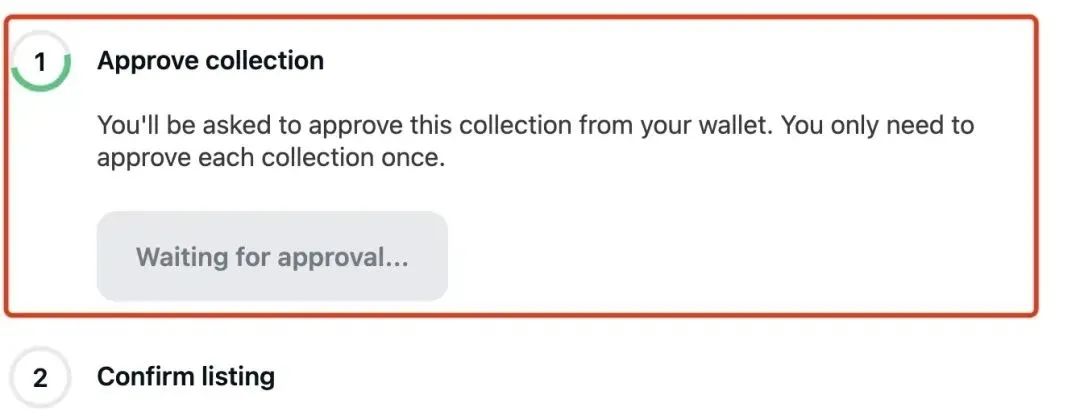
On blockchains such as Ethereum, the ERC-20 token standard allows users to authorize a third party (usually a smart contract) to withdraw a specified number of tokens from their wallets through the "Approve" function. This function is widely used in DeFi protocols such as Uniswap or Aave, where users need to authorize smart contracts to complete transactions, pledges, or liquidity mining. However, scammers use this mechanism to design malicious contracts.
How it works:
Scammers create a DApp disguised as a legitimate project, usually promoted through phishing websites or social media (such as fake "PancakeSwap" pages). Users connect their wallets and are induced to click "Approve", which ostensibly authorizes a small amount of tokens, but in fact may be an unlimited amount (uint256.max value). Once the authorization is completed, the scammer's contract address is authorized to call the "TransferFrom" function at any time to withdraw all corresponding tokens from the user's wallet.
Real case:
In early 2023, a phishing website disguised as "Uniswap V3 Upgrade" caused hundreds of users to lose millions of dollars in USDT and ETH. On-chain data shows that these transactions are fully compliant with the ERC-20 standard, and victims cannot even recover them through legal means because the authorization is signed voluntarily.
(2) Phishing Signature
Technical principle:
Blockchain transactions require users to generate signatures through private keys to prove the legitimacy of the transaction. Wallets (such as MetaMask) usually pop up a signature request, and after the user confirms, the transaction is broadcast to the network. Scammers take advantage of this process to forge signature requests and steal assets.
How it works:
The user receives an email or Discord message disguised as an official notification, such as "Your NFT airdrop is waiting to be claimed, please verify your wallet." After clicking the link, the user is directed to a malicious website, asked to connect the wallet and sign a "verification transaction." This transaction may actually be a call to the "Transfer" function, directly transferring the ETH or tokens in the wallet to the scammer's address; or a "SetApprovalForAll" operation, authorizing the scammer to control the user's NFT collection.
Real case:
The Bored Ape Yacht Club (BAYC) community suffered a signature phishing attack, and many users lost millions of dollars worth of NFTs by signing forged "airdrop claim" transactions. The attacker took advantage of the EIP-712 signature standard and forged a seemingly safe request.
(3) Fake Tokens and Dust Attacks
Technical principle:
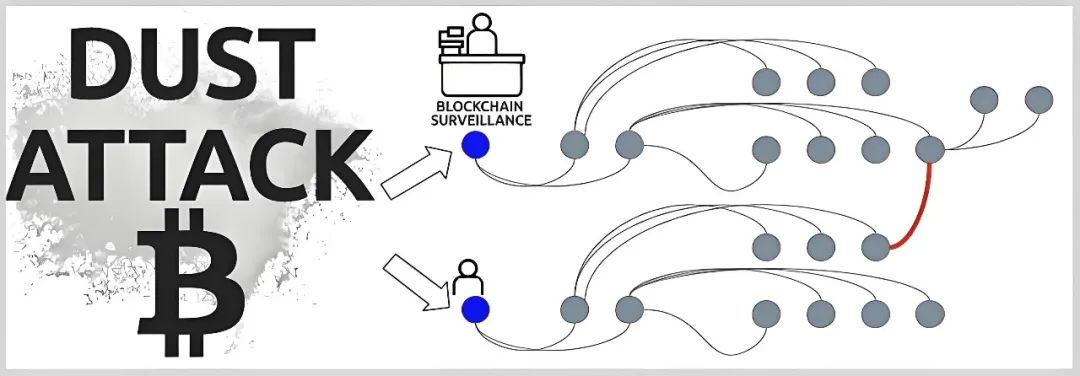
The public nature of the blockchain allows anyone to send tokens to any address, even if the recipient has not actively requested it. Scammers take advantage of this by sending small amounts of cryptocurrency to multiple wallet addresses in order to track wallet activity and link it to the person or company that owns the wallet. It starts with sending dust - sending small amounts of cryptocurrency to different addresses, and then the attacker tries to figure out which one belongs to the same wallet. The attacker then uses this information to launch phishing attacks or threats against the victim.
How it works:
In most cases, the "dust" used in dust attacks is distributed to user wallets in the form of airdrops. These tokens may have names or metadata (such as "FREE_AIRDROP"), which induce users to visit a website for details. Users are generally happy to cash out these tokens, and then the attacker can access the user's wallet through the contract address attached to the token. Secretly, dust attacks will use social engineering to analyze users' subsequent transactions and lock users' active wallet addresses, thereby implementing more precise fraud.
Real case:
In the past, the “GAS token” dust attack on the Ethereum network affected thousands of wallets. Some users lost ETH and ERC-20 tokens due to curious interactions.
2. Why are these scams difficult to detect?
These scams are successful in large part because they hide within the legitimate mechanisms of the blockchain, making it difficult for the average user to discern their malicious nature. Here are a few key reasons:
- Technical complexity:
Smart contract codes and signature requests are obscure to non-technical users. For example, an "Approve" request may appear as hexadecimal data such as "0x095ea7b3...", and users cannot intuitively determine its meaning.
- On-chain legitimacy:
All transactions are recorded on the blockchain and appear transparent, but victims often only realize the consequences of authorization or signature after the fact, at which point the assets cannot be recovered.
- Social Engineering:
Scammers exploit human weaknesses such as greed (“Get $1,000 in tokens for free”), fear (“Account abnormality requires verification”), or trust (disguising as MetaMask customer service).
- Disguise is exquisite:
Phishing sites may use URLs that are similar to official domains (such as “metamask.io” becoming “metamaskk.io”) and even use HTTPS certificates to increase credibility.
3. How to protect your cryptocurrency wallet?
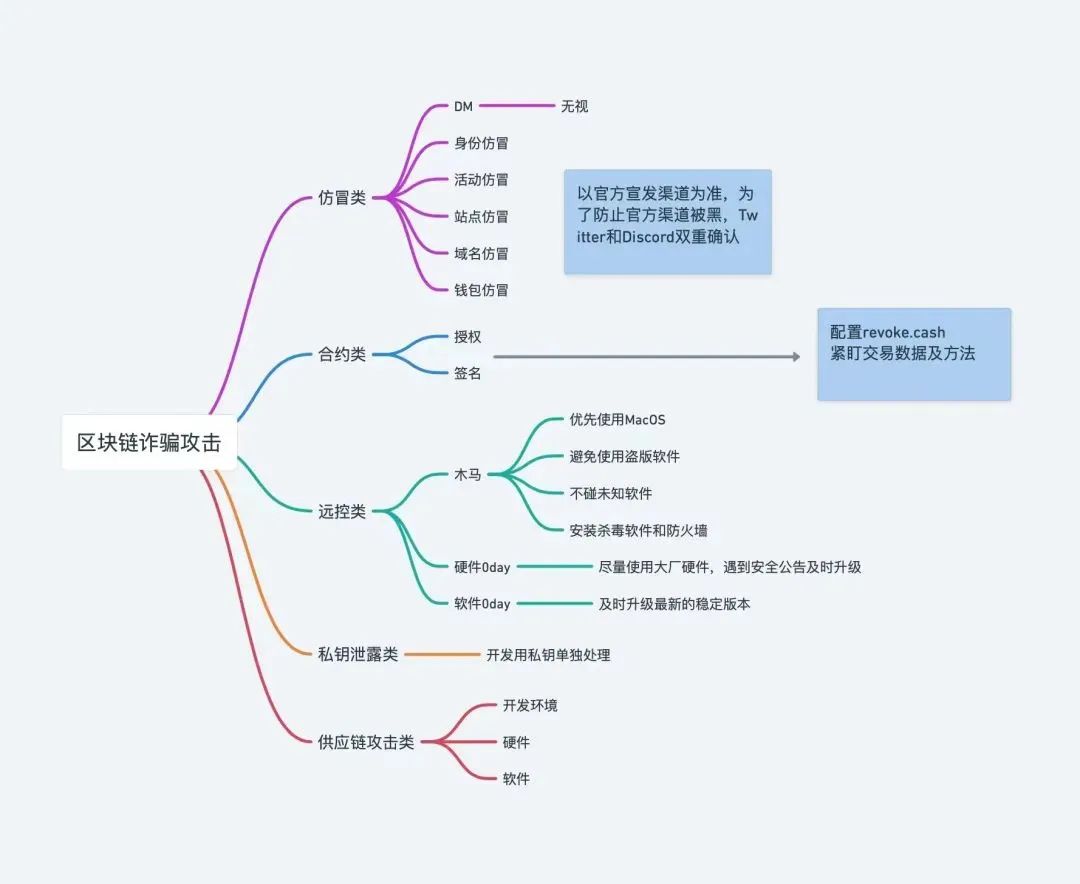
Blockchain security faces these technical and psychological scams, and protecting assets requires a multi-level strategy. The following are detailed preventive measures:
- Check and manage authorization permissions
Tools: Use Etherscan Approval Checker or Revoke.cash to check the wallet’s authorization history.
Action: Regularly revoke unnecessary authorizations, especially unlimited authorizations to unknown addresses. Before each authorization, make sure the DApp is from a trusted source.
Technical details: Check the "Allowance" value. If it is "infinite" (such as 2^256-1), it should be revoked immediately.
- Verify links and sources
Method: Manually enter the official URL and avoid clicking on links on social media (such as Twitter, Telegram) or in emails.
Check: Make sure the website is using the correct domain name and SSL certificate (green lock icon). Be wary of spelling errors or extra characters.
Example: If you receive a variation of "opensea.io" (such as "opensea.io-login"), immediately doubt its authenticity.
- Using cold wallets and multi-signature
Cold wallets: Store most of your assets in a hardware wallet (like the Ledger Nano X or Trezor Model T), connecting to the internet only when necessary.
Multi-signature: For large assets, use tools such as Gnosis Safe to require multiple keys to confirm transactions and reduce the risk of single point errors.
Benefits: Even if a hot wallet (such as MetaMask) is compromised, cold storage assets remain safe.
- Be careful with signature requests
Steps: Each time you sign, carefully read the transaction details in the wallet pop-up window. MetaMask will display the "Data" field. If it contains an unknown function (such as "TransferFrom"), reject the signature.
Tools: Use Etherscan's "Decode Input Data" function to parse the signature content, or consult a technical expert.
Recommendation: Create a separate wallet for high-risk operations and store a small amount of assets.
- Dealing with dust attacks
Strategy: Do not interact with unknown tokens after receiving them. Mark them as "junk" or hide them.
Check: Confirm the source of tokens through blockchain browser platforms such as OKLink. If they are sent in batches, be highly vigilant.
Prevention: Avoid disclosing wallet addresses or using new addresses for sensitive operations.
Conclusion
By implementing the above security measures, ordinary users can significantly reduce the risk of becoming victims of advanced fraud schemes, but true security is by no means a unilateral victory of technology. When hardware wallets build physical defenses and multi-signatures disperse risk exposure, users' understanding of authorization logic and prudence in on-chain behavior are the last bastion against attacks. Every data analysis before signing and every permission review after authorization are a declaration of one's own digital sovereignty.
In the future, no matter how the technology evolves, the core defense line will always be to internalize security awareness into muscle memory and establish a permanent balance between trust and verification. After all, in the blockchain world where code is law, every click and every transaction is permanently recorded in the chain and cannot be changed.