Security is no longer an afterthought in blockchain development, and builders are looking beyond incentives to long-term infrastructure stability. This is why elastic scaling technology is so important, and why Polkadot Assurance Legion is essential to help developers launch securely.

In the past few years, the overall size of Web3 developers has grown tremendously. According to Electric Capital statistics, there will be more than 24,000 active Web3 developers per month in 2024, and this number is expected to climb to 1 million by 2030.
Historically, liquidity and user activity have been the primary decision drivers. Liquidity attracts end users and, therefore, developers, as they gravitate toward the most active chains to build on. But as more teams deploy live products and look beyond short-term gains, factors like stability, tooling, and security are gaining traction, especially for developers transitioning from Web2 to Web3.
That’s why we’ve launched the Polkadot Assurance Legion (PAL) , a non-profit, community-led initiative focused on making open source security more accessible in the Polkadot ecosystem. We’ve seen that strong infrastructure can quickly be prioritized in an ecosystem of projects that are growing rapidly or attracting mass market attention, and we believe long-term action can help reverse this trend.
Why risk tolerance is changing
As with many emerging technologies, the early stages of Web3 have attracted builders and users who are often comfortable operating in unknown environments, sometimes with a high tolerance for risk. This mentality helps drive rapid experimentation and growth, but it also means that security is often reactive rather than considered from the outset.
We do not expect this trend to continue. While this is an understandable trade-off in the early stages of development, it becomes increasingly unsustainable as the Web3 ecosystem matures. Especially as enterprise interest grows and more productivity applications come online, the factors of security and proven development activity begin to define what makes a blockchain truly viable.
Make secure deployment more accessible
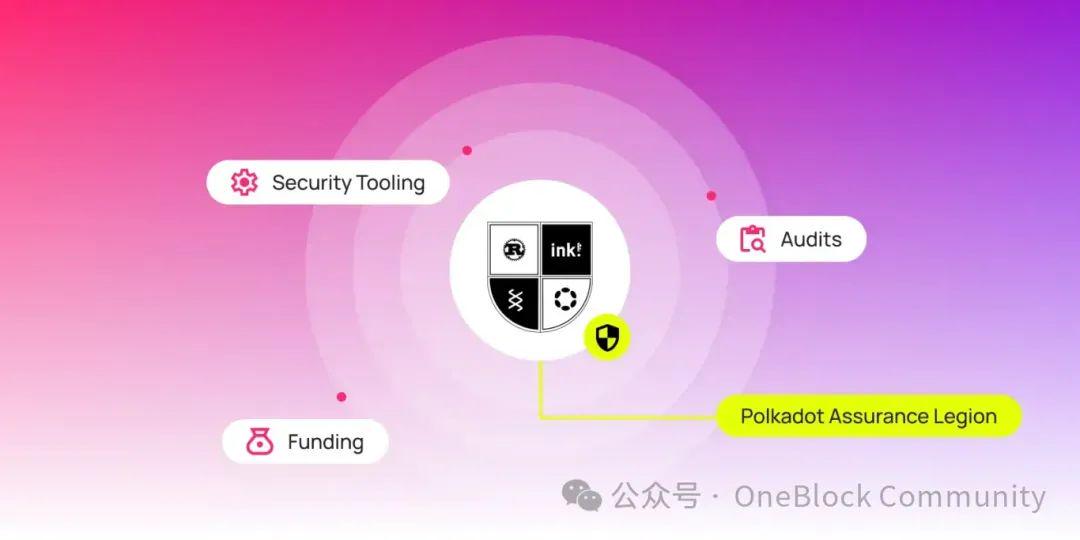
PAL was formed out of a mutual recognition among stakeholders that many projects want to prioritize security, but the resources to do so are not always accessible, especially in an open, decentralized ecosystem. Our goal is to help fill this gap in the Polkadot ecosystem.
We provide funding from the Polkadot Treasury to help subsidize security audits of rollups, smart contracts, and public interest projects on Polkadot. Teams building on Polkadot can receive up to 80% of audit fees through PAL. We also launched a bug bounty reimbursement program, providing reimbursement of up to 50% of eligible payments to support one of Web3's most critical and community-driven security practices. PAL also runs the program, but has covered up to 50% of smart contract audits, enabling the development of general security tools that benefit the Polkadot ecosystem.
To achieve this goal, we have partnered with 16 auditing firms, including OpenZeppelin, Trail of Bits, Hacken, etc. , to ensure that teams across the ecosystem have access to reputable and experienced partners. In addition to auditing, we also fund the technical development of open source security tools that can provide relevant technical services to the Polkadot ecosystem free of charge.
Most of the PAL folks are working and contributing full-time elsewhere because we believe the decentralization, transparency, and long-term resilience of the Polkadot ecosystem can support the growth of this project. Our goal is simple: we want to reduce barriers for development teams safely and sustainably from day one.
Security is starting to shape real-world decisions
We’re already seeing the impact of the broader technological philosophical shift that’s happening in the industry right now, which is prioritizing security, with teams building in areas like gaming that prioritize chain reliability and customizability as core requirements. Mythos Chain — versions like NFL Rivals and upcoming FIFA Rivals and Pudgy Party — started on Ethereum but later migrated to the Polkadot ecosystem, with speed, cost, and infrastructure resilience playing a big role in that decision.
While attention and monetary incentives largely influence the state of what developers build, they are not always aligned with long-term infrastructure development. Large enterprises in particular are less concerned with guiding developer interest , as they typically have internal teams and established distribution pipelines, and they want infrastructure they can rely on — projects that are stable, customizable, and designed for long-term integrity.
Security itself may not be the only factor in choosing a blockchain, but it is increasingly difficult to ignore. For teams looking to launch real products, the cost and price of ignoring security is simply too high, so if you are building a Polkadot ecosystem and need support for audits or security best practices, the Polkadot Assurance Legion (click to learn more: https://dotpal.io ) will be able to help you.