By Steven Ehrlich
Compiled by: TechFlow
After successfully escaping a regulatory dispute with the U.S. Securities and Exchange Commission (SEC), Ripple Labs CEO Brad Garlinghouse seems to have been reborn.
On July 2, Ripple announced that it had applied to the U.S. Office of the Comptroller of the Currency (OCC) for a federal banking license, striving to become the second company to receive this honor after Anchorage Digital. In addition, its New York State-regulated custody service provider, Standard Custody and Trust Company, is also working to become the first cryptocurrency company to obtain a Fed Master Account in order to hold reserve deposits directly at the Fed to support its $469 million stablecoin RLUSD.
“In keeping with our tradition of compliance, @Ripple is applying to the OCC for a national banking charter,” Garlinghouse said in a July 2 tweet. “If approved, we would be both state (via NYDFS) and federally regulated, which would set a new (and unique) standard of trust in the stablecoin market.”
Meanwhile, Ripple is continuing to improve the infrastructure of RLUSD. The company announced a partnership with Switzerland-based AMINA Bank and a collaboration with London-based OpenPayd to build a payment network using stablecoins.
And that’s not all, since November 1 last year, the native token XRP, which is mainly held by Ripple Labs, has risen 347%. In addition, XRP may usher in the first spot exchange-traded fund (ETF) in the United States later this year. Despite this, the price of XRP has remained basically stagnant in the past six months.
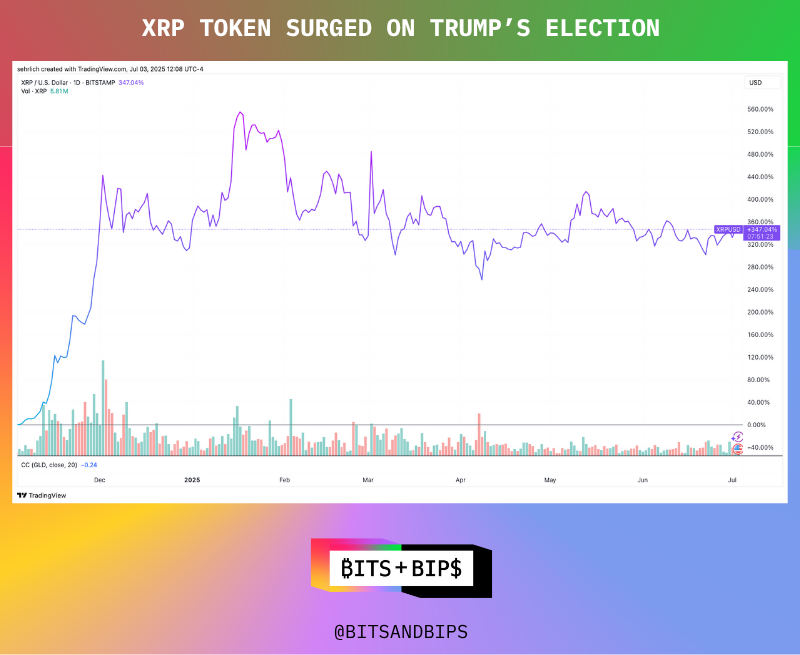
While many questions remain about the future of Ripple Labs, the XRP Ledger (XRPL), and its stablecoin, the biggest suspense still centers on its native token, XRP.
As Ripple appears to be shifting its focus more towards the stablecoin market, there is a view that if RLUSD really scales, it could cannibalize the latent demand that Ripple has been trying to create for XRP over the years.
It’s truly a fresh start for Ripple, but old problems remain for the blockchain company. To propel XRP’s price into its next phase of growth, some key factors may need to change. Here are two major challenges to watch out for.
XRP’s practical applications are still limited
Back in March 2024, I published an article in Forbes titled "The Rise of Crypto's Billion Dollar Zombies." While writing the article, I decided to focus on XRP Ledger (XRPL).
“From the perspective of global money flows, Ripple Labs’s current status is lackluster, and few expect it to disrupt the Belgian banking cooperative known as SWIFT, which handles as much as $5 trillion in interbank transfers a day,” I wrote. “Despite its failure to achieve its core purpose, Ripple’s blockchain — a ledger that records XRP transactions — continues to function. But it is essentially useless, while the XRP token has a market value of $36 billion, making it the sixth-largest cryptocurrency.”
This is obviously a harsh description, but in the article I pointed out that despite XRPL's market cap of $36 billion at the time, its fee income in 2023 was only $583,000. This is equivalent to a staggering price-to-sales ratio of 61,690 times. Even more noteworthy is that Ripple will have been established for 12 years by then, not a startup. To me, these data show that XRP is seen more as a "memecoin" than an asset with actual use.
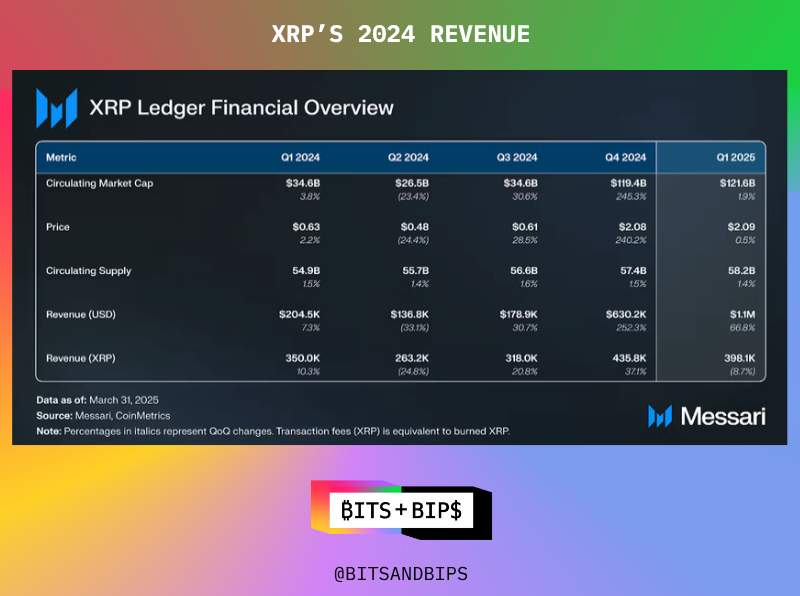
So what has happened to XRPL since then? In 2024, XRPL’s fee income grew to $1.15 million, an increase of only $567,000 from the previous year. At the same time, its market capitalization grew by more than $80 billion from $33.32 billion at the beginning of 2024, reaching an eye-popping 103,826 times the price-to-sales ratio.
This set of data once again highlights the core problem facing XRP: despite its rising market value, its actual applications and economic benefits are still limited, making it difficult to support its high market valuation.
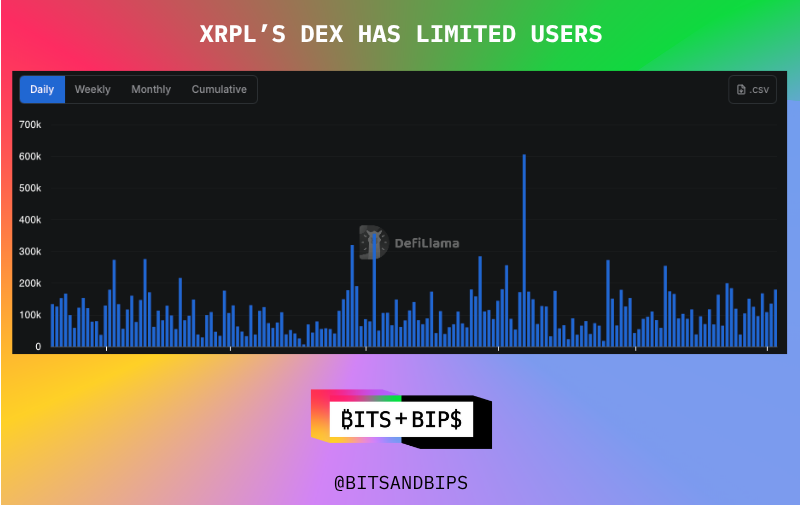
According to Messari data, activity on XRPL is not enough to support its price increase. Its signature decentralized exchange (DEX) daily trading volume is usually less than $100,000. In comparison, market leader PancakeSwap has a daily spot volume of more than $1 billion, not to mention the rapidly growing derivatives DEX industry, where two major exchanges, Binance and Hyperliquid, process trillions of dollars in transactions per month.
In the field of non-fungible tokens (NFT), XRPL is also lagging behind significantly. According to Messari data, XRPL will have only about 550 NFT traders per day on average in 2024. Even in the current overall downturn in the NFT market, Ethereum still has about 5,000 active traders per day.
In addition, XRPL is also unable to introduce native smart contract functions. As its single focus on payment gradually expands, smart contract functions have become the "basic configuration" of blockchain. However, as of June 30, Ripple Labs launched an EVM (Ethereum Virtual Machine) compatible sidechain in cooperation with Axelar to try to make up for this shortcoming. XRP will serve as the gas token and native asset of the new chain, creating a potential source of demand for the token in addition to the payment function.
Still, Ripple will have a lot of work to do to create real, non-speculative user demand for XRP with this new direction.
How about RLUSD?
In addition, XRP holders also need to think about how the stablecoin RLUSD launched by Ripple Labs will affect the demand for XRP. After all, XRP was originally designed to be a bridge currency to help banks complete currency conversions at a lower cost and higher efficiency. However, there is a view that the launch of a stablecoin may directly conflict with this goal, especially when the promotion of RLUSD may further consolidate the dominance of the US dollar. This is not only in line with the US's intention to maintain the hegemony of the US dollar, but may also extend to those countries and regions where the US dollar is not adequately covered.
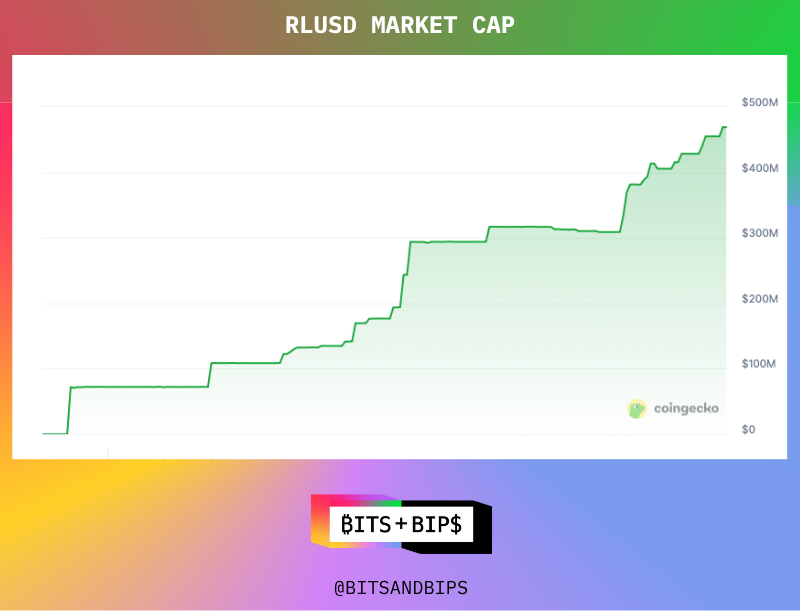
According to CoinGecko, the stablecoin market is growing at a rocket-like pace. The total supply of stablecoins has reached $254.79 billion, and the industry is still digesting the extremely successful IPO of USD Coin issuer Circle last month. Meanwhile, the U.S. government is inching closer to passing the GENIUS Act, which will become the first cryptocurrency-related law and set rules for the future development of stablecoins. With a large amount of capital pouring into this field and favorable regulations, many people have begun to believe that stablecoins, rather than XRP, are the future of the payment field.
Still, I can imagine a world where both coexist. After all, unless some emerging market follows El Salvador’s lead and adopts the U.S. dollar as its official currency, the need for foreign exchange conversion will remain. However, some argue that stablecoins are a better fit as a bridge currency than XRP due to their lower volatility.
This view of the need for two tokens is also shared by David Schwartz, CTO of Ripple Labs, who said in an interview around the launch of the RLUSD stablecoin last spring: "Providing customers with multiple paths to improve the experience means you can get more customers. If we rely only on XRP, then where XRP is not available, we can only say 'no' to customers." However, the potential market size of XRP may have shrunk compared to when Ripple Labs was founded in 2012.
In addition to the overall rise of stablecoins, another possible reason for Ripple to launch RLUSD is the “scarlet letter” shadow cast on XRP by the U.S. Securities and Exchange Commission (SEC)’s enforcement action against Ripple Labs. Owen Lau, executive director of Oppenheimer & Co, said in an interview with Forbes in April 2024: “Ripple may feel that it has no choice but to issue stablecoins to convince banks and other financial institutions to work with it. These institutions may be reluctant to hold or use XRP due to its price volatility and regulatory risks associated with SEC litigation.”
However, for RLUSD to achieve breakout growth and potentially return value to XRP, Ripple must act quickly. As we all know, the stablecoin market is currently dominated by two industry giants: Tether (market cap $158.3 billion) and Circle (market cap $62 billion). Ripple's best strategy may be to drive the use and value of RLUSD through its new sidechain, such as promoting the adoption of RLUSD through incentives, thereby increasing the demand for XRP to pay gas fees. But this is still a hypothesis full of uncertainty.
Currently, Circle and Tether and their tokens have achieved wide market distribution and are working hard to expand their ecosystems. Tether not only dominates the trading field, but also announced that its tokens can be used to pay gas fees on a new blockchain called Stable. Circle has established a high-profile partnership with Coinbase to promote the use of USDC on its Base blockchain, and has cooperated with Shopify to enable merchants to use USDC for payments.
Despite the attention paid to stablecoins, this is not a “blue ocean market” for RLUSD.
Circle and Tether and their stablecoins have achieved mass distribution and are working hard to expand their respective ecosystems. Tether dominates the trading space and recently announced that its tokens will be used to pay gas fees on a new blockchain called Stable. Circle, on the other hand, has promoted the use of USDC on its Base blockchain through a high-profile partnership with Coinbase, and has also partnered with Shopify to allow merchants to use USDC for payments.
Despite all the attention paid to the stablecoin market, it is by no means a “blue ocean market” for Ripple’s RLUSD.
Ripple’s trump card
If Ripple Labs has a trump card, it is that it is probably one of the most well-capitalized cryptocurrency companies in the world. According to its first quarter 2025 financial report, the company holds 4.56 million XRP in its wallet, worth about $10.27 billion. Not only that, the company also has 371 million XRP in escrow accounts, worth up to $83.5 billion, which will be gradually unlocked in the next few years.
While it would be impossible to fully recoup such a huge amount of funds if the company tried to sell all of its XRP at once, there is little risk that Ripple will run out of funds.
For XRP holders, this means that Ripple has unlimited resources to drive demand for its newly launched EVM sidechain, while also being able to fund the expansion of partnerships and use cases for RLUSD or XRP.
However, all this may not matter to XRP holders. After all, despite the limited user growth of the XRPL ledger in recent years, the price of XRP has continued to rise against the trend and has not been greatly affected.