
Original Article | Keisan.hl
Editor | Odaily Planet Daily
Translator | Dingdang
Editor's Note: In today's crypto market, rife with bubbles and narratives, how has Hyperliquid (HYPE) quickly catapulted into the multi-billion dollar market cap club? Is it a result of temporary hype, or is it due to the long-term value of its products and mechanisms? Starting with token economics and comparing traditional finance with leading crypto projects, author Keisan.hl systematically analyzes Hyperliquid's current market performance and underlying logic, constructing a relatively comprehensive valuation framework.
It's been about six months since I first published my valuation framework for HYPE. Much has changed in that time, but much has also remained constant. My optimism about HYPE remains as strong as ever.
Let's take a look at some data.
Revenue Estimation (Underwriting Revenue)
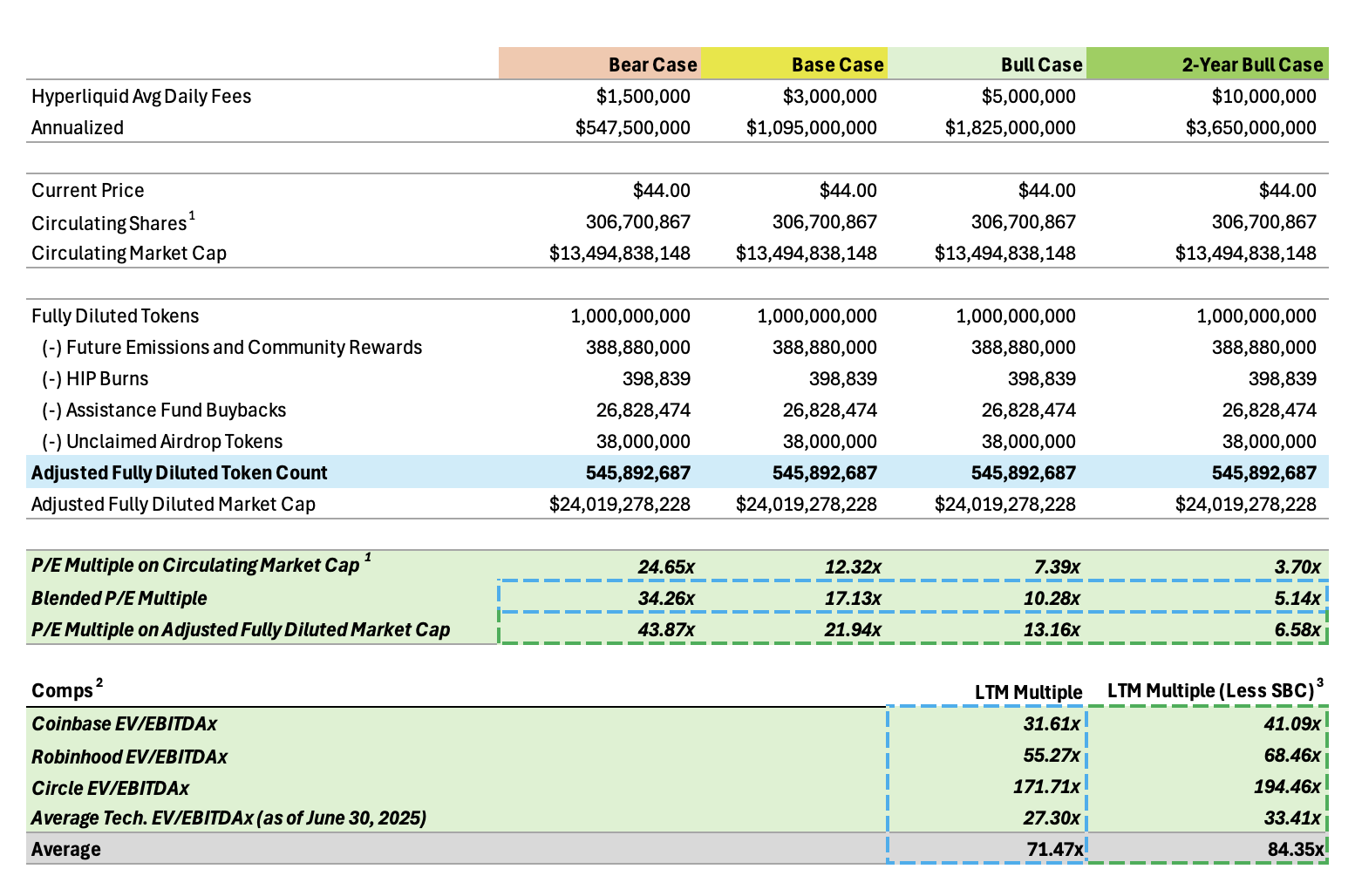
One of the biggest challenges in valuing HYPE is finding a comfortable valuation for annualized revenue (i.e., cash flow). Hyperliquid is an early-stage startup with rapid growth. Therefore, you might consider factoring growth into your numbers. However, Hyperliquid is also in a cyclical industry, and trading volume in a bear market can be approximately 50% lower than in a bull market. My personal view is that Hyperliquid's rapid user growth, capital inflows, and other positive catalysts will more than offset the decline in trading volume caused by the bear market. This is supported by the significant increase in average daily revenue over the past six months.
As for trading volume changes during bear markets, I believe that even if Bitcoin enters a bear market in the near future, the decline in trading volume will not be as drastic as in the past due to continued inflows from ETFs and the current more cryptocurrency-friendly US policy. Of course, this remains a factor to consider, as revenue could decrease by approximately 50% over several years. Therefore, we will conservatively use the average trading volume of the recent bull market as our forward benchmark ($3 million), ignoring growth.
Odaily Note: The author of this article published a valuation framework in January, and we have used that original valuation methodology to interpret the data in this chart.
A valuation multiple consists of two core components: price (valuation) and revenue (revenue/fees).
First, I analyzed the fee data by time period.
Next, I examine the total token supply from two perspectives: circulating supply and adjusted fully diluted supply.
- Circulating supply is straightforward: it's the number of tokens currently circulating in the market, roughly equal to the number distributed through airdrops, minus any burns through HIPs (governance proposals) and buybacks from the grant fund.
- The concept of fully diluted supply is often confusing, with many mistakenly assuming it's the only reference value for project valuation. In reality, HYPE's fully diluted supply is fixed (no inflation), with 38.888% reserved for future token releases and community rewards. Additionally, 3% is allocated for community funding programs, 1.2% has been repurchased by the fund, and 0.1% has been burned through HIP transaction fees.
In my calculations, I've excluded buybacks and burns, as well as tokens not yet distributed for future releases or community funding. My assumption is that a significant portion of this 38.888% of tokens will be released gradually over a long period of time in the form of staking rewards. I consider the community-funded portion to be a positive expected value (+EV) investment, a positive expenditure intended to strengthen the community and ecosystem.
Of the remaining uncirculated tokens, 23.8% is reserved for the team and future members, and 6.0% is reserved for the foundation. I include both of these components in the adjusted supply, but this assumption is conservative, as the team is unlikely to sell or distribute these tokens in the near term. The release cadence of these tokens is very slow, so they should be heavily discounted in the valuation. Again, it's important to emphasize that the team does not need to cash out or achieve a liquidity event.
Personally, I believe the most reasonable valuation base token count lies between the circulating supply and the adjusted fully diluted supply.
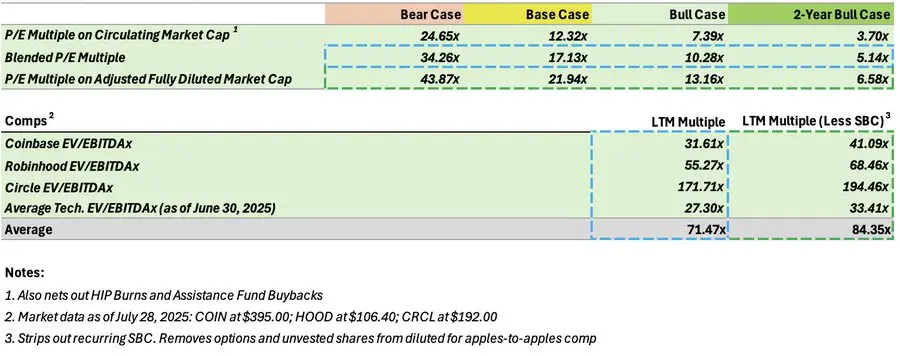
The price-to-earnings (P/E) ratios calculated based on 7-day data are as follows:
- The P/E ratio based on float is approximately 12.3x
- The P/E ratio based on adjusted fully diluted supply is approximately 21.9x
I believe the most reasonable valuation benchmark lies somewhere in between these two. We can call this the blended P/E multiple, which is approximately 17.1x.
Public Company Comparisons (Comps)
Now we get to the fun part of valuation: comparing it to public companies. HYPE is currently very cheap.
If you've been following me, you've heard me say many times that "no one knows how to value HYPE." Indeed, many people don't understand the logic behind this, especially how team tokens are included in the fully diluted total supply (FDV) and how this aligns with traditional public company valuations.
Publicly listed companies often issue stock-based compensation (SBCs), primarily to senior management and key employees. Many analysts tend to view these as one-time expenses, excluded from the company's operating expenses. But I disagree. In my view, treating annual, recurring expenses amounting to hundreds of millions of dollars as a one-time expense is highly unjustified.
I can confirm that Coinbase (COIN), Robinhood (HOOD), and Circle (CRCL) have SBCs representing approximately 25% of their adjusted EBITDA, and this percentage has remained constant for many years. These aren't one-time issuances; they're real, ongoing equity expenditures. They go directly into the pockets of executives through the issuance of additional shares, while also diluting the equity of existing shareholders. These are real costs.
Therefore, if we want to include these expenses in our valuations, we must exclude the stock options already included in equity, as they will vest over the next few years. I made the corresponding adjustments in the "LTM Multiple (net of SBC)" column, removing the "to-be-issued" SBC shares and re-assessing the SBC amount as an expense (which these companies often exclude when reporting EBITDA).
Why is this important? Because many people, when evaluating HYPE, count 100% of all team tokens in their FDV, ignoring the fact that public companies effectively have "unlimited FDV" and can continue to distribute SBC to executives every year.
So, how do you achieve a fair and comparable valuation? Here's my approach:
- If you want to compare actual shareholder net cash flow, use the "LTM Multiple (net of SBC)" to compare public company valuations, and count 100% of Hyperliquid's team tokens in the total supply.
- If you prefer to report "adjusted EBITDA" (earnings before interest, taxes, depreciation, and amortization) as is customary for public companies (i.e., without considering the sustainability of SBCs), then use a "blended supply multiple": tokens in circulation (excluding team tokens) + a 50% share of team tokens. This assumes the team has already secured half, with the remaining half released over the next few years, just like SBCs.
It's worth noting that SBCs are infinitely funded, while team tokens are finite. You can see that HYPE appears extremely attractive regardless of valuation.
Finally, regarding profitability, Coinbase, Robinhood, and Circle have significantly lower free cash flow margins than Hyperliquid. This means that when revenue declines, their EBITDA shrinks significantly, while expenses remain substantial. Hyperliquid's free cash flow, on the other hand, is cleaner, more sustainable, and more defensible.
One more statistic: Coinbase has 4,300 employees, Robinhood has 2,500, and Hyperliquid's core team consists of only 12 people.
HYPE's bull market expectations
Speaking of bull market expectations, I believe most people seriously underestimate HYPE's potential. They base their valuation solely on current revenue and simply discount the bull run premium.
But have they considered the true size of this market's TAM (total addressable market)?
Perpetuals are one of the largest markets in crypto, second only to stablecoins. Currently, Hyperliquid accounts for approximately 10% of the perpetual market. Its share of the spot CLOB (centralized limit order book) market is even lower.
More importantly, the HyperEVM is just getting started. HIP-3 and the various new perpetual contracts to be launched in the future will expand Hyperliquid from a "crypto perpetual contract platform" to a "perpetual trading platform for all global assets." The areas I'm most excited about include stocks, pre-IPO private equity, prediction markets, forex, and commodities.
Perpetual swaps are the best financial product on the planet, and Hyperliquid is the "AWS of perpetual swaps," offering extreme scalability, complete decentralization, and transparency.
Traditional finance and other non-crypto communities haven't yet fully grasped the power of perpetual swaps. But once discovered, their potential is enormous.
Back to the numbers. Six months ago, when I first wrote my valuation framework, Hyperliquid was generating approximately $1 million in daily revenue (due to a short-term surge in trading volume following the Trump announcement). Now, that number has stabilized between $2.5 and $3 million per day, more than tripling. User and capital inflows have also grown in tandem.
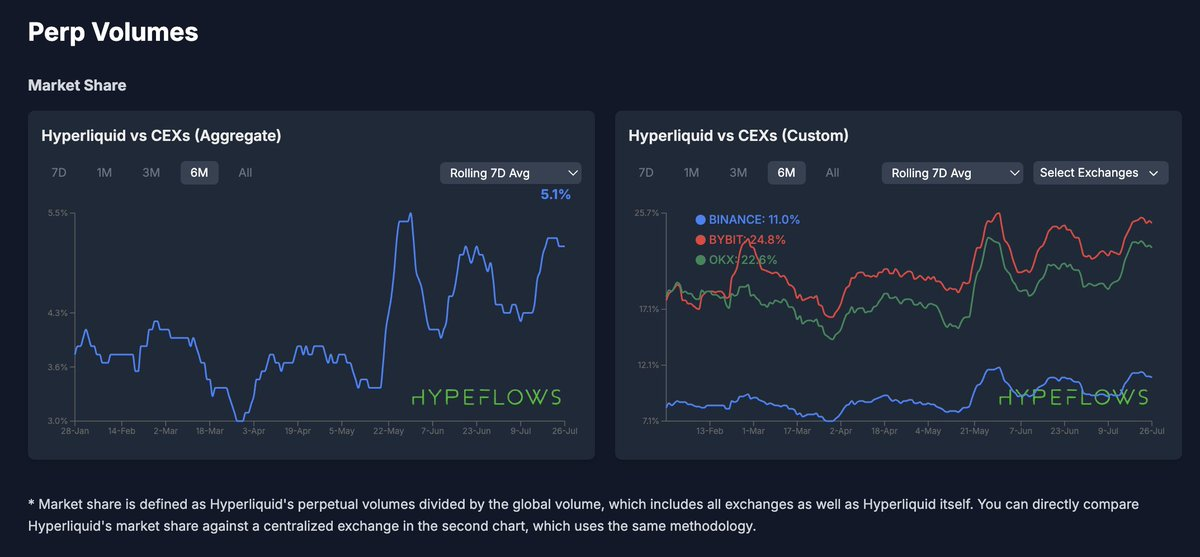
Currently, Hyperliquid accounts for approximately 5% of all CEX trading volume. Imagine if that number reaches 25% in the next few years, meaning daily revenue could potentially reach $15 million. Based on this calculation, HYPE's free cash flow valuation multiple would drop to 5x.
Comparison with Other Crypto Tokens
Comparing HYPE to other tokens isn't entirely fair, as there aren't many truly comparable projects.
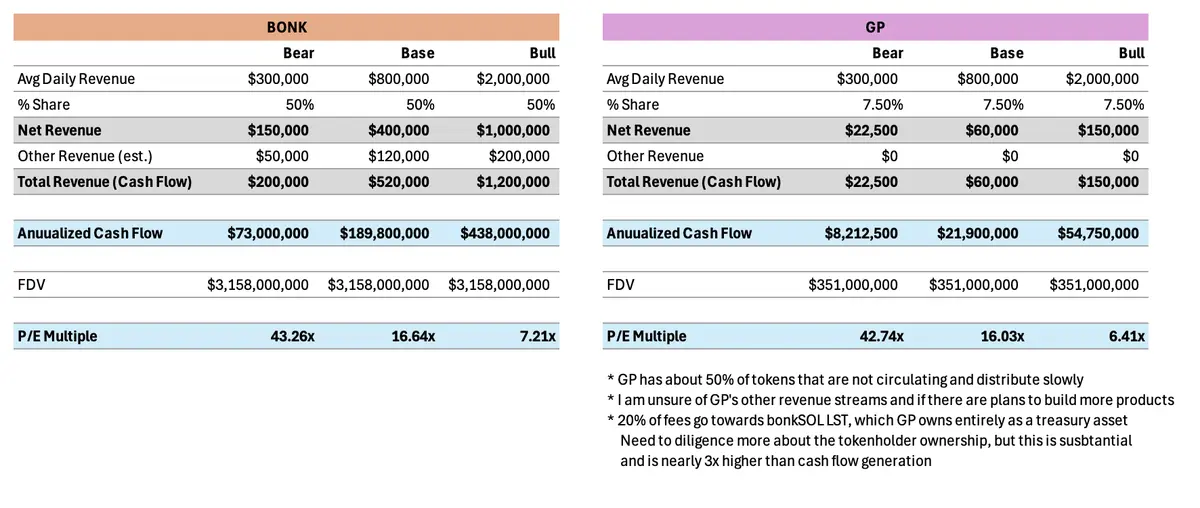
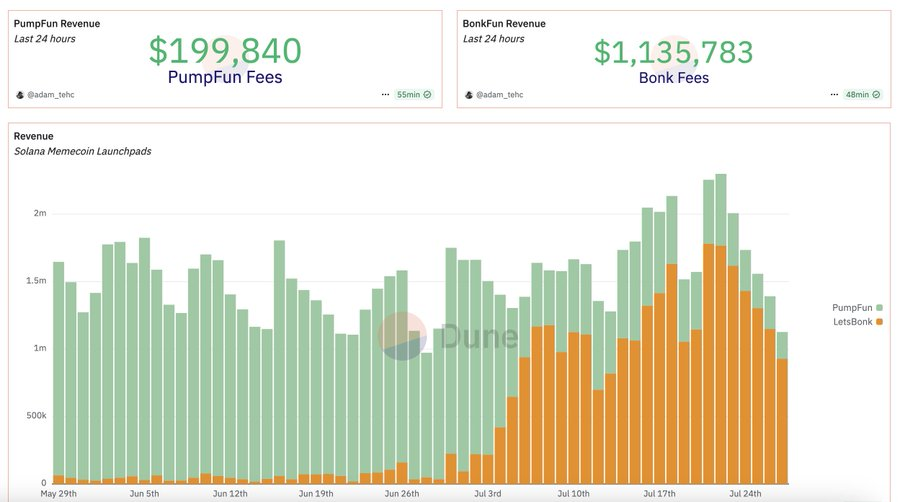
Currently, the only references are several memecoin launch platforms with strong product-market fit (PMF) and stable cash flow generation, such as BONK, GP, and PUMP.
I hold positions in BONK and GP and believe they are among the most undervalued projects besides HYPE.
I used to be a long-term investor in PUMP, but have now reduced my position. I believe they've been eliminated from the competition, which is understandable. Their models lack a defensible moat, making them vulnerable to disruption by other platforms. BONK's non-exploitative model is winning, as evidenced by various on-chain data.
Traditional finance's attention
Traditional finance is entering the crypto space. Since the launch of ETFs, Bitcoin and Ethereum have attracted inflows of $50 billion to $100 billion, setting a record for ETFs.
So, what assets are traditional finance most likely to favor? Of course, a token that generates significant cash flow, has a sustainable moat, and a highly defensible model.
A Bloomberg analyst once asked, "What's behind Hyperliquid?" While this question may seem sarcastic, it's precisely the core question that traditional finance has posed to crypto for years.
And now, we finally have the answer, and it's a resounding one.
HYPE hasn't been widely discovered in traditional finance circles simply because the team hasn't done any marketing. Any other team would have already made thousands of calls to solicit investment. But Jeff and his team have their own style.
However, don't be fooled by appearances. Wall Street will eventually discover HYPE.
I believe that once SONN goes live, it will be a major turning point. SONN has $300 million in reserves to purchase HYPE and will work with Paradigm and Galaxy Digital to fully promote HYPE.
Odaily Note: SONN is Sonnet BioTherapeutics, which has entered into an $888 million business combination agreement with Rorschach I LLC, transforming it into a crypto reserve company called Hyperliquid Strategies Inc. (HSI).
This purchasing power is equivalent to $48 billion in Bitcoin (Bitcoin ETFs have only attracted $15 billion in inflows this year). It can be said to be a super catalyst.
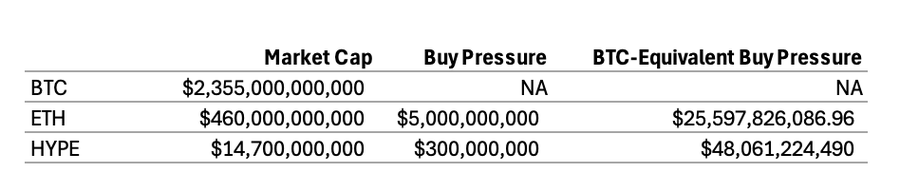
Token Distribution
Currently, HYPE has only approximately 150,000 holding addresses, a number lower than many memecoins on Solana (for example, SOL has over 10 million holdings).
The problem is that HYPE's current distribution channels are limited, making it difficult for ordinary users to buy in. Most existing holders have already made substantial profits and may not have a strong incentive to continue increasing their holdings. This will dampen price growth.
But things are changing. Coinbase and Binance declined to list HYPE for obvious reasons. However, many front-ends and fiat on-ramps are being built for Hyperliquid. Phantom launched a perpetual swap front-end based on Hyperliquid's builder code, attracting 15,000 to 20,000 users in two weeks. Leveraging this distribution network could be a huge catalyst for $HYPE, and there are others in the works. I believe treasury companies like SONN and HYPD will also become great distribution networks, not just for large traditional finance players. This may take time, and will become more pronounced as they mature.
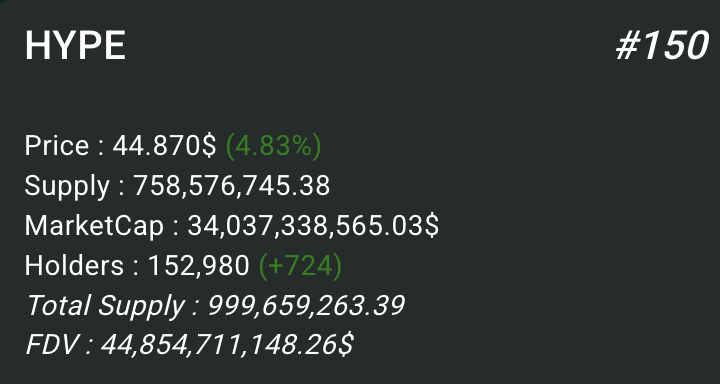
Performance Data
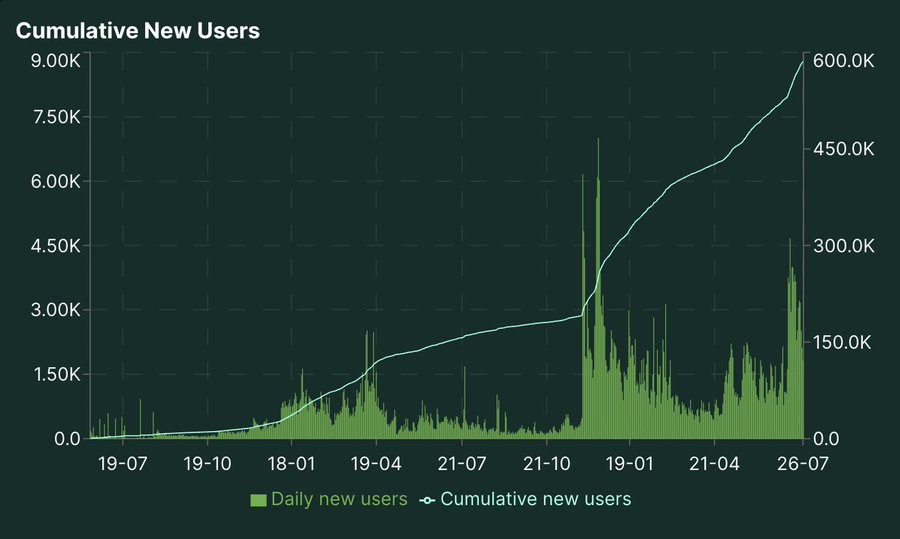
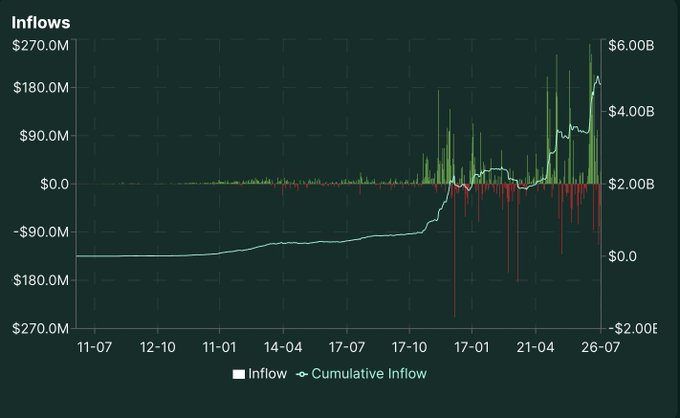
Hyperliquid's performance is impressive, even among the best among all cryptocurrencies. After Hyperliquid's recent tremendous growth, the current price level is truly impressive. I'll just share a few charts.
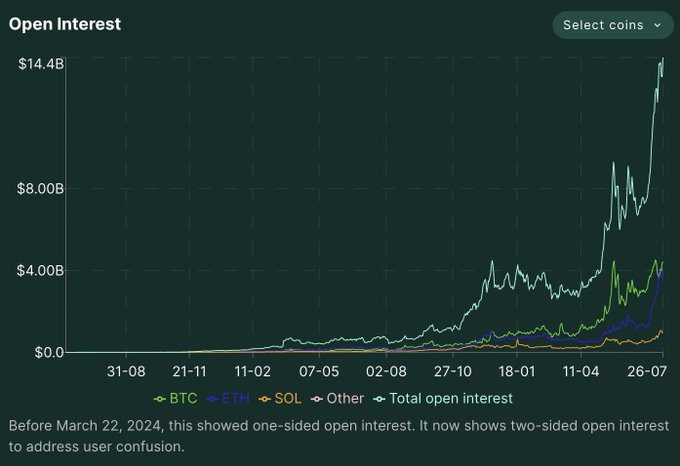
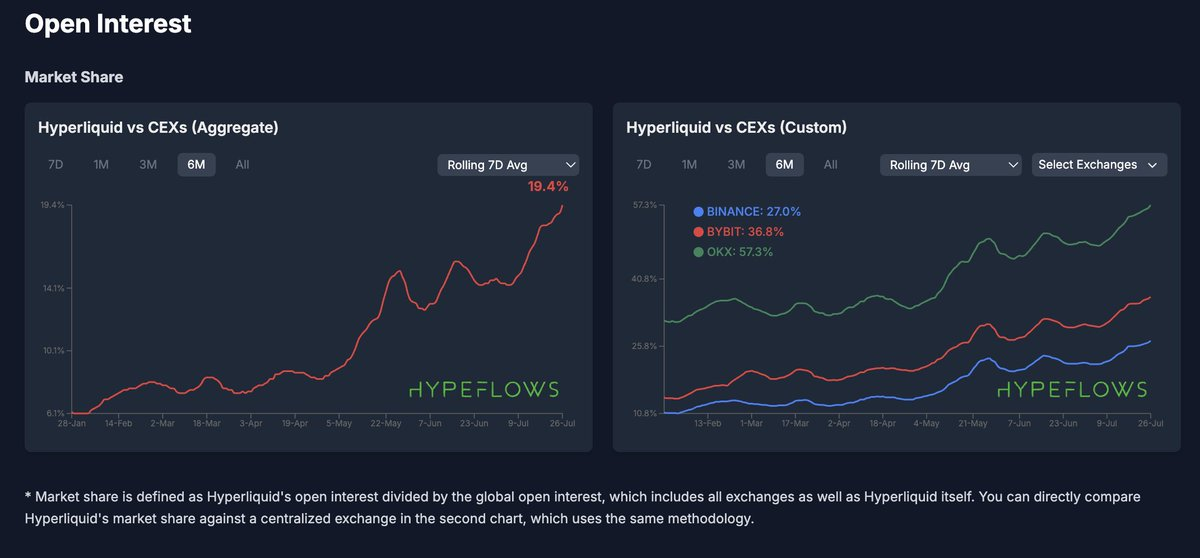
User growth has reached a new high since the TGE, capital inflows have accelerated and reached a historical high, and open interest (OI) has also reached a historical high.
Comparison of Hyperliquid and CEX Data: Trading volume on CEX is at an all-time high; open interest on CEX continues to break all-time highs.
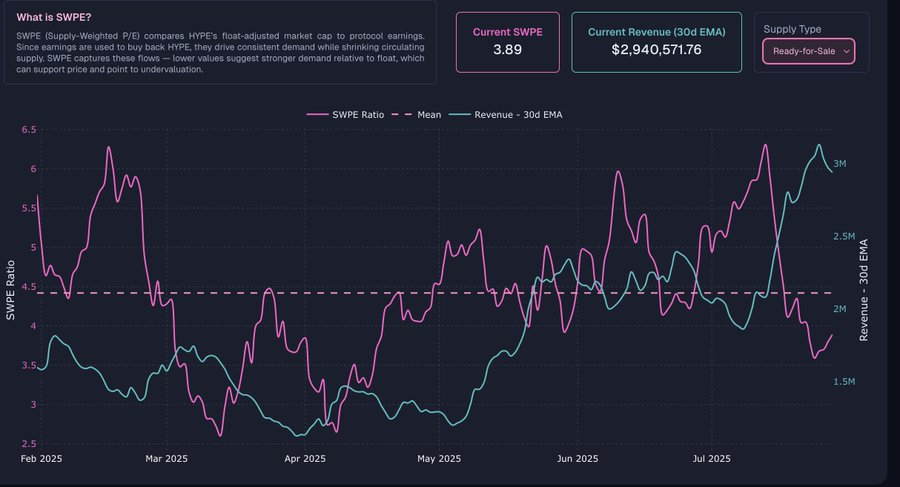
 Meanwhile, the SWPE (relative premium indicator) is at its lowest point since April, suggesting that current prices are attractive.
Drivers of the next round of growth
I believe the key factors driving HYPE's growth include:
- Front-end distribution: Builder code is one of Hyperliquid's best innovations. The front-end will also handle marketing, something Hyperliquid has never done before.
- Fiat on-ramp development: I've heard from several different sources (not directly from Hyperliquid, but from Hyperliquid-related applications or front-ends) that this is coming soon.
- HIP-3: A new product only possible on Hyperliquid that will generate a significant token burn for HYPE.
- SONN: This will bring Wall Street capital into HYPE and inject $300 million in buy pressure into HYPE.
- Spot collateral for perpetual swap trading: Based on the testnet deployment, this appears to be in the works, and I think this will be a huge unlock for the platform and the HYPE token. We'll likely see increased trading volume, and large BTC holders will likely deposit funds into Hyperliquid.
- More spot assets coming online. @hyperunit has been hard at work and continues to list top assets. The PUMP launch was a resounding success, a testament to the strength of our team. Hyperliquid listed perpetual contracts before the TGE, and @hyperunit launched spot trading immediately after the TGE, quickly building the thickest order book. Both events were significant user acquisitions, as evidenced by the significant capital inflows during those days.
These are just a few of the catalysts. I've been writing for over an hour and still haven't covered everything.
Summary
HYPE's current valuation remains incredibly cheap. You're not holding enough, and you might not truly understand its potential.
HYPE's current valuation remains incredibly cheap. You're not holding enough, and you might not truly understand its potential.