

Written by: Sanqing , Foresight News
On February 21, Nikita Bier (@nikitabier), the product manager of the X platform, publicly intervened on the platform in a post that appeared to involve undisclosed paid promotion, directly demanding that the original poster add a disclosure statement, or face account suspension. User @infodexx posted a list of "Most Valuable Startups of 2025," with prediction market Kalshi ranking second with a valuation of $11 billion, accompanied by an image of Kalshi's green brand and a photo of its founder.
The post has over 420,000 views, nearly 2,000 likes, and hundreds of shares, seemingly ranking objectively, yet it's marked as "this is a paid post" in the reader community notes. Furthermore, @infodexx's Bio clearly states "@Kalshi partner," but the original post itself didn't include any explicit disclosure tags like #ad or #sponsored.
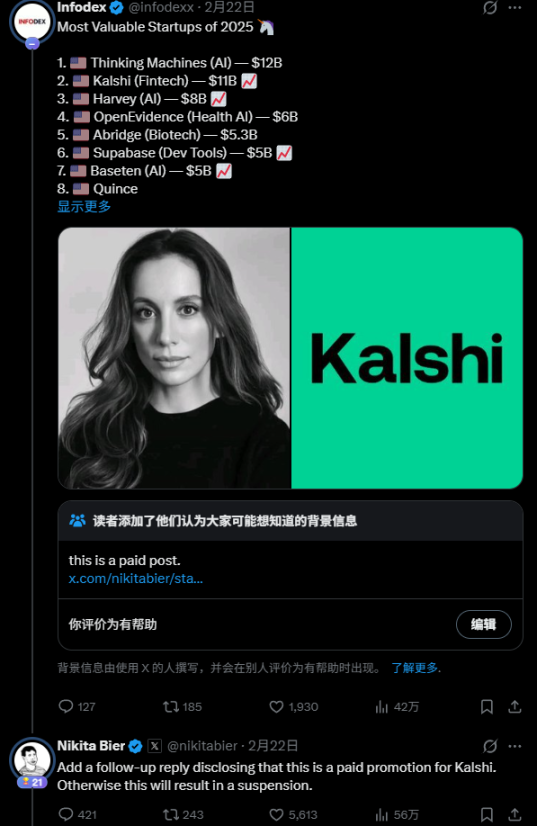
Nikita Bier replied to the post on the same day: "Please add a follow-up reply disclosing that this is a paid promotion for Kalshi. Otherwise, this will result in the account being suspended." Subsequently, when user @AlexFinn complained that the X platform was full of undisclosed ads (especially in prediction market and AI-related posts), Nikita Bier further replied: "We will be launching a disclosure feature for these kinds of issues next week."
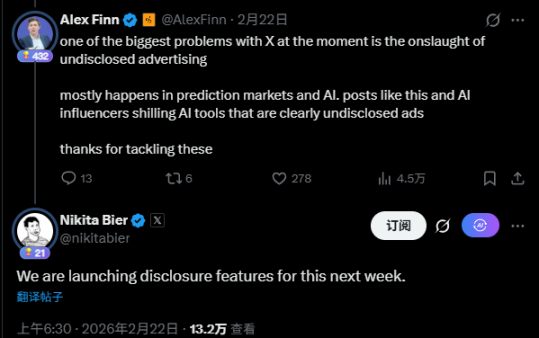
High-viewership hidden ads will be exposed.
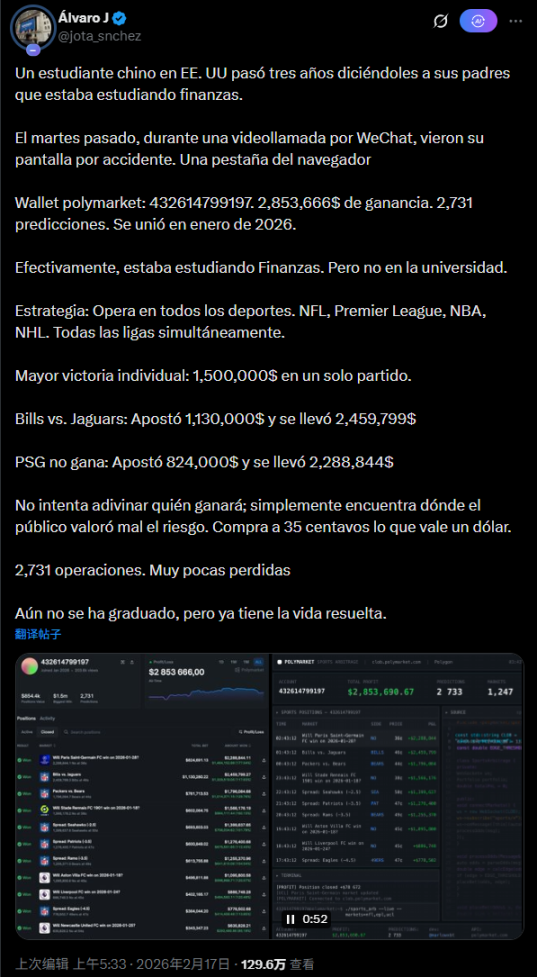
Below are a few examples of high-viewership "hidden ads" selected by the author. These tweets appear to be natural sharing, but in reality, they are suspected of being promotions without any disclosure tags. They have high viewership, inducing degen to follow suit, but evade responsibility.
A Spanish-language account, @jota_snchez, shared a story about a "Chinese student making a fortune on Polymarket," which garnered over 1.29 million views, 7,313 likes, and 312 shares. The content, featuring detailed strategies, pictures, and videos, appears to be an inspirational post, but it's actually a subtle promotion of Polymarket's earning potential. While lacking the #ad hashtag, it indirectly praises the platform, a typical example of a disguised user experience sharing.
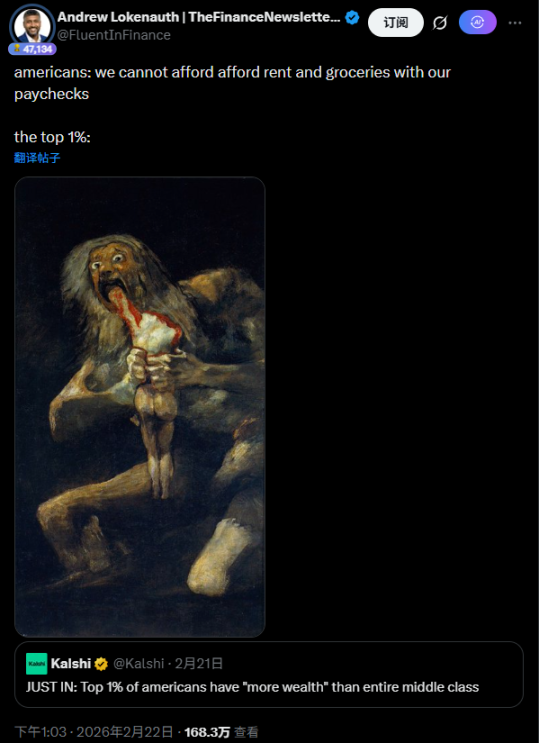
User @FluentInFinance quoted Kalshi's tweet, complaining that "the top 1% of Americans are wealthier than the middle class," which garnered 1.68 million views, over 150,000 likes, and over 20,000 retweets. While ostensibly a social commentary, it actually referenced Kalshi's "JUST IN" news, guiding users to place bets on related events on the platform. It didn't use the #sponsored tag, yet amplified its exposure through high engagement. This is a common pitfall for Web3 democrats.
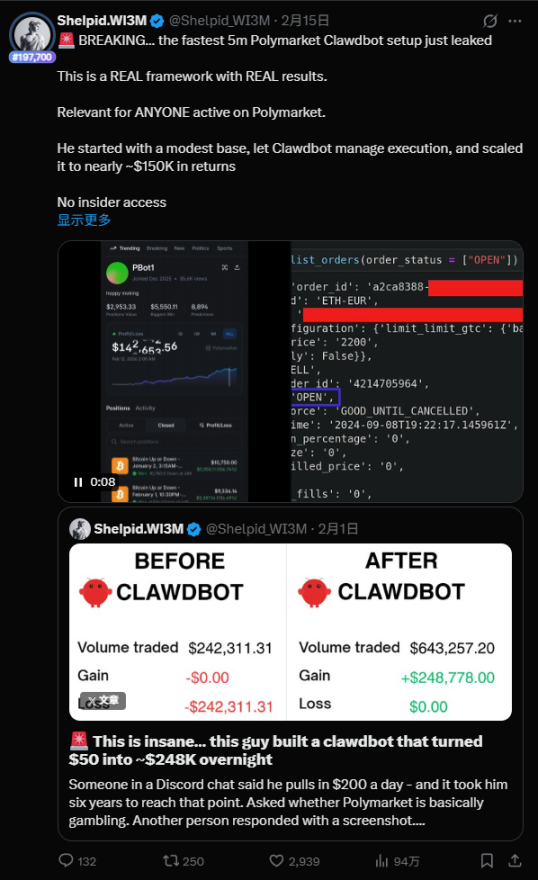
@Shelpid_WI3M "revealed" a 5-minute setup framework for Polymarket Clawdbot, garnering 940,000 views, 2,940 likes, and 6,091 bookmarks. The detailed steps and links, seemingly a "free sharing," are actually a promotion for the copytrade tool, indirectly attracting users to Polymarket. No collaborations are disclosed; this "developer's perspective" approach is a classic example of deceiving tech enthusiasts.
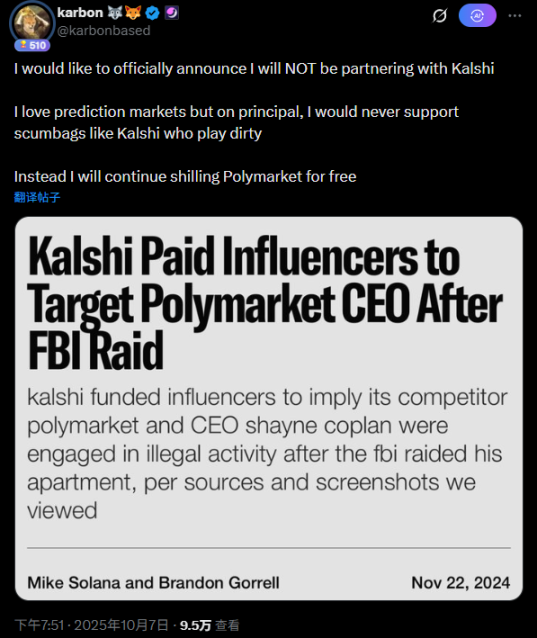
@karbonbased publicly stated, "We refuse to cooperate with Kalshi, but will continue to offer shill Polymarket for free," garnering 95,000 views and 764 likes. While ostensibly a "principle-based" refusal, it's actually a disguised promotion of Polymarket. The word "free" is the most suspicious element; what in the Web3 is truly free? There's no hashtag, yet they use moral high ground to entice followers.
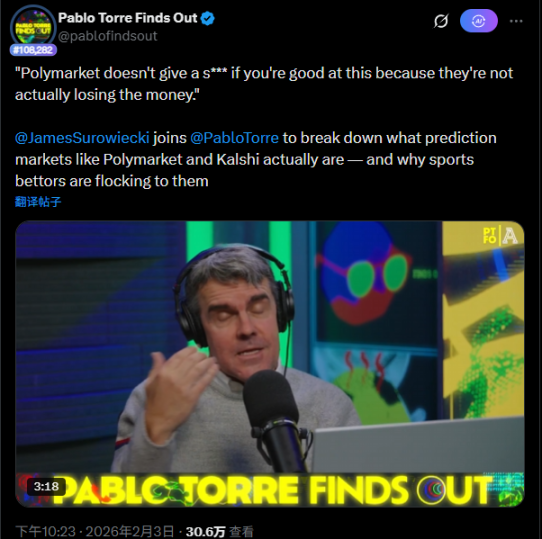
@pablofindsout uploaded a video discussing the nature of Polymarket and Kalshi, which received 300,000 views and 1,657 likes. While citing expert opinions and appearing neutral, it actually amplifies platform exposure and is essentially a hidden advertisement without being explicitly sponsored.
These examples illustrate that high page views do not equate to sincerity. They spread through FOMO (Fear of Missing Out) while avoiding disclosure, ripping off countless people. Under the new regulations, similar tweets will be restricted.
The impact of the new X regulations on Web3 marketing
For Web3 projects, this means a significant increase in marketing costs. Many prediction market projects (such as Polymarket and Kalshi) rely on KOLs' soft advertising to drive user FOMO (Fear of Missing Out) entry at low cost.
The new regulations now require any content involving payment, gifts, affiliate links, or material incentives to be prominently labeled with "#ad", "sponsored", or "paid collaboration", otherwise the tweet will be taken down immediately and the account will face suspension or even permanent ban.
In the short term, the growth of these platforms will slow down, KOLs will be hesitant to share content, cooperation thresholds will rise, and budgets will be forced to shift to more expensive channels.
For KOLs, the most direct impact is the end of the "low-cost passive income" model. In the past, many project teams relied heavily on KOLs' "soft advertising" strategy: by disguising themselves as neutral experience sharing, data pain point complaints, or viral memes, they created FOMO at low cost and drove user participation.
Now that mandatory disclosure is in place, KOLs can no longer hide their business relationships and dare not "share naturally" at will. Once detected or reported by AI, the risk of their posts being deleted and their accounts being suspended is extremely high.
This will also raise the bar for collaborations between project owners and KOLs, potentially leading to higher prices for KOLs due to increased risk. However, in the long run, this is beneficial for the Web3 ecosystem, as it increases transparency, restores user trust in promoted content, and reduces rug pulls and short-term hype.
A common alternative is to switch to X's official Promoted Post system: these ads are automatically tagged with "Promoted" or "Ads" and are handled and disclosed centrally by the platform, avoiding the risks of manual labeling. However, this also means that project teams pay X directly, with advertising revenue concentrated in the platform's hands rather than distributed among KOLs.
X's move may also be aimed at enhancing its own advertising monetization capabilities. By mandating open disclosure and promoting official advertising tools, the platform can attract more budget to flow into its own system, seize the share of "hidden advertising" that originally went to KOLs, and further strengthen its role as a source of advertising revenue, especially in highly competitive fields such as prediction markets and AI content.

