

Written by: Simona Weinglass, Bloomberg
Compiled by: Saoirse, Foresight News
In the real world, Bogdan Peschir is a 36-year-old cryptocurrency trader from Brasov, a fairytale-like town in Transylvania. From his balcony, he can see red-roofed houses, Gothic churches, and the changing seasons on Mount Tampa. On TikTok, he is Bogpr, the biggest spender on the platform in Romania.
Peschir is particularly fond of spending money on streamers. If you're live on TikTok and do something that grabs his attention and earns his approval—like jumping into a canal or doing a backflip—he might watch and send you animated virtual gifts that swipe across the screen. These gifts range in price from a few cents to hundreds of dollars, and the recipient can redeem them for cash. At this level, digital gifts are far more than just likes from strangers.
Peschir relentlessly showered TikTok with gifts, amassing nearly 200,000 followers. His continued spending unlocked increasingly flashy and expensive items, such as virtual Thunder Falcons and Phoenixes. By the fall of 2024, he had reached TikTok's highest level, level 50, solidifying his position as one of Europe's top gift-givers. He also gained a rare privilege: the ability to send animated Pegasus figures to streamers he admired. This was a unique kind of fame, but Romanian prosecutors argued that this influence was extremely powerful. They arrested Peschir, accusing him of using money and fame to help an unconventional far-right candidate win the first round of the Romanian presidential election in November 2024.
Candidate Călin Georgescu staged a near-overnight comeback. Polls three weeks before the election showed him with only 1% support, not even qualifying for the main national televised debates. Yet, he won 22.9% of the vote in the first round, surpassing his 12 opponents. Within three days, Romania's Supreme Defense Council announced external interference in the election. The government declassified five partially redacted intelligence documents, accusing a "state actor" of interfering in the voting. Germany and the United States directly pointed to Russia as the country in question.
The entire operation was conducted online, primarily through TikTok. Tens of thousands of fake accounts created the illusion of Georgescu's immense popularity, pushing him to the top of everyone's news feeds. According to a French government report, the hashtag #calingeorgescu was viewed 73.2 million times on TikTok in seven days—an unprecedented level of popularity for a country of 19 million people and approximately 9 million TikTok users. Prosecutors stated that Peschir was also involved: he redirected donations to creators promoting Georgescu and liked and commented on content supporting the candidate. In a text message to an acquaintance, he wrote, "I'm here doing everything I can to give him exposure."
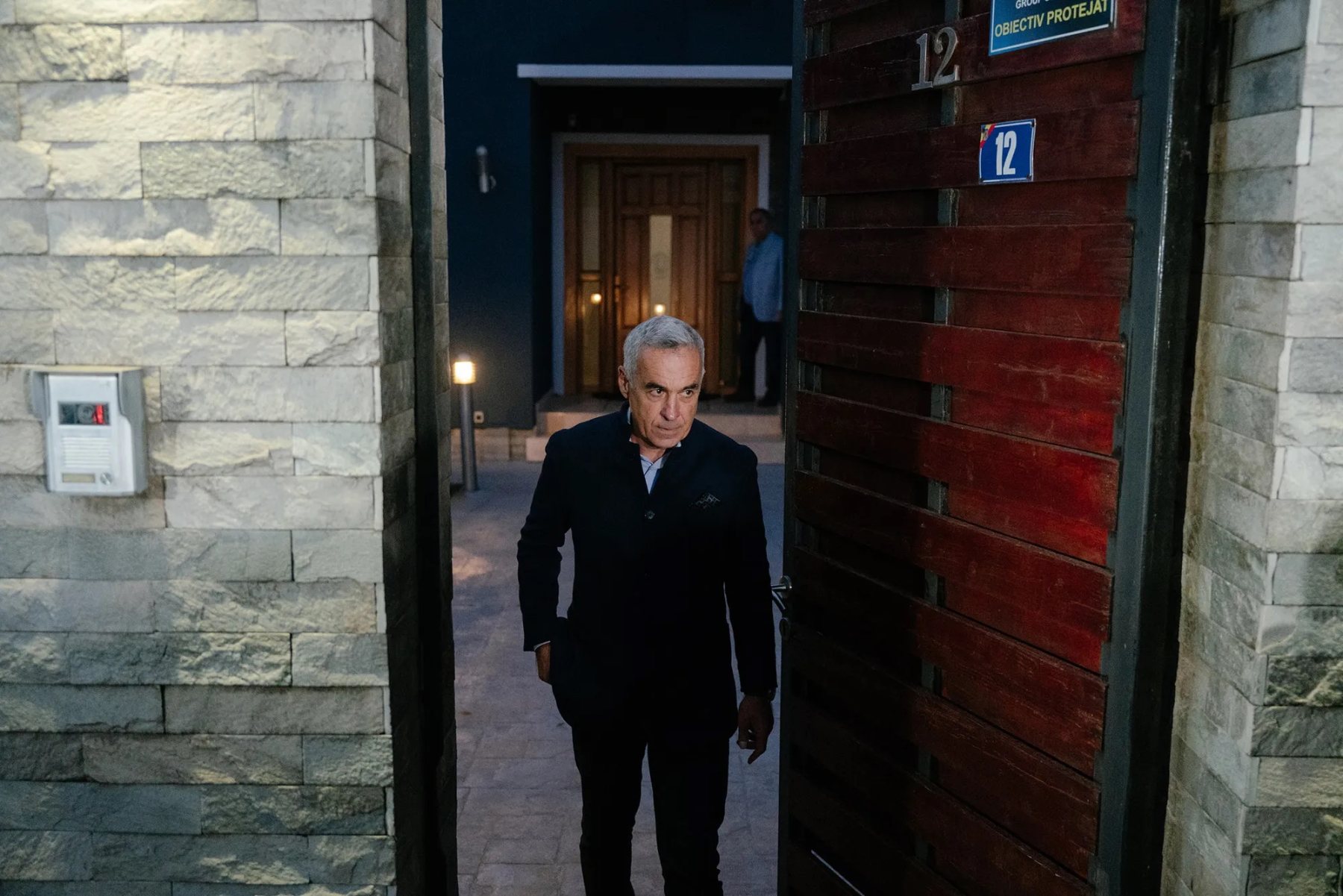
Cǎlin Georgescu won the first round of the Romanian presidential election, 10 days before his victory was declared invalid. Photographer: Andrei Pungovschi / Getty Images
Prosecutors suspect these actions were crucial, or even coordinated, with Russia's overall plan to oust Georgescu. They claim Peschir's role in boosting Georgescu's approval ratings was "decisive." Nicușor Dan, the Romanian president elected after Georgescu's disqualification, also publicly criticized Peschir. However, Peschir has not yet been formally charged. He stated that the government's claims are pure nonsense: he simply enjoys generously donating his independently earned money to TikTok influencers, and he happens to be a fan of Călin Georgescu.
For Romania, which was under pro-Soviet dictatorship from 1944 to 1989, the claim of Kremlin manipulation of elections was particularly sensitive. The Romanian authorities' response was exceptionally strong, rarely seen in similar cases. In December 2024, the Romanian Constitutional Court declared the election results invalid, citing violations of the election law: first, the "opaque use" of digital technology and artificial intelligence; and second, Georgescu's failure to declare the source of his campaign funds. The court announced a new election in May 2025 and banned Georgescu from running.
In March 2025, Peschir's arrest caused a sensation. He walked into the Bucharest police headquarters wearing a hat, mask, and sunglasses, reluctantly removing them in front of television cameras to reveal a neatly styled haircut and a lean, angular face. Prosecutors charged him with "electronic bribery of voters" and requested his detention while the charges were finalized. He was released about a month later. Afterward, a police drone hovered outside his balcony for months, and every new laptop he bought was confiscated by police.
Prosecutors allege that in the 10 months leading up to the election, Peschir spent nearly $900,000 on TikTok gifts, tipping over 250 Romanian influencers. In the final 31 days, he sent gifts worth $381,000 to accounts supporting Georgescu. The government claims these were undeclared and illegal campaign donations.
Peschir vehemently denied any wrongdoing. "The government hasn't presented a single piece of evidence," he said in an email to Bloomberg Businessweek. "It's a completely fabricated story, just a pretext to cancel the election." He denied being instructed by Moscow, stating, "No one can direct me except God, and I haven't taken a penny from anyone for years."
Police say the case is still under investigation. Businessweek has reviewed reports from Romanian intelligence, as well as hundreds of pages of Peschir's text message logs, and has spoken and emailed with him. These messages offer a glimpse into the sinister world of social media campaigning. This reclusive man has unexpectedly become a symbolic figure in what may be the most successful Russian election interference operation of the 21st century.
Bogpr had been active on TikTok since at least 2023, but his real breakthrough came in March 2024—eight months before the election. At that time, he sent gifts worth tens of thousands of dollars to Romanian singer Nicolae Guță. According to Peschir himself, this earned him the nickname "King of TikTok" in his country.
TikTok's economic model revolves around virtual currency purchased within the platform. In Romania, one coin is worth slightly more than one cent in the US. Peschir can buy a virtual rose with one coin, a lion with 30,000 coins, and a "universe" with 44,999 coins. (Whether he bought the Pegasus gift worth 42,999 coins is unknown.) Recipients can exchange these gifts for virtual diamonds, which can then be converted into real money—roughly half the cost of the gift. The other half goes to TikTok as commission. (The company declined to disclose the specific commission rate.)
In the first few months, Peschir's tipping of broadcasters seemed to have little to do with the election. He would respond to requests for donations, such as from parents of children with terminal illnesses; he tipped young female broadcasters who lip-synced without speaking; and he also sent gifts to people who simply filmed themselves driving or chopping wood.
“I would stream, wear skirts, and impersonate NPCs—non-player characters in games—to get his attention,” said Roma hip-hop artist Gheorghe-Daniel Alexe (online name Bahoi). According to prosecutors, he received a total of $2,400 in gifts from Peschir. Alexe said that others would tip him, but Peschir was on a completely different level.
Almost no TikTok creators know Peschir's real name or what he looks like. Alexe recalls that he rarely revealed anything about himself, only saying that he believed in God and found the greatest joy in giving money. "He said, 'I have too much money, nothing can move me, because nothing can stimulate me,'" Alexe relayed, "only giving can stimulate me."
Peschir's generation grew up during a period of dramatic social transformation. In 1989, the Ceaușescu regime collapsed along with the Iron Curtain, ending the communist dictatorship that had been rooted in the Soviet occupation since World War II. Romania opened up to the West, joining NATO in 2004 and the EU in 2007. In the years that followed, Romania's economy took off, transforming from a country known for its marginalization into the second-largest economy in Eastern Europe after Poland. Today, Bucharest, like many European capitals, has street performers, boutique cafes, and co-working spaces. But a large number of Romanians are still left behind. According to EU statistics, nearly 30% of the population faces the risk of poverty or social exclusion, the second highest percentage in the EU.
Romania's far-right forces began emerging online as early as the early 2010s. Oana Popescu-Zamfir, director of the Bucharest-based think tank GlobalFocus Centre, says these groups include extreme football fans, hip-hop enthusiasts, anti-LGBTQ activists, and proponents of Romanian unification. They have gradually aligned themselves with a new political party called the "Romanians' Union" (AUR)—a nationalist, nostalgic party that critics fear has authoritarian undertones, with its core tenets embracing tradition and Christianity.
Georgescu, a former member of the AUR, shares a similar worldview, albeit with his own unique perspective. He calls Ukraine a "fictional country," and hailes the leader of the far-right Legionnaires' Movement, which murdered Jews and political opponents in the decades before World War II, as a "hero," saying he "united tens of thousands of people with a single goal, a single belief, a national identity, and the purity of the Romanians." He has also predicted that humans will communicate telepathically in the future and has claimed to have seen extraterrestrials. (Georgescu did not respond to this publication's request for comment.)
In mainstream politics, Georgescu is considered an eccentric. But on TikTok, his image is drastically different. In one video, he swims in a frozen lake, showing off his muscular arms and shoulders; in another, he rides a white horse in a traditional embroidered shirt. He calls himself "the son of the peasants" and "the soul of the nation," claiming that the current Romanian leadership is corrupt and has sold the country to foreign companies. He says he is the country's last hope against globalist forces that want to destroy Christianity and Romania's unique identity. Georgescu's ideology is broadly termed "sovereignty," pitting ordinary people against elites, the nation-state against the EU and NATO, and tradition against progressivism.
These remarks deeply moved Peschir. He wrote in a text message, "I think this man was sent by God. Now we Romania have a chance."
Undoubtedly, a series of strange events occurred in the weeks leading up to the Romanian general election in November 2024. Passwords of Romanian election officials were leaked and appeared on Russian hacker forums. Romanian intelligence reports indicated that over 85,000 cyberattacks targeted election infrastructure, seemingly originating from 33 countries, but the report stated this was likely a hoax created by IP spoofing.
Clearly, one or more powerful forces are attempting to overturn the Romanian election while simultaneously trying to cover it up.
According to French media outlet Mediapart, Romanian intelligence officials have privately informed their French counterparts that they believe the attacks were coordinated by Russia. The report states that Romania has traced one of the attacks to APT29 (also known as "Comfort Bear"), a hacking group affiliated with Russia's Foreign Intelligence Service (SVR).
In October 2025, President Dan finally publicly stated that the government had traced all interference, including Georgescu's out-of-control social media campaign, to Russia. On October 2, Dan presented the interim findings of Romania's investigation to European leaders in Copenhagen.
The president stated that Russia's actions began as early as 2019, when a Russian company started creating social profiles of Romanians. A few years later, a large number of Romanian Facebook groups suddenly emerged, focusing on topics such as alternative medicine, religion, and recipes, with names like "Only God" and "The Beauty of Romania." Dan claimed that these seemingly harmless groups aimed to test different rhetoric among different groups in Romania.
A Romanian survey revealed that Russian digital marketers ultimately identified four main themes: "Romanians are most receptive to narratives about identity, nostalgia, conspiracy theories, religion, and alternative medicine," Romanian Prosecutor General Alex Florenta said at a press conference two weeks before Dan's visit to Copenhagen.
For example, many groups feature seemingly AI-generated Romanians who claim they are not ashamed of living in the countryside; others are down-to-earth Romanians who often lose loved ones but still celebrate their birthdays.
As the 2024 election approaches, many of these groups, in addition to recipes, inspirational quotes, and touching stories of ordinary people, have begun posting content supporting Georgescu. Meanwhile, TikTok is flooded with videos and images. Romanian sources say one of the main sources is a Telegram group called Propagatorcg, where administrators centrally manage Georgescu's promotional materials, distribute them to volunteers, and provide detailed instructions on which hashtags to use and how to edit videos, images, and memes to ensure TikTok's algorithm classifies them as original content.
Then, as hundreds of influencers posted content related to Georgescu, the third part of the campaign was launched: bot accounts. Two weeks before the vote, 25,000 previously almost dormant TikTok accounts suddenly became active, engaging extensively with content supporting Georgescu. Pavel Popescu, vice president of Romania's telecommunications regulator Ancom, said these accounts had independent IP addresses and simulated mobile devices constantly changing locations, just like real phones. This made them difficult to identify as bots and made Georgescu's interaction data appear exceptionally real to TikTok's algorithm.
"Anyone can buy 25,000 bots to like their own posts, it doesn't make much difference," Popescu said. "But when you have 25,000 active accounts that follow you wherever you go and flood your live stream as soon as it starts, that's a completely different story."
Typically, an account with 10,000 followers might only have 500 people watching live at the same time. But Georgescu's live stream viewership far exceeded what his follower count should have expected. "Soon, Georgescu appeared in everyone's feed, and then it exploded like a snowball," Popescu said. Shortly after the bot appeared, Georgescu became the ninth most popular trending topic on TikTok globally.
When Peschir was arrested, prosecutors accused him of supporting Georgescu in two phases: in the first few months, he built his popularity and following on TikTok through tipping; closer to the first round of the election, he began liking and sharing Georgescu's videos and memes. Given Peschir's fame and number of followers, this content spread automatically. When Bogpr entered a live stream, users were as excited as if they were seeing a celebrity. When he sent large gifts like lions or the universe, his ID would appear on the screen with an animation, and the streamer would often interrupt the broadcast to thank him. His reputation for generosity spread, and many people who contacted him mentioned his support for Georgescu.
"Can you give me some money? I'll do anything," Cristian Gunie, a TikTok user who had just been released from prison, texted Peschir a week before the election. "I can hand out Mr. Georgescu's flyers on the street, standing there from morning till night."
"Hi, if you do this on your live stream, I'll support you in the chat," Peschir replied. He only sent him one gift: a plane worth $48.88.
There is a clear discrepancy in many of the text message conversations between Peschir and the influencers he sponsors: the influencers speak bluntly, as if receiving money to campaign for Georgescu is a matter of course; while Peschir's wording is much more cautious.
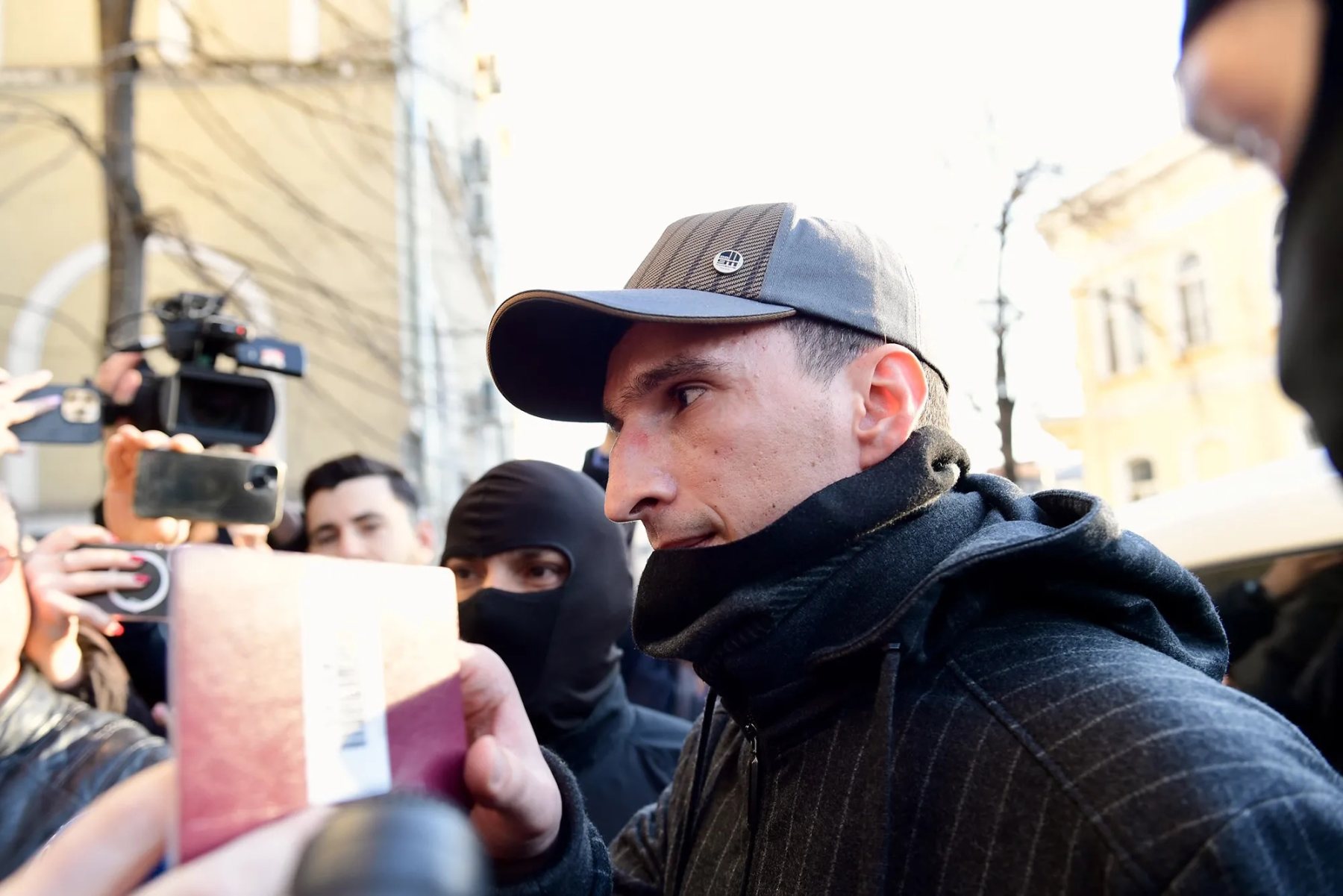
Bogdan Peșchir—known as Bogpr by his 200,000 followers on TikTok—was escorted to the Bucharest Prosecutor General's Office headquarters. Photographer: Cristian Nistor / Romanian National News Agency
Costel Niculae, whose online name is Costelusclejeanioficial10, served 22 years in prison after committing murder at the age of 14. His TikTok account features prison stories, singing, and profanity-laden reflections on life.
Six days before the election, Niculae messaged Peschir, saying he hadn't heard from him for several days. "Aren't you going to take me to the polls?" he wrote. "I can gather a lot of people in my community, and there's video evidence."
“I didn’t ‘bring’ anyone to do anything,” Peschir replied. “I just told people what I thought was good for the country. I didn’t pay people to do things.”
Niculae was confused: "I don't understand. Why are you leaving me hanging? What did I do wrong?"
“I’m not leaving you hanging,” Peschir replied. “Just do what you think is right.” After several exchanges, Peschir reiterated, “There are no plans to pay anything.” He had given Niculae gifts worth a total of $4,207.37.
If Peschir's text messages sounded like he had researched election laws, it's because he actually did: police found search records on his computer including "election bribery" and Romanian election finance law No. 334/2006. In Romania, buying votes and candidates accepting undisclosed financial support are illegal. Prosecutors believe that even if not explicitly stated, this exchange was tacitly understood.
Peschir declined to discuss the text messages, saying they might be related to his upcoming trial and were not convenient to discuss. However, he said he genuinely liked Georgescu and wanted him to win, and that searching the election law was precisely to avoid breaking the law. "This accusation is like something out of an Orwellian novel—a police state accusing you of 'thought crimes' when there is clear evidence to the contrary," Peschir wrote in the email, "utterly absurd."
Cross-border financial investigations can take years, and Romanian prosecutors are known for their secrecy. This may explain why prosecutors and officials rarely speak publicly, only occasionally hinting that Peschir's explanations for his lavish spending on TikTok are unbelievable. (As telecom regulator Popescu put it, "Who would spend $1 million to support someone who just appeared out of nowhere?") In the documents, prosecutors claim that Peschir's deliberate avoidance of displaying any money-for-power transactions with Georgescu's supporters proves he was doing just that. They allege that his TikTok donations over six months before the campaign season were all part of a plan: he was drawing people into his rapidly expanding network, or, in the words of the court documents, "creating a dependency to exploit during the campaign."
Peschir said his non-political donations only demonstrated his broad interests on TikTok. His lawyer, Cristian Sirbu, stated that his client not only donated to Georgescu's supporters but also gave gifts to supporters of his opponents. Sirbu pointed out that Peschir explicitly told others that his donations were not politically motivated.
“But the judge simply wouldn’t listen,” Sirbu said, referring to a judge at a hearing last March. “He said that even if (Peschir) tells people not to do it, there’s still a subconscious suggestion that makes them do it. They should see a psychiatrist. I even started asking myself if I should go to a mental hospital for a checkup.”
The government also stated that the approximately $7 million found in Peschir's cryptocurrency accounts after his arrest was "inconsistent with the standard of living corresponding to his company's operations." This is the closest the government has come to accusing Peschir of having off-the-books income or that the TikTok donations were not his own funds.
However, the current charges against Peschir do not address the source of his funds. He worked for nearly a decade at a Bitcoin ATM company called BitXatm until 2023. Since then, he claims to have traded cryptocurrencies full-time. "Most of my investments were made on public, decentralized platforms that anyone with basic blockchain knowledge can easily verify," he said.
Peschir's case is part of a larger investigation into Georgescu's backers. Georgescu has been under intense scrutiny since his first-round victory and subsequent disqualification. He is accused of glorifying the Legion movement (prohibited under Romanian law) and of plotting to overthrow the government after the election results were annulled. In October 2025, the Romanian Attorney General confirmed that he had sought assistance from at least three foreign countries to investigate the sources of Georgescu's campaign funds.
Romanian President Dan admitted last autumn that the government still faced difficulties in convicting Peschir. "We know how (the social media influence operations) were carried out," he said. "We know that some leads—whether from fake accounts or agencies that run paid online advertising—point to Russia. What we don't know is who designed the whole strategy. Similarly, we know very little about the flow of funds… everything related to Bogdan Peschir."
Peschir has been arrested for nearly a year. A police source told BusinessWeek that the case is still under investigation. He is now home, free to move around, and has a new laptop to replace the ones that were confiscated. He says he is trying to recoup his losses through cryptocurrency trading. He describes himself as a workaholic and introvert, "living a very peaceful, quiet life," spending most of his time in the office. "My only free time is spent going to church, spending time with my pets, reading, or relaxing by driving late at night," he says, adding that tipping on TikTok is just another way to de-stress.
In December 2024, the Romanian government submitted TikTok to the European Commission for an investigation into whether it had fulfilled its obligations to prevent the platform from being manipulated. The results of the investigation have not yet been released.
TikTok has acknowledged attempts to manipulate the election but disagrees with Romanian authorities' description of the manipulation. In an email to Businessweek, a TikTok spokesperson stated that the company dismantled several manipulation networks targeting Romania between November and December 2024, and that these networks did not exclusively support Georgescu. "Given the wide range of candidates supported, asserting that Călin Georgescu was the sole beneficiary of TikTok's insinuations is inaccurate and fails to measure the relative gains received by different candidates," the spokesperson said.
But Dan pointed directly to his only adversary. "We are facing Russian information attacks on European countries," he said in October, defining Russia's alleged subversion of the Romanian elections as hybrid warfare.
This term refers to indirect hostility between states that does not involve violent aggression, but aims to subvert the target from within. Western governments most often blame Russia for this strategy, accusing it of interfering in elections, sabotaging infrastructure, and supporting coups. Russia has consistently denied involvement.
Those who support the government's position believe that the more difficult it is to prove, the better the conspirators are at covering up their activities. Skeptics, on the other hand, see it as evidence that the so-called conspiracy is nothing more than a conspiracy theory.
The unprecedented decision to cancel the election has angered many Romanians. Elena Lasconi, the leading candidate who came in second place after Georgescu and was expected to face him in the finals, said that canceling the election "shattered the core of democracy—the ballot." In January 2025, tens of thousands of people marched in Bucharest, some carrying coffins inscribed with the word "democracy."
At one point, Romania's decision to exclude Georgescu from the race seemed counterproductive. Another sovereign candidate, George Simion, announced his candidacy. Like Georgescu, he was skeptical of the EU and its aid to Ukraine, and also stated that Russia posed no threat to NATO. Georgescu publicly endorsed him.
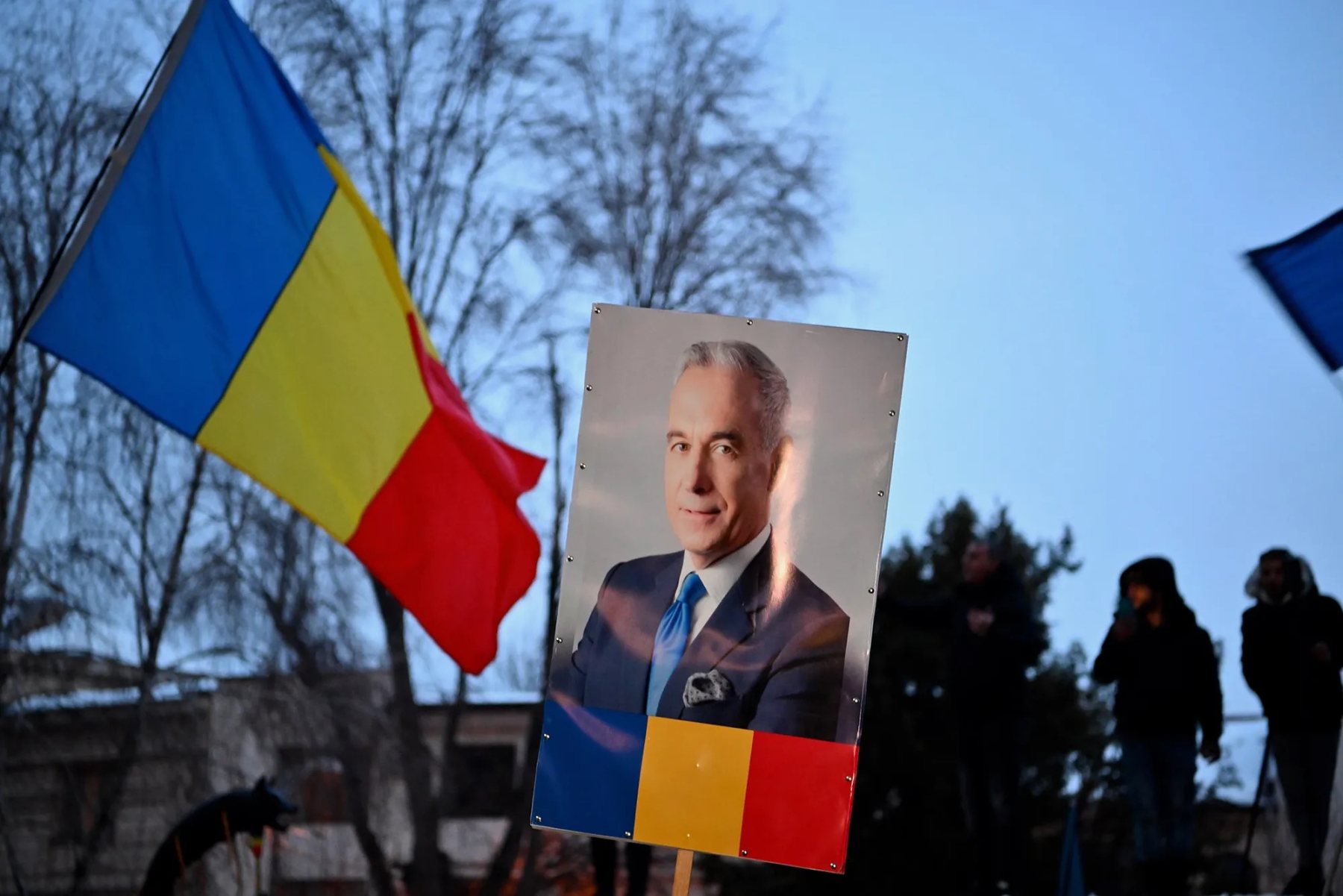
Two months after his brief election victory, his supporters gathered on the day he was taken in for questioning by police. Photographer: Alex Nicodim / Anadolu Agency
In the first round of the re-election in May 2025, Simion garnered 41% of the vote, far surpassing Georgescu's 23%. His opponent in the final round was Dan, a mathematician and activist who had served as mayor of Bucharest since 2020. Multiple global media outlets predicted Simion's victory. A Reuters headline on May 7th read: "Romania's far-right frontrunner Simion leads in polls ahead of final election." The Romanian lei fell to a historic low against the euro, clearly reflecting investor concerns about Simion's economic policies.
On TikTok, Simion has 1.3 million followers, while Dan only has 350,000. Simion posts videos of himself with his workers and in church; Dan posts videos of himself enjoying city life in Bucharest, going to restaurants, and sharing housework with his partner. Simion talks about restoring dignity and justice for Romanians; Dan solves math problems and explains how to balance budgets. Simion wants Romanians to join the great historical movement; Dan talks about the rule of law and liberalism.
TikTok, still under investigation by the EU, showed a markedly more proactive approach to handling suspicious activity on its platform during the final election period. Mircea Toma, State Secretary of the Romanian Audiovisual Council (which regulates broadcasting), said TikTok doubled its Romanian-language moderators and worked more closely with regulators. "We flag content and remove it within minutes," Toma said. "Before, you simply couldn't find anyone."
On May 18, election day, Romanian voters delivered another surprise. Dan defeated Simion with 53.6% to 46.4%. After the results were announced at 9 pm that evening, large crowds gathered outside Dan's campaign headquarters near Cișmigiu Park in Bucharest. Voter turnout reached a record 65%, compared to only 53% in the abolished first round. The crowd chanted "Europe, Europe!" and "Fascists down!", and many waved EU flags.
The Russian-preferred candidate lost, but the Georgescu-esque political ideology has clearly remained. "Our society is more polarized than ever before," said Romanian journalist Victor Ilie. "Because we canceled and then held a re-election, everyone who voted for Simion and Georgescu doesn't consider Nicușor Dan a legitimate president. On the other hand, those who voted for Dan are ecstatic that the far-right didn't win and idolize him in an extreme way. These two groups no longer communicate."
Of course, the person who firmly believes that Georgescu is the real victim of electoral interference is Bogdan Peschir. "The reason why Romanian elections must be abolished is because the 'wrong' people won—the wrong people for the political establishment," he said.
When asked why he thought Georgescu's popularity was so great, Peschir said it was purely because of his charisma. "I think it's simply because people identify with his ideas," he said. "Romanian society deeply yearns for change, and people see him as an outsider. He's very good at touching on those truly important issues that hurt Romania."
In a sense, this is self-evident. The viral propaganda launched by fake accounts gave Georgescu a huge first-mover advantage, allowing him to get onto ordinary people's phones first. And once he reached his audience, many were genuinely persuaded. The fake campaign ultimately became a reflection of real public opinion.


