

Author: David , Deep Tide TechFlow
Today, Brent crude oil broke through $110, and WTI crude oil broke through $100.
You should know that the last time oil prices reached $100 was in March 2022, during the Russia-Ukraine war.
This time it's Iran. The US-Israeli airstrikes, the killing of Khamenei, and the de facto closure of the Strait of Hormuz. One-fifth of the world's seaborne oil passes through this waterway, and now the daily traffic has plummeted from over 100 ships to single digits.
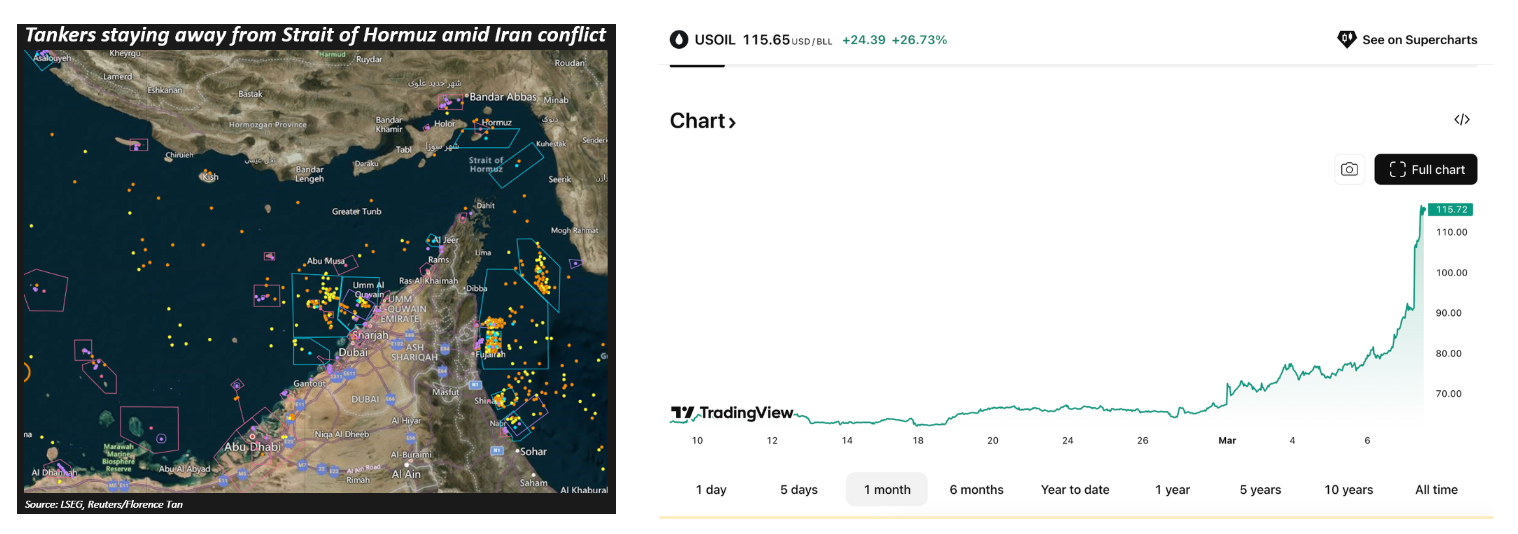
Image source: TradingView
With oil unable to be transported and storage tanks full, Iraq, Kuwait, and the UAE have successively begun shutting down wells and reducing production. Qatar's world's largest liquefied natural gas export facility has also been shut down.
U.S. crude oil rose 35% in a week, marking the largest weekly gain since futures trading began in 1983; Qatar's energy minister said that if this continues, oil prices could reach $150.
For ordinary people, these figures may still seem distant. But at midnight tonight, the domestic refined oil price adjustment window will open. The price of 92-octane gasoline will rise by 0.39 yuan per liter, meaning filling up a tank will cost an extra 20 yuan. This marks the fourth consecutive increase this year.
Gas stations are just the first part of the chain that you notice.
Ship jams in the Middle East Straits, traffic jams in Zhangmutou, Dongguan
The Strait of Hormuz was blocked by 300 oil tankers, and 8,000 kilometers away in Zhangmutou, Dongguan, a line of large trucks was stuck in traffic.
Petroleum is more than just gasoline. It's the lifeblood of the entire industrial system. Plastics, synthetic fibers, rubber, and fertilizers are all downstream products of petroleum.
If the strait is blocked, oil prices will rise, and the impact from the Middle East to South China can be transmitted in just a few days.
According to Southern Finance, a buying frenzy swept through Zhangmutou, Dongguan, the largest distribution center for plastic raw materials in South China, last week. Images of massive traffic jams at the Zhangmutou Plastic Trading Market in Dongguan are widely available online.
In this market with an annual transaction volume of nearly 100 billion yuan, buyers, fearing price increases, flocked to the market to snap up goods. Large trucks lined up to haul raw materials, causing traffic jams on the roads surrounding the market. The largest plastic e-commerce platform even crashed at one point, and the 90,000-square-meter public warehouse was nearly full, with workers working overtime for several days to make room.
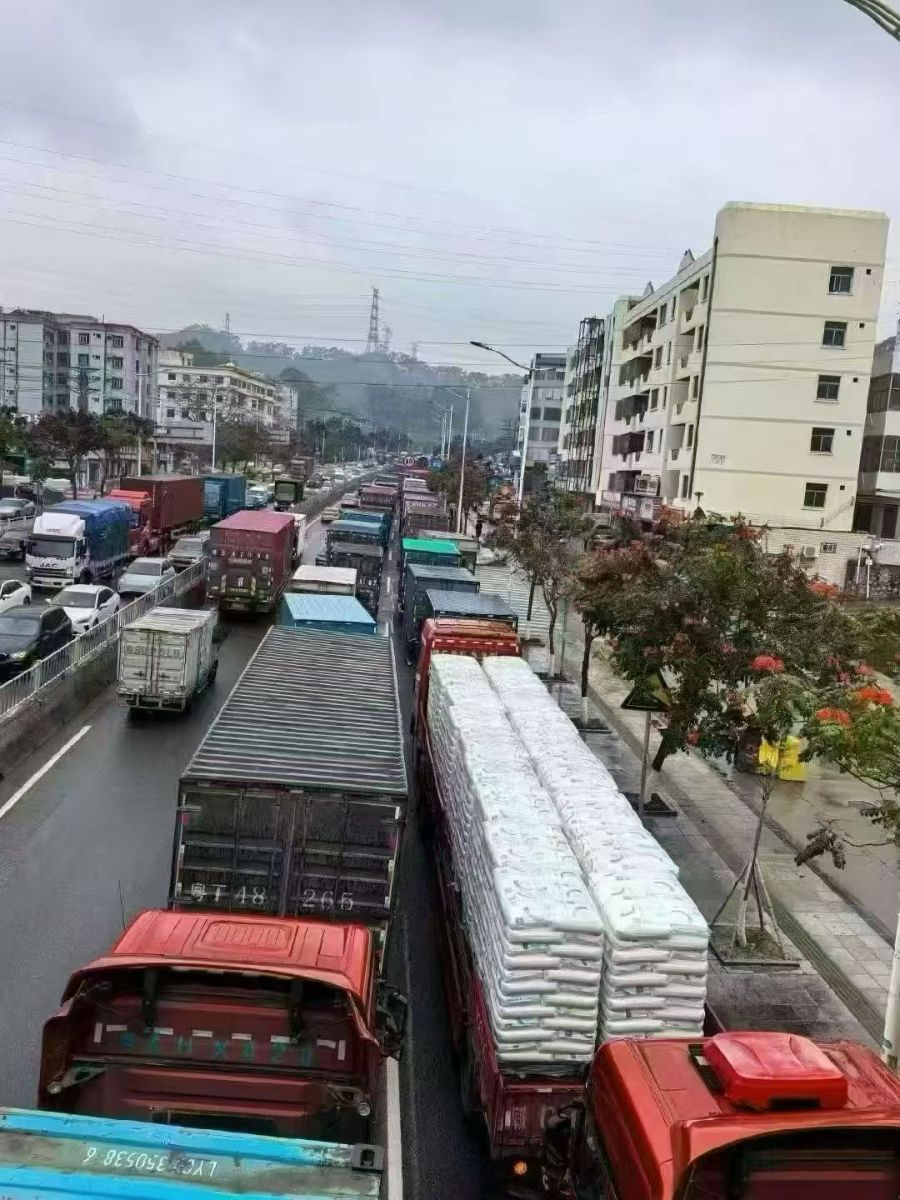
Image source: Southern Finance Network
Meanwhile, the rules at the plastics market have changed: prices are only available for the day, payment is required before shipment, and no pre-orders are accepted. Prices change every hour.
How sharp was the increase?
PC, the plastic used to make mobile phone cases and car headlight covers, has risen from a low of 10,000 yuan/ton last year to 14,000 yuan/ton, a 40% increase in one week; BASF, one of the world's largest chemical companies, announced an increase in the price of plastic additives, up to 20%.
Upstream petrochemical companies are restricting supply and limiting sales. Downstream factories don't want to accept this price, but they're even more afraid of prices rising tomorrow.
The reasoning is actually not complicated:
Oil prices rise, then chemical raw material prices rise, then plastic particle prices rise, and finally, the price increases reach your phone case, your running shoes, and your water bottle. From oil well to shelf, the chain is much shorter than most people think. Gas stations are just the first link you notice, but certainly not the last.
The last time we experienced this kind of price increase was during the Russia-Ukraine war in 2022.
That year, oil prices broke 100 yuan, prices rose throughout the year, and global stock markets plummeted from the beginning to the end. Many people still remember that 92-octane gasoline cost 9 yuan at the station.
Some people are adding fuel to the fire, while others are increasing their holdings.
The domestic refined oil price adjustment window will open at midnight tonight. The price of 92-octane gasoline is expected to rise by 0.39 yuan per liter, and 95-octane by 0.41 yuan per liter. Filling up a 50-liter tank with 92-octane gasoline will cost an extra 20 yuan. This marks the fourth consecutive price increase this year.
You'll have to pay more at the gas station tomorrow morning. But today, with the market opening, some people are already making money.

On March 2nd and 3rd, PetroChina, Sinopec, and CNOOC all hit their daily limit for the first time in their history, with 28 out of 48 oil and gas concept stocks reaching their daily limit, making the entire sector a sea of red.
PetroChina's market capitalization has exceeded 2.4 trillion yuan, regaining its position as the top A-share listed company by market capitalization.
In fact, the three major oil companies have been quietly raising their prices for three years. PetroChina's stock price has increased by 210% since the beginning of 2023, while CNOOC's has increased by 232%.
But the price increase was slow and quiet over the past three years, and most people didn't even notice it. The generation of retail investors who were trapped when PetroChina went public at 48 yuan in 2007 have been holding on for nearly 20 years, and are slowly climbing back up during these three years of slow growth.
What war does is kick a three-year-old, slow-burning fuse into a powder keg.
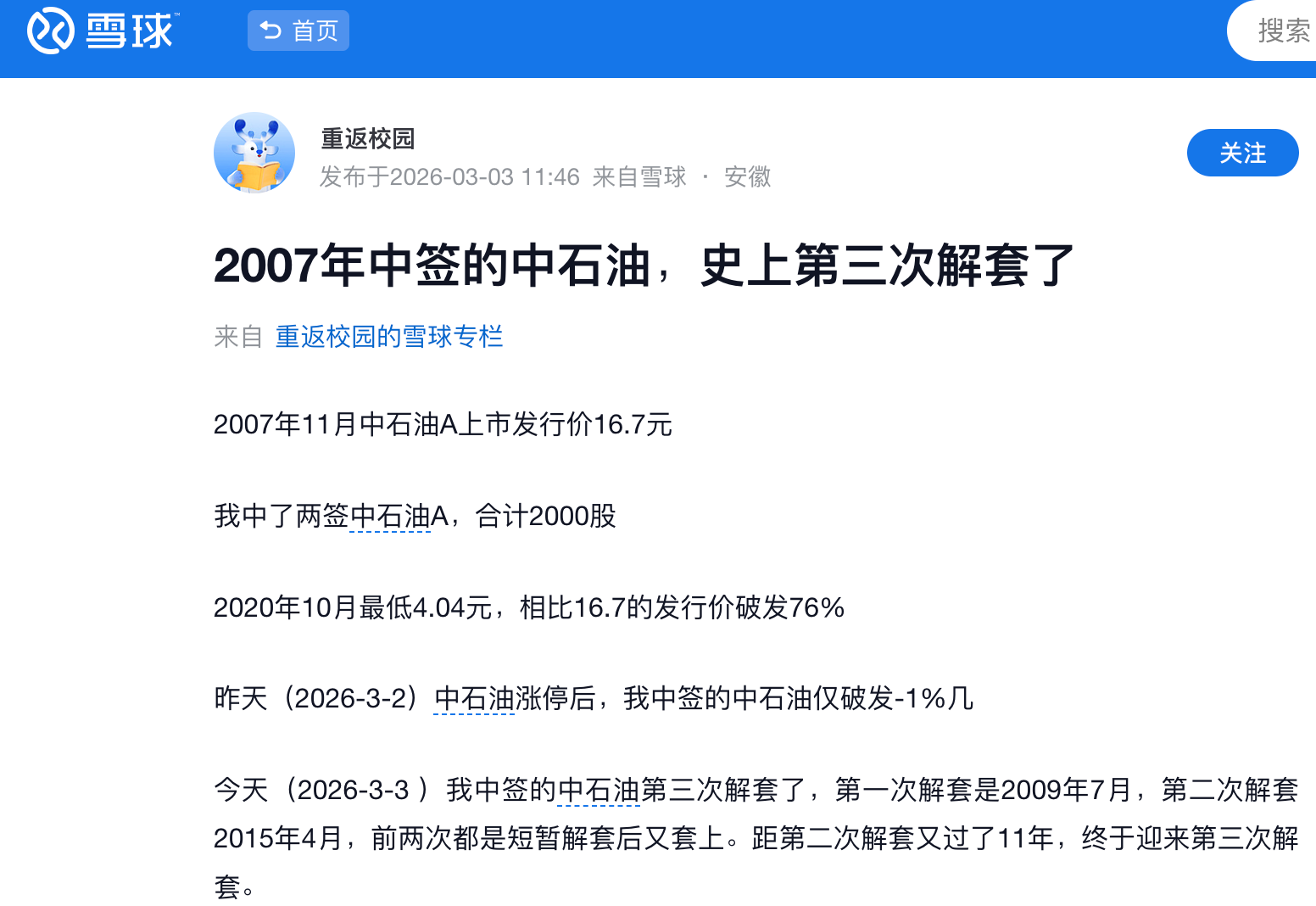
The same scenario applies to the chemical sector.
Funds started flowing in last year, with the size of chemical ETFs expanding tenfold from 2.5 billion to 25.7 billion in a year. After the battle began, the pace accelerated sharply, with a net inflow of 31.3 billion in main funds in 5 trading days, and net subscriptions of chemical ETFs exceeding 300 million units in a single day.
On the oil and gas ETF front, more than 8 billion yuan has flowed in this year, and many fund companies have submitted applications for new oil and gas-themed products.
The fire burned slowly for a year, but when war broke out, it became a race against time.
Going a step further downstream, the financial market is actually thinking about the same thing as the Zhangmutou plastics market. On March 3, the main plastics futures contract surged 6%, with PP polypropylene hitting its daily limit during trading.
Futures prices are rising, spot prices are rising, traders are stockpiling, and some investors are quietly starting to invest in plastic-related stocks.
As a result, some people hoard plastic raw materials to profit from price differences, some buy plastic futures to profit from volatility, and some keep an eye on chemical stocks and buy ETFs... There are people betting at every link in the entire chain.
Those who profited from the three major oil companies' price increases over the past three years likely focused on the long-term changes in China's energy structure, aiming to profit gradually and based on certainty. Those who rushed in after the war began were betting on something entirely different—for example, that the conflict wouldn't end quickly, and that oil prices would continue to rise.
Panic and speculation often involve the same action. The same barrel of oil is a cost for you, but a profit for someone else. The difference lies in where you are in the chain.
Those who bought more shares hoped the rally would end quickly, while those who bought more shares hoped it would end slowly.
New opportunities are not in the old Strait.
Looking back at history, every oil price crisis has reshaped the distribution of profits in the industry chain.
2022 serves as a prime example. After oil prices broke $100, the most direct beneficiaries were upstream oil companies, just as they are today. However, the real structural winners of that round emerged in an area that few paid attention to at the time:
New energy vehicles.
The price of 9 yuan per liter at 92-octane gasoline stations has directly increased the operating cost of gasoline vehicles, prompting many consumers to recalculate the economics of gasoline and electric vehicles.
The penetration rate of new energy vehicles was already on the rise, driven by policy subsidies, technological advancements, and charging infrastructure. However, the high oil prices in 2022 acted as a more direct driving force, turning those who were observing into those who placed orders.
The situation today is actually quite similar.
With oil prices breaking $100 again, the most instinctive reaction is for funds to flow into the oil and chemical sectors. However, if we extend the timeframe to two or three years, what's truly worth paying attention to might not be who made money in this round of oil price increases, but rather which alternative demands this shock will accelerate.
Over the past thirty years, the operation of the global manufacturing and trade system has been based on several implicit premises: such as ample energy supply, secure shipping lanes, and highly globalized supply chains...
The Strait of Hormuz may have been caused by war, but the geographical factors that make it solely dependent on energy remain unchanged, forcing all energy-related players to reassess their risk exposure.
Behind every recalculated account lies a new business. Alternative energy, alternative materials, alternative shipping routes, localized supply chains... the very concept of "not relying on oil" is becoming an increasingly large industry.
Will oil prices fall back down? I think it's highly likely. 90% of Iran's own oil exports pass through the Strait of Hormuz; if it's blocked for too long, they'll run out of supplies themselves.
But with each surge, the remaining costs won't fall back down with the price of oil. The lessons learned won't be forgotten, and the rebuilt supply chains won't be dismantled.
Gas prices exceeding $100 will change more than just your fuel costs; it will also change how everyone calculates their expenses.



