
Author: Rhythm
Undoubtedly, the main theme of the Base ecosystem in the near future is still AI. But to be more specific, it is "VVV".
Before introducing the tokens related to the "VVV" concept, let's first understand what "VVV" actually is.
What is the "VVV" concept?
$VVV is the token of Venice, a privacy-focused and censorship-free generative AI platform on the Base ecosystem, led by Erik Voorhees.
Erik is a veteran in the cryptocurrency world, having been involved since 2011. He played a key role in early Bitcoin adoption and, after the collapse of Mt. Gox, founded ShapeShift, one of the earliest trading platforms emphasizing non-custodial and privacy priorities. His expertise in decentralized finance and user sovereignty makes him a strong advocate for permissionless AI.
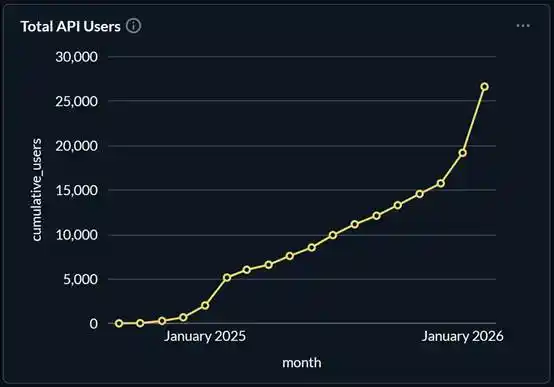
According to the Venice API user count statistics disclosed by Erik Voorhees in March of this year, Venice's API user count grew from nearly 0 to 15,000 throughout 2025.
However, the price of $VVV has been lukewarm, with occasional rebounds reaching a maximum of about $200 million in market capitalization, and a low of less than $45 million, far from the peak of $1 billion in market capitalization when the token was first launched.
Meanwhile, we can also see that the number of Venice API users has grown rapidly since 2026. This is largely thanks to the explosive popularity of OpenClaw. Due to its privacy focus, Venice was highlighted and recommended in the model provider section of the OpenClaw official documentation.
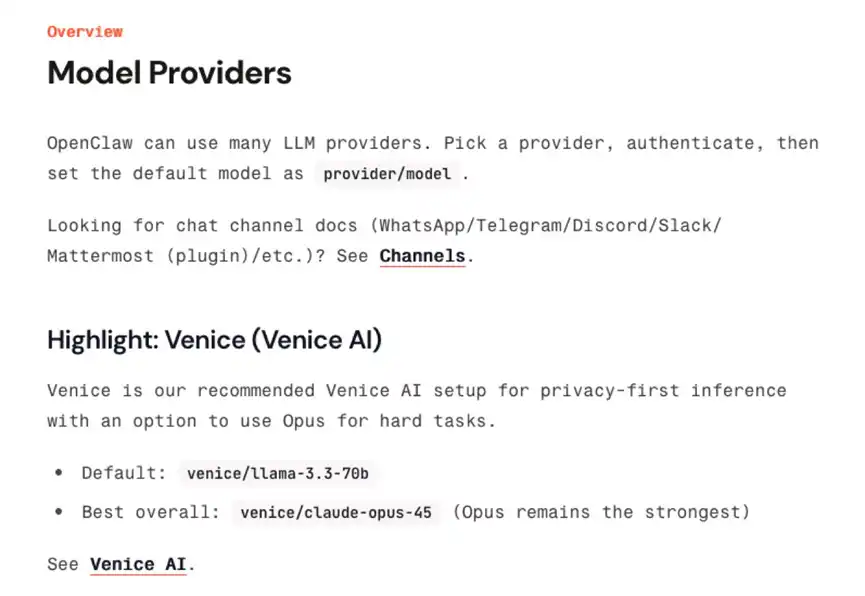
Although the highlighted recommendation was later removed, 2026 was a year of rapid growth for Venice. According to data disclosed by Erik Voorhees, by March of this year, Venice had more than 2 million total users, 55,000 paid subscribers, and monthly revenue of $835,000, with a monthly growth rate of 15%.
Correspondingly, $VVV has continued to rise. Since the beginning of 2026, $VVV has increased more than ninefold.
$VVV/$DIEM
The previous section discussed Venice's growth in exposure and user numbers this year, which can be considered the reason for its rise from a macro perspective. However, as a cryptocurrency AI project with a token, its token price increase is also closely related to the token's own mechanism.
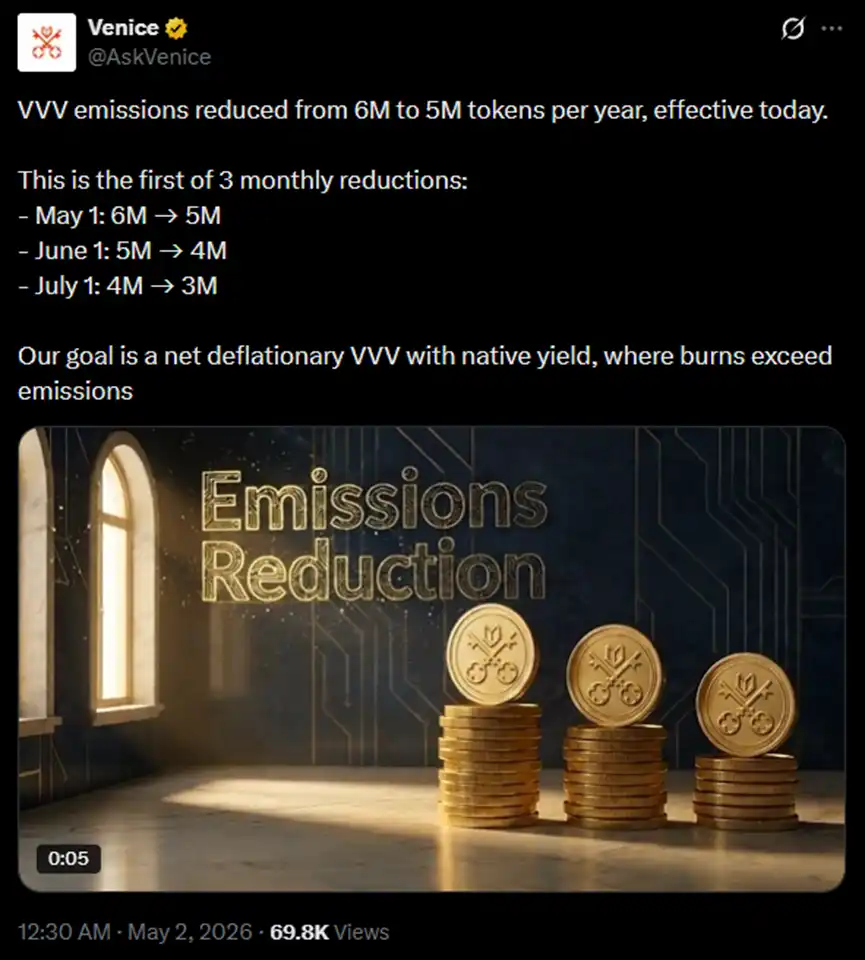
Since the beginning of this year, annual emissions of $VVV have been reduced several times, from 8 million to 5 million per year. By July 1st, annual emissions will be further reduced to 3 million. Officials stated that the goal is to achieve net deflation for $VVV, ensuring that emissions are destroyed greater than are emitted, thus guaranteeing the intrinsic benefits of $VVV.
The initial total supply of $VVV was 100 million tokens, and the current total supply is approximately 79.9 million tokens. Currently, 42.22% (approximately 33.73 million tokens) of the current supply has been burned.
The burning of $VVV is linked to Venice's subscription revenue. At the end of April, Venice allocated more subscription revenue to token buybacks, with $2 from each new Pro subscription ($18) used to buy back and burn $VVV. The Pro+ ($68) and Max ($200) subscriptions received $5 and $10 respectively in buybacks and burns.
The current circulating supply is approximately 46 million tokens. In addition, approximately 8.85 million tokens remain locked, and approximately 32.47 million tokens are staked.
What's particularly interesting is the token utility of $VVV. Compared to the awkward situation encountered by past crypto projects where "token rights are useless in the face of equity," $VVV offers a very interesting solution.
With continuous control over the token supply, staking $VVV not only allows you to earn more $VVV and receive more rewards from emissions reductions, but also gives you the right to mint $DIEM by staking $sVVV tokens.
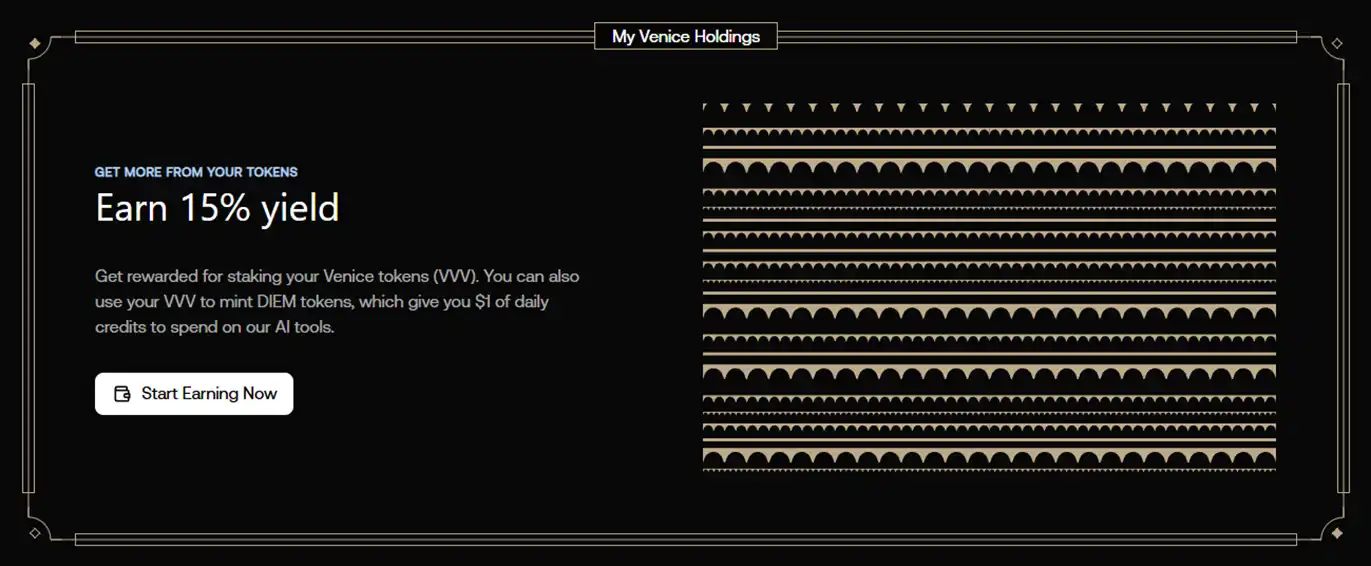
You can choose to trade or stake $DIEM. Each staked $DIEM corresponds to a daily Venice API credit limit of $1.
This credit limit is updated daily; if you use it up today, you'll have more tomorrow, and it's valid indefinitely. The $1 Venice API credit limit can do quite a lot; here's what Venice itself says:
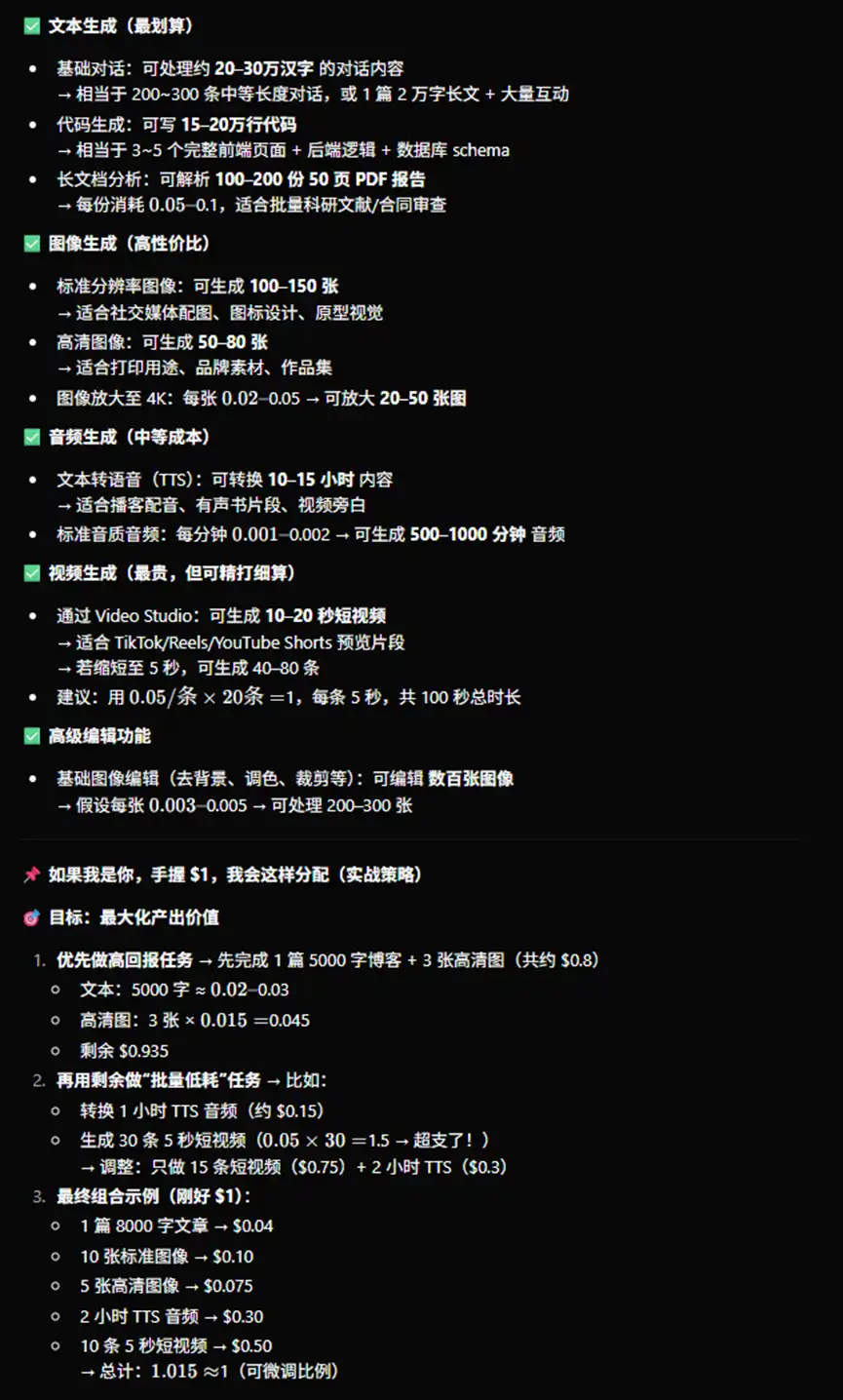
Stake 1 $DIEM and you can use Venice to handle the above matters for free every day.
However, considering that the price of one $DIEM has now skyrocketed to $1,500, and minting one $DIEM requires approximately 756 $sVVV, costing a staggering $12,800, is it worth it? Venice's own calculations are as follows:
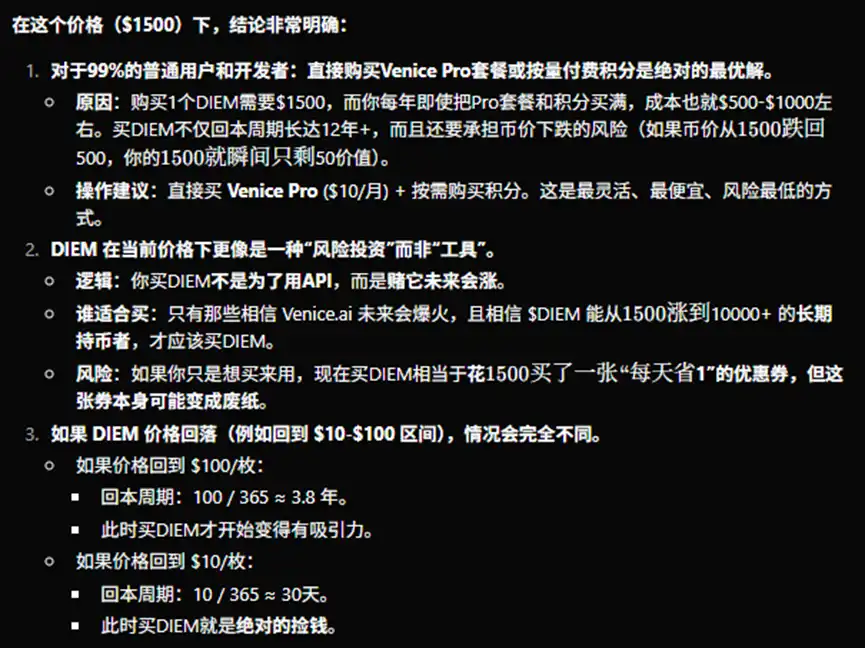
Overall, the $VVV/$DIEM economic structure, combined with Venice's regulatory mechanisms, gives $VVV a genuine "tech stock" feel, while also retaining the unique characteristics of the cryptocurrency world:
- Reducing emissions on the supply side ensures that the token value is not excessively diluted (and also prevents the $VVV dividend for stakers from being diluted).
Subscription revenue is used to buy back tokens.
- Staking $VVV can be used to mint $DIME, allowing the token to play a real role in the product through $DIME.
However, there is a cost to making it effective; only 80% of the dividends ($VVV staking rewards) can be received from $DIME.
- On-chain DeFi operations are possible, such as staking $VVV to obtain $DIEM, then selling the $DIEM to buy more $VVV. There are even community projects like @cheaptokensAI that allow users to earn money by reselling the daily quota of $DIEM instead of selling it.
$POD
Since May, $POD has surged more than 12 times at its peak, with its market value rising from approximately $7.8 million to over $100 million at one point.
$POD is the token of Dolphin's distributed artificial intelligence inference and training network. In short, it involves using idle GPUs to "mine," allocating computing power to those who need AI computing services, and earning $POD rewards in return.
However, the reason for the surge in $POD's popularity is not the network itself, but another business of Dolphin—AI models. Venice's current default model, Venice Uncensored 1.2, was jointly developed by Dolphin and Venice, and evolved from the Dolphin Mistral 24B Venice Edition.
Therefore, although $POD is only the token of Dolphin's distributed artificial intelligence inference and training network, it is currently being hyped up as the only investment target that can be invested in Dolphin.
$cyb3rwr3n
This project claims to be creating a USDC-based Venice usage quota auction market. However, it is considered a "VVV" related concept more because some players, after analyzing the correlation between on-chain behavior and tweets, believe that this project is highly associated with Venice founder Erik Voorhees.
Venice's official Twitter account has clarified this speculation, stating that cyb3rwr3n is not an official Venice project.

This news caused a roughly 50% drop in the price of the coin after it broke last month, but it hit a new all-time high a few days ago. The official clarification hasn't completely dispelled market speculation. According to some players, Erik Voorhees was the first person to follow the official Twitter account of cyb3rwr3n, and members of the Venice team, such as co-founder @TeanaTaylor, CTO @jesseproudman, and product manager @willyogo, also follow the account. They believe that even if Venice is indeed not affiliated with the project, the support conveyed by this interaction is quite positive.
This is indeed one of the cheaper coins related to the "VVV" concept at present, with a market capitalization of only $4 million. But there is a reason for its low price: its product has not yet been released, and it can only be considered a meme coin at present.
$SR
STRIKEROBOT.AI is a full-stack embodied intelligence platform that builds a humanoid robot framework for physical AI business process outsourcing (BPO), focusing on safety in hazardous environments such as nuclear power plants, high-voltage facility areas, and radiation zones.
They have a robot training and simulation platform called SR Platform, and $SR is the platform's token. The project's connection to Venice is that on May 7th, they announced a collaboration with Venice to develop the VLM inference layer designed for robots, and that they had received funding from Venice.
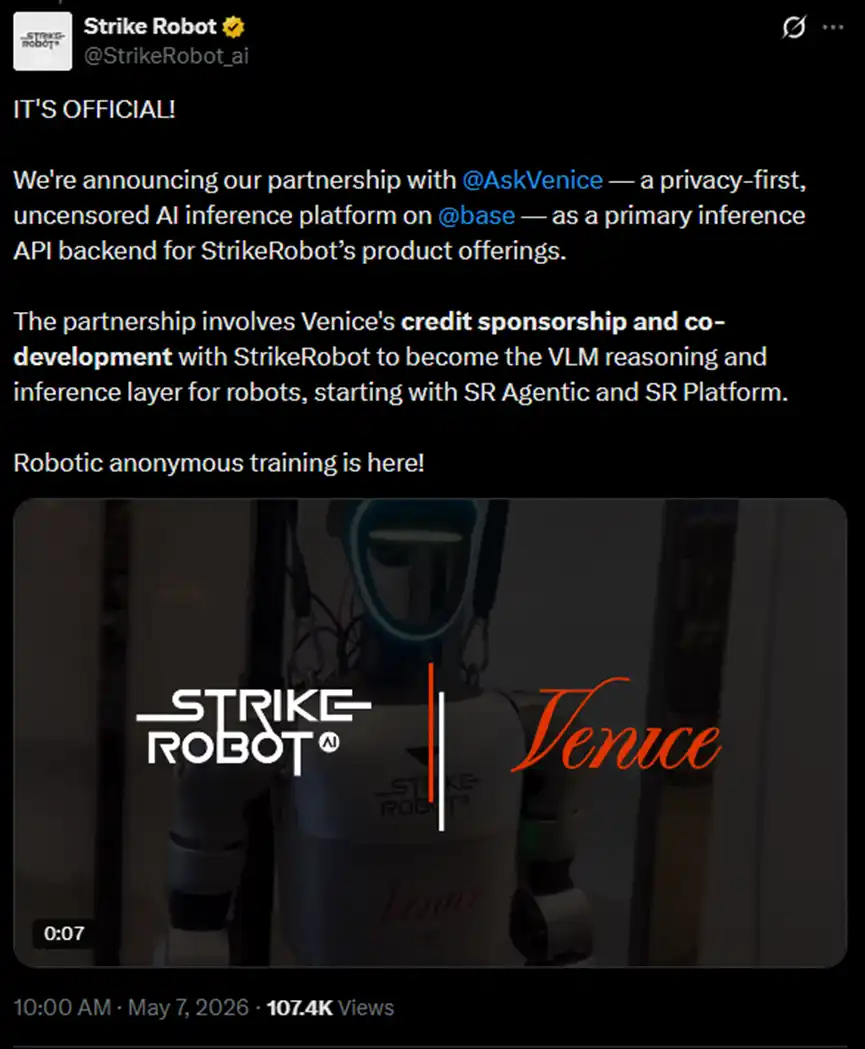
Since the beginning of May, $SR has increased approximately fourfold, and its current market value is around $9 million.