
Author: Monchi | Editor: Monchi
1. Bitcoin Market
From July 5 to July 11, 2025, the specific trend of Bitcoin is as follows:
July 5: Bitcoin continued the weak pattern of the previous trading day, quickly falling to a low of $107,412 in the early trading, rebounding briefly to $107,894 before falling back again, testing the previous low support. Subsequently, it received initial support at $107,412, and the price stabilized and rebounded slightly, reaching a high of $108,248. Since then, the price has fluctuated narrowly around $108,100, indicating that both the long and short sides of the market are in a cautious wait-and-see state, and the momentum is weak.
July 6: The market continued the previous day's consolidation trend, and the price still fluctuated slightly around $108,100, and the amplitude further converged. In the evening, the bulls began to try to break through, and the price rose from $108,034 to an intraday high of $109,038, and then there was a slight correction, returning to consolidation around $108,800.
July 7: The trend of the day was more volatile, and the market sentiment reversed several times, showing obvious wide fluctuations. In the morning, Bitcoin fell from $108,966 to $108,395 and then rebounded quickly, reaching a high of $109,470. Then the price fluctuated violently, first dropping to $108,735 and then rising to $109,627, but the upward momentum failed to continue and entered a downward trend, dropping to $108,011 and finally closing at $108,314, with an intraday amplitude of more than 1.5%.
July 8: The overall trend showed a fluctuating upward trend, but the game between long and short positions was still fierce. After opening, it briefly dropped to $107,681, and then the bulls gradually exerted their strength, and the price fluctuated upward to $108,372. After a period of time, selling pressure appeared and the price fell back to $107,586. In the afternoon, market confidence recovered, the price climbed steadily and once reached $109,067, and then rebounded to $108,186 after a short surge, showing a rhythm of "bottoming out - rebounding - rushing up - falling back" throughout the day.
July 9: Bitcoin bullish sentiment significantly warmed up, and a strong upward attack was launched in the early trading. The price broke through the high of the previous day and quickly rose to $109,137. After a short correction, it gained support and quickly rose to around $109,128 for the second time, showing strong upward momentum. However, as high-level profit-taking emerged, the price fell from the high to $108,389, but the buying below actively took over, and the market quickly stopped falling and rebounded, breaking through the morning high in one fell swoop, and rose to $109,737, setting a new stage high. Subsequently, there was a technical correction, which pulled back to $108,598, and then quickly recovered, and finally closed at $109,091, with the closing price close to the intraday high, showing that bulls dominated.
July 10: Continuing the upward momentum of the previous day, the price fluctuated and rose to $109,566, and then rose sharply to $111,907. The price of Bitcoin broke through the historical high to nearly $112,000 per coin, an increase of nearly 3% on the day. It then slightly adjusted back to $110,756, and then fluctuated sideways around $111,150. It fell slightly to $110,761 in the evening, and then rose rapidly to $111,450 at the end of the day.
July 11: Bitcoin continued the strong upward trend of the previous trading day, breaking through the previous high in the morning and quickly reaching $113,820, setting a new record high. After that, there was a short technical correction. After the price found support near $113,637, it restarted its upward trend and quickly rose to $116,526. As of the time of writing, the price of Bitcoin has further climbed to $118,050, showing a trend of continued capital inflow and continued strong trend. Bitcoin is currently in an accelerated pull-up stage, and it is still treated with a bullish mindset in the short term. It is necessary to pay attention to whether there will be subsequent signs of volume stagnation and correction to determine the sustainability of the rise.
Summarize
From July 5 to 9, BTC showed an overall range-bound trend, running in the range of $107,500–$110,000. Market sentiment gradually accumulated, long and short positions were stalemate at high levels, and chips showed stable turnover. After entering July 10, Bitcoin launched the first wave of large-scale upward attack, breaking through the previous high of $111,907, approaching the $120,000 mark, and forming an effective technical breakthrough. Subsequently, on July 11, the upward momentum continued, continuously pulling up and accelerating the rise, successively breaking through the two major integer levels of $114,000 and $116,000, forming a typical step-by-step upward structure, and bullish sentiment was high. As of the time of writing, the price of Bitcoin remained around $118,000, with a significant cumulative increase during the week, and the market entered a strong trend stage. Overall, this round of rise has the characteristics of clear structure, good volume and energy coordination, and strong capital drive. The trend is still bullish in the short term, but attention should be paid to the increase in high volatility and potential overbought pressure.
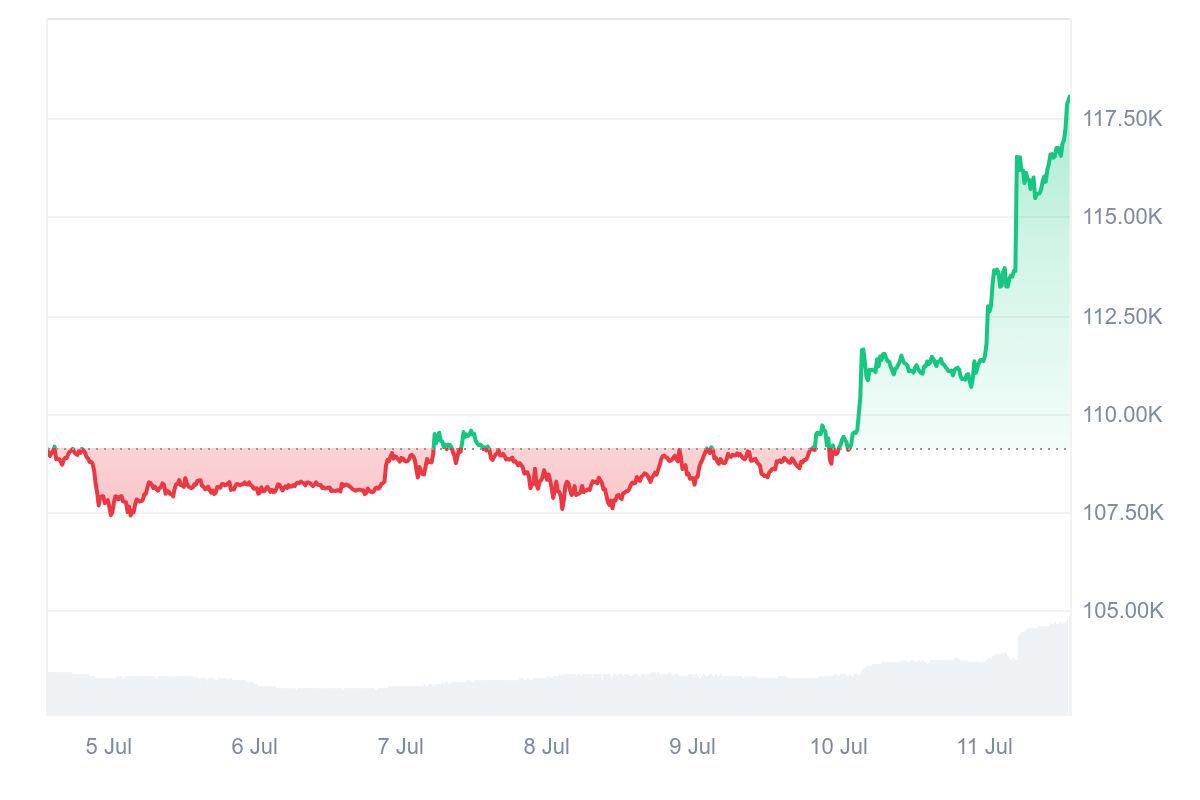
Bitcoin price trend (2025/07/05-2025/07/11)
2. Market dynamics and macro background
Fund Flows
1. Long-term currency holding configuration is stable
According to Cointelegraph, more than 30.4% of Bitcoin has been dormant in the address for ≥ 5 years, without being moved or traded, indicating that long-term holders remain firm in their beliefs.
2. Bitcoin’s market share hits a new high
On July 6, BTC market share (BTC.D) rose to 64.7%, close to the previous cycle high, indicating that market funds prefer Bitcoin assets.
3. Global liquidity/Bitcoin supply ratio reaches 12-year high
Ark Invest reported on July 9 that the global M2 broad money supply, which is comparable to circulating Bitcoin, reached $5.7M per coin, the highest since 2013. As the growth rate of Bitcoin supply slows down and global currency continues to expand, this ratio is expected to continue to rise, reinforcing the logic of Bitcoin scarcity.
4. Derivatives and Institutional Dynamics
Leveraged funds in the futures market began to flow back, and the open interest (OI) of multiple platforms rebounded significantly: CME increased by +18%, and Binance increased by +12%. As of July 11, according to Coinglass data, the open interest of Bitcoin futures contracts across the network reached 701,330 BTC (about 81.47 billion US dollars), setting a record high. Among them: CME Bitcoin contract open interest was 154,220 BTC (about 17.91 billion US dollars), ranking first in the world; Binance was 116,840 BTC (about 13.57 billion US dollars), ranking second.
In the options market, the demand for call options has increased significantly, and the mainstream layout direction is to build positions with a target price of BTC 160,000 and 180,000 US dollars. At the same time, the long-short CVD data shows that although the overall market atmosphere is optimistic, some institutions have launched defensive hedging operations, which means that market fluctuations may intensify in the short term and potential risks need to be paid attention to.
5. Spot Bitcoin ETF
This week's daily ETF fund inflow/outflow details:
July 7: +$216.5 million
July 8: +$75.3 million
July 9: +$215.7 million
July 10: +$1,175.6 million
According to Farside Investors monitoring data, since the spot Bitcoin ETF was officially approved in January 2024, the total net inflow has exceeded US$50 billion.
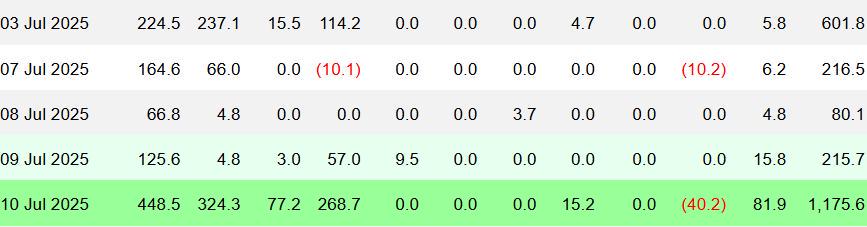
ETF Inflow/Outflow Data Image
BlackRock IBIT becomes market anchor
BlackRock's IBIT ETF holds more than 700,000 BTC, with a current market value of $75.5B, making it the world's largest BTC spot ETF, accounting for more than 55% of the total holdings of all spot ETFs in the United States. Since its establishment in early 2024, IBIT has achieved a return rate of 82.67%, and received another net inflow of $165M this week.
According to Galaxy Research, institutions such as IBIT and MicroStrategy have purchased a total of $28.2B BTC, far exceeding the $7.85B in new on-chain supply during the same period, indicating that institutions continue to "grab coins" and become the main driving force of the market.
ETF + Institutional Comparison: The contradiction between supply and demand on the chain has intensified
The total ETF holdings account for 6.3% of the total Bitcoin circulation (> 1.33M BTC), while the balance of exchange hot wallets has hit a new low since 2018 (< 14.5%).
Institutional purchases are greater than mining output, which directly drains liquidity from the chain, exacerbating the "supply depletion" trend and is conducive to long-term price support.
Regulatory attitudes are easing, and ETF development has entered a new stage
The U.S. SEC is studying to simplify the ETF approval process. It plans to unify the S-1 application form and establish a 75-day default effectiveness mechanism, which will benefit the efficiency of subsequent product approvals.
Earlier this month, REX-Osprey launched the first Solana ETF that supports staking income, marking the expansion of the ETF market to multi-chain assets.
ETF structural buying + regulatory easing signals are reshaping the basic structure of the market. We should continue to pay attention to the policy rhythm and changes in ETF net liquidity to avoid short-term correction risks.
Technical indicator analysis
1. Relative Strength Index (RSI 14)
According to Investing.com data, as of July 11, 2025, Bitcoin's 14-day relative strength index (RSI) was 82.721, far above the overbought critical point of 70, and in the strong overbought range (80-90). This value shows that the current market sentiment is extremely optimistic, bullish momentum continues to dominate, and a large amount of short-term funds are pouring in, pushing prices up rapidly.
However, the high RSI also means that the market may face the risk of a short-term technical correction, and we need to be alert to price fluctuations caused by high-level consolidation or profit-taking. Historical data shows that the time when RSI is above 80 is usually short, and investors should pay attention to whether there is a divergence signal to determine the possible turning point of the market.
2. Moving Average (MA) Analysis
5-day moving average (MA5): $111,828.73
20-day moving average (MA20): $107,925.00
50-day moving average (MA20): $106,097.48
100-day moving average (MA100): $96,283.26
200-day moving average (MA200): $93,182.04
Current market price: $118,050.57

MA5, MA20, MA20, MA100, MA200 data pictures
Judging from the moving averages of various periods, the price of Bitcoin is significantly higher than all major moving average levels, and the technical structure shows a standard bullish arrangement (Golden Cross), reflecting that the market trend continues to be strong in the medium and short term, and the buying-dominated situation has not changed.
The MA5, MA20 and MA50 moving averages are rising in a step-by-step manner, indicating a strong short-term rally; the continued rise of MA100 and MA200 shows that the medium- and long-term trends have also completely turned bullish; the current price has deviated from MA20 by more than US$10,000, indicating that the market has entered a stage of accelerated growth, but we also need to pay attention to the risk of a pullback caused by the price deviating too far from the moving average.
Investors should pay attention to whether there is a confirmation process of a pullback to MA5 or MA20 in the short term to determine whether the rise is sustainable.
3. Moving Average Convergence Divergence (MACD) Analysis
According to Investing.com data, as of July 11, the MACD fast line was 1718.34, but judging from the market performance and RSI indicators, the bullish momentum is significant and is in a bullish arrangement. MACD currently sends a strong "Buy" signal, and the technical trend is obviously bullish. However, MACD is also in a high range. If the subsequent momentum slows down or a top divergence signal appears, we need to be alert to the risk of short-term price fluctuations or corrections.
4. Key support and resistance levels
Support level : The current short-term key support levels for Bitcoin are $116,000, $113,500, and $111,000. On July 10, the price of BTC was trading sideways around the $111,000 area, showing good support; if the price is further adjusted, the $108,000–$110,000 range will constitute the second important support belt. Specifically, during the sideways shock stage from July 5 to 6, $108,000 showed good support; during the multiple rounds of retracement from July 7 to 9, the $108,000 to $109,000 range continued to carry the downward trend.
Resistance : Currently, the main resistance levels facing Bitcoin in the short term are $119,000 and $120,000 (integer psychological barriers). The current price is running around $118,000. If the bulls can successfully break through $120,000, it will open up further room for growth or usher in a new round of price discovery. Otherwise, if it is continuously blocked, there is a possibility of falling back to $116,000 in the short term.
In general , the price of Bitcoin has recently successfully broken through the historical high, reaching a new historical high near $118,000, indicating that the market is in the starting stage of a new round of upward trend. In the short term, attention should be paid to the stability of the price at $118,000 and the ability to break through the resistance levels of $119,000 and 120,000. If the upper resistance is effectively broken, the market is expected to further expand the gains and enter a new stage of price discovery; on the contrary, if it continues to be blocked, it may fall back to the lower support range for technical consolidation.
Market sentiment analysis
1. Emotional profile
This week (July 5-July 11), the Bitcoin market sentiment showed obvious fluctuations, and the overall trend experienced an evolution from wait-and-see, shock to rising sentiment. From July 5 to 6, the price of Bitcoin remained sideways in a narrow range, and the market trading sentiment tended to be cautious. Most investors were in a wait-and-see state, lacking a clear directional judgment. From July 7 to 9, the market entered a wide range of shocks, and the price of Bitcoin fluctuated violently above and below the key technical level. Sentiment also fluctuated violently, showing signs of rising short-term speculative sentiment. Entering July 10 to 11, market sentiment underwent a fundamental change. The price of Bitcoin continued to break through the previous historical highs, reaching as high as $118,000, setting a new high for the stage, forming a typical breakthrough and volume increase pattern. This round of upward movement was accompanied by a simultaneous increase in trading volume, and the market FOMO (fear of missing out) sentiment spread rapidly, investor confidence increased significantly, funds entered the market at an accelerated pace, and the bullish atmosphere was strong. The market officially entered a new round of trending upwards.
Overall, the Bitcoin market sentiment this week has achieved an orderly progression from "cautious wait-and-see → volatile testing → optimistic breakthrough", especially after July 10, when the bullish dominance was established. The sentiment has already provided positive feedback to the market, and is expected to push prices into a higher price discovery range with the support of technical structure and capital momentum.
2. Key Sentiment Indicators (Fear and Greed Index)
As of July 11, the Fear & Greed Index was at 67, which is in the "Greed" range, reflecting a significant warming of market sentiment. Investors are showing a strong willingness to chase rising prices and enthusiasm for market participation.
Looking back at this week (July 5-July 10), the daily values of the index were: 51 (neutral), 50 (neutral), 52 (neutral), 50 (neutral), 52 (neutral), 58 (neutral upper edge). From the trend point of view, the index has been hovering between the "neutral" and "neutral optimistic" range (50-58) in the first six days of this week, indicating that the market sentiment was relatively rational before, and investors mostly maintained a wait-and-see attitude, lacking decisive emotional drive. However, on July 11, as the price of Bitcoin broke through the previous high and hit a new high, the fear and greed index jumped to 67, reflecting that the market sentiment has entered a clear "greed" stage, funds are accelerating to enter the market, and FOMO emotions are gradually emerging. This sudden change shows that market sentiment is rapidly shifting from "wait-and-see" to "active participation" following the price rhythm, and the bullish atmosphere has significantly increased in the short term.
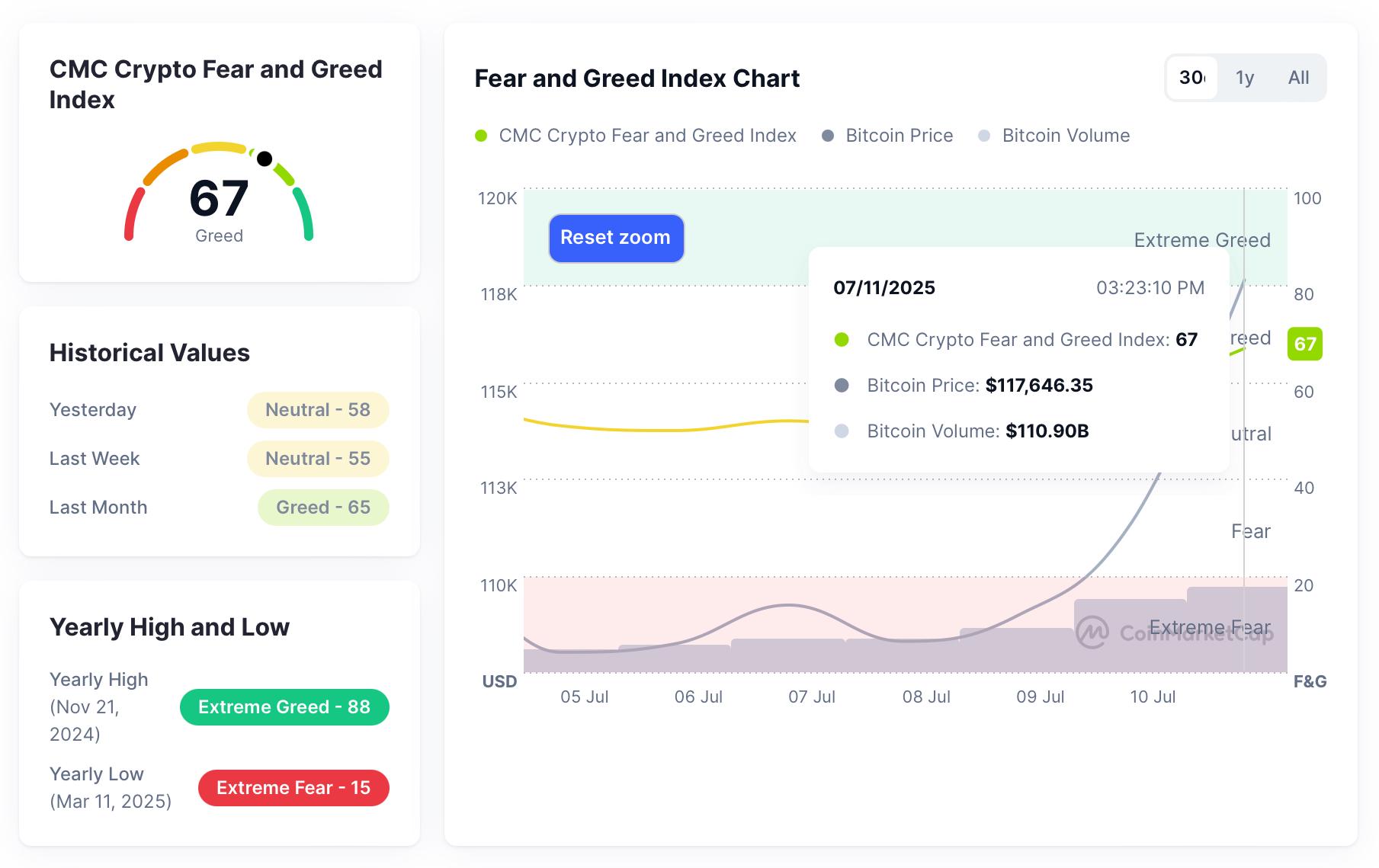
Fear and Greed Index Data Picture
Macroeconomic Background
Shift in Fed policy expectations
The minutes of the June FOMC meeting released on July 10 showed that although most officials believed that they should "remain patient", some officials (such as Waller and Bowman) have clearly expressed their support for a quick interest rate cut.
After the market reassessed the direction of the Federal Reserve's monetary policy, expectations for a September rate cut increased significantly, helping to boost Bitcoin as a risky asset.
Federal funds rate futures show that the market's probability of a rate cut in September has risen to about 70%, an increase of more than 20% from last week.
The United States has introduced large-scale tariffs on Japan, South Korea and other countries
On July 7, US President Trump announced a 25% tariff on Japan, South Korea and other countries, and threatened to impose additional tariffs on countries that support BRICS. Deutsche Bank warned that "low liquidity in the summer + tariffs + inflation fantasy + imbalanced Fed expectations" may cause market turmoil.
Geopolitical risks and the situation in the Middle East
The situation in the Middle East continued to be tense this week, and geopolitical risks have increased. Trump visited Saudi Arabia and Israel, trying to promote an anti-Iran alliance, and issued a strong warning to Iran, saying that "if a conflict breaks out, the United States may intervene." Iran strongly countered, and regional competition intensified. In the short term, the situation in the Middle East remains an important external variable for market fluctuations.
ETFs continue to inflow and corporate coin purchases drive capital repatriation
At the same time, institutional investors and companies continue to increase their investment, providing strong buying support for Bitcoin. The net inflow of spot Bitcoin ETFs represented by BlackRock and Fidelity rose again in early July, with the cumulative inflow approaching $150 billion, becoming an important driving force for the recent rise of Bitcoin.
In addition, MicroStrategy, Trump Media, GameStop and other companies have recently increased their holdings of Bitcoin assets, indicating that the trend of "corporate reserve assetization" is still continuing to strengthen. The entry of these large amounts of funds has offset the liquidity impact brought about by the unlocking of tokens, and also enhanced the market's expectations for the stability of mainstream currencies.
3. Hash rate changes
From July 5 to July 11, 2025, the Bitcoin network hash rate fluctuated as follows:
On July 5, the total computing power (hash rate) of Bitcoin showed a trend of rising first and then falling, gradually climbing from 948.24 EH/s to the intraday high of 1.0418 ZH/s, and then fluctuated and fell to 867.11 EH/s, and rose slightly to 909.57 EH/s at the end of the day. On July 6, the hash rate fell to 821.82 EH/s in the morning, and then rebounded strongly, once rising to 995.30 EH/s. After that, the trend weakened, and fluctuated and pulled back twice throughout the day, and fluctuated and fell to 902.59 EH/s at the close. On July 7, the overall computing power continued its downward trend, with multiple surges and declines during the session, fluctuating between 961.41 EH/s, 886.68 EH/s and 944.21 EH/s, and further falling to 842.87 EH/s at the end of the day, indicating a certain instability in the power supply or computing power deployment side.
On July 8, the hash rate continued to fluctuate, rebounding to 895.43 EH/s during the day, but then retreated, falling to a low of 792.20 EH/s, and finally closed at 817.77 EH/s, continuing the previous decline. On July 9, the hash rate continued to weaken, reaching a weekly low of 782.96 EH/s in the morning. It then rebounded strongly, rising to 993.68 EH/s during the day, reflecting the short-term release of a large amount of hash power temporarily restarted or adjusted. It fell back to 917.05 EH/s at the end of the day. On July 10, the hash rate fluctuated upward, gradually climbing from 867.02 EH/s to 1.0095 ZH/s. After entering July 11, the hash rate continued to rise, reaching a high of 1.0214 ZH/s, and then fell back, hovering around 921 EH/s at the time of writing.
This week, the hash rate trend showed significant fluctuations, which can be divided into three stages: July 5-6: the hash rate quickly fell after reaching 1.0418 ZH/s, showing signs of some miners going offline or adjusting their hash rate; July 6-8: the hash rate of the entire network continued to fluctuate downward, gradually falling from the stage high of 995.30 EH/s to 792.20 EH/s, reflecting the potential impact of network load pressure or power supply fluctuations in some regions; July 9-10: the hash rate rebounded quickly after hitting the bottom, indicating that some mines resumed operation, the network hash rate was repaired and returned to a high level, and the overall trend was a fluctuating recovery. Overall, the hash rate of the Bitcoin network showed high volatility during this cycle, and it may still maintain a volatile pattern in the short term. It is necessary to pay attention to the further impact of the operation of major mines in North America and Asia and changes in energy costs on network hash rate.
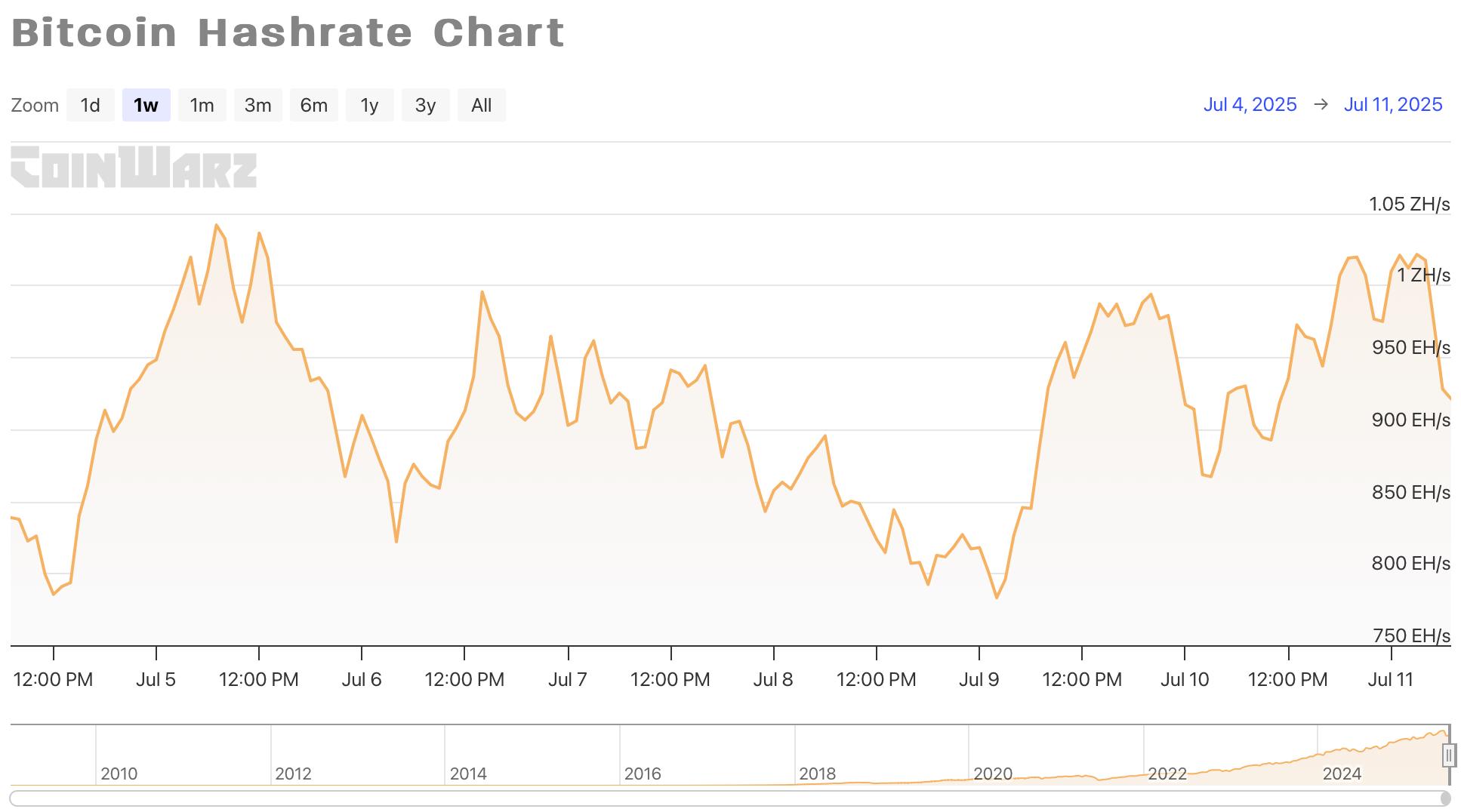
Bitcoin network hash rate data
4. Mining income
According to YCharts data, the total daily income of Bitcoin miners this week (including block rewards and transaction fees) is as follows: July 5: $53.45 million; July 6: $54.69 million; July 7: $52.45 million; July 8: $49.38 million; July 9: $56.61 million; July 10: $60.48 million. Overall, the average daily income of miners this week remained in the range of about $49 million to $60 million, showing a relatively stable and slightly rising trend. Compared with the same period of the previous month, the overall income level has increased slightly, mainly benefiting from the recent breakthrough in Bitcoin prices and the recovery of on-chain transaction activity, which in turn promoted the increase in transaction fee income. Among them, the peak of this week reached $60.48 million on July 10, mainly driven by the rise in Bitcoin prices and the increase in trading volume on that day.
From the perspective of daily revenue per unit computing power (Hashprice), Hashrate Index data shows that Hashprice showed a trend of fluctuating upward and sharply rising at the end of this week. As of the time of writing on July 11, Hashprice was reported at $63.97/PH/s/day, close to the historical high. Specifically: from July 5 to 6, Hashprice remained at about $58.45/PH/s/day, with limited overall fluctuations; on July 7, it rose slightly to $59.29/PH/s/day, followed by a brief correction; on July 9, it rose again to $59.38/PH/s/day; on July 10, it rose significantly, until it reached $63.97/PH/s/day on the 11th, setting a new high in nearly three months.
Based on the mining income and Hashprice performance this week, it can be seen that the overall profitability of miners is stable and has an upward trend in the short term. If the Bitcoin price continues to remain strong and the transaction activity on the chain remains at the current level, it is expected that Hashprice will fluctuate in the range of 63 to 65 US dollars/PH/s/day, and miners will have ample profit space.
It is worth noting that as the next round of network difficulty adjustment window approaches, if the computing power continues to grow rapidly or the Bitcoin price adjusts, Hashprice may face certain downward pressure. Miners should closely monitor the Bitcoin market trend and changes in network difficulty, flexibly adjust the computing power deployment and power resource allocation, optimize mining efficiency, and improve risk resistance. In addition, the proportion of on-chain fees has gradually increased, indicating that market transaction demand has rebounded. In the future, if more innovative applications and second-layer expansion plans are implemented, trading activities are expected to further increase, becoming a new important support point for miners' income.
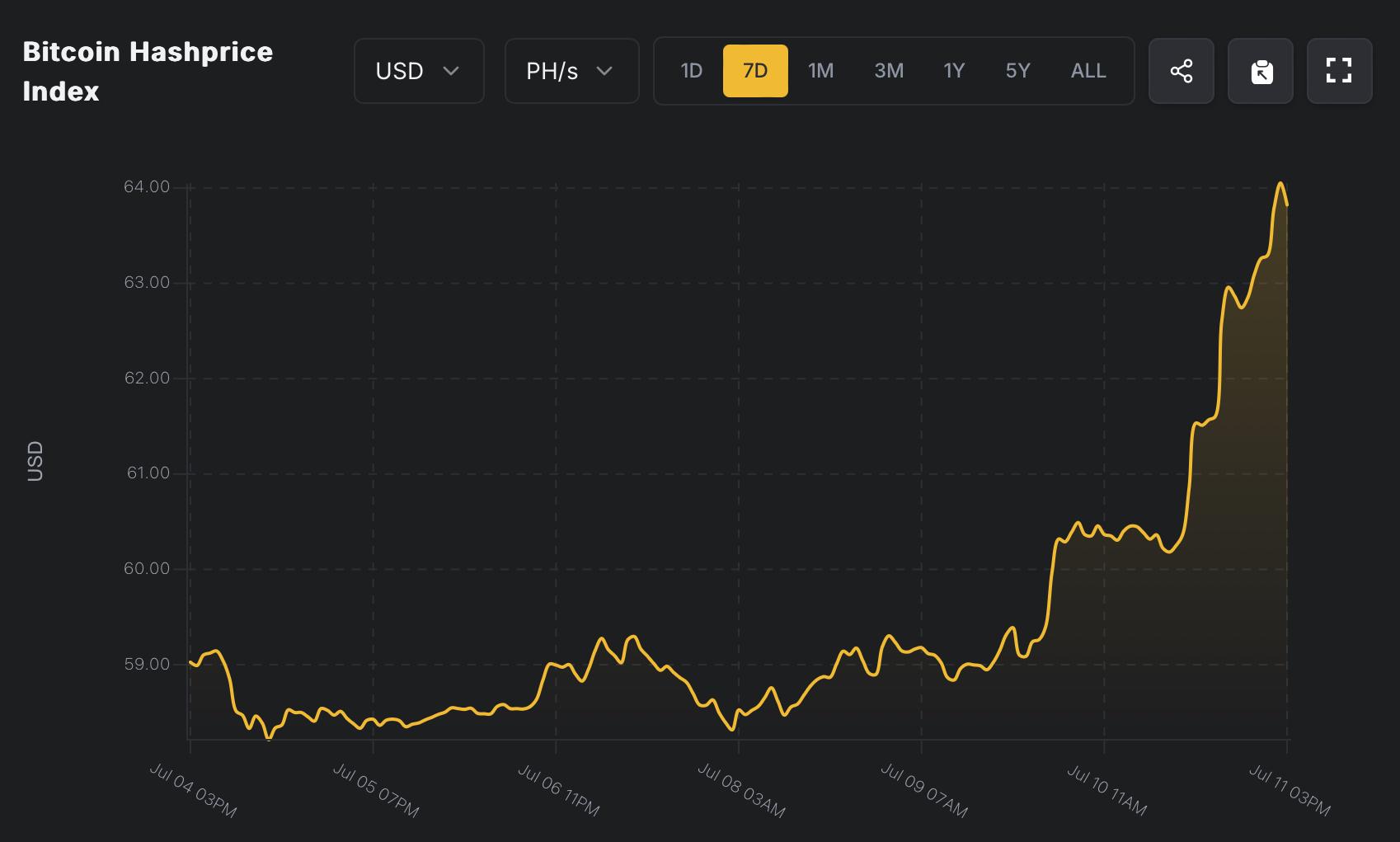
Hashprice data
5. Energy costs and mining efficiency
According to CloverPool data, as of July 11, 2025, the total computing power of the Bitcoin network has reached 915.91 EH/s, a new high for the year. The current mining difficulty of the entire network is 116.96 T. The next difficulty adjustment is expected to be carried out on July 12, and it is estimated to increase by 7.33% to 125.54 T. This reflects that the overall computing power of the network continues to rise, and miners are actively deploying more efficient mining machines, indicating that the market is still optimistic about the medium- and long-term price trend of Bitcoin. Historically, the rapid increase in mining difficulty usually means intensified competition among miners, especially in the stage of high-priced fluctuations, mining companies have increased their stakes to increase marginal output. This trend also highlights the competitive advantages of large mining companies in terms of scale effect and energy control.
From the perspective of mining costs, according to MacroMicro's latest model, as of July 9, 2025, the unit production cost of Bitcoin is approximately US$86,692.84, while the spot price during the same period is US$111,326.55. The difference between the two is US$24,633.71, and the corresponding mining cost-to-price ratio is 0.78. This ratio is at the lower end of the historical reasonable range, which means that most miners in the current market are in a stable and profitable state with considerable profit margins. In particular, medium and large mining companies with advanced mining machines and low electricity price resources may have actual unit costs as low as US$70,000 or less, and their profitability is more prominent.
On the contrary, for small miners who rely on traditional models or have higher electricity prices, although they are still profitable at present, their ability to withstand pressure is relatively weak. If the currency price falls back or the difficulty continues to rise, they may be the first to face the risk of being squeezed out.
In addition, the Mining Cost-to-Price Ratio of 0.78 also has certain market reference significance: when the value is close to or higher than 1, it usually indicates that market pressure is increasing, and some miners may be forced to shut down, reducing computing power and forming a bottom support for prices; and the current level below 0.8 indicates that Bitcoin prices still have room for downward buffer, miners are optimistic, and network security remains high.
In summary, the mining cost structure provides favorable support for miners at the current stage and also provides a solid downward foundation for the spot price of Bitcoin.
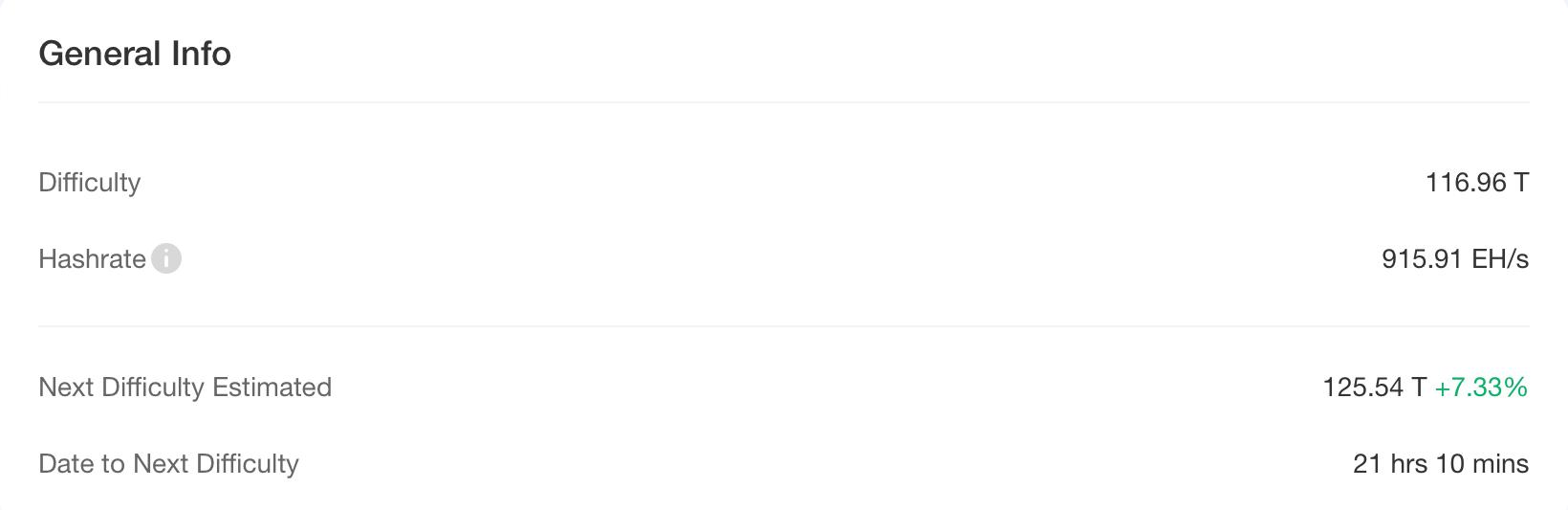
Bitcoin mining difficulty data
6. Policy and regulatory news
US Senators propose sanctions against Salvadoran President Bukele, accusing him of Bitcoin abuse and human rights violations
On July 10, Democratic senators in the United States proposed the Salvador Accountability Act (S.2058), which calls for sanctions against Salvadoran President Nayib Bukele and members of his government. The bill was proposed by Senators Chris Van Hollen, Tim Kaine, and Alex Padilla, accusing the Salvadoran government of violating international human rights standards and abusing Bitcoin. The bill requires the Trump administration to freeze the assets of relevant personnel in the United States, deny visas, and suspend financial assistance. In addition, the U.S. Secretary of State must submit a detailed report on the use of cryptocurrency in El Salvador within 90 days after the bill is passed, including information such as the amount of public funds used to purchase Bitcoin, the exchanges used, and related wallet addresses.
In response, President Bukele responded on social media, suggesting that the US lawmakers' attempt to impose sanctions was impure. It is worth noting that Bukele had a good relationship with President Trump before. He was invited to visit the White House in April this year, and two months later, Trump's advisers met with him to discuss cryptocurrency cooperation.

Related images
7. Mining News
Vitalik: The environmental cost of avoiding excessive regional concentration in the crypto space is acceptable, better than the negative impact of mining
On July 6, Ethereum co-founder Vitalik Buterin responded to a user's view on the collective carbon footprint. The user pointed out that "industry professionals may fly frequently around the world to attend multiple events, but this behavior is not the actual goal of solving the problem, but for business or spending time with friends." Vitalik responded, "In order to avoid excessive concentration of cryptocurrency in one geographical area, the cost of sacrificing the environment is acceptable, and this trade-off is proportional to a higher negative impact of mining."
Russia begins nationwide registration of cryptocurrency mining equipment to combat illegal mining and increase tax revenue
On July 7, according to Cryptonews, the Russian Ministry of Energy has begun compiling a national registration system for cryptocurrency mining equipment to combat illegal mining activities and increase tax revenue.
The registration system, which will serve as a central database for all cryptocurrency mining equipment in the country, was developed by the Ministry of Energy in conjunction with the Federal Tax Service and the Ministry of Digital Development. Russian Deputy Energy Minister Petr Konyushenko said the system will help authorities "precisely identify" who is using electricity for cryptocurrency mining, ensure miners comply with relevant laws and increase tax revenue.
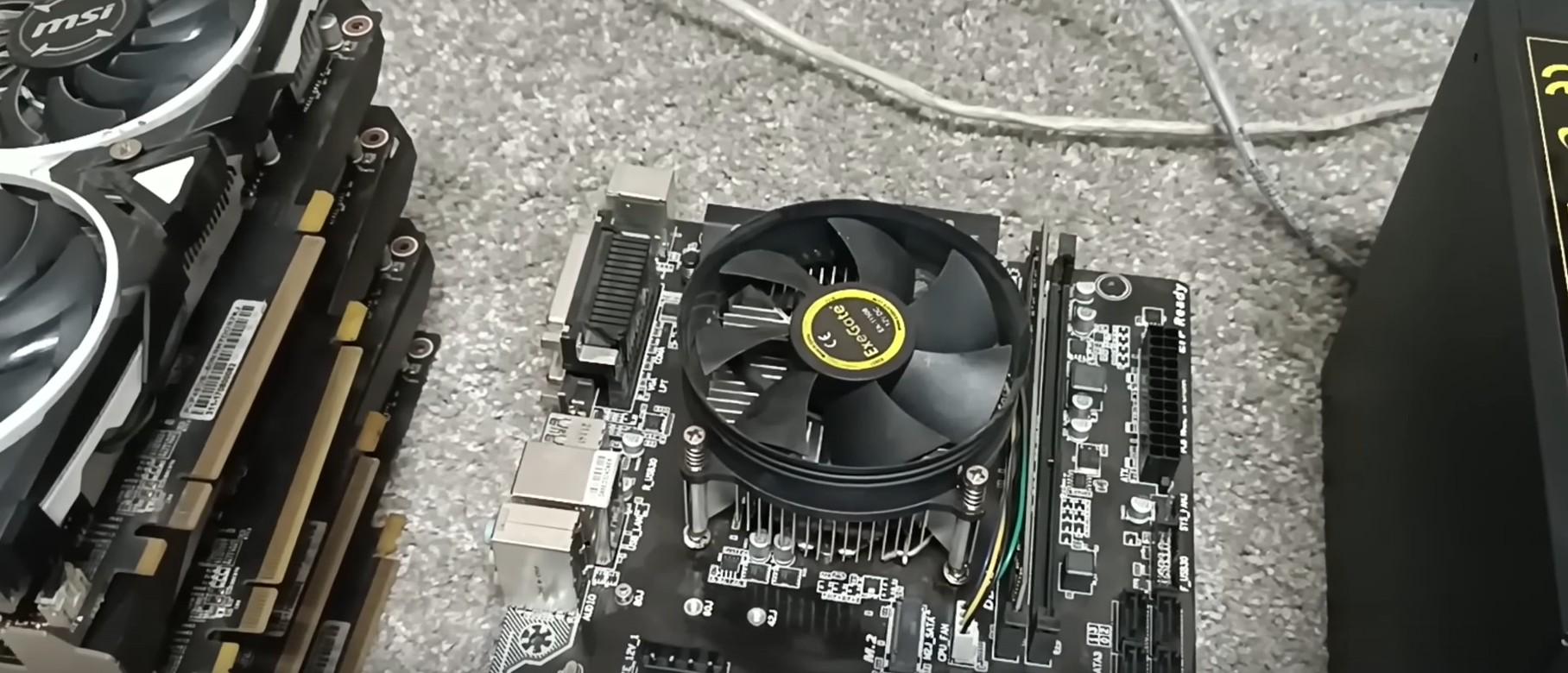
Related images
Trump's second son Eric Trump: Trump does not own a Bitcoin mining company
On July 10, Trump’s second son Eric Trump posted on a social media platform that US President Trump does not own a Bitcoin mining company.
8. Bitcoin related news
Global corporate Bitcoin holdings dynamics (statistics for this week)
1. Strategy (formerly MicroStrategy, United States)
From June 23 to 29, 4,980 BTC were added, bringing the total holdings to 597,325.
2. BlackRock (United States)
As of July 8, BlackRock’s IBIT Fund currently holds 700,307 bitcoins, worth approximately $75.5 billion.
3. El Salvador (Country)
In the past 7 days, 8 BTC were added, and the current total holdings rose to 6,230.18.
4. Smarter Web Company (UK)
On July 7, the company increased its holdings by 226.42 BTC, bringing its total holdings to 1,000 BTC.
5. The Blockchain Group (Europe)
On July 7, 116 BTC were added, bringing the total holdings to 1,904.
6. Monochrome (Australia)
As of July 4, its spot Bitcoin ETF holdings rose to 937 BTC.
7. Coinsilium Group (UK)
On July 7, the company increased its holdings by 14.9 BTC, and its total holdings are currently 88.63 BTC.
Bitcoin Treasury Dynamics of Publicly Listed Companies (This Week)
Murano (Nasdaq-listed real estate company)
On July 8, Murano announced that it had signed a $500 million equity agreement to establish Bitcoin reserves and purchased 21 BTC. It plans to use BTC for hotel payments and membership rewards and join the "Bitcoin for Corporations" alliance.
Nakiki SE (German listed company)
On July 8, Nakiki SE announced that it intends to become the first listed company in Germany to fully adopt a "pure Bitcoin" treasury strategy. It plans to propose a name change and strategic adjustment at the 2025 shareholders' meeting, and is discussing with investors about raising funds through issuing shares to purchase BTC.
Metaplanet (Japanese listed company)
On July 8, Metaplanet launched the second phase of its Bitcoin strategy, planning to use BTC as collateral for financing and considering acquiring a local Japanese digital bank to expand digital financial services.
Sequans Communications (NYSE listed company)
On July 8, Sequans completed US$384 million in financing, all of which will be used to launch the Bitcoin Treasury Plan, including US$195 million in PIPE financing and US$189 million in convertible bond issuance.
Remixpoint (Japanese listed company)
On July 9, Remixpoint announced that it had raised 31.5 billion yen (about 215 million U.S. dollars) in financing, which it plans to use in full to increase its holdings of Bitcoin, with the target holding increasing from the current 1,051 to 3,000. It has previously announced that the CEO's salary will be paid in full in Bitcoin.
DDC Enterprise (NYSE listed company)
On July 10, DDC Enterprise and Animoca Brands signed a non-binding memorandum of understanding to cooperate in advancing Bitcoin yield enhancement strategies. Animoca Brands will provide up to $100 million in BTC, with DDC responsible for operations and risk management.
K Wave Media (NASDAQ listed company)
On July 10, K Wave Media announced that it had received $1 billion in financing to support its Bitcoin strategy, including a $500 million convertible bond agreement and a $500 million standby equity agreement. It has purchased the first batch of 88 BTC and plans to use at least 80% of the financing proceeds to purchase BTC, with the goal of expanding to 10,000 bitcoins.
Rich Dad Poor Dad author: Losers warn of Bitcoin crash to scare off speculators, I will just buy more
On July 5, Robert Kiyosaki, author of Rich Dad Poor Dad, tweeted, "Losers use "clickbait" to keep warning of Bitcoin's collapse. They want to scare away speculators. I hope Bitcoin collapses because I will only buy more."

Related images
Musk: The American Party will embrace Bitcoin
On July 7, a user named X asked whether the US party would embrace Bitcoin. Musk replied: "There is no hope for legal currency, so yes."
BlackRock IBIT holdings exceed 700,000 Bitcoins
On July 8, after recording a net inflow of $164.6 million on Monday, BlackRock's IBIT fund currently holds 700,307 bitcoins, worth approximately $75.5 billion. This data comes from Apollo co-founder Thomas Fahrer.
According to BlackRock's official iShares website, as of last Thursday, IBIT held 698,919 bitcoins, meaning the fund added 1,388 new bitcoins in two trading days. According to Bitbo data, IBIT accounts for more than 55% of the total holdings of all U.S. bitcoin spot ETFs.
The fund has achieved a total return of 82.67% since its inception in January 2024. The Bitcoin holding milestone comes amid reports that BlackRock’s revenue from IBIT has surpassed that of its flagship product, the iShares Core S&P 500 ETF.
Bitwise: Bitcoin holdings of listed companies exceeded 847,000, with Q2 increase reaching a record high
On July 10, Bitwise released the "2025 Q2 Enterprise Bitcoin Adoption Report", which showed that as of June 30, there were 125 listed companies in the world holding Bitcoin, with a total of 847,000 pieces, accounting for 4.03% of the total supply of Bitcoin, with a total market value of approximately US$91 billion, a month-on-month increase of 60.93%. This quarter, the new purchase volume was 159,000 pieces, the highest in history; 46 new companies held coins. Among the top companies, Strategy ranked first with a holding of 597,000 pieces, followed by MARA Holdings (49,940 pieces) and the new Twenty One (37,230 pieces). The report also pointed out that GameStop completed its first purchase and Trump Media is raising $2.5 billion for Bitcoin accumulation.
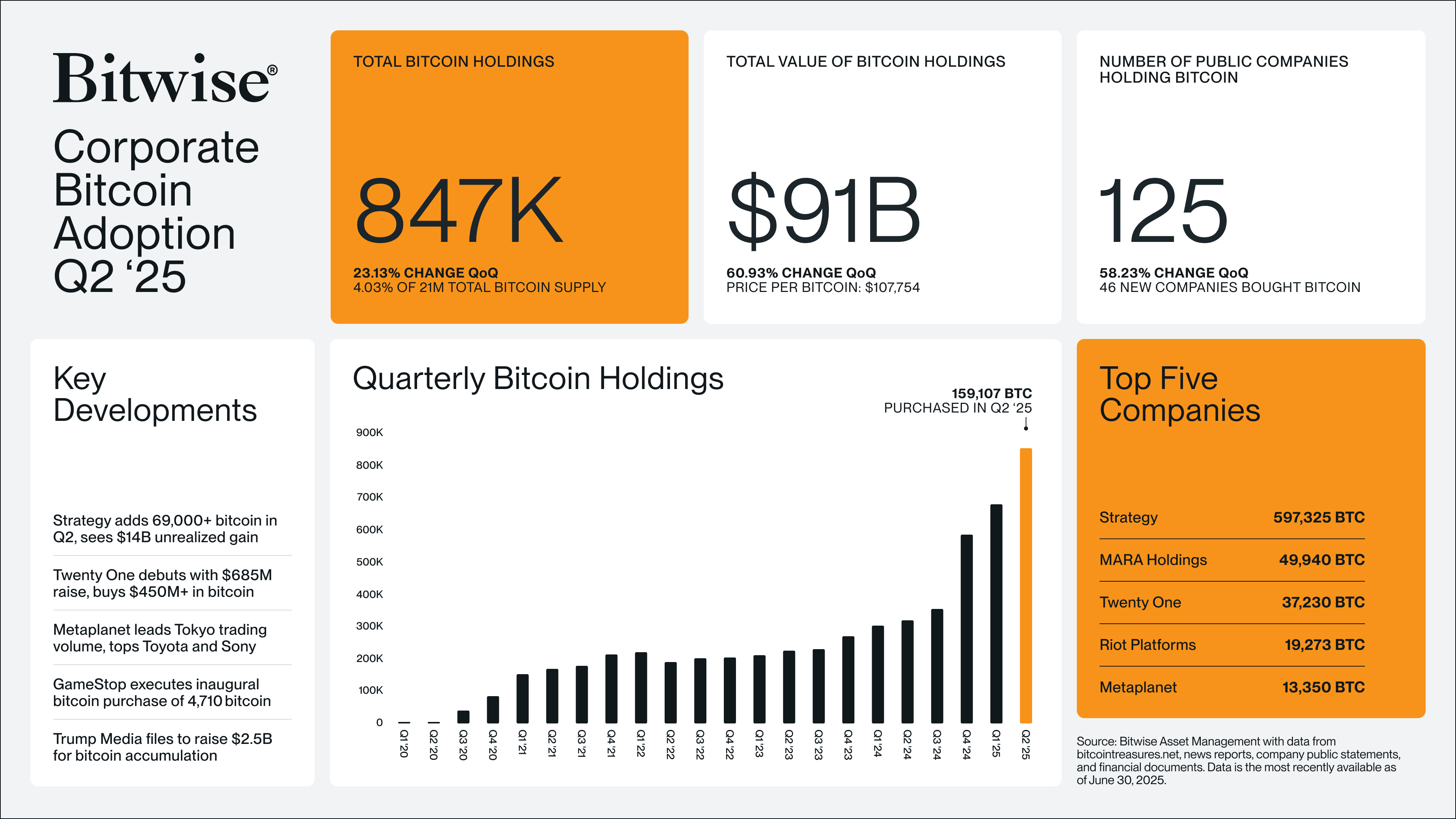
Related images
Rising institutional demand pushes Bitcoin to new highs
On July 11, Tickmill Group analyst Patrick Munnelly said in a report that Bitcoin has risen to a record high, driven by the interest of institutional investors and President Trump's support measures. He said: "The recent surge in Bitcoin's value is driven by continued buying by institutional investors, who have purchased large quantities of available supply, resulting in a continuous reduction in liquidity on trading platforms." In addition, Trump ordered the establishment of a strategic reserve of Bitcoin, and the U.S. Senate passed a bill last month to provide a regulatory framework for stablecoins.