
Source: The Token Dispatch
Author: Thejaswini M
Original title: Decentralization, But Make It BlackRock
Compiled and edited by: BitpushNews
There is a moment in every revolution when you realize that the rebels have won.
It wasn't because they overthrew the old system, but because they themselves became the new system.
It feels really strange to watch Larry Fink talk about tokenization with the same enthusiasm as ICO founders in 2017. This is the same guy who called Bitcoin a "money laundering index" back in 2017.
However, he now states on CNBC that cryptocurrencies play a "critical role" in diversified investment portfolios and that "all financial assets will be tokenized."
What has changed?
I don't think Fink experienced some kind of "Damascus moment" and suddenly had an epiphany about Satoshi Nakamoto's white paper.
I think he realized something more practical: if you can't beat them, then recruit them.
If you're going to incorporate them, you have to do it so thoroughly that ten years from now, people won't remember there was ever another option.
This is the real core of BlackRock's tokenization plan. From a dystopian perspective, it's "brilliant."
Okay, let me break it down, because BlackRock is very good at making this sound complicated and visionary, but in reality it's quite straightforward.
BlackRock manages $13.5 trillion in assets. They've identified that by 2040, the world will need approximately $68 trillion in infrastructure investment—new power grids, data centers, bridges, ports, and all those mundane but essential things that keep modern life running. Governments are running out of money. Banks are constrained. So, where will the money come from?
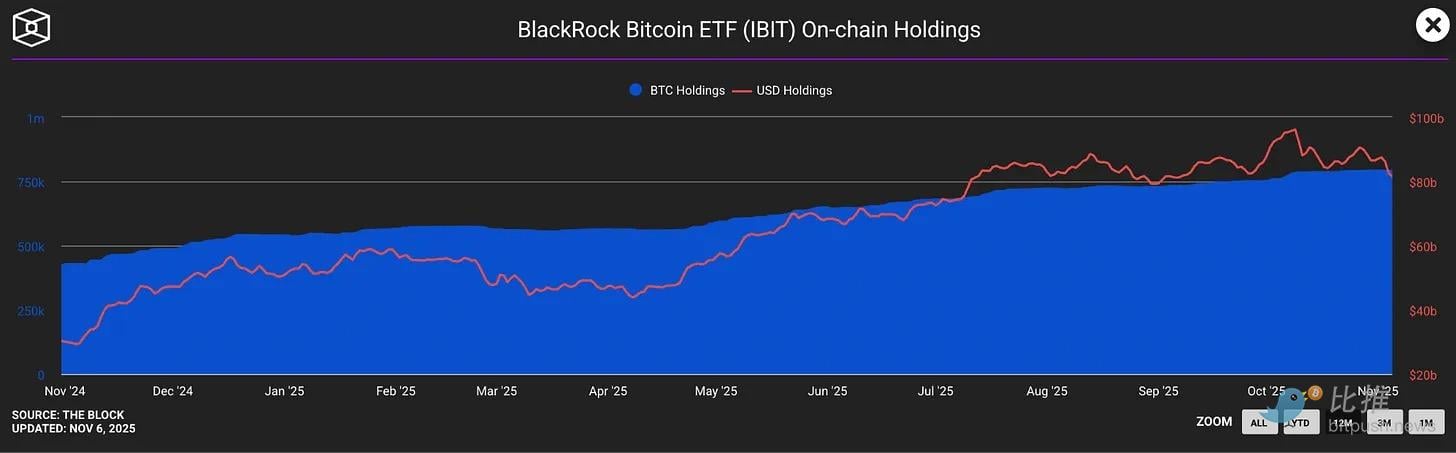
Ordinary people's savings, your money, my money. That $25 trillion lying in US bank accounts and money market funds earns almost no interest.
The problem is, nobody wants to lock their savings in illiquid infrastructure projects for 30 years. You need to access your money. Maybe not today, maybe not tomorrow, but you need to know you'll have it when you need it. That's precisely why your money is in a bank account in the first place.
BlackRock's solution? Tokenization. Their plan was to put these infrastructure assets on the blockchain, break them down into tiny pieces, and make them tradable 24/7. Suddenly, that 30-year bridge project didn't seem so daunting anymore, because, hey, you can sell your tokens anytime. It became liquid.
But... is that really the case?
This is when my philosophical side begins to come into play. What exactly is liquidity?
If I own a house, that's illiquid. I can't immediately convert it into cash. But if I own shares in a real estate investment trust (REIT) that holds those houses, that's liquid; I can sell those shares immediately. The houses themselves haven't changed. They're still houses. But somehow, the financial instruments representing them have become liquid.
Tokenization does the same thing, just at a deeper level. BlackRock wants to take a data center (illiquid) and then create tradable tokens (liquid) representing ownership of that data center. You can then trade these tokens on the blockchain 24/7. Problem solved, right?
Not entirely. Because the asset itself remains illiquid.
That data center will still take 20 years to generate a return. That bridge will still take 30 years to recoup its costs. What tokenization does is distribute this illiquidity among many people, each of whom feels they own liquidity because they can sell it to the next person.
This isn't inherently a bad thing; financial markets have always done this. But let's be honest about what's happening. BlackRock didn't solve the liquidity problem. They solved the perception problem. They made illiquid assets feel liquid, which is actually more powerful than making them truly liquid because it means people will voluntarily put money into those investments.
I can clearly see the "centralization of decentralization".
BlackRock makes no secret of this. They are explicitly building their own proprietary tokenized infrastructure. Not Ethereum (too decentralized and uncontrollable). Not public blockchains for critical parts (though they will use them when convenient, such as leveraging their BUIDL fund to access DeFi liquidity). They are joining Goldman Sachs and BNY Mellon in building private, permissioned blockchains.
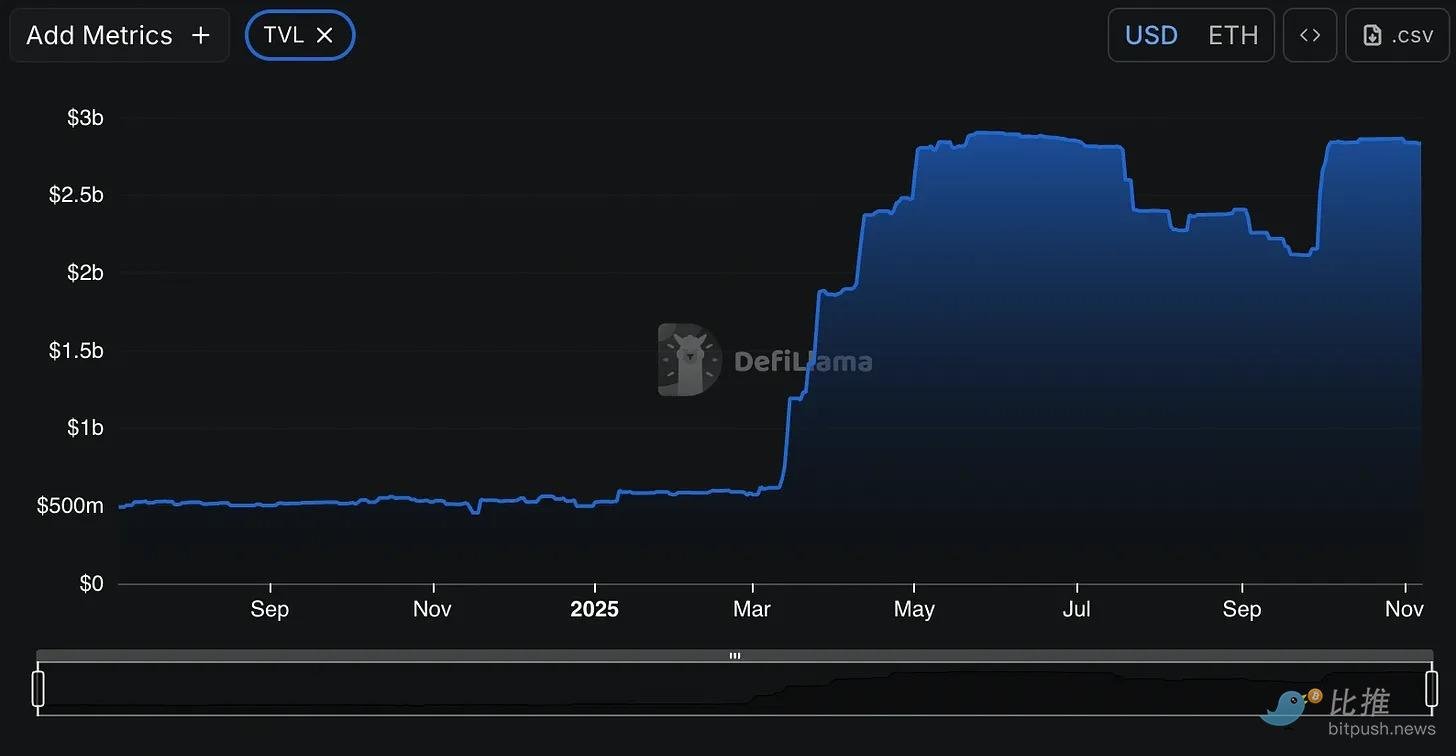
Let me repeat: Private. Permission required. Blockchain.
Do you know what that is? It's a database. A very fancy, expensive database with cryptographic signatures, but it's still a database controlled by BlackRock.
I'm not even angry about it. I actually admire it. It takes real courage to examine a technology designed to destroy you and then figure out how to use it to make yourself more indispensable. It's like how the record industry invented Napster.
Let's take a look at what BlackRock is building, because the scope is truly astonishing:
- Platform: They are creating the infrastructure upon which tokenized assets depend. Instead of using someone else's blockchain, they are building their own track and integrating it with their Aladdin risk management system.
- Compliance layer: Their "sToken framework" embeds KYC/AML directly into smart contracts. Transfer limits, ownership rights, and jurisdictional restrictions are all enforced by the code. Their code.
- Custody: They hold the actual assets. You own tokens representing those assets, but BlackRock owns bridges, data centers, and real estate.
- Distribution: through their ETF platform, their institutional relationships, and their partnerships with companies like Securitize.
- Pricing: Because they control the issuance and have access to data (thanks to the acquisition of Preqin), they effectively control the price discovery of these tokenized assets.
So… what part of this is decentralized? Blockchain? Great. The technology is decentralized, but power is completely centralized.
Here's a detail I find quite interesting: Vanguard—whose executives have publicly stated that Bitcoin "has no intrinsic economic value"—is now the largest shareholder of MicroStrategy, a company whose sole purpose is to hold Bitcoin.
How did they do it? Through index funds. Vanguard was required to buy anything included in the index, even if they thought it was a bad idea.
Now, imagine BlackRock successfully tokenizing everything. Tokenized ETFs are added to indices. Index funds, which account for about 40% of the US stock market, are forced to buy them. Trillions of dollars of passive capital will automatically flow into BlackRock's ecosystem, whether it makes sense or not.
That's where the real genius lies. BlackRock isn't trying to convince everyone that tokenization is good. They're trying to make it inevitable. Once it's in the index, funds will automatically flow in.
$68 trillion trick
Returning to that infrastructure funding gap—$68 trillion. A massive number. Where will the money come from?
BlackRock's pitch is essentially: "We will tokenize these infrastructure assets, making them accessible to ordinary investors through fragmented ownership, thus democratizing investment that was previously exclusive to a select few."
This sounds great. But note what's happening: your liquid savings (in your bank account, available when needed) are now funding an illiquid infrastructure project (locked up for decades). Tokenization makes you feel secure doing this by creating the illusion of liquidity.
Your capital has now become illiquid. You just don't feel it because you can trade your tokens.
To reiterate, this isn't necessarily evil. Infrastructure needs funding. Your savings need returns. But let's not pretend this is purely for innovation. It's about finding a socially acceptable way to move retail savings from safe, liquid instruments to risky, illiquid ones. Tokenization is simply the "psychological wrapping" that makes this acceptable.
So, what exactly happened?
I pondered this question until late at night, and the following kept appearing in my mind:
BlackRock has a problem: a huge infrastructure funding gap, and the only realistic source of capital is retail savings, but people are unwilling to lock up their money for 30 years.
They have a solution: tokenization creates the illusion of liquidity, making people more comfortable investing their savings in illiquid assets.
They have an opportunity: by building proprietary infrastructure, they can control the entire ecosystem—issuance, compliance, hosting, distribution, pricing—while using “democratized” language to make it sound like they’re doing you a favor.
But this could actually succeed. Not because it's the best solution, but because BlackRock is so large that they can make it the only solution. Once the tokenized product is listed in major indices, capital will automatically flow in. Once capital flows in, the ecosystem is built. Once the ecosystem exists, alternatives become obsolete.
I'm not saying tokenization itself is bad. I'm not even sure it is. Financial innovation often creates winners and losers, and the losers are usually those who don't realize what's happening until it's too late.
However, what bothers me is the language used here: "democratization"; "completing the work that began 400 years ago"; "bringing finance to the people".
BlackRock is not bringing finance to the people.
They are channeling the people's money to infrastructure projects that need funding.
This is not the same thing.
To me, true democratization is about autonomy. It's the difference between being invited to the table and actually having a voice at the table.
When your retirement savings automatically flow into an index you never chose because of tokenized infrastructure, that's not participation. That's just a more complex way of being told what to do with your money.
Democracy requires the ability to say "no." BlackRock's system is built on the assumption that you won't say "no."
Maybe this is fine. Maybe we really do need a more efficient way to finance infrastructure. Maybe tokenization is the real innovation. Maybe I'm just cynical because I've witnessed financial innovation consistently benefiting innovators more than participants.
But when the world’s largest asset management company told me they were going to use their centralized, proprietary technology, which they control at every level, to “democratize” finance… man, I don’t know, it doesn’t sound like democracy to me.
It sounds like something else. Something impressive, perhaps inevitable, or even necessary.
But it's not democracy.
That's all for the tokenization of "BlackRock style".
Please examine everything, especially the details.