1. Review of the incident: The rumor chain of "Presidential Dinner" or "Binance's investment"
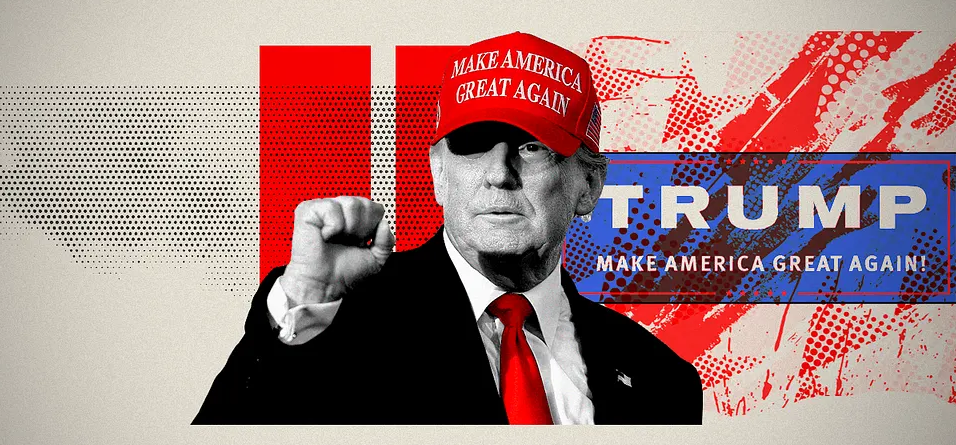
Origin: Recently, a picture of "Trump invites $TRUMP token holders to attend the Mar-a-Lago dinner" circulated in the crypto community, claiming that token holders have the opportunity to obtain VIP status;
Transmission path: The image was forwarded by some Twitter influencers and then deleted, causing fluctuations in the $TRUMP token;
Falsification: There is no event announcement on the official website of Mar-a-Lago. This is most likely a narrative conjecture based on [On May 13, 2024, Trump invited some holders of Trump Digital Trading Card Series NFT to participate in a dinner].
Previous events: Trump family crypto project WLFI issued a statement through its official X account to clarify that the news previously reported by the Wall Street Journal, Bloomberg and other media that WLFI and Binance discussed investing in the company was unconfirmed and seemed to be politically motivated, aimed at damaging the crypto industry;
2. Deep logic: market manipulation model under the narrative of no owner
Data proves: In Q1 2025, the amount of financing in the crypto industry fell by 72% year-on-year, the number of new projects dropped sharply, the market lacked real benefits, and investors turned to "rumor arbitrage";
Communication psychology: According to a CoinMarketCap survey, 68% of retail investors judge the credibility of news based on the title alone, and are extremely sensitive to celebrity-related narratives (e.g., the search volume for Musk and Trump-related tokens increased by 400%).
The maturity of the counterfeiting industry chain
Fake materials: AI-generated pictures/videos (such as Sora’s production of Trump’s speech), fake media screenshots (WSJ, Coindesk, etc.);
Communication matrix: paid KOL ($500-2000 per tweet), robot forwarding (cost $0.01 per tweet);
On-chain coordination: Whales build positions in advance and sell in batches after rumors are released (e.g. a certain address made a profit of $2.3 million in the $TRUMP event);
Cost-benefit ratio: The cost of a single fraud is about $50,000, the potential profit exceeds one million, and the legal risk is close to zero;
On-chain anonymity: 95% of Meme coin issuers use mixers to transfer funds, making them extremely difficult to track.
3. Survival Guide
Source checking: Use Google to reverse search the image and verify the original link of the media report (such as searching the WSJ official website);
On-chain monitoring: Track changes in token holdings through Arkham and Nansen. If whales increase their holdings in advance and there is no project progress, be alert to the possibility of price manipulation;
Position isolation: set the investment limit of Meme coins to 5% of the total funds, and only use spot transactions on exchanges (to avoid contract liquidation);
Stop profit and stop loss: Set a 10% stop loss line, and exit the market in batches after the profit exceeds 30%, and avoid FOMO emotions;