1. The essence of RWA is "standardized on-chain + financial mapping of real assets"
Real World Assets refer to those economic assets that originally existed off-chain and can be measured, such as debt, real estate, supply chain receivables, brand IP, green energy, stock equity, etc. RWA completes the confirmation of ownership, splitting, and valuation mapping through blockchain technology, and circulates, mortgages, trades, or serves as a payment medium in the form of Tokens, connecting off-chain value with on-chain finance.
Compared with DeFi's pure digital assets, the key to RWA is that it has a real income basis and compliance potential. This makes RWA regarded as the core bridge for the Web3 world to "enter the real economy", and it has also become the only on-chain asset paradigm that is currently widely accepted by traditional finance, besides stablecoins.
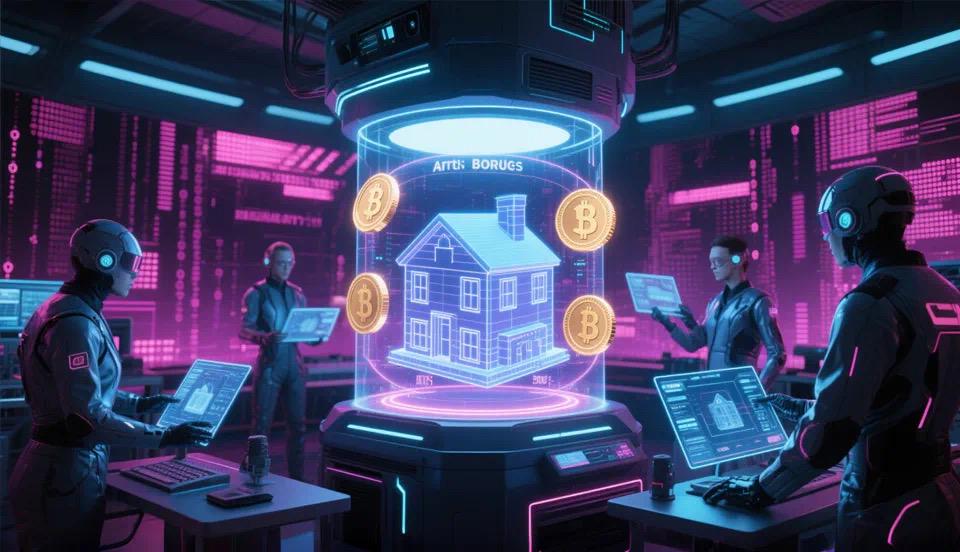
2. Three elements of infrastructure: title confirmation, valuation, and circulation
1. Title confirmation-chain reform is not about NFT, but about the standardized mapping of process assets
The first step of RWA is asset confirmation, but it is different from simple on-chain registration or NFT certificates. The real confirmation involves the original contract, the main law, regulatory disclosure and transfer mechanism. Most RWA projects entrust the underlying assets to SPV (special purpose vehicle) and realize the mapping with the on-chain token through the off-chain legal agreement. The current industry standards mostly draw on the structures of MakerDAO and Centrifuge, emphasizing the dual mechanism of off-chain real contract + on-chain mapping contract.
2. Valuation - from auditable income to AI-driven dynamic valuation
Valuation is the premise of RWA financialization. Unlike the high volatility of equity, RWA is closer to the bond structure - calculated by expected cash flow, collateral or production value. In order to improve liquidity, many platforms have begun to introduce AI audit models to track asset changes, repayment behavior or order status in real time, and promote the transition from "static valuation" to "smart valuation", which has become an important guarantee for the DeFiization of RWA.
3. Circulation-the transition from financing-type RWA to payment-type RWA
In the early days, RWA was mainly used for pledge financing, such as credit pool platforms such as Maple Finance; and as stablecoins such as USDC and EUROe began to connect to the RWA income structure, and platforms such as DCOOL launched the "payment is tokenization" mechanism, RWA began to truly enter the consumption scene and payment scene, forming a positive economic closed loop. This also means that RWA is no longer exclusive to institutions, and can also serve small and medium-sized enterprises and C-end users.
3. Policy trends: From regulatory vacuum to "controllable sandbox", Hong Kong and Singapore are competing for pilot projects
Starting from 2024, global regulators' attitudes towards RWA have become clearer:
-
Hong Kong: The Securities and Futures Commission issued the "Digital Asset Policy 2.0", encouraging RWA projects to register SPVs in Hong Kong and apply for virtual asset issuance notification exemptions (VASP exemption mechanism), and at the same time clarifying that STO (security tokens) must cooperate with licensed custody and legal opinion filing.
-
Singapore: MAS expands the scope of DPT (digital payment token) licenses to cover RWA payment tokens, and encourages licensed institutions to pilot RWA assets and DeFi pools.
-
Abu Dhabi/Bahrain: Through the open sandbox, it supports the on-chainization of carbon assets, energy certificates, real estate, etc., and becomes the frontier area of the RWA pilot in the Middle East.
-
Mainland China: Through "digital RMB + asset digitization", RWA exploration is quietly promoted on the industrial side, and some local state-owned platforms are testing "data asset" RWA contracts.
The world is moving from the "regulatory resistance period" to the "controllable support period", and the RWA compliance roadmap is gradually becoming clear.
IV. Observation of representative projects: From institutional-level RWA to payment scenario RWA
✅ Franklin Templeton
A long-established asset management institution in the United States, issuing the on-chain U.S. bond fund BENJI, which uses the public chain Solana for deployment, supports daily subscription and redemption, and has a management scale of over 300 million US dollars. A typical "traditional finance + on-chain assets".
✅ DCOOL (Web3 payment RWA platform)
Created by the DOMI CHAIN team, DCOOL launched an integrated mechanism of "real merchants + real payment + RWA token issuance", combining RWA with payment scenarios, and promoting RWA into the consumer ecosystem through the method of "payment is coinage, consumption is mining", and building a circular economy model of stablecoins and RWA assets.
✅ Ondo Finance
The US RWA project has launched a variety of bond-type RWA products and cooperated with Ethereum L2 and on-chain funds to provide DAO with low-risk return targets. Its architecture takes into account compliance, returns and liquidity, becoming a benchmark for RWA financial structure.
V. Summary: RWA is an on-chain economic "infrastructure project" that connects virtual and real
Currently, the biggest problem of Web3 is not the technical bottleneck, but the connection between value and reality. RWA builds a bridge from physical assets to digital tokens, from off-chain trust to on-chain credit. After this bridge is built, blockchain will no longer be just a "coin speculation tool", but a new financial foundation that can support the circulation of global value.
The next five years will be a critical period for the RWA ecosystem to move from technical experiments to mainstream implementation. From DeFi lending, consumer payments, supply chain financing, brand assets, to local government asset digital governance, RWA will become the intersection of "digital economy realization" and "real asset digitization".