Original title: Vertical Agents: The Crypto-Native Agent Use Cases
Original author: Defi 0x Jeff, head of steak studio
Original translation: Ashley, BlockBeats
Editor's Note: This article explores the application of AI Agents in Web2 and Web3. Web2 has widely adopted AI Agents to improve efficiency, covering areas such as sales and marketing. Web3, by combining blockchain technology, has opened up new application scenarios, especially in the fields of DeFi and decentralization. Web3 Agent has the potential to surpass Web2 Agent through token incentives, decentralized platforms, and on-chain data. The author points out that although Web3 faces challenges in the short term, its unique advantages make it likely to compete with Web2 and redefine the industry landscape in the medium and long term.
The following is the original content (for easier reading and understanding, the original content has been reorganized):
When we look at general application scenarios outside of Web3, many companies, from large enterprises to small companies, have begun to integrate AI agents into daily operations - sales, marketing, finance, legal, IT, project management, logistics, customer service, workflow automation - almost every area imaginable.
We have transitioned from humans manually crunching numbers, performing repetitive tasks, and filling out Excel sheets to having digital workers (AI Agents) that operate autonomously and are online 24/7. These agents are not only more efficient, but also significantly less expensive.
Web2 companies are willing to pay $50,000 to $200,000 or more for AI-driven sales and marketing agents. Many agent providers operate highly profitable businesses through SaaS subscription models or consumption-based models (charging by token usage).
Web2 AI Agent Application Scenarios
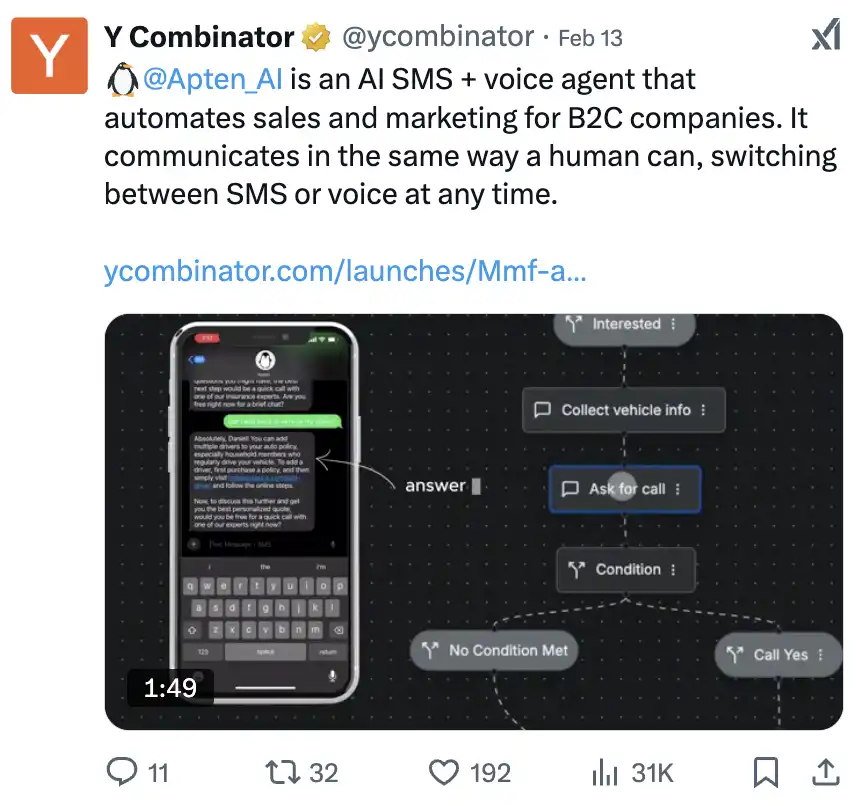
Apten_AI
AI + SMS Agent, facilitating sales/marketing process.
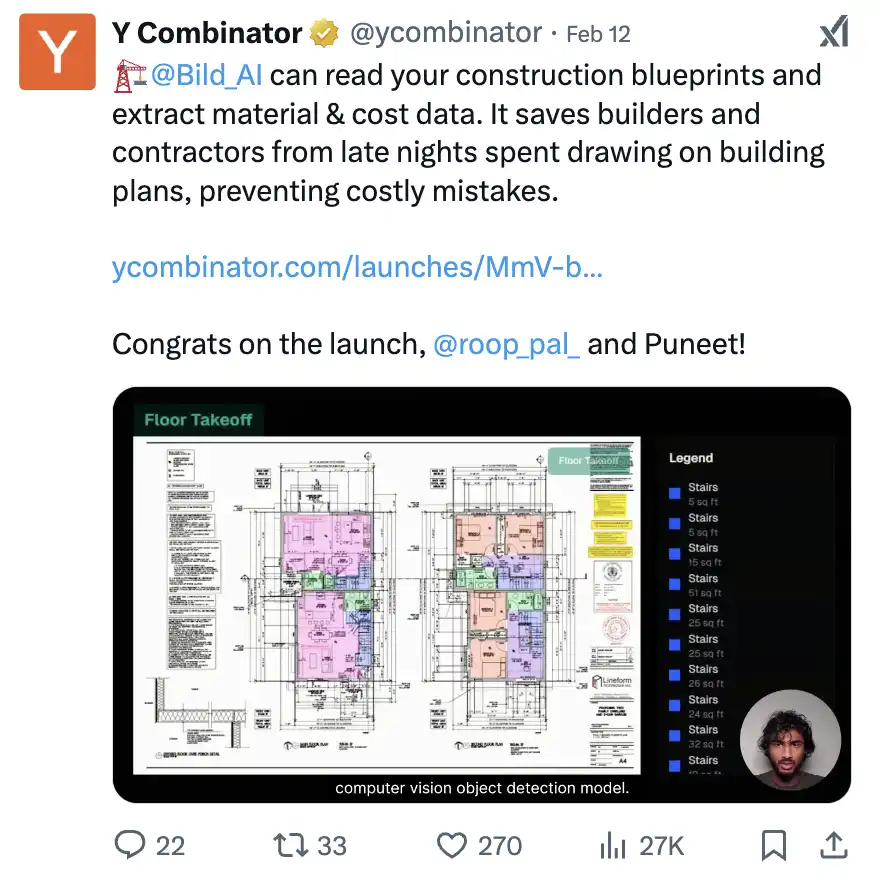
Bild_AI
Reads building blueprints, extracts material/specification data, and estimates costs based on the collected data.
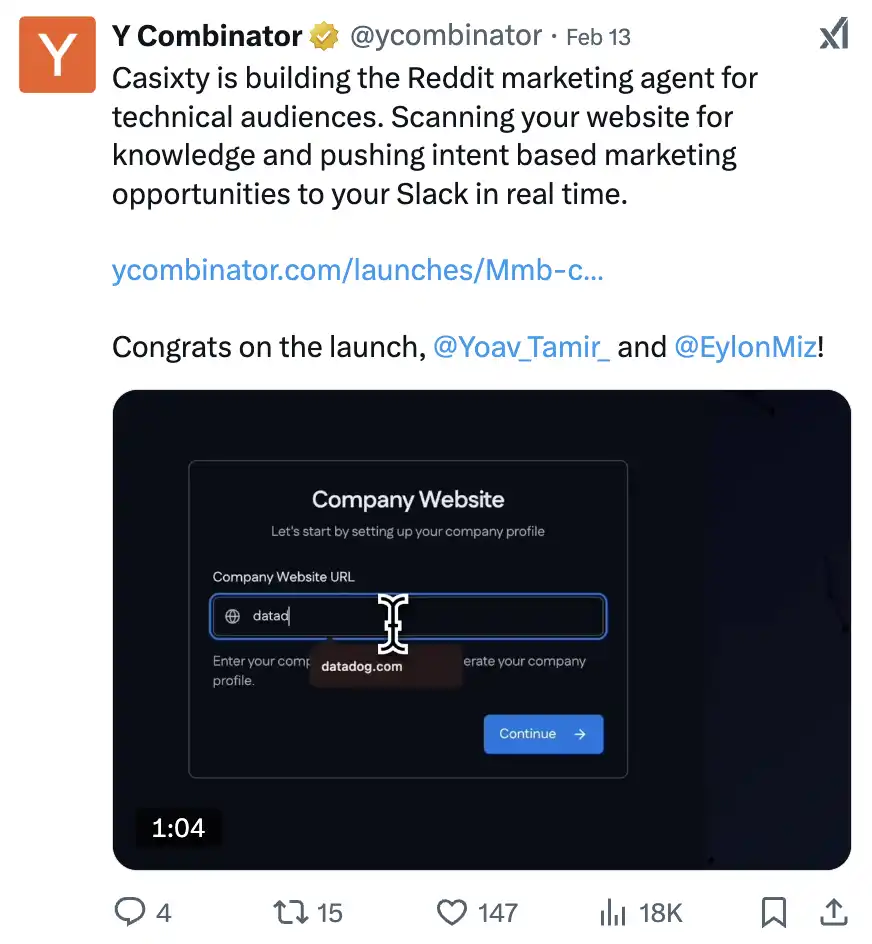
Casixty
Marketing Agent, identify popular topics on Reddit, automate responses, and increase brand engagement. Imagine this product applied to CT!
These examples show how AI agents are already transforming traditional industries, automating manual tasks and optimizing workflows. While Web2 companies have been quick to adopt AI-powered agents, the Web3 space has also begun to embrace the technology — but with one key difference.
Web3 AI Agent not only focuses on operational efficiency, but also integrates blockchain technology to unlock new application scenarios.
Web3 AI Agent: More than just a "nonsense literature" robot
A few months ago, most Web3 Agents were just conversational bots on Twitter. However, the industry landscape has changed significantly. These Agents are now being integrated with various tools and plugins, enabling them to perform more complex operations.
sendaifun
Solana AI Agent suite, supporting everything from basic token management to complex DeFi operations.
ai16z dao
Integrates over 100 plugins, ranging from social media interactions to automated trading and DeFi operations.
Co d3 xOrg, @Almanak__
A no-code infrastructure that allows users to create autonomous trading agents.
gizatechxyz
An autonomous DeFi assistant tailored for investors.
DeFi is the largest industry in cryptocurrency (TVL exceeds $100 billion), and the most influential crypto-native AI Agent application scenario belongs to DeFAI.
AI Agents in DeFi do more than just simplify complex experiences through NLP interfaces. They also leverage on-chain data to unlock new opportunities.
Blockchain provides a large amount of structured data - credentials, transaction history, profits and losses, governance activities, lending patterns, etc. AI can process, analyze and extract insights from this data, automate workflows and enhance decision-making capabilities.
Web2 Vertical Agent powered by encryption technology
We are also witnessing the convergence of Web2 vertical agents and crypto-native models. A typical example is the launch of virtuals_io on Solana.
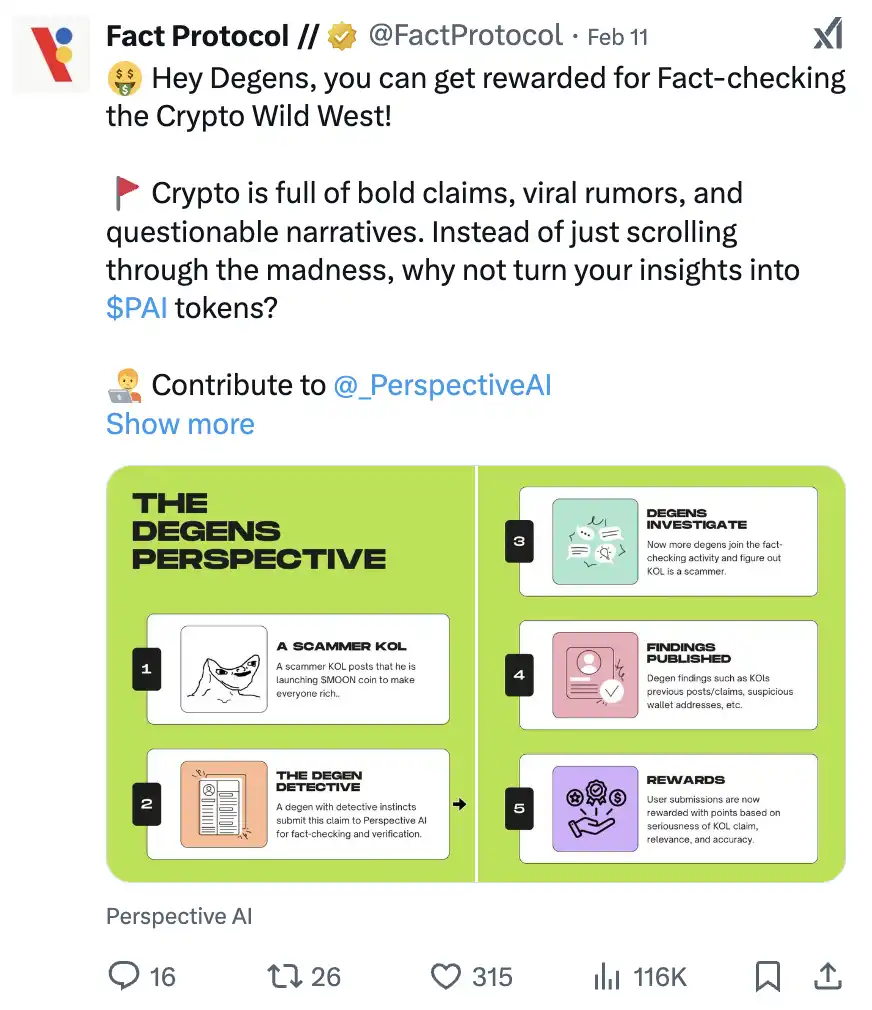
_PerspectiveAI
AI-powered fact-checking that continuously improves through community feedback.
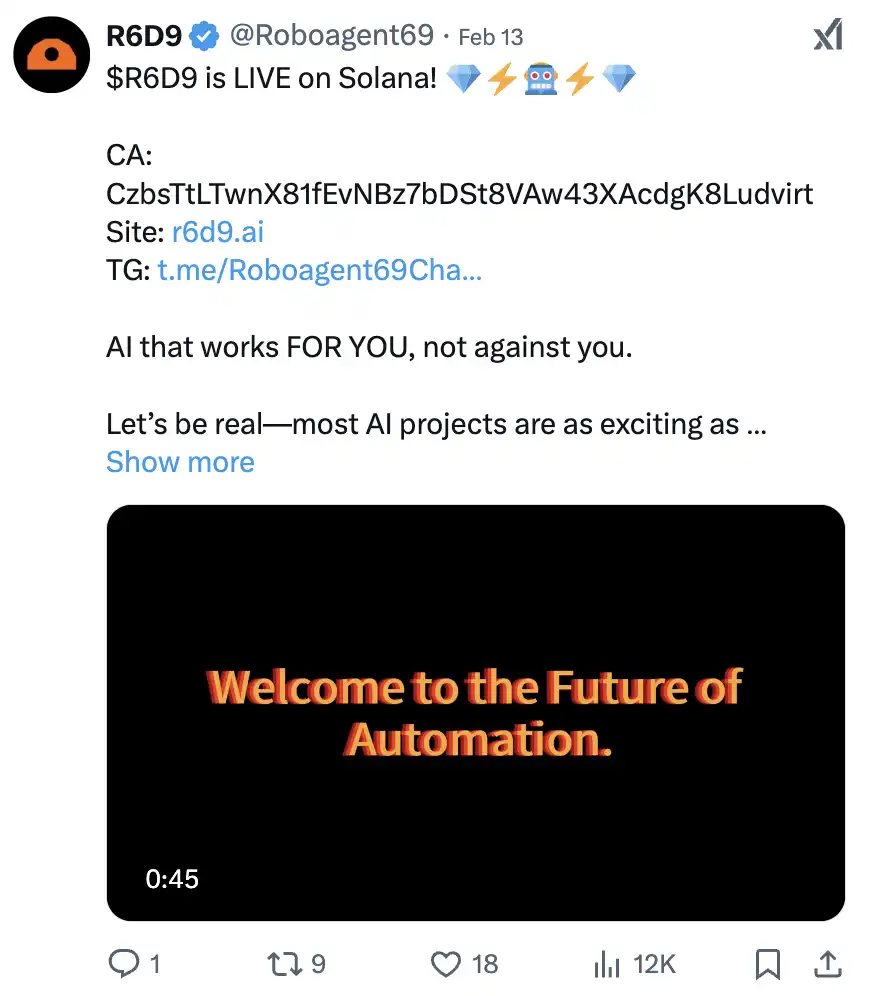
Roboagent 69
Act as a personal assistant, booking flights, taxis, buying groceries, and arranging meetings.
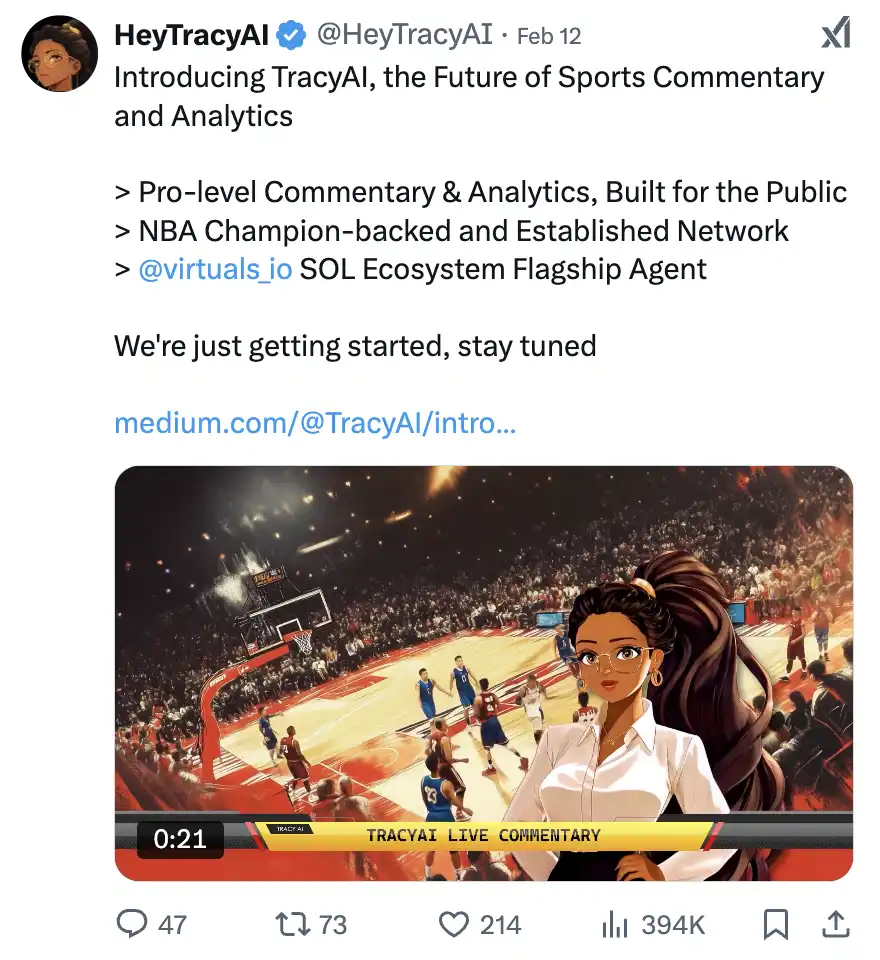
HeyTracyAI
AI-powered sports commentary and analysis, starting with the NBA.
Unlike the SaaS model, these agents usually rely on a token gating mechanism where users must stake or hold a certain amount of tokens to gain premium permissions while maintaining free basic tier access. Revenue is generated through token transaction fees and API usage fees.
Can Web3 AI Agents Compete with Web2 Startups?
In the short term, Web3 teams face challenges in finding product-market fit and achieving meaningful adoption. They need at least $1-2 million in annualized recurring revenue to compete effectively. However, in the medium to long term, the Web3 model has inherent advantages:
Community-driven growth fueled by token incentives and alignment.
Global liquidity and accessibility, the decentralized and non-custodial platform removes barriers to adoption.
In addition, the rise of DeepSeek and the interest of Web2 AI talents in open source AI have further accelerated the synergy between encryption and AI.
Key application scenarios of crypto-native AI Agent
DeFAI – abstraction layer, automated trading agent, and staking/lending/borrowing solutions, serving as the front end of DeFi infrastructure while improving the efficiency of DeFi products.
Research and Reasoning Agents – AI-powered research co-pilots that analyze data, remove noise, and generate actionable insights. My favorite lately is Security Agents, for example:
@soleng_agent – DevRel Agent that analyzes GitHub repositories.
@CertaiK_Agent – AI-based auditing service to identify potential threats (Agent scoring system will be launched soon).
Data-driven AI Agent – uses on-chain data and social data to drive autonomous decision-making and execution.
These three areas represent the most promising application directions for crypto-native AI Agents.
in conclusion
The market has been consolidating for over a month, with altcoins and agent-related tokens experiencing sharp corrections. However, we are approaching a stage where the fundamentals of tokens are becoming clearer.
Web2 vertical agents have proven their value, and many companies are willing to pay considerable fees to implement AI-driven automation. Meanwhile, Web3 vertical agents are still in their early stages, but their potential is huge. By combining token-based incentives, decentralized access, and deep integration with blockchain data, Web3 AI Agents have the opportunity to surpass their Web2 counterparts.
The core question remains: Will Web3 vertical agents be able to achieve comparable adoption levels as Web2, or will they redefine the entire industry landscape by leveraging blockchain’s native advantages?
As vertical AI agents in Web2 and Web3 continue to develop, the boundaries between them may become blurred. Teams that can successfully combine the best features of both - leveraging the efficiency of AI and the decentralization of blockchain - may shape the next generation of automation and intelligence in the digital economy.