
Bitlayer is excited to announce a milestone achievement: we have successfully demonstrated two live use cases of the BitVM bridge on Bitcoin mainnet . This milestone not only demonstrates the full functionality and strong security of our BitVM bridge, but more importantly proves the effectiveness of our strategic partnership with mining pools in handling non-standard transactions (NSTs) - a long-standing challenge for the BitVM bridge.
On March 31st, the Bitlayer team demonstrated the potential of BitVM for the first time on a dedicated testnet, bitvmnet. In order to prototype effectively on bitvmnet, we had to modify the Bitcoin Core client to accommodate NSTs, which are transactions larger than the 400KB allowed by Bitcoin’s default mempool policy. Overcoming this NST issue on the mainnet was the last critical step for our product.
Just a few days ago, Bitlayer announced key partnerships with several mining pools specifically dedicated to solving the NST challenge. We are excited to report that, in conjunction with this announcement, these pools’ APIs have already processed the first live NSTs from the Bitlayer BitVM bridge in response to real user requests.
This article details two complete BitVM bridge use cases executed on the Bitcoin mainnet. Notably, one of the cases involved processing two different NSTs: an Assert transaction and a Disprove transaction . This demonstration is a strong demonstration of the capabilities of the BitVM bridge and the success of our collaboration with mining pools.
Mainnet Live Demo
Characters in the demo
To illustrate how the bridge works, our mainnet demo includes:
- A Peg-in User: initiates the process by bridging BTC into Ethereum.
- Two Brokers:
- Broker A (malicious): attempts to steal funds through invalid withdrawal requests.
- Broker B (honest): initiates a legal withdrawal process.
Preparation: Recharge and create a bridge instance
- The depositing user deposits 0.0001 BTC into the BitVM smart contract. ( View the deposit transaction Pegin TX in mempool )
- Subsequently, the depositing user minted 0.0001 Peg-BTC (YBTC) on the Ethereum network. ( View the minting transaction Mint TX on Etherscan )
Case 1: BROKER-WITHDRAW-OPTIMISTICALLY
This scenario demonstrates an honest Broker successfully getting back his BTC and collateral after destroying his Peg-BTC (YBTC) on Ethereum. This leverages the flexible withdrawal (peg-out) feature of the BitVM bridge (learn more about our key differentiating features ).
- Burn Peg-BTC: Broker B destroyed its YBTC on Ethereum. ( View the destruction transaction Burn TX on Etherscan )
- Initiate a withdrawal request: Broker B sends a Kickoff transaction on Bitcoin to initiate a withdrawal request. ( View Kickoff TX in mempool )
- Retrieve BTC and collateral: After a predefined timeout, Broker B successfully retrieves his BTC and collateral via a HappyTake transaction. ( See HappyTake TX in mempool )
This case verifies the optimistic withdrawal path for honest participants.
Case 2: INVALID-RECLAIM-REJECTED
This key scenario demonstrates the robustness of Bitlayer’s security model. A malicious broker (Broker A) attempts to steal funds, but the fraud proof protocol involving NSTs successfully thwarts the attack.
- Initiating an invalid withdrawal request: Broker A initiated an invalid withdrawal request by sending a Kickoff transaction. ( View Kickoff TX in mempool )
- Fraud Detection and Challenge: An honest watcher detects fraud and sends a Challenge transaction, forcing Broker A to enter the "unhappy path" of the fraud proof protocol. ( View Challenge TX in mempool )
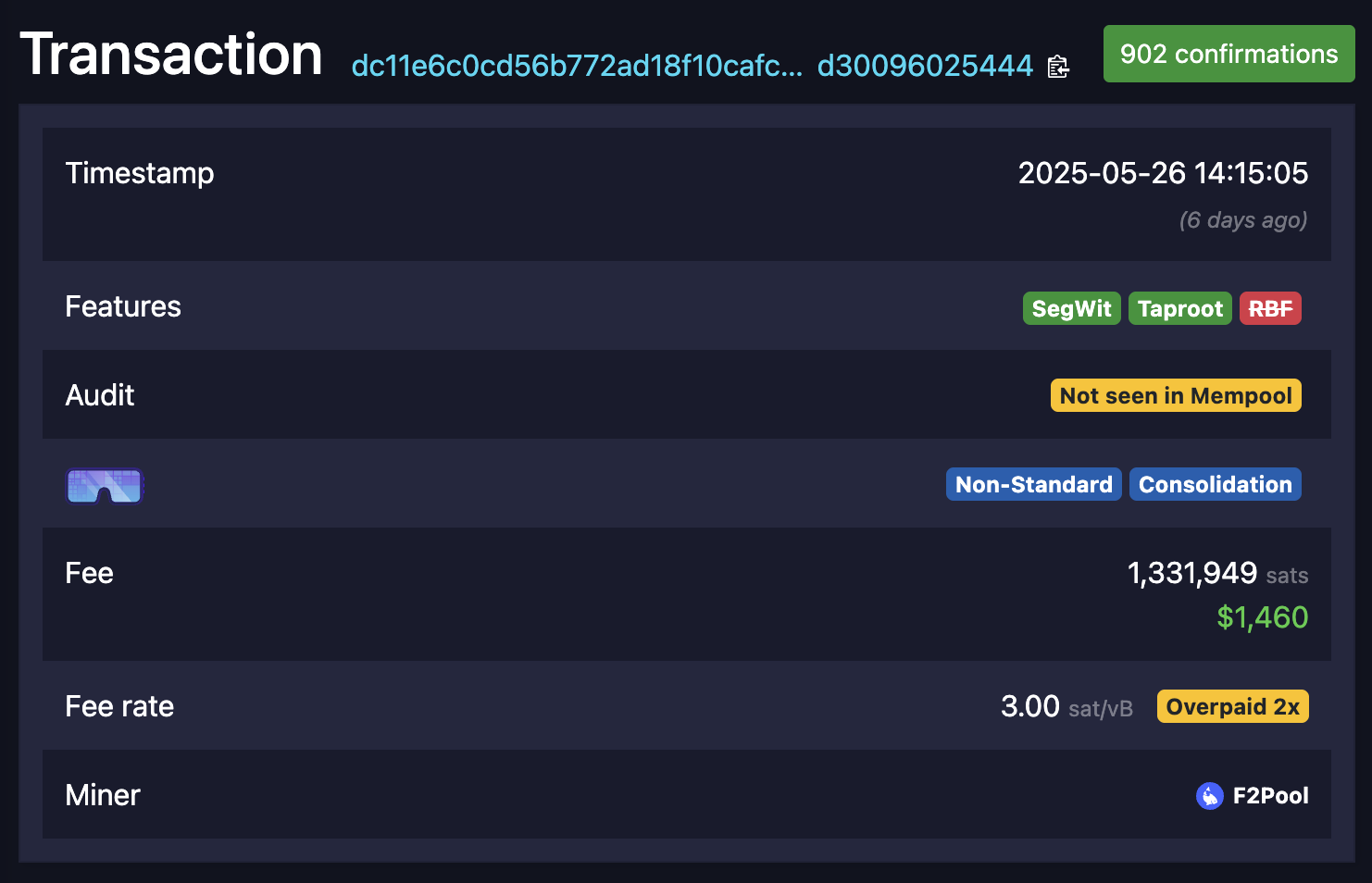
- Forced Reveal (Assert Transaction - NST): Broker A is forced to reveal all intermediate values of the verifier chunks. Due to an invalid withdrawal request, at least one chunk was executed incorrectly. This step involves an Assert transaction , which is an NST that was successfully processed by our partner mining pool. ( See PreAssert TX in mempool and Assert TX (NST) in mempool )
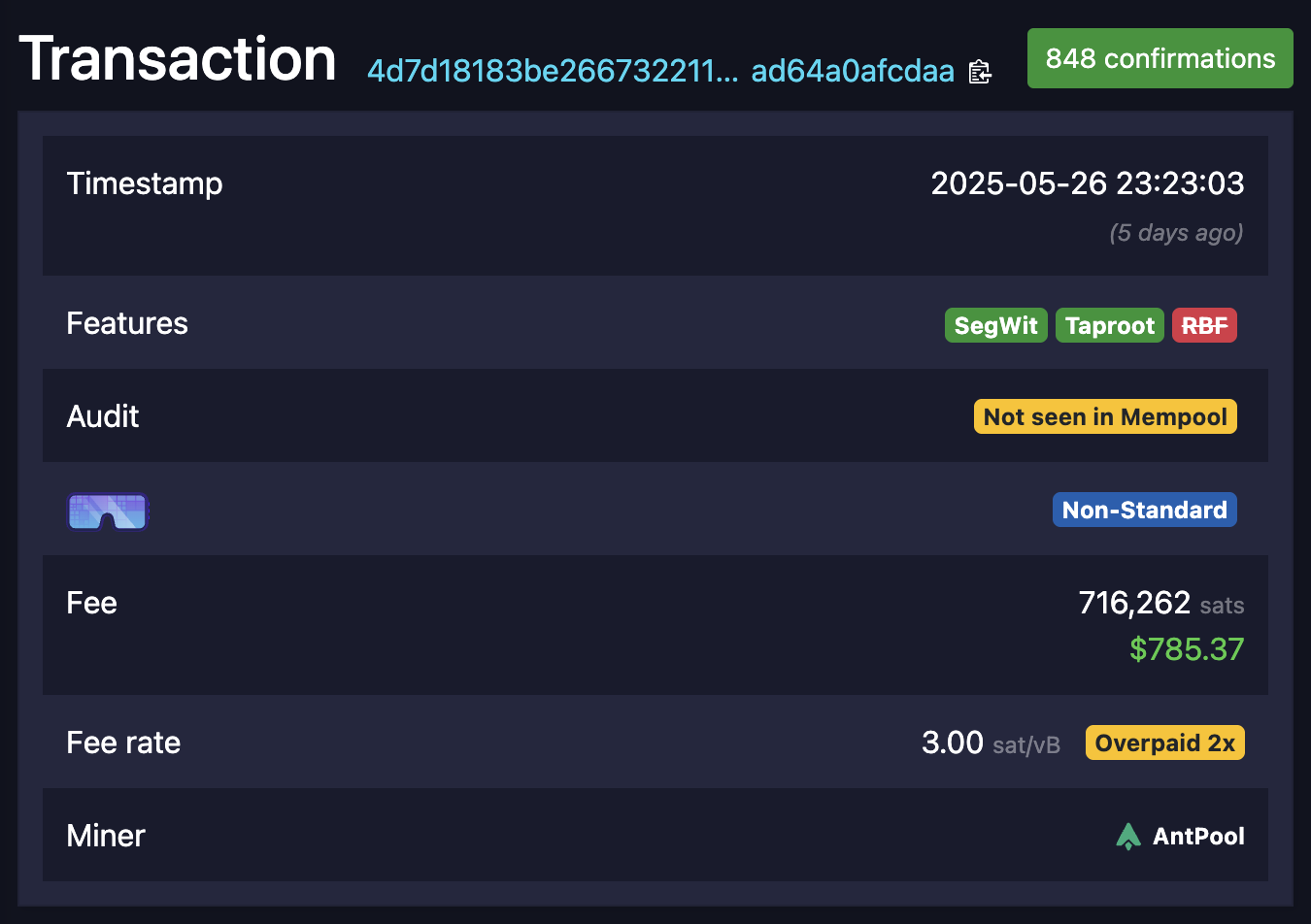
- Disprove Fraud (Disprove Transaction - NST): The observer ran all the blocks offline and identified the incorrect one, then sent a Disprove transaction to replay the incorrect block on-chain. This ultimately vetoed the invalid withdrawal request. The Disprove transaction was also an NST and was successfully processed on the mainnet again. ( See Disprove TX (NST) in mempool )
This case clearly demonstrates the ability of the BitVM bridge to punish malicious actors and protect user funds, which is crucially due to the mainnet's handling of NSTs such as Assert Transactions and Disprove Transactions.
Non-standard Assert transaction:
Non-standard Disprove transaction:
This successful live demo on Bitcoin mainnet is a milestone for Bitlayer. It validates our technology, the strength of our partnerships with mining pools, and our commitment to building a truly scalable, secure, and trustless Bitcoin infrastructure. We are paving the way for a new generation of decentralized financial applications on Bitcoin.