
BTC price continues to fall, proving the growing volatility and uncertainty in the Crypto asset market. As BTC faces more downward pressure, the market is awaiting a series of key economic reports to be released this week that could affect price action.
BTC price at risk as markets await key economic reports
After weeks of strong performance, the recent price crash of BTC has raised concerns about further declines and the possible start of a bear market. From today, the next few days will be crucial to determine whether BTC can recover from the current bearish trend or fall further.
Given the current state of the market, The Kobeissi Letter, the industry’s leading global capital markets commentary publication, has outlined six key economic events on the X platform (formerly Twitter) that could impact the broader financial and crypto asset markets.

The first event is the Job Openings and Labor Turnover Survey (JOLTS), which is scheduled to be released on Tuesday, February 11. This economic data measures the number of job openings in the U.S. Typically, a strong labor market means that the economy remains stable, which could delay further interest rate cuts from the Federal Reserve, leading to poor performance for BTC and other digital assets.
The second economic data released on the same day is the Short-Term Energy Outlook report from the U.S. Energy Information Administration (EIA). The report provides information on fuel supply and demand. While this economic event may not be a direct driver of the Crypto asset market, energy costs affect inflation, which in turn affects the Fed’s policies. These policies can have an adverse or boosting effect on BTC prices.
The third event scheduled for release this Wednesday (February 13) is the Consumer Price Index (CPI) inflation data for February. This economic data measures inflation at the consumer level and plays a key role in determining future interest rate cuts by the Federal Reserve. If the CPI is higher than expected, it may have a negative impact on BTC as it will indicate that persistent inflation persists, which may delay monetary easing policies.
The next economic data set to be released on Thursday is the weekly jobless claims report. If claims continue to rise, it could indicate a weakening economy, which could increase market expectations for rate cuts, driving up Bitcoin prices.
Another key event coming out on the same day is the February Producer Price Index (PPI). This data measures inflation at the wholesale level. A higher-than-expected PPI report could have a negative impact on BTC and could lead to a further crash by reducing the likelihood of a near-term rate cut by the Federal Reserve.
The final economic report is due this week.
Bitcoin faces greater volatility as the market closely monitors the latest reports of major economic events. Its price has fallen again by 2.28% in just 24 hours. According to CoinMarketCap data, this pioneer Crypto asset has plummeted by 17.22% in the past month, with the price falling to $80,380.
If the upcoming economic reports are negative for the market, the BTC price could plunge further as bearish sentiment could intensify. The last financial report scheduled for release on Friday, February 14 is the Michigan Consumer Sentiment Index. The index provides information about the level of consumer confidence in the economy.
Declining consumer confidence could signal economic uncertainty, which could have a bearish impact on BTC prices, especially if investors turn to safer assets. At the same time, if low consumer confidence fuels expectations of a rate cut by the Federal Reserve, it could also support BTC prices.
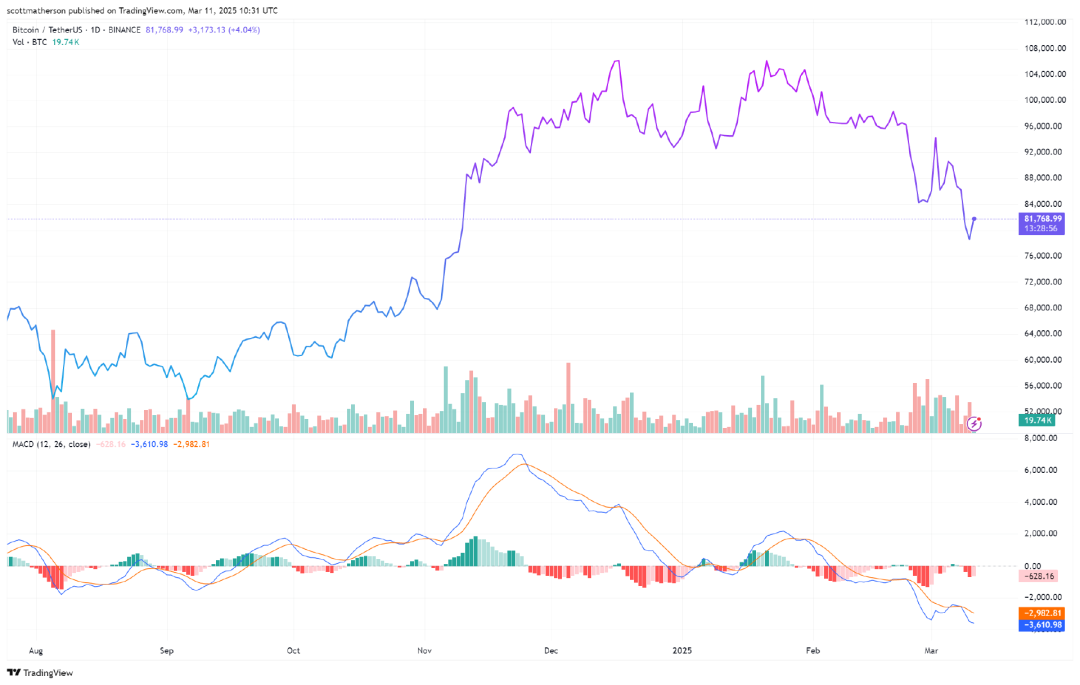
BTC is trading at $1 on the 81,768D chart | Source: BTCUSDT on Tradingview.com
Geoffrey Kendrick, head of digital asset research at Standard Chartered Bank, believes that BTC's recent price trend shows that under the current risk-averse market sentiment, BTC, as the leading Crypto asset, may need sovereign states to increase their holdings, or the geopolitical situation to become clearer, before it can rise further.
Kendrick noted that BTC remains at risk of further downside in the short term due to macro uncertainties and would need a major catalyst to resume its uptrend.
“The question now is which will come first: a recovery in risk assets or positive news for BTC, such as sovereign purchases by the U.S. or other countries,” he wrote.
The possibility of a Fed rate cut remains crucial. If the policy shift is faster than expected, which could happen at the Fed’s May meeting, this could stabilize risk markets. Market expectations for a rate cut in May have now risen from 50% to 75%, increasing the likelihood of a policy shift, which could be good for BTC.