Although "value investing" has become a flawed methodology in the cryptocurrency world, and the market no longer rewards "diamond hands" (meaning those who consistently succeed), faced with the market's relentless devastation and a flood of powerless complaints and grievances, I still tried to find some of the original wisdom of "holding onto your wealth" that belonged to the cryptocurrency world in Duan Yongping's video interview clips:
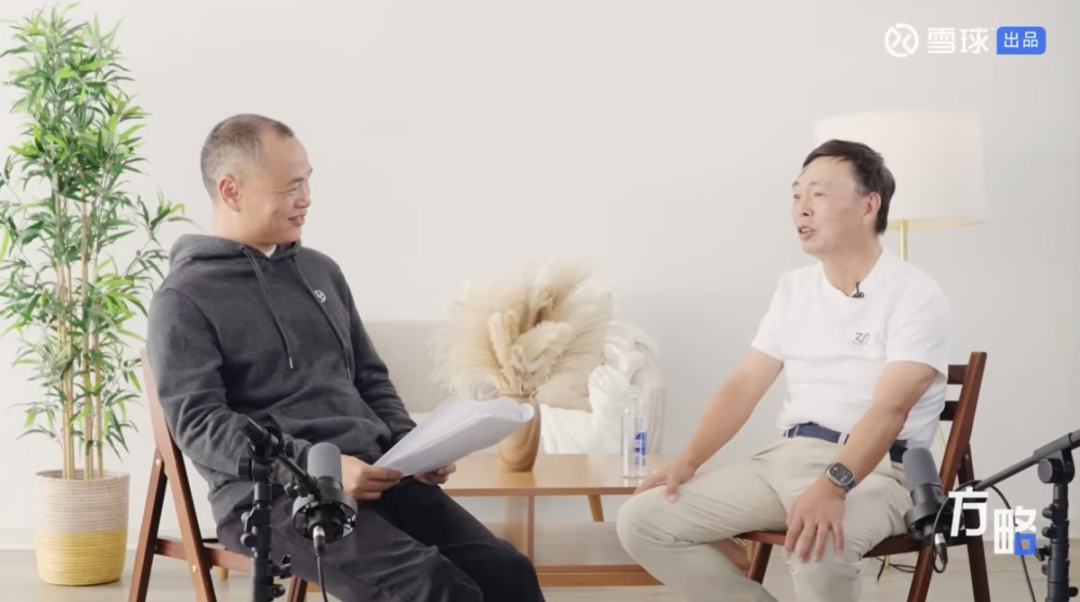
Let's take a look at some of his most insightful core viewpoints: (with his personal interpretation from the cryptocurrency perspective):
1) Buying stocks is buying a company; the difficulty lies in understanding the company.
99% of people have heard this statement, but less than 1% truly understand it. Understanding a company means being able to judge its future cash flow, business model, competitive advantage, and management team, and knowing whether it will still be doing well ten years from now.
In the crypto world, I think it's important to see if a project has the ability to weather economic cycles, understand its niche in the evolving narrative, see if the team is purely chasing the narrative or consistently focusing on product-market fit (PMF), and see if Tokenomics is just a short-term Ponzi trap or has the ability to capture long-term value.
2) Margin of safety does not refer to how cheap the stock is, but rather how deeply you understand the company.
This understanding overturns most people's perception of "buying the dip." Cheap things may become even cheaper, or even go to zero. The true "margin of safety" comes from depth of understanding: when you understand a company better than the market, short-term fluctuations are just noise to you, or even opportunities.
Most holders in the crypto market are stuck holding on and stubbornly clinging to their positions, while most retail investors chase the price up and cut their losses when it drops, completely disregarding the concept of a margin of safety. A true margin of safety should be when you are certain that the project's fundamentals haven't changed, the team is still building, and its value is severely undervalued; only then should a dip be an opportunity to add to your position.
3) I'm a full-position investor; I feel uncomfortable holding cash.
If you truly understand a company and determine its long-term value, then cash is just worthless paper that's depreciating. Investment decisions are always based on opportunity cost; if you sell a stock and can't find a place with a higher return, then selling it was a mistake in itself.
The high volatility and unregulated chaos in the cryptocurrency market make the "full position" strategy unsuitable for most ordinary people. The most important factors are the experience of holding cryptocurrency and staying in the game for a long time.
4) If you're constantly watching market fluctuations and talking about market trends, it means you don't understand the company.
True investors focus on business operations, not stock price fluctuations. In his view, candlestick charts, technical analysis, and short-term trading are all games that are difficult to make money in.
In the cryptocurrency world, if you want to understand a project, you should pay attention to its GitHub update frequency, technological innovation, community activity, and product iteration speed, rather than how many points it has risen or fallen today.
5) If you don't understand investing, don't touch stocks. Go buy S&P 500 or Berkshire Hathaway.
Copying others' trades is unsustainable because you'll always be lagging behind and never know when to sell. If you can't understand a company, then accept that fact and entrust your money to the index.
In the crypto world, it means: If you don't understand, don't play with cryptocurrencies; stick to dollar-cost averaging in BTC and ETH/SOL.
6) Doing the right thing is more important than doing things right.
First, address the issue of right and wrong, then address the issue of efficiency. Making mistakes in the process of "doing things right" is acceptable, but knowingly doing something "wrong" will have disastrous consequences.
In the cryptocurrency world, missing out on tenfold returns by not holding onto good projects is a matter of ability, which can be improved; investing in obvious scams is a matter of understanding, which is incurable. The greatest tragedy is often not missing opportunities, but actively stepping into traps.
7) Once something is untrustworthy, nothing it says is believable.
Duan Yongping left Subor because the equity commitment was not fulfilled, leading to a collapse of trust. Once a person or organization breaks its promise, nothing they say can be trusted anymore.
This logic should theoretically work well in the cryptocurrency world, but it's rife with teams that abscond with investors' money, only to reappear under a different guise and continue to fleece them. True investors should create a "blacklist": teams that have broken their promises, KOLs who have exploited investors, and protocols that have caused problems—never touch them again. Trust is the scarcest asset.
8) Shared values are very important; collaborations based on differing values cannot last.
Duan Yongping believes that companies should choose people who share the same values, rather than primarily relying on training. In investment terms, this means choosing projects that align with your own values.
The biggest problem in the cryptocurrency world is that 90% of project teams and investors have conflicting values: project teams want to cash out and run away, retail investors want to get rich overnight, and nobody cares whether the cryptocurrency actually has any value. This misalignment of values dooms most projects to short lifespans.
9) Knowing what not to do is more important than knowing what to do.
Duan Yongping has a "Don't Do" list: He doesn't do what he's not good at, and he doesn't do what's unhealthy or unsustainable. His corporate vision is "Healthier and Longer-Lasting."
In the crypto world, creating a "don't-do" list might be a better way to protect your capital than chasing trends: don't touch what you don't understand, don't touch things that are too complex, don't touch teams with tainted reputations, and don't touch tokens with flawed economic models. Everyone is thinking, "Where's the next opportunity?" but no one ever asks, "Which pitfalls must I absolutely avoid?"
10) AI is an industrial revolution, but it is accompanied by a bubble.
Duan Yongping has a clear understanding of AI: it is a true revolution, but there will definitely be a bubble. His investment in Nvidia is not for hype, but to "get involved" and not miss out on real change.
True innovation is always accompanied by bubbles and speculation, but this doesn't mean innovation itself has no value. The problem is being able to distinguish between genuine innovation and scams disguised as innovation. The same applies to AI + Crypto; bubbles are inevitable, and innovation will certainly occur. It all depends on whether you have the wisdom and conviction to "get involved."
above.
Duan Yongping's value investing philosophy centers on the concept of "monetizing knowledge." Investing is not gambling or speculation, but rather using a deep understanding of a company to capture its undervalued value.
Those seemingly simple principles—"duty, integrity, and long-termism"—have proven to be the most effective moat in his decades of practice. The market is never short of opportunities; what it lacks is the vision to recognize them and the composure to hold onto them.
Note: Reading the insightful comments of these successful investors during a market downturn is truly therapeutic, especially for those who still hold onto a "long-term" belief. You should definitely take a look, read, and reflect on them. Let's encourage each other!