
By Donovan Choy
Compiled by: Tim, PANews
Recently, a few well-known projects have launched (or plan to launch) dedicated chains based on the Avalanche technical architecture.
Why choose Avalanche instead of Ethereum?
The answer starts with Avalanche9000, the largest-scale upgrade in the history of the network implemented last December. It can be called the Avalanche version of "The Merge", which completely reconstructs the validator economic model.
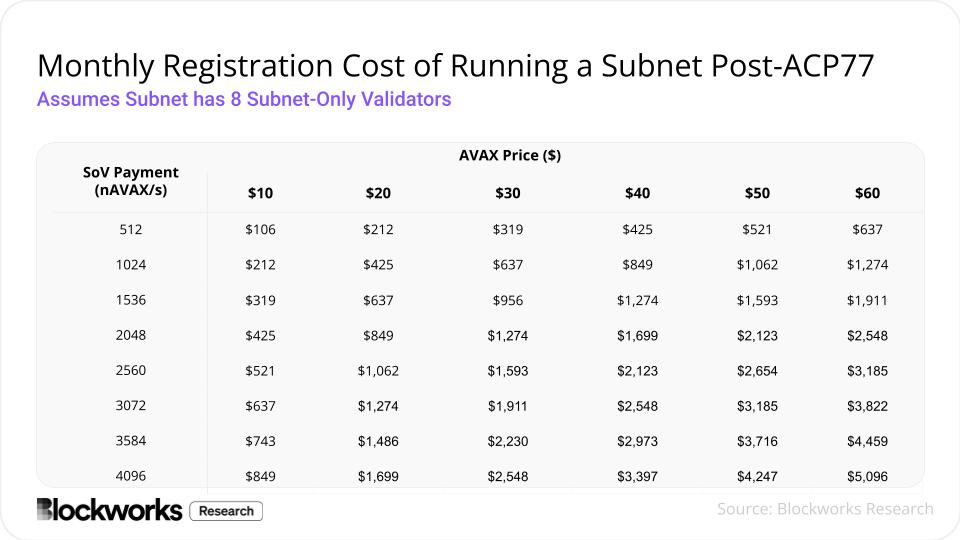
In the ACP-77 proposal, the high fixed staking cost requirement for Avalanche validator nodes (2,000 AVAX) is replaced by a low-threshold pay-as-you-go model.
Evaluation data from Blockworks Research analyst Effort Capital shows that the reduced upfront costs make launching a sovereign Avalanche L1 chain attractive, and the cost may even be lower than the Celestia rollup solution or the Cosmos application chain.

Further cost savings.
Teams that are creating Avalanche’s first layer chains can leverage the infrastructure already built on C-Chain, Avalanche’s liquidity hub.
For example, Avalanche’s first-layer network can provide users with the convenience of centralized exchange deposit channels through C-chain without having to pay a high proportion of tokens as direct integration fees.
“That’s one of the core value propositions of Avalanche,” Luigi D’Onorio DeMeo, chief strategy officer at Ava Labs, told me in an interview. “From a go-to-market perspective, it saves development teams a ton of time and millions of dollars in integration costs.”
For most standard on-chain infrastructure, including oracles, RPC services, indexers, block browsers, NFT markets, etc. (which are already available on the C-chain), if built from scratch by an independent L1, the startup cost is expected to be as high as $13 million.
All of this relies on Avalanche's interchain communication protocol. It is through this protocol that Avalanche's layer 1 network can easily transfer assets between C-chain and other chains, thereby making full use of the aforementioned functional advantages.
The connection between C-Chain and Henesys (MapleStory's exclusive chain) is now the most active two-way communication route in the international chat system, carrying thousands of messages every day.
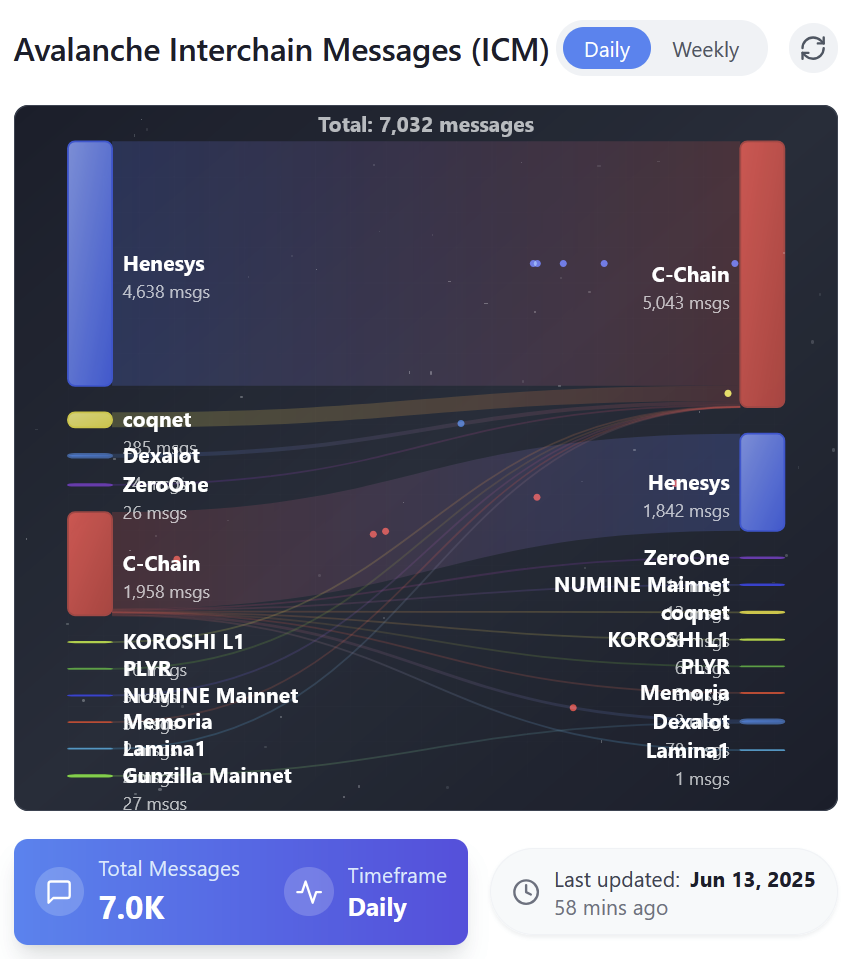
Source: L1beat.io
The value capture mechanism is another major reason for launching the Avalanche layer 1 network.
Avalanche's first-layer blockchain can build a clear value accumulation channel for the project's native token by guiding its own validator set, issuing block rewards (or using native tokens as gas fees), etc.
Ethereum’s second-layer network cannot utilize the same mechanism, so the project’s tokens have extremely limited or even no value capture channels other than governance functions (with a few exceptions).
Finally, AvaCloud's HyperSDK also supports a high degree of L1 chain customization capabilities, which is in stark contrast to the constraints faced by current L2 solutions based on the rollup technology stack, and shows significant advantages.
AVAX's value accumulation
Given that ETH and ATOM are plagued by value accumulation issues, it is necessary to study how AVAX achieves value accumulation.
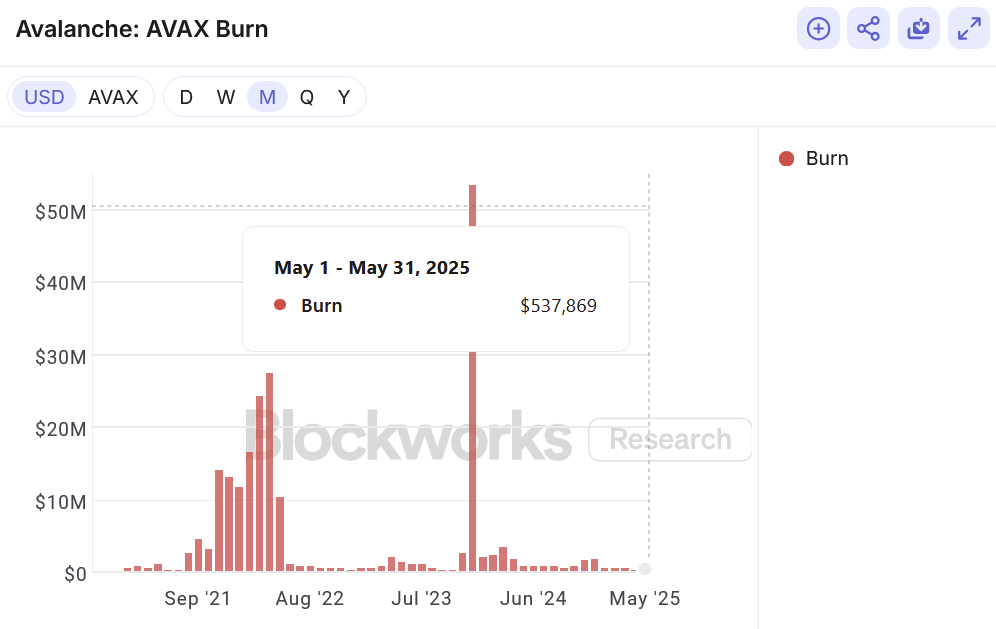
First, unlike Solana or Ethereum’s partial token burn mechanism, Avalanche’s C-chain will burn 100% of all transaction fees. In 2025, the average monthly burn value of its AVAX tokens will be approximately $453,000.
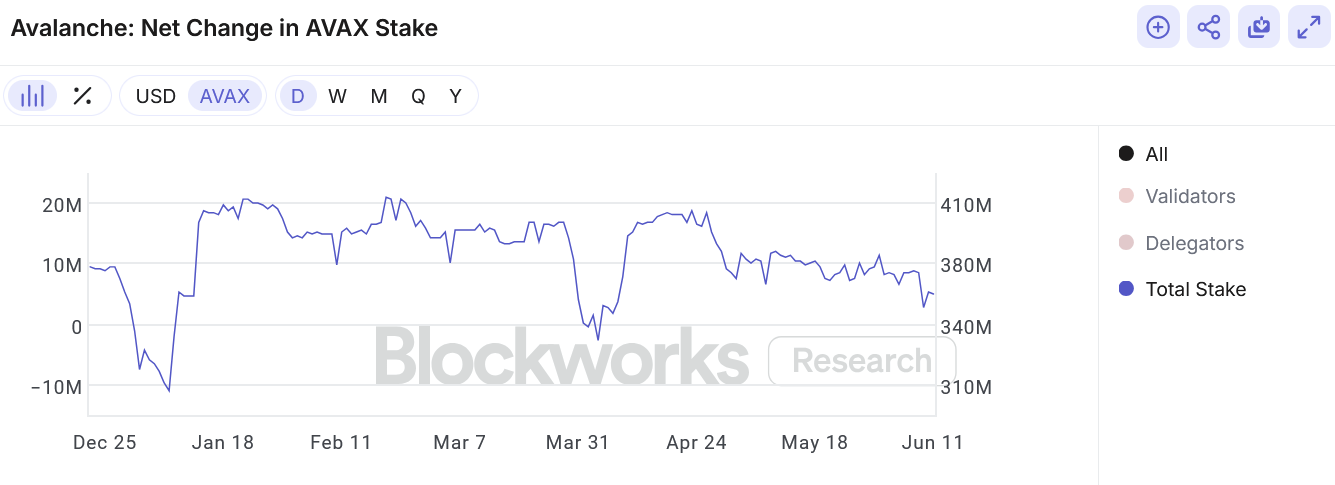
Validation nodes continue to stake AVAX to maintain the operation of the main network, and the current staked amount is approximately US$8 billion (360.2 million AVAX).
Third, according to the ACP-77 proposal, each Avalanche L1 validator node needs to pay a small amount of AVAX as a fee every month. Depending on the number of validators, this fee fluctuates between hundreds and thousands of AVAX. Blockworks Research analyst Boccaccio made a detailed calculation for the Gunzilla chain (see the link for the calculation report).
Whenever a transaction operation involves the C chain, a small amount of indirectly generated ICM (inter-chain communication) fees will be destroyed.
Avalanche's Development Path
Ultimately, Avalanche's business strategy is familiar: subsidize long-term growth by cutting back on upfront costs.
Ethereum is also taking the same approach, forgoing short-term execution fee revenue in order to gain data availability fees in the long term. In pursuit of long-term growth, Celestia is currently actually providing data availability services for free.
“One of the common misconceptions about Avalanche is that it has no intention of pursuing high-speed chains,” DeMeo told me, claiming that this statement is untrue.
Both ACP-125 and ACP-176 (Octane) upgrade plans implemented a reduction in the minimum base fee on the C-chain and introduced a dynamic fee mechanism to optimize fuel fees. These two improvements have led to an overall 96% drop in C-chain fees since the beginning of 2025.
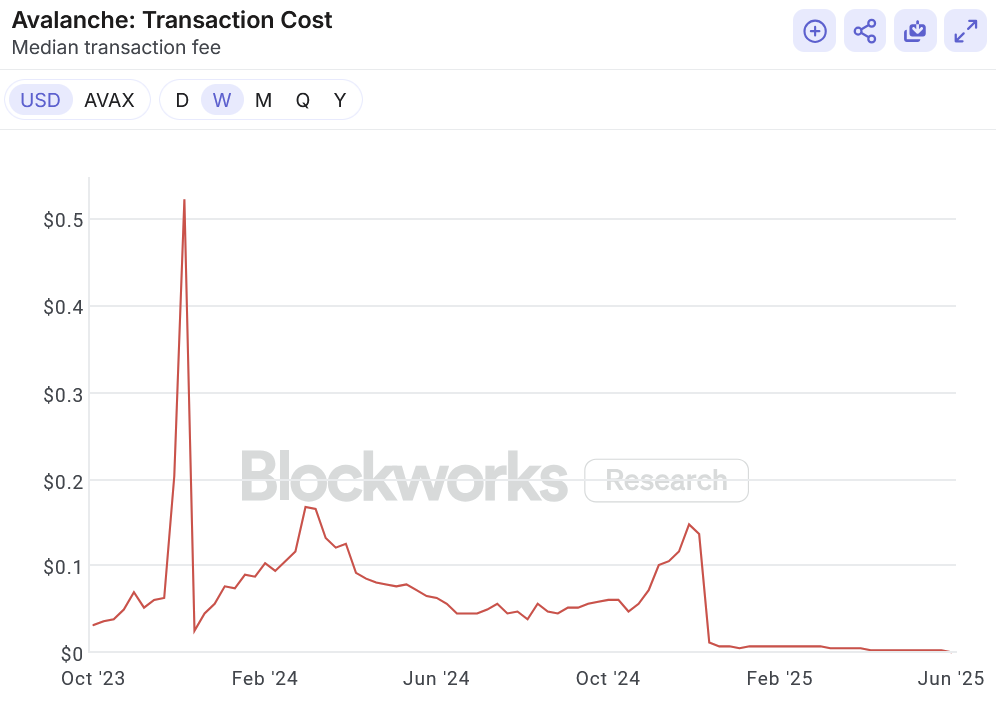
DeMeo continued: “As part of the network’s plan to implement ‘Asynchronous Execution (ACP-194)’ later this year, fees will continue to decrease. Avalanche’s value capture has not yet reached significant scale, but the path forward is clear. With 66 active L1 chains in the ecosystem and more on the way, Avalanche is well positioned to build its network effect.”