
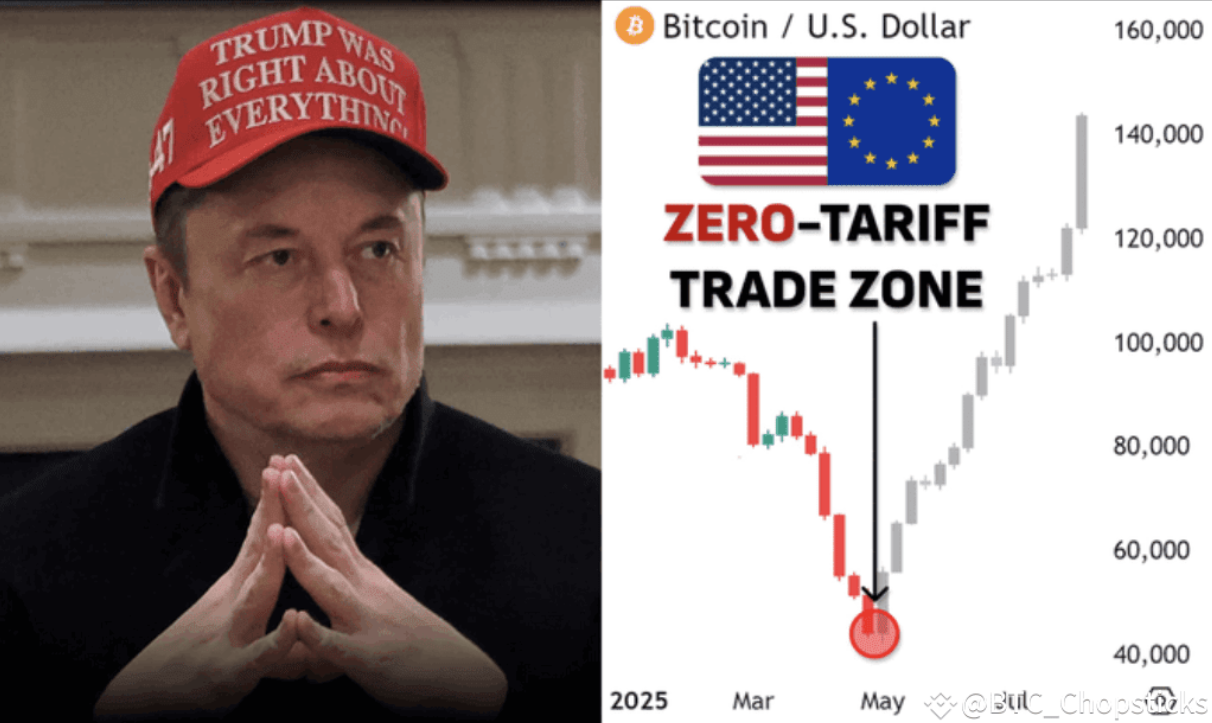
🧠 Musk's core point:
“We should strive to achieve a U.S.-EU free trade zone — zero tariffs, free flow of talent and capital.”
Musk compared the idea to economic integration within the European Union, emphasizing the importance of talent mobility and capital openness to innovation and economic growth.
It’s important to note that this scenario targets tariffs, not income or corporate taxes – but the potential impact is nonetheless huge.

📈 The practical economic significance of zero tariffs:
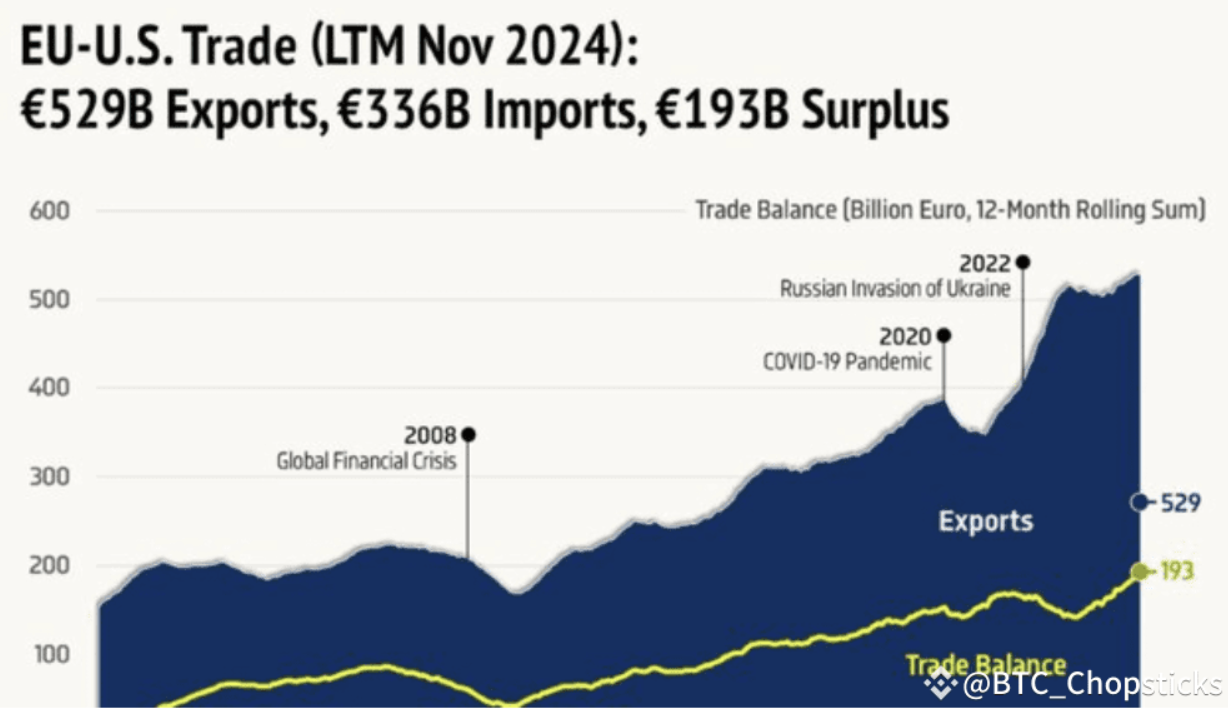
-By 2024, the bilateral trade volume between the United States and Europe has exceeded $1.1 trillion
-Once tariffs are removed, cross-border business operating costs will be significantly reduced
- The market entry threshold will also be lowered, and the industry competitiveness will be comprehensively improved
🔗 Positive Impact on Crypto Market:
The crypto industry is a typical “digital native industry” that benefits from any form of trade liberalization:
- If the US and Europe can coordinate their supervision, it is expected to reduce the compliance burden of enterprises in cross-border operations
-Cross-border investment will be more liquid, and Web3 project financing efficiency will be improved
- DeFi and on-chain financial services are developing faster, and more products can be made available globally
🚀 The development prospects of DeFi and Web3:
- If the US and European standards converge, it will be conducive to building a unified transatlantic application layer
- Crypto startups can more easily launch in both markets simultaneously
- Overseas projects and financing will be smoother, and the global collaboration model will be formed faster
In addition, this may also bring about a "geo-migration effect":
- Project owners and developers may move to countries within the trade zone to gain compliance advantages
- Talent aggregation, capital pooling, and technological breakthroughs will occur more frequently between the US and Europe
- Further consolidate the position of the United States and Europe as global centers of crypto innovation
⚠️ Challenges and risks cannot be ignored:
Despite the grand vision, the reality is far more complicated than imagined:
- There is no formal policy document or negotiation draft at present
-Similar TTIP agreements have failed due to political differences. Historical experience cannot be ignored.
- There are still significant differences in the definition of compliance between US and European regulators (such as the SEC and ESMA)
-Some domestic industries or labor organizations may oppose the initiative due to increased competition. Even if it goes smoothly, the actual launch may not be until 2027 or later.
✅ Conclusion:
Elon Musk’s idea of a “zero-tariff free trade zone between the US and Europe” is undoubtedly a grand new global economic experiment.
For the crypto industry, this may be a rare institutional dividend:
- Accelerate regulatory coordination and reduce barriers to entry
- Promote the simultaneous development of Web3 innovation in the US and Europe
- Attract talents and capital to the core encryption market
Although there is still uncertainty in its implementation, this grand vision has opened up space for imagination for the integration of the global digital economy.
The next round of prosperity in the crypto market may come quietly from such institutional changes.