
In 2025, the global financial market is undergoing a profound transformation. Bitcoin, as a representative of cryptocurrency, is sweeping the United States at an alarming rate, redefining the way of wealth storage. According to a post by Chris, a user on the X platform, there are 49.6 million Bitcoin holders in the United States, with an average value of $11,000 per person, far exceeding the average value of $1,512 for 36.7 million gold holders.

At the same time, the latest report released by River further reveals the United States' dominant position in the global Bitcoin ecosystem: from holdings to mining power to policy support, the United States is leading in all aspects and has become a veritable "Bitcoin country." What new wealth trend does this showdown between traditional gold and emerging cryptocurrencies portend? This article will deeply analyze the reasons behind the rise of Bitcoin and its far-reaching impact on the US financial landscape.
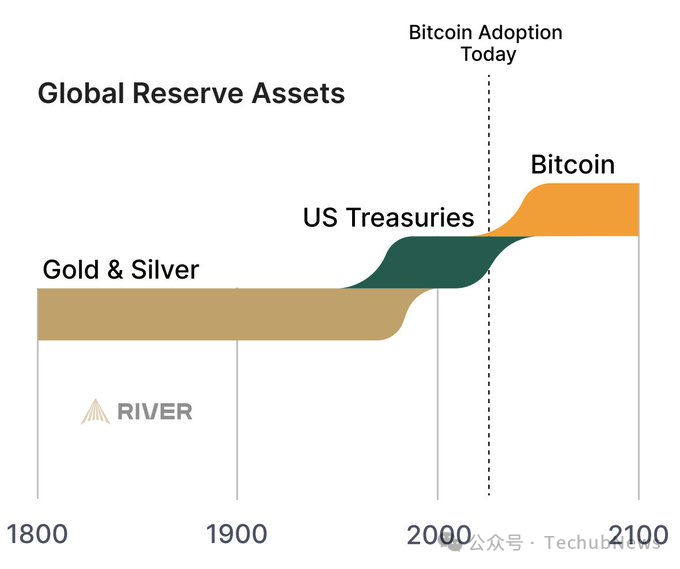
Bitcoin adoption and surface data
Bitcoin fever in the United States: 49.6 million holders, $11,000 per person
River's report shows that US residents hold about 40% of the world's Bitcoin, while the US population only accounts for 4.2% of the world's population. This data is jaw-dropping. 14.3% of Americans own Bitcoin, with the number of holders reaching 49.6 million, far exceeding the total of Europe, Oceania and Asia. Not only are ordinary investors enthusiastic, but American companies are also accelerating the layout of Bitcoin assets. The report pointed out that Bitcoin held by US listed companies accounts for 94.8% of global listed companies, totaling about 800,000 BTC, while listed companies in other parts of the world only hold about 40,000 BTC.
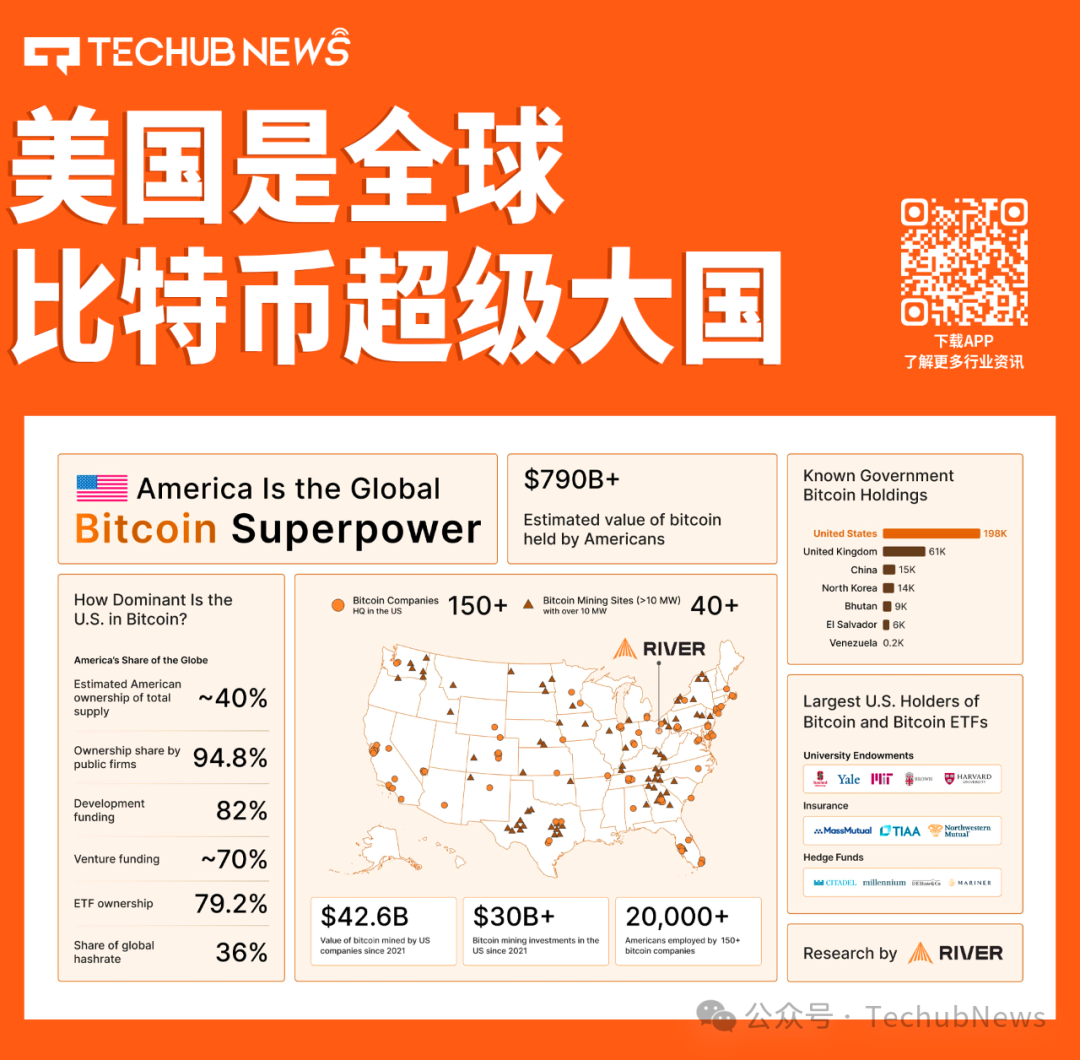
The high penetration rate and per capita value of Bitcoin in the United States (US$11,000) reflect its appeal as a wealth storage tool. In contrast, although gold is still the representative of traditional safe-haven assets, its influence in the United States is being surpassed by Bitcoin. 36.7 million Americans hold gold, with an average per capita value of only US$1,512. Whether in terms of the number of holders or the concentration of value, gold has been far behind Bitcoin. This trend is particularly evident among the younger generation. Generation Z regards Bitcoin as "digital gold" and is more inclined to use it as a long-term reserve asset.
Mining Overlord: The United States takes over the global computing power center
The rise of Bitcoin is not only reflected in the amount of holdings, but the United States' dominance in the mining field cannot be ignored. Since China's comprehensive ban on Bitcoin mining in 2021, the United States has quickly filled the market gap and become the global computing power center. The River report shows that 38% of the world's new Bitcoins are currently mined by American miners. Compared with 2020, the United States' share of global computing power has increased by more than 500%.
There are many reasons why the United States has become the preferred place for mining. First, its policy environment is relatively stable, and many states have passed legislation to encourage the development of the blockchain and cryptocurrency industries. Second, the United States has a developed capital market, and mining companies can easily obtain financing. In addition, the United States is rich in energy resources, especially the widespread use of renewable energy, which reduces the cost of mining. For example, Texas has become one of the world's largest Bitcoin mining centers due to its low electricity prices and supportive policies. The synergy of policies, capital and energy has enabled the United States to leap from a follower to a leader in the field of mining.
Gold vs. Bitcoin: New Choice for Americans’ Wealth
As a traditional safe-haven asset, gold has long been regarded as the first choice for wealth preservation. However, in the United States, this concept is being overturned. The River report pointed out that 49.6 million Americans support holding Bitcoin, while only 36.7 million prefer gold. Bitcoin is replacing gold and becoming the preferred reserve asset for a new generation of investors.
Although the gold market remains strong, it faces multiple challenges. According to the World Gold Council, global gold demand in 2024 will be suppressed by high gold prices, and U.S. gold production will continue to decline, from 237 tons in 2017 to 160 tons in 2024, far from meeting market demand. At the same time, although the New York COMEX gold inventory reached 37 million ounces in February 2025, doubling from the same period last year, the liquidity and income growth space of gold are limited, making it difficult to compete with the high return characteristics of Bitcoin.
The appeal of Bitcoin lies in its decentralized nature and fixed total amount (21 million coins), which makes it an ideal tool for fighting inflation. On March 7, 2025, the White House official statement mentioned: "Because the total amount of Bitcoin is fixed, it will be strategically advantageous to be the first to establish a national Bitcoin reserve." This statement shows that Bitcoin has gradually been accepted at the official level in the United States and may even become part of the national strategic reserve assets. In contrast, the United States accounts for 29.9% of the global central bank gold reserves, far lower than its dominant position in the Bitcoin ecosystem.
Policy support: Bitcoin enters mainstream American politics
Another key factor in the rise of Bitcoin in the United States is the strengthening of policy support. The River report shows that 59% of US senators and 66% of congressmen hold a "Bitcoin-friendly" attitude. Both liberals and conservatives are gradually accepting Bitcoin as part of the financial infrastructure. In particular, Bitcoin has the highest support rate among the "very liberal" and "neutral voters" groups. The formation of this political consensus has not only promoted the legalization of Bitcoin, but also profoundly influenced the investment concepts of ordinary people.
States in the United States are also actively exploring ways to incorporate Bitcoin into the financial system. For example, some states have introduced policies to support cryptocurrency transactions and payments, and some state governments have even proposed making Bitcoin a legal reserve asset. This policy environment provides fertile ground for the widespread use of Bitcoin and further consolidates the United States' leadership in the global Bitcoin ecosystem.
The road to coexistence of Bitcoin and gold
Although Bitcoin has surpassed gold in terms of the number of holders and per capita value, this does not mean that gold will completely exit the stage of history. Gold's thousand-year history and globally recognized safe-haven properties have enabled it to still have a place among institutional investors and conservative investors. For example, U.S. states are exploring ways to incorporate gold into the financial system, and some states have introduced bills to purchase gold, showing potential support for gold at the policy level.
Looking ahead, Bitcoin and gold may not be completely opposite, but coexist and develop together. Bitcoin represents a new symbol of wealth in the digital economy era, and its high liquidity and high return characteristics will continue to attract young investors and institutional funds. Gold will continue to be the cornerstone of safe-haven assets, especially when global economic uncertainty increases, its value is difficult to replace. For investors, the choice between Bitcoin and gold depends on risk preferences and investment goals: investors seeking stability and long-term value preservation may prefer gold, while investors seeking innovation and high returns may be more optimistic about Bitcoin.
The Beginning of the Bitcoin Era in America
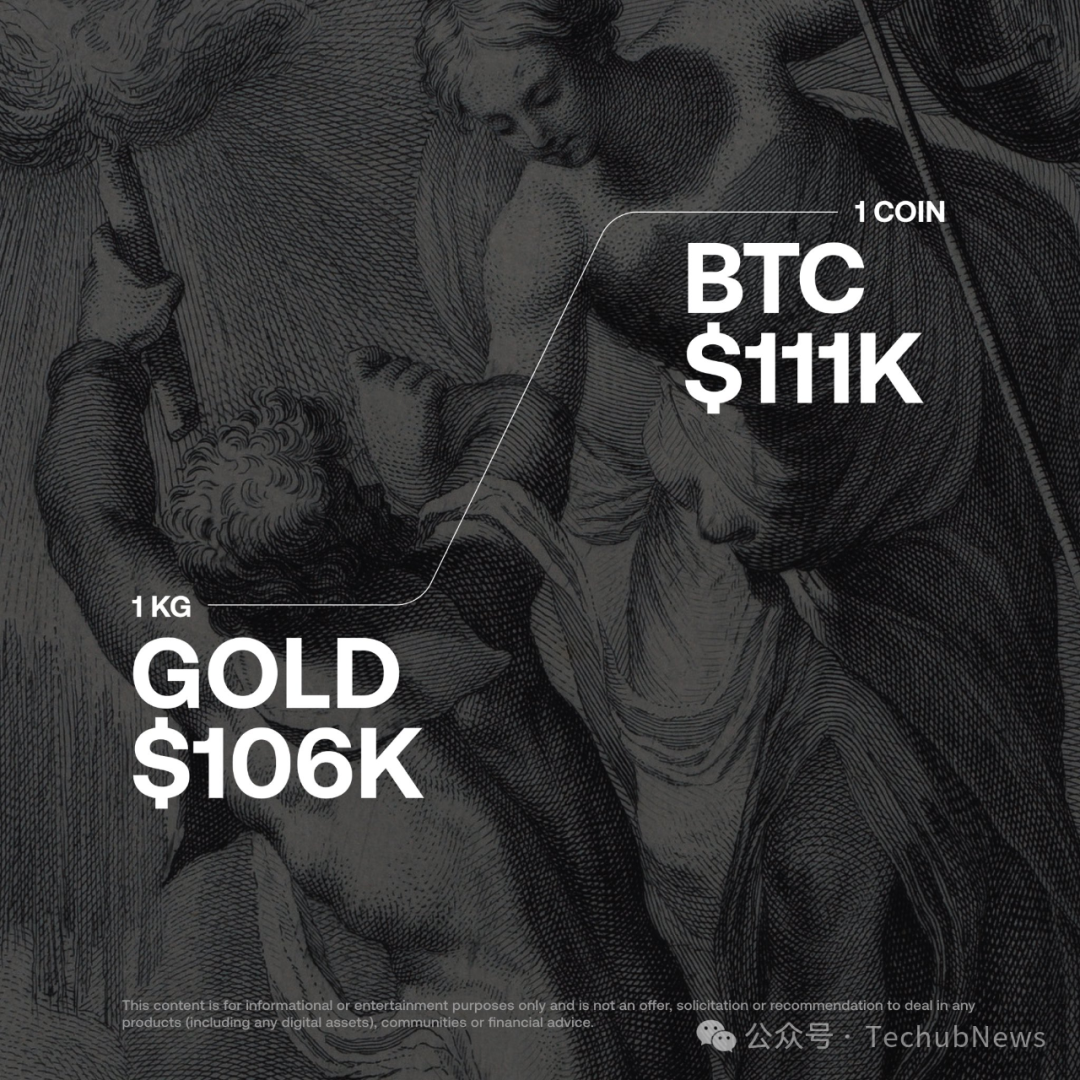
Although Bitcoin has surpassed gold in terms of the number of holders and per capita value, this does not mean that gold will completely exit the stage of history. Gold's thousand-year history and globally recognized safe-haven properties have enabled it to still have a place among institutional investors and conservative investors. For example, U.S. states are exploring ways to incorporate gold into the financial system, and some states have introduced bills to purchase gold, showing potential support for gold at the policy level.
Looking ahead, Bitcoin and gold may not be completely opposite, but coexist and develop together. Bitcoin represents a new symbol of wealth in the digital economy era, and its high liquidity and high return characteristics will continue to attract young investors and institutional funds. Gold will continue to be the cornerstone of safe-haven assets, especially when global economic uncertainty increases, its value is difficult to replace. For investors, the choice between Bitcoin and gold depends on risk preferences and investment goals: investors seeking stability and long-term value preservation may prefer gold, while investors seeking innovation and high returns may be more optimistic about Bitcoin.
The Beginning of the Bitcoin Era in America
The comparison between 49.6 million Bitcoin holders and 36.7 million gold holders reveals a profound change in the way wealth is stored. The United States has become the hegemon of the global Bitcoin ecosystem through its comprehensive leadership in holdings, mining power, and policy support. From individuals to companies to the national level, Bitcoin is being incorporated into the financial, reserve, and geostrategic systems of the United States. As the River report says, the story of Bitcoin in the United States has just begun.
In the next decade, the financial, technological and institutional focus of global Bitcoin will likely be anchored in the United States. In this competition for the new king of wealth, which side will you choose to stand on?