Author: Jaleel Jialiu, BlockBeats
No one knows better than Trump how to use political bargaining chips to manipulate public sentiment.
Trump has been under some pressure recently. In order to circumvent the presidential investment restrictions, on the eve of taking office, the Trumps issued a coin directly, allowing the entire interest group behind them to achieve "profit without investment" at the fastest speed.
There can be many people who reap the benefits in the cryptocurrency circle, but the president cannot be the one. Many members of the cryptocurrency community who once supported him have publicly opposed his behavior. However, there is also a voice from those in the cryptocurrency circle who are dissatisfied with Trump's currency issuance:
“I can’t forgive Trump for issuing a coin on the eve of his inauguration unless he can release Ross Ulbricht tomorrow.”
This is how Trump's political sophistication manifests itself. Under pressure from the crypto industry, he immediately called the mother of Silk Road founder Ross Ulbricht and told her in person that she had been waiting for her son to come home for ten years:
"I have just signed a full and unconditional pardon for your son, Ross." Ross can go home.
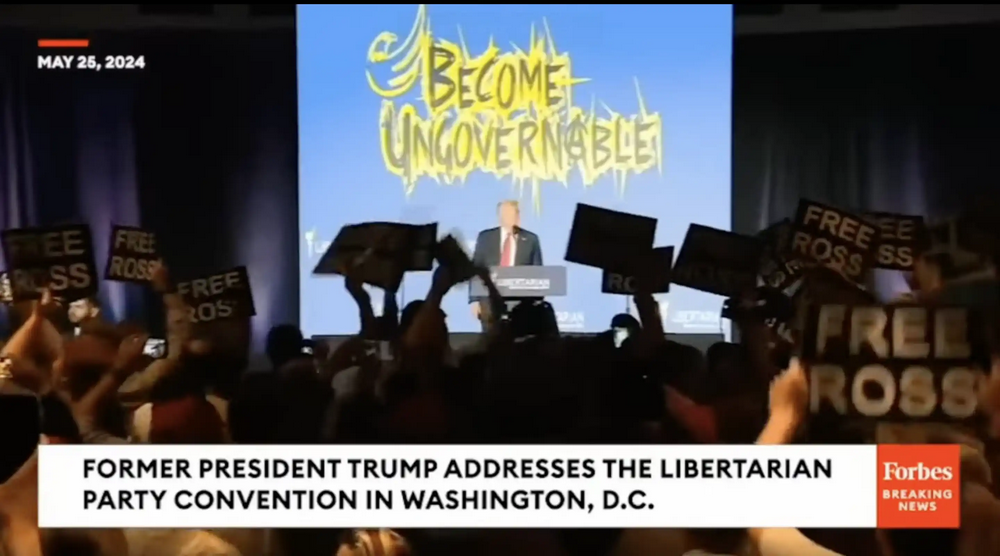
This was Trump's campaign promise. He promised that if he was re-elected, he would commute Ross's sentence or even pardon him on his first day in office. Six months have passed since the Bitcoin 2024 conference, and most of his promises at the conference have been fulfilled: firing the current SEC Chairman Gray Gensler, appointing a Bitcoin/Cryptocurrency Presidential Advisory Committee, commuting Ross's sentence or even pardoning him, and the US government's strategic Bitcoin reserve.
Every word and action seemed to prove and imply that "all my campaign promises will be fulfilled one by one, and the next one may be the Bitcoin strategic reserve." Bitcoin strategic reserve is undoubtedly the G-spot of the crypto industry. In this way, Trump dispelled most of the anger of the crypto industry about his currency issuance.
For those who are far away from the crypto industry, it may be difficult to understand why releasing Ross can calm the crypto industry's anger over Trump's currency issuance, which allows interest groups to make "huge profits without any investment."
We have to start from 2011. Many major events happened that year, including the killing of Bin Laden and the death of Kim Jong-il. But there were also some things that didn’t seem so important at the time, such as the fact that Bitcoin was just two years old and, unlike the current $100,000, it remained at $0.1 per coin for one or two years after its birth.
Although Bitcoin now seems to have a genius design, it was considered useless at the time. It was not until 2010 that Ross heard about the existence of Bitcoin from a customer, which became a turning point.
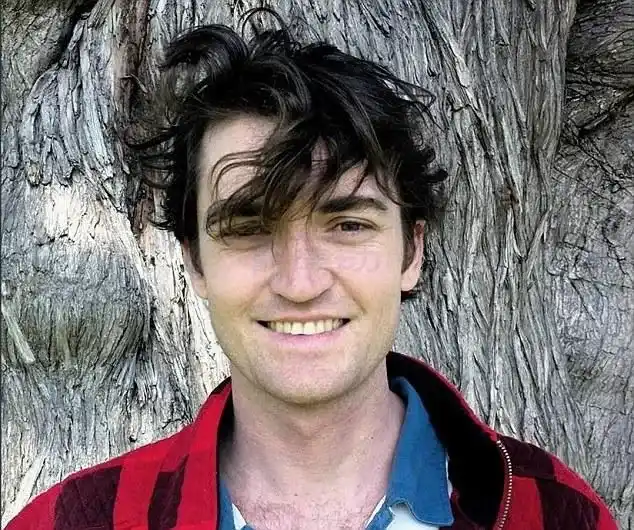
Ross Ulbricht
In 2011, Ross founded the infamous dark web market Silk Road. The Silk Road did not trade tea, silk, or porcelain. It was the most famous and infamous dark web in history. The main trading objects of this website were drugs, sex slaves, child pornography, private killers, arms trade, and identity fraud.
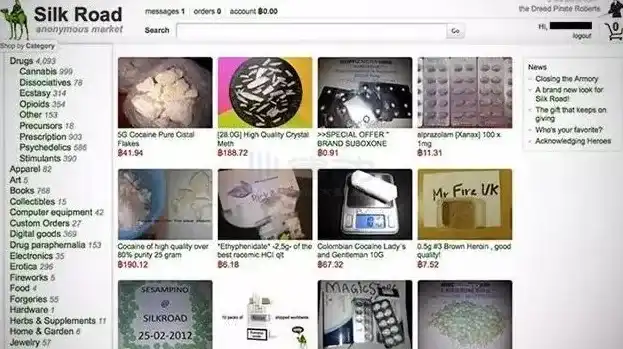
Screenshot of the Silk Road website, source: Internet
To ensure anonymity, Ross is designed to only allow access through the Tor onion router (search engines cannot access it, only through special software), and only uses Bitcoin as a transaction medium. The core of the government's crackdown on illegal activities is the supervision of funds - the core behind it is the banking system, which is firmly controlled by the government. Bitcoin is the payment tool that is separated from the banking system - until now, banks and Bitcoin are still going their own way.
With the rise of Silk Road, Bitcoin finally found its first application scenario - a payment tool for criminal transactions. Data shows that Silk Road once circulated more than 9.5 million Bitcoins, accounting for 80% of the total Bitcoin circulation at the time.
To his real friends in life, Ross always tells them that his job is "making an economic simulator" with the goal of using economic theory to eliminate coercion and aggression between people, so that people can experience for themselves what it is like to live in a world without systematic force.
No one could have imagined that this sunny and motivated boy was actually a drug lord and the founder of the evil underground world. But there is no such thing as a wall without cracks in the wall. Several regulatory agencies have been eyeing him at the same time, and even an FBI spy has been friends with him for three years.
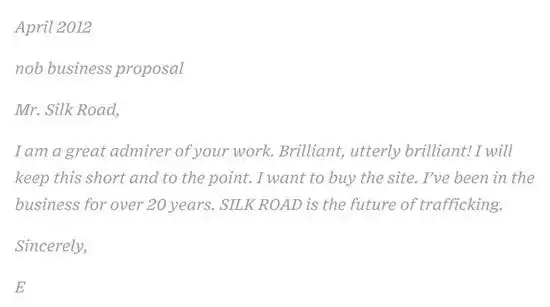
Ross once received an FBI spy acquisition request email worth $1 billion, source network
The DEA still found out Ross's identity through the Internet, and the moment when the FBI arrested him was also very exciting.
Ross was arrested in October 2013 while surfing the Internet in a bookstore. In order to prevent Ulbricht from deleting or encrypting the files on his laptop, a pair of agents pretending to be a couple walked past him and then quarreled loudly beside him.
"Curiosity kills the cat." Ross turned around to look at them. At this moment, an agent quickly snatched his computer away, and the other two agents rushed over to capture him. The agents inserted a USB device into the computer and copied the key files through the software. At that time, Ross's computer was logged into the administrator account of "Silk Road".
On August 21, 2014, Ross was formally indicted on charges of money laundering, computer intrusion, and conspiracy to commit drug trafficking. He was found guilty of all charges on February 4, 2015. On May 29, 2015, the court sentenced Ross to double life imprisonment with no possibility of parole for 40 years.
In conclusion, Ross is an extremely important figure in the history of Bitcoin development. When Bitcoin was about to be ignored by the world, he ended the history of Bitcoin as a toy and gave it real-world significance - serving crime.
Just as the consensus of fools is also consensus, the demand of black is also demand. Driven by criminal transactions, Bitcoin ushered in its first surge, reaching $31 in June 2011. Two months after Ross was arrested, Bitcoin rose to $1,100 per coin.
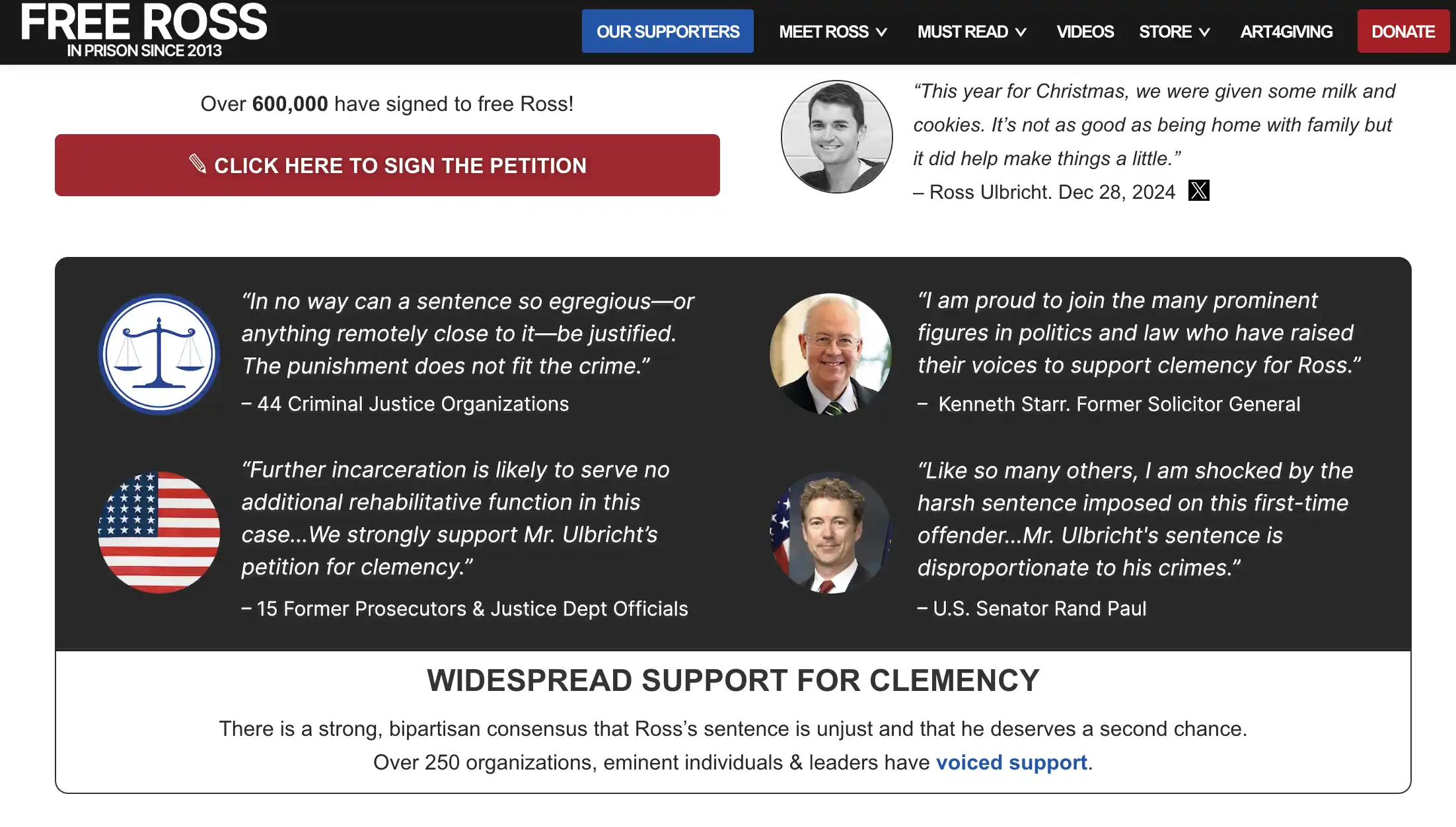
Due to his practice of liberalism, Ross has been in prison for 11 years. There has been widespread support for leniency in society, including the crypto industry, and many people in both parties believe that Ross's sentence is unjust and he deserves a second chance. More than 250 organizations, celebrities and leaders have expressed their support, and more than 600,000 people have signed a petition to release Ross.
Today, times have changed, and as Trump’s chances of winning the election continue to rise on Polymarket (a highly accurate blockchain betting platform), most people believe that Ross may be given a commutation of sentence or even pardoned.
We can also see that in the betting topic on PolyMarket about "Who will Trump pardon within the first 100 days of taking office?", the possibility of Ross being pardoned is very high, and the winning rate has been rising all the way. For a long time, the probability of Ross being pardoned was 73%.
Two life sentences plus an additional 40 years in prison were indeed too heavy for the teenager who was arrested at the age of only 26.
Now, the price of Bitcoin is $105,247, and the United States has welcomed its first "Bitcoin" president. Ross, 41 years old, who has been in prison for 11 years, can finally laugh at the camera easily after walking out of prison.

The first photo of Ross Ulbricht after his pardon was released, source: BitcoinMagazine