On June 30, 2025, the Monetary Authority of Singapore (MAS) will officially implement new regulations for digital token service providers (DTSP). The new regulations, which are called "cliff-like regulation" in the industry, require local companies that provide services such as crypto exchanges to operate with licenses, which means that a large number of unlicensed institutions may be driven out of Singapore . Dubai and Abu Dhabi in the United Arab Emirates have become one of the safe havens for "Singapore refugees".
Thanks to a clear regulatory framework and policies that support innovation, the UAE is becoming the "Wall Street of Cryptocurrency." Internationally renowned Web3 companies such as Binance, Crypto.com, OKX, Bybit, Kraken, and Ripple have already settled in the city, and Dubai alone has more than 1,000 cryptocurrency-related companies.
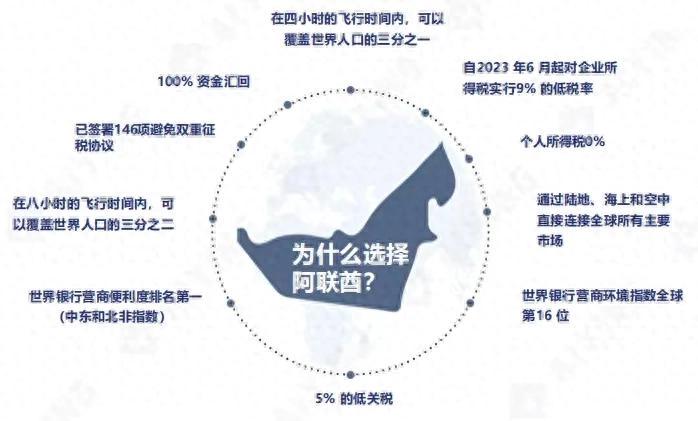
Figure 1: The many advantages of the UAE as a business and investment destinationSource: AIYING
At the same time, because the UAE dirham has maintained a fixed exchange rate with the US dollar for a long time (about 1 US dollar to 3.67 dirhams), it has attracted a large amount of international capital inflows, especially high-net-worth individuals from regions such as Russia and Iran. According to Chainanalysis data, from July 2023 to June 2024, the UAE received more than $30 billion in cryptocurrency inflows, making the country the third largest crypto economy in the Middle East and North Africa (MENA) region (after Turkey and Morocco) . The UAE's cryptocurrency holding rate ranks first in the world. According to Triple A statistics, the UAE's cryptocurrency holding rate exceeded 25% in 2024, while the global average holding rate was only 6.9%.
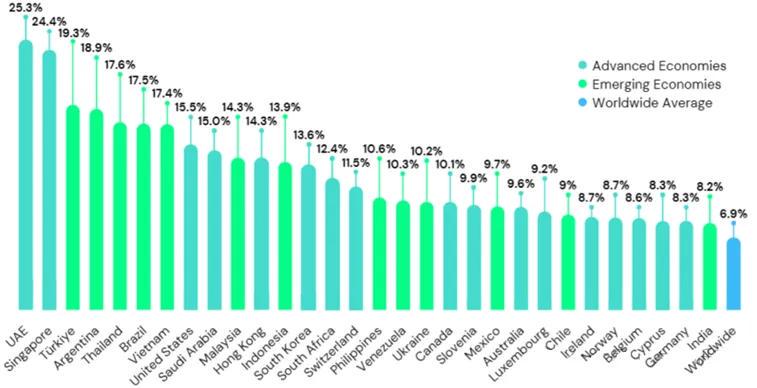
Figure 2: UAE ranks first in the world in terms of cryptocurrency ownership
Speaking of the UAE, due to its unique national organizational structure, the regulatory system is relatively complex. In this issue of Global Policy, Starlabs Consulting will sort out a clear framework to provide reference for Web3 entrepreneurs who are interested in going overseas to the UAE.
The UAE’s unique federal system
The UAE is made up of seven emirates: Abu Dhabi, Dubai, Sharjah, Ajman, Umm al-Qaiwain, Ras al-Khaimah and Fujairah. The royal family of each emirate rules its own territory and enjoys independent autonomy.
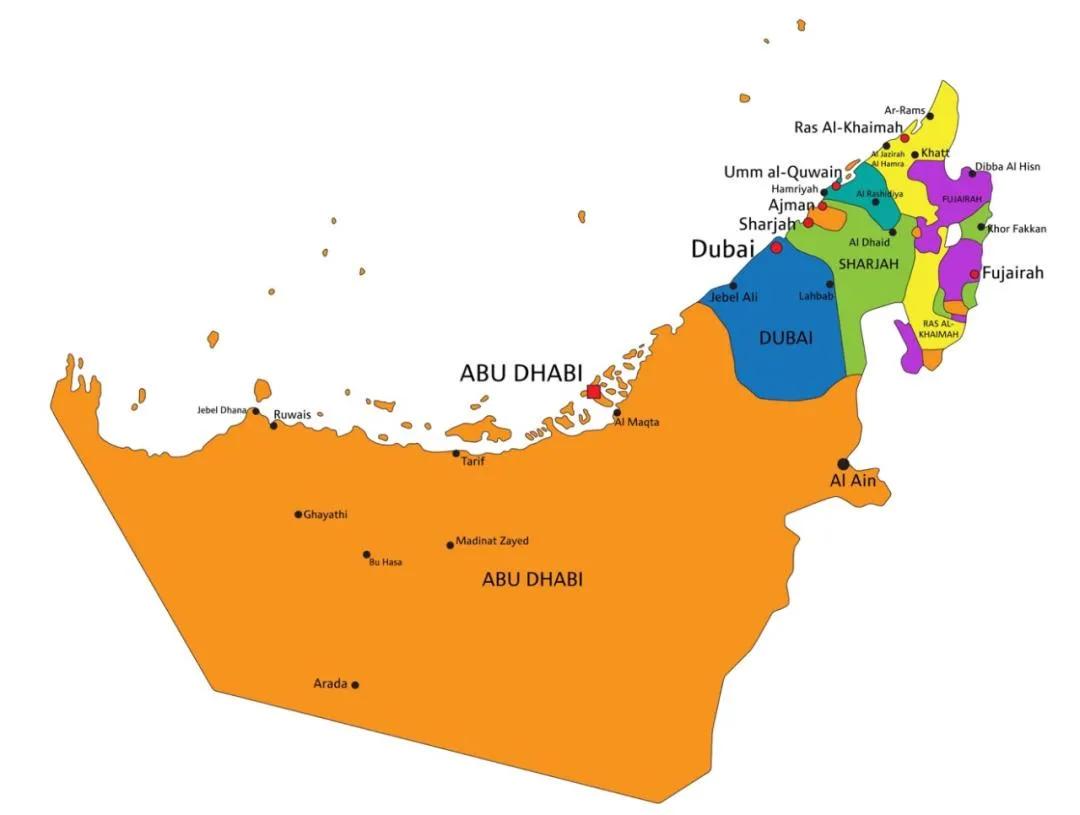
Figure 3: Distribution of the emirates and their major cities in the UAE
Among them, the GDP of the two emirates, the capital Abu Dhabi and the commercial center Dubai, accounts for 80% of the country. These two emirates have established multiple economic free zones. Abu Dhabi has the Abu Dhabi Global Market (ADGM), Dubai has the Dubai International Financial Center (DIFC), Dubai Multi Commodities Center (DMCC), Dubai World Trade Center (DWTC) and Dubai Airport Free Zone Authority (RAKEZ). In addition, the Emirate of Ras Al Khaimah has also established the Ras Al Khaimah Digital Asset Oasis (RAKDAO).
In this way, the UAE's regulation of crypto assets covers multiple jurisdictions. Each jurisdiction has a dedicated regulatory agency, and some free economic zones also have specific regulatory frameworks, forming a special mechanism of federal, emirate, and local multi-level supervision.
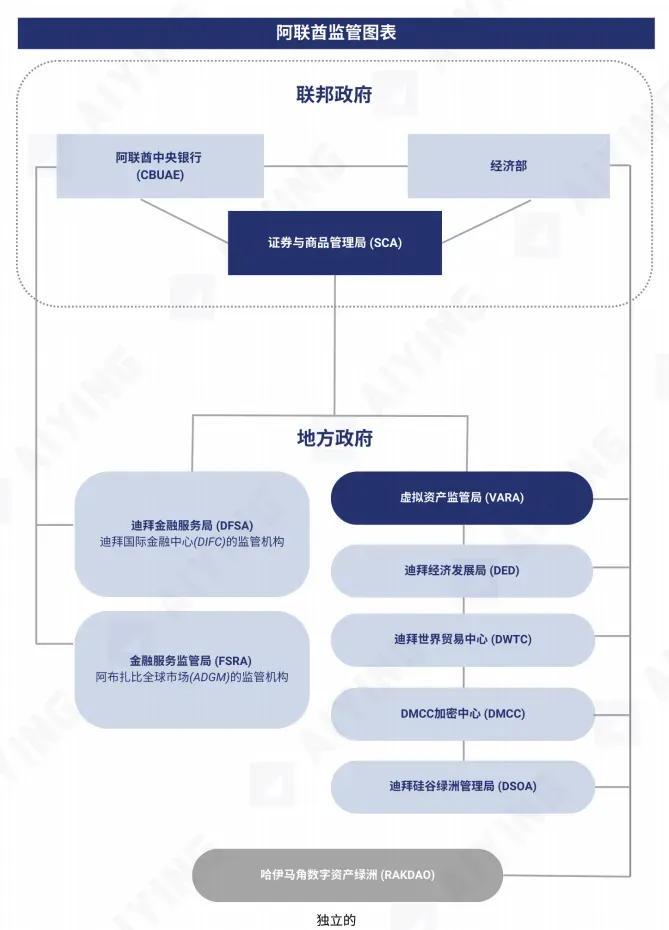
Figure 4: Virtual asset regulatory system in the UAE Source: AIYING
1. Regulatory bodies
- Federal level: The Central Bank of the United Arab Emirates (CBUAE) regulates cryptocurrency payments; the Securities and Commodities Authority (SCA) regulates investment crypto assets and is the licensing authority
- Dubai (excluding DIFC) : regulated by Virtual Asset Regulatory Authority (VARA), licensing authority
- Dubai International Financial Centre (DIFC) : regulated by the Dubai Financial Services Authority (DFSA) and has independent crypto regulatory policies
- Dubai Multi Commodities Centre (DMCC) : VARA regulated but with independent license
- Abu Dhabi Global Market (ADGM) : regulated by the Financial Services Regulatory Authority (FSRA) and has independent crypto regulatory policies
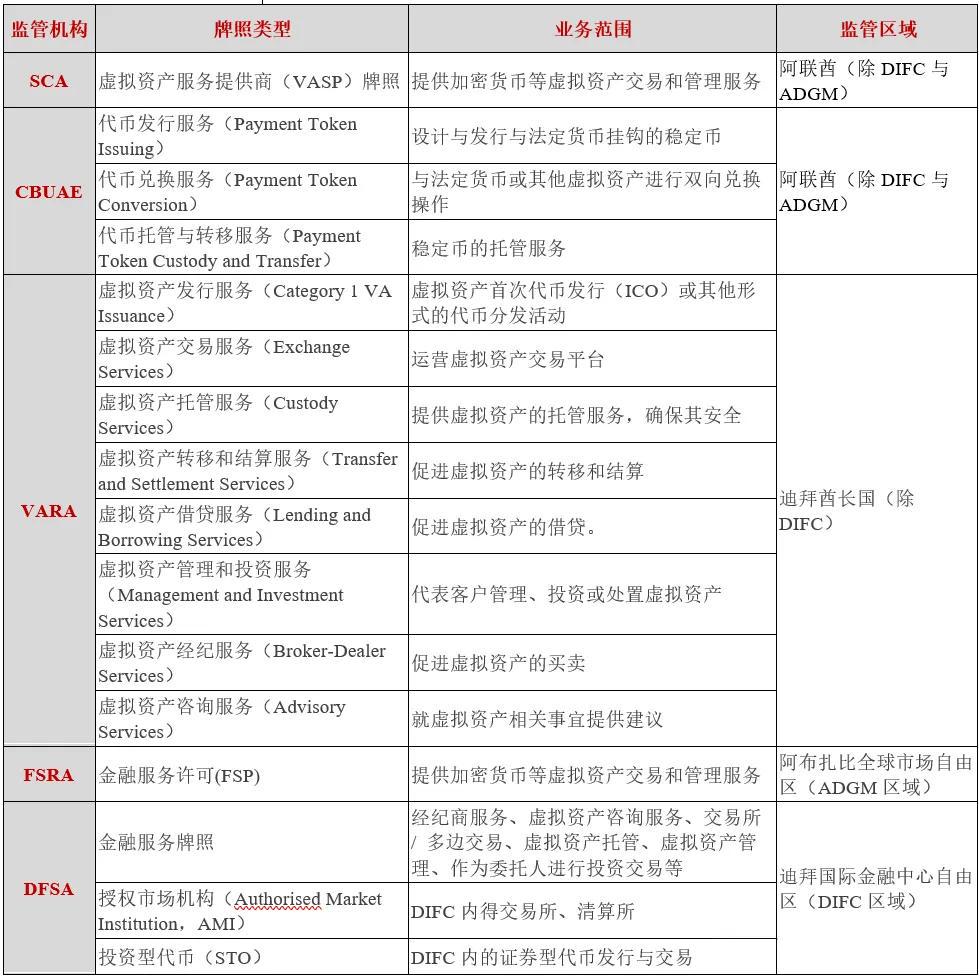
Figure 5: License types, regulatory scope and jurisdiction of different regulatory agencies in the UAE Source: Public account Taihui Research
2. Regulatory Basis
Currently, there are five main regulatory frameworks in the UAE that govern the provision of virtual asset services, including:
- Federal regulations on virtual assets issued pursuant to Cabinet Resolution No. 111;
- Regulations issued in the two financial free zones of Dubai International Financial Centre (DIFC) and Abu Dhabi Global Market (ADGM);
- Regulations applicable within the Emirate of Dubai (excluding DIFC) under the newly established Dubai Virtual Asset Regulatory Authority (VARA) ;
- The licensing framework for crypto businesses within the Dubai Multi Commodities Centre (DMCC) free zone .
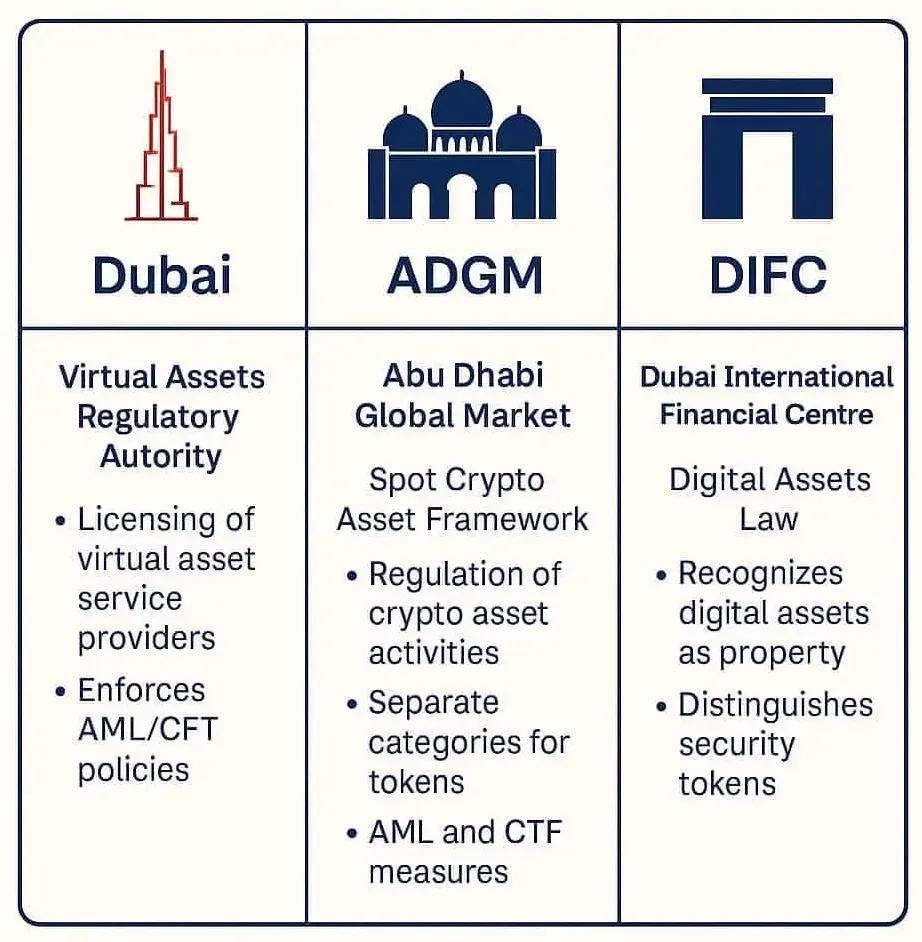
Figure 6: Comparison of Dubai VARA, Abu Dhabi ADGM and Dubai DIFC regulationSource: AIYING
There are also some local regulations, such as the Dubai Department of Economic Development (DED) has issued regulations and licensing requirements for virtual asset-related activities in Dubai, and the Abu Dhabi Department of Economic Development (ADDED) has issued regulations and licensing requirements for virtual asset-related activities in Abu Dhabi.
Regulatory framework at the federal level
1. SCA regulates crypto assets with reference to securities
The Securities and Commodities Authority (SCA) is authorized to regulate crypto-asset activities in the UAE mainland and certain free zones (excluding ADGM and DIFC).
In 2023, the SCA issued the "Guidelines for the Supervision of Virtual Assets and Virtual Asset Service Providers" to regulate the use of virtual assets (VAs) and the activities of service providers (VASPs). According to the guidelines, the SCA divides virtual assets into two categories:
- Virtual assets used for investment purposes are regulated by the SCA, but digital securities and NFTs not used for investment are not regulated by the SCA;
- Virtual assets used for payment purposes are regulated by the Central Bank of the UAE (CBUAE), unless the CBUAE specifically approves them for investment purposes.
The SCA stipulates that the following activities involving virtual assets must be licensed:
- Operate and manage virtual asset platforms
- Provide virtual asset exchange services
- Providing virtual asset transfer services
- Brokerage services for virtual asset transactions
- Custody and management of virtual assets
- Financial services related to virtual asset issuance
The SCA provides specific licenses and associated capital requirements for the following activities:
- Virtual asset platform operators: only operate virtual asset platforms, with a paid-in capital of AED 1 million; while providing other virtual asset services, with a paid-in capital of AED 5 million. Both require six months of operating funds.
- Virtual asset custodian: Paid-in capital of AED 4 million, required to maintain 6 months of operating funds.
- Virtual Asset Financial Advisor: Paid-in capital of AED 500,000, which is required to maintain operating funds for 6 months.
- Virtual Asset Portfolio Manager: Paid-up capital AED 3 million.
- Virtual Asset Broker: Paid-up capital of AED 2 million.
- Virtual Asset Dealer: Paid-up capital of AED 30 million.
Additionally, virtual assistant trading platforms are considered equivalent to the multilateral trading facility (MTF) platforms used in traditional financial markets, meaning they are subject to similar regulatory standards.
2. CBUAE regulates payment tokens and stablecoins as payment instruments
In June 2024, the Central Bank of the United Arab Emirates (CBUAE) issued the Payment Token Services Regulation (PTSR), which regulates stablecoins as payment tools and only accepts stablecoins pegged to the dirham. This means that other stablecoins pegged to foreign currencies (such as USDT, USDC) are not recognized in the payment field.
The regulation applies to the entire UAE, including free trade zones, but excluding DIFC and ADGM. The regulation covers the main activities of issuance, conversion, custody and transfer of payment tokens, collectively referred to as “payment token services”.
According to the regulation, any person or entity that provides payment token services in the UAE or provides such services to persons in the UAE must obtain a license (Dirham Payment Token Services) or registration (Foreign Payment Token Services) from the CBUAE. Licenses are only issued to companies incorporated in the UAE (excluding companies in financial free zones), while entities that are not registered in the UAE but are located in the UAE (including DIFC and ADGM) can apply for registration as a foreign payment token issuer.
The regulation imposes strict licensing and compliance requirements on stablecoin issuers, including capital requirements, transparency regulations, and anti-money laundering (AML) and counter-terrorism financing (CFT) obligations. The capital requirements are as follows:
- Payment token issuers: initial and ongoing capital of AED 15 million; additional ongoing capital of at least 0.5% of the fiat currency par value of outstanding payment tokens. Issuers must ensure that assets are fully collateralized and subject to regular third-party audits.
- Payment token custodians, transferors and payment token conversion service providers: regulatory requirements of AED 3 million and AED 1.5 million respectively, depending on whether their average monthly payment token transfer value is greater than or less than AED 10 million.
Dirham-pegged stablecoin progress:
In August 2023, Tether, the issuer of USDT, announced that it would cooperate with Phoenix Group (PHX), an Abu Dhabi-listed company, to launch a stablecoin pegged to the dirham.
In October 2024, CBUAE approved the dirham-backed stablecoin AE Coin launched by local company AED Stablecoin LLC.
In May 2025, Abu Dhabi’s sovereign wealth fund ADQ, Abu Dhabi Bank (FAB) and IHC, the second largest international holding company in the Gulf country by market value, announced that they had cooperated to launch a stablecoin pegged to the dirham and were awaiting approval from the CBUAE.
✨ Starlabs Consulting Note: According to Chainalysis data, 93% of stablecoin transfers in the UAE are at the retail level.
3. Tax incentives: VAT exemption
Individual investors: 0 capital gains tax and 0 income tax on cryptocurrency investments.
Corporate taxation: Starting from 2023, the UAE has introduced a 9% corporate income tax for companies (companies with taxable income below 375,000 dirhams are exempted), and this tax policy also applies to cryptocurrency-related companies.
VAT Exemption: From November 15, 2024, cryptocurrency transactions (including exchanges and transfers of ownership) will be exempt from Value Added Tax (VAT), retroactive to January 1, 2018.
Dubai Regulatory Framework: VARA + DIFC
1. Dubai International Financial Centre (DIFC): regulated by the Dubai Financial Services Authority (DFSA)
DIFC is an economic free zone in the UAE with independent tax policies and regulatory framework.
The DIFC Digital Assets Law, promulgated in March 2024, recognizes that digital assets are property under the principles of British common law. The DFSA is responsible for supervising crypto activities within the DIFC, and cryptocurrency-related entities operating in the DIFC must obtain a license from the DFSA. Starlabs Consulting learned that Standard Chartered Bank, Ripple, etc. have successfully obtained DFSA licenses.
In March 2025, the DFSA launched the Tokenization Regulatory Sandbox for companies that provide tokenized investment products and services. Eligible services include tokenized stocks, bonds, Islamic bonds and collective investment fund units.
Regulation of the DIFC is achieved through two key policies:
i. Investment Token Regime
In October 2021, the DFSA published the Investment Token Regime, which provides a preliminary regulatory framework for investment tokens (such as security tokens or derivative tokens). The framework applies to institutions involved in the marketing, issuance, trading or holding of investment tokens within the DIFC, as well as authorized companies engaged in investment token business, such as facilitating transactions, using tokens for payments and providing advice.
ii. Crypto Token Regime
In November 2022, the DFSA published comprehensive legislation to implement the Crypto Token Regime. The regime covers not only anti-money laundering (AML) and counter-terrorist financing (CFT) risks associated with trading, clearing, holding or transferring crypto tokens, but also risks related to consumer protection, market integrity, custody and service provider financial resources.
According to the system, only accepted crypto assets (Accepted Crypto Token) can be included in the regulation and used in DIFC. Currently, DFSA recognizes five tokens: BTC, ETH, LTC, TON and XRP, as well as Circle's stablecoins USDC and EURC. In addition, other types of crypto assets, such as utility tokens and NFTs, are explicitly excluded from the scope of regulation.
2. Beyond DIFC: Virtual Asset Regulatory Authority (VARA) regulation
Dubai's virtual asset regulatory framework is based on the Virtual Asset Regulatory Law, which came into effect in March 2022. The law also established a dedicated regulatory agency, the Virtual Asset Regulatory Authority (VARA), which is responsible for regulating virtual asset activities in all regions of Dubai, including free zones and special development zones (excluding DIFC) , and establishing links with the Dubai World Trade Center Authority (DWTCA). As a result, Dubai has become the first and only jurisdiction in the world to establish a dedicated virtual asset regulatory agency.
As an autonomous regulatory body, VARA coordinates virtual asset regulations with SCA and CBUAE at the federal level to supervise virtual asset service providers (including exchanges, venture capital funds, NFT platforms, etc.) outside of DIFC in Dubai as a whole, and establishes an approval and licensing system for virtual asset businesses.
VARA and the DFSA have some similarities, but there is no jurisdictional overlap. VARA identifies eight types of regulated virtual asset (VA) activities, and any VASPs wishing to provide these services must apply for a license before operating:
- VA Counseling Services
- VA Broker Services
- VA Managed Services
- VA Transaction Services
- VA Loan Services
- VA Administration and Investment Services
- VA Transfer and Settlement Services
- VA issuance category 1 (mainly involving the issuance of stablecoins pegged to fiat currencies)
According to the VARA public register, 35 companies have obtained VASP licenses issued by VARA, including Binance, OKX, Crypto.com, Deribit, HashKey, Gate, etc.
In October 2024, VARA announced fines and cease-and-desist orders against seven unlicensed cryptocurrency entities, with fines ranging from $13,000 to $27,000.
In September 2024, VARA and the Securities and Commodities Authority (SCA) of the UAE signed a cooperation framework to clarify their respective regulatory scopes. Both parties agreed that VASPs planning to operate in Dubai only need to obtain a VARA license and can be registered with SCA by default to serve the wider UAE market.
In addition, VARA requires that starting September 26, 2024, all companies promoting digital asset investments must include clear risk warnings in their marketing pitches.
VARA's "Regulations on the Management of Virtual Asset Marketing and Related Activities", which came into effect in October 2024, further strengthened supervision, covering marketing, consulting services, decentralized finance (DeFi) and custody services, while introducing a graded penalty system to deal with improper marketing and exaggerated propaganda.
On May 19, 2025, VARA updated its regulatory rules and officially included RWA tokenization in its regulation, allowing it to be freely traded on the secondary market. In the same month, Dubai officially launched the first licensed real estate tokenization project in the Middle East and North Africa (MENA) region.
Abu Dhabi Global Market (ADGM): regulated by the Financial Services Regulatory Authority (FSRA)
ADGM is an international financial center established by Abu Dhabi. As an independent economic zone, ADGM has a flexible regulatory mechanism. It adopts the Anglo-American legal system and provides a transparent and efficient regulatory environment.
FSRA is the independent regulatory body responsible for ADGM. The ADGM license issued by FSRA covers activities such as cryptocurrency trading, storage, purchase, sale and asset management.
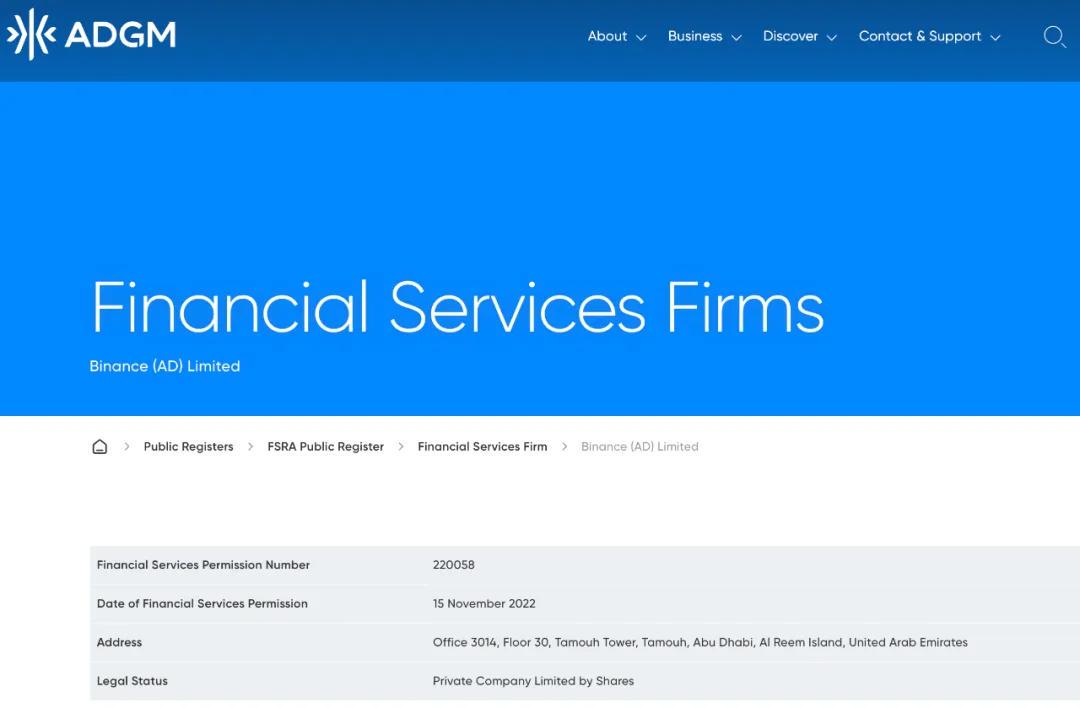
Figure 7: In November 2022, Binance received a Financial Services License (FSP) from FSRA
In 2022, the FSRA issued the "Guidance on the Regulation of Virtual Asset Activities", which clarified the regulatory requirements for virtual asset providers, including compliance measures such as capital prerequisites, personnel controls, anti-money laundering (AML) and customer due diligence (KYC).
In 2023, ADGM introduced a formal regulatory framework for decentralized autonomous organizations (DAOs) and other digital asset entities, allowing DAOs to operate legally and issue tokens to members.
In 2024, FSRA issued Consultation Document No. 7 of 2024, proposing a stablecoin regulatory framework based on Fiat Reference Tokens (FRT), and plans to revise existing relevant rules to allow tokens to be used in multiple scenarios such as payment services and investment services.
Starlabs Consulting noted that USDT has been listed as one of the tokens accepted by ADGM, and stablecoin companies such as Paxos and Circle have also obtained in-principle approval (IPA) issued by FSRA. In March 2025, Abu Dhabi-backed investment group MGX invested $2 billion in Binance using stablecoins.
Additionally, ADGM has set up a fintech sandbox to allow businesses to test their crypto-related products and services in a controlled environment.
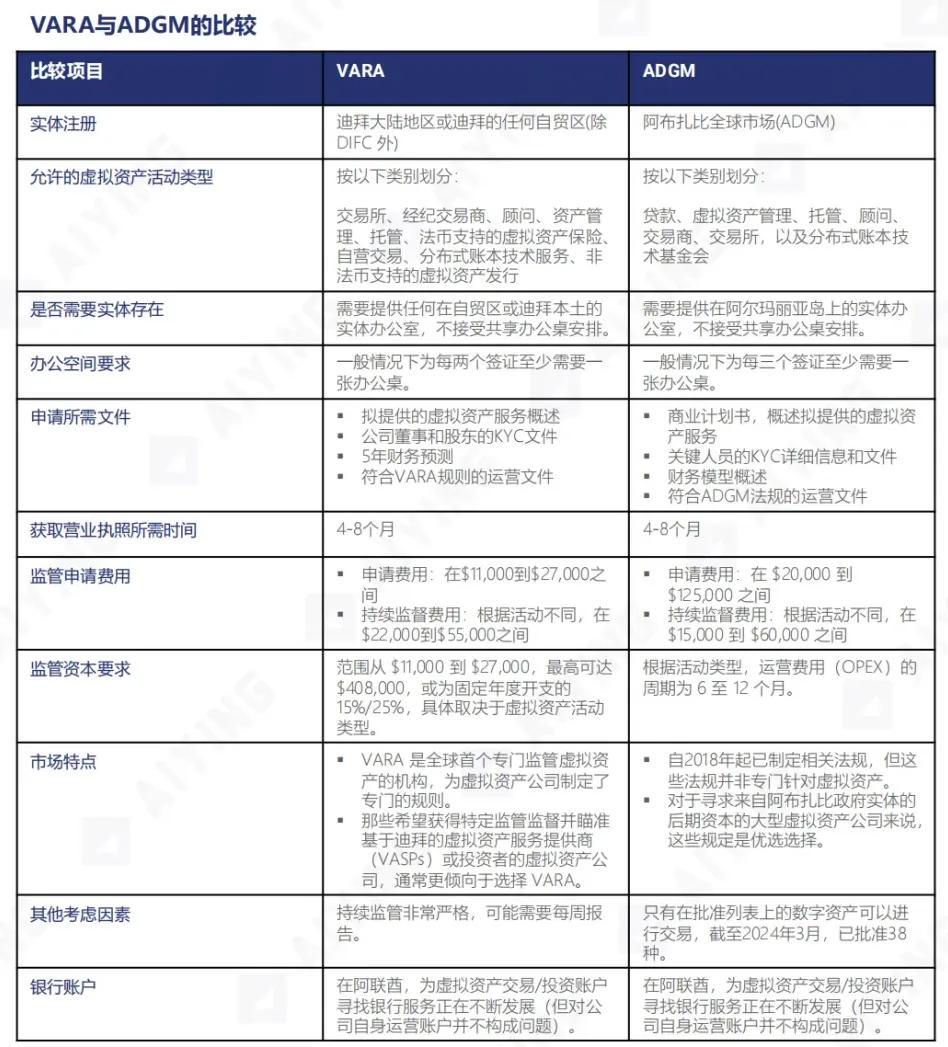
Figure 8: Comparison of VARA and ADGM regulation Source: AIYING
Other popular free zones
In addition to the strictly regulated licenses led by ADGM and VARA, some free zones have launched "non-regulatory" virtual asset licenses with lower thresholds, such as Dubai Multi Commodities Center (DMCC), Dubai World Trade Center (DWTC), Dubai Airport Free Zone Authority (RAKEZ), Dubai Silicon Oasis Authority (DSOA), Fujairah International Free Zone Authority (IFZA), Ras Al Khaimah Digital Asset Oasis (RAKDAO), etc. Each zone provides specific licensing options for the needs of cryptocurrency companies. Although these licenses are not applicable to exchange operations, they allow specific businesses to be carried out.
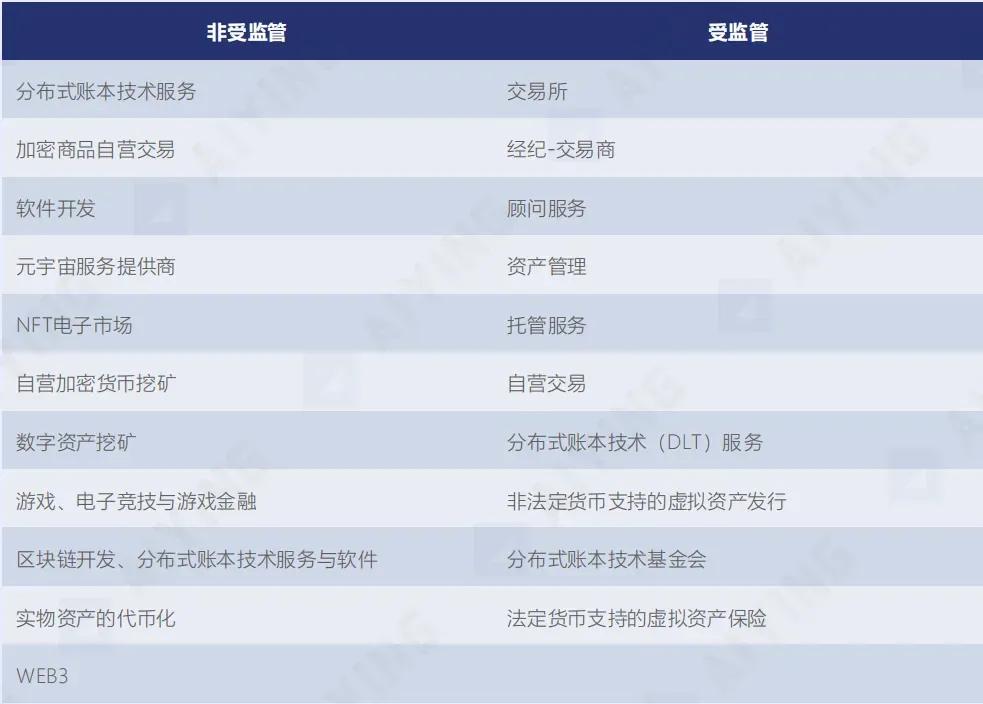
Figure 9: Business types under non-regulatory and regulatory licenses Source: AIYING
Among them, DWTC has become a key hub for the UAE's crypto industry and has worked with VARA to provide a regulatory framework. DWTC offers the convenience of 100% foreign ownership, no personal income tax or capital gains tax, and no currency restrictions, making it an ideal choice for cryptocurrency companies. Binance has partnered with the Dubai government to promote the construction of a regional cryptocurrency center at DWTC.