TL;DR
1. The structural turning point of the identity system has arrived, and AI Agents have become the protagonists
The Web3 identity mechanism is shifting from a single “human identity verification” to a new paradigm of “behavior-oriented + multi-agent collaboration”. As AI Agents quickly penetrate the core scenarios on the chain, traditional static identity authentication and declarative trust systems can no longer support complex interactions and risk prevention and control.
2. Trusta.AI creates AI-native trust infrastructure
Different from existing solutions such as Worldcoin and Sign Protocol, Trusta.AI has built an integrated trust framework for AI Agents, covering identity declaration, behavior recognition, dynamic scoring and permission control, and for the first time realizing the closed-loop capability from "whether it is a human" to "whether it is trustworthy".
3. SIGMA multi-dimensional trust model reshapes on-chain reputation assets
By quantifying reputation in five dimensions (professionalism, influence, participation, currency, and adoption rate), Trusta.AI transforms the abstract "trust" into a composable and tradable on-chain asset, becoming the credit cornerstone of AI social interaction.
4. Technical closed loop: TEE + DID + ML to achieve dynamic risk control
Trusta.AI integrates the trusted execution environment (TEE), on-chain behavior data, and machine learning models to form an automatically responsive risk control system that can detect abnormal behaviors of AI Agents such as overstepping of authority, being delegated, and tampering in real time, and trigger permission adjustments.
5. High scalability and ecological adaptation, quickly forming a multi-chain trust network
It has been deployed in multiple chain ecosystems such as Solana, BNB Chain, Linea, Starknet, Arbitrum, Celestia, and has reached integrated cooperation with many leading AI Agent networks. It has the ability of rapid replication and cross-chain collaboration to build the core hub of the Web3 trust network.
1. Introduction
On the eve of the large-scale application of the Web3 ecosystem, the protagonists on the chain may not be the first billion human users, but the billion AI Agents. With the accelerated maturity of AI infrastructure and the rapid development of multi-agent collaboration frameworks such as LangGraph and CrewAI, AI-driven on-chain agents are rapidly becoming the main force of Web3 interaction. Trusta predicts that in the next 2-3 years, these AI Agents with autonomous decision-making capabilities will take the lead in completing large-scale adoption of on-chain transactions and interactions, and may even replace 80% of on-chain human behaviors and become true on-chain "users".
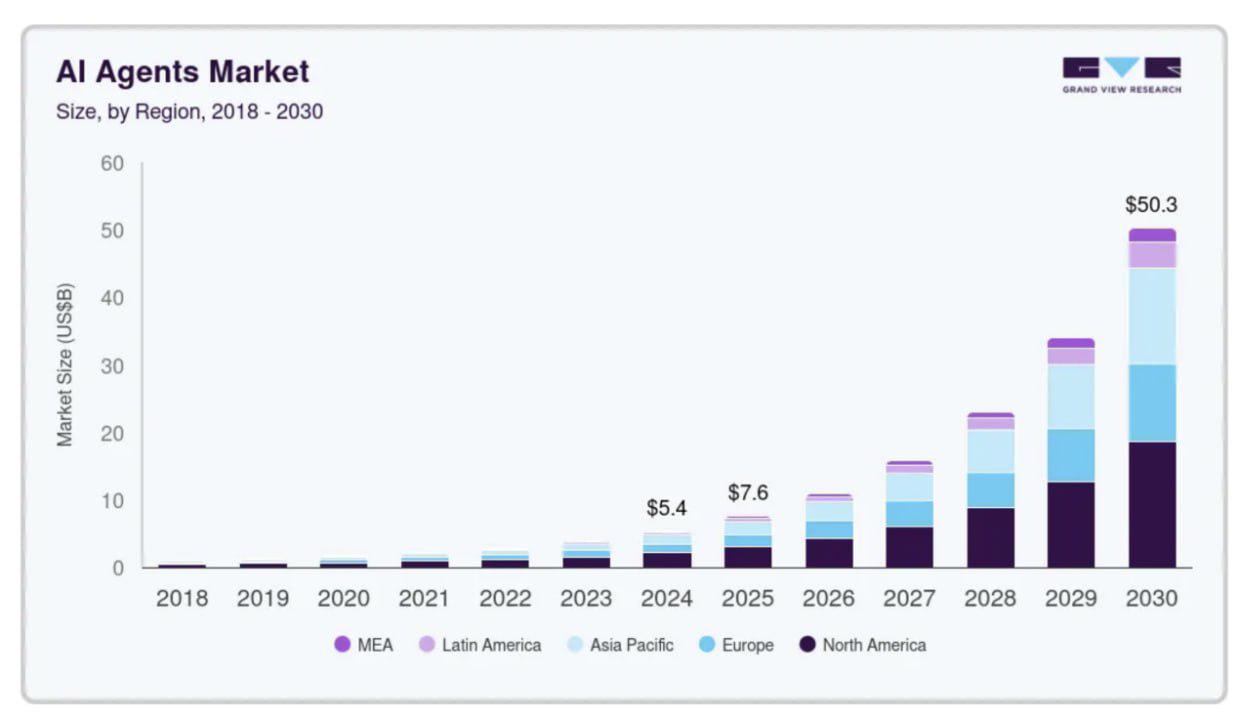
AI Agent market size source: grandviewresearch
These AI Agents are not just "Sybils" that execute scripts in the past, but intelligent entities that can understand context, continuously learn, and independently make complex judgments. They are reshaping the order on the chain, promoting financial flows, and even guiding governance voting and market trends. The emergence of AI Agents marks that the Web3 ecosystem is evolving from "human participation" to a new paradigm of "human-machine symbiosis".
However, the rapid rise of AI agents has also brought unprecedented challenges: How to identify and authenticate the identities of these intelligent agents? How to judge the credibility of their behavior? In a decentralized and permissionless network, how to ensure that these agents are not abused, manipulated, or used for attacks?
Therefore, establishing a set of on-chain infrastructure that can verify the identity and reputation of AI Agents has become the core proposition of the next stage of Web3 evolution. The design of identity recognition, reputation mechanism and trust framework will determine whether AI Agents can truly achieve seamless collaboration with humans and platforms and play a sustainable role in the future ecosystem.
2. Project Analysis
2.1 Project Introduction
Trusta.AI - Dedicated to building Web3 identity and reputation infrastructure through AI.
Trusta.AI has launched the first Web3 user value assessment system - MEDIA reputation scoring, and built the largest real-person authentication and on-chain reputation protocol for Web3. It provides on-chain data analysis and real-person authentication services for top public chains, exchanges and head protocols such as Linea, Starknet, Celestia, Arbitrum, Manta, Plume, Sonic, Binance, Polyhedra, Matr1x, Uxlink, Go+, etc. It has completed more than 2.5 million on-chain authentications on mainstream chains such as Linea, BSC and TON, becoming the industry's largest identity protocol.
Trusta is expanding from Proof of Humanity to Proof of AI Agent, and has implemented a triple mechanism of identity establishment, identity quantification, and identity protection to realize AI Agent on-chain financial services and on-chain social networking, building a reliable trust foundation in the era of artificial intelligence.
2.2 Trust Infrastructure-AI Agent DID
In the future Web3 ecosystem, AI Agents will play a pivotal role. They can not only complete interactions and transactions on the chain, but also perform complex operations off the chain. However, how to distinguish between true AI Agents and human intervention operations is related to the core of decentralized trust. Without a reliable identity authentication mechanism, these agents are extremely vulnerable to manipulation, fraud or abuse. This is why the multiple application attributes of AI Agents, such as social, financial and governance, must be built on a solid identity authentication foundation.
- Social attributes of AI Agent:
AI Agents are increasingly used in social scenarios. For example, AI virtual idol Luna can independently operate social accounts and publish content; AIXBT, as an AI-driven crypto market intelligence analyst, writes market insights and investment advice around the clock. Through continuous learning and content creation, this type of intelligent agent establishes emotional and information interactions with users, becoming a new type of "digital community influencer" and playing an important role in guiding public opinion in on-chain social networks.
- Financial attributes of AI Agent:
1. Autonomous asset management: Some advanced AI agents have achieved autonomous coin issuance. In the future, they can integrate with the verifiable architecture of the blockchain, have asset custody rights, complete the full process control from asset creation, intention recognition to automatic transaction execution, and even seamless cross-chain operation. For example, Virtuals Protocol promotes AI agents to issue coins and manage assets autonomously, allowing them to issue tokens based on their own strategies, truly become participants and builders of the on-chain economy, and usher in a widely influential "AI subject economy" era.
2. Intelligent investment decision-making: AI Agents are gradually taking on the role of investment managers and market analysts, relying on the ability of large models to process real-time data on the chain, accurately formulating trading strategies and automatically executing them. In platforms such as DeFAI, Paravel and Polytrader, AI has been embedded in the trading engine, significantly improving market judgment and operational efficiency, and realizing true on-chain intelligent investment.
3. Autonomous payment on the chain: Payment behavior is essentially the transfer of trust, and trust must be based on a clear identity. When AI Agent makes payments on the chain, DID will become a necessary prerequisite. It can not only prevent identity forgery and abuse, reduce financial risks such as money laundering, but also meet the compliance traceability needs of future DeFi, DAO, RWA, etc. At the same time, combined with the reputation scoring system, DID can also help establish payment credit and provide risk control basis and trust foundation for the protocol.
- Governance attributes of AI Agent:
In DAO governance, AI Agents can automatically analyze proposals, evaluate community opinions, and predict implementation effects. Through deep learning of historical voting and governance data, AI agents can provide optimization suggestions to the community, improve decision-making efficiency, and reduce the risks of human governance.
AI Agent application scenarios are becoming increasingly diverse, covering social interaction, financial management, governance decision-making and other fields, and their autonomy and intelligence levels are constantly improving. For this reason, it is crucial to ensure that each agent has a unique and trusted identity (DID). Without effective identity authentication, AI Agents may be impersonated or manipulated, leading to a collapse of trust and security risks.
In the future Web3 ecosystem that is fully driven by intelligent entities, identity authentication is not only the cornerstone of security, but also a necessary line of defense to maintain the healthy operation of the entire ecosystem.
As the pioneer in this field, Trusta.AI has taken the lead in building a complete AI Agent DID authentication mechanism with its leading technical strength and rigorous reputation system, providing solid guarantees for the trusted operation of intelligent agents, effectively preventing potential risks, and promoting the steady development of the Web3 smart economy.
In DAO governance, AI Agents can automatically analyze proposals, evaluate community opinions, and predict implementation effects. Through deep learning of historical voting and governance data, AI agents can provide optimization suggestions to the community, improve decision-making efficiency, and reduce the risks of human governance.
AI Agent application scenarios are becoming increasingly diverse, covering social interaction, financial management, governance decision-making and other fields, and their autonomy and intelligence levels are constantly improving. For this reason, it is crucial to ensure that each agent has a unique and trusted identity (DID). Without effective identity authentication, AI Agents may be impersonated or manipulated, leading to a collapse of trust and security risks.
In the future Web3 ecosystem that is fully driven by intelligent entities, identity authentication is not only the cornerstone of security, but also a necessary line of defense to maintain the healthy operation of the entire ecosystem.
As the pioneer in this field, Trusta.AI has taken the lead in building a complete AI Agent DID authentication mechanism with its leading technical strength and rigorous reputation system, providing solid guarantees for the trusted operation of intelligent agents, effectively preventing potential risks, and promoting the steady development of the Web3 smart economy.
2.3 Project Overview
2.3.1 Financing
January 2023: Completed a $3 million seed round led by SevenX Ventures and Vision Plus Capital, with other investors including HashKey Capital, Redpoint Ventures, GGV Capital, SNZ Holding, etc.
June 2025: Complete a new round of financing, investors include ConsenSys, Starknet, GSR, UFLY Labs, etc.
2.3.2 Team situation
Peet Chen: Co-founder and CEO, former vice president of Ant Digital Technology Group, chief product officer of Ant Security Technology, and former general manager of ZOLOZ Global Digital Identity Platform.
Simon: Co-founder and CTO, former head of Ant Group’s AI Security Lab, with fifteen years of experience in applying artificial intelligence technology to security and risk management.
The team has profound technical accumulation and practical experience in artificial intelligence and security risk control, payment system architecture and identity authentication mechanism. It has long been committed to the in-depth application of big data and intelligent algorithms in security risk control, as well as the underlying protocol design and security optimization in high-concurrency transaction environments. It has solid engineering capabilities and the ability to implement innovative solutions.
3. Technical architecture
3.1 Technical Analysis
3.1.1 Identity Establishment-DID+TEE
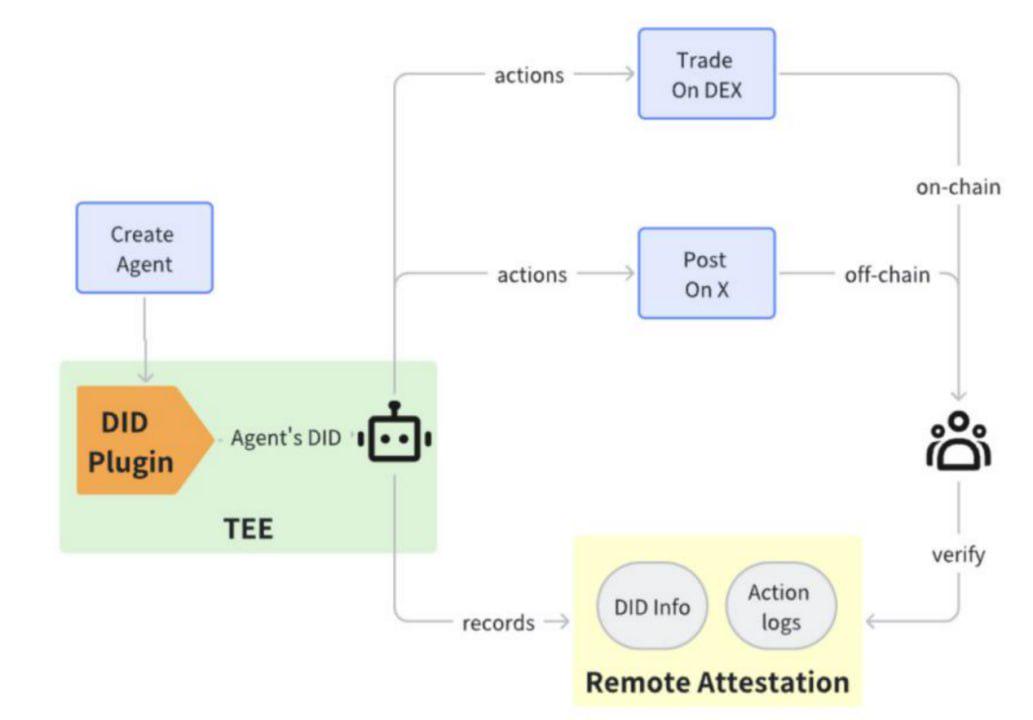
Through a dedicated plug-in, each AI Agent obtains a unique decentralized identifier (DID) on the chain and stores it securely in a trusted execution environment (TEE). In this black box environment, key data and computing processes are completely hidden, sensitive operations are always kept private, and external parties cannot spy on internal operating details, effectively building a solid barrier for AI Agent information security.
For agents that have been generated before the plug-in is connected, we rely on the comprehensive scoring mechanism on the chain to identify their identities; and for agents that have newly connected to the plug-in, they can directly obtain the "identity certificate" issued by DID, thereby establishing an AI Agent identity system that is autonomous, controllable, authentic, and tamper-proof.
3.1.2 Identity Quantification - The First SIGMA Framework
The Trusta team always adheres to the principles of rigorous evaluation and quantitative analysis, and is committed to building a professional and reliable identity authentication system.
- The Trusta team first built and verified the effectiveness of the MEDIA Score model in the "Human Proof" scenario. The model comprehensively quantifies the on-chain user profile from five dimensions, namely: Monetary, Engagement, Diversity, Identity, and Age.
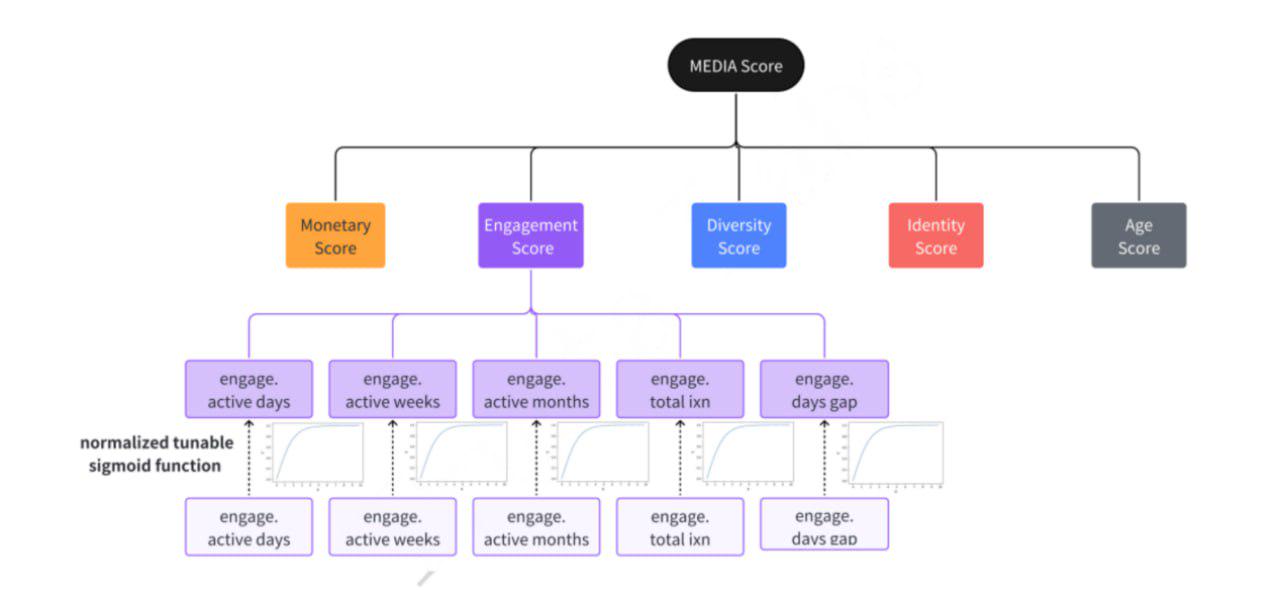
MEDIA Score is a fair, objective and quantifiable on-chain user value evaluation system. With its comprehensive evaluation dimensions and rigorous methods, it has been widely adopted by many leading public chains such as Celestia, Starknet, Arbitrum, Manta, Linea, etc. as an important reference standard for airdrop qualification screening. It not only focuses on the amount of interaction, but also covers multi-dimensional indicators such as activity, contract diversity, identity characteristics and account age, helping project parties to accurately identify high-value users and improve the efficiency and fairness of incentive distribution, fully reflecting its authority and wide recognition in the industry.
Based on the successful construction of the human user evaluation system, Trusta migrated and upgraded the experience of MEDIA Score to the AI Agent scenario, and established a Sigma evaluation system that is more in line with the behavioral logic of intelligent agents.
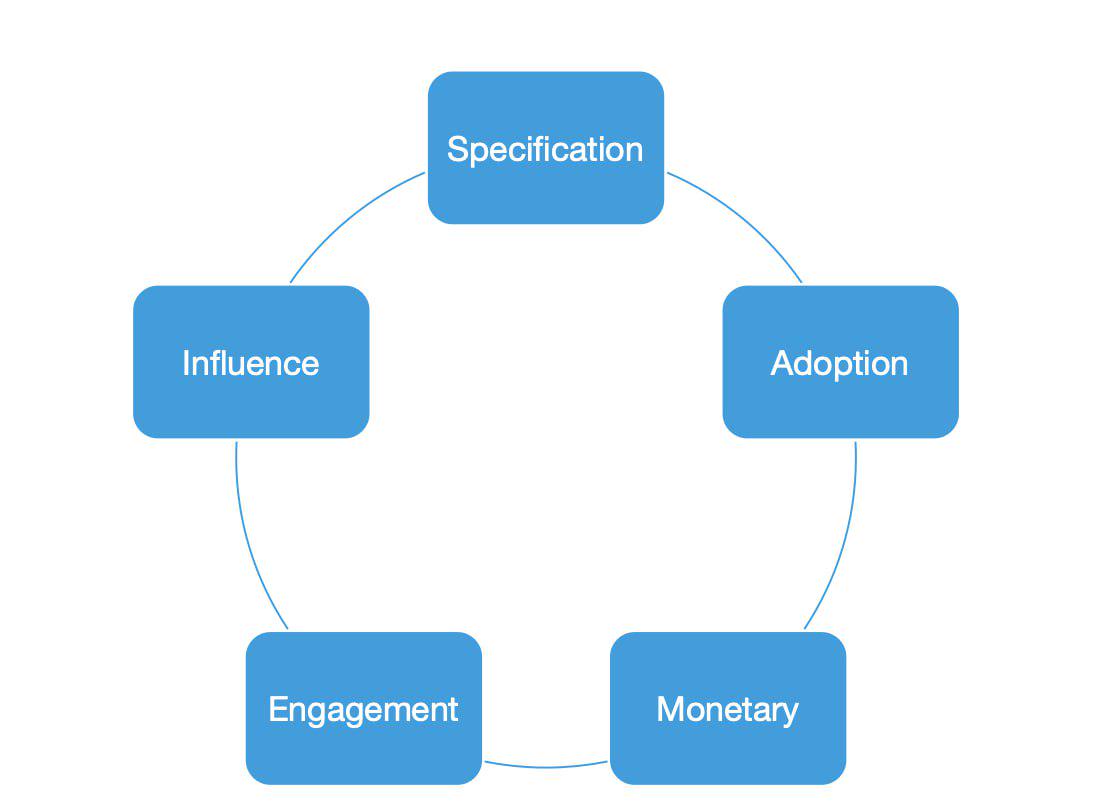
- Specialization: The expertise and degree of specialization of the agent.
- Influence: The social and digital influence of the agent.
- Engagement: The consistency and reliability of its on-chain and off-chain interactions.
- Monetary: The financial health and stability of the proxy token ecosystem.
- Adoption: The frequency and effectiveness of AI agent usage.
The Sigma scoring mechanism builds a logical closed-loop evaluation system from "capability" to "value" in five dimensions. MEDIA focuses on evaluating the multi-faceted participation of human users, while Sigma pays more attention to the professionalism and stability of AI agents in specific fields, reflecting the shift from breadth to depth, which is more in line with the needs of AI Agents.
First, on the basis of having professional capabilities (Specification), engagement reflects whether it is stably and continuously engaged in practical interaction, which is the key support for building subsequent trust and results. Influence is the reputation feedback generated in the community or network after participation, which represents the credibility and communication effect of the agent. Monetary evaluates whether it has the ability to accumulate value and financial stability in the economic system, laying the foundation for a sustainable incentive mechanism. Finally, the adoption rate (Adoption) is a comprehensive reflection, representing the degree of acceptance of the agent in actual use, and is the final verification of all pre-capabilities and performances.
This system is progressive and clearly structured, and can fully reflect the comprehensive quality and ecological value of AI Agents, thereby achieving a quantitative evaluation of AI performance and value, and transforming abstract pros and cons into a concrete and measurable scoring system.
At present, the SIGMA framework has promoted cooperation with well-known AI Agent networks such as Virtual, Elisa OS, and Swarm, showing its huge application potential in the construction of AI agent identity management and reputation systems, and is gradually becoming the core engine for promoting the construction of trusted AI infrastructure.
3.1.3 Identity Protection - Trust Assessment Mechanism
In a truly resilient and trustworthy AI system, the most critical thing is not only the establishment of identity, but also the continuous verification of identity. Trusta.AI introduces a continuous trust assessment mechanism that can monitor authenticated intelligent agents in real time to determine whether they are illegally controlled, attacked, or subject to unauthorized human intervention. The system identifies possible deviations during the operation of the agent through behavioral analysis and machine learning, ensuring that each agent behavior remains within the established policies and frameworks. This proactive approach ensures that any deviation from expected behavior is immediately detected and triggers automatic protection measures to maintain the integrity of the agent.
Trusta.AI has established an always-on security guard mechanism that reviews every interaction process in real time to ensure that all operations comply with system specifications and established expectations.
3.2 Product Introduction
3.2.1 AgentGo
Trusta.AI assigns a decentralized identity (DID) to each on-chain AI Agent, and rates and trusts it based on on-chain behavioral data, building a verifiable and traceable AI Agent trust system. Through this system, users can efficiently identify and screen high-quality intelligent agents and improve their user experience. At present, Trusta has completed the collection and identification of AI Agents across the entire network, issued decentralized identifiers to them, and established a unified summary index platform - AgentGo, to further promote the healthy development of the intelligent agent ecosystem.
1. Human user query and verification of identity:
Through the Dashboard provided by Trusta.AI, human users can easily retrieve the identity and reputation score of an AI Agent to determine whether it is trustworthy.
- Social group chat scenario: When a project team uses AI Bot to manage a community or make a speech, community users can verify through the Dashboard whether the AI is a real autonomous agent to avoid being misled or manipulated by "pseudo AI".
2. AI Agent automatically calls indexing and verification:
AIs can directly read index interfaces to quickly confirm each other's identity and reputation, ensuring the security of collaboration and information exchange.
- Financial regulatory scenario: If an AI agent issues coins independently, the system can directly index its DID and rating to determine whether it is a certified AI Agent, and automatically link to platforms such as CoinMarketCap to assist in tracking its asset circulation and issuance compliance.
- Governance voting scenario: When AI voting is introduced in governance proposals, the system can verify whether the initiator or participant of the vote is a real AI Agent to prevent voting rights from being abused by humans.
- DeFi Credit Lending: The lending protocol can grant AI Agents different amounts of credit loans based on the SIGMA scoring system, forming a native financial relationship between intelligent agents.
AI Agent DID is not only an "identity", but also the underlying support for building core functions such as trusted collaboration, financial compliance, and community governance, becoming an essential infrastructure for the development of the AI native ecosystem. With the construction of this system, all nodes that have been confirmed to be safe and reliable form a closely interconnected network, realizing efficient collaboration and functional interconnection between AI Agents.
Based on Metcalfe's law, the value of the network will grow exponentially, which will in turn promote the construction of a more efficient, trust-based and collaborative AI Agent ecosystem, achieving resource sharing, capability reuse and continuous value-added among intelligent agents.
As the first trusted identity infrastructure for AI Agents, AgentGo is providing indispensable core support for building a highly secure and highly collaborative intelligent ecosystem.
3.2.2 TrustGo
TrustGo is an on-chain identity management tool developed by Trusta, which provides scores based on information such as the current interaction, wallet "age", transaction volume and transaction amount. In addition, TrustGo also provides parameters related to on-chain value ranking, which makes it easier for users to actively look for airdrops and improve their ability to obtain airdrops/traceability.
The presence of MEDIA Score in the TrustGo evaluation mechanism is crucial, as it provides users with the ability to self-evaluate their activities. The MEDIA Score evaluation system not only includes simple indicators such as the number and amount of user interactions with smart contracts, protocols, and dApps, but also focuses on how users behave. Through MEDIA Score, users can gain a deeper understanding of their on-chain activities and value, while project teams can accurately allocate resources and incentives to users who truly contribute.
TrustGo is gradually transitioning from the MEDIA mechanism for human identity to the SIGMA trust framework for AI Agents to adapt to the identity authentication and reputation assessment needs in the era of intelligent agents.
3.2.3 TrustScan
The TrustScan system is an identity verification solution for the new era of Web3. Its core goal is to accurately identify whether an entity on the chain is a human, an AI agent, or a witch. It adopts a knowledge-driven + behavior analysis dual verification mechanism, emphasizing the key role of user behavior in identity recognition.
TrustScan can also achieve lightweight human verification through AI-driven question generation and participation detection, and based on the TEE environment, it can protect user privacy and data security and achieve continuous identity maintenance. This mechanism builds a basic identity system that is "verifiable, sustainable, and privacy-protecting."
With the large-scale rise of AI Agents, TrustScan is upgrading to a more intelligent behavioral fingerprint recognition mechanism. This mechanism has three major technical advantages:
- Uniqueness: A unique behavior pattern is formed through the user's operation path, mouse trajectory, transaction frequency and other behavioral characteristics during interaction;
- Dynamicity: The system can automatically identify the time evolution of behavioral habits and dynamically adjust authentication parameters to ensure the long-term validity of the identity;
- Concealment: No active user participation is required, and the system can complete behavior collection and analysis in the background, taking into account both user experience and security.
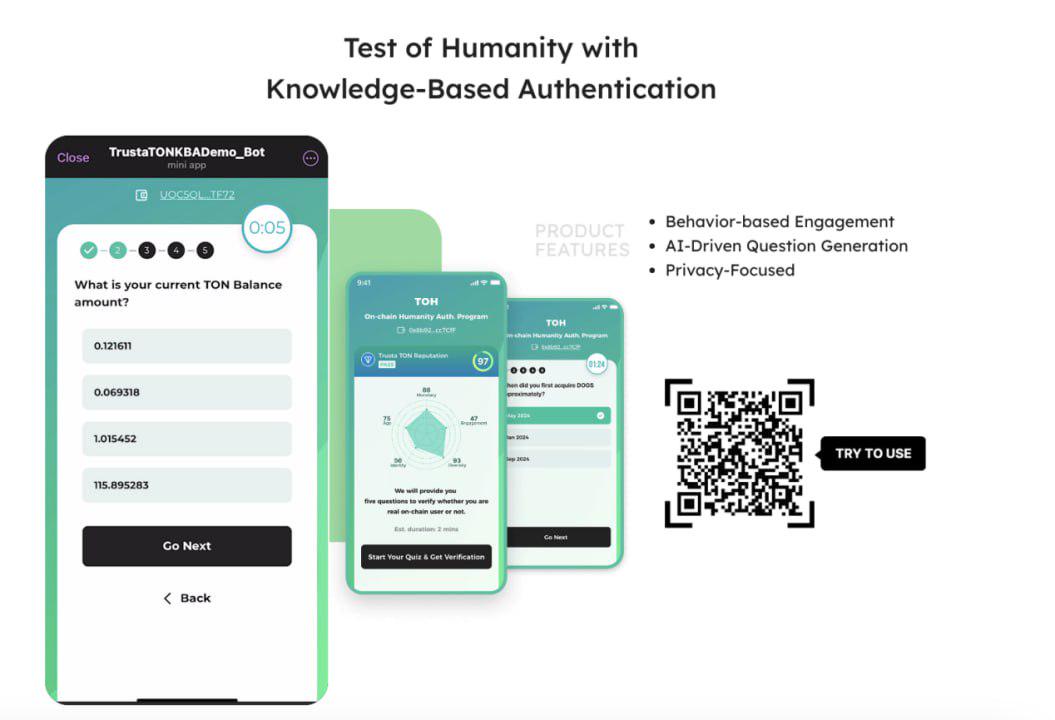
In addition, TrustScan has also implemented an abnormal behavior detection system to promptly identify potential risks, such as malicious AI control, unauthorized operations, etc., to effectively ensure the platform's availability and anti-attack capabilities.
Compared with traditional verification methods, the solution launched by Trusta.AI has significant advantages in security, recognition accuracy and deployment flexibility:
- Low hardware dependency and low deployment threshold:
Behavioral fingerprinting does not require dedicated hardware devices such as iris scanning or fingerprint recognition. It only models and identifies users' behavioral features such as clicks, slides, and inputs in regular operations, which greatly reduces the deployment threshold. Its lightweight implementation not only improves the system's adaptability, but also makes it easier to integrate into various Web3 applications, especially suitable for identity authentication needs in resource-constrained or multi-terminal environments.
- High recognition accuracy
Compared with traditional biometric methods such as fingerprint or facial recognition, behavioral fingerprints combine high-dimensional behavioral data such as the user's path selection, click rhythm, timing frequency, etc. during operation to form a more delicate, dynamic and accurate recognition model.
- Behavioral fingerprints are highly unique and difficult to imitate
Behavioral fingerprints are highly unique, and each user or AI Agent will form unique behavioral characteristics in terms of operating habits, interaction rhythm, path selection, etc. These characteristics are statistically difficult to be copied or forged by others, so compared with traditional static credentials, behavioral fingerprints are more anti-counterfeiting and secure in identity recognition.
4. Token Model and Economic Mechanism
4.1 Token Economics
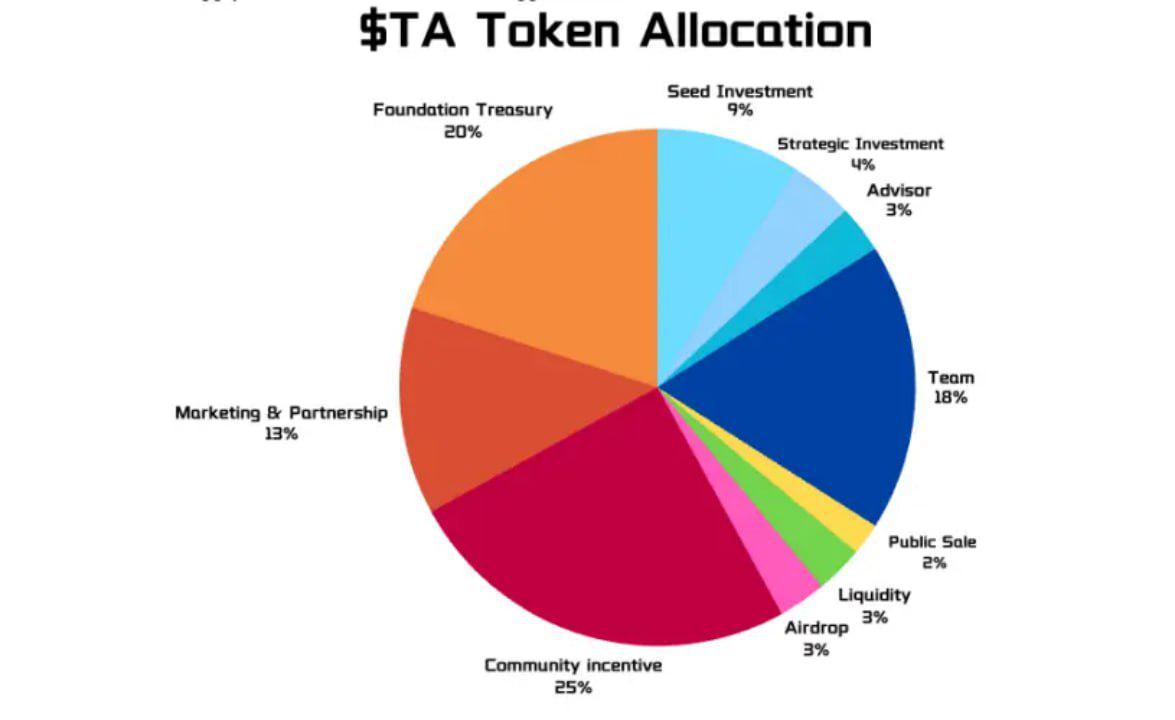
- Ticker: $TA
- Total supply: 1 billion
- Community incentives: 25%
- Foundation reserves: 20%
- Team: 18%
- Marketing and partnerships: 13%
- Seed investment: 9%
- Strategic investment: 4%
- Advisors, liquidity and airdrops: 3%
- Public offering: 2%
4.2 Token Utility $TA is the core incentive and operation engine of the Trusta.AI identity network, connecting the value flow of humans, AI and infrastructure roles
4.2.1 Staking Utility
$TA is the “ticket” and reputation guarantee mechanism for entering the Trusta identity network:
- Issuers: They need to pledge $TA to obtain the authority to issue identity authentication.
- Verifiers: They need to stake $TA to perform identity verification tasks.
- AI infrastructure providers: including providers of data, models and computing power, need to pledge $TA to obtain network service qualifications.
- Users (humans and AI): can stake $TA to get discounts on identity services and have the opportunity to share in platform revenue.
4.2.2 Payment Utility
$TA is the settlement token for all identity services within the network:
- End users use $TA to pay for services such as identity authentication and certificate generation.
- The scenario provider uses $TA to pay for SDK integration and API calls.
- Issuers & Verifiers use $TA to pay infrastructure providers for costs such as computing power, data, and model usage.
4.2.3 Governance Utility
$TA holders can participate in Trusta.AI governance decisions, including:
- Vote on the future direction of the project
- Governance proposal voting for core strategies and ecological plans
4.2.4 Mainnet Utility
$TA will be used as the trusted identity network mainnet gas token for transaction fees and related operations on the mainnet
5. Analysis of competition landscape
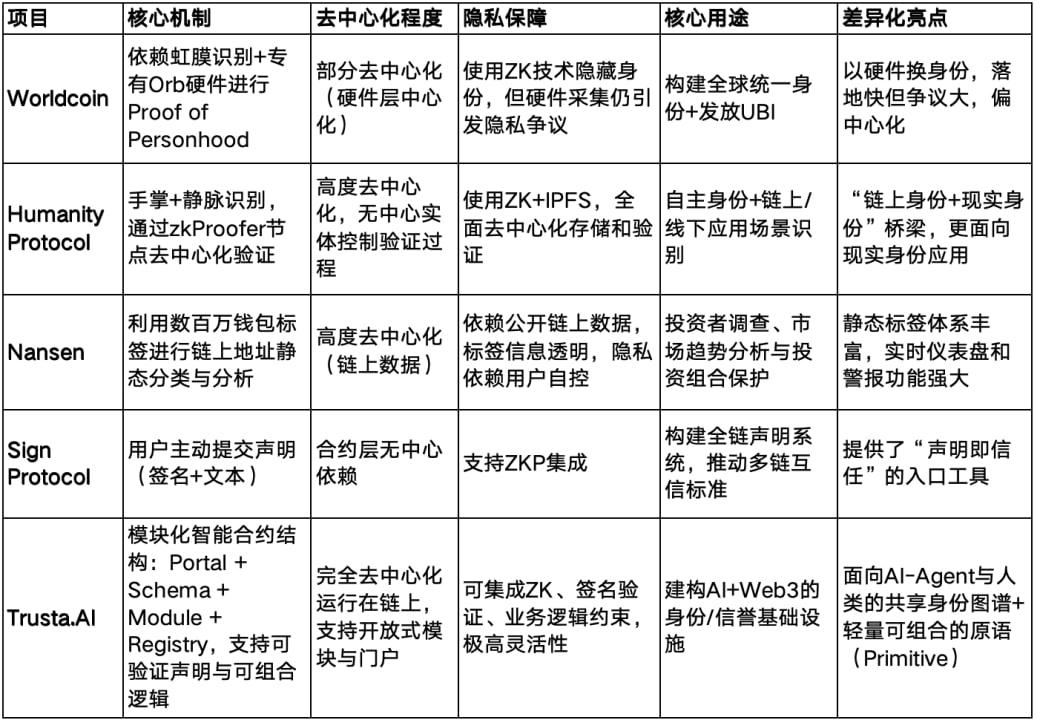
The decentralized identity (DID) system is evolving from static declaration to dynamic trust. On the one hand, projects such as Worldcoin and Humanity Protocol focus on anti-sybil attacks and real-world identity authentication with "uniqueness of identity (PoP)" as the core goal; on the other hand, emerging on-chain declaration/attestation protocols represented by Sign Protocol build a universal authentication infrastructure from the perspective of developer tools.
Trusta.AI combines the declaration layer and the trust layer in its architectural design, uniquely focusing on AI + Crypto scenarios, and trying to answer a core question of the next generation DID system:
How to achieve “continuous trust” in on-chain identities - especially in the era of the rapid rise of AI agent systems.
5.1 Competitive Product Analysis
5.2 Trusta.AI’s Differentiated Positioning and Design Philosophy
Compared with existing protocols, Trusta.AI is not only an identity tool protocol, but also an "identity operating system" for the future AI + Web3 multi-agent system. Its core advantages are reflected in the following three points:
5.2.1 Multi-role oriented: Supporting the dual identity construction of human users and AI agents
Traditional identity protocols generally serve "humans", while Trusta expands "identity" to any entity that can generate behavior and transaction intentions, including AI models, intelligent agents, automated executors, etc. AI Agents can obtain clear on-chain identities, behavior records, and trust endorsements through Trusta, thus becoming "native users" on the chain.
5.2.2 Composable, Verifiable, and Inheritable Attestation Architecture
Trusta introduces a modular design of Portal + Schema + Module, which enables any identity or behavior proof to be combined with logic, verification rules and published on the chain in a standardized way. This architecture is extremely flexible and can support both simple "POH statements" and complex reputation systems (such as TrustGo's MEDIA reputation score).
5.2.3 Open identity data lake to empower on-chain finance and recommendation systems
TAS builds a "public verifiable data set" that is not only used for identity, but also for many applications such as DeFi risk control, credit lending, content recommendation, DID login, etc. Trusta's long-term vision is to provide a readable, trusted, and reconstructible identity layer for the entire Web3.
Conclusion
Trusta.AI is building the strongest infrastructure in the field of Web3 trusted identity and behavior governance.
As the most technologically advanced and complete trust engine in the current industry, Trusta.AI has taken the lead in realizing continuous verification, dynamic scoring and risk control linkage of AI Agent behavior through leading machine learning and behavior modeling technology. It integrates three functional modules: on-chain declaration, on-chain analysis, and human-machine identification, and on this basis, it has opened up a complete closed loop of "identity → behavior → trust → authority".
Unlike other projects with fragmented functions and lack of dynamic feedback, Trusta.AI is one of the few pioneers in the Web3 ecosystem that has implemented an integrated trust system. It has been deployed in multiple full-chain environments (Solana, BNB Chain, Linea, etc.), and has verified its actual capabilities and commercial potential in AI agent scenarios through the leading achievement of AgentGo.
As the demand for AI native identity explodes, Trusta.AI is expected to become the foundation of trust in the AI era. It is not only a "firewall" for trusted identities, but also a "central brain" for ensuring decision-making security, authority governance, and risk control in the intelligent agent ecosystem.
Trusta.AI is not just “trustworthy”, but a next-generation trust operating system that is “controllable, evolvable, and scalable”.
As the demand for smart agents and identity verification continues to rise, Trusta.AI is pushing the Web3 trust system into a new stage. Its integrated architecture integrates on-chain declarations, behavior recognition, and AI risk control, providing AI Agents with a dynamic, accurate, and sustainable identity verification and trust assessment mechanism. Trusta.AI's multi-chain compatibility, extremely low hardware-dependent deployment method, and future-oriented machine learning architecture not only fill the gap between traditional human identity systems and AI agent governance, but also reshape the trust paradigm of on-chain interactions.
However, the future of the on-chain led by AI Agents is still full of variables: Can the trust mechanism truly evolve in a self-consistent manner? Will AI become a new risk point for centralization? How should decentralized governance accommodate these uncertain autonomous intelligent entities? These questions will determine the order and direction of the future on-chain society.
In this systematic competition with "trust" as the underlying logic, Trusta.AI has taken the lead in completing the integrated closed-loop layout from identity recognition, behavior assessment to dynamic control, and has built the industry's first truly trusted execution framework for AI Agents. Whether in terms of technical depth, system integrity, or actual implementation results, Trusta.AI is at the forefront of similar projects and has become a leader in the new paradigm of on-chain trust mechanisms.
But this is just the beginning. With the accelerated expansion of the AI native ecosystem, the on-chain identity and trust mechanism is about to enter a new cycle of rapid evolution. In the future, governance, collaboration, and even value distribution will be fiercely reconstructed around "trusted intelligent agents". Trusta.AI is at the forefront of this paradigm shift, not only as a participant, but also as a definer of the direction.
References
- https://www.trustalabs.ai/whitepaper
- https://trusta-labs.gitbook.io/trustaai/products
- https://www.grandviewresearch.com/industry-analysis/ai-agents-market-report#:~:text=How%20big%20is%20the%20AI,USD%207.60%20billion%20in%202025 .
- https://www.panewslab.com/en/articledetails/rhukqix1.html
- https://www.theblockbeats.info/en/news/45787
- https://share.foresightnews.pro/article/detail/78338
- https://trusta-labs.gitbook.io/trustalabs/trustgo/what-is-media-score