
On Monday, economic concerns swept across Wall Street, U.S. stocks suffered a Black Monday, and technology stocks recorded the biggest drop since 2022. Tesla led the decline by more than 15%, and the market value of the seven giants evaporated by more than US$830 billion in one day.
The bloodbath in the U.S. stock market brought down the crypto market. BTC fell below the $80,000 mark for the second time in three weeks, hitting a low of $76,600, basically returning to the level when Trump won the election last year. Ethereum, the leader of the cottage industry, fell below $1,800, hitting its lowest level since October 2023. Since hitting a record high in mid-December last year, the crypto market has evaporated $1.3 trillion, a cumulative decline of 33%, and the market is in extreme panic.
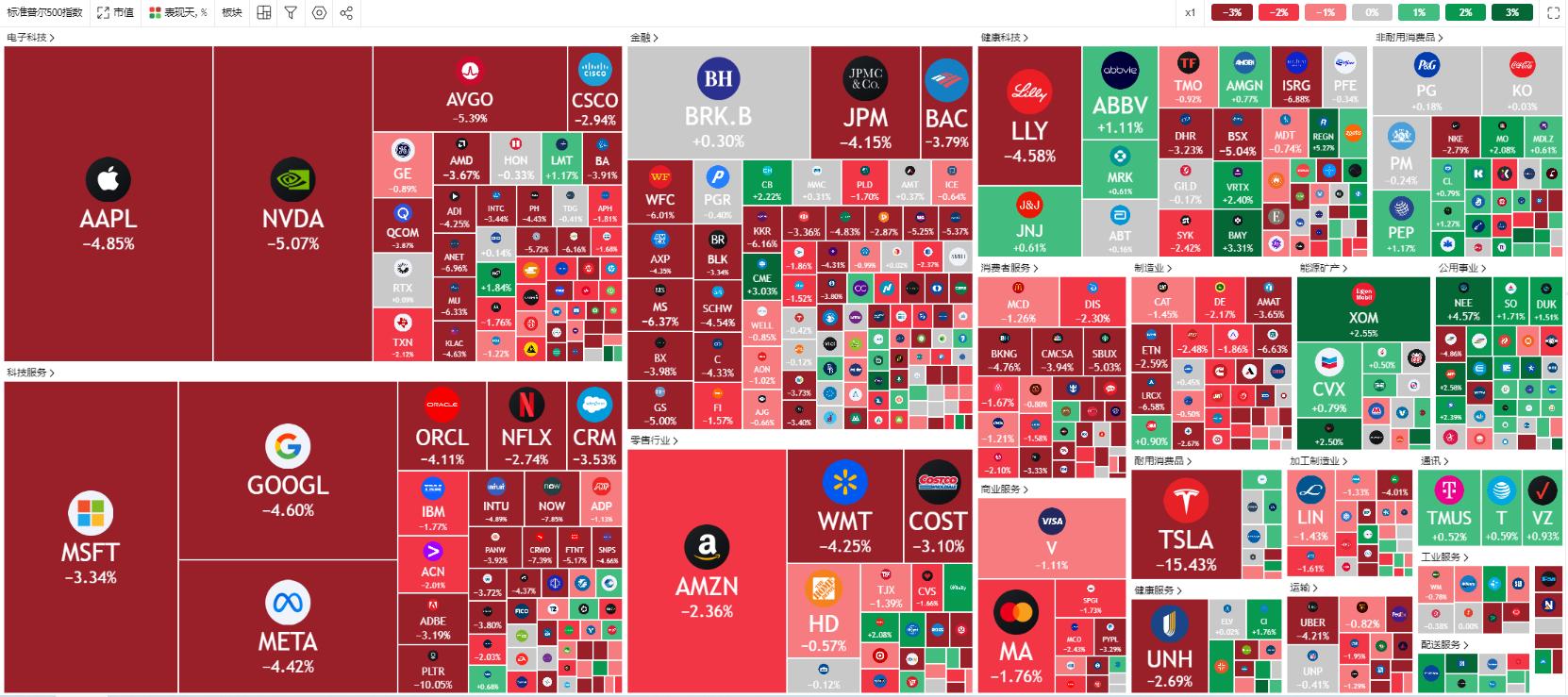
Trump's latest remarks spark recession fears
The market is worried that the Trump administration's tariff policy and spending cuts will cause the US economy to stagnate. His latest remarks have exacerbated such concerns and caused panic among investors.
On March 4, Trump admitted in a speech to Congress that his economic plan might bring "some disruptions," but he insisted that it was for the purpose of achieving a long-term "golden age." On March 6, he said that he "didn't even look at the market" because the United States would be strong in the long run. But in an interview last weekend, he said that his tariff policy might affect U.S. economic growth and refused to rule out the possibility that the economy might fall into recession, saying that the economy was going through a "transition period" and that too much attention should not be paid to the stock market. U.S. Treasury Secretary Benson and Commerce Secretary Lutnick also expressed similar views, suggesting that the economy might be slowing down.
The latest statements from Trump and his team have weakened investors' confidence that the United States will change its policy direction amid the market crash, and indirectly acknowledged the possibility of an economic slowdown and the inevitability of a short-term decline in U.S. stocks.
Now, there is growing speculation that Trump is willing to tolerate economic and market troubles in order to achieve his long-term goals involving tariffs and reducing the size of government, and will double down on his strategy of "short-term pain for long-term gain," sparking investor panic.
Safe-haven assets become popular
The unexpected recovery of the U.S. economy has been the main driver of the stock market in the past few years, but the recent trend has suddenly changed, and the fear of recession is now sweeping Wall Street further. The steady decline in U.S. stocks accelerated sharply on Monday as investors fled almost all types of risky assets.
Deutsche Bank data shows that U.S. stock positions are currently slightly low, the first time since August last year. Data from Goldman Sachs' equity sales trading department showed that hedge fund selling intensified in the week ending March 7, shorting at the fastest pace since November 2024, with long-term investors selling a net $5 billion and the ratio of long and short stocks falling to the lowest level since 2019. The data also showed that the selling was mainly concentrated in the technology, financial and discretionary consumer sectors.
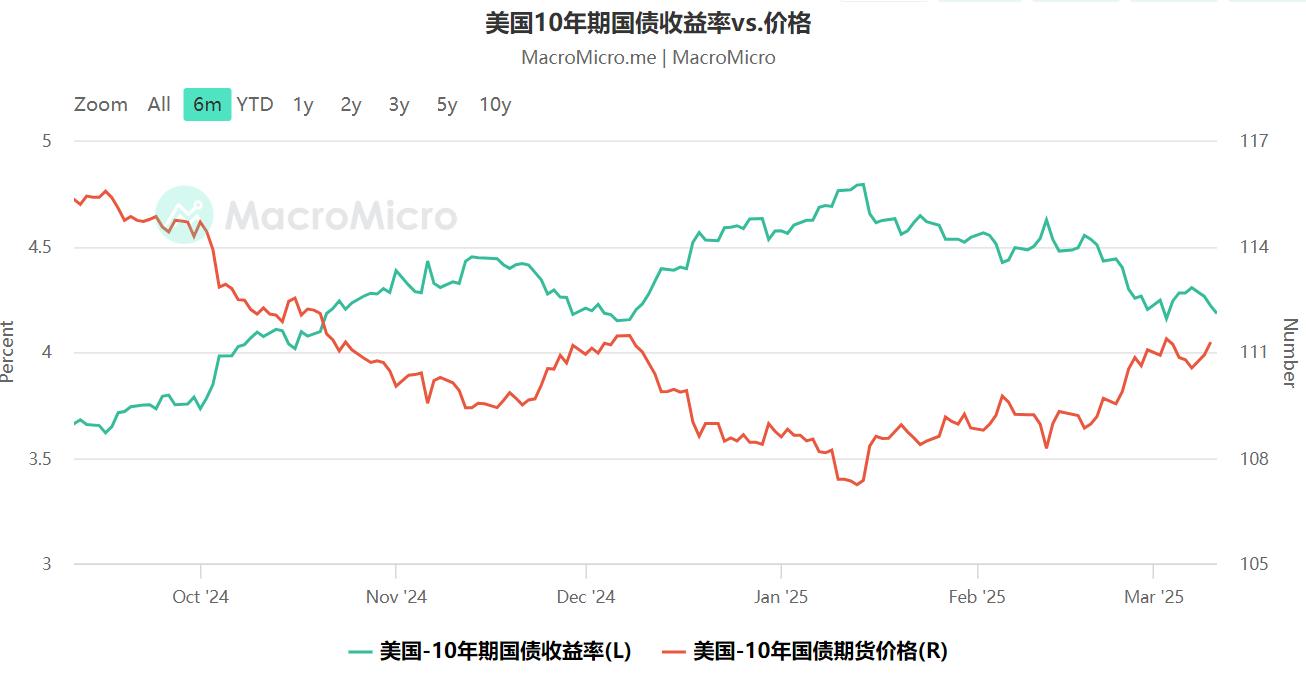
As funds fled the stock market, traders returned to traditional strategies and flocked to defensive havens. U.S. Treasuries rose across the board, led by the two-year Treasury note, which caused its yield to fall by about 8 basis points, the biggest drop since September 4 last year. The 10-year Treasury yield fell 10.5 basis points, the biggest single-day drop since February 13. Wall Street strategists and economists have begun to raise their expectations for the probability of a U.S. recession, and the market generally expects more declines to come.
Crypto market capital withdrawal accelerates, market sentiment deteriorates
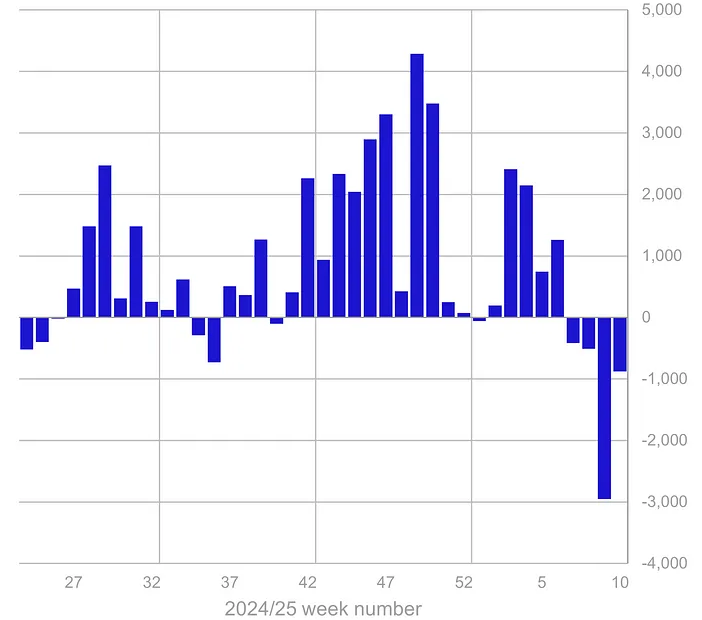
Institutional investors are also withdrawing from the crypto market, with related products experiencing net outflows for the fourth consecutive week. According to CoinShares data, crypto funds saw outflows of $867 million last week, bringing the total outflow to $4.75 billion in four weeks. Most of the bearish sentiment came from the United States, where investors withdrew $922 million last week.
The crypto market has a lot of long-term growth momentum, especially in terms of U.S. crypto policy. But the current market is selling off all risk assets, and their pricing is largely based on emotion rather than rationality. When there are so many concerns in the broader market, it will be difficult for investors to regain confidence in the crypto market in the short term.
Arthur Hayes, co-founder of BitMEX, predicted at the beginning of the year that Bitcoin could fall to $75,000, and as market sentiment deteriorates, this prediction is becoming more credible. In his latest tweet, Hayes called on investors to remain confident that Bitcoin could bottom out around $70,000, which is a normal correction in a bull market. He believes that the next step is to pay attention to the plunge in U.S. stocks and the bankruptcy of traditional financial institutions, and then wait for the Federal Reserve to adopt loose policies to stimulate the economy before re-investing.