Original article: https://www.parity.io/blog/polkadot-rollups
Author: Parity
Compiled by: OneBlock+
Since its inception, blockchain technology has been facing fundamental challenges in scalability. With the surge in the number of network users and applications, the transaction processing capacity of mainstream public chains such as Ethereum has gradually become a bottleneck restricting the development of the ecosystem. To meet this challenge, the blockchain community has developed a variety of expansion solutions, among which Rollup technology has attracted much attention because it can significantly increase throughput while maintaining security.
The core advantage of Rollup technology is that it transfers transaction calculations to off-chain execution, while greatly improving the processing capacity of the blockchain network through optimized data transmission and verification processes. However, although Rollup has been widely used on multiple platforms, it still faces many challenges, especially in terms of security integration with Layer 1 blockchains, verification efficiency, and cross-chain interoperability.
In this technical context, Polkadot's Parachain architecture, as an innovative blockchain design paradigm, shows similar expansion potential to Rollup, but adopts a more advanced architecture in the underlying implementation. Unlike the single-chain dependency model, Polkadot builds a multi-chain ecosystem, realizes seamless interoperability between different blockchains through its unique Relay Chain, and achieves expansion effects similar to or even beyond Rollup through a shared security model and efficient verification mechanism.
This article will deeply analyze the intrinsic connection between Polkadot's parachain architecture and the mainstream Rollup expansion solution, and systematically analyze Polkadot's innovative advantages in technical implementation. Through this comparative study, we will reveal how Polkadot provides a more efficient, flexible and secure blockchain expansion solution with its unique design.
Rollup Technology Analysis: Innovation in Separating Computation and Verification
The main task of a blockchain network is to verify transactions on the chain through consensus protocols. These transactions can be "real" transactions, such as sending tokens from one account to another, or data transfer between networks. Due to the natural limitations of blockchain networks in terms of block size and block time, any blockchain network has a throughput limit, which is exactly the bottleneck that Rollup technology is trying to break through.
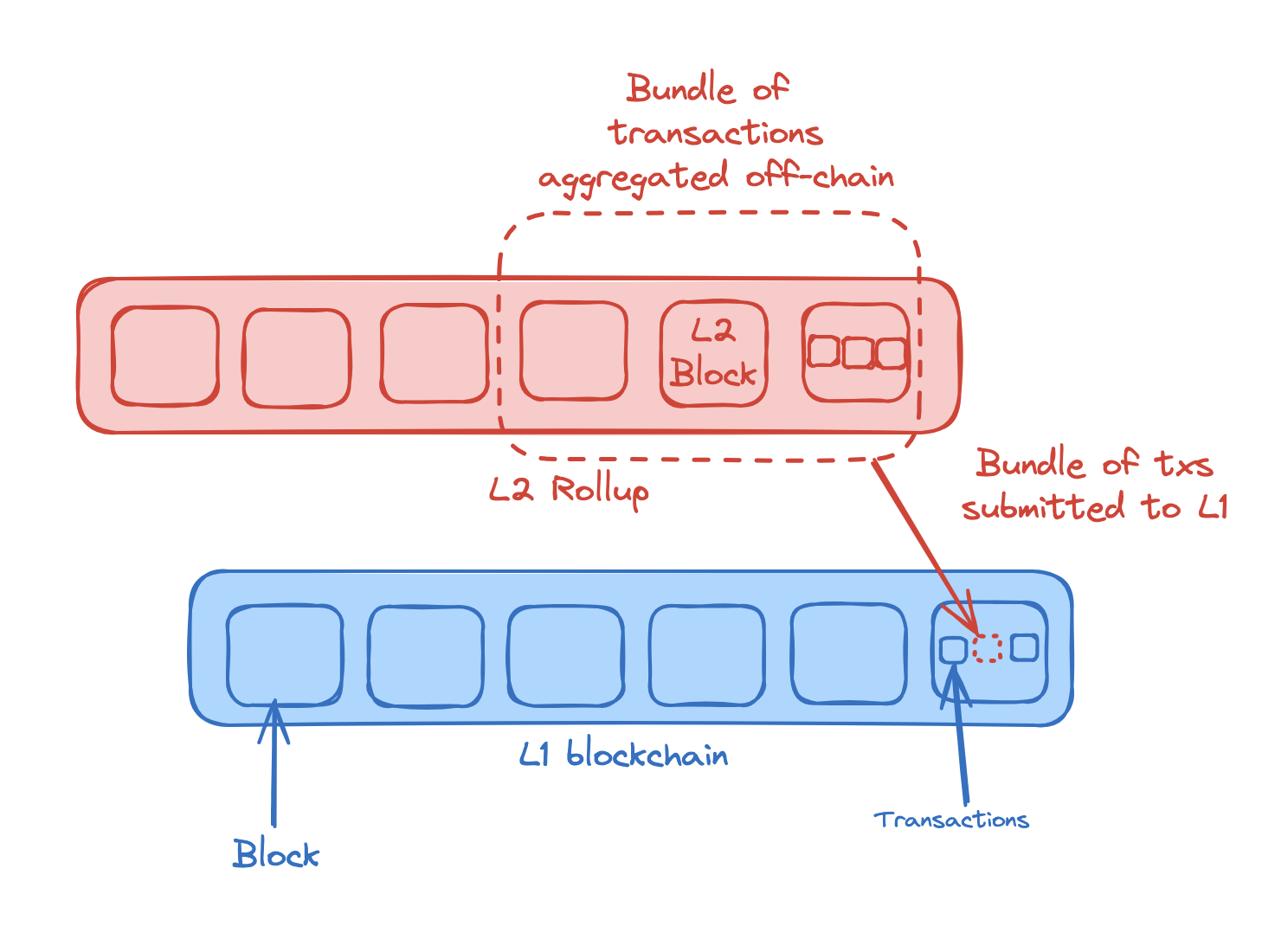
From a technical perspective, Rollup performs transaction calculations in an off-chain environment, and packages multiple transactions into a single data packet through data compression and batch processing mechanisms. This processed data packet is eventually submitted back to the Layer 1 main chain, where the data availability is guaranteed by its security protocol. In this way, Rollup achieves the separation of computing and data availability, providing an efficient and elegant solution for blockchain expansion.
Rollup Technology Ecosystem: Two Mainstream Implementations
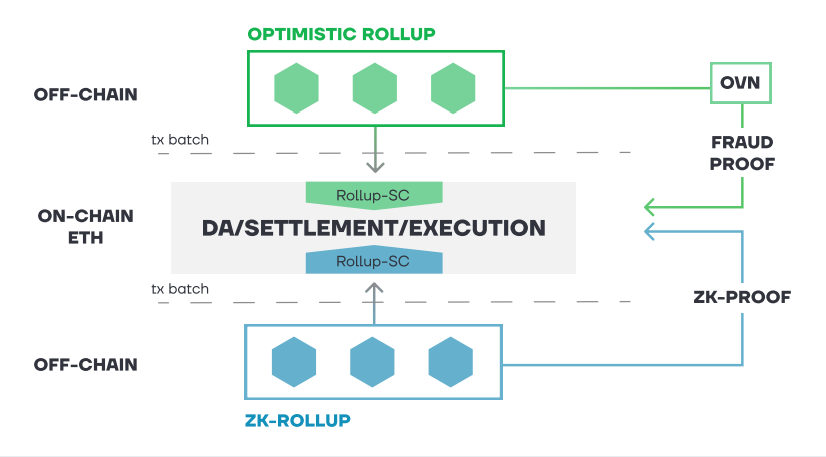
Optimistic Rollup: Delayed Verification Based on Trust Assumption
As the name implies, Optimistic Rollups is based on an "optimistic" assumption (Optimistic means optimistic in English): all submitted transactions are valid by default unless they are proven to be fraudulent. This design philosophy is in sharp contrast to the traditional "verify first, then execute" model.
Specifically, Optimistic rollups first approves all transactions and sends the packaged data to the L1 mainnet. The system relies on a "fraud proof" mechanism instead of verifying each transaction in real time, which greatly reduces the computational burden on the chain.
When the system detects a potential fraudulent transaction, the dispute resolution process is triggered: the transaction is rolled back to the state before the dispute, and the validator who submitted the fraudulent transaction is punished. Participants must pledge assets as a guarantee of good faith. Once the fraud is confirmed, the pledged assets will be confiscated. To ensure accurate determination of disputes, the Rollup system needs to implement a complete transaction replay function.
Due to the high cost of the dispute resolution process, the actual frequency of occurrence is relatively low. At the same time, in order to ensure a sufficient challenge period, Optimistic Rollups usually set a final confirmation waiting period of 7-14 days, which is one of the main limitations of the technology.
ZK Rollup: Cryptographically Secure Instant Verification
ZK (zero-knowledge) Rollups adopt a stricter verification mechanism, requiring all transactions to be verified off-chain and generate cryptographic proofs, and then submit the proofs together with the transaction data to the mainnet smart contract for verification.
This approach ensures that only verified valid transactions are recorded on the chain, significantly improving system security and reliability. Invalid transaction batches are immediately rejected to maintain network integrity. However, due to the use of complex cryptographic techniques, high requirements for specific hardware, and potential centralization risks, ZK Rollups are more complex and costly to implement than Optimistic Rollups.
In addition, ZK Rollups still face challenges in interoperability across different L1 protocols, which to some extent limits the breadth of its application in the multi-chain ecosystem.
Polkadot Parachain: A skeptical verification architecture
Parallel chain design: a shared security model for multi-chain collaboration
Parachains in the Polkadot ecosystem were originally designed as dedicated chains. With the introduction of the Agile Coretime model, this concept is evolving into a more flexible resource allocation mechanism, enabling various projects to obtain high-quality block space based on actual needs. Nevertheless, this article still uses the term Parachain for ease of discussion.
From an architectural point of view, each Parachain independently performs transaction verification and block generation, providing functional services according to its specific business logic. However, unlike completely independent blockchains, the final consensus of Parachain is provided by Polkadot's Relay Chain, which constitutes its unique security model. Verified Parachain blocks are integrated into the Relay Chain to achieve cross-chain interoperability.
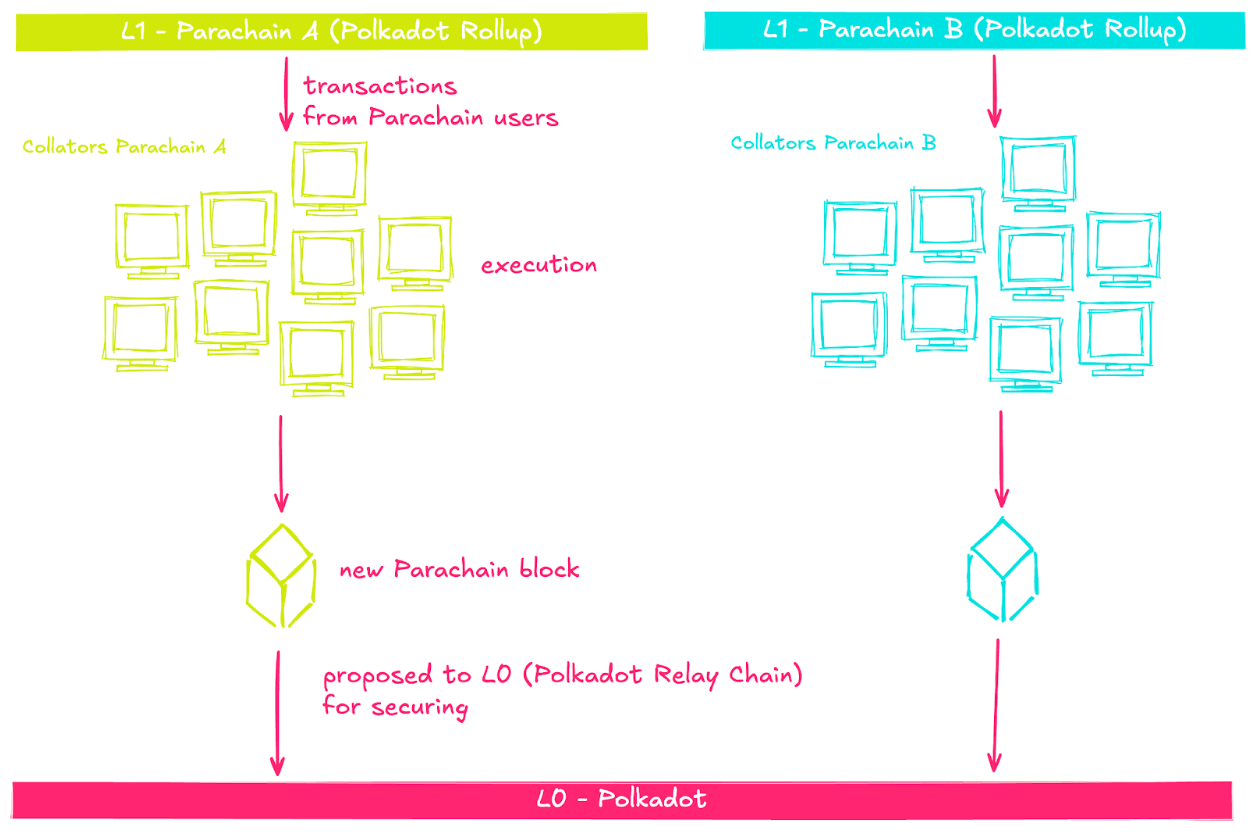
In-depth analysis shows that Polkadot's parachain is essentially a native "Rollup" implementation. Similar to ZK Rollups, Parachain pre-verifies transactions before submitting them to the relay chain. However, to ensure the validity of blocks, Polkadot adopts a multi-layer verification mechanism and builds a "skeptical" Rollup model. This model is based on the zero-trust principle and assumes that network participants may have malicious behavior, so strict multiple verification guarantees are implemented.
In the parachain ecosystem, the collator node plays a key role, responsible for aggregating user transactions, executing state transitions and proposing new blocks, becoming a bridge between the parachain and the relay chain.
Multi-layer verification: Polkadot ’s security system
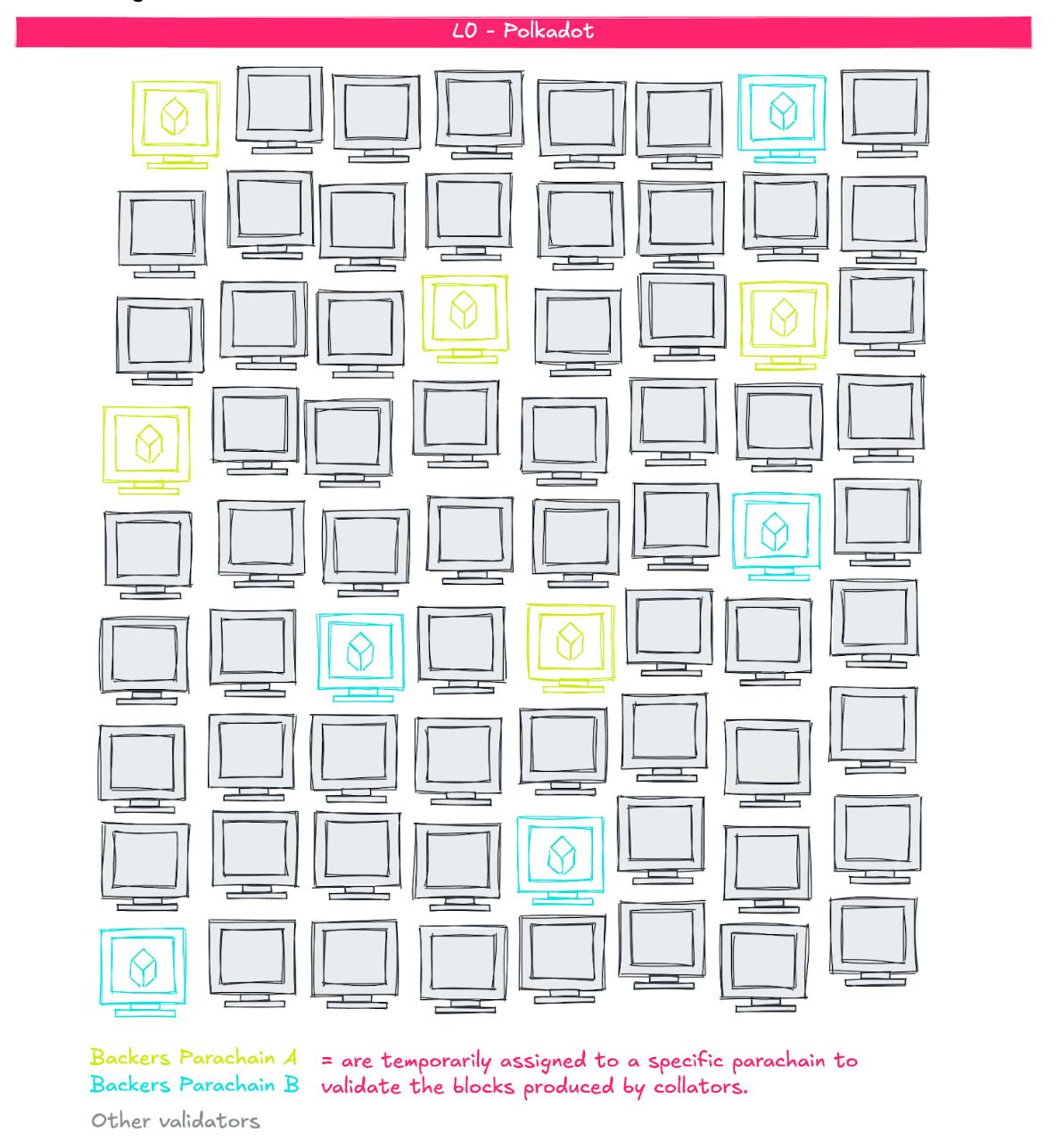
Polkadot's verification architecture introduces the role of backers, which are dynamically assigned from the relay chain validator set (currently five per Parachain) to verify the blocks proposed by collators. This dynamic allocation mechanism is managed by the relay chain to ensure fair distribution of verification power and prevent a single group from controlling the security of a specific parachain for a long time.
Backers verify the validity of the block proposed by collators, ensuring that it complies with the rules of the Parachain and does not conflict with other parts of the system. These proofs are recorded in the relay chain block, combined with the data availability system, which makes backers accountable for their verification behavior and forms an effective economic security model.
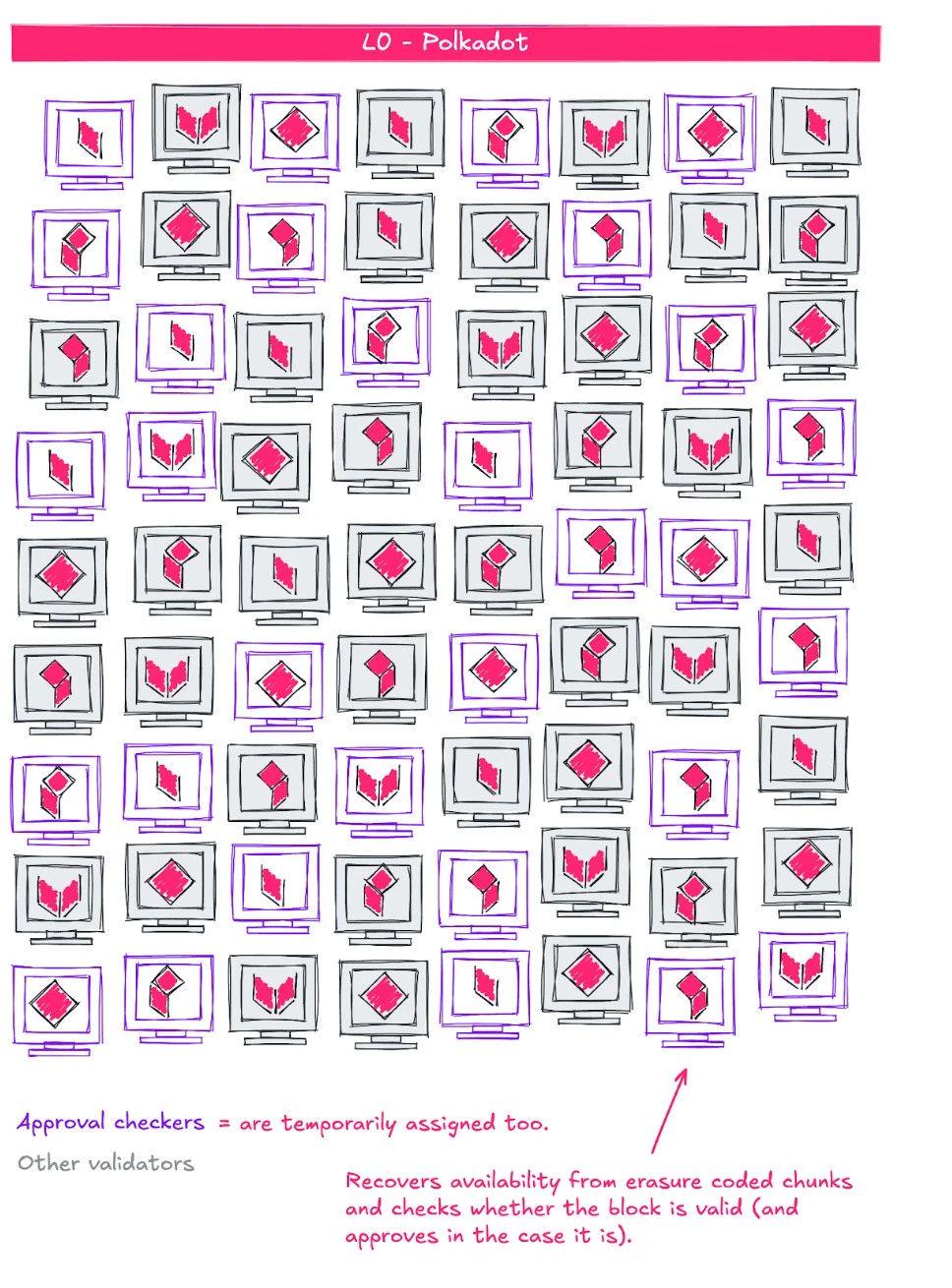
To further prevent malicious or faulty blocks from being finalized, Polkadot also adds a verification layer called "approval checkers." Approval checkers must revalidate blocks to maintain the integrity of the network, but this process relies on access to block data. What if the backers don't provide data at all? This is where data availability and erasure coding come in handy.
Elimination coding divides block data into multiple redundant fragments and stores them in a distributed manner among network validators, so that even if some data providers are offline or act maliciously, the complete block can be reconstructed. This mechanism not only ensures data availability, but also improves network efficiency by optimizing bandwidth usage.
From proposal to consensus: a fast-confirmed verification process
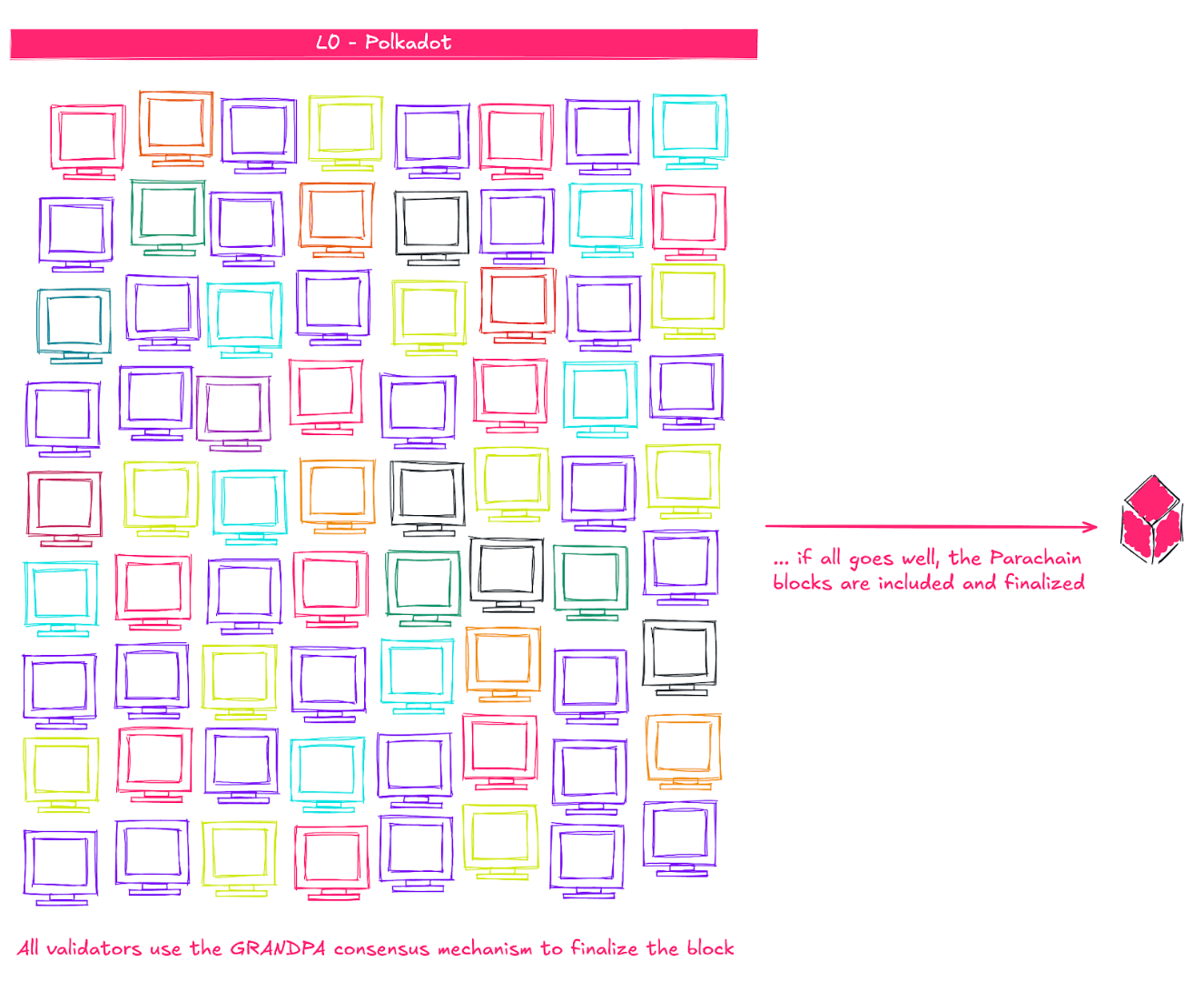
Under ideal conditions, multi-layer validated Parachain blocks are confirmed by the GRANDPA finality algorithm. If the reviewer finds that the block is invalid, a dispute process will be triggered, requiring all relay chain validators to perform additional checks. If the proof provided by the supporter is proven to be incorrect, the relevant supporter will face a slashing penalty.
This carefully designed coordination process ensures that the Polkadot network can achieve fast final confirmation while maintaining high security. Although the verification process seems complicated, the entire process only takes about 18 seconds to complete.
Polkadot’s Technical Advantages: Beyond Traditional Rollup
Speed advantage: from 14 days to 18 seconds
Although Polkadot's final confirmation mechanism includes multiple verification steps, it achieves a final confirmation time of about 18 seconds through efficient parallel processing and optimized consensus algorithms. This performance indicator is far better than the 7-14 day dispute period of Optimistic Rollups, providing DApp developers and end users with a smoother interactive experience.
This speed advantage stems from Polkadot’s unique layered verification architecture and GRANDPA finality algorithm. Even when processing complex verification information, the system can maintain high efficiency and balance security and performance requirements.
XCM: A cross-chain standard for seamless interconnection
In addition to the efficient final confirmation mechanism, Polkadot also provides native cross-chain communication capabilities. Through the XCM protocol, applications within the Polkadot ecosystem can achieve seamless interoperability, allowing developers to take advantage of the rich features of the multi-chain environment.
The XCM protocol promotes the development of truly decentralized applications and supports complex cross-chain interaction scenarios. Thanks to the shared security model provided by the relay chain, Polkadot's cross-chain communication is not only fast (about 12 seconds, and continuously optimized), but also maintains a high level of security. In contrast, secure communication between Optimistic Rollups requires waiting for the full dispute period (about 7 days), which is significantly less efficient.
Conclusion
Comprehensive analysis shows that Polkadot has implemented native Rollup functionality from the protocol level, and at the same time has built a more advanced scaling architecture through innovative multi-layer verification, fast confirmation mechanism and efficient data processing.
Polkadot's parachain system represents an innovative model of "skeptical Rollup". It cleverly combines the pre-verification advantages of ZK Rollup and the flexibility of Optimistic Rollup. Through a unique verification architecture and role design, it achieves comprehensive improvements in performance, security and interoperability, opening up a new development direction for blockchain expansion technology.
🔍 If you want to learn more about Polkadot’s Rollup architecture, or compare it to other Rollups, you can refer to the Polkadot official Wiki:
https://wiki.polkadot.network/docs/learn-comparisons#rollup-comparison-table