
Author: Ryan Yoon , Analyst at Tiger Research
Compiled by: Tim, PANews
Two weeks ago, I wrote that Bitcoin might not break $100,000 yet. The price briefly touched $99,000 before falling back. Currently, it's consolidating below $90,000.
At this point, most people are asking the same question: "Is it time to buy at the bottom?"
Yes, it's possible to buy in stages at the bottom. But you must set strict stop-loss orders.
Bitcoin enters consolidation phase: a crucial decision point is approaching.
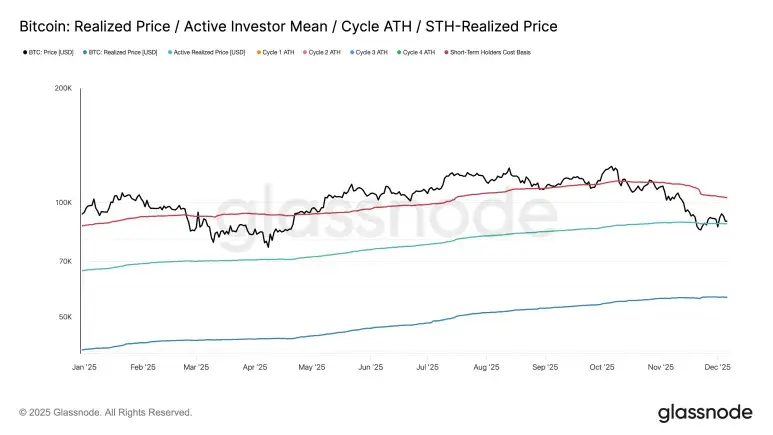
Prices held steady above $87,900, which is the average cost for active buyers.
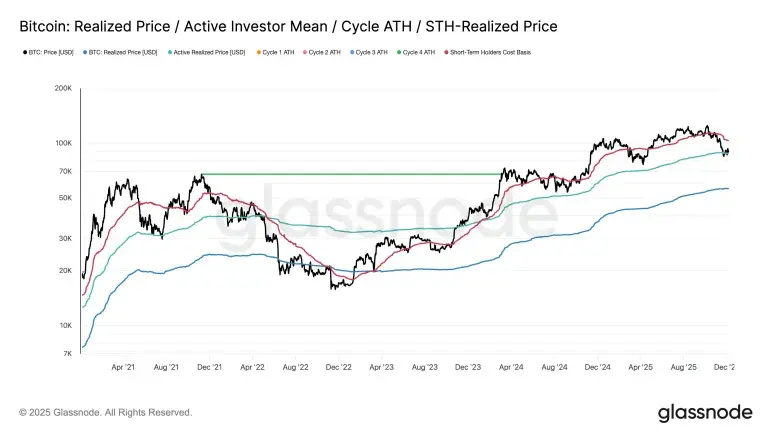
Actively traded prices represent the break-even point for the entire market. After the market crash in 2022, it took a year and a half to regain this level. With prices bottoming out and rebounding, the market can finally breathe a sigh of relief.
Pay close attention to this point and use it as your baseline.
Simultaneously, observe the relationship between the short-term holder's cost line and the active realization price line. If the short-term line crosses downwards through the active line, the risk increases rapidly. Currently, this unfavorable crossover has not yet occurred.
2. On-chain indicators are weak, but the potential rewards are substantial.
Despite the downward trend shown by key on-chain indicators, the profit opportunity remains high because we are at the bottom of the value zone.
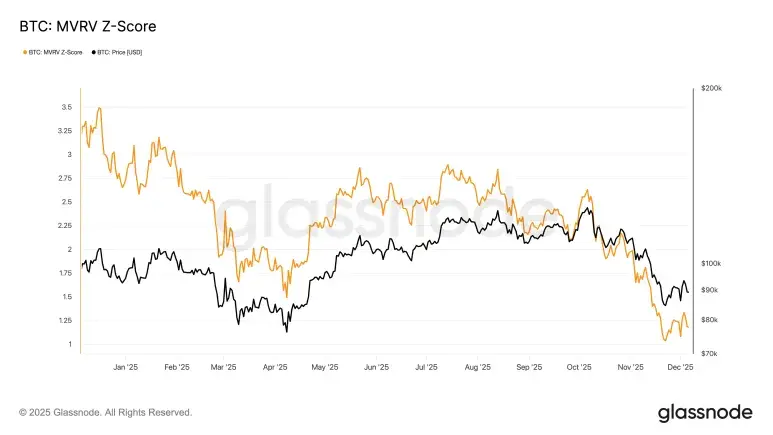
The MVRV Z-Score is currently at 1.17. It has moved out of the cheap price range but hasn't climbed significantly yet. Growth is slowing here due to the interplay of buying and selling forces. The current trend is weak and directionless.
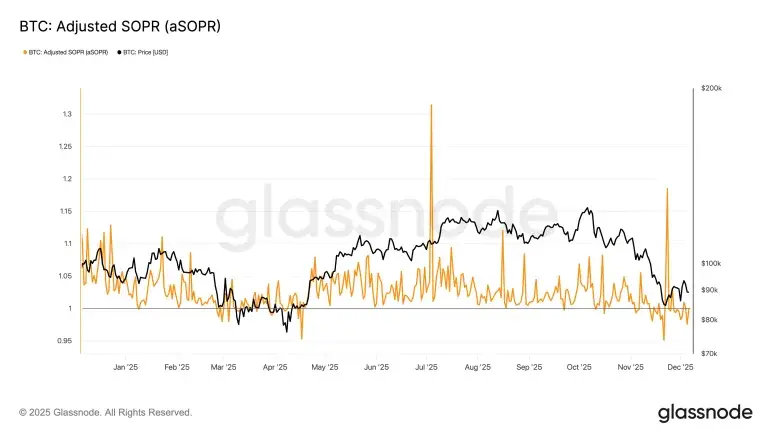
aSOPR (Adjusted Spending-to-Profit Margin) remained unchanged at 1.0. Sellers traded at cost price, choosing to sell even with meager profits.
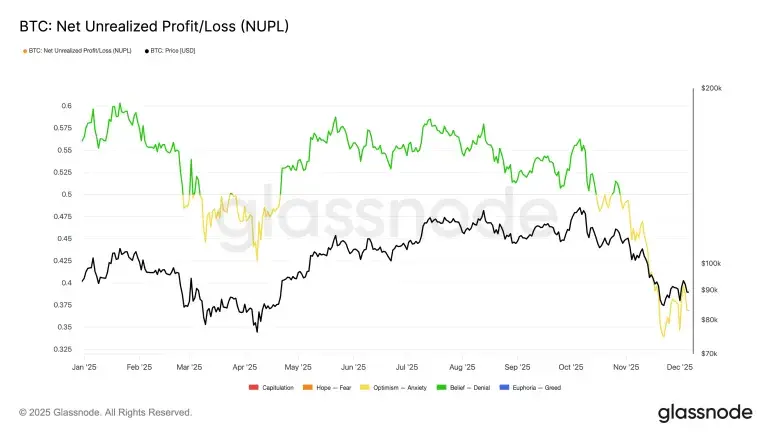
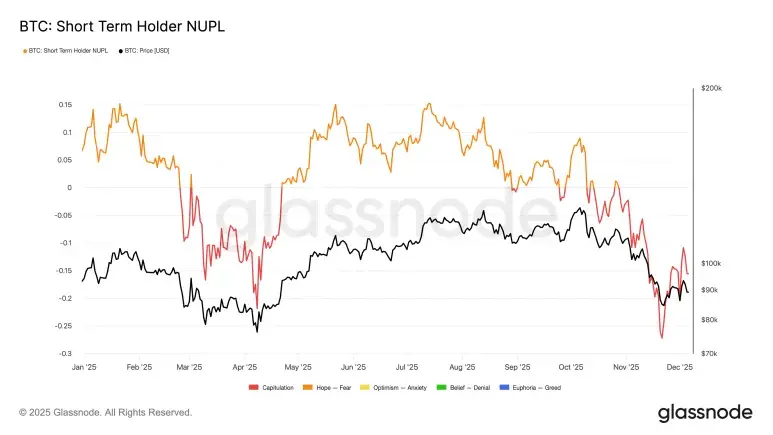
The NUPL is 0.36, just entering the equilibrium range. Short-term holders' NUPL is -0.155, indicating new buyers are at a loss. They will sell once the price touches the cost line. This confirms weak market sentiment.
In general, holders tend to sell when they have made a small profit. However, please note that when the MVRV (market capitalization to realized value) is close to 1.10, it is an excellent buying opportunity for long-term investment. The risk is lower at this point, and historical data shows that an average return of 40% can be obtained from this point over the next year.
3. Bitcoin's "life-or-death" threshold: $84,000
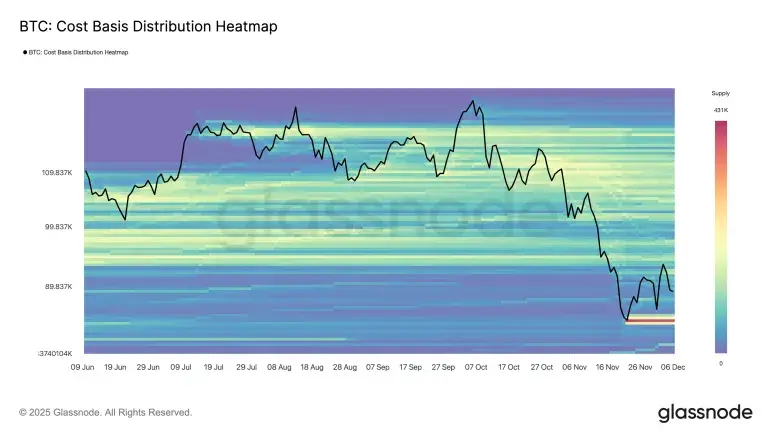
A drop below $84,000 would pose a significant risk and could trigger a prolonged sell-off.
The cost distribution chart shows a dense wall of buy orders around $84,000 (the $83,000-$85,000 range), which represents the cost range for a large number of recent buyers. If the price falls below this level, short-term holders will face significant losses, potentially triggering panic selling.
If the price of Bitcoin were to fall significantly below $84,000, it would disrupt the existing market structure. On December 1st, when the price reached $83,000...
Market panic intensified rapidly. The $84,000 level was not only a technical threshold on the charts, but also the last line of defense for maintaining the break-even point for those holding positions.
4. Open interest: falling back to the low point
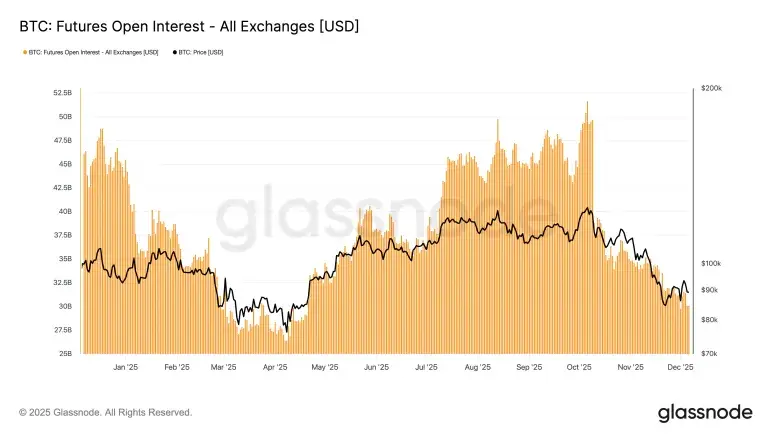
Open interest in futures contracts has fallen to its lowest level since April, indicating that rampant leveraged positions have been cleared out.
This sharp decline is good news; low leverage reduces the risk of a market crash or a continuous plunge. The market has squeezed out the bubble and now has the conditions to rise on this solid foundation. We can expect a new rally to begin from this price range.
5. Now is a good time to buy the dip, but strict stop-loss orders are necessary.
On-chain tools indicate that now is the best time to buy the dip. The market bubble has deflated, and the expected returns outweigh the risks. Building a position now is a wise choice.
However, if you are concerned about risk, don't just buy. Set a clear stop-loss order, because the market trend is still unclear.
When prices fall below the active realization price, most active traders will face losses. This can trigger market panic, potentially leading to a market crash.
Set your stop-loss at $87,900. This allows you to buy on dips and control risk if the key support level is broken. If the support level fails, be sure to hold cash.