
Authors: Rao Weitong, Hu Yiming
What are "arbitrage" and "foreign exchange cross-trading"?
Virtual currency arbitrage refers to a strategy of buying high and selling low by taking advantage of the price difference between different exchanges or trading pairs. Its core lies in completing the purchase and sale of the same subject in a very short time, and achieving risk-free or low-risk returns through fast transactions. For example, an arbitrage trader found that there were often arbitrage trading opportunities between the BTC/USDT trading pairs of OKX and Binance, so he deposited USDT in OKX and BTC in Binance at the same time. When an arbitrage opportunity arises, he simultaneously exchanged USDT with BTC in OKX and exchanged BTC with USDT in Binance to complete the arbitrage.
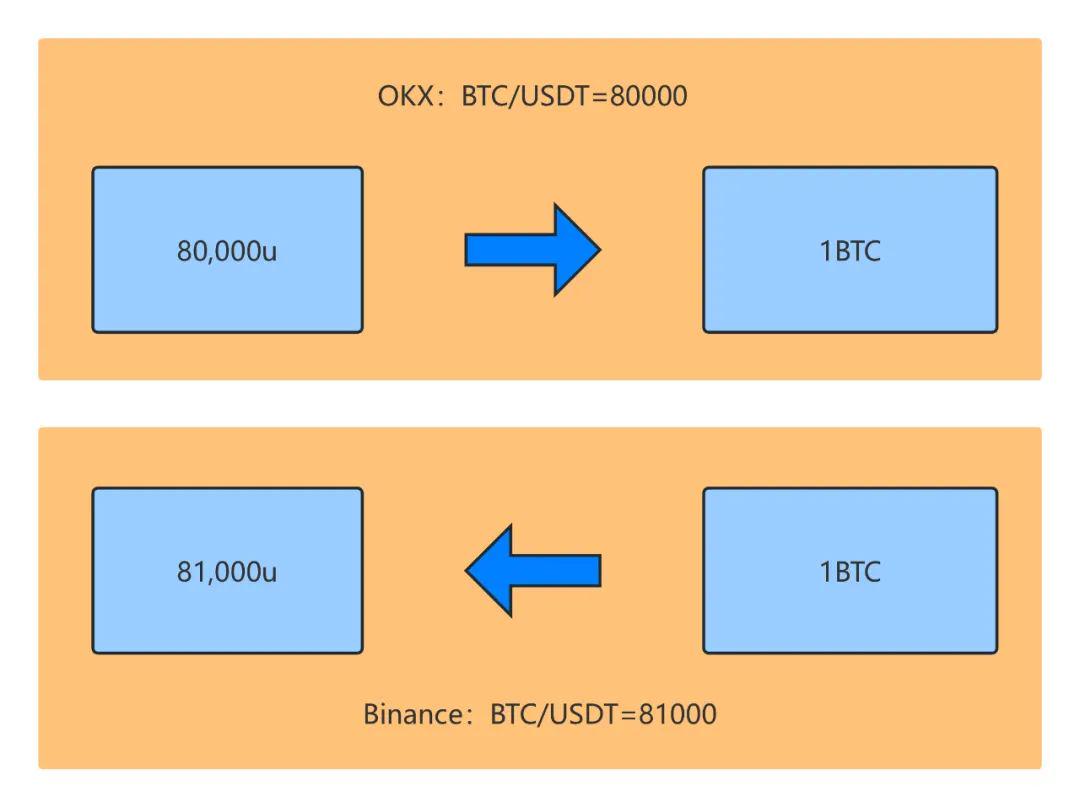
The above is the simplest description of arbitrage, but in practice, in order to arbitrage profits, the transaction chain required by traders will be much more complicated than the above. It is very likely that legal currency will be exchanged in a certain chain, which leads to possible "foreign exchange arbitrage" behavior.
1. Analysis of typical foreign exchange illegal arbitrage models:
1. Receive and deliver legal currency
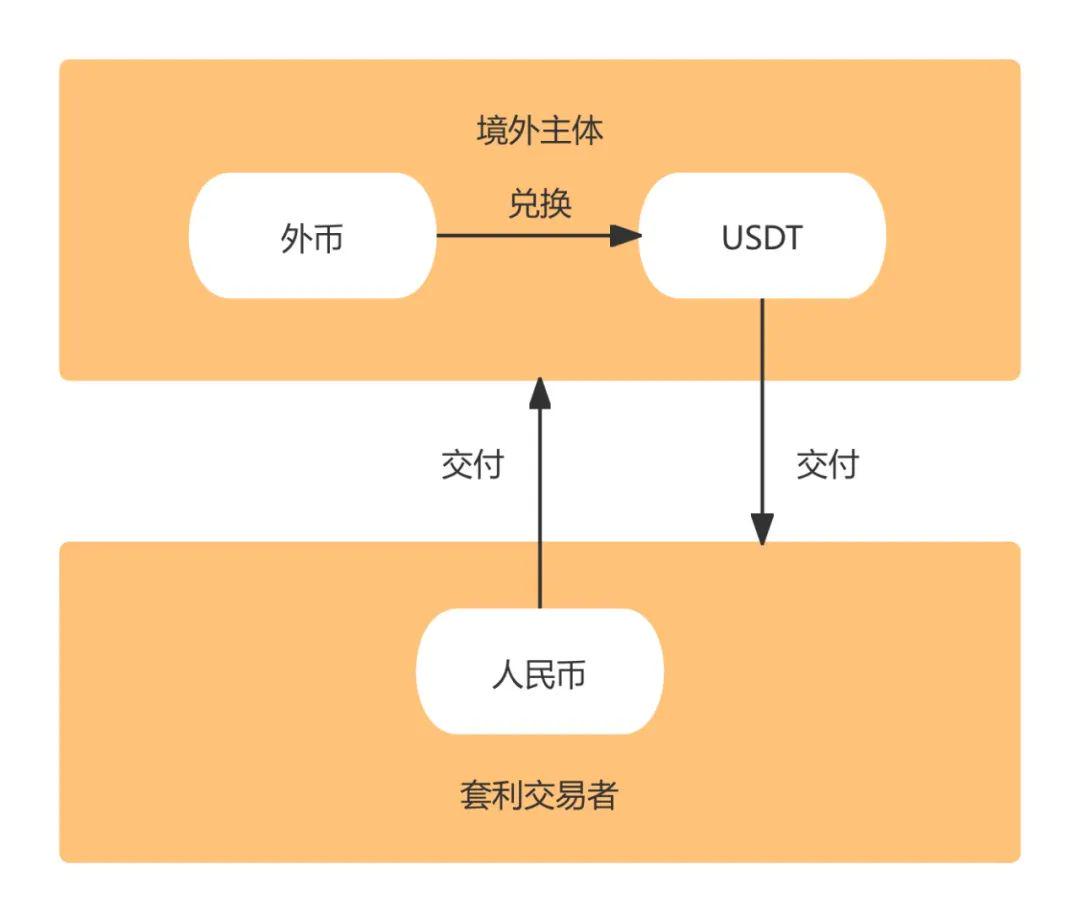
Knowing that the USDT or other virtual currencies used by the other party for transactions were purchased with foreign currency, but still providing RMB for exchange, or knowing that the USDT or other virtual currencies used by the other party for transactions were purchased with RMB, but believing that the other party provides foreign currency for exchange, constitutes illegal foreign exchange arbitrage of receiving and delivering legal currency.
2. Counter-trading type
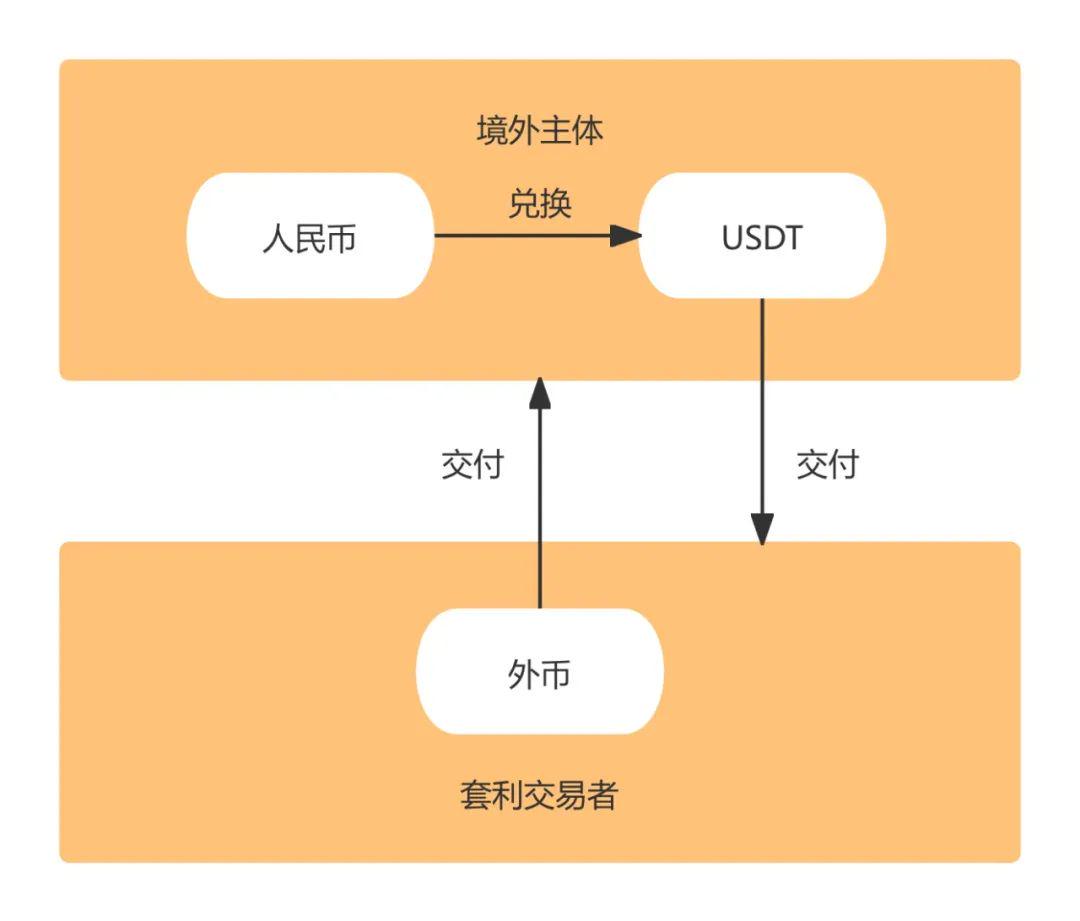
Collecting RMB in China, transferring foreign currency in overseas accounts to the designated account of the purchaser, using the collected RMB to purchase virtual currencies such as USDT and converting them into overseas legal tender; or collecting foreign currency in overseas accounts, transferring RMB to the designated account of the purchaser, using the collected foreign currency to purchase virtual currencies such as USDT and converting them back into RMB, constitutes illegal foreign exchange arbitrage through cross-trading.
3. The core difference between ordinary arbitrage and illegal foreign exchange arbitrage
The core difference between arbitrage and foreign exchange trading lies in whether the transaction chain involves both RMB and foreign currency. It is not difficult to distinguish between ordinary arbitrage and illegal foreign exchange trading. First, confirm whether the transaction subject is a virtual currency trading pair normally listed on the exchange. If the transaction subject of the two-way trading is virtual currency, it is generally not suspected of illegal foreign exchange trading; secondly, if it involves deposits and withdrawals, it is necessary to determine whether the source of the virtual currency is directly purchased with foreign currency. If the virtual currency purchased with RMB also comes from RMB purchases, it is generally not involved in illegal foreign exchange trading.
Why does “counter-knocking” constitute the crime of illegal business operation?
Article 225 of the Criminal Law stipulates that whoever violates state regulations and conducts any of the following illegal business operations, thereby disrupting the market order, shall, if the circumstances are serious, be sentenced to fixed-term imprisonment of not more than five years or criminal detention, and shall be fined not less than one time but not more than five times the illegal gains; if the circumstances are especially serious, he shall be sentenced to fixed-term imprisonment of not less than five years, and shall be fined not less than one time but not more than five times the illegal gains or have his property confiscated:
(iv) Other illegal business activities that seriously disrupt market order.
At the same time, according to the Interpretation on Several Issues Concerning the Application of Law in Handling Criminal Cases of Illegal Fund Payment and Settlement Business and Illegal Foreign Exchange Trading, if anyone violates national regulations and engages in illegal foreign exchange trading such as speculating in foreign exchange or trading in foreign exchange in disguised form, thereby disrupting the order of the financial market, and the circumstances are serious, he shall be convicted and punished for the crime of illegal business operation in accordance with the provisions of Article 225, Paragraph 4 of the Criminal Law.
In judicial practice, foreign exchange arbitrage is usually regarded as an act of "speculating on foreign exchange or buying and selling foreign exchange in disguised form".
In the "receive and deliver legal tender" foreign exchange illegal arbitrage model, the transaction chain is foreign currency-virtual currency-RMB, and virtual currency only serves as a bridge and medium, which is essentially the exchange of foreign currency and RMB. Subjectively, the perpetrators, for the purpose of profit, knowing that the virtual currency they received was directly purchased with foreign currency, still deliberately bypassed foreign exchange controls and provided payment to the other party. Objectively, this large-scale operation behavior undermined the foreign exchange regulatory system, caused a certain degree of damage to financial stability and financial order, and constituted the crime of illegal business operations.
In the "counter-trading" foreign exchange illegal arbitrage model, the perpetrator provides foreign currency to the foreign exchange buyer and receives local currency, and uses virtual currency to complete the circulation between foreign currency and local currency. The transaction chain of this model is also foreign currency-virtual currency-RMB, and virtual currency only plays a bridge and medium role. In essence, it is also an exchange of foreign currency and RMB. Like the "receiving and delivering legal currency" foreign exchange illegal arbitrage, it should also be punished for the crime of illegal business operation.
Real case 1: Lin’s illegal business operation:
Lin was originally engaged in ordinary arbitrage in a virtual currency exchange, and later met a Nigerian who called himself "Prince" by chance during a transaction. "Prince" said that the fees for buying and selling foreign exchange in banks or foreign exchange companies were high, and wanted to exchange the local legal currency Naira into RMB through Lin.
The two parties negotiated that the "Prince" purchased USDT on Binance Exchange with the local legal currency Naira, and then transferred it to Lin's account on Binance Exchange. Lin sold the received USDT to domestic currency dealers in exchange for RMB, and then transferred the RMB to the bank account in China provided by the "Prince". Lin determined the purchase price in advance based on the listing price of Tether that day, which was 5% lower, and then sold it to domestic currency dealers at the listing price to earn the difference.
In just a few months, Lin and others completed more than 650 foreign exchange trading transactions, involving a foreign exchange amount of nearly 30 million yuan.
Lin's behavior seemed to involve only two steps: "collecting U" and "paying U", and Lin used RMB as the currency for buying and selling U. However, he subjectively helped others to exchange U illegally, bypassing the state's foreign exchange control, undermining the state's foreign exchange supervision system, and disrupting the normal financial market order. His behavior was disguised foreign exchange trading. He was eventually sentenced to five years in prison and fined for illegal business operations.
Real case 2: Zhao et al.’s illegal business operation case:
In this case, Zhao and others used the cryptocurrency USDT as a medium for buying and selling foreign currencies. They received dirhams in cash in Dubai, paid RMB to the domestic account provided by the other party, and used dirhams to buy Tether. At the same time, they asked the domestic gang to sell Tether in exchange for RMB. In this way, they not only realized the circulation of funds, but also earned huge profits through the exchange rate difference.
This kind of illegal exchange of currency, using virtual currency as a medium, realizes the one-way flow of two currencies, which objectively increases the difficulty of police investigation and evidence collection. However, this operation achieved the increase and decrease of the amount of two currencies in the total account of Zhao and others, and at the same time bypassed foreign exchange supervision, disrupted the normal order of the financial market, and was a disguised illegal exchange of currency.
Ultimately, the main members of the case were sentenced to seven to eleven years in prison for illegal business operations and fined between two million and twenty million yuan.
What behaviors of arbitrage may violate criminal law risks?
Combined with the above analysis, I believe everyone can have their own views on the criminal legal risks of "foreign exchange counter-trading" involved in arbitrage. In principle, if the behavior of arbitrage is purely from the exchange rate difference between virtual currencies and does not involve any legal currency, it does not constitute the criminal risk of illegal business operation. However, in practice, there are still some arbitrage behaviors, and the transaction chain is long and complicated. For those who have not conducted in-depth research, it is not clear whether legal currency transactions are carried out at which link. For example, the following situations of arbitrage behavior have a high criminal risk:
1. Indirect capital closed loop: repeatedly collecting large amounts of USDT or other virtual currencies of unknown origin directly purchased with foreign currency, using RMB to pay for them, and then selling the virtual currencies in exchange for RMB;
2. Abuse of structured tools: using DeFi protocols, cross-chain bridges and other tools to split the transaction chain and conceal the essence of the final flow of funds to fiat currency exchange;
3. Concealed cross-trading: The two parties to the transaction conduct currency-to-currency transactions on the surface, but privately agree to settle the French currency income based on the difference in domestic and foreign exchange rates.
Therefore, you should not make quick attempts to make money from arbitrage activities that you do not understand, otherwise you may put yourself at risk.
Exploring the possibilities of technological innovation within a compliance framework
The compliance of virtual currency transactions is not "black or white", but requires a dynamic balance between regulatory logic and technical characteristics. For practitioners, strictly adhering to the bottom line of "not touching the closed loop of legal currency exchange" and building a verifiable full-process compliance chain through a professional legal team can achieve the coexistence of business security and innovative value.