
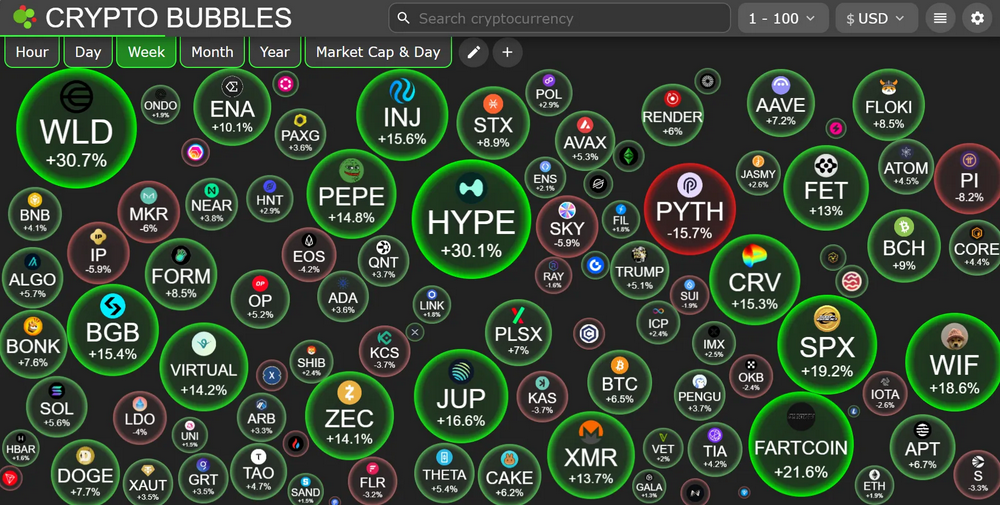
This week, driven by institutions, Bitcoin has risen strongly, breaking through 110,000 on Pizza Day on May 22, setting a new record. Ethereum and strong tracks AI and Meme have all seen a general rise. In terms of policy supervision, Hong Kong and the United States GENIUS Act have laid out stablecoin tracks, and related DeFi assets have seen abnormal movements. The Texas Senate passed the Bitcoin Reserve Act, and Governor Abbott is expected to sign the bill, and is expected to become the third state to establish an official Bitcoin reserve. In addition, the theft of $223 million from Cetus caused a flash crash in the Sui ecosystem in a short period of time, and Trump's dinner aroused suspicion of political corruption.
The Trump family's USD1 stablecoin has become the focus. Binance has launched the USD1/USDT trading pair. In conjunction with the advancement of the GENIUS Act, the stablecoin compliance narrative has heated up. The integration of USD1 in the BSC and Tron ecosystems has driven the prices of related projects such as Lista and StakeStone to rise. The market trading volume increased by 2.42%, and investor confidence was high. USD1-centered speculation may dominate the short-term market trend. The DeFi and RWA projects in the BSC and Tron ecosystems are worthy of attention.
1. USD1 Narrative
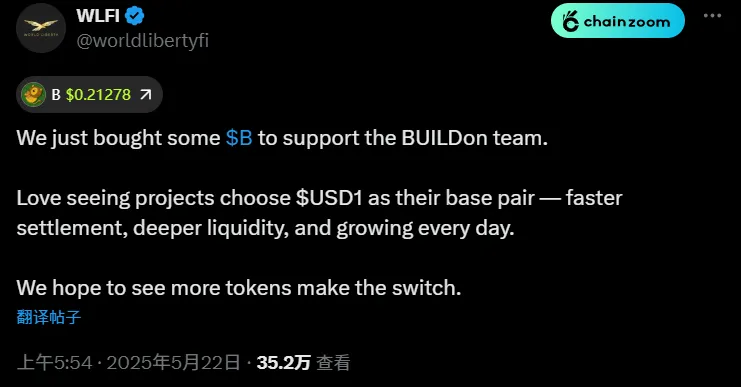
On May 22, the Trump family project WLFI announced that it would spend $25,000 to buy 636,961 $B to support the BUILDon team to encourage it to choose $USD1 as the basic trading pair. As soon as the news came out, the $B token quickly attracted market attention, and achieved a seven-fold increase in a single day. In addition, the prices of tokens of some other projects that had previously cooperated with WLFI, such as Lista and Sto, all rose. Subsequently, Binance immediately launched World Liberty Financial UsD (UsD1) and opened the USD1/USDT spot trading pair, and also determined the market tone in the future medium and short term as speculation on related assets centered on USD1.
1. Pay attention to the Binance ecosystem
Binance’s deep connection with the Trump family
- The Trump family had already negotiated on acquiring a stake in Binance.US as early as March, and in May of this year, Trump's second son Eric Trump stated that the WLFI stablecoin USD1 will be used by MGX to complete its $2 billion investment in Binance.
- Binance founder CZ was once sentenced for violating US money laundering and sanctions laws. CZ has confirmed in his latest podcast that his legal team has submitted an application for pardon to US President Trump on his behalf. The two parties are very likely to sign a relevant agreement in exchange for their respective interests.

Stable currency layout
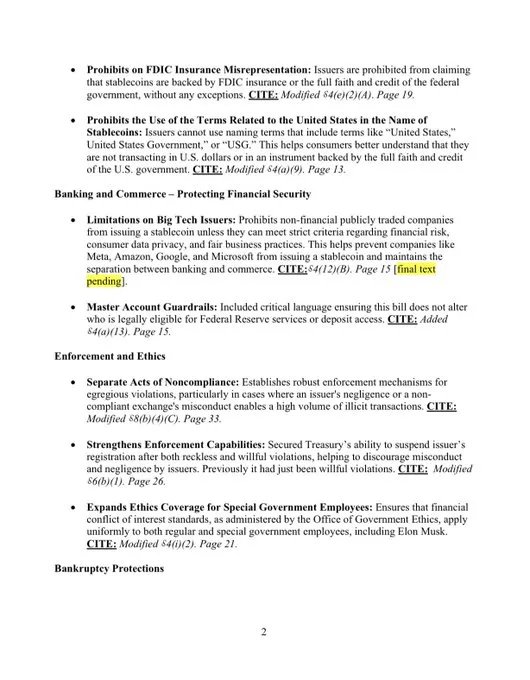
- On May 20, as the U.S. Senate passed a procedural motion, the GENIUS Stablecoin Act entered the formal review stage, marking an important step for compliant stablecoins. For President Trump, the emergence of new stablecoins may increase the demand for U.S. Treasuries, as they often use U.S. Treasuries as reserve assets. With the continued fiscal deficit in the United States, U.S. Treasuries are a key financing tool, so it is only a matter of time before the bill is passed. Once passed, it will be a great boon to the public chains and DeFi products in the crypto market.
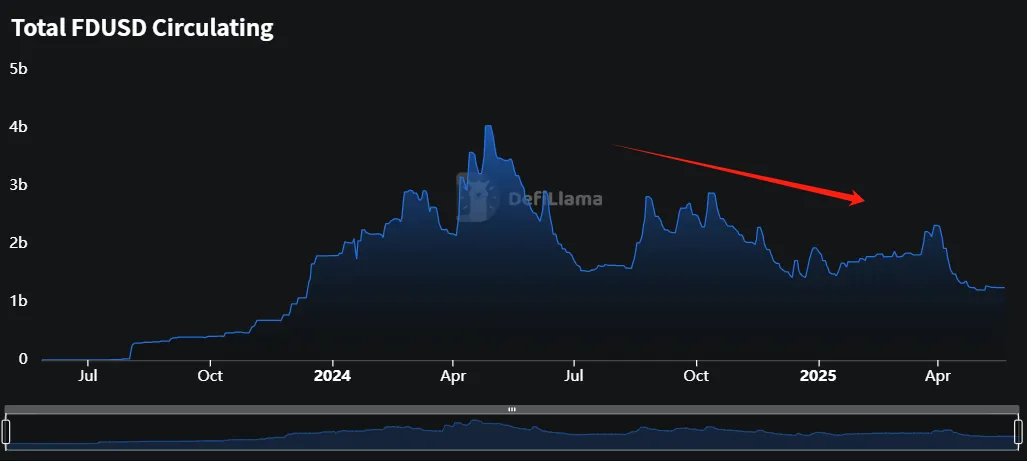
- The stablecoin giant Tether's annual net profit in the fourth quarter of 2024 exceeded 13 billion US dollars, and the group's stock soared to more than 20 billion US dollars, proving that the stablecoin direction has huge profit margins. In addition, many RWA and on-chain activities are based on stablecoins as the base currency. In view of the above, FDUSD supported by Binance has fallen into decline, and Binance's own strategic development requires a stablecoin narrative, so USD1 is the right choice at present, and by the way, it is on Trump's thigh.
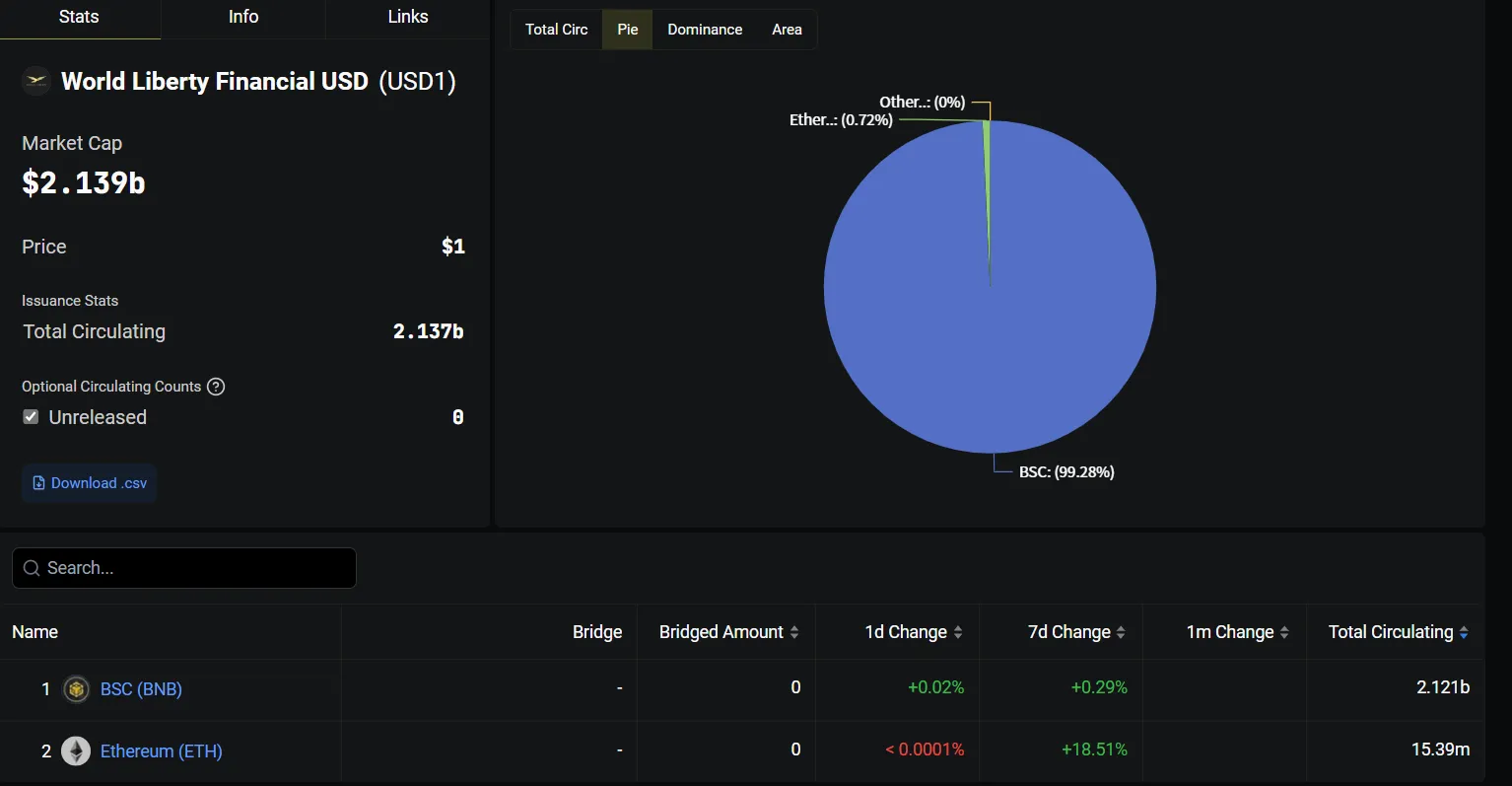
- According to statistics, the current market value of USD1 is 2.139B, which is basically issued on the BSC chain, confirming the speculation that USD1 is cooperating with Binance. The USD1 Vault launched by Lista Lending, a lending product of Lista DAO, became the first application of USD1 on BNB Chain.
- StakeStone (STO): On May 22, it was announced that USD1 will soon be available on LiquidityPad, which will bring new income opportunities and deeper DeFi integration.
- Lorenzo Protocol (BANK): Launched $BANK- SUSD1 trading pair on PancakeSwap on May 22.
- Thena(THE): The incentive pool for the liquidity infrastructure is now online: On May 22, the first incentive pool based on its new liquidity infrastructure was launched: USDT/USD1.
- Aster (no token issued): On May 15, it integrated USD1 and became the first perpetual contract decentralized exchange (DEX) that supports USD1 as collateral.
The above Binance ecological projects have all performed well in the market under the hype of USD1.
2. Pay attention to the Tron ecosystem
Justin Sun took the initiative to surrender to the Trump family
- Sun Yuchen invested $75 million through the cryptocurrency project World Liberty Financial (WLFI), becoming the largest known individual investor and an advisor to WLFI. Interestingly, Sun Yuchen was sued by the U.S. Securities and Exchange Commission (SEC) for selling unregistered securities and fraud, but in February 2025, the SEC suspended the case against him.
- Justin Sun holds $18.6 million worth of TRUMP tokens and attended the May 22 Trump dinner as TRUMP's largest holder.
- Zack Witkoff, co-founder of World Liberty Financial, said that the US dollar stablecoin USD1 issued by WLFI will also be natively issued on the Tron chain.

Assets
- TRON (TRX): TRON project founded by Justin Sun. Its native token TRX is the core asset of the TRON network and is used for the decentralized content entertainment ecosystem.
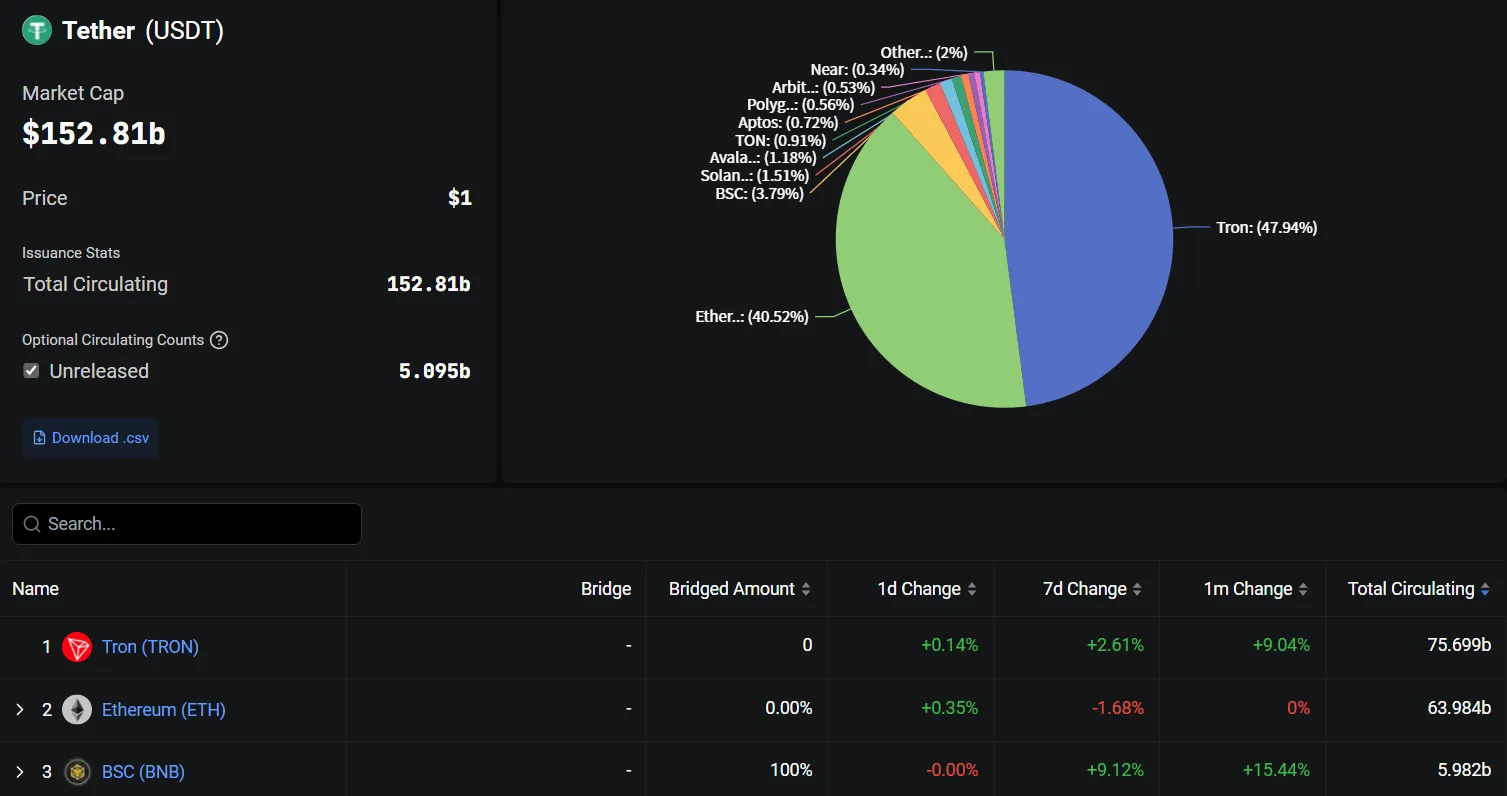
- As the GENIUS Stable Market Act enters the formal review stage, the stablecoin compliance narrative has become more and more mainstream. It is worth noting that Tether has issued $75.4 billion in stablecoins on Tron, while Ethereum ranks second with $62.1 billion. USDC has issued $36.1 billion on Ethereum and $8.6 billion on Solana. From this point of view, the battle for the stablecoin narrative focuses on Ethereum and Tron, but considering that Justin Sun is an advisor to WLFI and has a vested interest in the Trump family, it is not ruled out that Tron is likely to become one of the winners of the stablecoin narrative.
- JustLend (JST): JustLend is a TRON-based token market protocol that aims to establish a capital pool with interest rates determined by an algorithm based on the supply and demand of TRON assets. Since USD1 is likely to choose TRON as one of the main public chains for issuance, JustLend, as a lending protocol, will benefit from the increase in trading volume, liquidity, user growth, and profit opportunities brought by USD1, and the price of JST will rise accordingly.
- SUN (SUN): SUN is the community governance and DeFi token of the TRON ecosystem, supporting liquidity mining and decentralized exchanges (such as SunSwap). SUN works with JustLend and USDD and also benefits from the growth of the TRON ecosystem, but has a lower market value and higher volatility.
2. GENIUS Stablecoin Act
1. Core content of the bill
Issuer and supervision
- Only approved issuers can issue payment stablecoins to U.S. users, including bank subsidiaries and federal or state qualified non-bank issuers (state-level issuance is limited to US$10 billion).
- Issuers can choose federal or state regulation and be supervised by the relevant agencies. Large issuers (with a market value of over US$10 billion, such as Tether and Circle) must be directly regulated by the Federal Reserve System or the OCC, while small issuers are regulated by the state.
Reserves and Disclosures
- Reserve assets, such as U.S. dollars or liquid assets, must be held in a 1:1 ratio , and stablecoin issuers must hold an equivalent amount of cash or short-term U.S. Treasury bonds as reserves.
- The redemption policy must be made public and reserve details must be disclosed monthly.
Other provisions
- Foreign issuers must meet certain conditions before they can offer stablecoins in the United States.
- Payment stablecoins are not considered securities and issuers must comply with anti-money laundering regulations.
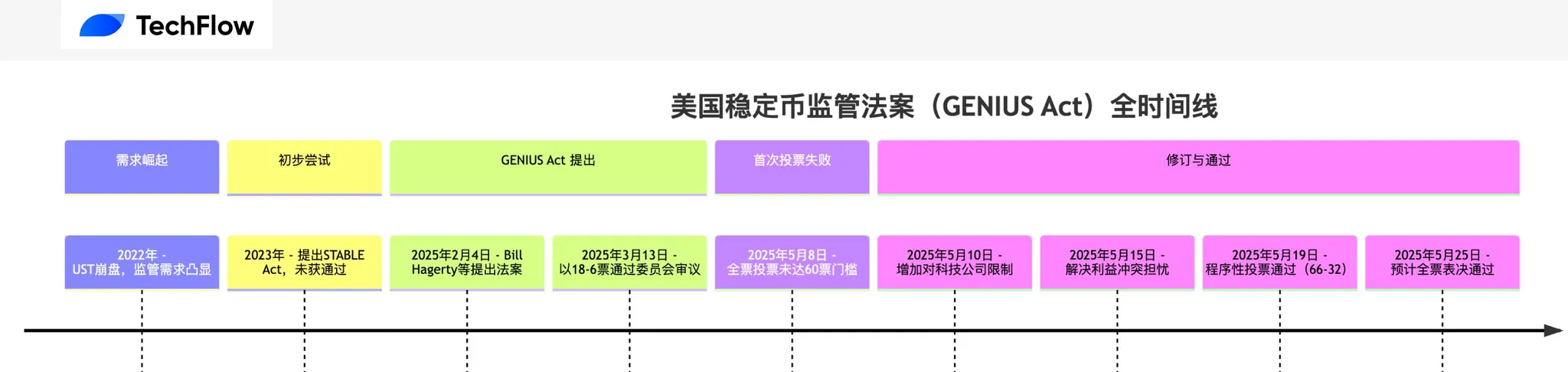
In addition, the currently published version clearly states that large technology companies are restricted from issuing stablecoins: non-financial listed companies are prohibited from issuing stablecoins unless they meet strict standards for financial risks, consumer data privacy and fair business practices, and companies such as Meta, Amazon, Google, and Microsoft are prevented from issuing stablecoins, maintaining the separation of banks and businesses. It is not difficult to understand why BlackRock chose to sign a cooperation agreement with Circle, promising not to issue competitive US dollar payment stablecoins within four years, which to a certain extent helps it avoid strict supervision.
2. Stablecoin track
The first to be affected by the bill is the entire stablecoin track. The current total market value of stablecoins is 245 billion US dollars, a significant increase from 200 billion US dollars at the end of 2024. It is predicted that it may reach 400 billion US dollars in 2025. This piece of cake is definitely getting bigger and bigger. Among them, Tether (USDT) currently has a market value of about 143 billion US dollars, and its trading volume accounts for more than 75%. About 60% of its reserves are US short-term Treasury bonds, which basically meets the requirements of the bill, but Tether faces strict regulatory restrictions in the United States and may launch a stablecoin specifically for the US market in the future. Although the market value of USDC is only 60 billion US dollars, it complies with similar regulations in Europe and the United States, is advancing the IPO process, and is working closely with Coinbase, so the battle for the first place is still going on. And with the influx of various compliant stablecoins, the competition in the market will become more and more fierce.
Stablecoin/Fixed Income
- Ethena Labs
USDtb, developed by Ethena Labs, is a fully collateralized stablecoin with a current market cap of approximately $1.4 billion. USDtb is backed by highly liquid assets such as Blackrock’s BUIDL (a tokenized asset) and has been integrated into Aave (a mainstream DeFi lending platform), increasing the liquidity of USD lending.
The GENIUS Act emphasizes that collateralized stablecoins must hold sufficient reserve assets, and USDtb's fully collateralized model is highly consistent with this requirement. Compared with pure algorithmic stablecoins (such as the early UST), USDtb's collateral attributes make it more compliant and stable under the regulatory framework.
- Pendle
Pendle Finance's business in stablecoins is mainly focused on yield tokenization, fixed income products, and yield optimization of stablecoin liquidity pools. Through integration with protocols such as Curve, Aave, and Ethena Labs, it provides users with flexible yield management and fixed income solutions. The passage of the GENIUS Stablecoin Act will enhance the market trust and adoption of stablecoins, directly benefiting Pendle's business growth, especially in the fixed income field. The $PENDLE token has short-term speculation and long-term growth potential due to its core position on the platform.
- Frax Finance
As a stablecoin issuer (FRAX), Frax Finance directly benefits from the regulatory clarity provided by the bill. The bill clarifies the definition and requirements of payment stablecoins. Although FRAX is a fractional algorithmic stablecoin, some of its collateral characteristics (such as 15% of US Treasury bonds) may make it meet the reserve requirements of the bill. However, the bill excludes synthetic stablecoins, which may restrict the algorithmic part of FRAX. Frax Finance needs to adjust its model to meet regulatory requirements, otherwise it may face market share loss.
3.Layer1
Public chains with high-frequency stablecoin usage scenarios are also one of the beneficiaries. Currently, the preferred ones are Ethereum, Solana and Tron, which are also the three largest public chains in the stablecoin market. However, since USD1, which has a political background, is closely related to BSC, BSC may also be one of the potential public chains. RWA, PayFi and DeFi products on various chains are also worthy of special attention.

Special thanks
Creation is not easy. If you need to reprint or quote, please contact the author in advance for authorization or indicate the source. Thank you again for your support.
Written by: Nora / WolfDAO
Editorial review: Mat / Nora
Thanks to the above partners for their outstanding contributions to this weekly report. This weekly report is published by WolfDAO for learning, communication, research or appreciation only.
Attached is a recruitment information:
🔥 Cryptocurrency traders, build the future of Web3 with us!
Job responsibilities: Develop, execute and optimize trading strategies, monitor market trends and on-chain data, increase returns and control risks.
Job requirements: Finance/mathematics/computer related background, familiar with the mainstream digital asset market, practical trading experience, strong data analysis ability, and passion for the crypto market.
We offer:
Industry-leading salary (base salary + performance + project commission + year-end bonus)
Clear promotion path (Strategist → Senior Trader → Head of Asset Management)
Core teamwork and rapid growth
Get in touch with the latest Web3 projects
If you are passionate about cryptocurrency and eager to realize personal value in a rapidly growing industry, welcome to join us!
Resume delivery: kelly@wolfdao.com