
Author: The Kobeissi Letter
Compiled by: Tim, PANews
Over the past 41 days, the total market capitalization of cryptocurrencies has evaporated by $1.1 trillion, equivalent to a daily loss of $27 billion.
Following the 10/11 liquidation, the total market capitalization of cryptocurrencies has fallen by approximately 10%.
I believe this is a structural market adjustment, and this post will explain why in detail.
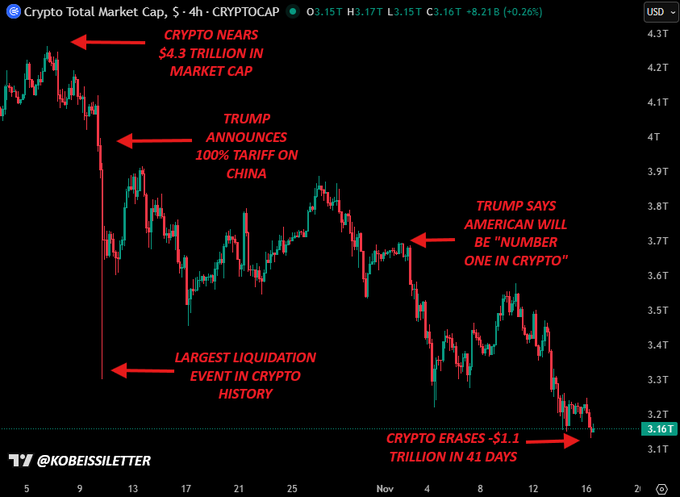
This drop is quite unusual because, from the perspective of the crypto market's fundamentals, there haven't been many substantial bearish factors.
Just days ago, President Trump stated that making the United States a "leader in the crypto space" is his top priority.
However, Bitcoin fell by 25% in a month.
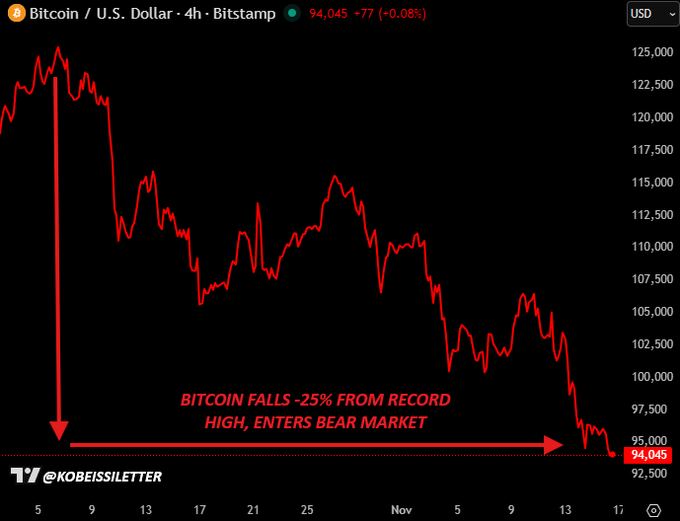
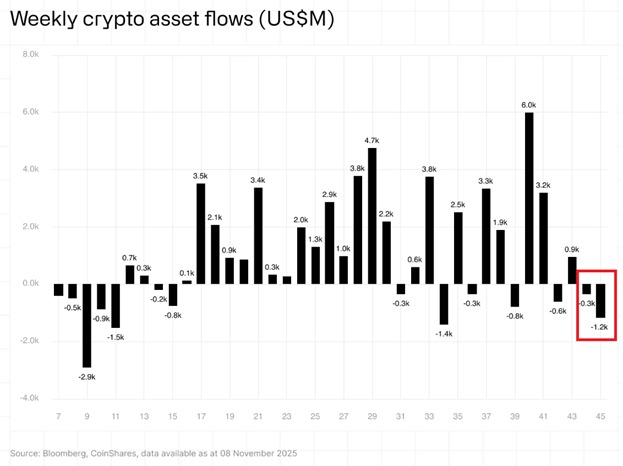
This appears to be a structural decline, all stemming from institutional fund outflows in mid-to-late October.
In the first week of November, crypto funds saw an outflow of $1.2 billion. A concerning issue is that this outflow occurred at a time when leverage levels were too high.
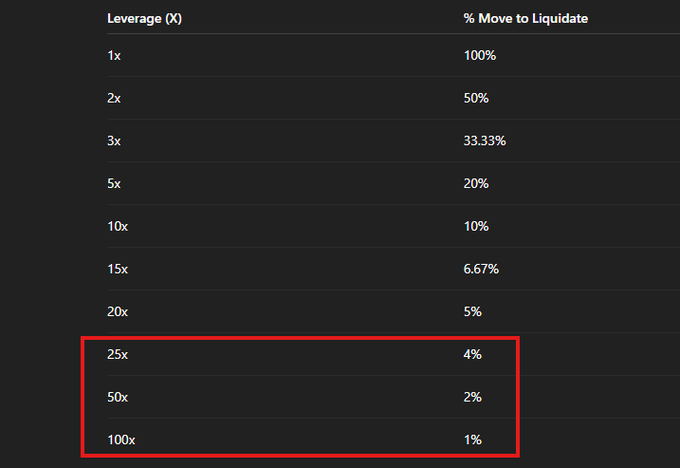
Leverage is used aggressively in the crypto market. It is not uncommon for speculators to hold leverage ratios as high as 20x, 50x, or even 100x.
As shown in the diagram below, with 100x leverage, a price fluctuation of just 2% can lead to a margin call. When millions of traders use leverage simultaneously, it can trigger a domino effect.
Therefore, when the crypto market suddenly crashes, the scale of liquidations surges.
As happened on October 11, a $19.2 billion liquidation frenzy caused Bitcoin to drop by $20,000 on its first daily candlestick chart.
Excessive leverage has made the market unusually sensitive.
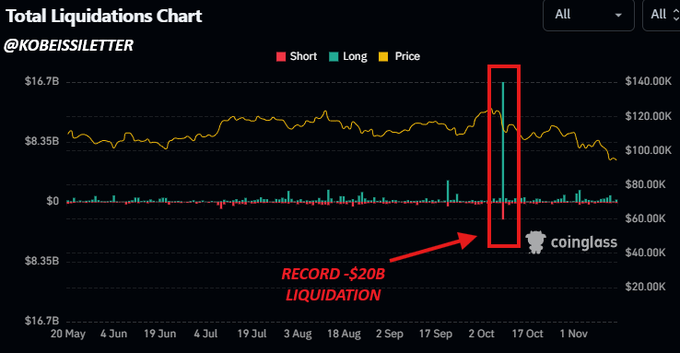
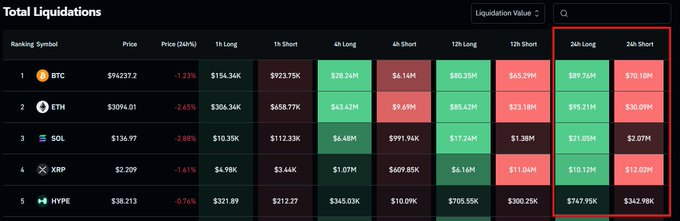
In the past 16 days alone, there have been 3 days with single-day clearing amounts exceeding $1 billion.
Daily margin calls exceeding $500 million have become the norm.
This is especially true during periods of low trading volume, which can lead to significant volatility in the crypto market. Moreover, this volatility is two-way.
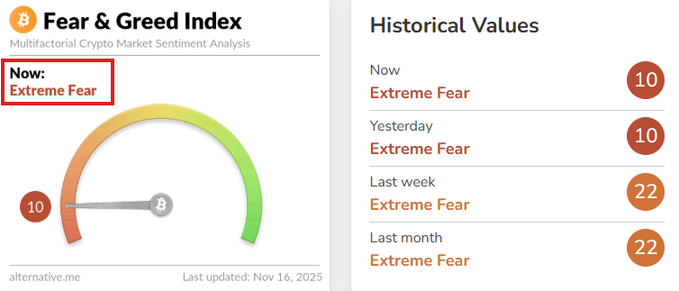
This also explains the sudden shift in market sentiment. The crypto market fear and greed index has officially fallen to 10, which is "extreme fear".
The current index is now on par with the all-time low of February 2025. Although Bitcoin has risen 25% since its April low, leverage is amplifying investor sentiment volatility.
Are you still unwilling to believe all of this?
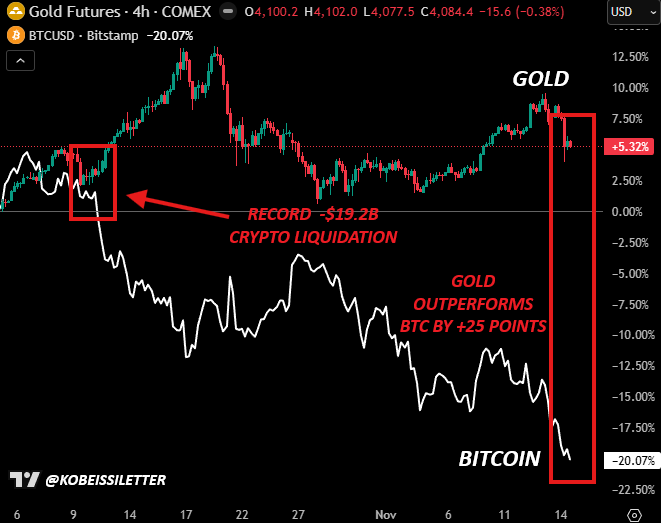
Let's look at a chart comparing the price movements of Bitcoin and gold since the Great Liquidation on October 11th. Over the past 12 months, gold and Bitcoin, as safe-haven assets, have shown a high correlation. However, since the beginning of October, gold has outperformed Bitcoin by 25 percentage points.
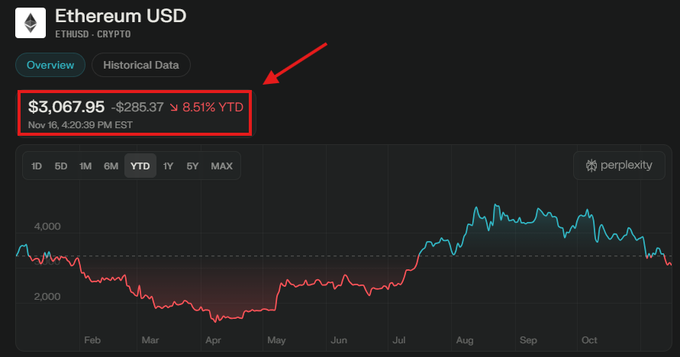
The downturn in the crypto market is even more pronounced in assets outside of Bitcoin. Ethereum, for example, has seen a year-to-date decline of -8.5%. Since October 6th, Ethereum has fallen sharply by 35%.
Despite a general rise in various risky assets, Ethereum's decline has far exceeded the levels typical of a bear market.
When you step back, the crypto market appears to be in a "structural" bear market. While the fundamentals of the crypto market have improved, the factors influencing prices are changing. As with any efficient market, this issue will resolve itself.
Therefore, we believe the market bottom is near.
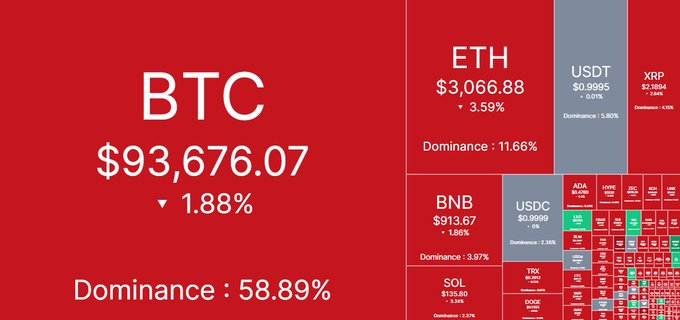
Beyond the crypto market, entry opportunities have also emerged in other assets. The macroeconomy is shifting, and stocks, commodities, bonds, and cryptocurrencies all present investment opportunities.
The macroeconomic reality is that the global M2 money supply has reached a record high of $137 trillion. Japan is preparing an economic stimulus plan of over $110 billion, and Trump's $2,000 tariff benefits are about to be distributed. For cryptocurrencies, this drop is merely growing pains in the process of rising prices.